300 scientists call for finding safe site to store nuclear waste

By EISUKE SASAKI/ Senior Staff Writer, October 31, 2023 https://www.asahi.com/ajw/articles/15044716
Earth science specialists hold a news conference on Oct. 30 to express their opposition to a plan to bury spent nuclear fuel as a final storage method. (Eisuke Sasaki)
About 300 earth science specialists have released a statement calling for a fundamental review of the Japanese government’s plan for storing spent nuclear fuel.
The process for finding a final storage site in Japan has been proceeding “while keeping a lid on scientific discussions,” said Junji Akai, a professor emeritus of earth science at Niigata University, who signed the statement, at an Oct. 30 news conference.
The current plan is to bury the highly radioactive waste deep underground.
But the statement about 300 scientists signed, including a number of former chairmen of the Geological Society of Japan, said there was no place in Japan where such waste could be kept safe for the 100,000 years or so needed for the radiation to dissipate.
A law passed in 2000 regarding the final handling of nuclear waste stated that the spent nuclear fuel should be buried deep underground.
But the statement released on Oct. 30 noted that several tectonic plates converge on the Japanese archipelago, a mobile belt with active volcanoes and frequent earthquakes.
It went on to say that under the current circumstances, it would be “impossible” to choose a location that would not be affected by such tectonic activity for 100,000 years.
The statement called for abolishing the law on the final storage of nuclear waste and setting up a third-party organization to reconsider how such waste should be stored, including temporarily storing it aboveground.
Two small municipalities in Hokkaido are in the first of a three-stage process to determine their suitability as a site for the final storage of nuclear waste. #nuclear #antinuclear #nuclearfree #NoNuke
1 Comment »
Leave a comment
1 This Month
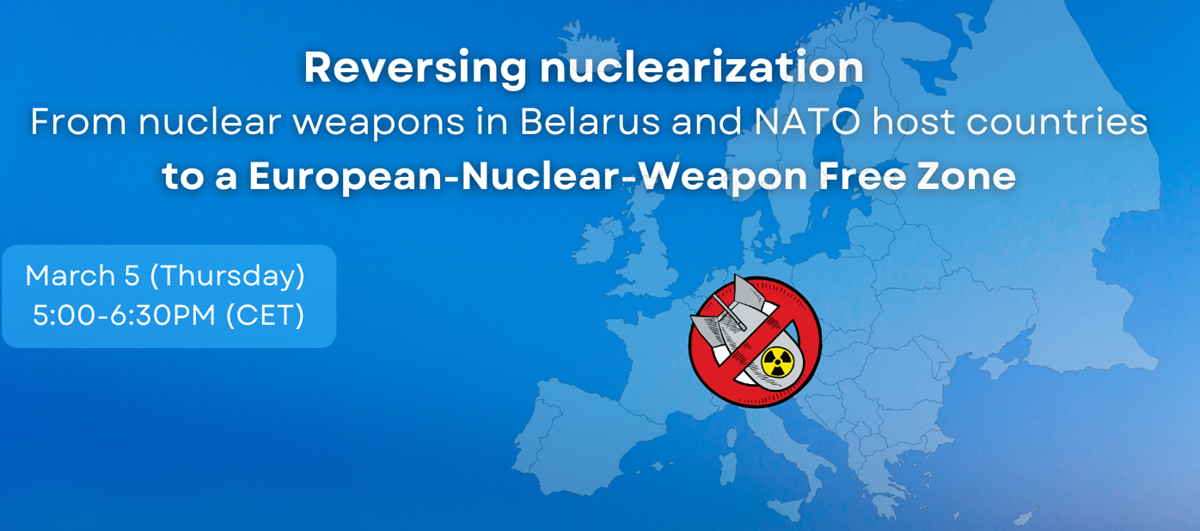
5 March -Online – Reversing nuclearization:
From nuclear weapons in Belarus and NATO host countries to a European-Nuclear-Weapon Free Zone
11am-12:30pm Eastern Time USA / 5pm-6:30pm CET

of the week – Advocating for a
nuclear free beach – https://www.samuellawrencefoundation.org/
The Samuel Lawrence Foundation advocates for a Nuclear Waste Free Beach at San Onofre, join us and take action!

10 March A LIVE WEBINAR THE REAL EFFECTS OF NUCLEAR POWER
What the Industry Isn’t Telling Us
1:00 PM Mountain, 2 pm Central, 3 pm Eastern. Live on the Keepers of the Water Facebook page

18 March Webinar @ 1 PM EST: An Assessment of SMR Projects: The Case of Canada
register for the zoom:
https://us02web.zoom.us/webinar/register/WN_o8BIIOUvQ2ONJR1nta65DQ#/registration

of the week – STOP SMALL MODULAR REACTORS IN CANADA
To see nuclear-related stories in greater depth and intensity – go to https://nuclearinformation.wordpress.com
-
Archives
- March 2026 (38)
- February 2026 (268)
- January 2026 (308)
- December 2025 (358)
- November 2025 (359)
- October 2025 (376)
- September 2025 (258)
- August 2025 (319)
- July 2025 (230)
- June 2025 (348)
- May 2025 (261)
- April 2025 (305)
-
Categories
- 1
- 1 NUCLEAR ISSUES
- business and costs
- climate change
- culture and arts
- ENERGY
- environment
- health
- history
- indigenous issues
- Legal
- marketing of nuclear
- media
- opposition to nuclear
- PERSONAL STORIES
- politics
- politics international
- Religion and ethics
- safety
- secrets,lies and civil liberties
- spinbuster
- technology
- Uranium
- wastes
- weapons and war
- Women
- 2 WORLD
- ACTION
- AFRICA
- Atrocities
- AUSTRALIA
- Christina's notes
- Christina's themes
- culture and arts
- Events
- Fuk 2022
- Fuk 2023
- Fukushima 2017
- Fukushima 2018
- fukushima 2019
- Fukushima 2020
- Fukushima 2021
- general
- global warming
- Humour (God we need it)
- Nuclear
- RARE EARTHS
- Reference
- resources – print
- Resources -audiovicual
- Weekly Newsletter
- World
- World Nuclear
- YouTube
-
RSS
Entries RSS
Comments RSS
 nuclear-news
The radioactive half life of plutonium is 24,100 years. It takes 10 half lives for plutonium to become harmless. Does any human built site ever stay intact for that long? Are we going to have a Nuclear “Priest hood” of guards for these sites going to be established to protect us from these nuclear wastes, with no terrorist attacks, sabotage, earthquakes, floods or “acts of god?”