TODAY. Nuclear “sacrifice zones” and “sponges”- a new revelation

Only recently revealed: – “The silos are basically meant to divert and absorb the incoming nuclear missiles from important and critical areas in the country, like cities.”
OnFrom its beginning in the 1940s the global nuclear industry set up “sacrifice zones”- Nevada nuclear test sites, though the residents didn’t know this – a sort of “unconscious” one – where the outcomes of cancer and birth defects were not fully understood.
Twas the Russians who first put the concept clearly into practice – setting up City 40, Ozersk the birthplace of the Soviet nuclear weapons programme . City 40’s inhabitants were told they were “the nuclear shield and saviours of the world”. This was absolute nuclear sacrifice. The residents of this secret city knew that their role was to accept both the cancerous consequences of nuclear weapons-making and their status as a nuclear target – all for the supposed glory of making all of Russia “safe”.
The residents were compensated – financial stability, private apartments, plenty of food – including exotic delicacies such as bananas, condensed milk and caviar – good schools and healthcare, a plethora of entertainment and cultural activities.
In exchange, the residents were ordered to maintain secrets about their lives and work. For the first eight years, residents were forbidden from leaving the city, writing letters or making any contact with the outside world.
The Americans did it more subtly. They chose areas where the indigenous population would would have little awareness of the issues – a much cheaper system than the Russian one. The US military set up nuclear silos of InterContinental Ballistic Missile (ICBMs.) as “sponges” “The role of the ICBM is to force an adversary to use many nuclear weapons if they decided to attack the U.S. The silos are basically meant to divert and absorb the incoming nuclear missiles from important and critical areas in the country, like cities.”
Wherever there are nuclear weapons systems, there are these “sponges”, – places where the uninformed local community, preferably indigenous are put in danger. for the presumed safety of the more important city residents.
The very latest one is in the UK, in Suffolk, where the US is about to bring back nuclear weapons,
The women of Greenham Common previously got rid of American nuclear weapons bases.
UK needs a new Greenham Common to fight this new nuclear target, sponge, sacrifice zone.
COP28: Hopes of fossil fuel ‘phase out’ hit by revelations of Saudi plan to boost oil demand.

The scale of the challenge faced by diplomats pushing
for a new global agreement to ‘phase out’ unabated fossil fuels at the
upcoming UN Climate Summit in Dubai was underscored yesterday by reports
detailing how both the United Arab Emirates (UAE) and Saudi Arabia are
privately working to sustain long term demand for oil and gas.
Just hours after the BBC reported yesterday that COP28 hosts the UAE had used
bilateral meetings with governments ahead of the Summit to promote new oil
and gas investments, Channel 4 News and the Centre for Climate Reporting
revealed how Saudi Arabia is using its Oil Demand Sustainability Programme
(ODSP) to drive long term demand for oil from developing economies.
Business Green 28th Nov 2023
US nuclear bombs ‘set to return to UK’ for first time in 15 years – making Lakenheath a “nuclear target”
“they will make us a nuclear target. “
US nuclear weapons are expected to return to the UK after 15 years following a visit to RAF Lakenheath in Suffolk by American Deputy Defence Secretary Kathleen Hicks
By Ben Glaze, Deputy Political Editor1, 29 Nov 2023
American nuclear bombs are set to return to Britain after 15 years.
A senior US defence official has visited an RAF base in the Suffolk countryside, paving the way for the controversial arms to come back to the UK. Deputy Defence Secretary Kathleen Hicks went to RAF Lakenheath for a tour of “infrastructure improvements” at the air station, according to The Daily Telegraph.
The Pentagon is planning a £39.5million dormitory for troops with the military site due to be used for “surety” – a US defence term to describe operations related to nuclear weapons, the paper reported. The last American nuclear arms were removed from Britain in 2008, when approximately 110 tactical B61s stored at Lakenheath were stripped out.
The weapon – a low to intermediate-yield strategic and tactical nuclear bomb – remains part of the US’ “enduring stockpile” following the end of the Cold War. It could be dropped by US Air Force F-15E Strike Eagle fighter-bombers. The aircraft are still based at Lakenheath as part of the USAF 48th Fighter Wing – known as The Liberty Wing – its main air defence mission in Europe………………………………………..
Deployment of American nuclear arms to Britain would generate fresh controversy. Campaign for Nuclear Disarmament general secretary Kate Hudson told the Mirror: “Kathleen Hicks’ visit to RAF Lakenheath is further proof that Washington intends to use Britain as a launch pad for its nuclear arsenal in Europe. The lack of transparency surrounding this deployment is shocking, given how dangerous it is.
“Russia has already retaliated – it has stationed its own nuclear weapons in Belarus in response. A YouGov poll found that almost two thirds of the British public don’t want US nuclear weapons stationed here. That’s not surprising – they will make us a nuclear target. CND calls on the UK Government to say that US nuclear weapons are not welcome in Britain.”
Green Party co-leader Carla Denyer said: “The world feels like an increasingly dangerous place with conflicts in Ukraine, Gaza and many other places. However, the positioning of US nuclear weapons at Lakenheath will not help ease tensions – it is far more likely to increase them. Over 100 nuclear bombs were stored at the airbase but they were removed in 2008. The UK Government should be working much harder to reduce the threat of nuclear war by actively supporting the UN Treaty on the Prohibition of Nuclear Weapons, and seeking to reverse the collapse of other international arms control treaties which were designed to protect us.”
Previous deployments of American nuclear weapons have triggered outrage. Greenham Common in Berkshire saw years of anti-nuclear demonstrations, and was the UK’s biggest women-led movement since the Suffragettes. The protest began in 1981 and lasted 19 years until the airbase was decommissioned. https://www.mirror.co.uk/news/politics/nuclear-bombs-set-return-uk-31552964?link_id=3&can_id=0a448bf4278898648e02a8f6dea4650f&source=email-a-senior-us-defence-official-just-visited-raf-lakenheath&email_referrer=email_2128400&email_subject=a-senior-us-defence-official-just-visited-raf-lakenheath
Ralph Nader: An Open Letter to Members of the United States Congress

By Ralph Nader / Nader.org November 29, 2023
RE: Hamas-Israel-Gaza-Genocide
We are writing to exercise our First Amendment to petition Congress for redress of grievances. We are urging Congress to end the United States’ unconditional, close, and continual military and intelligence support of Israel in its ongoing physical destruction of 2.3 million Palestinians residing in Gaza. The United States is responsible for genocide under any plain reading of the Genocide Convention.
Congress commands plenary power over the foreign policy of the United States. It employed the power of the purse to end United States combat in Indochina on August 16, 1973. It prohibited the CIA from intermeddling in Angola with the Clark Amendment in 1975. And by statute, Congress has insisted that Israel receive weapons that ensure a Qualitative Military Edge over its neighbors.
Words only diminish our revulsion at the congressional dereliction in enabling President Joe Biden to transfer weapons and share real-time intelligence with Israel to destroy Palestinian civilians in Gaza in violation of multiple laws: the Genocide Convention, the federal prohibition of genocide,18 U.S.C. 1091, the Leahy Amendments, the Declare War Clause of the Constitution, and the statutory restriction on the use of American arms for defensive purposes only.
Why has Congress neglected public hearings to expose and redress these offenses to the rule of law?
Congress should enact a Joint Resolution endorsing a two-state solution featuring a Palestinian state initially administered by a United Nations caretaker mission to organize free and fair elections.
The United States’ current unlawful foreign policy is indistinguishable from “the strong do what they can and the weak suffer what they must” voiced by Thucydides in History of the Peloponnesian War.
Section 2 of the Genocide Convention defines the crime as including “intentionally creating conditions of life calculated to physically destroy a racial, religious, ethnic, or national group in whole or in part.” Evidence in the public domain authoritatively establishes that Israel is intentionally creating conditions of life in Gaza intended to physically destroy the 2.3 million Palestinian occupants. Israeli officials, without dissent, announced a siege of Gaza including the genocidal refrain, “no food, no water, no power, no electricity, no medicine, no shelter, no anything.” See e.g., “‘Erase Gaza’: Conflict Unleashes Inflammatory Rhetoric From Israeli Leaders,” New York Times, A7, November 16, 2023. Palestinians are even prohibited from collecting or storing rainwater which is considered the property of the Israeli government.
The siege of Gaza’s population has been fortified by a land invasion and bombings of hospitals, clinics, ambulances, bread bakeries, water mains, schools, apartment buildings, marketplaces, fleeing refugee families to nowhere, journalists, mosques, churches, and clearly marked United Nations schools and relief sites. Death certificates are prepared before the ink on birth certificates dries. Fires cannot be extinguished. Diseases are spreading. Deaths are at least 20,000 and probably twice or three times that number increasing by the hour, from lack of water, food, and urgent medical treatment, for those homeless battered families being driven south under Israeli bombardment and communications blackouts. There are no safe sanctuaries whether in North or South Gaza – even in hospitals they blockaded. Gaza is a free fire zone for the IDF.
Israel has turned its brutal war machine on the entire Palestinian population in Gaza. Israel’s President declaimed, “It is an entire nation out there that is responsible. It’s not true about civilians not aware, not involved. It’s absolutely not true.” An Israeli Knesset member echoed, “The Children of Gaza brought it upon themselves.” The Defense Minister insisted, “We are fighting human animals and will treat them accordingly.”
Prime Minister Netanyahu added that the Gaza conflict is between 21st century progress and “the barbaric fanaticism of the Middle Ages” and a “struggle between the children of light and the children of darkness.” He reminded Israeli Jews of the Lord’s ordering the destruction of Amalek in the Book of Samuel, “This is what the Lord Almighty says,” the prophet Samuel tells Saul. “I will punish the Amalekites for what they did to Israel when they waylaid them as they came up from Egypt. Now go, attack the Amalekites and totally destroy all that belongs to them. Do not spare them; put to death men and women, children and infants, cattle and sheep, camels and donkeys.’”
The Nazis in World War II attempted to conceal the Holocaust fearing legal accountability. Israel’s genocide is unfolding in plain view confidant of impunity, including unconditional callous congressional support and gross misdirection of taxpayer dollars for violence, in lieu of satisfying the critical needs of the American people.
Congress is poised, without even public hearings and witnesses, to spend an additional $14.3 billion of taxpayer dollars to compensate for a staggering blunder of Israeli intelligence. Why?
Israel has taken an eye for an eye, a tooth for a tooth standard of justice of Leviticus to a criminal, genocidal level: 10,000 eyes for an eye, 10,000 teeth for a tooth. It is turning Gaza into a vast sick and dying huddle of civilian families exposed to American bombs and missiles. As the Washington Post reported, “hunger, thirst and disease are quickly spreading.” Babies are dying alone having lost their parents.
Had the touted Israeli defenses and intelligence not been colossally AWOL, the October 7th attack could never have occurred. As one elderly Holocaust survivor told The New York Times, “It should never have happened…”
President Biden has made the United States a belligerent and co-belligerent with Israel against Hamas without a constitutionally required declaration of war by Congress. Systematically providing the IDF with massive weapons made us a co-belligerent and sharing real-time battlefield intelligence made us a belligerent.
Such presidential wars are impeachable high crimes and misdemeanors as Mr. Biden himself vigorously underscored in his presidential campaign for the 2008 Democratic nomination in an interview with Chris Matthews on Hardball on December 4, 2007.
Listen further to the fundamental, historical provocation of the war as elaborated by David Ben-Gurion, founder and first Prime Minister of Israel:
“If I were an Arab leader, I would never sign an agreement with Israel. It is normal; we have taken their country. It is true, God promised it to us, but how could that interest them? Our God is not theirs. There has been anti-Semitism, the Nazis, Hitler, Auschwitz, but was that their fault? They see but one thing: we have come and we have stolen their country. Why would they accept that?” Printed in “The Jewish Paradox,” (p. 121) by Nahum Goldmann.
Ben Gurion’s recognition was echoed by Israel’s acclaimed war hero Moshe Dayan. Standing close to the Gaza border in 1956 eulogizing a 21-year-old Israeli security officer who had been slain by Palestinian and Egyptian assailants, Dayan reflected, “Let us not today cast blame on his murderers. What can we say against their terrible hatred of us? For eight years now, they have sat in refugee camps of Gaza and watched how, before their very eyes, we have turned their land and villages, where they and their forefathers previously dwelled, into our home.”
Also often forgotten by most Members of Congress is P.M Netanyahu’s widely quoted strategy of supporting and funding Hamas over the years to thwart a two-state solution with the Palestinian Authority. Roger Cohen of the New York Timeswrote on October 22, 2023, “All means were good to undo the notion of Palestinian statehood. In 2019, Mr. Netanyahu told a meeting of his center-right Likud party: ‘Those who want to thwart the possibility of a Palestinian state should support the strengthening of Hamas and the transfer of money to Hamas. This is part of our strategy.’”
The “From the river to the sea” expression originated with Prime Minister Netanyahu’s Likud party pressing for a “Greater Israel” in all of Palestine, not with Hamas. Further, the idea is also consistent with peaceful coexistence between Palestinians and Jews, by people advocating a one-state solution.
Dante observed, “The hottest places in hell are reserved for those who, in times of great moral crisis, maintain their neutrality.” The Congressional positions against Palestinian civilians, three-quarters of whom are children and women, are far beyond neutrality. Read the front-page article of the New York Times (November 26, 2023) headlined: “Israel Has Killed More Women and Children Than Have Been Killed in Ukraine.”
Congress should follow the example of President Dwight D. Eisenhower in 1956 who interceded in the Suez crisis to stop the attacks by Israel, France, and the United Kingdom, on Egypt. He also initiated the United Nations peacekeeping force in the Sinai.
Congress should conduct public hearings in the House and Senate featuring prominent and longtime Israeli peace advocates, holding past high-level government positions, along with Israeli and Palestinian human rights groups. Their voices have been excluded from Capitol Hill since 1948. You know why? Shame!
Congress cannot escape the judgment of history which will endure for the ages over its defining role in the annihilation of innocent Palestinian families – mostly children and women – inside Gaza – long described as Israel’s illegally blockaded open-air prison.
We look forward to a congressional response, from U.S. Senators and U.S. Representatives respectful of citizen petitions.
Sincerely,
Bruce Fein, Esq., Ralph Nader, Esq.
Why Britain’s mini-nukes dream is hanging by a thread
Scuppered American power deal throws the UK’s promise of a green transition into doubt
Telegraph UK, By Howard Mustoe, 29 November 2023
It was meant to provide cheap, clean power to towns in the Midwest of the US.
But a scuppered nuclear power deal has thrown the promise of green power in the region into doubt, and could have repercussions in Britain.
NuScale Power said earlier this month that its maiden deal to build six of its mini-nukes in Utah was dead, after several towns that were backing the project pulled out over soaring costs…………………………………
In Britain, the Government wants a quarter of all electricity to come from nuclear power by 2050, and has launched a competition to find developers who can build SMRs by the mid-2030s. Last month, it unveiled a shortlist of six contenders, including NuScale.
However, the Portland, Oregon-based company’s struggles raise the spectre that SMRs may be beset to the same cost overruns that have long haunted the industry, casting doubt over whether mini-nukes can actually deliver on their promise.
NuScale is the only SMR developer with a design approved by a regulator.
The Utah Associated Municipal Power Systems (UAMPS), which provides power to local areas across the Midwest, first signed a deal with NuScale in 2015.
The ambition of the project changed over time, with UAMPS eventually settling on plans to buy six NuScale reactors that could deliver 77 megawatts (MW) of electricity each, collectively enough to power almost 1.4 million homes.
However, members of UAMPS, small towns and local areas, were uneasy with the long timeline and high costs of the project.
When the Utah city of Logan pulled out in 2020, its finance chief Richard Anderson told the Salt Lake City paper Deseret News: “We don’t have the experience to be swimming in these waters. I didn’t feel good about it.”
The death knell for NuScale came in January when new estimates showed a 53pc increase in costs. The price of steel and other raw materials had leapt, sending the price of power from the plant from $58 per MW hour to $89.
The sharp increase came despite a promise of $4bn (£3.2bn) in US taxpayer support under President Biden’s Inflation Reduction Act.
Several member towns pulled out over soaring costs, leaving the project dead in the water.
Tony Roulstone, a lecturer in nuclear energy at the University of Cambridge and a former Rolls-Royce engineer, said the deal coming unstuck was “bad for the broader market”.
“They’re the one with a ticket from a safety authority,” he said of NuScale. “They’re the one with a project, which has been supported by the US government.”
SMRs offered the promise of bringing the cost discipline of mass production to nuclear engineering. They were touted as a way to pull the industry away from unwieldy megaprojects that were subject to cost overruns and delays……………………………..
the rising costs in Utah evoke worrying parallels to the industry of old. Hinkley Point C in Somerset was estimated to cost about £26bn in 2015, for example, but could now end up costing £33bn, according to the latest estimate.
While the scale of costs is different, the unpredictability is a worry……………………………….
The market is also quite crowded. France’s EDF, US-Japanese alliance GE-Hitachi, Rolls-Royce and US companies Holtec, NuScale and Westinghouse are all competing for part of the SMR market in the UK through the Government’s competition.
With costs rising and interest waning, the industry has complained the Government is moving too slowly…………………………………..
To succeed in delivering the economies of scale promised by factory production, SMRs must be developed en masse………………………………………………………. https://www.telegraph.co.uk/business/2023/11/29/soaring-costs-mini-nuclear-dream-left-on-thread/
EDF to “build 1 reactor a year in 2030s” – CEO
EDF to “build 1 reactor a year in 2030s” – CEO. French utility EDF
plans to build at least one nuclear reactor per year in the next decade in
Europe, its CEO told the World Nuclear Exhibition in Paris late on Tuesday.
“We’re counting on an accelerated rate of construction capacity for large
reactors, from what we have today, which is one or two per decade… and
gradually moving up to one or even 1.5 per year” for the next decade, Luc
Remont said on the sidelines of the conference. “We have already built
four reactors per year” in the 1970s-80s.
Montel 29th Nov 2023
https://www.montelnews.com/news/1532125/edf-to-build-1-reactor-a-year-in-2030s–ceo
Pentagon struggling to pay for Middle East buildup – Politico
https://www.rt.com/news/588180-pentagon-struggle-middle-east-deployment/ 29 Nov 23
The US military has to make do with a stopgap budget that freezes defense funding at the previous year’s levels
The Pentagon is scrambling to find money to pay for a military buildup in the Middle East amid the Hamas-Israel conflict due to gridlock in the US Congress, which has so far been unable to approve full defense funding, Politico reported on Tuesday.
The US Department of Defense, along with many other federal agencies, is now operating under a stopgap funding bill which was signed by US President Joe Biden earlier this month to avert a potential government shutdown. The measure, which did not satisfy Biden’s request for additional money for Israel and Ukraine, also freezes other types of defense spending at the previous year’s levels.
Pentagon spokesman Chris Sherwood told Politico that since no one planned for a massive redeployment of US forces to the Middle East after the October 7 Hamas attack on Israel, the military “had to pull money from existing operations and maintenance accounts.” This means less funding for exercises and deployments that had already been planned.
“We’re taking it out of hide,” the spokesman said.
Since the start of the Middle East crisis, the US has deployed two aircraft carriers with escorts, additional missile and air defense systems, more than 1,000 troops, and an Ohio-class nuclear-powered missile submarine to the region.
The military buildup came as the US declared unequivocal support for Israel in its conflict with the Palestinian armed group Hamas, as well as fears that hostilities could lead to a major regional escalation involving Iran and Islamist organizations with ties to Tehran.
US defense officials had previously sounded the alarm about the congressional stalemate, warning that a lack of funding could harm not only shipbuilding and procurement programs, but the industrial base itself.
Speaking to Defense News, Deputy Under Secretary of Defense Radha Plumb did not rule out the possibility of an “additive domino effect of delays,” noting that suppliers could be especially hard-hit by this.
Meanwhile, Under Secretary of Defense Bill LaPlante warned of potential layoffs in contractor companies due to the lack of Pentagon funding.
According to Politico, if US lawmakers are unable to pass a full spending bill by spring, the Pentagon and other federal departments will have to cut their overall expenses by 1%.
Palestine is the genocide that we as Jewish people can halt.
Amanda Gelender, 24 November 2023 https://www.middleeasteye.net/opinion/israel-palestine-genocide-jewish-people-can-halt—
We cannot allow the moral soul of Judaism to perish with our collective silence on Israel’s genocidal war on Palestinians in Gaza.
sit down to write this – a love letter for my treasured Jewish people – as a genocide unfolds on my screen.
This letter pours from my heart to yours. It is a call to action to rise in solidarity with Palestine. I have such deep tenderness for us, our history, and the proud traditions we have preserved through centuries of unspeakable injustice.
Like some of you, I grew up attending synagogue in a progressive American Jewish community. Celebrating and supporting Israel was part of what it meant to be culturally and religiously Jewish.
When I first came to understand what was actually happening in the occupied Palestinian territories, I was 18 and enrolled in my first year of college. A Jewish peer told me about the abuse Israel commits in our name.
I’m not proud to admit that the fact she was Jewish is likely the only reason I listened: I was taught by my community that only Jewish people can truly understand how important Israel is for our safety and wellbeing. Looking back, I wish I had believed Palestinians sooner.
Palestinians are the authorities on their own freedom struggle. But the indoctrination and fear instilled in me as a Jewish child was too strong to overcome, until the bubble of Zionism burst.
When I first came to learn about the extent of Israel’s ongoing brutality against the Palestinian people, I struggled to believe it. My Jewish elders taught me about justice, human rights and the Jewish moral mandate to cultivate social change and “repair the world” (tikkun olam).
How is it possible that my own people could omit the truth about Israeli apartheid and occupation? I was taught that Israel was founded on an empty plot of land, not that Zionist terrorist squads raided villages, killing 15,000 Palestinians and forcibly displacing 750,000 more in the Nakba. Like me, did they just not know?
Zionist fallacy
The line that “everyone who criticises Israel is antisemitic” felt increasingly flimsy in the face of a mounting list of war crimes committed by Israel. If everything taught to me about Israel wasn’t true, what else was a lie?
And what would this mean for participation in the Jewish community going forward, given that virtually all of my Jewish peers are still tacitly or actively invested in the fallacy of Zionist nationalism?
Once the denial faded, the rage set in. We have been lied to by people we trusted; deceived so that we would cheer on an apartheid state that abuses children and tortures mercilessly in our name. Jewish youth, including myself, have been implicated in a 75-year, ongoing genocide against the Palestinian people.
There have been tremendous, unfathomable human rights abuses committed under the guise of protecting Jewish livelihood – when in reality, a settler’s quiet peace is made possible only by continued Palestinian repression. There is no safety for anyone under occupation.
We were taught that Israel represented a whisper of refuge carved out for Jews after the Holocaust – something precious that we must protect at all costs. It was “the only nation for Jewish people”, our homeland, our birthright: Israel.
We were taught intrinsic entitlement over a piece of land on the other side of the earth. Israel was a second, optional home for us – but the story conveniently omitted that Palestine is the one and only home for Palestinians, who have tended to the land for generations.
Israel still denies Palestinians visitation rights and the inalienable right to return home, but as a Jewish person born in California, I can visit whenever I want, and Israel will even pay me to move there and live on stolen Palestinian land.
I wasn’t taught that Israel is funded to the teeth by the US, functioning as a strategic western imperial outpost for natural resource extraction, weapons testing, US police training, and more. No one told me that the birth of Israel required the death of Palestinians, an ethnic cleansing conveniently swept under the rug so that Jewish people could have something shiny and clean; that it was a militarised nation founded on piles of scorched Palestinian bodies, a Jewish homeland built on mass indigenous graves.
Decolonial freedom struggle
The story of Israel is not new. It is deeply familiar to colonised peoples the world over. It perpetuates the same white supremacist, colonial lie that settlers arriving to Turtle Island (North America) told themselves to justify the genocide of indigenous peoples: that in the name of progress, modernity and democracy, the coloniser must demolish, kill and destroy.
Under this lie, the coloniser must pillage the land as manifest destiny, from “sea to shining sea”, and violently execute as many of the “savage native terrorists” as possible to expand territorial gains and build safe homes for settler families.
Palestine is not engaged in a holy war; it is a decolonial freedom struggle. Palestinians did not choose Jewish people to colonise their land, and they have a moral and legal right to resist occupation, regardless of who the occupier is. Jewish safety is a non-starter, so long as the violent occupation of Palestine persists. Our liberation is bound together as one.
We are at an unprecedented moment in history. A genocide is unfolding before our eyes, as bodies pile up in mass graves outside of bombed hospitals and refugee camps. A global solidarity movement for Palestine has pierced through the veil of western comfort – a jailbreak from the prison of blockade.
And as the US-backed Israeli military continues to rain down bombs on the besieged people of Gaza, many of my fellow Jewish people are sitting back and watching, or actively cheering it on.
With our silence, Jewish people globally are co-signing this genocide. Many have calculated that it’s “too complicated”, with the threat of being alienated from friends, family and colleagues. We don’t want to risk anything real.
Delusional asymmetry
But Palestinian families are being murdered while they sleep, brutalised with burning white phosphorous, sniped in hospital maternity wards, starved and made to suffer from dehydration and a lack of clean water, and forced on death marches. They are pulling dead, bloodied children from the dusty ruins of bombed rubble.
And yet, my Jewish peers in the West say they are the ones who fear genocide. This delusional asymmetry must end so that we can point resources and attention towards those who face an actual threat of extinction in this completely preventable massacre of human dignity.
The call from Palestinians at this moment is clear: ceasefire now. End the siege on Gaza and the illegal occupation. Respect the right of return. Palestinians are asking us to bear witness to their genocide, pressure our representatives for an immediate ceasefire, and boycott those profiting from the illegal occupation. Every day without a ceasefire, the death toll increases and Israel wipes more lineages from the public record.
Palestine is the genocide that Jewish people can halt. We couldn’t intervene to stop millions of our ancestors from perishing in death camps, but we can and must stop this genocide from continuing one more day. Let us not squander our urgent, sacred duty by exploiting Jewish suffering as a shield and cudgel for violence against Palestinians.
If you consider yourself a Jewish person of conscience, understand that there is no moral or legal justification for this massacre. The time to speak is now. Palestinians can’t wait for history to redeem them, because the air strikes continue to beat down as I write this letter of love and rage to you, my Jewish kin.
We cannot allow the moral soul of Judaism to perish with the sound of our collective silence on genocide. Let our voices be a prayer for our Jewish ancestors and a blessing for our descendants to say once and for all: never again.
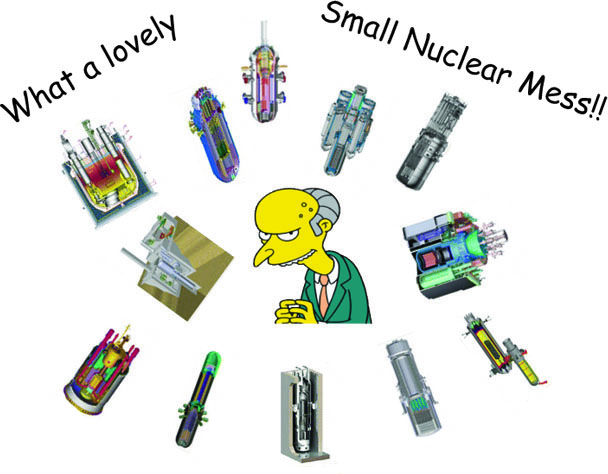
Small modular nuclear reactors: a history of failure
Jim Green 28 November 2023 https://reneweconomy.com.au/small-modular-nuclear-reactors-a-history-of-failure/
Small modular reactors (SMRs) are defined as reactors with a capacity of 300 megawatts (MW) or less. The term ‘modular’ refers to serial factory production of reactor components, which could drive down costs.
By that definition, no SMRs have ever been built and none are being built now. In all likelihood none will ever be built because of the prohibitive cost of setting up factories for mass production of reactor components.
No SMRs have been built, but dozens of small (<300 MW) power reactors have been built in numerous countries, without factory production of reactor components. The history of small reactors is a history of failure.
The US Army built and operated eight small reactors beginning in the 1950s, but they proved unreliable and expensive and the program was shut down in 1977. In addition, 17 small civilian reactors were built in the US in the 1950s and 1960s, but all have since shut down.
Twenty-six small Magnox reactors were built in the UK but all have shut down and no more will be built. The only operating Magnox is a mini-Magnox in North Korea: the design was made public at an Atoms for Peace conference and North Korea uses its 5 MW Magnox to produce plutonium for nuclear weapons.
India’s operates 14 small pressurised heavy water reactors, each with a capacity of about 200 MW. Prof. M.V. Ramana noted in his 2012 book, ‘The Power of Promise: Examining Nuclear Energy in India’, that despite a standardised approach to designing, constructing, and operating these reactors, many suffered cost overruns and lengthy delays. There are no plans to build more of these small reactors in India.
Elsewhere, the history of small reactors is just as underwhelming. This includes three small reactors in Canada (all shut down), six in France (all shut down), and four in Japan (all shut down).
Prof. Ramana concludes his history of small reactors with this downbeat assessment: “Without exception, small reactors cost too much for the little electricity they produced, the result of both their low output and their poor performance.”
Recent history
Just two SMRs are said to be operating — neither meeting the ‘modular’ definition of serial factory production of reactor components. The two SMRs — one each in Russia and China — exhibit familiar problems of massive cost blowouts and multi-year delays.
The construction cost of Russia’s floating nuclear power plant increased six-fold and the OECD’s Nuclear Energy Agency estimates that the electricity it produces costs US$200 (A$306) / megawatt-hour (MWh). The reactor is used to power fossil fuel mining operations in the Arctic.
The other operating SMR (loosely defined) is China’s demonstration 210 MW high-temperature gas-cooled reactor (HTGR). The World Nuclear Association states that the cost of the demonstration HTGR was US$6,000 (A$9,200 billion) per kilowatt, three times higher than early cost estimates and 2-3 times higher than the cost of China’s larger Hualong reactors per kilowatt.
NucNet reported in 2020 that China dropped plans to manufacture 20 HTGRs after levelised cost estimates rose to levels higher than conventional large reactors. Likewise, the World Nuclear Association states that plans for 18 additional HTGRs at the same site as the demonstration HTGR have been “dropped”. China’s demonstration HTGR demonstrates yet again that the economics of small reactors doesn’t stack up.
Three SMRs are under construction – again with the qualification that there’s nothing ‘modular’ about these projects.
Argentina’s CAREM reactor has been a disaster. Construction began in 2014 and the National Atomic Energy Commission now hopes to complete the reactor in 2027 — nearly 50 years after the project was conceived. The cost estimate in 2021 was US$750 million (A$1.1 billion) for a reactor with a capacity of just 32 MW. That’s over one billion Australian dollars for a plant with the capacity of a handful of large wind turbines.
In 2021, China began construction of a 125 MW pressurised water reactor. According to China National Nuclear Corporation, construction costs per kilowatt will be twice the cost of large reactors, and levelised costs will be 50 percent higher than large reactors.
Also in 2021, construction of the 300 MW demonstration lead-cooled BREST fast neutron reactor began in Russia. The cost estimate has more than doubled to 100 billion rubles (A$1.7 billion) and no doubt it will continue to climb.
NuScale and mPower
In 2012, the US Department of Energy (DOE) offered up to US$452 million to cover “the engineering, design, certification and licensing costs for up to two US SMR designs.” The two SMR designs that were selected by the DOE for funding were NuScale Power and Generation mPower.
Taking its cues from the US government, in 2015 the South Australian Nuclear Fuel Cycle Royal Commission commissioned research by WSP Parsons Brinckerhoff (now WSP) on the economic potential of the same two designs.

However NuScale recently abandoned its flagship project in Idaho as RenewEconomy recently reported. NuScale secured subsidies amounting to around US$4 billion (A$6.1 billion) from the US government comprising a US$1.4 billion subsidy from the DOE and an estimated US$30 per megawatt-hour (MWh) subsidy in the Inflation Reduction Act. Despite that government largesse, NuScale didn’t come close to securing sufficient funding to get the project off the ground.
NuScale’s most recent cost estimates were through the roof: US$9.3 billion (A$14.2 billion) for a 462 MW plant comprising six 77 MW reactors. That equates to US$20,100 (A$30,700) per kilowatt and a levelised cost of US$89 (A$135) / MWh. Without the Inflation Reduction Act subsidy of US$30/MWh, the figure would be US$129 (A$196) / MWh. That’s close to WSP’s estimate of A$225 / MWh.
To put those estimates in perspective, the Minerals Council of Australia states that SMRs won’t find a market in Australia unless they can produce power at a cost of A$60-80 / MWh, 2-3 times lower than the WSP and NuScale estimates.
NuScale still hopes to build SMRs but the company is burning cash and, some analysts suggest, heading towards bankruptcy.
Generation mPower — a collaboration between Babcock & Wilcox and Bechtel — was the other SMR design prioritised by the US DOE and the South Australian Royal Commission. mPower was to be a 195 MW pressurised light water reactor.
In 2012, the DOE announced that it would subsidise mPower in a five-year cost-share agreement. The DOE’s contribution would be capped at US$226 million, of which US$111 million was subsequently paid. The following year, Babcock & Wilcox said it intended to sell a majority stake in the joint venture, but was unable to find a buyer.
In 2014, Babcock & Wilcox announced it was sharply reducing investment in mPower to US$15 million annually, citing the inability “to secure significant additional investors or customer engineering, procurement and construction contracts to provide the financial support necessary to develop and deploy mPower reactors”.
The mPower project was abandoned in 2017. The joint venture companies spent more than US$375 million on the project, in addition to the DOE’s US$111 million contribution.
Iceberg Research analysts predicted the collapse of NuScale’s Idaho project, drawing a furious response from NuScale, and later drew the connections between NuScale and mPower:
“[NuScale’s] trajectory bears striking similarities to the B&W mPower project, a joint venture formed in 2010 between Babcock & Wilcox and Bechtel. Like NuScale, mPower was developing a small modular reactor and enjoyed DOE backing. Babcock & Wilcox, mPower’s 90%-shareholder, attempted but failed to sell a majority stake in the project. In a similar vein, NuScale’s largest shareholder Fluor is actively trying to sell around 30% of its equity interest in NuScale.
“There was eventually a significant reduction in funding for mPower. In March 2017, Bechtel withdrew from the joint venture, pointing to the challenges of securing a site and an investor for the first reactor. This led to the termination of the mPower project and Babcock & Wilcox paid Bechtel $30m as settlement.”
“There was eventually a significant reduction in funding for mPower. In March 2017, Bechtel withdrew from the joint venture, pointing to the challenges of securing a site and an investor for the first reactor. This led to the termination of the mPower project and Babcock & Wilcox paid Bechtel $30m as settlement.”
NuScale and mPower had everything going for them: large, experienced companies; conventional light-water reactor designs; and generous government subsidies. But they struggled to secure funding other than government subsidies. Needless to say, non-government funding is even more difficult to secure for projects without the backing of large companies, and for projects that envisage construction of unconventional reactors (molten salt reactors, fast neutron reactors, etc.).
NuScale’s failure is particularly striking given the extent of the government subsidies and given that NuScale had progressed further through the licensing process than other SMR designs (which isn’t saying much). Australia’s energy minister Chris Bowen said: “The opposition’s only energy policy is small modular reactors. Today, the most advanced prototype in the US has been cancelled. The LNP’s plan for energy security is just more hot air from Peter Dutton.”
NuScale’s failure is particularly striking given the extent of the government subsidies and given that NuScale had progressed further through the licensing process than other SMR designs (which isn’t saying much). Australia’s energy minister Chris Bowen said: “The opposition’s only energy policy is small modular reactors. Today, the most advanced prototype in the US has been cancelled. The LNP’s plan for energy security is just more hot air from Peter Dutton.”
Other failures
Many other plans to build small reactors have been abandoned. In 2013, US company Transatomic Power was promising that its ‘Waste-Annihilating Molten-Salt Reactor‘ would deliver safer nuclear power at half the price of power from conventional, large reactors. By the end of 2018, the company had given up on its ‘waste-annihilating’ claims, run out of money, and gone bust.
MidAmerican Energy gave up on its plans for SMRs in Iowa in 2013 after failing to secure legislation that would require ratepayers to partially fund construction costs.

In 2018, TerraPower abandoned its plan for a prototype fast neutron reactor in China due to restrictions placed on nuclear trade with China by the Trump administration.
The French government abandoned the planned 100-200 MW ASTRID demonstration fast reactor in 2019.
The US government abandoned consideration of ‘integral fast reactors‘ for plutonium disposition in 2015 and the UK government did the same in in 2019. (Plutonium disposition means destroying weapons-useable plutonium through irradiation, or treating plutonium in such a way as to render it useless in nuclear weapons.)
During the South Australian Royal Commission, nuclear lobbyists united behind a push for integral fast reactors and they would have expected some support from the stridently pro-nuclear Royal Commission.
However the Royal Commission rejected the proposal, noting in its May 2016 report that advanced fast reactors and other innovative reactor designs are unlikely to be feasible or viable in the foreseeable future; that the development of such a first-of-a-kind project would have high commercial and technical risk; that there is no licensed, commercially proven design and development to that point would require substantial capital investment; and that electricity generated from such reactors has not been demonstrated to be cost competitive with current light water reactor designs.
Dozens of SMR designs are being promoted — mostly by start-ups with a Powerpoint presentation. Precious few will reach the construction stage and the likelihood of SMRs being built in large numbers is negligible.
Dr. Jim Green is the national nuclear campaigner with Friends of the Earth Australia and author of a detailed SMR briefing paper released in June.
UK government hopes that United Arab Emirates will invest in Sizewell C nuclear power plan.

UAE approached to invest in Sizewell C nuclear power plan
UK lines up Middle East investor for stake in £20bn-£44bn project despite growing row over other Emirati investment plans.
Alex Lawson, https://www.theguardian.com/business/2023/nov/27/uae-approached-to-invest-sizewell-c-nuclear-power-plant
A United Arab Emirates investor has been approached to take a stake in the Sizewell C nuclear power plant project in Suffolk, it has emerged.
Ministers are searching for new investors in the project, which could cost between £20bn and £44bn, after removing the Chinese state-owned CGN last year due to security concerns over UK infrastructure amid poor Anglo-Sino relations.
The Times reported on Monday that the UK government had lined up Mubadala, the Abu Dhabi fund run by Sheikh Mansour bin Zayed Al Nahyan, the owner of Manchester City football club, to back the energy project, with a decision due early next year.
However, a source close to Mubadala denied the fund was interested in Sizewell but said other UAE entities were interested. A separate source said that Emirates Nuclear Energy Corporation, which is owned by Abu Dhabi sovereign wealth fund ADQ, could be a good fit for the project.
The UAE interest comes against the backdrop of Westminster tensions over a separate Emirati deal. Last week, RedBird IMI – a joint-venture between America’s Redbird Capital and International Media Investments, an Abu Dhabi investor also backed by Mansour – announced a deal to take control of the Telegraph group. The government has indicated it will launch a public interest investigation into the newspaper deal.
The Sizewell C plant aims to generate enough energy to power 6m homes. It is backed by France’s EDF and the UK government, which has spent nearly £100m buying CGN out of the project. CGN had held a 20% stake.
Rishi Sunak hosted Mubadala’s Khaldoon Al Mubarak at a meeting of global business leaders at Hampton Court, south-west London, on Monday as he attempts to attract foreign investment to the UK.
Although a formal search for outside investment launched in September, Sizewell C has been touted to potential investors – including sovereign wealth funds, infrastructure and pension funds – for years. The government earmarked a further £341m to develop the project in August.
Bankers at Barclays have been tasked with procuring investment for the project, which has faced significant opposition in Suffolk.
The interest from the UAE – host of Cop28, which begins this week – in Sizewell C has been mooted for more than a year. Last week, campaigners parked a sign reading “Sizewell C is a toxic investment” outside the UAE embassy in London.
Alison Downes, of the Stop Sizewell C campaign, said: “There may be a dearth of UK interest in Sizewell C, but there is no energy security in handing chunks of the UK’s critical national assets to countries that don’t share our values. If the UAE is not good enough for the Telegraph, it’s definitely not good enough for Sizewell C.”
Investors in Saudi Arabia and Australia have also previously reportedly been approached to back Sizewell C. However, a source close to the project denied there was active interest from Saudi investors.
The project is set up as a 50-50 joint-venture between the government and EDF, which is behind the sister Hinkley Point C development in Somerset. That project is significantly over budget and years late.
Ministers overruled the independent Planning Inspectorate to grant Sizewell C planning consent. Backers are seeking a development consent order that will precede a final investment decision by its backers.
The plant is not expected to generate power until at least the mid-2030s, after most of Britain’s nuclear power stations have been retired.
Sunak’s government hopes to kickstart a renaissance in the nuclear power industry, and launched a new delivery body, Great British Energy, in the summer.
Separately, the boss of Rolls-Royce, Tufan Erginbilgic, is expected to urge the government to back its plans to build small nuclear power plants at an investor day on Tuesday.
Sizewell C and Mubadala have been approached for comment.
Portland nuclear power startup NuScale hit with investor lawsuit
Oregon Public Broadcasting | By Jonathan Levinson, November 27, 2023
Investors have hauled a Portland-based nuclear power company into federal court claiming the company misled them about a major project promised to usher in a new age of nuclear power.
NuScale Power canceled a partnership earlier this month with Utah Associated Municipal Power Systems that would have seen the first small modular nuclear reactors built in the United States. The project called for six NuScale reactors to be built at the U.S. Department of Energy’s Idaho National Laboratory. The deal collapsed earlier this month under the weight of rising interest rates and inflation, according to NuScale. The project could have delivered nuclear power to 16 states.
In a class-action lawsuit filed Nov. 15, investors say NuScale “made materially false and/or misleading statements and failed to disclose material adverse facts about the Company’s business, operations, and prospects.” They are seeking unspecified monetary damages to recoup their losses plus interest.
While there are a number of U.S. companies trying to perfect the technology, NuScale has the only small modular nuclear reactor design approved by the U.S. Nuclear Regulatory Commission…………………
The lawsuit claims NuScale withheld from investors that the proposed Idaho project wasn’t financially viable after it failed to attract enough customers. Over the course of several investor calls in 2023, NuScale executives told investors progress acquiring the needed customer base was “looking pretty good” and that “we continue to make progress.”
But research published in October by Iceberg Research, a short-selling firm specializing in revealing “substantial earnings misrepresentation and accounting irregularities,” contradicted that narrative, claiming no new customers had agreed to buy the nuclear power since March.
The same report suggested a second planned NuScale project supplying nuclear power to two Standard Power data centers in Ohio and Pennsylvania stood little chance of success. NuScale claimed the project would consist of 24 reactors producing 1,848 megawatts of power.
“They need the power like last year. These guys are building data centers. They need it now,” Clayton Scott, NuScale’s chief commercial officer, told investors in October. “We’re going to start work right away.”
Again, researchers with Iceberg called foul.
“This contract has zero chance of being executed as Standard Power clearly does not have the means to support contracts of this size,” the firm’s report claimed.
Based on statements on Standard Power’s website, the report said the company’s demand for electricity was dramatically lower than what NuScale said it was delivering………………………..
NuScale’s stock has fallen 60% since August. https://www.klcc.org/economy-business/2023-11-27/portland-nuclear-power-startup-nuscale-hit-with-investor-lawsuit
Cop28: what to expect from the Dubai climate change conference

On November 30 officials will begin to discuss an agenda in the UAE that
includes measures on fossil fuels and boosting funds for vulnerable
countries.
We were walking for 12 hours in 37 or 38-degree heat, and you
could feel the heat from the fire,” Joanna Harber said, recounting how
wildfires on Rhodes turned her summer holiday to hell. Images of thousands
of British holidaymakers evacuating the Greek island in July brought home
the widespread impacts of an era of “global boiling”, in a region that
scientists say is experiencing more fires because of climate change.
Across the year, heatwaves have blanketed large areas of the world, causing
burning in unprecedented areas of Canada and record levels of sea ice
melting in Antarctica. November looks set to be the sixth warmest month
globally in a row, with this year almost certain to be the hottest yet.
On Thursday, world leaders will meet in an attempt to slam the brakes on these
extremes. Officials from almost 200 countries will arrive in Dubai, at one
of the planet’s busiest airports, for a fortnight of talks in the
world’s seventh-largest oil-producing state.
The Cop28 summit will be chaired, controversially and for the first time, by the head of an oil
firm, Sultan Ahmed al-Jaber of the United Arab Emirates.
More than 45,000 people attended last year’s Cop27 climate summit in Egypt, which achieved a surprise deal on a “loss and damage” fund for vulnerable countries
hit by global warming. A similar number are expected in Dubai, among them
Rishi Sunak and more than a hundred heads of state.
Times 26th Nov 2023
https://www.thetimes.co.uk/article/cop28-dubai-climate-change-conference-what-to-expect-htjv27l9q
“We cannot afford to have a bad COP” – Mary Robinson
Mary Robinson: This year will go down in history as the one when global
temperature records were not merely surpassed but shattered. There is also
a risk that 2023 becomes the year that multilateral co-operation on climate
fractures, if leaders do not respond at the scale and with the urgency the
science demands.
As COP28 starts in Dubai against a backdrop of divisive
geopolitics, governments need to demonstrate that working together on our
shared challenges is not only necessary but possible. The need for
collective action is urgent, and the cost of inaction catastrophic. Yet
leaders have not done enough. We are well off-track in curbing global
warming to 1.5C above pre-industrial levels, the limit set out in the Paris
Agreement.
The latest UN assessment shows current climate policies would
mean a predicted 9 per cent rise in global emissions from 2010 to 2030,
despite scientific consensus demanding a 45 per cent reduction in the same
timeframe. Meanwhile, despite projections of global clean energy
investments reaching $1.7tn in 2023, oil and gas industry profits soared to
an estimated $4tn last year while fossil fuel subsidies hit a record $7tn.
FT 26th Nov 2023
https://www.ft.com/content/824664ec-4b20-48cc-8fc2-44ab4c31b75d
The New York Times Reports Gaza Civilians ‘Are Being Killed at Historic Pace’

By Max Jones / ScheerPost Staff Writer https://scheerpost.com/2023/11/27/the-new-york-times-reports-gaza-civilians-are-being-killed-at-historic-pace/
The New York Times reported on Saturday that “experts say that even a conservative reading of the casualty figures reported from Gaza shows that the pace of death during Israel’s campaign has few precedents in this century.”
ScheerPost publisher Robert Scheer commented on the importance of the piece, stating, “The so-called paper of record finally acknowledges the unprecedented degree of violence visited upon civilians in Gaza by the Israeli government.”
Using U.S.-made bombs that weigh 2,000 pounds “that can flatten [apartment towers],” Israel has killed “roughly 10,000 women and children” according to the Times. Women and children make up almost 70 percent of all deaths reported in Gaza.
According to Rick Brennan, the regional emergency director for the World Health Organization’s Eastern Mediterranean office, the opposite is typically expected. “In past clashes between Israel and Hamas, for example, about 60 percent of the reported deaths in Gaza were men,” according to the Times.
Further, “U.S. military officials often believed that the most common American aerial bomb — a 500-pound weapon — was far too large for most targets when battling the Islamic State in urban areas like Mosul, Iraq, and Raqqa, Syria,” according to the Times. As the Times reported:
“‘It’s beyond anything that I’ve seen in my career,’ said Marc Garlasco, a military adviser for the Dutch organization PAX and a former senior intelligence analyst at the Pentagon. To find a historical comparison for so many large bombs in such a small area, he said, we may ‘have to go back to Vietnam, or the Second World War.’”
The paper also reported that “People are being killed in Gaza more quickly…than in even the deadliest moments of U.S.-led attacks in Iraq, Syria and Afghanistan, which were themselves widely criticized by human rights groups.”
Lt. Col. Jonathan Conricus, the Israeli military spokesperson, claims that civilian casualties are inevitable because of Hamas’s alleged strategy of deliberately embedding itself within the civilian population of Gaza. Gaza is, however, one of the most densely populated cities on Earth, standing 25 miles long and 5 miles wide.
The Israeli military claims that the numbers of dead Palestinians reported by the Palestinian Health Ministry cannot be trusted because the Ministry operates under Hamas. Conricus claims “We do a lot in order to prevent and, where possible, minimize the killing or wounding of civilians.”
As the Times reported, international experts do not share the same skepticism of the Palestinian Health Ministry’s numbers that the Israeli government does:
“[Brian Castner, a weapons investigator for Amnesty International and a former explosive ordnance disposal officer in the U.S. Air Force,] said Israel appeared to be moving too quickly to reduce harm to civilians…”
“After initially questioning the death toll in Gaza, the Biden administration now concedes that the true figures for civilian casualties may be even worse.
Barbara Leaf, the assistant secretary of state for Near Eastern affairs, told a House committee this month that American officials thought the civilian casualties were ‘very high, frankly, and it could be that they’re even higher than are being cited.’”
“While the experts urged caution around public statements about the specific number of people killed in a particular strike — especially in the immediate aftermath of a blast — they said the aggregate death tolls reported by the Gaza Health Ministry have typically proved to be accurate.”
The Intercept previously uncovered evidence that the Gaza Health Ministry numbers were accurate, and possibly underreported.
Further, since Israel began its bombardment of hospitals in Gaza, recording the death toll has become increasingly challenging since the Gaza Health Ministry, according to international experts the Times spoke to, “gathers death figures from hospitals and morgues across the enclave, which tally the dead and report the names, ID numbers and other details of people killed.” The majority of Gaza’s hospitals have been shut down by Israel, which has necessitated “other government officials [to begin] updating the number of killed instead of the ministry,” according to the Times.
The numbers will likely rise in the coming weeks. After Hamas’s October 7 attack on Israel, Israel launched a “complete siege” of Gaza, cutting off food, water, electricity, and fuel. Israeli PM Benjamin Netanyahu stated that “this will be a long war.”
A Nuclear Attack by Design — or by Accident — Must Never Happen
InDepthNews by Thalif Deen
UNITED NATIONS | 27 November 2023 (IDN) — As two of the world’s nuclear powers—Russia and Israel—are engaged in two devastating conflicts, a lingering question remains: could the military tension looming over both countries trigger a nuclear attack either by design or by accident?
“That is one scenario that must never happen”, warns Hirotsugu Terasaki, Director General of Peace and Global Issues, Soka Gakkai International (SGI), which represents a diverse Buddhist community of over 12 million people that promotes peace, culture and education, and is an NGO in consultative status with the United Nations.
In an interview with IDN, he said, much effort has been made and must continue to be made to ensure that this will never become a reality by all concerned—the United Nations, international organizations, and civil society.
“Needless to say, the background and circumstances of the two crises are different and should be discussed separately, and any discourse on nuclear weapons should be cautious and restrained,” he pointed out.
Excerpts from the interview:
Israel is considered to be a de facto nuclear weapon state, although it has never confirmed or denied possessing nuclear weapons. It has been reported that Israeli Prime Minister Benjamin Netanyahu has reprimanded a cabinet member for suggesting a nuclear weapons option and suspended him from cabinet meetings until further notice because his remarks were “disconnected from reality”.
The armed conflict in the Gaza Strip has already caused too many civilian casualties and destroyed neighborhoods and livelihoods. Hate is causing more hatred, deepening division, and I am deeply concerned day after day. To prevent further tragedy, we strongly call for a humanitarian ceasefire and humanitarian aid to save lives.
In the Ukraine crisis, repeated threats to use nuclear weapons have been made. Prior to the G7 Hiroshima Summit held in May 2023, SGI President Daisaku Ikeda urged the nuclear weapon states to make pledges of “No First Use” of nuclear weapons to reduce risk, which would serve as the basis on which states could together transform the challenging security environments.
The SGI, co-sponsored with other NGOs, a side event on this theme at the 2023 NPT Preparatory Committee in August. Unfortunately, international norms for nuclear disarmament have since been further disrupted.
Humanity is now staring into the abyss of annihilation. Therefore, we must take the right steps toward a future that we choose and build a sustainable world. We should deal with the crises, constantly reminding ourselves of the true horrors of the atomic bombings, bearing in mind the voices of the global hibakusha, and facing up to inhumane and catastrophic consequences of nuclear weapons.
Let us take this opportunity to once again take to heart the Russell-Einstein Manifesto: “We appeal, as human beings, to human beings: Remember your humanity, and forget the rest. If you can do so, the way lies open to a new Paradise; if you cannot, there lies before you the risk of universal death.”
UN as a peacemaker?…………………………………………………………………………………… more https://indepthnews.net/a-nuclear-attack-by-design-or-by-accident-must-never-happen/
-
Archives
- February 2026 (211)
- January 2026 (308)
- December 2025 (358)
- November 2025 (359)
- October 2025 (376)
- September 2025 (258)
- August 2025 (319)
- July 2025 (230)
- June 2025 (348)
- May 2025 (261)
- April 2025 (305)
- March 2025 (319)
-
Categories
- 1
- 1 NUCLEAR ISSUES
- business and costs
- climate change
- culture and arts
- ENERGY
- environment
- health
- history
- indigenous issues
- Legal
- marketing of nuclear
- media
- opposition to nuclear
- PERSONAL STORIES
- politics
- politics international
- Religion and ethics
- safety
- secrets,lies and civil liberties
- spinbuster
- technology
- Uranium
- wastes
- weapons and war
- Women
- 2 WORLD
- ACTION
- AFRICA
- Atrocities
- AUSTRALIA
- Christina's notes
- Christina's themes
- culture and arts
- Events
- Fuk 2022
- Fuk 2023
- Fukushima 2017
- Fukushima 2018
- fukushima 2019
- Fukushima 2020
- Fukushima 2021
- general
- global warming
- Humour (God we need it)
- Nuclear
- RARE EARTHS
- Reference
- resources – print
- Resources -audiovicual
- Weekly Newsletter
- World
- World Nuclear
- YouTube
-
RSS
Entries RSS
Comments RSS
 nuclear-news