Space debris
https://interconnectedrisks.org/tipping-points/space-debris 25 Oct 23
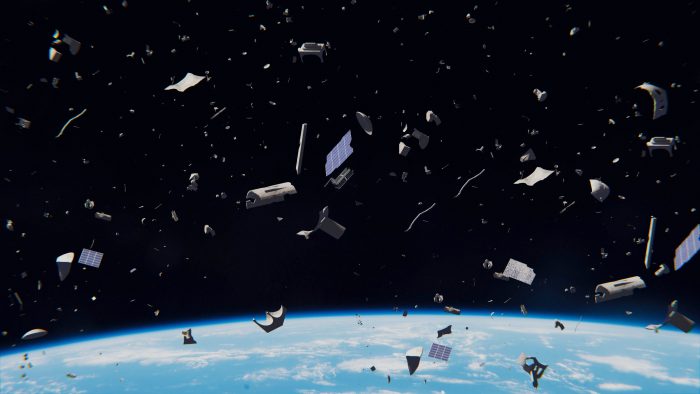
Thousands of satellites orbit the Earth, gathering and distributing vital information for weather monitoring, disaster early warning systems and communications. Recent technological advancements have made it easier and more affordable for countries, companies and even individuals to put satellites into space. Satellites make our lives safer, more convenient and connected, and represent critical infrastructure that is now essential for a functioning society. However, as the number of satellites increases, so does the problem of space debris, which poses a threat to both functioning satellites and the future of our orbit.
Space debris consists of various objects, from minuscule flecks of paint to massive chunks of metal. Out of 34,260 objects tracked in orbit, only around 25 per cent are working satellites while the rest are junk, such as broken satellites or discarded rocket stages. Additionally, there are likely around 130 million pieces of debris too small to be tracked, measuring between 1 mm and 1 cm. Given that these objects travel over 25,000 kilometres per hour, even the smallest debris can cause significant damage. Each piece of debris becomes an obstacle in the orbital “highway”, making it increasingly difficult for functional satellites to avoid collisions.
Key Numbers
8,300 functioning satellites in orbit
34,260 tracked objects in orbit
25,000 kilometres per hour travel speed
The danger is more than just theoretical. In 2009, a collision between a defunct satellite and an active communications satellite created thousands of debris pieces that still orbit Earth today. This debris can impact other objects, such as the International Space Station, which conducts manoeuvres around once per year to avoid such debris. Satellites can be warned of impending collisions; in fact, the European Sentinel-2 satellite registered more than 8,000 alerts between 2015 and 2017. Collision avoidance even between active satellites can also be difficult since agencies often need to communicate and quickly come to agreements. For example, in 2019, a European Space Agency satellite had to perform an emergency manoeuvre to avoid colliding with a communications satellite after an agreement with the operator could not be reached.
More than 100,000 new spacecraft could be launched into orbit by 2030, compared to the approximately 8,000 we have now. As more satellites are launched, the orbit becomes more crowded, increasing the risk of collisions. Each collision creates millions more pieces of debris, which can then collide with other debris or satellites, creating even more shrapnel. Eventually, this will reach a point where one crash sets off a chain reaction, causing our orbit to become so dense with shrapnel that it becomes unusable. The existing space infrastructure would eventually be destroyed and future activities in space could become impossible.
Space is the final frontier, and with countries and companies racing to stake their claim, we must consider what kind of future we want to create. If we continue on the current trajectory, we risk sacrificing Earth’s orbits and the opportunities they offer to society now and in the future. Importantly, we must regulate space launches more strictly and ensure that satellites and other spacecraft are disposed of responsibly, while also investing in technologies for tracking and removing orbital debris. By coming together as a global community to treat Earth’s orbits as a precious common good, we can safeguard our future in space before it is too late. #nuclear #antinuclear #nuclearfree #NoNukes
No comments yet.
1 This Month

of the week – Shut Down Drone Warfare!


Tell the Ukrainian Government to Drop Prosecution of Peace Activist Yurii Sheliazhenko

Petition to revoke the licensing of the Near Surface Nuclear Disposal Facility (NSDF) at Chalk River. https://www.ourcommons.ca/petitions/en/Petition/Details?Petition=e-7247
To see nuclear-related stories in greater depth and intensity – go to https://nuclearinformation.wordpress.com
-
Archives
- April 2026 (114)
- March 2026 (251)
- February 2026 (268)
- January 2026 (308)
- December 2025 (358)
- November 2025 (359)
- October 2025 (376)
- September 2025 (257)
- August 2025 (319)
- July 2025 (230)
- June 2025 (348)
- May 2025 (261)
-
Categories
- 1
- 1 NUCLEAR ISSUES
- business and costs
- climate change
- culture and arts
- ENERGY
- environment
- health
- history
- indigenous issues
- Legal
- marketing of nuclear
- media
- opposition to nuclear
- PERSONAL STORIES
- politics
- politics international
- Religion and ethics
- safety
- secrets,lies and civil liberties
- spinbuster
- technology
- Uranium
- wastes
- weapons and war
- Women
- 2 WORLD
- ACTION
- AFRICA
- Atrocities
- AUSTRALIA
- Christina's notes
- Christina's themes
- culture and arts
- Events
- Fuk 2022
- Fuk 2023
- Fukushima 2017
- Fukushima 2018
- fukushima 2019
- Fukushima 2020
- Fukushima 2021
- general
- global warming
- Humour (God we need it)
- Nuclear
- RARE EARTHS
- Reference
- resources – print
- Resources -audiovicual
- Weekly Newsletter
- World
- World Nuclear
- YouTube
-
RSS
Entries RSS
Comments RSS
 nuclear-news
Leave a comment