Are They Already Cutting Corners on Worker Protection at DOE’s New Plutonium Processing Plant?

plutonium is toxic at the scale of micrograms, deadly at the scale of milligrams, and useable in nuclear weapons of mass destruction at the scale of kilograms. This is why plutonium work requires rigid, intensive safety systems, referred to as “defense in depth,” to protect workers and the surrounding people and landscape; as well as extreme levels of security and material accounting.
CounterPunch, BY DON MONIAK 11 Sept 23
As of this past Labor Day, there are strong indications that future workers at the planned, new Savannah River Plutonium Processing Plant (SRPPF) may face unnecessary, increased risks of exposure to radiological hazards inherent in plutonium toxicity and chemical complexity.
According to an August 3, 2023 letter from the Defense National Facilities Safety Board (DNFSB) to the Department of Energy’s (DOE) National Nuclear Security Agency (NNSA), the SRPPF project leadership team does not consider vital plutonium processing safety equipment as “safety significant controls.”
According to the letter, NNSA’s project leadership team believes a reliance on worker sense of sight, hearing, taste, smell, and touch is sufficient to detect and/or prevent accidents such as plutonium fires and dispersal of plutonium oxide powder.
In the hierarchy of nuclear safety, the Department of Energy standards place “Safety Significant Controls” above administrative controls that are reliant upon the absence of human error.
The motive for SRPPF project team’s preference for administrative controls is unknown.
The New Plutonium Processing Plant.
The plutonium/MOX (Pu/MOX) fuel facility was a massive, multi-billion dollar endeavor designed to help dispose of dozens of tons of surplus nuclear weapons plutonium (Pu). This Savannah River Site(SRS) project was abandoned in the late 2010’s, following a chronic array of technical issues, mismanagement, major cost overruns, cutting of corners, and the lack of commercial Pu/MOX fuel customers.
After the project was abandoned, the Department of Energy’s (DOE) National Nuclear Security Agency (NNSA) decided to repurpose the unfinished facility into a new “plutonium pit”production plant. The Mixed Oxide Fuel Fabrication Facility (MFFF) was then renamed the Savannah River Plutonium Processing Plant (SRPPF). This $11 billion plus repurposed facility is already burdened by cost overruns—-the original estimate was $3.7 billion.
Plutonium pits are referred to as the primary nuclear explosives, or triggers,” (1) that dominate the known U.S. nuclear weapons arsenal. Pits acquired their quaint nickname by virtue of the resemblance of the configuration of high explosives surrounding the primary nuclear explosive to stone fruit like peaches and plums—an example of early nuclear weaponeers’ inside humor.
The Pu pits are pressure vessels with nested shells of material, comprised of other non-nuclear parts, including the metal cladding, welds, a pit tube, neutron tamper(s) and initiator, as well as the usually hollow-cored plutonium hemispheres. In most pit designs, a sealed pit tube carries deuterium-tritium gas into the hollow-core to boost the nuclear explosive power of weapons.
But unlike the sweet, fruity, and and delectable flesh surrounding plum and peach pits, a Pu pit is surrounded by a high explosives package powerful enough to implode the plutonium metal sphere contained in the pit. This is not like compressing a tin can, as plutonium is the most durable of the transuranic heavy metals.
The current plan is to annually produce at least eighty new plutonium pits in the SRPPF. Pit fabrication was once the exclusive task at the long-closed Rocky Flats plant in Colorado, and the work processes constitute the most dirty—in terms of waste production—and dangerous workplace in the national nuclear weapons complex. In this century, Los Alamos National Laboratory (LANL) has failed miserably to reconstitute a tiny fraction of the Rocky Flats pit production rate.
Pit production is unlikely to be the only task at the SRPPF. An estimated ten to twelve-thousand surplus plutonium pits, containing a sum of 30 to 34-metric tonnes of plutonium, could also be processed at a plutonium pit disassembly and conversion line at the SRPPF. The resulting plutonium oxide powder would then be sent to the SRS K-Area’s Pu waste production facility, where the powder is diluted to a three to five percent level within a larger mixture of inert materials………………………….
Some Plutonium Processing Hazards
There is a negligible level of debate that plutonium is toxic at the scale of micrograms, deadly at the scale of milligrams, and useable in nuclear weapons of mass destruction at the scale of kilograms. This is why plutonium work requires rigid, intensive safety systems, referred to as “defense in depth,” to protect workers and the surrounding people and landscape; as well as extreme levels of security and material accounting.
The most hazardous plutonium operations involve plutonium pit fabrication. After pit disassembly, the plutonium within pits is converted to a finely dispersed powder form (2), made up of sticky grains containing energetic alpha particles that easily damage soft lung tissues. Sticky plutonium oxide particles clinging to ductwork can also hinder ventilation systems over time.
Recycling plutonium for pit production then requires difficult and dangerous processes to remove impurities and undesirable decay products such as intensely radioactive Americium-241. (3) The resulting plutonium form is transferred to the next step, the plutonium foundry.
The foundry work involves a complex ten-step process, summarized as melting, casting, and heat treating of plutonium metal. Gallium is added at a one-percent ratio to produce an alloy that is considered almost as easy to machine as aluminum or silver. The risk from explosion, criticality, and spill hazards must be rigidly controlled; while contaminated parts such as crucibles pose unique waste management measures.
The final plutonium processing step is machining the foundry product into a precise sub-critical configuration. Like any machining, Plutonium metal work casts tiny shavings and creates fine dust.
These shavings can ignite upon exposure to air and lead to larger fires that can destroy glove boxes and ventilation systems, and cause large releases of plutonium into the atmosphere. The Rocky Flats experience suggests that fires of any size are not a remote possibility, they are a probability.
The task is to keep Pu metal fires small and nondestructive, while preventing injury and harmful exposures to workers. A small fire can render costly equipment useless. A large fire can lead to a countryside contaminated with particles that become more intensely radioactive for decades.
Extreme care must also be taken to keep plutonium metal in a non-critical configuration at all times. The wrong geometry or placement of metal pieces in the wrong configuration can produce the deadly blue light that signifies criticality accidents. In 2009, a number of Los Alamos criticality engineers walked off the job at the lab’s pit production line, citing a casual approach to criticality safety.
The final step is assembly, where the parts that make pits tick are introduced. The making of these parts pose their own toxic hazards, such as the fine dust from machining beryllium metal.
Those are just several aspects of the safety issues involved with the plutonium pit fabrication.
The True, and False, Necessity for New Pit Fabrication and Production. ……………………………………………………………………………………………………………………………………………………………………………….
The Pit Plant’s Initial Design: One Less Layer of Safety Depth?
Because of all these factors, new pit production is considered essential, and a new, smaller scale—by Cold War Standards—plutonium pit fabrication capacity is presently in the preliminary design phase at the SRPPF complex.
The highest standards of safety are expected to prevent accidents or mitigate the impacts of spills, fires, leaks, and dispersion of fine radioactive dust. A less rigid approach to safety is quite unexpected for a high hazard, hardened nuclear facility that would only be the second its kind in the weapons complex—-the last being the Rocky Flats plant built in the 1950’s.
But according to the August 3, 2023 letter from the Defense Nuclear Facilities Safety Board (DNFSB), the DOE/NNSA’s project leadership team does not consider vital plutonium processing safety equipment as “safety significant controls.”…………………………………………………………………………………………………………………………………………………………………………………………….more https://www.counterpunch.org/2023/09/11/are-they-already-cutting-corners-on-worker-protection-at-does-new-plutonium-processing-plant/
Peace boat’s message is clear: Golden Rule mission urges support for nuclear ban treaty.
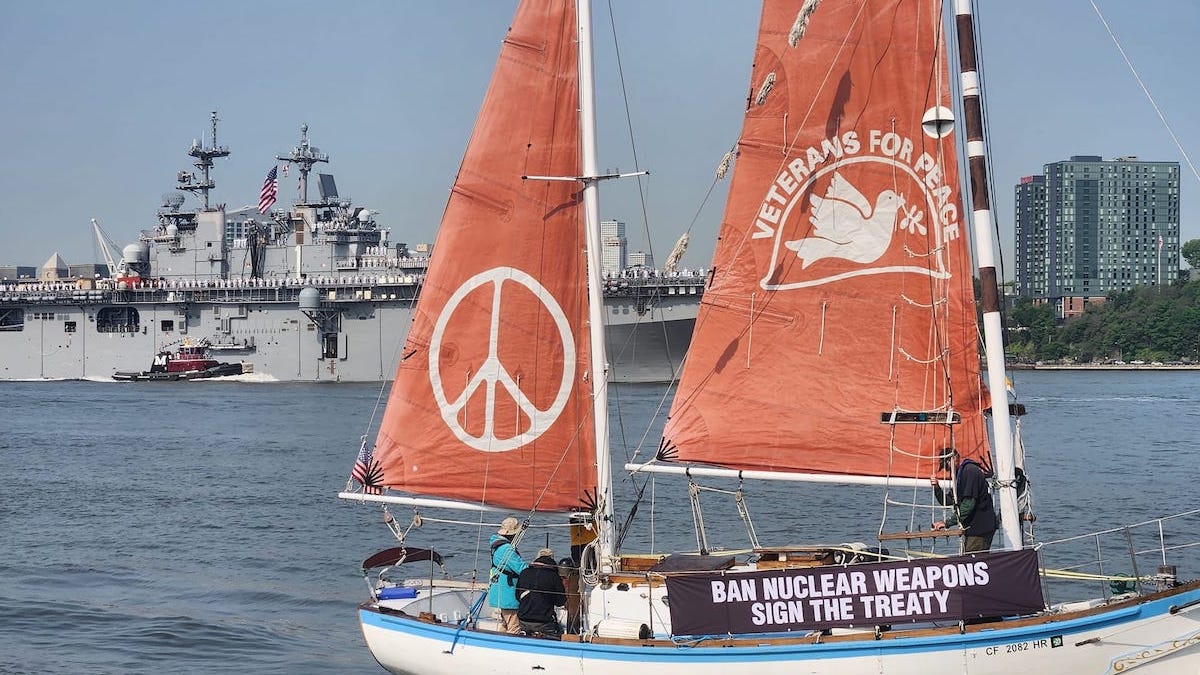
Beyond Nuclear International, 11 Sept 23, By Gerry Condon, President of the Veterans For Peace Golden Rule Project
The Golden Rule anti-nuclear sailboat and her intrepid crew arrived to Chelsea Piers in New York City on May 17 to a wonderful reception, followed by ten days full of amazing events.
Emotional meetings featured family members of the original crew who sailed toward the Marshall Islands in 1958 to interfere with US nuclear bomb tests. A lunch meeting was hosted by Amalgamated Bank, the only US bank that refuses to invest in nuclear weapons. And the historic peace boat made an (uninvited) guest appearance in New York City’s Fleet Week “Parade of (war) Ships.” With its ruddy tan bark sails emblazoned with a peace sign and the logo of Veterans For Peace, the Golden Rule was a jaunty counterpoint to the Navy’s grey display of weapons of mass destruction.
Multiple events were organized daily by Veterans For Peace, the Friends House (Quakers), the War Resisters League, the Catholic Workers (Maryhouse), Pax Christi, the Peoples’ Forum and others. The City Council issued a welcoming proclamation. The Golden Rule also crossed the Hudson River several times to New Jersey for events with environmental activists and Indigenous leaders.
Perhaps most exciting of all were our meetings with United Nations missions from around the world. Mexico’s mission hosted a meeting where Veterans For Peace and the Golden Rule team met with 12 U.N. missions, including New Zealand, Malaysia, Vietnam, Cuba, South Africa, Austria, Indonesia, Ireland, Costa Rica, Kiribati, and the Holy See…………………………..
All but one of the nations represented had signed the U.N. Treaty on the Prohibition of Nuclear Weapons (TPNW), which is a primary focus of the Golden Rule’s educational mission. The meeting ended with pledges to stay in touch and to work together toward the goal of abolishing nuclear weapons, including the upcoming Second States Meeting in New York Nov. 27 through Dec. 1………………………………………………………………………………………………………………. more https://beyondnuclearinternational.org/2023/09/11/peace-boats-message-is-clear/
Global stocktake UN urges radical changes in climate policy plans at Cop28.

The UN has published its first global stocktake of climate pledges and
actions made by governments, stating that there is only a chance of keeping
1.5C alive with ‘radical decarbonisation’ and ‘system transformation’.
Edie 8th Sept 2023 https://www.edie.net/global-stocktake-un-urges-radical-changes-in-climate-policy-plans-at-cop28/
Ukraine war: Kyiv denounces G20 declaration as UN warns of potential nuclear safety threat
By Euronews with AFPPublished on 09/09/2023
G20 declaration on Ukraine: “nothing to be proud of” – Kyiv
Kyiv has criticised the G20 leaders’ statement on the war in Ukraine, in which they denounced the use of force, but neglected to mention Russia…………………………..
The text adopted by the G20 does not explicitly mention Russian “aggression” in Ukraine, a term used in 2022 during the previous G20 summit in Bali…………………. https://www.euronews.com/2023/09/09/ukraine-war-ukrainian-armed-forces-advance-as-zelenskyy-renews-calls-for-foreign-aid
Japan’s Insane Immoral, Illegal Radioactive Dumping
CounterPunch, BY ROBERT HUNZIKER 8 Sept 23

Japan cannot possibly outlive the atrocity of dumping radioactive wastewater into the Pacific Ocean. In fact, Tokyo Electric Power Company (TEPCO) is an example of how nuclear meltdowns negatively impact the entire world, as its toxic wastewater travels across the world in ocean currents. The dumping of stored toxic wastewater from the meltdown in 2011 officially started on August 24th, 2023. Meanwhile, the country restarts some of the nuclear plants that were shut down when the Fukushima Daichi Nuclear Power Plant exploded.
Fukushima’s broken reactors are an example of why nuclear energy is a trap that can’t handle global warming or extreme natural disasters. Nuclear is an accident waiting to happen, for several reasons, including victimization by forces of global warming.
According to Dr. Paul Dorfman, chair of the Nuclear Consulting Group, former secretary to the UK Scientific Advisory Committee on Internal Radiation, and Visiting Fellow, University of Sussex: “It’s important to understand that nuclear is very likely to be a significant climate casualty. For cooling purposes nuclear reactors need to be situated by large bodies of water, etc. …” Essentially, global warming is nuclear energy’s Waterloo; it has already seriously endangered France’s 56 nuclear reactors with partial shutdowns because of extreme global warming. Nuclear reactors cannot survive global warming. See “the nuclear energy trap” link at the end of this article.
TEPCO’s treacherous act of dumping radioactive water into a wide-open ocean is a deliberate violation of human decency, as it clearly violates essential provisions of the International Atomic Energy Agency’s (IAEA) General Safety Guide No. 8 (GSG-8).
Japan should be forced to stop its diabolical exercise of potentially destroying precious life. Shame on the IAEA and shame on the member countries of the G7 for endorsing this travesty. They’ve christened the ocean an “open sewer.” Hark! Come one, come all, dump your trash, open toxic spigots, bring chemicals, bring fertilizers, bring plastic, bring radioactive waste that’s impossible to dispose… the oceans are open sewers. It’s free! Yes, it’s free but only weak-minded people would allow a broken-down crippled nuclear power plant to dump radioactive waste into the world’s ocean. It is a testament to human frailty, weakness, insipience, not courage.
According to Arjun Makhijani, Ph.D. Institute for Energy and Environmental Research, TEPCO’s ALPS-treated Radioactive Water Dumping Plan Violates Essential Provisions of IAEA’s General Safety Guide No. 8 (GSG-8) and Corresponding Requirements in Other IAEA Documents, June 28, 2023: “The IAEA is an important United Nations institution. Like the rest of the Expert Panel, the author of this paper has been reluctant to criticize the IAEA. Yet, its outright refusal to apply its own guidance documents in full measure is stark. Its constricted view of the dumping plan has allowed it to evade its responsibilities to many countries. Its eagerness to assure the public that harm will be “negligible” has been carried to the point of grossly overstating well-known facts about tritium. The serious lapses of the IAEA in the Fukushima radioactive water matter have made criticism unavoidable.”………………………………………………………………………………………………………….
“At high doses, ionizing radiation can cause immediate damage to a person’s body, including, at very high doses, radiation sickness and death. At lower doses, ionizing radiation can cause health effects such as cardiovascular disease and cataracts, as well as cancer. It causes cancer primarily because it damages DNA, which can lead to cancer-causing gene mutations.” (Source: National Cancer Institute)
How is it possible to justify dumping any amount of radioactive wastewater into the Pacific Ocean? Is the world’s consciousness so low, so lacking a moral compass, that it’s okay to dump the most toxic material on the planet into the oceans?
Stop destroying the oceans!
And please contemplate the dire ramifications of the nuclear energy trap. more https://www.counterpunch.org/2023/09/08/japans-insane-immoral-illegal-radioactive-dumping/?fbclid=IwAR0IaIETBoTgZeDUmJ3caeJAlFFWGPrdCtsqt5oR0A7XP8NEl1fKqLJwu54
Robert Hunziker lives in Los Angeles and can be reached at rlhunziker@gmail.com.
Nuclear Free Local Authorities’ plea to new Energy Secretary: ‘Don’t make Sizewell C Suffolk’s nightmare.’
The UK / Ireland Nuclear Free Local Authorities have written to the new Secretary of State for Energy Claire Continho MP asking her not to make Sizewell C ‘Suffolk’s nightmare’.
Ms Continho replaced Grant Shapps after the former Energy Secretary was sent to Defence following the resignation of Ben Wallace. She was only elected to Parliament in December 2019 for the safe Conservative seat of East Surrey and is largely unknown having previously saved in only a very junior ministerial post. With a background in banking, the new Energy Secretary does however have close connections with the Prime Minister having been an advisor and then a parliamentary aide to Rishi Sunak when he was at the Treasury, and a leading figure in Mr Sunak’s leadership campaign team.
Energy represents a massive promotion for Ms Continho, but it is a complex brief. In his letter the Chair of the NFLAs Councillor Lawrence O’Neill outlines why Sizewell C, and indeed the whole new nuclear programme, should not go ahead and urges the Secretary of State to ‘take up the offer made by local campaigners to visit the site and speak to local people about their serious concerns about this costly and foolhardy project’.
The NFLAs are also backing the campaign initiated by Stop Sizewell C to deprive the nuclear monster of private sector investment by lobbying pension funds. In this vein, we have previously contacted pension funds and last month we wrote also to the Chief Executive of Centrica, a previous commercial investor in nuclear plants, asking him to refrain from backing the project.
With recent unwelcome news of a further £300 million of government funding being awarded for preparatory works at Sizewell C, the campaign feels that ‘it is time to scale up’ the pensions campaign and is asking for public support. A bespoke platform has been developed featuring almost 70 pension funds, www.stopsizewellc.org/goodpension which is now backed by a short animated video voiced by Fiona Turnbull https://drive.google.com/file/d/1LjV_WbyWkUsGf7ClwPuinU_Dq_sY7NZ9/edit .
Stop Sizewell C is asking campaign supporters who make pension contributions or receive pensions to write to their fund managers urging them NOT to invest in Sizewell C. However, the most pressing priority is to expand the reach of the campaign so Stop Sizewell C is asking supporters to raise awareness of it by sharing the links on their social media accounts.
The links to the latest pensions campaign post are:
Twitter/X – https://twitter.com/StopSizewellC/status/1699788799654637820?s=20
Instagram – https://www.instagram.com/reel/Cw5KbW6s6wq/
Facebook – https://fb.watch/mVA8OdaiP7/
LinkedIn – https://www.linkedin.com/feed/update/urn:li:activity:7105240738447114240
Councillor O’Neill added: “Sizewell C can be seen as many-headed like the mythical hydra; many of the heads represent a possible financial investment. It we can cut off the heads we can kill the monster!”
1000 Sellafield Ltd. contractors to be balloted for strike by Unite
AROUND 1,000 contractors at Sellafield are being balloted for potential
strike action, after Unite have criticised an ‘unacceptable offer’ from
management. More than 3,000 engineering construction workers nationally,
operating under the National Agreement for Engineering Construction
Industry (NAECI), are being balloted for strike action overpay, Unite, the
UK’s leading union, said on Thursday, September 7. This includes about
1,000 Sellafield Ltd. contractors who the union say conduct critical repair
and maintenance at the site.
Whitehaven News 10th Sept 2023
“A world free from nuclear weapons is possible”
World Council 0f Churches, 11 Sept 23
Peter Prove, director of the World Council of Churches Commission of the Churches on International Affairs, spoke on a nuclear weapons-free world during “The Audacity of Peace” gathering in Berlin.
Prove, part of a panel discussion, noted that a world free from nuclear weapons is not just possible—but necessary, and he endorsed the comprehensive approach of the Treaty on the Prohibition of Nuclear Weapons as a legal means to achieve this goal.
“Nuclear weapons are the most indiscriminately and catastrophically destructive category of weapons ever created by human beings,” Prove said. “They are designed to destroy entire cities, along with everyone and everything in them, and their use poisons the environment for thousands upon thousands of years.”
Prove also noted that the World Council of Churches has also adopted a position of categorical opposition to nuclear weapons since its founding in 1948.
“The WCC has continued to call for the complete elimination of nuclear weapons since that time, through its governing bodies, functional commissions, and member churches,” he said. “While the absolute number of nuclear weapons has declined since its height during the Cold War, it only amounts to a reduction in the number of times that the world’s population centres could be destroyed.”…………………………more https://www.oikoumene.org/news/a-world-free-from-nuclear-weapons-is-possible
Pakistan nuclear weapons, 2023
Bulletin, By Hans M. Kristensen, Matt Korda, Eliana Johns, September 11, 2023
Pakistan continues to gradually expand its nuclear arsenal with more warheads, more delivery systems, and a growing fissile material production industry. Analysis of commercial satellite images of construction at Pakistani army garrisons and air force bases shows what appear to be newer launchers and facilities that might be related to Pakistan’s nuclear forces.
We estimate that Pakistan now has a nuclear weapons stockpile of approximately 170 warheads (See Table 1 on original). The US Defense Intelligence Agency projected in 1999 that Pakistan would have 60 to 80 warheads by 2020 (US Defense Intelligence Agency 1999, 38), but several new weapon systems have been fielded and developed since then, which leads us to a higher estimate. Our estimate comes with considerable uncertainty because neither Pakistan nor other countries publish much information about the Pakistani nuclear arsenal.
With several new delivery systems in development, four plutonium production reactors, and an expanding uranium enrichment infrastructure, Pakistan’s stockpile has the potential to increase further over the next several years. The size of this projected increase will depend on several factors, including how many nuclear-capable launchers Pakistan plans to deploy, how its nuclear strategy evolves, and how much the Indian nuclear arsenal grows. We estimate that the country’s stockpile could potentially grow to around 200 warheads by the late 2020s, at the current growth rate. But unless India significantly expands its arsenal or further builds up its conventional forces, it seems reasonable to expect that Pakistan’s nuclear arsenal will not continue to grow indefinitely but might begin to level off as its current weapons programs are completed…………………………………………………………………………………………………………………………………………………………………………………………………………………..more https://thebulletin.org/premium/2023-09/pakistan-nuclear-weapons-2023/
Ukraine’s defeat could mean the end of NATO in its current form
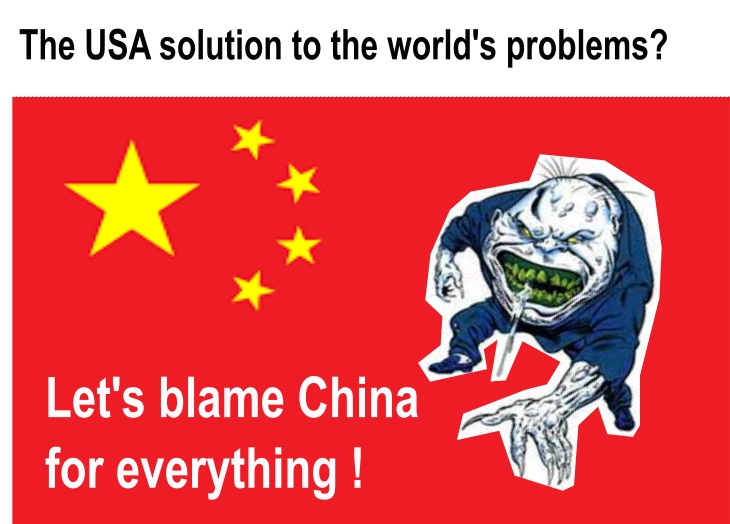
The ‘shift focus to another enemy’ narrative is the simplest and most obvious – that will be China. NATO is already trying to expand its influence in Asia, including via a planned ‘liaison office’ in Japan. The ‘China is the real threat’ narrative is bubbling steadily to the surface in Western media.
The bloc has too much riding on Kiev’s highly-unlikely success, and that’s why it’s doing all it can to prolong the conflict
By Chay Bowes, journalist and geopolitical analyst, MA in Strategic Studies, RT correspondent
As the West’s proxy war in Ukraine slips inexorably towards utter failure, the neocons behind the debacle are faced with dwindling avenues of retreat.
Early confidence that Russia, in its current form, would collapse under the pressure of the harshest sanctions regime in history failed to materialize. Early Russian miscalculations on the battlefield were not followed by a military meltdown, but by a pragmatic display of strategic adaptability, which is begrudgingly admired in the military war rooms of the West. The Russian army, far from falling apart, has steeled itself into making bold decisions to retreat when prudent and advance when required, both of which have proven devastating for their Ukrainian opponents. It follows that, as the Western political elites that cultivated this conflict peer into another winter of political, military, and potentially economic discontent, it is now that we potentially face the most dangerous period in Europe since the outbreak of WWII.
The catalyst for a wider war in Europe isn’t, in fact, a limited conflict in Ukraine in itself, one that started in 2014 and, notably, had been largely ignored by Western powers for almost a decade. The real issue is that NATO, which is currently engaged in a proxy War with Russia, is facing a ‘damned if you do and damned if you don’t’ scenario regarding its growing military involvement in Ukraine. If the US-led bloc escalates further as defeat looms, it could likely lead to direct confrontation with Russia. If it doesn’t, its proxy will collapse and leave Russia victorious, a fate once utterly unthinkable in Brussels, Washington, and London, but now becoming a nightmarish reality.
Such a defeat would be devastating and potentially terminal for the prestige and reputation of the whole NATO brand. After all, despite the Soviet Union having long ceased to exist, the bloc still markets itself as an indispensable bulwark against imagined Russian expansionism. In the event of an increasingly likely Ukrainian defeat, that ‘essential partner’ in ‘countering Russia’ will have been proven utterly impotent and largely irrelevant. More cynically, the vast US arms industry would also be denied a huge and lucrative market. So, how does a multi billion-dollar machine that has prophesied absolute victory against Russia even begin to contemplate defeat? And how do senior EU bureaucrats like Ursula Von der Leyen climb down from their quasi-religious devotion to the ‘cause’ of utterly defeating Russia, which she has shamelessly evangelized for over a year and a half? Lastly, how does the American administration, which has gone politically, morally, and economically ‘all in’ against Russia in Ukraine, contemplate what amounts to an increasingly inevitable European version of Afghanistan 2.0?
They will need to do two things: Firstly, find someone to blame for their defeat and secondly, find a new enemy to deflect public opinion onto. The ‘someone to blame’ will be quite easy to identify – the narrative will be flush with attacks on states like Hungary, China, and to some extent India, who will be accused of “undermining the unified effort needed to isolate and defeat Russia.”
Blaming Ukraine itself will also be central to this narrative. Western media will insure it’s singled out as incapable of ‘taking the medicine’ proffered by NATO and therefore suffering the consequences, not listening to Western military advice, failing to utilize Western aid correctly and, of course – given that little has been done by Zelensky to tackle the endemic corruption in Ukraine – this fact will be easily weaponized against him and used to lubricate a slick narrative of ‘we tried to help them, but they simply couldn’t be saved from themselves’.
The ‘shift focus to another enemy’ narrative is the simplest and most obvious – that will be China. NATO is already trying to expand its influence in Asia, including via a planned ‘liaison office’ in Japan. The ‘China is the real threat’ narrative is bubbling steadily to the surface in Western media.
And, most worryingly, should Western powers fail to make their case for ‘plausible deniability’ around the culpability for this war, there is always the option of further escalating it. Such an escalation could rapidly lead to direct confrontation between NATO and Russia, an outcome no lucid observer on either side of the debate could or should be contemplating. The problem is, rational assessment and negotiation seem to have become so rare in Washington and Kiev that a devastating escalation could, quite remarkably, be considered an option by the deluded neocon think-tank advisers wielding disproportionate influence over an increasingly desperate political class in Washington and Brussels. In the event that NATO does indeed sanction a direct intervention into Ukraine, it will, of course, be justified as a ‘peacekeeping’ or humanitarian intervention by Polish or Romanian troops, but the categorization of the ‘mission’ will become gloriously irrelevant when the first clashes with Russian forces occur, followed by a potentially rapid spiral into all-out war between Russia and NATO.
It could be argued that the process to disassociate from Ukraine has already started, beginning with the embarrassment Zelensky faced at the recent NATO summit and progressing with the open spats between Western ‘partners’ over whether to give Ukraine ever deadlier weapons to essentially insure its self-destruction.
From here on out one thing is abundantly clear, nothing will happen by accident when it comes to the EU and NATO’s interaction with the Zelensky regime. Whatever comes next may need to be spun both ways, to either pull out or to escalate. A case in point is the blame game being openly acted out around the obvious failure of Ukraine’s counteroffensive, with open finger-pointing in the Western media by Ukrainian officials like the ambassador to Germany, Aleksey Makeev. Kiev’s top man in Germany recently blamed the West for the bloody failure of the ill-fated project, suggesting it was solely due to European and American delays in shipping weapons and cash to Kiev. According to the ambassador, it was this Western failure that apparently allowed the Russians to build their defenses in eastern Ukraine, where tens of thousands of unfortunate Ukrainian conscripts have met their fate in the past three months.
In the real world, the counteroffensive, which has now become a slow-motion calamity, had been telegraphed to the Russians and the wider world for almost a year and will surely be recalled as one of the greatest military misadventures in history. The fact that the Ukrainian regime openly advertised its intentions, even loudly pointing out the avenue of assault and strategic goals, is conveniently ignored by the likes of Makeev. It now seems apparent that Kiev believed that its overt saber-rattling would stimulate faster and larger weapons shipments from its increasingly concerned partners – it didn’t, and by the time those very same sponsors’ patience ran out with Kiev’s lack of progress on the battlefield, it was glaringly obvious any offensive against long-prepared Russian defenses was doomed to fail. Yet, because of Kiev’s PR need and demands from Western political elites, the counteroffensive began, wiping out entire battalions of Ukrainian troops and burning through a huge portion of the Western heavy weapons previously provided.
The situation evokes a kind of tragic romantic folly, with Ukraine desperate to woo NATO and the EU to the point of suicide, NATO and the EU playing the aloof lover; never having really considered marriage but willing to allow its admirer to throw itself onto the spears of the real object of their attention – Russia. Of course, the real concern now preoccupying the EU-NATO cabal is how to survive this tawdry affair and move on. While the hapless Jens Stoltenberg would have us believe NATO has never been stronger, the reality is far less rosy for the ‘defensive alliance’ that has bombed its way across Europe and the Middle East, and now seeks to expand to the Pacific. The reality is that the Ukraine conflict could destroy NATO. It has become something of a modern day League of Nations, adept at admonishing small fish, but utterly incapable of standing toe to toe with any peer adversary, a failed political institution, posing as a military alliance, that in reality would collapse in the face of a direct challenge from either Russia or China. Of course, it seems that NATO has also willfully fallen under the spell of its own propaganda.
The big question now is whether the bloc would in reality contemplate a direct confrontation with Russia in Ukraine? Or will the Western political elites who built the scaffold the Ukrainian conflict is now blazing on choose to reverse through blame or escalate through desperation?
One thing is indisputable: The fate of NATO and its credibility as a ‘defensive alliance’ is irrevocably intertwined with the outcome of the Ukrainian conflict, yet because NATO is, in reality, a political rather than military institution, these crucial issues will never be debated openly, as the answers would be akin to a priest announcing the nonexistence of God from the pulpit.
USA & NATO responsible for Ukraine war, German & French public say in poll
Most people in Germany and France blame the United States and/or NATO for the war in Ukraine, according to a poll conducted not by a pro-Russian group but rather by anti-Putin activists.
BEN NORTON, SEP 10, 2023, Geopolitical Economy Report
Original shows tables of poll results.
Most people in Germany and France blame the United States or NATO for the war in Ukraine, according to a poll conducted not by a pro-Russian group but rather by anti-Putin activists.
This public opinion is unlikely to have a significant impact on government policy, however.
Germany’s Foreign Minister Annalena Baerbock stated bluntly in a NATO-funded conference in 2022 that Berlin would support Ukraine “no matter what my German voters think”.
In the German poll, respondents were only allowed to pick one answer. In France, the poll was a bit different, and people could blame multiple parties for starting the war in Ukraine. (This explains why the sum of the latter poll is greater than 100%.)
Among the French surveyed, 43% blamed the USA, 36% NATO, 19% Ukraine, and 19% other European countries, while 40% blamed Putin.
These results suggest that many average Europeans can see clearly that the conflict in Ukraine is not merely a battle between Kiev and Moscow, but rather a proxy war that the NATO military alliance, led by the United States, is waging against Russia.
The outcome of these polls is even more striking when one considers who sponsored them.
The so-called “Anti-Corruption Foundation” was founded by Russian opposition politician Alexei Navalny, a regime-change activist who is openly supported by Western governments…………………………………………………………………………………………….more https://geopoliticaleconomy.substack.com/p/us-nato-responsible-ukraine-war-poll?r=nxsz
IAEA warns of nuclear safety threat as combat spikes near Ukraine nuclear power plant

The United Nations atomic watchdog warned of a potential threat to nuclear
safety from a spike in fighting near Europe’s largest nuclear power plant
in Ukraine, whose forces continued pressing their counteroffensive on
Saturday. The International Atomic Energy Agency said its experts deployed
at the Russia-occupied Zaporizhzhia Nuclear Power Plant reported hearing
numerous explosions over the past week, in a possible indication of
increased military activity in the region. There was no damage to the
plant.
PBS 9th Sept 2023
Ukrainian Dissident Resists NATO’s Proxy War
September 10, 2023, By Max Blumenthal / YouTube
Ukrainian journalist and exiled antiwar dissident Ruslan Kostaba has been jailed and brutally attacked for his years of opposition to his government’s war in the Donbas, and his calls for peace with Russia. From exile, he speaks to The Grayzone’s Max Blumenthal about the growing movement in Ukraine against escalating the war, and the price his countrymen face for attempting to escape the war.
Comment. Kalen
Thanks for the first on SP post about peace activism in Ukraine although it is very diverse with many angles and ideologies. Most of them acquired legitimacy many years ago when they did what real peace peace movements must do namely tried to promote peace like Minsk agreements and prevent wars not freezing them. They failed among other things because their voice was suppressed in the western peace movements that actually fueled the war. Now Ukrainians for peace and that also includes non-pacifists are appalled by Ukraine being used by NATO as bloody battlefield to preserve US hegemony over Eurasia.
The western peace movements’ silence and betrayal of gruesome fate of thousands of Ukrainian peace activists exiled, hundreds murdered and imprisoned by Kiev regime while protesting eight years of Donbas war against civilians, Kiev escalation of war financed by US and in last 18 months calling for peace talks with Russia is one of darkest chapters of western peace movements already tarnished by adopting nonsense of just wars and humanitarian killings.
The old western anti war movements are all dead, some act like war craving zombies. They burned to ashes. There is nothing to resurrect as they were always fundamentally wrong and morally highly ambiguous as long as they were judging foreign societies they had no idea about pushing supposedly universal superiority of western liberalism they were themselves clueless about. As a result they often externally fueled conflicts, prevented any solutions of social peace to be achieved by local communities’ cooperation free of dogmatic political or religious influences.
UK / ‘No Easy Options’ For Disposal Of Plutonium Stockpile, Says Report

“simpler and cheaper to consider it a waste material alongside the other legacies from the nuclear industry, and safely dispose of it.”
NUCNET, bBy David Dalton, 6 September 2023
There are no easy options when it comes to the “unavoidably complex” task of managing the UK’s plutonium stockpile, but more research, development and innovation is needed to underpin any decision, a report says.
The report, prepared by the Dalton Nuclear Institute at Manchester University, calls for a national dialogue led by “trusted voices” and based on a clear view of the government’s thinking of the role, if any, plutonium might play in meeting future UK energy needs.
The stockpile could be used as fuel for existing or future thermal reactors. It could also be combined with the UK’s 100,000 tonne supply of depleted, natural and low-enriched uranium to fuel new fast reactors, which has the potential to power the UK for centuries. Both options could lead to the reduction of the UK’s nuclear legacy burden.
Another option is to dispose of the stockpile in the planned UK deep geological repository.
Professor Clint Sharrad, acting director of the Dalton Nuclear Institute, said while this all sounds promising, successfully delivering such outcomes would take time, money, organisation, and commitment.
The Nuclear Decommissioning Authority, a government body, is in the process of repackaging the plutonium stocks, stored at Sellafield in northwest England, into more robust containment.
“Being wary of the current global political and economic climate, it may be that extracting the energy from UK plutonium in the not-too-distant future becomes unnecessarily expensive and political barriers may be too difficult to overcome,” Prof Sharrad said.
“Therefore, it might be simpler and cheaper to consider it a waste material alongside the other legacies from the nuclear industry, and safely dispose of it.”
The stockpile originates from reprocessing spent fuel from the UK’s reactor fleets, plus some material derived from outside the UK….. https://www.nucnet.org/news/no-easy-options-for-disposal-of-uranium-stockpile-says-report-9-3-2023
Australia’s Navy Pursues Nuclear Submarines and AI-Powered Ghost Sharks

the potential for AI-driven robots to make lethal decisions independently,
https://www.gktoday.in/australias-navy-pursues-nuclear-submarines-and-ai-powered-ghost-sharks 10 Sept 23
Australia’s Navy is adopting two contrasting approaches to advanced submarine technology to address the challenges posed by a rising China. On one hand, Australia is investing in a costly and slow project to acquire up to 13 nuclear-powered attack submarines. On the other hand, Australia is rapidly developing AI-powered unmanned submarines called “Ghost Sharks,” AI-powered subs will be delivered in the near future, offering a cost-effective and swift solution to enhance naval capabilities. The divergent approaches highlight the transformative impact of automation and AI on modern warfare.
How do the cost and delivery timelines of the nuclear submarines and Ghost Sharks differ?
The nuclear submarines are estimated to cost over AUD$28 billion each and will not be delivered until well past the middle of the century. In contrast, Ghost Sharks have a per-unit cost of just over AUD$23 million and will be delivered by mid-2025.
Significance of the Ghost Shark project
The Ghost Shark project illustrates the transformative impact of automation and AI on modern warfare, offering a cost-effective and swift solution to enhance naval capabilities. Such AI-powered unmanned submarines can operate autonomously, descend to greater depths, and be deployed in large numbers without risking human lives. They offer increased flexibility, cost-effectiveness, and the ability to perform maneuvers that might be impossible for crewed submarines.
Link to Geopolitical Challenges?
Australia’s investments in advanced submarine technology are linked to the geopolitical challenges posed by a rising China in the Asia-Pacific region. These developments are part of efforts to maintain military capabilities and respond to regional security concerns.
nfluence of AI
AI technology is influencing the development of various military capabilities, including autonomous weapons, fighter drones, swarming aerial drones, and ground combat vehicles. AI is also playing a role in data analysis and decision support for military commanders.
The AI technology arms race has high stakes in terms of military dominance and geopolitical influence. Winning the race could reshape the global political and economic order, with potential consequences for peace and stability in the Asia-Pacific region.
Challenges of AI
Challenges and concerns include the potential for AI-driven robots to make lethal decisions independently, the need for regulation related to the military application of AI, and the ethical considerations of using AI in warfare, including the targeting of combatants and non-combatants.
Private Sector’s Role
Private companies like Anduril are actively involved in developing AI-powered military technologies. They are contributing to the development of autonomous systems, sensor fusion, computer vision, edge computing, and AI, with applications in various defense domains, including submarines, drones, and counter-drone systems.
1 This Month
23 April – WEBINAR – Why new nuclear reactors are the wrong tools for decarbonization Thursday, April 23 • 1 AM – 2 AM AEST
World Nuclear Power. Reactors 1951-2026, 75 Years of Nuclear Power.
Interactive Map– https://dv.worldnuclearreport.org/

Chernobyl: The Lost Tapes – A good documentary on Chernobyl on SBS available On Demand for the next 3 weeks– https://www.sbs.com.au/ondemand/tv-program/chernobyl-the-lost-tapes/2352741955560

of the week–London Campaign for Nuclear Disarmament

Tell the Ukrainian Government to Drop Prosecution of Peace Activist Yurii Sheliazhenko
To see nuclear-related stories in greater depth and intensity – go to https://nuclearinformation.wordpress.com
-
Archives
- April 2026 (220)
- March 2026 (251)
- February 2026 (268)
- January 2026 (308)
- December 2025 (358)
- November 2025 (359)
- October 2025 (376)
- September 2025 (257)
- August 2025 (319)
- July 2025 (230)
- June 2025 (348)
- May 2025 (261)
-
Categories
- 1
- 1 NUCLEAR ISSUES
- business and costs
- climate change
- culture and arts
- ENERGY
- environment
- health
- history
- indigenous issues
- Legal
- marketing of nuclear
- media
- opposition to nuclear
- PERSONAL STORIES
- politics
- politics international
- Religion and ethics
- safety
- secrets,lies and civil liberties
- spinbuster
- technology
- Uranium
- wastes
- weapons and war
- Women
- 2 WORLD
- ACTION
- AFRICA
- Atrocities
- AUSTRALIA
- Christina's notes
- Christina's themes
- culture and arts
- Events
- Fuk 2022
- Fuk 2023
- Fukushima 2017
- Fukushima 2018
- fukushima 2019
- Fukushima 2020
- Fukushima 2021
- general
- global warming
- Humour (God we need it)
- Nuclear
- RARE EARTHS
- Reference
- resources – print
- Resources -audiovicual
- Weekly Newsletter
- World
- World Nuclear
- YouTube
-
RSS
Entries RSS
Comments RSS
 nuclear-news