It’s Time to Admit the Truth About the War in Ukraine—and Course Correct
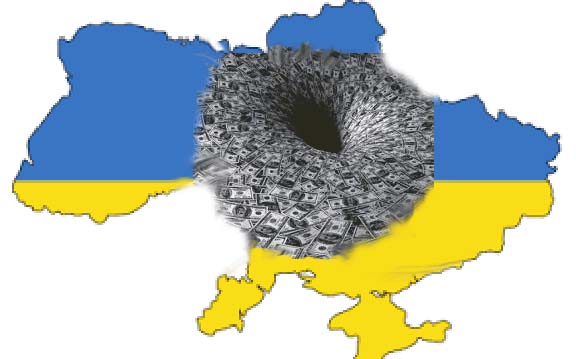
If it wasn’t clear to Washington before the offensive started that the fundamentals of combat operations and principles of war indicated Ukraine would likely fail, it should now be crystal clear.
DANIEL L. DAVIS , SENIOR FELLOW, DEFENSE PRIORITIES ON 9/18/23 https://www.newsweek.com/we-can-no-longer-hide-truth-about-russia-ukraine-war-opinion-1826532?amp=1
As leading American politicians, generals, and pundits continue advocating for open-ended support to Kyiv in their war against Russia, a sober, accurate analysis of Ukraine’s nearly completed summer offensive reveals that the heroic sacrifice Ukraine continues to make is producing little to no meaningful progress toward the objective of evicting Russia from Ukraine’s territory.
Washington should instead employ a necessary course correction and form a new policy, based on the harsh, ground-truth combat realities in Ukraine. Revising the objectives would give Washington and Kyiv a chance to preserve Ukrainian lives and American interests.
Washington’s current policies do neither.
Despite great hopes for a rapid success, Ukraine’s months-in-the-making offensive has sputtered from the outset. That shouldn’t have surprised anyone in the White House. On April 5, two months before the start of the offensive, I wrote that “Zelensky’s troops—with little to no air power and a dearth in artillery ammunition—could suffer egregious casualties while gaining little.”
Five days later, The Washington Post revealed the contents of a leaked Top Secret U.S. intelligence assessment which likewise predicted the Ukrainian offensive would probably fall “well short” of expectations, and that “enduring Ukrainian deficiencies in training and munitions supplies probably will strain progress and exacerbate casualties during the offensive.” Total Ukrainian deaths in the war at that point were estimated to be as low as 17,500.
About a month before the start of the offensive, I again warned that the odds were stacked heavily against Kyiv. To succeed, I explained, Ukraine would “have to conduct the most difficult task in modern land warfare: a combined arms operation into the teeth of a dug-in enemy force that is prepared for an attack,” complicated by the shortage of artillery ammunition along with “limited airpower and minimal air defense.” Nevertheless, on the eve of battle, some Western analysts remained optimistic.
Once the offensive began on June 5, however, that optimism quickly evaporated. In the first two weeks of the fighting, Ukraine’s spearhead brigades suffered massive losses in armor and personnel while capturing virtually no territory. By the end of the third week, they had lost an estimated fifth of their strike force, requiring Ukraine to dramatically change tactics. Instead of leading with tanks and other armored vehicles (which were predictably getting chewed up in minefields and by Russian anti-tank missiles and artillery shells), Ukraine moved to an infantry-centric attack system.
While this change did result in producing incremental gains, the cost was exorbitant. On Aug. 29, the BBC reported that new leaked reports suggested Ukrainian battle deaths exploded since the offensive started. Whereas Ukraine was reported to have lost 17,500 troops in the first year of the war, it is presently assessed to have lost a breathtakingly high 50,000 additional deaths, for a total of 70,000 dead and 120,000 wounded.
If it wasn’t clear to Washington before the offensive started that the fundamentals of combat operations and principles of war indicated Ukraine would likely fail, it should now be crystal clear. Although Ukraine appears to have finally penetrated the first line of Russia’s main defense, the most difficult part of Russia’s defensive system has yet to be overcome: the hundreds of kilometers of dragon’s teeth, tank ditches, and yet more vast minefields.
It is unclear at this point whether Ukraine has enough striking power remaining in its offensive forces to reach, much less penetrate, Russia’s second main line—beyond which is a third main line followed by a fortress-defense at Tokmak, which is still 75 road kilometers from the Azov coast. Given these realities, the best Ukraine can likely do for the rest of the year is to hold what they have and prevent the possibility of losing more territory to a potential Russian counteroffensive this fall.
The United States, however, would be wise to adjust its policies to reflect the reality of Ukraine’s slim chances against Russia’s fortified lines. Washington has spent nearly $113 billion over the course of this war, provided Ukraine with an astounding volume of modern arms and ammunition, and delivered an impressive array of training and intelligence support. After almost a year of preparation, it hardly dented the Russian lines.
There is no realistic basis, therefore, to believe that Ukraine has the capacity to attain its stated strategic objective to reclaim all its territory, including Crimea. What is realistic is to continue providing Kyiv with the military wherewithal to defend itself from further Russian incursions. This goal should be combined with shifting an increasing percentage of the burden for additional arms and ammunition to our rich European friends. The U.S. should continue to ensure the war does not expand beyond the borders of Ukraine, and increase diplomatic efforts with all relevant parties to end the war on the best terms possible for Kyiv—all of which are beneficial to American interests.
Rather than repeating over the next year and a half what has already not worked—potentially costing Ukraine yet additional hundreds of thousands of losses—it’s time to try something that has a chance to succeed. In other words, it’s time to acknowledge objective reality and employ policies that can work.
Daniel L. Davis is a senior fellow for Defense Priorities and a former lieutenant colonel in the U.S. Army who deployed into combat zones four times. He is the author of The Eleventh Hour in 2020 America. Follow him @DanielLDavis1
France’s nuclear power sector is not delivering

Euractiv, By Philippe Girard, Sep 26, 2023
The dominant player in France’s energy sector, Electricité de France (EDF), must leave room for smaller energy providers who offer an innovative alternative to the national nuclear energy champion model, writes Philippe Girard.
Philippe Girard is CEO of E-Pango and an expert in energy and electricity markets.
As the International Energy Agency has recently warned, Europe could face a very difficult winter this year despite coping impressively with the challenges of sky-high natural gas prices that followed Russia’s full-scale invasion of Ukraine.
Surprisingly, France needs to prepare to face another energy crisis this winter.
France’s nuclear energy sector has been hailed as the best in Europe, if not the world, for decades. France’s once robust nuclear sector, responsible for 70% of its energy production, should have positioned the country as a dominant force in Europe’s energy landscape.
However, in 2022, France was forced to import electricity from Germany, Spain and the UK when a significant proportion of France’s nuclear reactors had to close for unscheduled maintenance. How did this happen?
Many analysts attribute France’s current energy crisis to a combination of external factors such as the COVID-19 pandemic, climate change, inconsistent government policies and plain bad luck. Yet, pinning this crisis on these factors alone would be a mistake.
The story behind France’s energy sector turmoil is intimately linked to the machine behind it all, Electricité de France (EDF), the state-controlled energy company. Years of poor decision-making and mismanagement have eroded the country’s nuclear advantage, resulting in France importing energy rather than exporting it……………………………………………………………………….
In a landscape dominated by EDF, its responsibility must be questioned. By the end of 2022, EDF’s debts had reached a staggering €64.5 billion, making it one of the most heavily indebted companies globally. The full acquisition of EDF by the French State in 2023 was crucial for the company’s survival. Presently, the French government needs to boost EDF’s revenues without imposing higher electricity expenses on consumers. At the same time, it must navigate the delicate path of avoiding prosecution by the European Commission for potential infringements related to illegal state aid and distortion of competition.
The importance of preventing one dominant player from having a quasi-monopoly on non-intermittent capacity cannot be understated. In the case of EDF, it has negatively impacted the European and UK electricity markets.
Considering the turmoil caused by EDF and its place within the French energy ecosystem, ending EDF’s monopoly on the energy sector by diversifying energy providers and embracing innovation should be the way forward. Smaller energy providers offer an innovative alternative to the national champion model.
Consumers will have much to gain from introducing competition in France’s electricity market. https://www.euractiv.com/section/energy-environment/opinion/frances-nuclear-power-sector-is-not-delivering/
Microsoft Is Using a Hell of a Lot of Water to Flood the World With AI
Angely Mercado, September 12, 2023 https://gizmodo.com.au/2023/09/microsoft-is-using-a-hell-of-a-lot-of-water-to-flood-the-world-with-ai/
—
As artificial intelligence is increasingly developing and data centres are erected to further this tech, it’s becoming clear that AI has a water usage problem.
Microsoft’s latest sustainability report revealed that the software giant’s water usage saw a tremendous spike between 2021 and 2022. In 2021, the company used up 4,772,890 cubic meters of water. In 2022 that went up to 6,399,415—which is around a 30 percent increase from one year to the next. That’s almost 1.7 billion gallons of water in just one year, which is enough to fill more than 2,000 Olympic-sized swimming pools.
Why did Microsoft draw so much freaking water? Data centres that run AI supercomputers are hot. Equipment heats up, and if a centre overheats, those computers can shut down. The increase in water use is directly tied to the company’s investment and development of AI. Microsoft has backed OpenAI, which has a data centre in Des Moines, Iowa. During the summer months, the centre has to use a ton of water to keep equipment cool, especially as Iowa experiences rising temperatures due to climate change.
The water is drawn from nearby watersheds including the Des Moines and Raccoon rivers to cool the supercomputer that develops AI systems, the Associated Press reported. However, local waterways also provide drinking water for nearby communities. The volume used by the data centres has become a concern for the local utility company, West Des Moines Water Works.
A document from the utility dated April 2022 outlined that officials and the utility will only “consider future data centre projects beyond Microsoft Data Center Project Ginger East and West” unless the new projects can significantly lower their water usage. “This approach to resource conservation will help preserve the water supply for current and future commercial and residential needs of West Des Moines,” the document read.
Google, another tech giant that has heavily invested in AI products, has also seen a spike in water usage. An environmental report released this July outlined that the company’s water usage increased about 20% from 2021 to 2022. “We’re working to address the impact of our water consumption through our climate-conscious data centre cooling approach and water stewardship strategy,” a spokesperson told Gizmodo in an email this July.
As the planet becomes warmer, it may become harder for large tech companies to cool facilities. Many data centres are in cooler locations like the Pacific Northwest and states like Iowa in the upper Midwest, but neither location has been spared from heat waves.
Other tech companies have experienced challenges with keeping their centres online during especially hot weather. Last September, equipment at then Twitter’s data centre in Sacramento shut down during a heat wave. Increased instances of heat waves due to the climate crisis have also plagued data centres overseas. Last July, Google and Oracle’s London-based data centres went offline as England baked through sky-high temperatures of over 40 degrees Celsius.
Microsoft May Go Nuclear to Support Its Energy-Hungry AI.

powering that AI is extraordinarily costly, even more so than its other cloud-based products. Microsoft’s latest sustainability report noted that the company’s water consumption has increased 30% year over year in order to keep its AI supercomputers cool.
Kyle Barr, September 28, 2023 https://gizmodo.com.au/2023/09/microsoft-may-go-nuclear-to-support-its-energy-hungry-ai/
Artificial intelligence has proved a costly endeavour—well, yes, in terms of money, but AI requires massive amounts of energy, and water consumption to operate at scale. That hasn’t stopped big tech companies such as Google and Microsoft from putting that energy-hungry AI into practically every single one of their user and enterprise end-products. Big daddy Microsoft has been trying to keep its (OpenAI-assisted) lead in the AI rat race, and it may need to grab the fuel rod by both hands if it wants to continue its big AI ambitions.
And when we say fuel rod, we mean it literally. Microsoft put out calls for a program manager on “Nuclear Technology” on Monday. As first reported by CNBC, The job specifically mentions that this new initiative would use “microreactors” and “Small Modular Reactors” to power the data centres used by Microsoft Cloud and AI. Whatever it is, the scope for Microsoft’s nuclear AI could be “global” as Microsoft has Azure data centres in all parts of the globe.
Microsoft declined to comment on any plans for future nuclear endeavours. The company instead linked to past blog posts on company sustainability initiatives. It’s unclear what plans Microsoft may have for nuclear-powered AI. The position references that the nuclear program manager would build a “roadmap for the technology’s integration,” which would also mean selecting partners for developing and implementing how the hell the tech giant would facilitate nuclear.
Small Modular Reactors, or SMRs, are a proposed class of reactors that would be a purportedly smaller version of a full-on nuclear plant with a smaller power capacity. The idea is they can be built in one location and then moved to a separate site. There are only a few prototype SMRs implemented in Places like Russia and China, though the U.S. Office of Nuclear Energy only approved its first SMR design in January this year.
Back in May, Microsoft signed a power purchase agreement with nuclear fusion startup Helion set to start in 2028. That’s different than an SMR, which still uses fission to generate power, and while there have been some recent successes with fusion this past year, we still could be a long way off from any kind of energy pivot.
Microsoft has spent the last year implementing generative AI into practically every one of its software products. Most recently, the Redmond, Washington company announced its AI copilot for Windows 11 to act as a kind of virtual assistant on a desktop. Court documents have shown that Microsoft has been looking for ways to implement more AI capabilities on its Azure cloud platform.
But powering that AI is extraordinarily costly, even more so than its other cloud-based products. Microsoft’s latest sustainability report noted that the company’s water consumption has increased 30% year over year in order to keep its AI supercomputers cool. Microsoft has put billions of dollars into a partnership with ChatGPT-maker OpenAI, and the Redmond company now being forced to power and cool its partner’s growing energy needs to train OpenAI’s latest models. Training GPT-3 consumed enough water to fill a full nuclear reactor’s cooling tower, according to one recent study.
Studies have shown AI is responsible for massive amounts of carbon emissions, and OpenAI’s GPT-3 model was responsible for CO2 emissions than most other large language models. The company’s GPT-4 model is purportedly 1,000 times more powerful than GPT-3.5 and was trained on nearly four times as much data. Running a larger AI model would require several times as much power as smaller models, and AI companies aren’t slowing down.
Nuclear experts raise new concerns about industry-led policy proposals to separate plutonium in Canada
Canadian Coalition for Nuclear Responsibility Sept. 25 2023 http://www.ccnr.org/Media_Release_final_Sept_25_2023.pdf
Twelve internationally recognized nuclear experts have sent an open letter to Prime Minister Justin Trudeau, expressing new concerns over nuclear weapons proliferation risks associated with a government-funded nuclear reprocessing project in New Brunswick.
The authors cite new information obtained through Access to Information. They quote from recently released internal documents that reveal a governmental “policy-making process on reprocessing in collaboration with the international CANDU Owners Group (COG)”.
The letter points out that such activity runs counter to the G7 statement that Canada endorsed in Hiroshima, on 19 May 2023, pledging “to reduce the production and accumulation of weapons-usable nuclear material for civil purposes around the world.”
In 2021, Ottawa gave $50.5 million to Moltex, a UK-based company. Moltex plans to separate plutonium and other materials from used nuclear fuel already stored at Point Lepreau nuclear plant on the Bay of Fundy. Moltex hopes to use the materials as fuel in its “molten salt” reactor.
Moltex says its technology is proliferation resistant, that the material extracted is not “weapons usable”. However, the letter cites two expert U.S. studies , published in 2009 and 2023, that challenge that claim. Both conclude that protection against weapons use is marginal at best.
Reprocessing is a technology for extracting plutonium from used nuclear fuel. It is a sensitive technology because plutonium is a nuclear explosive. Any nation or subnational group with access to separated plutonium can use it to make a nuclear bomb.
In 1974 India exploded its first atomic bomb using plutonium from a Canadian research reactor. U.S. President Carter banned reprocessing in 1977, and Canada followed suit by nixing commercial reprocessing in Canada.
Civilian reprocessing runs the risk of spreading the bomb by making weapons-usable materials more easily available. This is especially true when such technology is exported, as Moltex eventually hopes to do. But even without exports, government funding of reprocessing sends a signal to other countries that reprocessing is perfectly acceptable as a civilian energy strategy.
The Canadian Coalition for Nuclear Responsibility warns that the new information raises questions about the extent to which nuclear promoters are writing public policy on nuclear issues in Canada.
In fact, Canada’s 2019 Impact Assessment Act exempts reprocessing plants of a certain size from Environmental Assessment, implying that such plants are under consideration. A plant producing 100 tonnes of plutonium per year (enough for 15,000 A-Bombs annually) is exempt from review.
Frank von Hippel, PhD, Professor of Peace and International Affaoirs, Princton University, fvhippel@princeton.edu
Gordon Edwards, PhD, Canadian Coalition for Nuclear Responsibility, ccnr@web.ca, (514) 489 5118.
Susan O’Donnell, Coalition for Responsible Energy Development N.B., susanodo.ca@gmail.com , (506) 261 1727
Kiev’s counteroffensive unlikely to achieve its goals – US officials to New York Times
Ukrainian forces will need to pause in a few weeks to restock and recover after summer fighting, the paper reports, citing sources
Officials in Washington have suggested that Ukraine’s military forces won’t be able to cut Russia’s land bridge to Crimea as part of their counteroffensive or achieve other key goals, the New York Times has reported.
“Some American officials have said that the Ukrainian counteroffensive appears likely to fall short of its strategic goals,” the paper reported in an article on Friday.
Kiev’s forces are struggling to achieve the aim of reaching the Sea of Azov in Russia’s Zaporozhye Region, because the minefields set up by Moscow’s forces, they say, have proven to be “a potent defense,” the Times added.
According to US officials, conducting offensive operations would also soon become even more difficult for Ukraine “as the ground becomes soft and muddy” in the region.
The NYT also said that some in Washington have warned that “within a few weeks, the Ukrainian army will need time to rebuild their stockpile of equipment and to rest forces exhausted by the summer fighting.”………………………………more https://www.rt.com/news/583443-ukraine-counteroffensive-us-zelensky/—
What will happen to 140-tonne stockpile of combustible sodium at Dounreay?
Dounreay’s operators have still to decide what to do with the remaining 140
tonne stockpile of sodium on site. Plans are afoot to build a new plant to
neutralise what is one of the most hazardous legacies from its days as the
UK’s testbed for fast reactors.
But Magnox Ltd has not ruled out hauling
the material to a disposal plant, if it can find one able and willing to do
the job. An update was given at Wednesday evening’s meeting of Dounreay
Stakeholder Group (DSG) when the site management came under fire for not
dealing with the issue years ago.
John O’Groat Journal 25th Sept 2023
A mature design or junk? EDF plan for Sizewell C continues to rely on controversial EPR reactor

The UK/Ireland Nuclear Free Local Authorities were incredulous to hear the recent claim by Sizewell C’s Joint Managing Director that EDF’s project plan was based on ‘a mature reactor design’.
Julie Pyke’s bold assertion was included in the media statement issued last week by government ministers announcing they were seeking private sector investment in the controversial project.
EDF Energy, the wholly-French-stated-owned operator of Britain’s nuclear reactor fleet, intends to deploy its European Pressurised Reactor (or EPR) at Sizewell C, should the project ever become operational.
Cynics have assigned the EPR a less complimentary sobriquet, ‘European Problem Reactor’, for this is the same reactor design that was involved in an accident at the Taishan-1 plant in China. Here radioactive gas leaked, seemingly because of corrosion and faulty parts. It is also same reactor which, at Olkiluoto-3 in Finland, took over a year to bring online, after being delivered fourteen years late, following the discovery of repeated faults.
In response to last week’s official investment launch for Sizewell C, Andy Mayer, the Chief Executive of the Institute of Economic Affairs, was quick to rubbish its prospects saying that:
“The underlying EPR tech is junk, resulting in projects that run over-time/budget [and] when built are riddled with corrosion…investors would be mad to back Sizewell. If built, it will be late & obsolete”.
And in December of last year, the former Chief Executive of EDF (surely a man who should know), Henri Proglio, told a hearing of the French National Assembly in exasperation that:
“The EPR is too complicated, almost unbuildable. We see the result today.”
The Chair of the NFLA Steering Committee, Councillor Lawrence O’Neill, said in response to Ms Pyke’s claim:
“Whether you believe the EPR is turnkey or turkey, we suspect that this is a classic case of someone in authority adopting an attitude of hope over expectation as the history of EPRs has so far been the stuff of nightmares rather than something to write home about.
“Hinkley Point C will be delivered around a decade late at a cost of at least £33 billion, nearly double the original budget. The development at Sizewell C with its extra geographical complexities, will we suspect take even longer and cost so much more – and that is assuming that the whole project is not kiboshed by the serious legal challenge being pursued by our friends in Together Against Sizewell C and their allies”.
The timing of the government’s announcement is itself suspect as Barclays have previously been appointed by government to solicit investors and there have been many pronouncements, usually negative, by the leaders of major financial institutions on their prospects of investing in Sizewell C.
Being of similar mind to Mr Mayer, the NFLAs have been active in backing our friends in the campaign group, Stop Sizewell C, in writing to prospective investors to point out the pitfalls that might befall backing the White Elephant.
Gratifyingly, so far, the market has proven lukewarm in embracing new nuclear, with a typically prescient comment made by a spokesperson for Legal & General Capital to The Telegraph:
“Our stance hasn’t changed: we are focused on investing in and supporting other innovative, viable, and cost-effective clean energy solutions that are already delivering results.”
The NFLAs hope that this will be the uniform response of the market and that this unwanted and unneeded nuclear waste of public money will soon be abandoned.
Solar and wind farms can easily power the UK by 2050, scientists say
A team at the University of Oxford claims that the two technologies could provide ten times our present need
Adam Vaughan, Environment Editor, Tuesday September 26 2023, The Times
Wind and solar power could comfortably supply all the UK’s energy needs by the middle of the century, according to a University of Oxford team.
The researchers calculated that the two renewable technologies could power the nation even after making a conservative estimate that accounted for the amount of land and sea available, energy storage needs, economics and a high future demand for energy.
The analysis found that the UK has enough wind and solar resources to generate 2,896 terawatt hours a year by 2050, or almost ten times today’s electricity needs.
Shotwick Solar Farm in Deeside covers 220 acres and is the biggest in Britain. Similar farms could provide almost of a fifth of our energy
The vast majority, 73 per cent, would come from offshore wind farms, followed by utility-scale solar in fields at 19 per cent. The Solar Energy Industries Association defines a solar project as utility-scale
if it generates greater than 1 megawatt of
solar energy.
Onshore wind farms, which the government this month promised
to unblock in England by changing planning barriers, would supply about 7
per cent. Solar on rooftops would provide less than 1 per cent, because it
was assumed the technology would be largely confined to the south of
Britain and only for south-facing rooftops.
The paper by the Smith School of Enterprise and the Environment said wind and solar had been underestimated in Great Britain, and “predominant narratives that
renewables are too expensive or impractical are wildly out of date”.
Professor Cameron Hepburn, director of the Smith School, said a renewable
powered Britain was now possible because of falling costs of wind and solar
power. He said a recent Royal Society report on energy storage showed the
intermittent nature of renewables could be cost-effectively tackled by
using hydrogen stored in the country’s network of salt caverns. “I
think the public would be stunned that we could power not just the entire
electricity system but the whole energy system of this country with wind
and solar,” Hepburn said.
The country was assumed to need 1,500 terawatts
of energy by 2050, far higher than most other estimates, to ensure the
analysis was conservative. The report assumed 2 per cent of land was given
over to utility-scale solar, 5 per cent of land to onshore wind farms and
10 per cent of the UK’s exclusive economic zone to offshore wind
turbines. Hepburn said wind turbines on land would coexist with farms.
Times 26th Sept 2023
Canadian Parliament Gives Standing Ovation to Man Who Served in Waffen SS
Daily Sceptic, BY NOAH CARL, 24 SEPTEMBER 2023
“…………………………………………….. On September 22nd, Justin Trudeau invited a 98-year-old Ukrainian-Canadian man named Yaroslav Hunka to the parliament in Ottawa. Hunka was introduced as a “veteran from the Second World War who fought for Ukrainian independence against the Russians”. Greeted with a standing ovation, he was described as a “Ukrainian hero” and a “Canadian hero”.
Left out was the fact that Hunka fought with the Nazis as a volunteer in the Waffen SS ‘Galicia Division’.
There seems to some dispute about whether or to what extent this particular unit was involved in atrocities. Wikipedia notes that although it “has not specifically been found guilty of any war crimes by any war tribunal or commission”, the unit faces “numerous accusations”, and goes on to list several atrocities in which it was allegedly involved.
What is true is that by the time the ‘Galicia Division’ was formed in 1943, the Nazis and their collaborators had already murdered hundreds of thousands of Hunka’s fellow citizens (mostly Jews and ethnic Poles). So regardless of exactly what his unit did during the war, fighting with the Nazis against the Soviets is hardly something a Western parliament should be honouring as “heroic”.
Indeed, “heroic” would have been to resist both the Nazis and the Soviets, as some Eastern European partisans did.
My point here is not that ‘Ukrainians are Nazis’. My point is that the Canadian parliament are taking us for fools. They honoured a man with ‘associations’ (to put it mildly) that in any other context they would have viciously denounced. Either that or they didn’t do basic due diligence…………………………………..
Stop Press: The speaker of the Canadian parliament has apologized and accepted responsibility for honouring Hunka. So it seems that neither Trudeau nor the Canadian parliament was aware of Hunka’s role in the Waffen SS. Was not a single parliamentarian just a little bit suspicious? https://dailysceptic.org/2023/09/24/canadian-parliament-gives-standing-ovation-to-man-who-served-in-waffen-ss/
New York Times Says ‘Evidence Suggests’ Ukrainian Missile Misfire To Blame For Market Tragedy
Radio Free Europe, 19 Sept 23
The New York Times has published a report suggesting a deadly bombing at an outdoor market in eastern Ukraine earlier this month was likely caused by an errant missile fired by Ukraine’s armed forces.
Kyiv rejected the September 19 report by the U.S. daily, again stating that the September 6 blast in Kostyantynivka that killed at least 15 people and injured 30 more was caused by a Russian missile.
The report cites “evidence collected and analyzed by The New York Times, including missile fragments, satellite imagery, witness accounts and social media posts, strongly suggests the catastrophic strike was the result of an errant Ukrainian air defense missile fired by a Buk launch system.”
It shares security footage appearing to show a missile flying at the market “from the direction of Ukrainian-held territory, not from behind Russian lines,” and images of scarring on the ground near the impact……………………….. https://www.rferl.org/a/ukraine-nyt-missile-kostyantynivka-market/32599514.html—
Ottawa yet to decide whether reprocessing spent nuclear fuel should be allowed in Canada
MATTHEW MCCLEARN, (September 26, 2023)
More than two years after it provided tens of millions of dollars to a company seeking to reprocess spent nuclear fuel, the Canadian government has yet to decide whether the practice should be allowed on Canadian soil.
Reprocessing involves extracting uranium and plutonium from irradiated fuel to make new fuel. In March, 2021, the government provided Moltex Energy with $50.5-million to support development of a reprocessing facility (known as Waste To Stable Salt, or WATSS) and a reactor that would burn fuel it produced. Moltex plans to construct both at New Brunswick Power’s Point Lepreau station, on the northern shore of the Bay of Fundy.
Currently reprocessing is not conducted in Canada. With the notable exception of Japan, it’s done almost exclusively by countries that have nuclear weapons programs. It’s controversial: Critics warn reprocessing increases proliferation risks, and that Canada would set a bad precedent by pursuing it………………………………….
Documents released this summer under the Access to Information Act to Susan O’Donnell, an activist on nuclear issues and researcher at the University of New Brunswick, and provided to The Globe, show that the CANDU Owners Group (which represents utilities such as New Brunswick Power that operate Canadian-designed reactors) drafted a reprocessing policy and distributed it among government and industry officials.
The documents also reveal that Moltex warned the government last year the company would have difficulty raising money until the government clarified that reprocessing will be allowed……………………….https://www.theglobeandmail.com/business/article-moltex-canada-nuclear-waste-trudeau-letter/
The Cyber Threat to Nuclear Non-Proliferation
Lawfare, Michael P. Fischerkeller, Monday, September 25, 2023,
Targeting nuclear enterprises in a condition of competition could lead to global geostrategic instability.
Most cyber scholars looking at the nexus of cyber campaigns/operations and the nuclear weapons enterprise—command and control, communications, and delivery systems—focus on the consequences of targeting the enterprise through cyber operations during militarized crises or armed conflicts between nuclear powers. There is a third geopolitical condition—competition short of crisis and armed conflict—where the consequences, although of a different ilk, are no less severe. Whereas analyses in crises and armed conflicts center on the consequence of dyadic nuclear strategic instability between the opponents, the consequence in a condition of competition could be global geostrategic instability resulting from nuclear proliferation. ……………………………………………………………………………………………………………………….. more https://www.lawfaremedia.org/article/the-cyber-threat-to-nuclear-non-proliferation
1 This Month
Chernobyl: The Lost Tapes – A good documentary on Chernobyl on SBS available On Demand for the next 3 weeks– https://www.sbs.com.au/ondemand/tv-program/chernobyl-the-lost-tapes/2352741955560

of the week–London Campaign for Nuclear Disarmament

Tell the Ukrainian Government to Drop Prosecution of Peace Activist Yurii Sheliazhenko
To see nuclear-related stories in greater depth and intensity – go to https://nuclearinformation.wordpress.com
-
Archives
- April 2026 (126)
- March 2026 (251)
- February 2026 (268)
- January 2026 (308)
- December 2025 (358)
- November 2025 (359)
- October 2025 (376)
- September 2025 (257)
- August 2025 (319)
- July 2025 (230)
- June 2025 (348)
- May 2025 (261)
-
Categories
- 1
- 1 NUCLEAR ISSUES
- business and costs
- climate change
- culture and arts
- ENERGY
- environment
- health
- history
- indigenous issues
- Legal
- marketing of nuclear
- media
- opposition to nuclear
- PERSONAL STORIES
- politics
- politics international
- Religion and ethics
- safety
- secrets,lies and civil liberties
- spinbuster
- technology
- Uranium
- wastes
- weapons and war
- Women
- 2 WORLD
- ACTION
- AFRICA
- Atrocities
- AUSTRALIA
- Christina's notes
- Christina's themes
- culture and arts
- Events
- Fuk 2022
- Fuk 2023
- Fukushima 2017
- Fukushima 2018
- fukushima 2019
- Fukushima 2020
- Fukushima 2021
- general
- global warming
- Humour (God we need it)
- Nuclear
- RARE EARTHS
- Reference
- resources – print
- Resources -audiovicual
- Weekly Newsletter
- World
- World Nuclear
- YouTube
-
RSS
Entries RSS
Comments RSS
 nuclear-news