NATO isn’t able to help Ukraine win
Russia has the upper hand on the front lines as the bloc is no longer able to meet Kiev’s needs
Rt.com By Ilya Kramnik, military analyst, expert at the Russian International Affairs Council and researcher at the Russian Academy of Sciences 10 Sept 23
More than 18 months into the conflict between Russia and Ukraine, NATO military aid to Kiev remains a constituent part of the war. This factor seeps into public consciousness, influences the political perception of the conflict, and affects the situation on the battlefield, whichever side of the hostilities people find themselves on. All these aspects are important in their own right, and each will influence the course of the conflict and its eventual outcome. But how long will NATO be able to provide military assistance to Ukraine?
Gloomy prospects for Ukraine
NATO began providing assistance to Kiev as soon as the conflict started in 2022, and the volume of aid increased throughout the course of last year. This assistance largely influenced the attitude of ordinary Ukrainians toward the hostilities and reinforced the myth of a speedy and inevitable “victory” for Kiev, certain to happen because “the whole world supports us.”
The same attitude prevailed in the area of public policy – the aid provided by a particular country indicated whose side it was on: Ukraine’s “allies” in NATO (primarily the US) provided direct military assistance, while “neutral” countries offered only financial and organizational assistance, or no help at all.
On the battlefield, NATO aid is fully responsible for the combat capabilities of the Armed Forces of Ukraine (UAF). If this aid is discontinued, the Ukrainian army will lose its combat capability within a few weeks, or as soon as the current ammunition stocks run out.
How likely is it that NATO assistance will continue? To answer this question, we need to understand the stocks of weapons and military equipment among members of the bloc – and it is important to note that many are lacking in this regard.
The US stands out for its available resources, and its weapons arsenal is larger than that of all other NATO countries. However, even though Washington has provided Kiev with large quantities of weapons and ammunition, it is still only supplying a relatively small share of what it has. Other countries with large weapons arsenals are Greece and Turkey. However, these stocks exist because of age-old tensions between the two countries, which limits their possible transfer to Ukraine.
In most other NATO countries, military stocks are relatively small and are intended mainly for export, particularly when the buyer is interested in used equipment which can be put to use in its existing condition or modernized.
These factors impose a limit on the volume of aid allocated to Ukraine, and are why military assistance to Kiev, which started in 2022 and peaked in early 2023, has begun to decline. It also means that unless the US starts handing over reserve military equipment, or, together with other allies, finds alternative suppliers, assistance will be cut further.
…………………………………………………………………………………… the Ukrainian counteroffensive was launched with a clear lack of artillery, tanks, and particularly engineering equipment, despite the fact that NATO Supreme Allied Commander General Christopher Cavoli declared that Ukrainian troops were fully equipped.
On the other hand, NATO made a number of decisions and signed contracts to equip Ukrainian troops on a long-term basis. This included the transfer of missile defense systems and other weapons which, due to insufficient production capacities, will not be available for several years. Like the decision to transfer fighter jets – which hasn’t yet been publicly finalized in terms of volume and timing – these contracts were assessed by numerous experts as “post-war,” i.e. intended to compensate after the conflict for the losses sustained.
However, the unsuccessful course of the Ukrainian counteroffensive launched in July makes the full-scale implementation of these contracts and intentions uncertain. Their prospects will be even more doubtful in the event of a successful Russian offensive in the coming fall or winter……………………………………
Will NATO be able to significantly increase aid to Ukraine in the near future? No. Military production is an inertial industry, and even if the decision to considerably increase the production of weapons were made tomorrow, it would take up to two years to yield any results. Considering the unfavorable public image of Ukraine’s unsuccessful counteroffensive, it may take even longer.
……….. It is quite likely that the initiative to transfer Western fighter jets to Ukraine will be quietly abandoned, since the AFU will no longer be able to use them. Russia knows full well that this is the case. In theory, this state of affairs should increase the willingness of the US to negotiate, although the upcoming election season will greatly complicate any potential talks.
So, unless something extraordinary happens, the West will most likely continue to support the Ukrainian armed forces to the extent necessary to continue resistance. This means Ukraine will not have enough equipment and weapons to launch a large-scale new counteroffensive unless the US decides to share its weapons arsenals.
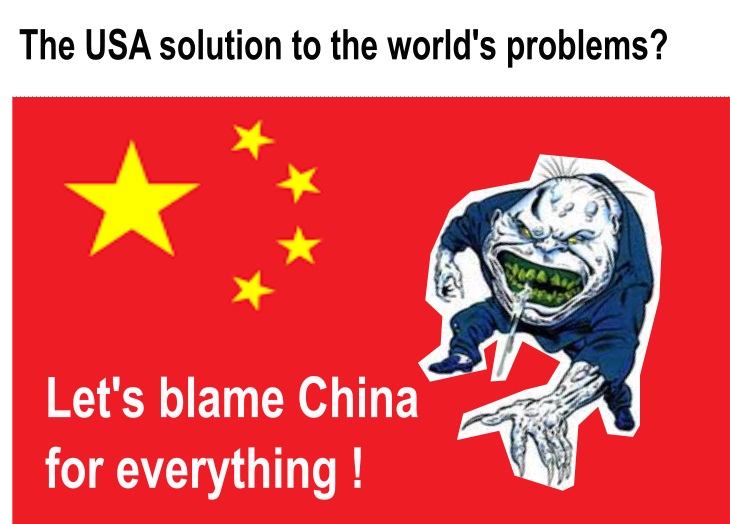
Such a decision, however, would go against US practice in recent years as well as its strategic planning, which sees China as the main rival on which to focus its financial, military, and technological resources. https://www.rt.com/russia/582368-nato-ukraine-russia-front-lines/
No comments yet.
1 This Month


Tell the Ukrainian Government to Drop Prosecution of Peace Activist Yurii Sheliazhenko

Petition to revoke the licensing of the Near Surface Nuclear Disposal Facility (NSDF) at Chalk River. https://www.ourcommons.ca/petitions/en/Petition/Details?Petition=e-7247


of the week – STOP SMALL MODULAR REACTORS IN CANADA
To see nuclear-related stories in greater depth and intensity – go to https://nuclearinformation.wordpress.com
-
Archives
- March 2026 (193)
- February 2026 (268)
- January 2026 (308)
- December 2025 (358)
- November 2025 (359)
- October 2025 (376)
- September 2025 (258)
- August 2025 (319)
- July 2025 (230)
- June 2025 (348)
- May 2025 (261)
- April 2025 (305)
-
Categories
- 1
- 1 NUCLEAR ISSUES
- business and costs
- climate change
- culture and arts
- ENERGY
- environment
- health
- history
- indigenous issues
- Legal
- marketing of nuclear
- media
- opposition to nuclear
- PERSONAL STORIES
- politics
- politics international
- Religion and ethics
- safety
- secrets,lies and civil liberties
- spinbuster
- technology
- Uranium
- wastes
- weapons and war
- Women
- 2 WORLD
- ACTION
- AFRICA
- Atrocities
- AUSTRALIA
- Christina's notes
- Christina's themes
- culture and arts
- Events
- Fuk 2022
- Fuk 2023
- Fukushima 2017
- Fukushima 2018
- fukushima 2019
- Fukushima 2020
- Fukushima 2021
- general
- global warming
- Humour (God we need it)
- Nuclear
- RARE EARTHS
- Reference
- resources – print
- Resources -audiovicual
- Weekly Newsletter
- World
- World Nuclear
- YouTube
-
RSS
Entries RSS
Comments RSS
 nuclear-news
Leave a comment