Biden’s horse-trading on nuclear technology and fuels is an unprecedented proliferation risk
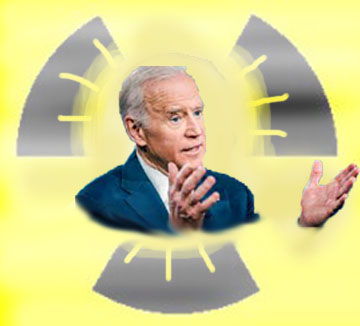
he is funding not just prudent nuclear research, but also their boondoggles to expand use of plutonium and HEU fuel. To ensure US military support for the trilateral Australia-United Kingdom-United States (AUKUS) deal, he is acquiescing to Navy insistence on using weapons-grade uranium reactor fuel, even in exported submarines. However, recent spikes in demand for nuclear weapons, among friends and foes alike, suggests this is a dangerously short-sighted approach.
Bulletin, By Alan J. Kuperman | September 6, 2023
News media in the United States rarely report on nuclear proliferation until it reaches the crisis stage—as in North Korea and Iran. By then, however, it is typically too late to stop the spread of nuclear weapons. Effective nonproliferation must begin much earlier, not only by suppressing demand for nuclear weapons but also by restricting supplies of the fissionable materials necessary to build them in the first place. Sadly, the Biden administration is bungling this latter responsibility.
To acquire the bomb, nuclear aspirants must first obtain its key ingredient: plutonium or highly enriched uranium (HEU). So, as demand for nuclear weapons grows in Asia, the Middle East, and Europe, one would expect the US government to do everything it can to clamp down on supply. Instead, President Joe Biden is actually doing just the opposite, by promoting commerce in weapon-usable nuclear materials as a bargaining chip for other issues. Unless the president reverses course, one of his greatest foreign policy legacies could wind up being global nuclear proliferation.
The spike in demand for nuclear weapons has been driven by several key events over the past two decades………………………………………………………………………………………………………….
Considering this growing demand for nuclear weapons, an essential policy to avert proliferation is to block the supply of the necessary fissionable materials. Regrettably, the Biden administration instead has taken four steps that would foster proliferation of both plutonium and weapons-grade uranium.
First, President Biden is funding US companies like Oklo that want to reprocess used reactor fuel—how plutonium is obtained in the first place, by separating it from nuclear waste—and then deploy its fuel recycling technology “on a global scale.” This would reverse nearly half a century of bipartisan US policy opposing such activity at home and abroad, which has succeeded at restricting commercial reprocessing to only two countries, France and Russia, both of which already have nuclear weapons.
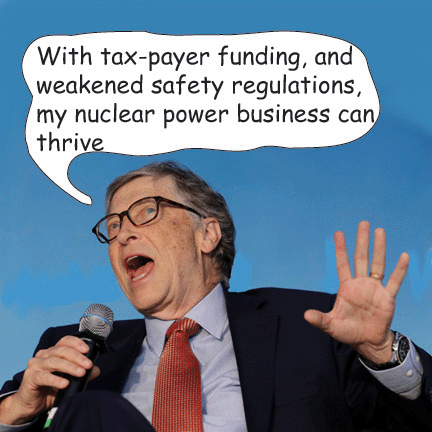
Second, the Biden administration is providing a $2 billion subsidy to Bill Gates (currently the fifth richest person in the world) to develop exotic “fast” nuclear reactors, which originally were designed explicitly to increase supplies of plutonium. Gates’s nuclear energy startup Terrapower promises not to use them this way, but the reactors are so expensive that countries importing them could cite economics to justify turning them into plutonium factories.

Third, the president is pursuing construction of a civilian US research reactor using weapons-grade HEU fuel for the first time since the 1960s, thereby threatening to undermine decades of progress in delegitimizing this dangerous fuel globally.

Fourth, the White House has agreed to export tons of weapons-grade uranium—an amount sufficient for hundreds of nuclear bombs—to fuel Australia’s forthcoming SSN-AUKUS nuclear-powered submarines. This announcement already has prompted at least one other country, Iran, to suggest that it too may produce HEU for naval fuel—a well-known back door to nuclear weapons. The good news is that Australia’s submarines likely could be redesigned to use low-enriched uranium that is unsuitable for nuclear weapons. Unfortunately, the Biden administration recently canceled funding for the eight-year-old program to develop such proliferation-resistant naval fuel.
Why is President Biden doing all this? The US president seems to think he can prevent proliferation solely by quashing demand—using carrots and sticks to persuade countries not to seek the bomb—despite evidence to the contrary. So, he feels free to relax supply restrictions in political horse-trades. For example, to persuade legislators to support solar and wind power, he is funding not just prudent nuclear research, but also their boondoggles to expand use of plutonium and HEU fuel. To ensure US military support for the trilateral Australia-United Kingdom-United States (AUKUS) deal, he is acquiescing to Navy insistence on using weapons-grade uranium reactor fuel, even in exported submarines. However, recent spikes in demand for nuclear weapons, among friends and foes alike, suggests this is a dangerously short-sighted approach.
Of course, the United States should continue trying to reduce demand for proliferation, including by avoiding attacking any more countries that have halted their nuclear weapons programs like Iraq and Libya. But if President Biden imagines that demand-suppression is a silver bullet that gives him license to expand civilian commerce in nuclear weapons-usable materials, he is deeply mistaken. Unless Biden changes course, his promotion of such dangerous nuclear technologies will enable supply to meet demand—in the market of mass destruction. https://thebulletin.org/2023/09/bidens-horse-trading-on-nuclear-technology-and-fuels-is-an-unprecedented-proliferation-risk/
No comments yet.
1 This Month
Chernobyl: The Lost Tapes – A good documentary on Chernobyl on SBS available On Demand for the next 3 weeks– https://www.sbs.com.au/ondemand/tv-program/chernobyl-the-lost-tapes/2352741955560

of the week–London Campaign for Nuclear Disarmament

Tell the Ukrainian Government to Drop Prosecution of Peace Activist Yurii Sheliazhenko
To see nuclear-related stories in greater depth and intensity – go to https://nuclearinformation.wordpress.com
-
Archives
- April 2026 (139)
- March 2026 (251)
- February 2026 (268)
- January 2026 (308)
- December 2025 (358)
- November 2025 (359)
- October 2025 (376)
- September 2025 (257)
- August 2025 (319)
- July 2025 (230)
- June 2025 (348)
- May 2025 (261)
-
Categories
- 1
- 1 NUCLEAR ISSUES
- business and costs
- climate change
- culture and arts
- ENERGY
- environment
- health
- history
- indigenous issues
- Legal
- marketing of nuclear
- media
- opposition to nuclear
- PERSONAL STORIES
- politics
- politics international
- Religion and ethics
- safety
- secrets,lies and civil liberties
- spinbuster
- technology
- Uranium
- wastes
- weapons and war
- Women
- 2 WORLD
- ACTION
- AFRICA
- Atrocities
- AUSTRALIA
- Christina's notes
- Christina's themes
- culture and arts
- Events
- Fuk 2022
- Fuk 2023
- Fukushima 2017
- Fukushima 2018
- fukushima 2019
- Fukushima 2020
- Fukushima 2021
- general
- global warming
- Humour (God we need it)
- Nuclear
- RARE EARTHS
- Reference
- resources – print
- Resources -audiovicual
- Weekly Newsletter
- World
- World Nuclear
- YouTube
-
RSS
Entries RSS
Comments RSS
 nuclear-news
Leave a comment