Nevada’s atomic fallout: How nuclear explosions in the Silver State reverberate through lives today
It happened not so long ago, though some who call Nevada home may not remember the “Atomic Era,” when more than 1,000 nuclear bombs were set off near the Las Vegas Valley.
But there are some in the Silver State who can never forget. These are their stories.
(Video) The stories of Hiroshima and Nagasaki, as told through the eyes of survivors. Channel 13 anchor Paulina Bucka hears from two Las Vegas residents who share how the 1945 bombings still impact them today.
The two bombs killed more than 300,000 people — and counting. “Whoever survived…sometimes they’d say they were better off dead,” Kumiko Noriega, a Las Vegas resident who grew up in Hiroshima after the bombings, told Channel 13.
so, so much.”
DOWNWINDERS: A TRUE LAS VEGAS STORY
(Video) During the height of the Cold War and atomic nuclear testing, Las Vegas became home to one of the largest atomic testing sites in the country.
In the vast Nevada desert, there are many stories of people who lived to tell about the effects of nuclear fallout — and many who did not. Paulina Bucka reports.
Even before its theater debut, the blockbuster biopic “Oppenheimer” prompted thought-provoking discussions about the past, present, and future implications of the atomic bomb and nuclear energy.
Oppenheimer’s grandchildren recently discussed his legacy at an event in Southern Nevada. Isabella Martin reports.
‘OPPENHEIMER’: THE BLOCKBUSTER FILM’S LAS VEGAS CONNECTION
Continue readingA warning from the Caribbean – none of us is safe from nuclear disaster
Nuclear disaster a very real prospect
Trinidad Express Editorial, 8 Aug 23
Two days ago, the world, led by Japan, peered through the long lens of history to August 6, 1945, when the first atomic bomb was released above Hiroshima that changed the world.
As Japan rang its peace bell and observed its annual moment of silence—at the exact time and date that the A-bomb innocuously nicknamed “Little Boy” was unleashed—Hollywood filmmaker Christopher Nolan threw his gaze forward to the age of artificial intelligence, calling this inflection point in global technological advancement an “Oppenheimer moment”.
Together, both cast modern perspectives on the 78-year-old event that killed between 129,000 and 226,000 mostly civilians and pushed the world to where it is now: in near-constant fear of global annihilation from nuclear weapons.
. In the time between that fateful day in 1945 and now, far from being chastened into complete nuclear disarmament, nations have invested in technological advancements that have made nuclear weapons 80 times more powerful than the one detonated over Hiroshima. These modern weapons now have more accurate and resilient delivery methods that can fly faster than the speed of sound……………………………………………….
last weekend’s anniversary reminds us that climate chaos is not the only threat to the future of humanity. Here in T&T, we may feel farther away from nuclear annihilation than from the weather crises we experience daily but one serves to remind us of the other.
As the Caribbean raises its voice on the world stage on climate change, so too our voices must be heard on the other looming threat to our existence. https://trinidadexpress.com/opinion/editorials/nuclear-disaster-a-very-real-prospect/article_2cff3a12-3585-11ee-a35f-334a8a703465.html
To 7 August – nuclear news this week

A bit of good news – The largest landfill in Latin America has now been restored into a thriving mangrove ecosystem.
TOP STORIES
Wilfred Burchett: The Atomic Plague,
Those who will fire the nuclear weapons are thoroughly trained to have no hesitation. We must stop them.
US rejects Australian plea to drop Assange case.
UK government must come clean, to tax-payers and consumers, on the financial figures before signing up to new nuclear programme. ( Full report. See in particular paras 41 -44)
Senate passes $886 billion National Defense Authorization Act (NDAA): No audits necessary.
Aggressive U.S. Push for Military Supremacy in the Arctic Could Trigger Nuclear War.
Climate. A Vital Atlantic Ocean System Could Collapse Sooner Than Previously Thought . The Chilling Truth: Antarctica Just Lost an Ice Mass the Size of My Country .
Nuclear. Well – It’s been THAT memorable week – the 78th anniversary. I can’t add to the many fine stories this week. Except to note that all nuclear-weapons nations are sticking to their policies, and the nuclear industry is enthusiastically propagandising -because we all know that small nuclear reactors etc have nothing to do with military use, don’t we?.
Christina notes. Forget Oppenheimer. The real nuclear hero is Joseph Rotblat. The persecution of Wilfred Burchett and Julian Assange .
CLIMATE. Nuclear war would be more devastating for Earth’s climate than cold war predictions – even with fewer weapons. What you won’t learn about in Oppenheimer: the potential effects of a nuclear winter.
ECONOMICS. How the “Nuclear Renaissance” Robs and Roasts Our Earth. First new US nuclear reactor in 3 decades may well also be its last. Nuclear power’s landmark project stumbles across the finish line. The unpalatable facts of the costs to consumers of electricity from new nuclear power. The High Costs and Failures of Nuclear Reactors.
ENERGY. The digital data industry is an energy-and-water-guzzling climate disaster. For Scotland, energy is our best argument for independence.
EMPLOYMENT. Hinkley Point scaffolders begin industrial action over pay and shift patterns.
ENVIRONMENT. Environment Agency allows Hinkley Point C permit variation to remove fish deterrent system. Nuclear Weapons: Devastation Inside the U.S. Do right by the whales. Water. Water Wars: Cooling the Data Centres. Environment Agency grants contentious Hinkley C water discharge permit.
ETHICS and RELIGION. Scared to Death! Oppenheimer and the threat of nuclear destruction. https://www.youtube.com/watch?v=-xthzy1PxTA&t=5s
HISTORY. Western Media Has Falsely Presented the Donbas’ Drive For Autonomy as Being Instigated By Moscow.
LEGAL. Judge tosses charges against executive in South Carolina nuclear debacle, but case may not be over.
MEDIA. Like ‘the tolling of a distant temple bell’, Ibuse Masuji’s Black Rain remembers the horrors of Hiroshima and warns of the inhumanity of war. ‘Barbenheimer’ highlights U.S. ignorance of nuclear reality. Greg Mitchell on “Oppenheimer” & Why Hollywood Is Still Afraid of the Truth About the Atomic Bomb. Why no Hollywood movie on Nagasaki A Bombing? Humans Might Be About to Break the Ocean? Don’t Stop the Presses.
OPPOSITION to NUCLEAR . Campaigners against Sizewell C nuclear plan welcome call for financial clarity from Science, Innovation and Technology Committee.
Together Against Sizewell environmental group angry at the coming destruction of marine life, as acoustic fish deterrent will not be installed at Hinkley Point C nuclear. Pacific anti-nuclear groups condemn Fiji’s Prime Minister Sitiveni Rabuka for backing Fukushima wastewater stance.
PERSONAL STORIES. Oppenheimer’s nuclear fallout: How his atomic legacy destroyed my world.
POLITICS.
- Why The Niger Coup Has Sparked Concerns About Nuclear Power.
- BRING IT HOME-Robert F. Kennedy, Jr.
- UK has no coherent plan to develop nuclear energy . Ambition alone will not build UK nuclear power. Another kick in the teeth for UK taxpayers as EDF pockets another £170m of public money for their Sizewell C White Elephant. Ministers diverted £136m from electric car fund to Sizewell C nuclear project despite infrastructure concerns.
- Sweden’s Nuclear Power Ambitions Quashed.
- Why is Ontario Government bent on building a new nuclear reactor, at a much greater cost than solar or wind technologies? New Brunswick Power is kicking the can down the road while the planet burns. ADVANCE Act on nuclear sends us backwards.
POLITICS INTERNATIONAL and DIPLOMACY.
- Requiem for NATO’s Nightmare – the Vilnius summit. Mexican president urges end to ‘irrational’ Ukraine war, wants Russia at peace talks. CIA Director Affirms U.S. Regime Change Strategy in Russia in Address at British Foundation.
- United Nations wants to resurrect a global disarmament mechanism last used in the 1980s.
- Saudi Arabia could convert civilian nuclear to military, Israeli expert warns.
- Prime Minister Anthony Albanese is reiterating his call for the case against Julian Assange to be dropped. Australian MPs Blast Blinken Over Assange.
PROTESTS. Protests held in Tokyo against nuclear water discharge,
SAFETY. UN nuclear watchdog finds no explosives at Zaporizhzhia plant. Russia’s Kola nuclear power plant turns 50. That is not necessarily something to celebrate. Non-compliant fire program halts decommissioning of Whiteshell Nuclear Laboratories.
URANIUM. Niger stops uranium and gold export to France.
WASTES.
- Niger’s 20 million tonnes of radioactive waste.
- The nuclear arms race’s legacy: Toxic contamination, staggering cleanup costs and a culture of government secrecy.
- Sellafield seeks partners for £4.8bn nuclear decommissioning works. UK’s Radioactive Waste Management holds meetings in Lincolnshire, seeking a location for nuclear waste dump
WAR and CONFLICT When facts cut through the fog of war. Is the US preparing to dump the proxy war in Ukraine so it can start another in Taiwan? Nuclear catastrophe threat is ‘great and growing’, warn over 100 top medical journals. Veterans, descendants of nuclear testing era urged to apply for British medal.
Decades Later, the U.S. Government Called Hiroshima and Nagasaki ‘Nuclear Tests’, Japan marks 78th anniversary of US atomic bombing on Hiroshima, calls nuclear deterrence ‘folly’. Japan condemns Russia nuclear threat on Hiroshima anniversary.
WEAPONS and WEAPONS SALES
The Sky’s the Limit on Nuclear Weapons Spending, But What Does It Really Get Us? US cluster munitions will bring more pain and death to Donbass civilians, and Washington doesn’t care. Kiev’s broken record: no matter what advanced weaponry the West sends, there is no magic wand to conjure a Ukrainian victory. Military Initiative by Australia, the United Kingdom and the United States (AUKUS) is Another Major Step in Prospective War on China. How Have Nuclear Weapons Evolved Since Oppenheimer and the Trinity Test?
Building for War: The US Imperium’s Top End Spend. USA flexes its belligerent muscles in Western Australia, showing off its nuclear submarines. AUKUS, Australia and the drive to war. A Client State.
Water Wars: Cooling the Data Centres

August 6, 2023, Dr Binoy Kampmar, https://theaimn.com/water-wars-cooling-the-data-centres/
Water. Data centres. The continuous, pressing need to cool the latter, which houses servers to store and process data, with the former, which is becoming ever more precious in the climate crisis. Hardly a good comingling of factors.
Like planting cotton in drought-stricken areas, decisions to place data hubs in various locations across the globe are becoming increasingly contentious from an environmental perspective, and not merely because of their carbon emitting propensities. In the United States, which houses 33% of the globe’s data centres, the problem of water usage is becoming acute.
As the Washington Post reported in April this year, residents in Mesa, Arizona were concerned that Meta’s decision to build another data centre was bound to cause more trouble than it was worth. “My first reaction was concern for our water,” claimed city council member Jenn Duff. (The state already has approximately 49 data centres.)
The move to liquid cooling from air cooling for increasingly complex IT processes has been relentless. As the authors of a piece in the ASHRAE Journal from July 2019 explain, “Air cooling has worked well for systems that deploy processors up to 150 W, but IT equipment is now being manufactured with processors well above 150 W where air cooling is no longer practical.” The use of liquid cooling was not only more efficient than air cooling regarding heat transfer, but “more energy efficient, reducing electrical energy costs significantly.” The authors, however, show little concern about the water supplies needed in such ventures.
The same cannot be said about a co-authored study on the environmental footprint of US-located data centres published two years later. During their investigations, the authors identified a telling tendency: “Our bottom-up approach reveals one-fifth of data center servers’ direct water footprint comes from moderately to highly stressed watersheds, while nearly half of servers are fully or partially powered by power plants located within water stressed reasons.” And to make things just that bit less appealing, it was also found that roughly 0.5% of total US greenhouse gas emissions could also be attributed to such centres.
Google has proven to be particularly thirsty in this regard, not to mention secretive in the amount of water it uses at its data hubs. In 2022, The Oregonian/Oregon Live reported that the company’s water use in The Dalles had almost tripled over five years. The increased usage was enabled, in no small part, because of increased access to the municipal water supply in return for an upgrade to the water supply and a transfer of certain water rights. Since establishing the first data centre in The Dalles in 2005, Google has also received tax breaks worth $260 million.
The city officials responsible for the arrangement were in no mood to answer questions posed by the inquisitive paper on Google’s water consumption. A prolonged 13-month legal battle ensued, with the city arguing that the company’s water use constituted a “trade secret”, thereby exempting them from Oregon’s disclosure rules. To have disclosed such details would have, argued Google, revealed information on how the company cooled their servers to eager competitors.
In the eventual settlement, The Dalles agreed to provide public access to 10 years of historical data on Google’s water consumption. The city also agreed to pay $53,000 to the Reporters Committee for Freedom of the Press, which had agreed to represent The Oregonian/Oregon Live. The city’s own costs had run into $106,000. But most troubling in the affair, leaving aside the lamentable conduct of public officials, was the willingness of a private company to bankroll a state entity in preventing access to public records. Tim Gleason, former dean of the University of Oregon’s School of Journalism and Communication, saw this distortion as more than just a touch troubling. “To allow a private entity to essentially fund public advocacy of keeping something out of the public domain is just contrary to the basic intent of the law.”
Instead of conceding that the whole enterprise had been a shabby affront to local residents concerned about the use of a precious communal resource, compromising both the public utility and Google, the company’s global head of infrastructure and water strategy, Ben Townsend, proved benevolent. “What we thought was really important was that we partner with the local utility and actually transfer those water rights over to the utility in a way that benefits the entire community.” That’s right, dear public, they’re doing it for you.
John Devoe, executive director of the WaterWatch advocacy group, also issued a grim warning in the face of Google’s ever increasing water use, which will burgeon further with two more data centres promised along the Columbia River. “If the data center water use doubles or triples over the next decade, it’s going to have serious effects on fish and wildlife on source water streams, and it’s potentially going to have serious effects for other water users in the area of The Dalles.”
Much of the policy making in this area is proving to be increasingly shoddy. With a global demand for ever more complex information systems, including AI, the Earth’s environment promises to be stripped further. Information hunger risks becoming a form of ecological license.
Decades Later, the U.S. Government Called Hiroshima and Nagasaki ‘Nuclear Tests’
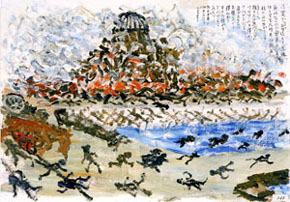
The military was able to test both a uranium-fueled bomb on Hiroshima and a second plutonium bomb on Nagasaki to gauge their effects on big cities.
Today, in some elite circles of Russia and the United States, normalized talk of using “tactical” nuclear weapons has upped the madness ante.
NORMAN SOLOMON, AUG 1, 2023 https://wordpress.com/read/feeds/2663585/posts/4838936867
In 1980, when I asked the press office at the U.S. Department of Energy to send me a listing of nuclear bomb test explosions, the agency mailed me an official booklet with the title “Announced United States Nuclear Tests, July 1945 Through December 1979.” As you’d expect, the Trinity test in New Mexico was at the top of the list. Second on the list was Hiroshima. Third was Nagasaki.
So, 35 years after the atomic bombings of those Japanese cities in August 1945, the Energy Department—the agency in charge of nuclear weaponry—was categorizing them as “tests.”
Later on, the classification changed, apparently in an effort to avert a potential P.R. problem. By 1994, a new edition of the same document explained that the bombings of Hiroshima and Nagasaki “were not ‘tests’ in the sense that they were conducted to prove that the weapon would work as designed…or to advance weapon design, to determine weapons effects, or to verify weapon safety.”
But the atomic bombings of Hiroshima and Nagasaki actually were tests, in more ways than one.
Take it from the Manhattan Project’s director, Gen. Leslie Groves, who recalled: “To enable us to assess accurately the effects of the bomb, the targets should not have been previously damaged by air raids. It was also desirable that the first target be of such size that the damage would be confined within it, so that we could more definitely determine the power of the bomb.”
A physicist with the Manhattan Project, David H. Frisch, remembered that U.S. military strategists were eager “to use the bomb first where its effects would not only be politically effective but also technically measurable.” The military was able to test both a uranium-fueled bomb on Hiroshima and a second plutonium bomb on Nagasaki to gauge their effects on big cities.
For good measure, after the Trinity bomb test in the New Mexico desert used plutonium as its fission source on July 16, 1945, in early August the military was able to test both a uranium-fueled bomb on Hiroshima and a second plutonium bomb on Nagasaki to gauge their effects on big cities.
NATO’s Secret Armies – Operation GLADIO and Terrorism in Western Europe

This fascinating new study shows how the CIA and the British secret service, in collaboration with the military alliance NATO and European military secret services, set up a network of clandestine anti-communist armies in Western Europe after World War II.
These secret soldiers were trained on remote islands in the Mediterranean and in unorthodox warfare centres in England and in the United States by the Green Berets and SAS Special Forces. The network was armed with explosives, machine guns and high-tech communication equipment hidden in underground bunkers and secret arms caches in forests and mountain meadows. In some countries the secret army linked up with right-wing terrorist who in a secret war engaged in political manipulation, harrassement of left wing parties, massacres, coup d’états and torture.
Codenamed ‘Gladio’ (‘the sword’), the Italian secret army was exposed in 1990 by Italian Prime Minister Giulio Andreotti to the Italian Senate, whereupon the press spoke of “The best kept, and most damaging, political-military secret since World War II” (Observer, 18. November 1990) and observed that “The story seems straight from the pages of a political thriller.” (The Times, November 19, 1990). Ever since, so-called ‘stay-behind’ armies of NATO have also been discovered in France, Spain, Portugal, Germany, Belgium, the Netherlands, Luxemburg, Denmark, Norway, Sweden, Finland, Switzerland, Austria, Greece and Turkey. They were internationally coordinated by the Pentagon and NATO and had their last known meeting in the NATO-linked Allied Clandestine Committee (ACC) in Brussels in October 1990.
Greg Mitchell on “Oppenheimer” & Why Hollywood Is Still Afraid of the Truth About the Atomic Bomb
The movie Oppenheimer about the “father of the atomic bomb” focuses on J. Robert Oppenheimer’s conflicted feelings about the weapons of mass destruction he helped unleash on the world, and how officials ignored those concerns after World War II as the Cold War started an arms race. Journalist Greg Mitchell says that while the film is well made and worth seeing, “the omissions are quite serious.” He says there is little mention of the dangers of radiation and no focus on the impact of the bomb on its victims in Hiroshima and Nagasaki. The film also does not question the necessity of using the bomb in the first place, upholding the “official narrative … that has held sway since 1945,” says Mitchell.
Greg Mitchell is a documentary filmmaker and the author of numerous books, including The Beginning or the End: How Hollywood—and America—Learned to Stop Worrying and Love the Bomb. He was editor of Nuclear Times magazine from 1982 to 1986 and has written about this new film for Mother Jones, on his Substack, and in an opinion piece for the Los Angeles Times headlined “‘Oppenheimer’ is here. Is Hollywood still afraid of the truth about the atomic bomb?” Transcript: https://www.democracynow.org/2023/7/2…
Kiev’s broken record: No matter what advanced weaponry the West sends, there is no magic wand to conjure a Ukrainian victory
Rt.com 6 Aug 23
Zelensky’s team keeps asking for more advanced military hardware as though hoping for a divine intervention that can turn the tide of war.
“………………………………………………………………………Ukrainian presidential adviser Mikhail Podoliak……….. advocated for a political solution to the ongoing conflict between Russia and Ukraine by calling on the West to provide F-16 fighters, ATACMS long-range artillery rockets, and modern missile and air defense systems to Ukraine.
According to Podoliak, these weapons are needed by Ukraine to forcibly evict Russian forces from territory Ukraine claims is illegally occupied by Russia (including Crimea). Anything less than this, he contends, “will result in the collapse of the global security order and the triumph of bloody cannibals around the world.”
…………………..the emphasis placed by the Ukrainian politician on the impact the requested weapons would have on the outcome of the conflict between Russia and Ukraine is telling. On its face, Podoliak’s statement at once reveals the depth of Ukraine’s military difficulties, and the reality that nothing – not even the provision of the requested weapons systems – can reverse the trajectory of strategic defeat that Kiev currently finds itself on.
Back in December 2022, the commander of Ukrainian forces, General Valery Zaluzhny, articulated what material support he wanted from NATO, Western Europe, and the US in order to defeat Russia. “We need tanks,” Zaluzhny said. “We need armored personnel carriers, infantry fighting vehicles. And we need ammo. Please note, I’m not talking about the F-16 now.”
At the end of June 2023, however, Zaluzhny, confronted with the fact that the counteroffensive he had promised if he received the requested weapons (he did) was failing, sang a different tune. “I do not need 120 planes [i.e., F-16’s]. I’m not going to threaten the whole world. A very limited number would be enough. But they are needed. Because there is no other way. Because the enemy is using a different generation of aviation. It’s like we’d go on the offensive with bows and arrows now, and everyone would say, ‘Are you crazy’?”
The US and its NATO allies are currently providing training to Ukrainian pilots on the F-16, and it is expected that Ukraine may receive a small number of the aircraft sometime later this year. But they will not be available in time to have an impact on Ukraine’s faltering counteroffensive, something Zaluzhny believes to be a mistake on the part of his Western partners.
Zaluzhny’s American counterpart, Chairman of the Joint Chiefs of Staff General Mark Milley, disagrees. Following a virtual meeting of the Ukraine Defense Contact Group, which coordinates the supply of weaponry to Ukraine, Milley told the press that the provision of F-16s made no sense from a financial perspective. “If you look at the F-16, 10 F-16s [cost] a billion dollars, the sustainment cost another billion dollars, so you’re talking about $2 billion for 10 aircraft,” Milley said, noting that if the US had provided F-16s earlier, Ukraine would not have gotten much of the equipment Zaluzhny claimed he needed to carry out the Ukrainian counteroffensive. “There are no magic weapons in war,” Milley said. “F-16s are not and neither is anything else.”
Podoliak and the Ukrainians disagree. While hopes for an F-16-powered ‘Divine Wind’ remain quashed for the moment, Kiev is hoping that the US will lift its prohibition on the supply of ATACMS long-range artillery rockets. As things currently stand, however, such a decision is not in the works, with the Biden administration continuing to be worried about any possible escalation in the Ukraine conflict that could lead to a direct military-on-military clash between the US and Russia.
……………………….The problem facing Ukraine is that Russia has responded to the provisions of these weapons by unleashing a massive suppression of enemy air defense (SEAD) campaign designed to neutralize them, and all of Ukraine’s air defense for that matter. This campaign has been successful at stripping away air defense from the front lines and weakening it around critical strategic targets inside Ukraine. Russia today enjoys air superiority throughout Ukraine, able to strike any target it desires at any time. While Ukraine continues to ask for modern air defense systems to replace those destroyed by Russia, the bottom line is these will suffer the same fate as those that preceded them – being destroyed or rendered ineffective.
Podoliak knows the hard truth, yet he and other senior Ukrainian officials continue to call upon the collective West to provide a miracle weapon that will tip the scales in Ukraine’s favor………. https://www.rt.com/russia/580768-ukraine-western-weapons-victory/
Why no Hollywood movie on Nagasaki A Bombing?
| Walt Zlotow, West Suburban Peace Coalition Glen Ellyn IL 06 Aug 23 |
But who piloted what plane that dropped the second A Bomb on Nagasaki just 3 days later?
The American Story has largely erased the saga of the Nagasaki mission for good reason. It was a colossal screw up that almost got the pilot court martialed; indeed, nearly detonated Fat Man over the Pacific en route.
Trouble began early on. Paul Tibbetts, fresh from his Hiroshima success, picked his friend Charles Sweeney to pilot the drop plane ‘Bockscar’ instead of its regular pilot Fred Bock. Sweeney was unfamiliar with both combat and the plane. Preparing for takeoff, Sweeney was unable to operate the reserve tank containing 640 gallons of fuel needed to get Bockscar safely back to its Tinian takeoff point. Bock may have had the familiarity with the plane to accomplish that. Regulations required the mission be scrapped so Sweeney and crew exited Bockscar. But Tibbetts overruled them and the mission was on with insufficient fuel.
Three hours in, worse trouble. Fat Man’s red detonation lights began blinking wildly. Chief weaponeer Dick Ashworth frantically searched the blueprints and realized 2 switches had been reversed in the pre flight assembly. Solving that problem, everyone relaxed till Bockscar failed to rendezvous with the second of two back up planes, one for photography and one for instruments. The instrument plane, The Big Stink, was 9,000 feet above Bockscar.
Instead of pushing on to original target Kokura, Sweeney wasted 45 minutes of precious fuel trying to link up. Big Stink pilot Hoppy Hopkins broke radio silence frantically calling Tinian asking “Is Bockscar down?” Mission officials only heard “Bockscar Down” and freaked out believing Bockscar, Fat Man and the 13 member crew were in Davy Jones Locker.
Ashford was frantic that all was lost. As tension mounted between the weaponeer and the pilot, he finally persuaded Sweeney to proceed to primary target Kokura. But a smokescreen put up by Japanese defenders responding to the Hiroshima attack caused Sweeney to go around for a second and third bomb run, wasting more fuel.
More trouble. Flack and approaching Japanese Zeros forced Sweeney to abandon Kokura to flee 100 miles to alternate target Nagasaki.
The drop made, Sweeney made a desperate dive to avoid the mushroom cloud that nearly engulfed them. But his previous delays made the return trip to Tinian impossible. Low on fuel, Sweeney began a treacherous 450 mile flight on dwindling fuel for Okinawa. All aboard Bockscar prepared to ditch. Approaching the Okinawa airfield unable to radio the tower of their emergency, Bockscar had to drop into a forced landing amid numerous other flights without control tower clearance. Bockscar bounced 25 feet in the air landing at 30 MPH over the maximum landing speed, nearly colliding with a row of fuel laden B-24’s. One engine quit on the approach and another upon touchdown. Thinking Bockscar was lost, airport personnel inquired who this strange plane was that descended out of the sky unannounced. ‘We just dropped an atomic bomb’ was the reply.
There were no celebrations for the crew of Bockscar. Officials considered a courts martial for Sweeney for his life and mission threatening delays but considered the embarrassment it would cause and decided against. Why mar the mission-perfect first nuking of civilians by Paul Tibbetts and Enola Gay?
While we’ll never get a Hollywood treatment of the Bockscar A Bomb mission, it would be a lot more exciting than ‘Above and Beyond’. An appropriate title? ‘Nearly Down and Out Over Nagasaki’.
Japan marks 78th anniversary of US atomic bombing on Hiroshima, calls nuclear deterrence ‘folly’
Japan has marked the 78th anniversary of the US atomic bombing on Hiroshima, where its mayor urged the abolition of nuclear weapons and called the Group of Seven leaders’ notion of nuclear deterrence a “folly”.
Key points:
- Japan’s prime minister said the road to a world without nuclear weapons was getting steeper due to the Russia-Ukraine war
- The G7 leaders said nuclear weapons should serve to deter aggression and prevent war
- UN Secretary-General Antonio Guterres said the “drums of nuclear war are beating once again”
The day to commemorate the victims of the world’s first nuclear attack comes as Russia has raised the spectre of using nuclear weapons in its war with Ukraine……………………………………..
more https://www.abc.net.au/news/2023-08-06/japan-marks-78th-anniversary-of-hiroshima-bombing/102694840—
Environment Agency grants contentious Hinkley C water discharge permit
The Environment Agency has granted a contentious water discharge activity
(WDA) permit to NNB Generation Company at Hinkley Point C near
Burnham-On-Sea.
The decision has provoked concerns from the Stop Hinkley
campaign group. It comes as the Environment Agency says it has added new
limits and conditions to the permit variation requested by the company
“to protect people and the environment”.
A WDA permit allows the company to discharge returned abstracted seawater from the cooling water system, fish recovery and return system and other liquid trade effluents,
including treated sewage effluent, to the Bristol Channel.
Burnham-on-sea.com 4th Aug 2023
Japan condemns Russia nuclear threat on Hiroshima anniversary
Bangkok Post, 6 Aug 23
Japan’s prime minister hit out at Russian threats to use nuclear weapons as the country marked the 78th anniversary of the atomic bombing of Hiroshima on Sunday.
…………………”Japan, as the only nation to have suffered atomic bombings in war, will continue efforts towards a nuclear-free world,” Prime Minister Fumio Kishida said at a ceremony in Hiroshima.
The path towards it is becoming increasingly difficult because of deepening divisions in the international community over nuclear disarmament and Russia’s nuclear threat,” he said.
……………………………….At the ceremony, thousands of people — survivors, relatives and foreign dignitaries from a record 111 countries — prayed for those killed or wounded in the bombing and called for world peace.
Russia and Belarus were not invited to the ceremony for the second straight year because of the Ukraine crisis.
Participants, many dressed in black, offered a silent prayer at 8.15am (6.15am in Thailand) when the first nuclear weapon used in wartime was dropped………………………………………………………………………………more https://www.bangkokpost.com/world/2624486/japan-condemns-russia-nuclear-threat-on-hiroshima-anniversary
The Chilling Truth: Antarctica Just Lost an Ice Mass the Size of My Country
Antarctica’s sea ice is not just a local phenomenon — it plays a significant role in regulating the Earth’s temperature.
Ricky Lanusse 6 Aug 23
“………………………….Recent reports from July 30th, 2023, reveal that Antarctica has lost a mass of ice the size of my country, Argentina, the 8th largest country in the world. And this profound loss is sending shockwaves through the global community.
The Unprecedented Melting
As the heatwave tightens its grip on the northern hemisphere, Antarctica broke a different kind of climate record.
Antarctic sea ice has shown variability for decades, fluctuating between historical highs and lows.
In a normal situation, the ice reaches its lowest point in late February and then recovers during the winter. Since 2016, scientists have witnessed a drastic downward trend that defies all expectations.
But this year, it is at its lowest level since records began 45 years ago. A disturbing sign that something has changed on our planet…………………….. (Subscribers only) more https://medium.com/the-new-climate/the-chilling-truth-antarctica-just-lost-an-ice-mass-the-size-of-my-country-d8970933f260
Wilfred Burchett: The Atomic Plague
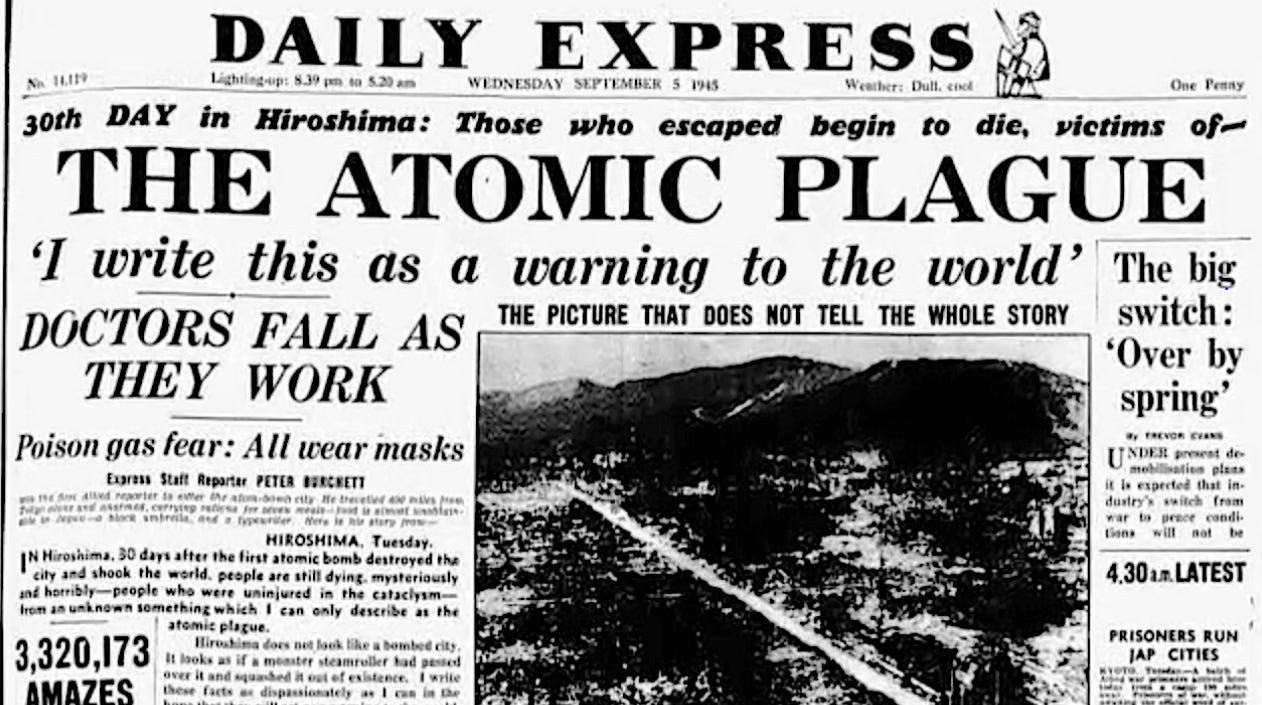
BY WILFRED BURCHETT AUGUST 27, 2014 https://www.fairobserver.com/region/north_america/wilfred-burchett-atomic-plague-99732/
Wilfred Burchett was the first reporter to enter the city of Hiroshima after the bombing in 1945.
Wilfred Burchett’s “The Atomic Plague” is often referred to as “the scoop of the century.” He was the first correspondent to enter the city of Hiroshima after the bombing, arriving with the first wave of US Marines on the USS Millett that landed in Japan on August 14, 1945. Armed with a pistol, a typewriter and a Japanese phrasebook, he traveled through scenes of unparalleled destruction caused by US air raids, onto “where Hiroshima used to be.” “There was devastation and desolation and nothing else.”
Burchett was the first to expose the devastating effects of radiation that was being denied by the Allied forces at the time. His dispatch conveys the harrowing confusion and ignorance of the victims as to what was done to them — it was thought the bombs contained a poisonous gas, perhaps, and doctors hoped the Americans would provide an antidote. By the end of 1945, some 140,000 were dead in Hiroshima and a further 70,000 in Nagasaki — a number that will continue to grow over the course of the century.
Despite the Allied officials’ attempts to censor the story, Burchett’s dispatch was published in The Daily Express on September 5, 1945. It is a piece of journalism that should be read over and over again — “as a warning to the world” — because like no other account, it brings home the inhuman reality of a nuclear holocaust.
“I Write This as a Warning to the World”
The Daily Express, London, September 5, 1945.
Express Staff Reporter Peter Burchett [sic] was the first Allied staff reporter to enter the atom-bomb city. He travelled 400 miles from Tokyo alone and unarmed carrying rations for seven meals — food is almost unobtainable in Japan — a black umbrella, and a typewriter. Here is his story from —
HIROSHIMA, Tuesday.
In Hiroshima, 30 days after the first atomic bomb destroyed the city and shook the world, people are still dying, mysteriously and horribly — people who were uninjured by the cataclysm — from an unknown something which I can only describe as atomic plague.
Hiroshima does not look like a bombed city. It looks as if a monster steamroller had passed over it and squashed it out of existence. I write these facts as dispassionately as I can in the hope that they will act as a warning to the world. In this first testing ground of the atomic bomb I have seen the most terrible and frightening desolation in four years of war. It makes a blitzed Pacific island seem like an Eden. The damage is far greater than photographs can show.
When you arrive in Hiroshima you can look around and for 25, perhaps 30, square miles you can hardly see a building. It gives you an empty feeling in the stomach to see such man-made devastation.
And so the people of Hiroshima today are walking through the forlorn desolation of their once proud city with gauze masks over their mouths and noses. It probably does not help them physically. But it helps them mentally.
I picked my way to a shack [sic] used as a temporary police headquarters in the middle of the vanished city. Looking south from there I could see about three miles of reddish rubble. That is all the atomic bomb left of dozens of blocks of city streets, of buildings, homes, factories and human beings.
Still They Fall
There is just nothing standing except about 20 factory chimneys — chimneys with no factories. I looked west. A group of half a dozen gutted buildings. And then again nothing.
The police chief of Hiroshima welcomed me eagerly as the first Allied correspondent to reach the city. With the local manager of Domei, a leading Japanese news agency, he drove me through, or perhaps I should say over, the city. And he took me to hospitals where the victims of the bomb are still being treated.
In these hospitals I found people who, when the bomb fell, suffered absolutely no injuries, but now are dying from the uncanny after-effects.
For no apparent reason their health began to fail. They lost appetite. Their hair fell out. Bluish spots appeared on their bodies. And the bleeding began from the ears, nose and mouth.
At first the doctors told me they thought these were the symptoms of general debility. They gave their patients Vitamin A injections. The results were horrible. The flesh started rotting away from the hole caused by the injection of the needle.
And in every case the victim died.
That is one of the after-effects of the first atomic bomb man ever dropped and I do not want to see any more examples of it. But in walking through the month-old rubble I found others.
The Sulphur Smell
My nose detected a peculiar odour unlike anything I have ever smelled before. It is something like sulphur, but not quite. I could smell it when I passed a fire that was still smouldering, or at a spot where they were still recovering bodies from the wreckage. But I could also smell it where everything was still deserted.
They believe it is given off by the poisonous gas still issuing from the earth soaked with radioactivity released by the split uranium atom.
And so the people of Hiroshima today are walking through the forlorn desolation of their once proud city with gauze masks over their mouths and noses. It probably does not help them physically. But it helps them mentally.
From the moment that this devastation was loosed upon Hiroshima the people who survived have hated the white man. It is a hate the intensity of which is almost as frightening as the bomb itself.
“All Clear” Went
The counted dead number 53,000. Another 30,000 are missing, which means “certainly dead”. In the day I have stayed in Hiroshima – and this is nearly a month after the bombing – 100 people have died from its effects.
They were some of the 13,000 seriously injured by the explosion. They have been dying at the rate of 100 a day. And they will probably all die. Another 40,000 were slightly injured.
These casualties might not have been as high except for a tragic mistake. The authorities thought this was just another routine Super-Fort raid. The plane flew over the target and dropped the parachute which carried the bomb to its explosion point.
Many people had suffered only a slight cut from a falling splinter of brick or steel. They should have recovered quickly. But they did not. They developed an acute sickness. Their gums began to bleed. And then they vomited blood. And finally they died.
The American plane passed out of sight. The all-clear was sounded and the people of Hiroshima came out from their shelters. Almost a minute later the bomb reached the 2,000 foot altitude at which it was timed to explode – at the moment when nearly everyone in Hiroshima was in the streets.
Hundreds upon hundreds of the dead were so badly burned in the terrific heat generated by the bomb that it was not even possible to tell whether they were men or women, old or young.
Of thousands of others, nearer the centre of the explosion, there was no trace. They vanished. The theory in Hiroshima is that the atomic heat was so great that they burned instantly to ashes – except that there were no ashes.
If you could see what is left of Hiroshima you would think that London had not been touched by bombs.
Heap of Rubble
The Imperial Palace, once an imposing building, is a heap of rubble three feet high, and there is one piece of wall. Roof, floors and everything else is dust.
Hiroshima has one intact building – the Bank of Japan. This in a city which at the start of the war had a population of 310,000.
Almost every Japanese scientist has visited Hiroshima in the past three weeks to try to find a way of relieving the people’s suffering. Now they themselves have become sufferers.
For the first fortnight after the bomb dropped they found they could not stay long in the fallen city. They had dizzy spells and headaches. Then minor insect bites developed into great swellings which would not heal. Their health steadily deteriorated.
Then they found another extraordinary effect of the new terror from the skies.
Many people had suffered only a slight cut from a falling splinter of brick or steel. They should have recovered quickly. But they did not. They developed an acute sickness. Their gums began to bleed. And then they vomited blood. And finally they died.
All these phenomena, they told me, were due to the radio-activity released by the atomic bomb’s explosion of the uranium atom.
Water Poisoned
They found that the water had been poisoned by chemical reaction. Even today every drop of water consumed in Hiroshima comes from other cities. The people of Hiroshima are still afraid.
The scientists told me they have noted a great difference between the effect of the bombs in Hiroshima and in Nagasaki.
Hiroshima is in perfectly flat delta country. Nagasaki is hilly. When the bomb dropped on Hiroshima the weather was bad, and a big rainstorm developed soon afterwards.
And so they believe that the uranium radiation was driven into the earth and that, because so many are still falling sick and dying, it is still the cause of this man-made plague.
At Nagasaki, on the other hand, the weather was perfect, and scientists believe that this allowed the radio-activity to dissipate into the atmosphere more rapidly. In addition, the force of the bomb’s explosion was, to a large extent, expended into the sea, where only fish were killed.
To support this theory, the scientists point out to the fact that, in Nagasaki, death came swiftly, suddenly, and that there have been no after-effects such as those that Hiroshima is still suffering.
Postscriptum
“It so happened that step by step and almost accidentally, I had achieved a sort of journalistic Nirvana, free of any built-in loyalties to governments, parties, or any organizations whatsoever. My loyalty was to my own convictions and my readers. This demanded freedom from any discipline except that of getting the facts on important issues back to the sort of people likely to act — often at great self-sacrifice — on the information they received. This was particularly so during my reporting from Vietnam, the most important of my career, far too important to be swayed by dictates from outside or above. Over the years, and in many countries, I had a circle of readers who did not buy papers for the stock market reports or strip cartoons, but for facts on vital issues affecting their lives and their consciences. In keeping both eyes and both ears open during my forty years’ reporting from the world’s hot spots, I had become more and more conscious of my responsibilities to my readers. The point of departure is a great faith in ordinary human beings and the sane and decent way they behave when they have the true facts of the case.”
— Wilfred Burchett, At the Barricades
Like ‘the tolling of a distant temple bell’, Ibuse Masuji’s Black Rain remembers the horrors of Hiroshima and warns of the inhumanity of war
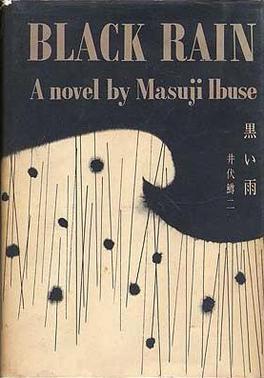
Jindan Ni, August 4, 2023 https://theconversation.com/like-the-tolling-of-a-distant-temple-bell-ibuse-masujis-black-rain-remembers-the-horrors-of-hiroshima-and-warns-of-the-inhumanity-of-war-205837?utm_medium=email&utm_campaign=The%20Weekend%20Conversation%20-%202700227280&utm_content=The%20Weekend%20Conversation%20-%202700227280+CID_e1af8a5e068132789cd3bffaecf54867&utm_source=campaign_monitor&utm_term=Like%20the%20tolling%20of%20a%20distant%20temple%20bell%20Ibuse%20Masujis%20Black%20Rain%20remembers%20the%20horrors%20of%20Hiroshima%20and%20warns%20of%20the%20inhumanity%20of%20war
In May 2023, almost 80 years after its devastation by an atomic bomb, Hiroshima again became the focus of world attention as the host city for the 49th G7 Summit.
On the summit’s official website, Hiroshima is presented as the exemplar of Japan’s postwar success. It is described as an “international city of peace and culture” and “resolute postwar advancement”. There are photos of its serene landscapes, its local delicacies and sake, and its modern sports and street culture.
The bombing of Hiroshima at the conclusion of World War II is mentioned just once. The Hiroshima Peace Memorial, according to the site, “speaks to the horrors of nuclear weapons”.
Hiroshima has more than this to tell us. But its stories, its “several pasts”, have been constantly abridged – or “refashioned”, as Michel Foucault would say. They have been adapted to serve political agendas.
On August 6, 1945, after the atomic bomb was dropped on Hiroshima, President Harry Truman released a statement that praised the scientific achievement:
“Sixteen hours ago an American airplane dropped one bomb on Hiroshima, an important Japanese Army base […]
It is an atomic bomb. It is a harnessing of the basic power of the universe. The force from which the sun draws its power has been loosed against those who brought war to the Far East […]
What has been done is the greatest achievement of organized science in history. It was done under high pressure and without failure”.
The atomic bomb was something altogether different for Japan. After the bombs fell on Hiroshima and Nagasaki, the Japanese emperor Hirohito broadcast his “jewel voice” to make the announcement of Japan’s surrender to his subjects. He spoke in an opaque, classical language almost incomprehensible to ordinary Japanese:
“The enemy has for the first time used cruel bombs to kill and maim extremely large numbers of the innocent and the heavy casualties are beyond measure; if the war were continued, it would lead not only to the downfall of our nation but also to the destruction of all human civilization.“
In these statements, we can see Truman and Hirohito attempting to justify their actions. We can see interpretations of the attacks on Hiroshima and Nagasaki taking different tracks. Such modified national memories install a kind of forgetting. They are ways of marginalising or erasing individual experiences of the war.In these statements, we can see Truman and Hirohito attempting to justify their actions. We can see interpretations of the attacks on Hiroshima and Nagasaki taking different tracks. Such modified national memories install a kind of forgetting. They are ways of marginalising or erasing individual experiences of the war.
During the postwar occupation of Japan, from 1945-1952, the Allied occupiers sought to remould the Japanese minds. The “horrors of nuclear weapons” could not be mentioned. Pictures and narratives about the atomic bombs were subject to strict censorship.
Only after the easing of censorship could Japanese writers begin to reveal the details of the horrendous suffering that occurred in Hiroshima and Nagasaki. These works became collectively known as genbaku bungaku, or “atomic bomb literature”. The explorations of the destructive power of war and institutionalised violence have left their mark on contemporary Japanese literature.
Ibuse Masuji’s Black Rain, which won the prestigious Noma Literary Prize after its publication in 1965, epitomises atomic bomb literature. It is now considered a classic of modern Japanese literature.
Black Rain records the scorching memories of the hibakusha – atomic bomb survivors – of the bombing and its aftermath. More significantly, it critiques the brutality of war, the militarised state, and the purposeful forgetting of history. Ibuse based his novel on journals and interviews with the bomb survivors, writing against amnesia using what he called the “crudest kind of realism”.
Forgetting and stigmatisation
Black Rain begins four years and nine months after the war. Shizuma Shigematsu and his family live a seemingly quiet and normal life in the village of Kobatake, about 100 kilometres from Hiroshima city. But the fact that they once lived and worked close to Hiroshima is still a weight upon their lives.
Shigematsu is vexed about his niece Yasuko’s poor marriage prospects. There are rumours circulating in the village that Yasuko was near the epicentre of the explosion and now has radiation sickness. As her guardian, Shigematsu is agonised with guilt, as it was at his instigation that Yasuko came to Hiroshima city, so as to avoid the army’s conscription of young women to work in the factories that produced military supplies.
During the war, “irresponsible talk” was strictly forbidden by the army. But after the war, Shigematsu laments, rumours stigmatising people like Yasuko are by no means under control. To prove that Yasuko was not exposed to radiation, Shigematsu decides to copy Yasuko’s wartime diary entries and show them to the village matchmaker.
For the survivors of Hiroshima, memories of the bombing return unbidden. The misery of past has to be revisited to ease their present predicament.
Initially, no one knew what happened when the bomb fell. It was beyond everyone’s comprehension. And it is this horror of not knowing that Black Rain agonisingly depicts. Because of this, people who were not at the epicentre went towards it. They went in search of their families and were thus unnecessarily exposed to radiation.
Yasuko was one of these victims. She was 10 kilometres from the epicentre, but became caught in the radioactive “black rain” on the way to find her uncle and aunt. The rain leaves ominous strange black stains on Yasuko. Her dread is heartwrenching:
I felt horrified, and then awfully sad. However many times I went to the ornamental spring to wash myself, the stains from the black rain wouldn’t come off.
Despite Shigematsu’s efforts to prove that Yasuko is free from radiation sickness, she develops symptoms eventually, almost five years after the bomb. There is no cure for this condition and the doctor asks Shigematsu to report Yasuko’s case to the Atomic Bomb Casualty Commission (ABCC), which was established by the Allied occupation in 1947 with “the highest ideals” in order to collect data of the victims.
The commission only documented cases like Yasuko’s; it provided no treatment for the victims.
Tradition versus modernity
In Black Rain, Ibuse boldly challenges the modernisation which Japan has been determined to achieve since the Meiji Restoration, which began in 1868.
His critique of modernity is highly nuanced, with a tinge of humour. For example, when Shigematsu decides to copy Yasuko’s diaries, his wife Shigeko asks him to use Chinese brush ink instead of ordinary pen ink which does not last. To convince him, she shows him a letter which was sent to his great-grandfather from Tokyo in 1870.
The letter sender proudly concludes his letter by emphasising “this letter, in accordance with my promise to you at the time, is written in the ‘ink’ commonly in use in the West.” But the ink has “faded to a pathetic light brown colour”.
Shigematsu agrees to his wife that they should use the traditional brush ink so that their diaries and memories can be well preserved.
In the introduction to his English translation of Black Rain, John Bester writes that Ibuse shows “infinite nostalgia” towards “the beauty of the Japanese countryside and the ancient customs of its people”. For Ibuse, it is only through traditional food and medicine that the damages brought by science and modernity, exemplified by the atomic bomb, can be eased and soothed.
Appeal to nature, humanity and peace
Black Rain dwells on the atrocity of war as it affects people, but it also documents damage that war inflicts on nature. Shigematsu recalls the massive gingko tree he liked to play under, which stood outside his friend Kōtarō’s place. It was cut down for the “national interest” during the war.
Similarly, the novel records that villagers were ordered to dig pine-tree roots to extract oil for “the engines of the planes whose job it was to shoot down B-29s”.
Animals also suffered as a result of the atomic bomb, just as people did. The fish in the lake died. Like the bomb survivors who lost teeth and hair, they lost their scales and could not swim normally.
In Black Rain, the collective forgetting of the direct experiences of the victims leads to systematic stigmatisation and bias against them, which exacerbates their struggle. Shōkichi – Shigematsu’s friend who also survived the bomb – stridently announces:
Everybody’s forgotten! Forgotten the hellfires we went through that day – forgotten them and everything else, with their damned anti-bomb rallies. It makes me sick, all the prancing and shouting they do about it.
Shōkichi’s visceral repulsion to the anti-bomb rallies speaks of a collective forgetting, in which the enduring sufferings of the “precious victims” have been deployed as convenient narratives to serve the “national interest”. As the historian John Dower succinctly puts it, the rallies and memorial activities conformed to the state’s need of “nuclear victimization”, which aimed to shape “new forms of nationalism in postwar Japan”.
One of the maimed survivors in Black Rain writes in his journal that he now has permanent ringing in his ears: “it persists in my ear day and night, like the tolling of a distant temple bell, warning man of the folly of the bomb”.
Black Rain calls for a proper remembering of the war. In Ibuse’s documentary novel, Hiroshima is allowed to speak more and remember more. Through Shigematsu’s voice, Ibuse expresses the anger and despair of the people forced to endure the war:
I hated war. Who cared, after all, which side won? The only important thing was to end it all soon as possible: rather an unjust peace, than a “just” war!
1 This Month
26 April – Chernobyl: Inside the Meltdown airs on National Geographic on Sunday 26th April from 4pm
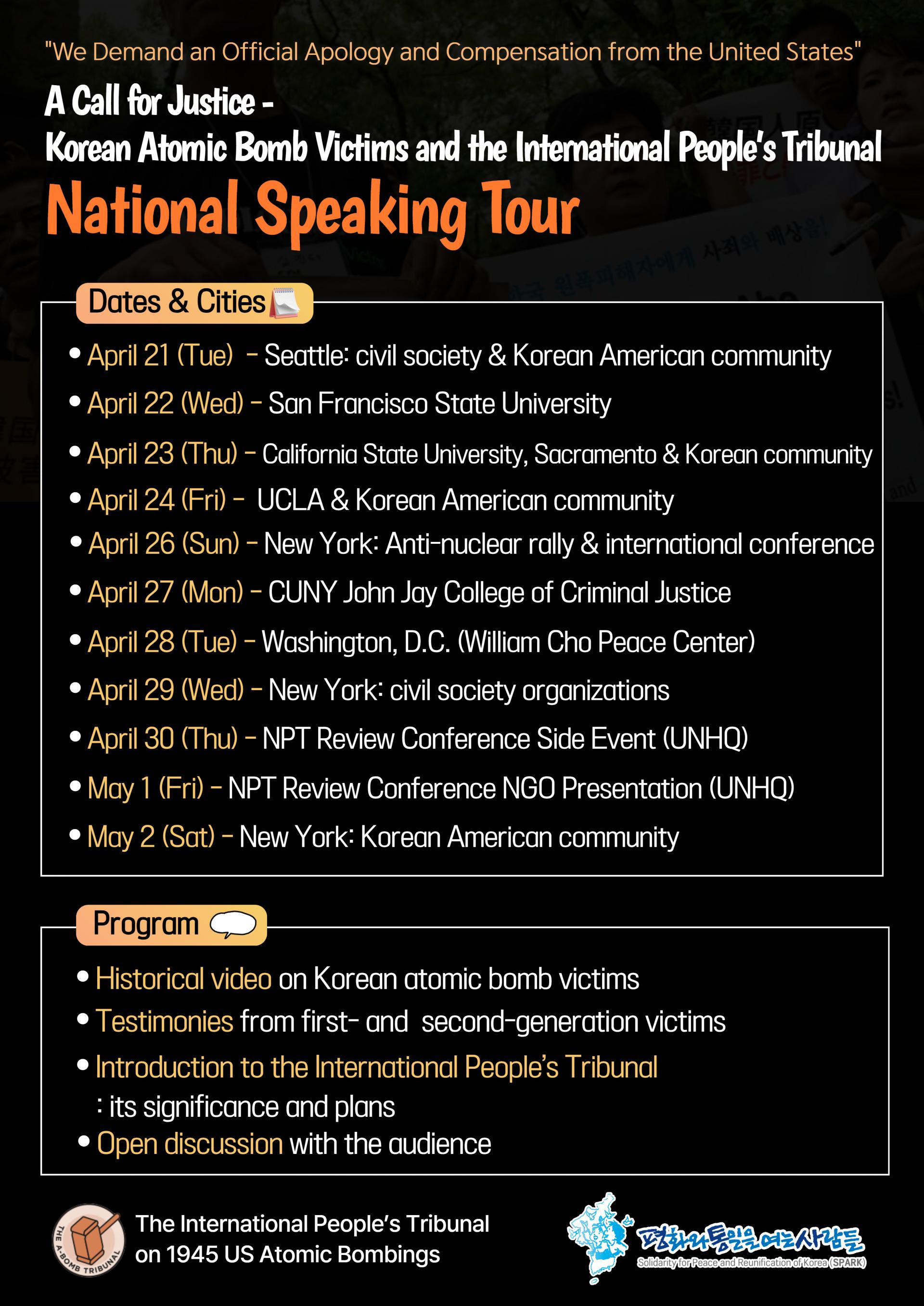
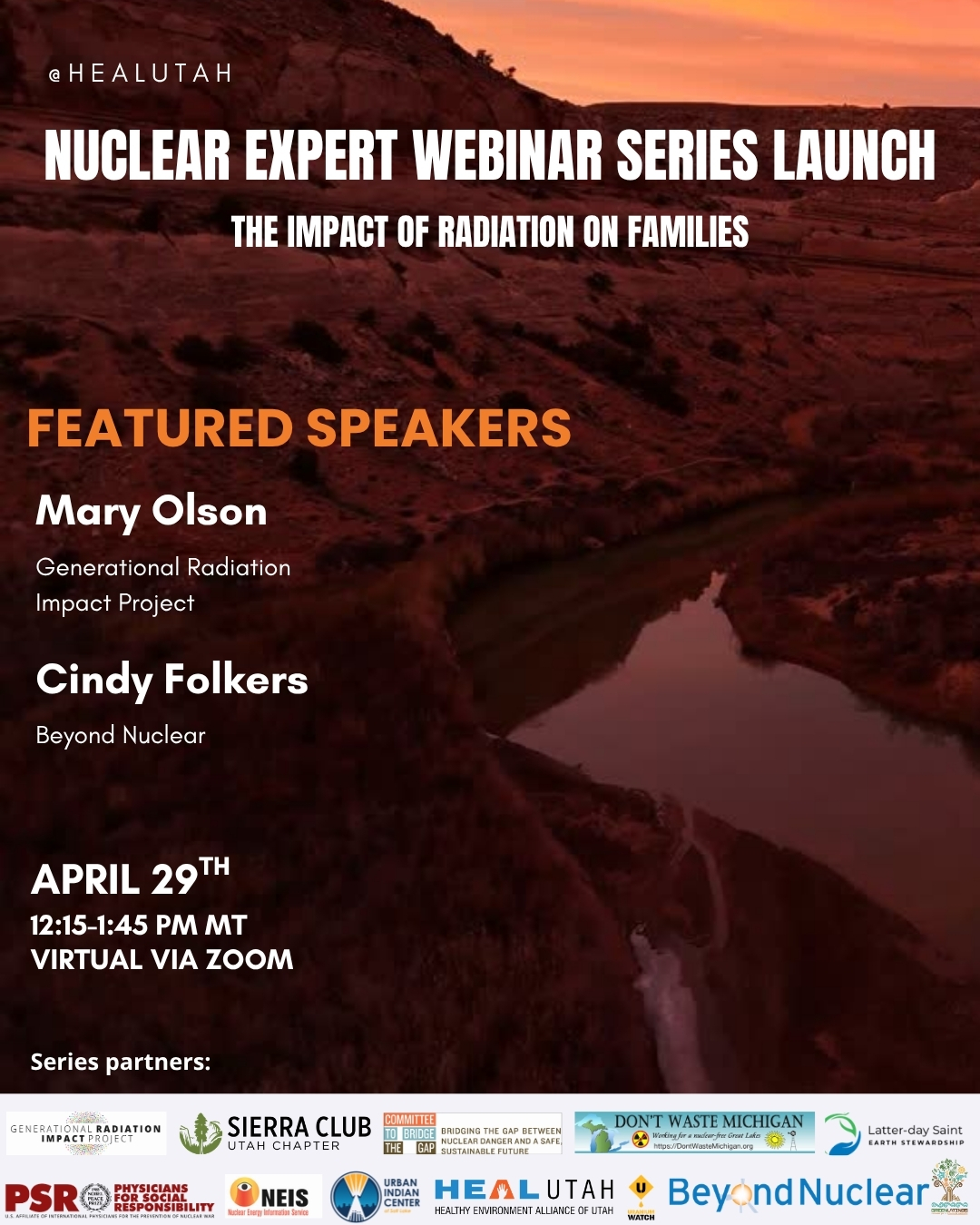
29 April – Nuclear Expert Webinar #1 – Radiation Impacts on Families with Mary Olson and Cindy Folkers
- 12:15 PM MT – 1:45 PM MT
- Location: Virtual – REGISTER TODAY

4 May -West Suburban Peace Coalition to discuss Iran war at May Educational Forum
Monday, May 4, 7:00 – 8:00 PM Central Standard Time
Title: : How Trump’s Narrative Tries to Shape the Reality of the War on Iran.
Contact Walt Zlotow, zlotow@hotmail.com 630 442 3045 for further information
14 May – online event From Bombs to Data Centres: the Face of Nuclear Colonialism

Pine Ridge Uranium is the real threat, not Tehran- Tell Burgum: Stop the Extraction.
Chernobyl: The Lost Tapes – A good documentary on Chernobyl on SBS available On Demand for the next 3 weeks– https://www.sbs.com.au/ondemand/tv-program/chernobyl-the-lost-tapes/2352741955560
To see nuclear-related stories in greater depth and intensity – go to https://nuclearinformation.wordpress.com
-
Archives
- April 2026 (288)
- March 2026 (251)
- February 2026 (268)
- January 2026 (308)
- December 2025 (358)
- November 2025 (359)
- October 2025 (376)
- September 2025 (257)
- August 2025 (319)
- July 2025 (230)
- June 2025 (348)
- May 2025 (261)
-
Categories
- 1
- 1 NUCLEAR ISSUES
- business and costs
- climate change
- culture and arts
- ENERGY
- environment
- health
- history
- indigenous issues
- Legal
- marketing of nuclear
- media
- opposition to nuclear
- PERSONAL STORIES
- politics
- politics international
- Religion and ethics
- safety
- secrets,lies and civil liberties
- spinbuster
- technology
- Uranium
- wastes
- weapons and war
- Women
- 2 WORLD
- ACTION
- AFRICA
- Atrocities
- AUSTRALIA
- Christina's notes
- Christina's themes
- culture and arts
- Events
- Fuk 2022
- Fuk 2023
- Fukushima 2017
- Fukushima 2018
- fukushima 2019
- Fukushima 2020
- Fukushima 2021
- general
- global warming
- Humour (God we need it)
- Nuclear
- RARE EARTHS
- Reference
- resources – print
- Resources -audiovicual
- Weekly Newsletter
- World
- World Nuclear
- YouTube
-
RSS
Entries RSS
Comments RSS
 nuclear-news
