There should be no Saudi uranium enrichment

The ultimate argument against a US-Saudi nuclear deal is the crown prince himself, who is in line to be king and for practical purposes already is.
He is a liar and a gruesome killer. Saudi Arabia, for all its modern trappings, is a primitive state with no effective checks on his powers. The king makes the laws, rules by decree, and is the chief judge. He has powers the British king gave up in the 13th century. Saudi Arabia has a long way to go before it will be a safe place for nuclear energy.
By Victor Gilinsky | August 28, 2023
https://thebulletin.org/2023/08/there-should-be-no-saudi-uranium-enrichment/?utm_source=Newsletter&utm_medium=Email&utm_campaign=MondayNewsletter08282023&utm_content=NuclearRisk_SaudiUranium_08282023&utm_source=Newsletter&utm_medium=Email&utm_campaign=MondayNewsletter08282023&utm_content=NuclearRisk_SaudiUranium_08282023
There is increasing talk of a United States-brokered “grand bargain” on Middle East security, the core of which would be normalization of ties between Israel and Saudi Arabia. It isn’t clear what motivates Joe Biden to press for this deal now. The obvious goal would involve the eternal search for peace in the Middle East, but there are hints that such a bargain may have more to do with keeping the Saudis out of China’s orbit.
One thing we know, Biden’s lieutenants are lobbying hard in the Senate for acceptance of some version of far-reaching demands from the Saudi crown prince, Mohammed bin Salman, among them access to uranium enrichment technology that would ostensibly provide fuel for future Saudi nuclear power plants. Indeed, enrichment is a step in the production of nuclear reactor fuel. It is also a vital part of one of two paths to the atomic bomb.
One thing we know, Biden’s lieutenants are lobbying hard in the Senate for acceptance of some version of far-reaching demands from the Saudi crown prince, Mohammed bin Salman, among them access to uranium enrichment technology that would ostensibly provide fuel for future Saudi nuclear power plants. Indeed, enrichment is a step in the production of nuclear reactor fuel. It is also a vital part of one of two paths to the atomic bomb.
That isn’t of course the polite version of the crown prince’s plan. He says he wants to use domestic uranium, of which the Saudis claimed to have large deposits, to fuel civilian nuclear power reactors. He wants to produce fuel domestically, ergo he needs to acquire enrichment technology. But despite Saudi claims, there are no significant uranium deposits in the country. Recent reports reveal that the teams of geologists sent to search for it have turned up empty-handed. That hasn’t, however, caused the crown prince to lose interest in enrichment, which is itself a revealing fact about his intentions—and his reliance on American cupidity.
To cope with what the Saudis regard as excessive suspicion of others, they have suggested they are open to accepting some modest additional oversight arrangements, which they cynically expect Congress to accept after members engage in some ritual handwringing.
You would think the Saudi insistence on inclusion of enrichment, no matter how restricted, would be a non-starter for a US-Saudi “123” agreement for nuclear cooperation. (Compliance with Section 123 of the Atomic Energy Act is essential for any significant US-Saudi nuclear trade.) But such common sense is a thin reed to lean on when it comes to Washington nuclear politics. Powerful lobbies have been pushing for years for sale of power reactors in the Middle East and for generous subsidies to allow this to happen. The departments of Energy and State will be supporting this, too, claiming that international “safeguards” would be effective in preventing misuse of civilian nuclear facilities. The official line on nuclear energy is still Atoms for Peace, as it has been since President Eisenhower’s 1953 speech. Recall that George W. Bush said even Iranian power reactors, by themselves, were perfectly legitimate.
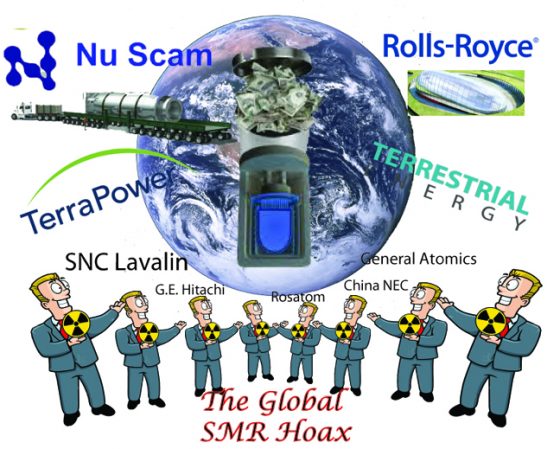
The problem is that hardly anyone in Congress has any real understanding of nuclear technology. The members are swept off their feet by promises of safe, non-carbon producing energy sources, especially when nuclear proponents use adjectives like “small” and “modular” and “advanced.” Congressional discussions on international aspects seldom get beyond “restoring America’s competitive advantage in nuclear energy.”
There is also little understanding of the limitations of international “safeguards,” the inspection system of the International Atomic Energy Agency (IAEA). (Is there any realistic recourse if the Saudis break the rules?) It is indicative of Saudi Arabia’s attitude toward the IAEA that it has used every stratagem to minimize its safeguards responsibilities. The minimization strategy does not violate IAEA requirements, yes, but a country anxious to demonstrate its nuclear bona fides should be more forthcoming in its nonproliferation cooperation.
The 2008 US-India civil nuclear agreement is an eternal warning about how American international nuclear policy can go off the rails when the president and Congress are swept away by visions of gaining an ally against China plus the prospect of dozens of power reactor sales. That agreement ran a truck through the Non-Proliferation Treaty, and none of the sales of nuclear power plants materialized.
The Saudis know Americans can be made to swallow principle—they recently succeeded in humbling the US president on human rights and oil prices—and so are unlikely to soften their stance on inclusion of enrichment in a 123 agreement. The White House will be looking for a formula that accepts it, but adds some restriction, or appearance of restriction, or another sweetener, perhaps related to Palestinian rights, that would allow members of the House and Senate to go along with inclusion of enrichment in a US-Saudi agreement.
Who would stand in the way? Not the Republicans: They love the Saudis. The one possibility is if Israel balks at any deal that includes Saudi enrichment. Opposition Leader Yair Lapid told Democratic Party lawmakers visiting Israel recently that he opposes a potential Israel-Saudi Arabia normalization deal that allows Riyadh to enrich uranium because it would harm Israel’s security. But the Israeli government’s response—that is, Prime Minister Netanyahu’s—has been ambiguous.
Somebody needs to stand up. Not only should the United States say no to Saudi enrichment, but Washington should also rethink the entire notion of nuclear power reactors in Saudi Arabia. Such reactors, coupled with a reprocessing facility to extract plutonium from used fuel, which the Saudis will surely want as well, provide the other path to a bomb, a plutonium bomb.
With its constant threat of wars, the Middle East is no place for nuclear reactors. Nuclear reactors in the region have been targeted in aerial attacks a dozen times. The safety issues that followed the capture by the Russians of the Zaporizhzhia power reactors in Ukraine should teach us something, too. Nuclear reactors do not belong in regions of potential conflict.
The ultimate argument against a US-Saudi nuclear deal is the crown prince himself, who is in line to be king and for practical purposes already is. He is a liar and a gruesome killer. Saudi Arabia, for all its modern trappings, is a primitive state with no effective checks on his powers. The king makes the laws, rules by decree, and is the chief judge. He has powers the British king gave up in the 13th century. Saudi Arabia has a long way to go before it will be a safe place for nuclear energy.
TEACHERS ACT AGAINST SCHOOLS NUCLEAR SUBMARINES PROGRAM

the normalisation of militarisation and downplaying of nuclear risks in schools is a grave concern.
“Nuclear and military aspects in the curriculum fail to address health and environmental risks associated with both, as well as the drive to war,”
Education. 28 Aug 2023 https://www.nationaltribune.com.au/teachers-act-against-schools-nuclear-subs-program/
Children being taught to make weapons
Teachers are moving to boycott a new pro-nuclear-fuel brainwashing program being introduced into schools.
There’s growing momentum within unions to ban the Nuclear-powered Submarine Propulsion Challenge, which is a Defence Department initiative backed by the Federal and Victorian governments.
In a blatant attempt to normalise nuclear power and indoctrinate children into building instruments of death, the challenge asks students from years 7 to 12 to design a nuclear-powered propulsion system for a submarine.
Friends of the Earth (FoE) understands that motions calling for a boycott have already been passed in some chapters of the Australian Education Union.
One motion, passed at a recent branch meeting said: “We resolve to refuse to refer students to this program or others like it, and we will refuse to promote it within our schools. We call on the Department of Education to cease all involvement in this and similar programs.”
Another said: “We don’t intend to refer students to this program or others like it, or to promote it within our schools. We call on the Department of Education to cease all involvement in this and similar programs.”
Friends of the Earth is supporting the ban and has written to the Australian Education Union asking them to impose a nationwide boycott.
FoE Nuclear Free Coordinator Sanne De Swart said the normalisation of militarisation and downplaying of nuclear risks in schools is a grave concern.
“Nuclear and military aspects in the curriculum fail to address health and environmental risks associated with both, as well as the drive to war,” Sanne De Swart said.
“It fails to acknowledge Australia’s significant and devastating history with nuclear, including the atomic bomb tests, uranium mining and the attempts to impose nuclear waste dumps, all which have and continue to affect First Nations communities disproportionately .”
‘Peaceful Atom’ Sparks Fierce Debate In Kazakh Village Slated To Host Nuclear Power Plant
By Petr Trotsenko, August 28, 2023 Radio Free Europe
ULKEN, Kazakhstan — Plans are under way to build a nuclear power plant (NPP) scheduled to be online by 2035, to supply Kazakhstan’s soaring energy needs.
In Ulken, where the plant is likely to be built, opinions among the village’s 1,500 residents on what a nuclear future for their impoverished lakeside village would look like are split.
Ulken is located 330 kilometers northwest of Almaty on the shores of Lake Balkhash. The village was created in the 1980s to house workers for a planned hydroelectric power plant. That project was unfinished when the Soviet Union collapsed and high-rise apartments are the only completed constructions from the period.
Officially, Ulken is a village, but it feels like an urban settlement. There are no houses here, only apartments. There is no livestock, and no gardens grow in the rocky soil…………………………………………………………………………….
Khairulina wants to increase the population of Ulken, renovate the village, and give life to the abandoned apartments. For these reasons she supports the construction of an NPP. “If the project starts, civilization will come,” she said. The villager is concerned for the environment, but said, “We are not afraid of environmental problems, now everything is made with modern technology.”
Fishermen in Ulken are largely against the NPP project because they fear that Lake Balkhash will be affected and that fishing there could eventually be banned.
It’s not difficult to find fishermen. In front of one abandoned apartment, fish hang in the breeze.
The owner of the property is a young man named Rinat. The 34-year-old fisherman has devoted half of his life to the profession and works the lake every day. Rinat firmly opposes the construction of an NPP.
“The lake sustains us,” he said. “This year the water level in the Balkhash dropped severely, and the fish population decreased. If an NPP is built, there will be no water left in the lake,” Rinat claimed.
At the grocery store, I met another resident, Aleksei Losev. The 35-year-old moved to Ulken six years ago to live with his future wife. He’s not a fisherman, but does not expect anything good from the construction of the NPP.
“On one hand I support its construction, because new jobs will be created, people will come from abroad, and the village will develop. On the other hand, it’s about ecology,” he said, before referencing a troubled Soviet-era NPP in western Kazakhstan that is currently being decommissioned. “Three kilometers from Aqtau there is the Manghystau NPP. The environmental situation there is bad. Why? Wastewater! Both fish and seals are dying…. It will be the same here,” he said……………………………………………………………………………….
In the small assembly hall of the Ulken high school where the August 21 meeting to discuss the NPP took place, it was standing room only. Environmental activists who had travelled from Almaty for the meeting unfurled posters calling to put a stop to the project as residents chanted, “we support the peaceful atom!”
When the discussion on the planned NPP got under way it was clear that there would be little constructive conversation. The emotions of the crowd boiled over.
“We are against the nuclear power plant, it will destroy Balkhash Lake!” activists shouted.
“You’re not a nuclear specialist, how do you know it will be harmful? You don’t live in Ulken” responded some residents.
“It is not only an Ulken problem, this topic should be discussed by all of Kazakhstan!” the activists countered.
…………………………………………………………………… Another local man hoped to work in the future energy sector.
“We residents have been waiting for this construction for 40 years,” he said. “We started with the construction of the power station, we spent days without heat and electricity, we went through many different events together. Ulken needs this energy, this is the center of Kazakhstan. Our region is seismologically stable! There are 15 nuclear power plants in Japan, which has an earthquake every month. Energy is scarce and very expensive in our country. We all need electricity. We support the peaceful atom!” he said.
People in the hall clapped and someone asked, “What about solar energy?” nobody seemed to hear the question amid chants of “Peaceful atom! Peaceful atom!”
Then environmentalist Svetlana Mogilyuk spoke. Like many others, Svetlana came to Ulken to take part in the discussion.
“Dear residents, we have now listened very carefully to what was said,” Mogilyuk said. “No basic, truthful information was provided to you. In contrast to the claim that nuclear energy is not harmful to health, there are qualified studies showing that nuclear energy is still harmful! Numerous studies also confirm that children who live near nuclear power plants are more likely to develop leukemia, and deaths from cancer increase by 24 percent.”
As she made these claims, her microphone cut off. She continued without it.
“Nuclear power plants are harmful, they are accompanied by radioactive emissions. Citizens! You are now being told a lie! Hearings must be accompanied by basic information! You must understand that apart from the NPP, you have other opportunities, you have the opportunity to develop other types of electricity. They will be no less powerful, no less effective, but safer!”
……………………………………………………………………… many in Kazakhstan feel the construction of an NPP is a done deal for the government and that far more depends on its decision than the prospects for locals of a small village on the banks of the Balkhash. https://www.rferl.org/a/kazakhstan-nuclear-power-plant-debate-construction/32563042.html
French energy regulator: Nuclear alone not enough for carbon neutrality
“renewable energies to be brought on stream as quickly as possible, as there will be no new reactors in operation by 2035” to meet the need to decarbonise the energy mix.
By Clara Bauer-Babef and Paul Messad | EURACTIV.fr 27 Aug 23 https://www.euractiv.com/section/politics/news/french-energy-regulator-nuclear-alone-not-enough-for-carbon-neutrality/
If France is to achieve carbon neutrality by 2050, it must integrate renewables into its energy mix, according to the head of the country’s energy regulator, RTE, who believes nuclear power alone will not be enough.
As part of its EU targets, France has pledged to become carbon neutral by 2050 and contribute to the bloc’s efforts to cut greenhouse gases by 55% by 2030.
“To achieve carbon neutrality by 2050, nuclear power alone will not be enough,” said Xavier Piechaczyk, Chairman of RTE, on France Inter radio on Saturday.
Instead, France needs to diversify further its energy mix, which is currently 40% nuclear, 28% oil, 16% natural gas, 14% renewables and 2% coal, according to the French Ministry for Ecological Transition.
All the more so as “energy consumption will fall, but electricity consumption will rise to replace fossil fuels”, with a 25% increase in decarbonised electricity, writes RTE in its reference report on the French energy mix in 2050.
As such, Piechaczyk calls for “renewable energies to be brought on stream as quickly as possible, as there will be no new reactors in operation by 2035” to meet the need to decarbonise the energy mix.
France plans to build six new small nuclear reactors (EPR), although these will not be operational until 2035. Construction for the first reactor is only set to start in 2027.
“France is struck by a pathology, which is to spend its time arguing between nuclear versus renewable: it’s not the first question to be asked”, Piechaczyk said.
Piechaczyk referred in particular to the conflict between the radical left and ecologists, who are opposed to nuclear power, and the presidential majority and the right, supported by the Communists, who favour the development of nuclear power.
(Paul Messad & Clara Bauer-Babef | EURACTIV.fr)
Respect for hibakusha, and hope in younger generations
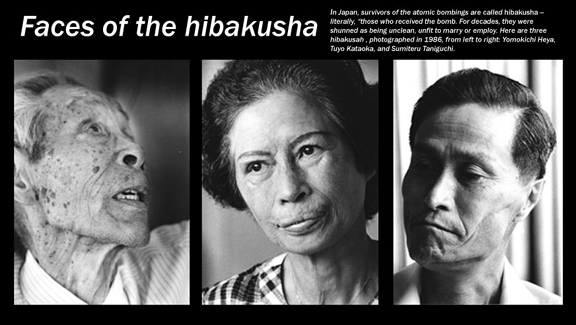
Hibakusha, atomic bombing survivors, have been tirelessly exerting themselves toward a world free of nuclear weapons, with their only wish that no one else should go through the sufferings they have experienced
The Bulletin, By Masako Toki | August 22, 2023
For too long, nuclear weapons narratives have been dominated by those who saw the mushroom cloud from afar or above. Or maybe just in photos, TV, or videos. Most absurdly, the voices of people who suffered the most under the mushroom cloud have often been marginalized.
There have been numerous efforts to raise awareness of the inhumane nature of nuclear weapons among hibakusha (atomic bomb survivors), people in Hiroshima and Nagasaki, and more broadly, in the international community. One of the most important milestones came when the 2010 Nuclear Nonproliferation Treaty (NPT) Review Conference adopted a final document that included, for the first time “the catastrophic humanitarian consequences of any use of nuclear weapons.” Since then, the humanitarian initiative for nuclear disarmament has been gaining momentum.
Three conferences on the humanitarian impact of nuclear weapons contributed to the start of the negotiation of the Treaty on the Prohibition of Nuclear Weapons (TPNW) and to adoption of the treaty. Through this process, a wide range of civil society members, along with like-minded governments, energized the humanitarian initiatives and tenaciously supported bringing humanitarian dimensions to nuclear weapons policy discussion.
The adoption of the TPNW has brought a glimmer of hope to nuclear disarmament advocates, although they are fully aware that this is a first step of the long process. Still, this is considered to be one of very few positive developments in recent nuclear disarmament efforts. The world is currently moving backward on nuclear disarmament. The Russian invasion of Ukraine has caused unspeakable human suffering and raised the risk of nuclear war. Today, nuclear threats are at the highest level since the end of the Cold War,
Hibakusha, atomic bombing survivors, have been tirelessly exerting themselves toward a world free of nuclear weapons, with their only wish that no one else should go through the sufferings they have experienced.
As the memories of Hiroshima and Nagasaki are further fading away every year given the advanced age of hibakusha, it is urgent for younger generations to learn more. Time is of the essence. Earlier this year, the average age of hibakusha reached 85.01 years, according to Japan’s Ministry of Health, Labor and Welfare. In addition, the number of hibakusha decreased by 5,286 to 113,649 this year. As the A-bomb survivors continue to age, the issue of how to pass on the message of the catastrophic impact of nuclear weapons to the next generation becomes increasingly pressing. Informing and educating the next generation is how we can ensure that nuclear weapons will never be used again, and eventually, achieve a world free of nuclear weapons.
The time to learn from hibakusha directly is limited and is getting shorter and shorter. The peace declaration this year read by Nagasaki Mayor Shiro Suzuki quoted Sumiteru Taniguchi, one of the late hibakushas who dedicated his life to nuclear disarmament. Taniguchi admonished that “[p]eople appear to be gradually forgetting the suffering of the past. This forgetfulness terrifies me. I fear that forgetfulness will lead to the acceptance of further atomic bombings.”
Keiko Ogura, a Hiroshima hibakusha and an English-Japanese interpreter for peace activities, shared her testimonials with world leaders in May this year at the G7 Hiroshima Summit. She asked the leaders to “relive the struggles in the hearts of hibakusha” that have been felt for so long, and to imagine the invisible wounds, traumas, sorrows, and unspeakable secrets through her eyes and heart. One of the most important abilities you need when you work for nuclear disarmament is to be able to empathize with other’s suffering. Ogura asked the G7 leaders to do precisely this. She also sent a message to Russian President Vladimir Putin through a reporter for one of her numerous interviews, saying, “You don’t know what a nuclear weapon is, the reality of a nuclear weapon. So come here and see.”
Earlier this summer, at a civil society event, Ogura calmly started her atomic bombing testimonial by encouraging the audience to imagine how it feels like to be under the mushroom cloud at the time of the bomb’s detonation. “I was at that time under the mushroom cloud you can see there,” while showing the picture of the mushroom cloud after the bomb was dropped.
Nothing is more powerful and effective than hibakusha testimonials in helping others to understand the horrific reality of the use of nuclear weapons. It is very important to imagine what really happened under the mushroom cloud. When you hear about the Hiroshima bombing or the Nagasaki bombing, the first image that comes to your mind may be the mushroom cloud. But we need to understand that people were under the mushroom cloud. Most of the victims were civilians, including small children.
Every year, the Hiroshima and Nagasaki remembrance days come. These are the days that we have to make efforts to remember and renew our resolve to work for nuclear disarmament. Soon, we will not be able to listen to hibakusha directly. As the hibakusha are aging in the middle of increasing nuclear risks, we cannot do business as usual every year, or think about nuclear disarmament only on these remembrance days……………………………………………………………….more https://thebulletin.org/2023/08/respect-for-hibakusha-and-hope-in-younger-generations/?utm_source=Facebook&utm_medium=SocialMedia&utm_campaign=FacebookPost082023&utm_content=NuclearRisk_HibakushaAndHope_08222023&fbclid=IwAR0hzzEqc_dLq2NN_fF9F4OQl0uI31cz7QW9BA5nL5TPKrLpASBAUt9dRDg
Saudi Arabia weighs nuclear power offers from China and France in bid to sway US
Saudi Arabia is considering bids to build a nuclear power station from
countries including China, France and Russia as the kingdom seeks to sway
the US over a sensitive security pact.
The kingdom, which is the world’s
largest oil exporter, has long sought its own civil nuclear capability and
has made US assistance with the programme a key demand in a potential deal
to normalise relations with Israel. One person said Saudi Arabia would make
its decision based on the best offer.
Another said that while Riyadh would
prefer the US, which is seen to have better technology and is already a
close Saudi partner, Washington’s restrictions on uranium enrichment would
scupper co-operation.
FT 26th Aug 2023
https://www.ft.com/content/ec613036-86ab-479e-bedc-99d152030c34
Swedish government removes nuclear power promise from website.
Climate minister accused of ‘exceeding her powers’ by announcing need for 10 new reactors.
The Swedish government has quietly walked back an announcement
that it would build at least 10 nuclear reactors by 2040 as part of its
plan to ditch fossil fuels.
Romina Pourmokhtari, Sweden’s climate and
environment minister, announced earlier this month that Sweden needed to
double electricity production in the next two decades in order to meet its
climate goals. An accompanying statement said that “Sweden will need
three times as much nuclear power in 20 years”.
But the statement was
quickly taken down from the government website and replaced with one that
makes no mention of the ten new reactors. Daniel Liljeberg, state secretary
to the minister for energy, business and industry, said there is no
official target matching Ms Pourmokhtari’s statement. Mr Liljeberg told the
Swedish daily Aftonbladet the government has not established targets or
assessments at that level of detail.
Insiders say Ms Pourmokhtari
“exceeded her powers” when she announced publicly that the government’s
aim was to put at least ten conventional reactors into operation during the
2030s and 2040s, Aftonbladet reported. Environmental experts had criticised
the government announcement, saying the new reactors would be too expensive
and not meet needs fast enough. The plans marked a dramatic change from the
country’s current capacity for nuclear power, where six reactors currently
account for around 30 per cent of its electricity production. In June,
Sweden’s coalition government adopted a new energy target, changing it to
“100 per cent fossil-free” electricity from “100 per cent
renewable”, giving the green light to push forward a new energy strategy
relying on expanding its nuclear power network.
Telegraph 26th Aug 2023
Cattenom nuclear plant reports ‘significant safety event’
A “significant safety event” occurred at the ever-troublesome Cattenom
nuclear plant this week, operator EDF said on Friday, after a series of
mishaps last week. The breach, which was of a technical nature, happened
during regular checks to restart unit 1 of the nuclear power station, and
was rated as a level-one incident on a seven-level scale, EDF said in a
press release.
Operators last week on Thursday uncovered a faulty circuit
breaker on an emergency diesel engine, which is designed to kick in and
guarantee that water continues to be powered through the reactor core
during a power cut. Four days later, they uncovered that the same diesel
engine was still not working properly as an electric board was faulty
leading to the malfucntion of the switchboard. This did not show when tests
were carried out after the first fault was repaired, EDF said.
Luxembourg Times 25th Aug 2023
https://www.luxtimes.lu/luxembourg/cattenom-plant-reports-significant-safety-event/2583844.html
More countries take actions to handle Japan’s nuclear-contaminated water dump, while US ‘double-standard exposed hypocrisy’
Global Times, By Yang Sheng Aug 27, 2023
In order to prevent any impact caused by Japan’s dumping of Fukushima nuclear-contaminated wastewater into the Pacific Ocean, more countries, especially those in the Asia-Pacific like China, Thailand and Russia, are taking actions, including strengthened testing of aquatic products imported from Japan, while more people and organizations from South Korea and the Pacific Island countries are voicing their opposition and concern over Tokyo’s decision.
Although the US said it is “satisfied” with Japan’s act, which has caused fury and concern worldwide, the US is in fact the country that has seen the greatest reduction in imports of Japanese seafood and rice wine, media reported, citing data published by Japan’s Ministry of Agriculture, Forestry and Fisheries………………………………………………………
In some other countries, concern and opposition against Japan’s actions have increased, despite their governments remaining silent or exhibiting tolerance toward Tokyo.
In the Pacific Island Country of Fiji, the Suva Fish Market Association came out strongly on Thursday and stated that it does not agree with the dumping of the Fukushima nuclear-contaminated wastewater into the Pacific Ocean, and they are also concerned over the Fijian government’s attitude that “the discharged water is safe,” according to Fiji media fijivillage.com.
Samu Maraiwai, president of the association, said the nuclear-contaminated wastewater to be dumped into the Pacific Ocean poses “a risk of massive destruction to our marine ecosystem and our source of livelihood.” Maraiwai said the nuclear-contaminated waste will be toxic to a certain level and it will affect the marine ecosystem including fish, seaweeds, corals and other sources of livelihood.
According to South Korean media Yonhap News, about 50,000 people rallied in Seoul on Saturday to “protest Japan’s release of radioactive water from the crippled Fukushima nuclear power plant,” with the participation of some 90 civic groups which have formed a coalition to protest the dumping of nuclear-contaminated water and members of four opposition parties, including the main opposition Democratic Party (DP). ………………………………………………………………………………………………………….. more https://www.globaltimes.cn/page/202308/1297053.shtml
1 This Month

of the week – Shut Down Drone Warfare!


Tell the Ukrainian Government to Drop Prosecution of Peace Activist Yurii Sheliazhenko

Petition to revoke the licensing of the Near Surface Nuclear Disposal Facility (NSDF) at Chalk River. https://www.ourcommons.ca/petitions/en/Petition/Details?Petition=e-7247
To see nuclear-related stories in greater depth and intensity – go to https://nuclearinformation.wordpress.com
-
Archives
- April 2026 (68)
- March 2026 (251)
- February 2026 (268)
- January 2026 (308)
- December 2025 (358)
- November 2025 (359)
- October 2025 (376)
- September 2025 (257)
- August 2025 (319)
- July 2025 (230)
- June 2025 (348)
- May 2025 (261)
-
Categories
- 1
- 1 NUCLEAR ISSUES
- business and costs
- climate change
- culture and arts
- ENERGY
- environment
- health
- history
- indigenous issues
- Legal
- marketing of nuclear
- media
- opposition to nuclear
- PERSONAL STORIES
- politics
- politics international
- Religion and ethics
- safety
- secrets,lies and civil liberties
- spinbuster
- technology
- Uranium
- wastes
- weapons and war
- Women
- 2 WORLD
- ACTION
- AFRICA
- Atrocities
- AUSTRALIA
- Christina's notes
- Christina's themes
- culture and arts
- Events
- Fuk 2022
- Fuk 2023
- Fukushima 2017
- Fukushima 2018
- fukushima 2019
- Fukushima 2020
- Fukushima 2021
- general
- global warming
- Humour (God we need it)
- Nuclear
- RARE EARTHS
- Reference
- resources – print
- Resources -audiovicual
- Weekly Newsletter
- World
- World Nuclear
- YouTube
-
RSS
Entries RSS
Comments RSS
 nuclear-news