Nuclear deterrence is a dangerous fraud
The theory of nuclear deterrence is a feeble excuse for nations to hold onto their weapons of mass destruction and a fraud that must be exposed, writes Dr Sue Wareham. 23 Aug 23 https://independentaustralia.net/politics/politics-display/nuclear-deterrence-is-a-dangerous-fraud,17833
Dr Sue Wareham OAM is President of the Medical Association for Prevention of War (Australia) and a past board member of ICAN (the International Campaign to Abolish Nuclear Weapons) Australia.
HOW IS IT that “homo sapiens” has persisted with an invention that threatens our very survival, strikes fear in the heart of every rational one among us, diverts an unconscionable quantity of our collective time, labour and finances from things that are actually useful, and at the same time could be eliminated?
All we need to do is dismantle the invention and prioritise efforts to ensure that it remains a historic relic. That could all be done. Our failure to do so thus far is such an extraordinary gamble on our future that we must examine the reasons.
The invention is, of course, nuclear weapons. The answer to the opening question is not so straightforward, but given our current all-time high risk of these weapons being used, the question has never been more important. And given Australia’s rapidly growing enmeshment with the only nation that has used these weapons thus far in warfare, we in Australia have a particular interest in it.
The first response to the question that often comes to mind is that of “power”. That’s true, a tiny minority of the world’s leaders – in nine out of the nearly two hundred countries that make up the global community – see the capacity to inflict unimaginable suffering on others as a marker of global prestige and influence in world affairs.
But, as we shall see, translating a capacity for cruelty to military or political advantage is a completely different matter. And, in any event, even such leaders need to explain to their people how having horrific and widely-condemned weapons is actually a good thing. For this, they need a theory that sounds plausible; it doesn’t need to be valid, but it just needs to sound reassuring and humane.
That theory is nuclear deterrence — the theory that having nuclear weapons keeps a nation safe from attack, especially nuclear attack, because others will be too terrified of a possible nuclear response. The more inhumane our weapons appear, the safer we are and the more certain we are to prevail militarily if any armed conflict does occur — or so the theory goes. The Latin origin “terrere”, to terrify or deter by terror, sums up how deterrence is meant to work.
For Australia, the theory is extended nuclear deterrence, a belief that our ally – the U.S. – would launch its own nuclear weapons if needed to “protect” Australia (whatever that means in practice), even risking a nuclear retaliatory strike on its own shores in the process. Like nuclear deterrence itself, extended nuclear deterrence is no more than an unproven theory.
Nuclear deterrence has been so consistently presented as justification for the world’s worst weapons of mass destruction that it is worth unravelling. If it is found to be faulty, then the primary crutch that bolsters nuclear weapons policies is exposed as a dangerous fraud.
The first major problem with nuclear deterrence theory is that it hasn’t worked. Nuclear weapons have proven to be generally useless in preventing military aggression or bringing military victories. As nuclear weapons abolition advocate Ward Wilson argues: ‘It is possible for a weapon to be too big to be useful.’
History recounts multiple occasions in which a nuclear arsenal on one side of a conflict has been irrelevant to the outcome. Examples include the attacks on or by Vietnam, Afghanistan, the UK-held Falklands, Iraq (1991 and 2003), Lebanon, former Soviet republics, multiple confrontations between India and Pakistan (both nuclear-armed), and others. In addition, crises over the deployment of the weapons have triggered periods of extreme danger, such as the 1962 Cuban Missile Crisis.
The war in Ukraine is the latest example of a war involving a nuclear-armed adversary. Whether or not President Putin follows through with his gravely irresponsible threats to use nuclear weapons in this war remains to be seen, but “winning” a nuclear wasteland would be no more than a pyrrhic victory.
Claims that attacks on non-nuclear armed nations, such as Ukraine, would have been prevented if those nations did have “the bomb” are not supported by evidence. In any event, such claims would lead us to the conclusion that the weapons are essential for every nation — including, say, Iran and North Korea. Deterrence cannot work only for “us” and not for “them”.
Have nuclear weapons played a role in preventing a war between two nuclear-armed superpowers? We don’t know, but there is no evidence for such a role. Even if they did, could we rely on this deterrent effect to always work? The answer is a categorical no; such a proposition is not credible.
This leads to the second major problem with nuclear deterrence theory which is that to be reliable, it must work in every conceivable situation for all time. Common features of human behaviour, such as miscommunication, misunderstanding, clouded judgement or plain incompetence in a period of heightened tensions could spell catastrophe.
Irrational or malevolent leaders who care little about human suffering elevate the risks, as do ongoing cyber and computer vulnerabilities. Nuclear deterrence might be fit for a fantasy world where everything goes according to plan, but it is not fit for the real world. The nuclear weapons era has produced over a dozen “near misses” when detonation of a warhead was very narrowly avoided.
Tellingly, even governments for whom the mantra of deterrence is sacrosanct know all this. Repeatedly, official documents in the U.S. and, presumably, in other nuclear-armed nations, refer to measures needed “if deterrence fails”. Events that could be terminal for much of human civilisation are passed off with those few glib words, “if deterrence fails”, to set out what military strategy kicks in next.
Part of the “what next” for the U.S. is its missile defence program, another vast money-guzzling venture that won’t necessarily work but is designed to intercept incoming enemy nuclear missiles, the ones that haven’t been deterred; it just might save “our” side at least. The response of the “other” side, not to be deterred, is obvious — more missiles, thus the race continues.
There is one thing that “if deterrence fails” scenarios steer well clear of, however — what happens to people and the planet when the bombs do hit their target cities? For deterrence advocates, that’s someone else’s problem.
The third major impediment to nuclear deterrence is that pesky constraint on so many nefarious activities — the law. Since the entry into force in January 2021 of the Treaty on the Prohibition of Nuclear Weapons (TPNW), even the possession of these devices, let alone use or threats to use them, have been explicitly prohibited under international law.
While the prohibition is legally binding only for nations that have joined the Treaty (those with the weapons and their supporters, such as Australia, not yet being among them) its purpose goes much deeper. It replaces whatever international prestige might be attached to the weapons with international opprobrium. The treaties prohibiting both landmines and cluster munitions strongly influenced the behaviour of even nations that hadn’t signed them.
Fourthly, and herein lies the crux of all the above problems, nuclear deterrence is a threat to commit morally abhorrent actions. The incinerating of cities condemns millions of people, guilty and innocent alike, young and old, to the same collective unthinkable punishment. To play any role in deterring, a threat must be credible and therefore acceptable to those making it, something they would be prepared to carry through with in some circumstances.
Being the perpetrator of such suffering, or even just aiding and abetting it as extended nuclear deterrence requires, challenges us to consider whether our common humanity means anything at all. If it does, then committing or even threatening acts of savagery on a grand scale against innocent people has no place. It not only destroys the victims but also degrades the perpetrator.
Beyond the fundamental flaws of nuclear deterrence theory – its failure to prevent wars, its unsuitability for an imperfect world, its illegality and its immorality – it brings further risks and harm.
Economically, the cost of nuclear weapons programs is staggering, diverting scarce funds from essential human and environmental needs. In 2022, the nine nuclear-armed nations between them spent $82.9 billion on their nuclear weapons programs, over half of that being spent by the U.S. — all this for devices with the extraordinary purpose of existing so that they are never used.
With such national treasure invested in being able to commit atrocities, an enemy is needed, or a succession of enemies to suit changing circumstances. The enemy must be portrayed as morally inferior to us, less worthy as humans, so that no fate is deemed too terrible for them.
U.S. President Reagan’s “evil empire” speech of 1983 about the Soviet Union exemplified the process of dehumanising the “other”. President George W Bush’s reference in his January 2002 State of the Union address to the “axis of evil” – comprising Iran, Iraq, North Korea and others – did similarly. While more measured in rhetoric, President Biden’s “democracy versus autocracy” speech in February 2021 carried the same message of U.S. moral authority, for which read supremacy, with which it must confront its enemies.
As our “security” is built on a capacity to destroy, or euphemistically, “deter”, the critical task of building a common future with all people is marginalised. Foreign policies become stunted and skewed far too heavily towards inflicting collective punishment on whole populations rather than the slow and painstaking work of diplomacy to manage international relationships. Cooperation on global challenges such as climate dwindles as enmity is reinforced. Deterrence policy, with nuclear weapons at the pinnacle, erodes our capacity to survive together on this small and troubled planet.
Nuclear weapons themselves must be abolished. Given that they have proven to be almost useless in deterring anything or winning anything, this goal is achievable. Exposing the fraud of nuclear deterrence and extended nuclear deterrence theories – in promising security and yet delivering existential risk – is a key part of that process.
On the warpath: AI’s role in the defence industry

BBC, By Christine Ro, Technology reporter, 23 Aug 23
Alexander Kmentt doesn’t pull his punches: “Humanity is about to cross a threshold of absolutely critical importance,” he warns.
The disarmament director of the Austrian Foreign Ministry is talking about autonomous weapons systems (AWS). The technology is developing much faster than the regulations governing it, he says. “This window [to regulate] is closing fast.”
A dizzying array of AI-assisted tools is under development or already in use in the defence sector.
Companies have made different claims about the level of autonomy that is currently possible.
A German arms manufacturer has said, for a vehicle it produces that can locate and destroy targets on its own, there’s no limitation on the level of autonomy. In other words, it’s up to the client whether to allow the machine to fire without human input.
An Israeli weapons system previously appeared to identify people as threats based on the presence of a firearm – though such systems can, like humans, make errors in threat detection.
And the Australian company Athena AI has presented a system that can detect people wearing military clothes and carrying weapons, then put them on a map.
“Populating a map for situational awareness is Athena’s current primary use case,” says Stephen Bornstein, the chief executive of Athena AI……………………………………….
Many current applications of AI in the military are more mundane.
They include military logistics, data collection and processing in intelligence and surveillance and reconnaissance systems…………………………………………………………………………
However, it’s in the realm of weapons deployment that people really tend to worry about militarised AI.
The capacity for fully autonomous weapons is there, cautions Catherine Connolly, the automated decision research manager for the campaign network Stop Killer Robots.
“All it requires is a software change to allow a system to engage the target without a human actually having to make that decision,” according to Ms Connolly, who has a PhD in international law & security studies. “So the technology is closer, I think, than people realise.”
One argument advanced by proponents of AI-enabled weapons systems is that they would be more precise. But Rose McDermott, a political scientist at Brown University in the US, is sceptical that AI would stamp out human errors.
“In my view the algorithms should have brakes built in that force human oversight and evaluation – which is not to say that humans don’t make mistakes. They absolutely do. But they make different kinds of mistakes than machines do.”
It can’t be left to companies to regulate themselves, says Ms Connolly……………………………….
So that the speed and processing power of AI don’t trample over human decision making, Ms Connolly says the Stop Killer Robots campaign is looking for an international legal treaty that “ensures meaningful human control over systems that detect and apply force to a target based on sensor inputs rather than an immediate human command”.
She says regulations are urgent not only for conflict situations, but also for everyday security.
“We so often see that the technologies of war come home – they become used domestically by police forces. And so this isn’t only just a question of the use of autonomous weapon systems in armed conflict. These systems could also then become used by police forces, by border security forces.”…………………………. more https://www.bbc.com/news/business-66459920
Seafood war looms after Japan releases nuclear plant water
China became the latest country to ban imports of all types of Japanese
seafood while South Korea has stopped taking fish caught or farmed from the
area around the now abandoned power plant.
Anti-Japanese sentiment is also
on the increase in South Korea. Several people were arrested after
attempting to storm the Japanese embassy in Seoul while hundreds have taken
to the capital’s streets in protest. Public concern remains high in South
Korea over the plan to release more than 1 million metric tons of treated
radioactive water.
Other Asian countries are expected to ban or restrict
Japanese seafood imports in the coming weeks. More than a million tonnes of
treated radioactive water is understood to be stored at the now inactive
power plant.
Fish Farmer 24th Aug 2023
Ukraine will ‘capitulate unconditionally’ – Scott Ritter
Earlier this week, the Washington Post reported that the Ukrainian campaign is showing “signs of stalling.” The newspaper warned that “the inability to demonstrate decisive success on the battlefield [by Kiev’s forces] is stoking fears that the conflict is becoming a stalemate and international support could erode.”
25 Aug 23, https://www.rt.com/news/581761-ukraines-president-volodymyr-zelensky-speaks/—
President Vladimir Zelensky should recall how World War II ended for Japan, the former US intelligence officer says
The conflict between Russia and Ukraine will conclude with Kiev’s unconditional surrender, according to Scott Ritter, a former US intelligence officer and UN weapons inspector.
On Wednesday, Ukrainian President Vladimir Zelensky claimed in a post on X (formerly Twitter) that “Ukraine does not trade its territories, because we do not trade our people.”
The message was dedicated to the Third Crimea Platform Summit, where Ukraine discussed ways of “de-occupying” the peninsula, which reunited with Russia in 2014 following a referendum triggered by the US-backed Maidan coup in Kiev earlier that year.
Replying to Zelensky’s post, Ritter wrote that “it was NATO that suggested a trade. Russia isn’t trading anything.”
The former US intelligence officer was apparently referring to remarks by NATO Secretary General Jens Stoltenberg’s chief of staff, Stian Jenssen, who said in mid-August that Ukraine could “give up territory [to Russia], and get NATO membership in return.” According to Jenssen, this idea was actively being discussed within the US-led military bloc.
Jenssen later apologized for his remarks, saying they were “a mistake.”
The suggestion caused outrage in Kiev, with presidential aide Mikhail Podoliak branding it “ridiculous.” Such a move would amount to “deliberately choosing the defeat of democracy… and passing the war on to other generations,” he claimed.
The head of the Ukrainian National Security Council, Aleksey Danilov, reiterated that Kiev would never negotiate with Russian President Vladimir Putin, insisting that “Russia must be destroyed like a modern-day Carthage.”
Ritter insisted that Moscow is “dealing with reality” when it comes to the conflict with Kiev, including “where Russian boots will be when Ukraine capitulates unconditionally.”
“Think Tokyo Bay, September 2, 1945. That’s your future. Enjoy,” he wrote, addressing Zelensky.
On that date, representatives of the Japanese Empire signed an unconditional surrender to the Allies aboard the USS Missouri, ending the country’s participation in World War II.
In line with the deal, Japan agreed to the loss of all its territories outside of its home islands, complete disarmament, Allied occupation of the country, and tribunals to bring war criminals to justice.
On Wednesday, Zelensky admitted that the Ukrainian counteroffensive against Russian forces, which began in early June, was proving “very difficult.” However, he also claimed that the operation was moving “slowly, but in the right direction.”
Earlier this week, the Washington Post reported that the Ukrainian campaign is showing “signs of stalling.” The newspaper warned that “the inability to demonstrate decisive success on the battlefield [by Kiev’s forces] is stoking fears that the conflict is becoming a stalemate and international support could erode.”
President Putin claimed on Wednesday that it was “astonishing” to see how little the authorities in Kiev cared about Ukrainian soldiers. “They are throwing [them] on our minefields, under our artillery fire, acting as if they are not their own citizens at all,” the Russian leader said.
According to Moscow’s estimates, Ukraine has failed to make any significant gains since the launch of its counteroffensive, but has lost more than 43,000 troops and nearly 5,000 pieces of heavy equipment. Kiev has so far claimed the capture of several villages, but these appear to be some distance from Russia’s main defensive lines.
US and Ukraine ‘at odds’ over counteroffensive tactics – WSJ
25 Aug 23, https://www.rt.com/russia/581779-ukraine-us-debate-counteroffensive/
Washington is reportedly “frustrated” with Kiev’s reluctance to follow its advice in the conflict with Russia
American officials are “frustrated” with Ukraine’s reluctance to accept their advice on how to conduct the counteroffensive against Russian forces, the Wall Street Journal reported on Thursday.
The newspaper claimed it was still “not too late” for Kiev to follow instructions from Washington, and to utilize the training that tens of thousands of Ukrainian troops have received from NATO nations. The outlet noted, however, that the two sides are still “at odds about how to turn the tables on the Russians”before winter sets in.
According to the WSJ’s sources, the US believes that the amount of Western military aid sent to Ukraine is enough to breach Russian defenses, although the window of opportunity is closing.
“We built up this mountain of steel for the counteroffensive. We can’t do that again,” one former US official explained. “It doesn’t exist.”
The Ukrainian military leadership has attempted to deflect criticism by claiming that the Americans do not understand the kind of warfare that Kiev is engaged in, the WSJ added.
“This is not counterinsurgency. This is Kursk,” General Valery Zaluzhny, Kiev’s top military commander, told his US interlocutors, according to an unnamed American official.
Zaluzhny was referring to a key World War II battle on the eastern front, in which defending Soviet troops stopped Nazi forces before turning the tables on them.
Figures in Washington want Zaluzhny to concentrate Ukrainian forces near the southern city of Tokmak for a push towards the Azov Sea, the article claimed. It added that US officials disapprove of President Vladimir Zelensky’s focus on attempts to retake the city of Artyomovsk in the east, which Kiev calls Bakhmut.
The Ukrainian leader, who has invested symbolic significance in the settlement, reportedly argued that recapturing it would boost troop morale. US officials have long said Artyomovsk has no strategic value, urging a withdrawal before Ukrainian troops were ousted from it in late May. The WSJ said Kiev had made adjustments in recent weeks by taking a defensive posture in the east.
Russia has argued that the US is using the Ukrainian people as cannon fodder in a proxy war against Moscow. The Russian military has claimed that Ukrainian troop losses during the first two months of its summer counteroffensive were more than 43,000.
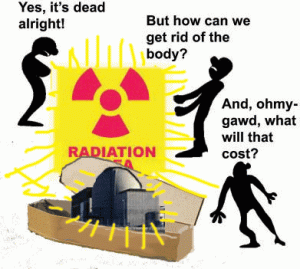
Dismantling of deactivated Fort Greely nuclear power plant to resume.
Alaska Public Media By Tim Ellis, KUAC – Fairbanks, August 25, 2023
The decommissioning of an old nuclear power plant at Fort Greely can move forward now that the federal agency overseeing the project has resolved a contract dispute that delayed work for more than a year.
Work on the final phase of decommissioning and dismantling the long-mothballed SM-1A heat and power plant has been on hold since late last year, when a company that was competing for the contract began filing protests over how the Army Corps of Engineers handled the bid proposals…………………………………………………………………………………………
Barber said the year-long, back-and-forth process of reviewing and re-evaluating the proposals means the completion date of the project also will be pushed back by a year.
“So we’re looking at 2029, at this point,” she said, adding that it’ll take a while for A3D to begin work on the facility……………..
The SM-1A’s highly enriched uranium dioxide fuel and most highly radioactive components of the facility were removed after it was shut down in 1972. Remaining materials have been entombed in concrete or safely stored onsite. Much of that will be removed as part of the contract with A3D……
Barber says when the the remaining work is completed, the SM-1A, like two other prototype military nuclear power plants developed during the Cold War, will finally all be decommissioned and dismantled. https://alaskapublic.org/2023/08/25/dismantling-of-deactivated-fort-greely-nuclear-power-plant-to-resume/
.
‘Powerful’ Ukrainian brigade loses US-made demining vehicles – Forbes
https://www.rt.com/russia/581697-ukraine-stryker-mine-clearing/ 25 Aug 23
The vehicles’ Stryker-type armor may not be suitable in a combat environment, the outlet’s report suggests
A Ukrainian brigade, which Forbes magazine had described as Kiev’s “most powerful unit” at the front lines, has lost 10% of its valuable mine-clearing vehicles just a week since joining the push against Russian defense lines, the outlet has reported.
The 2,000-soldier 82nd Air Assault Brigade, which is armed with four British-made Challenger 2 tanks, 40 German-made tracked Marder infantry fighting vehicles and 90 wheeled Stryker infantry fighting vehicles, had been kept in reserve until last week. It has since “written off” at least two of its 20 or so M1132 Engineer Squad Vehicles, Forbes reported on Tuesday.
The M1132 is a variant of the Stryker vehicle, which is equipped with mine rollers and is meant to clear a path through a minefield for advancing forces. The loss was hardly surprising, the report suggested, considering the role of the armor and its relatively weak protection.
Normally, minefield-breaching vehicles have the chassis of a tank. The M1132, though better suited for transportation by air, is vulnerable to enemy fire and should ideally be used in surprise assaults where there is little resistance, Forbes writer David Axe explained.
The report is based on images of the destroyed vehicles circulating online. The publication noted that it was unclear how exactly they were neutralized or whether their crews had survived. The “good news,” Axe noted, is that the US Army “has hundreds more Strykers in storage” and can supply more to Ukraine.
The 82nd was deployed to the front line in the contested Zaporozhye Region and is involved in Ukraine’s push towards the village of Rabotino, which lately has seen some intensive fighting.
Kiev has rebuked media coverage of the maneuver. Deputy Defense Minister Anna Malyar declared on Monday that “the price of the headlines” of such published articles was “five airstrikes a day” targeting the brigade. She also threatened criminal prosecution for disclosing information about movements of Ukrainian troops.
Evgeny Balitsky, the Russian official who is serving as acting head of the region, reported on Tuesday that, in ten days, Kiev had lost some 1,500 troops and “countless military vehicles” in the area.
Concerned Citizens for Nuclear Safety Urges State Legislature to Protect the Española Aquifer from LANL Pollutants.
August 24th, 2023 http://nuclearactive.org/
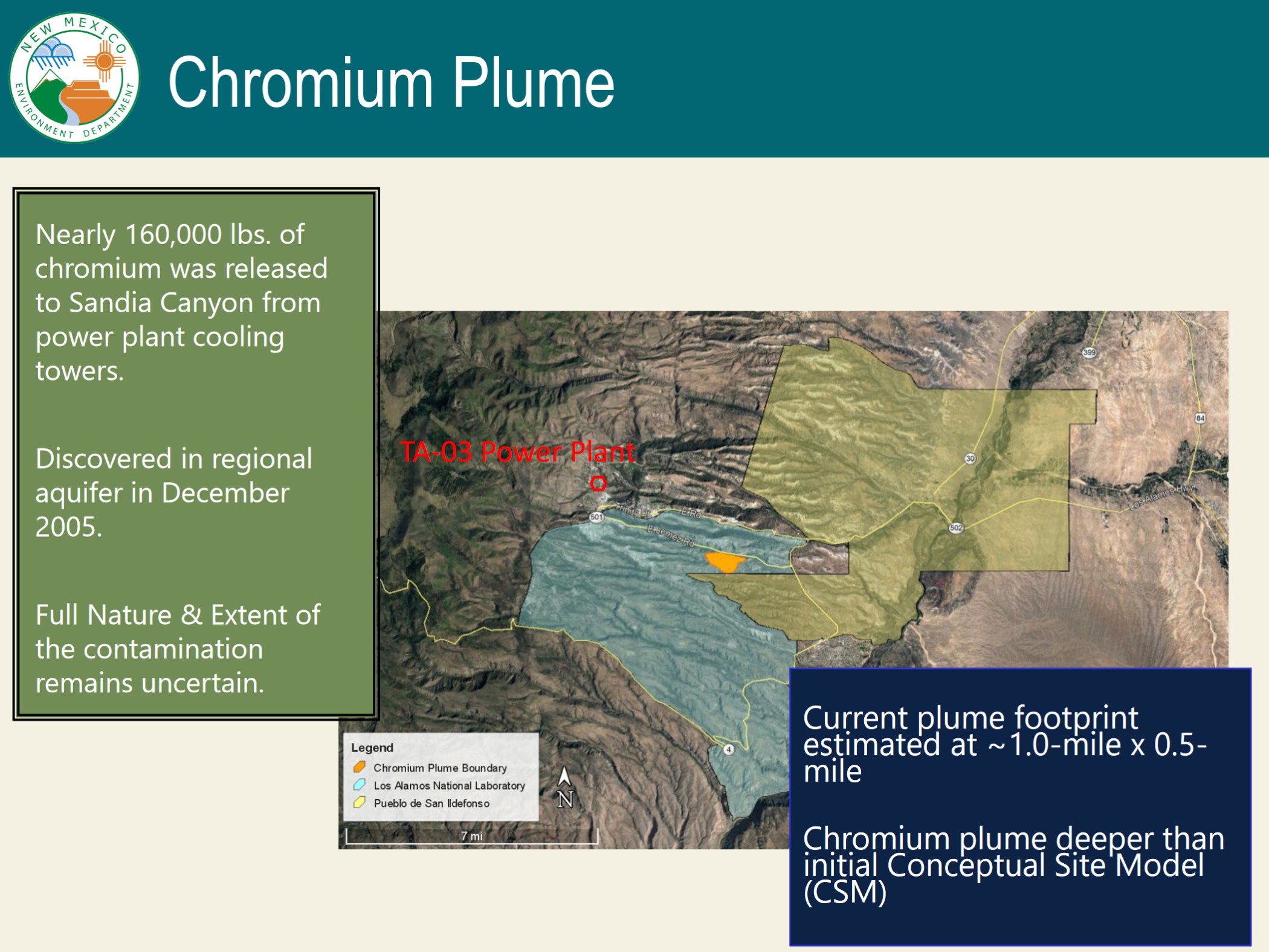
Did you know that in 2008 the Environmental Protection Agency (EPA) designated the 3,000 square mile Española Basin System as a Sole Source Drinking Water Aquifer? https://www.epa.gov/dwssa One ongoing concern is that Los Alamos National Laboratory (LANL) sits on its western edge, near the Valles Caldera. And a recent dispute between the New Mexico Environment Department and the Department of Energy about the LANL hexavalent chromium plume, which is being pushed deeper into the regional drinking water aquifer, highlights the need for state agencies to have the resources to protect it. See Powerpoint presentations titled “DOE-Los Alamos Field Office (1)” and “NMED Hex Chrome Plume” under Item 1.
On Monday, August 21st CCNS requested that a New Mexico Legislative Committee provide funding to key state agencies to protect this aquifer from LANL pollutants, which are migrating through the aquifer to the Rio Grande and beyond. The request to the New Mexico Radioactive and Hazardous Materials Committee was for line items for the budgets of the Office of the State Engineer and New Mexico Environment Department. See CCNS presentation “Concerned Citizens for Nuclear Safety” under Item 1. https://www.nmlegis.gov/committee/Handouts_List?CommitteeCode=RHMC&Date=8/21/2023
An important history: In 2006, La Cienega Valley Citizens for Environmental Safeguards and geo-hydrologist Zane Spiegel submitted a petition to the Environmental Protection Agency (EPA) to designate the area as a sole source aquifer. They argued that the aquifer supplies at least 50 percent of the drinking water for its service area and there are no reasonably available alternative drinking water sources should the aquifer become contaminated. The aquifer encompasses the area between the Jemez and Sangre de Cristo Mountains, from Tres Piedras to the north almost to Galisteo to the south.
Then, in 2008, after EPA determined that 85% of the drinking water in the area covered by the petition comes from wells in the aquifer, EPA approved the application and designated the aquifer as a sole source drinking water aquifer. http://www.nuclearactive.org/news/011808.html
Nevertheless, LANL has been investigating the hexavalent chromium contamination for nearly 20 years. http://www.nuclearactive.org/audio/092706.mp3 and http://www.nuclearactive.org/news/122206.html
More recently, NMED became concerned that the hexavalent chromium was being pushed further and further into the regional drinking water and ordered that the injection process be stopped. See NMED Hex Chrome Plume Powerpoint under “Item 1” at https://www.nmlegis.gov/committee/Handouts_List?CommitteeCode=RHMC&Date=8/21/2023
The threat posed to the Española Basin Sole Source Aquifer by the hexavalent chromium contamination encouraged CCNS to ask for legislative oversight by providing funding to the Office of State Engineer and New Mexico Environment Department.
It is important to note that three of the Los Alamos County drinking water wells are located close to the known perimeter of the hexavalent chromium plume.
A full recording of the August 21, 2023 meeting of the Radioactive and Hazardous Materials Committee meeting is available here: https://sg001-harmony.sliq.net/00293/Harmony/en/PowerBrowser/PowerBrowserV2/20230824/-1/73647 The presentation by Joni Arends, Executive Director of CCNS begins at 10:06 AM.
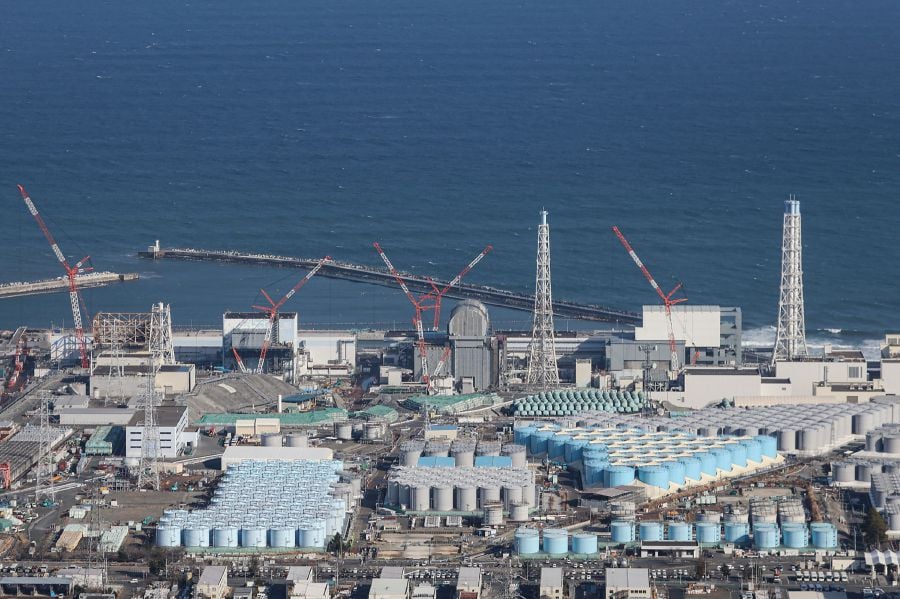
At Fukushima Daiichi, decommissioning the nuclear plant is far more challenging than water release.
“technical difficulty involving the decommissioning is much higher” than the water release and involves higher risks of exposures by plant workers to remove spent fuel or melted fuel.
Some experts say it would be impossible to remove all the melted fuel debris by 2051 and would take 50-100 years, if achieved at all.
BY MARI YAMAGUCHI, August 27, 2023
FUTABA, Japan (AP) — For the wrecked Fukushima Daiichi nuclear plant, managing the ever-growing volume of radioactive wastewater held in more than 1,000 tanks has been a safety risk and a burden since the meltdown in March 2011. Its release marks a milestone for the decommissioning, which is expected to take decades.
But it’s just the beginning of the challenges ahead, such as the removal of the fatally radioactive melted fuel debris that remains in the three damaged reactors, a daunting task if ever accomplished.
Here’s a look at what’s going on with the plant’s decommissioning:
…………………………………………………… WILL THE WASTEWATER RELEASE PUSH DECOMMISSIONING FORWARD?
Not right away, because the water release is slow and the decommissioning is making little progress. TEPCO says it plans to release 31,200 tons of treated water by the end of March 2024, which would empty only 10 tanks out of 1,000 because of the continued production of wastewater at the plant.
The pace will later pick up, and about 1/3 of the tanks will be removed over the next 10 years, freeing up space for the plant’s decommissioning, said TEPCO executive Junichi Matsumoto, who is in charge of the treated water release. He says the water would be released gradually over the span of 30 years, but as long as the melted fuel stays in the reactors, it requires cooling water, which creates more wastewater.
Emptied tanks also need to be scrapped for storage. Highly radioactive sludge, a byproduct of filtering at the treatment machine, also is a concern.
WHAT CHALLENGES ARE AHEAD?
About 880 tons of fatally radioactive melted nuclear fuel remain inside the reactors. Robotic probes have provided some information but the status of the melted debris remains largely unknown.
Earlier this year, a remote-controlled underwater vehicle successfully collected a tiny sample from inside Unit 1’s reactor — only a spoonful of the melted fuel debris in the three reactors. That’s 10 times the amount of damaged fuel removed at the Three Mile Island cleanup following its 1979 partial core melt.
Trial removal of melted debris using a giant remote-controlled robotic arm will begin in Unit 2 later this year after a nearly two-year delay. Spent fuel removal from Unit 1 reactor’s cooling pool is set to start in 2027 after a 10-year delay. Once all the spent fuel is removed, the focus will turn in 2031 to taking melted debris out of the reactors. But debris removal methods for two other reactors have not been decided.
Matsumoto says “technical difficulty involving the decommissioning is much higher” than the water release and involves higher risks of exposures by plant workers to remove spent fuel or melted fuel.
“Measures to reduce radiation exposure risks by plant workers will be increasingly difficult,” Matsumoto said. “Reduction of exposure risks is the basis for achieving both Fukushima’s recovery and decommissioning.”
HOW BADLY WERE THE REACTORS DAMAGED?
Inside the worst-hit Unit 1, most of its reactor core melted and fell to the bottom of the primary containment chamber and possibly further into the concrete basement. A robotic probe sent inside the Unit 1 primary containment chamber found that its pedestal — the main supporting structure directly under its core — was extensively damaged.
Most of its thick concrete exterior was missing, exposing the internal steel reinforcement, and the nuclear regulators have requested TEPCO to make risk assessment.
CAN DECOMMISSIONING END BY 2051 AS PLANNED?
The government has stuck to its initial 30-to-40-year target for completing the decommissioning, without defining what that means.
An overly ambitious schedule could result in unnecessary radiation exposures for plant workers and excess environmental damage. Some experts say it would be impossible to remove all the melted fuel debris by 2051 and would take 50-100 years, if achieved at all.
1 This Month

of the week – Shut Down Drone Warfare!


Tell the Ukrainian Government to Drop Prosecution of Peace Activist Yurii Sheliazhenko

Petition to revoke the licensing of the Near Surface Nuclear Disposal Facility (NSDF) at Chalk River. https://www.ourcommons.ca/petitions/en/Petition/Details?Petition=e-7247
To see nuclear-related stories in greater depth and intensity – go to https://nuclearinformation.wordpress.com
-
Archives
- April 2026 (68)
- March 2026 (251)
- February 2026 (268)
- January 2026 (308)
- December 2025 (358)
- November 2025 (359)
- October 2025 (376)
- September 2025 (257)
- August 2025 (319)
- July 2025 (230)
- June 2025 (348)
- May 2025 (261)
-
Categories
- 1
- 1 NUCLEAR ISSUES
- business and costs
- climate change
- culture and arts
- ENERGY
- environment
- health
- history
- indigenous issues
- Legal
- marketing of nuclear
- media
- opposition to nuclear
- PERSONAL STORIES
- politics
- politics international
- Religion and ethics
- safety
- secrets,lies and civil liberties
- spinbuster
- technology
- Uranium
- wastes
- weapons and war
- Women
- 2 WORLD
- ACTION
- AFRICA
- Atrocities
- AUSTRALIA
- Christina's notes
- Christina's themes
- culture and arts
- Events
- Fuk 2022
- Fuk 2023
- Fukushima 2017
- Fukushima 2018
- fukushima 2019
- Fukushima 2020
- Fukushima 2021
- general
- global warming
- Humour (God we need it)
- Nuclear
- RARE EARTHS
- Reference
- resources – print
- Resources -audiovicual
- Weekly Newsletter
- World
- World Nuclear
- YouTube
-
RSS
Entries RSS
Comments RSS
 nuclear-news