French Winter Power Twice as Pricey as Germany’s on Nuclear Woes

By Todd Gillespie, April 19, 2023 https://www.bloomberg.com/news/articles/2023-04-19/french-winter-power-twice-as-pricey-as-germany-s-on-nuclear-woes?leadSource=uverify%20wall#xj4y7vzkg
France’s weakened nuclear power output means the cost of its electricity for next winter is more than twice as expensive as Germany’s, as concerns over the health of the country’s reactors persist.
The “massive” gap of nearly €250 ($273) per megawatt-hour between French and German prices is because traders are pricing in more risk as they await updates on Electricite de France SA’s struggles with its aging atomic fleet, according to analysts at Engie SA’s EnergyScan. “No participants want to risk being short next winter,” they wrote.
French power for the first quarter of 2024 is trading at €416 per megawatt-hour, more than double Germany’s rate of €169. Normally a power exporter, France’s atomic generation has been gradually returning to service but still remains below historical averages.
France, which relies on nuclear energy for most of its electricity, is expected to remain heavily dependent on power imports during the winter months to meet its demand. Meanwhile, Germany closed its last nuclear plants Saturday after years of political tension over phasing out the technology, but is still very reliant on polluting coal-fired power.
French nuclear availability was at 62% on Wednesday, according to data compiled by Bloomberg. Nuclear output on Wednesday was above its level for this time last year after weeks of historic lows.
— With assistance by Josefine Fokuhl and Francois De Beaupuy
The Fukushima nuclear plant will start releasing treated wastewater. Here’s what you need to know.
The Canadian Press, Mari Yamaguchi, The Associated Press 23 Aug 23,
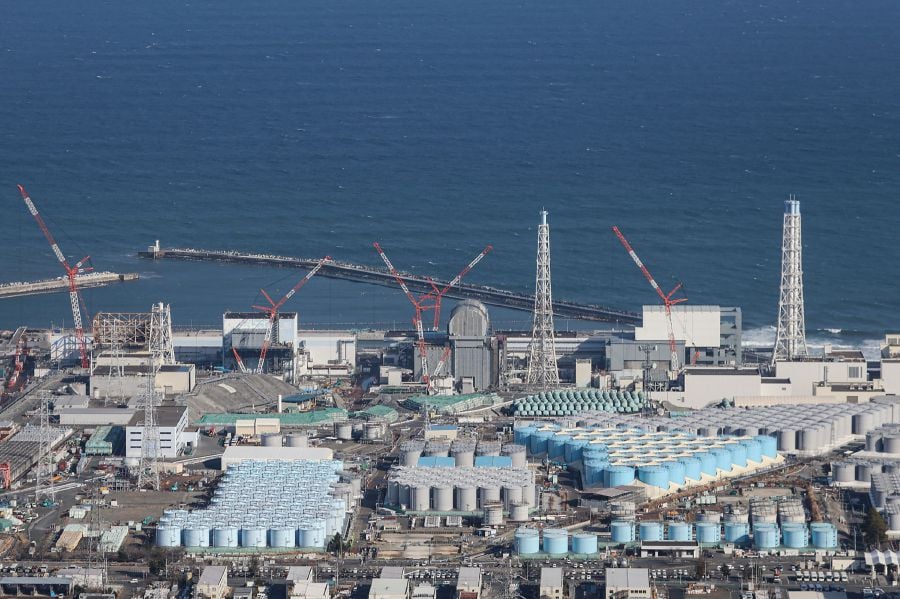
TOKYO (AP) — Japanese officials plan to start discharging treated radioactive wastewater from the damaged Fukushima Daiichi nuclear power plant into the Pacific Ocean on Thursday, a contentious step more than 12 years after a massive earthquake and tsunami set off a battle against ever-increasing amounts of radioactive water at the plant.
The government and plant operator say the release is an unavoidable part of its decommissioning and will be safely carried out, but the plan faces opposition in and outside Japan. Here is a look at the controversy.
WHY IS THERE SO MUCH WASTEWATER?
The March 2011 earthquake and tsunami destroyed the plant’s cooling systems, causing three reactors to melt. Highly contaminated cooling water applied to the damaged reactors has leaked continuously to building basements and mixed with groundwater.
The plant operator, Tokyo Electric Power Company Holdings (TEPCO), has taken steps to limit the amount of groundwater and rainwater entering the reactor area, and has reduced the increase in contaminated water to about 100 tons a day, 1/5 of the initial amount. The water is collected and partly recycled as cooling water after treatment, with the rest stored in around 1,000 tanks, which are already filled to 98% of their 1.37 million-ton capacity.
WHY IS TEPCO RELEASING THE WATER NOW?
The government and TEPCO say they need to make room for the plant’s decommissioning and prevent accidental leaks from the tanks.
Japan has obtained support from the International Atomic Energy Agency to improve the transparency and credibility of the release and ensure it meets international safety standards. The government has also stepped up a campaign promoting the plan’s safety at home and through diplomatic channels.
WHAT’S IN THE TREATED WATER’?
The water is being treated by what’s called an Advanced Liquid Processing System, which can reduce the amounts of more than 60 selected radionuclides to government-set releasable levels, except for tritium, which officials say is safe for humans if consumed in small amounts.
About 70% of the water held in the tanks still contains cesium, strontium, carbon-14 and other radionuclides exceeding government-set levels. It will be retreated until the concentrations meet those limits, then diluted by more than 100 times its volume of seawater before it is released. That will bring it way below international safety limits, but its radioactivity won’t be zero.
HOW SAFE IS IT?
IAEA concluded in a report that the plan, if conducted as designed, will have negligible impact on the environment and human health. IAEA chief Rafael Grossi visited the plant and said he was satisfied with preparations.
Japan’s government says the release of tritium into the sea is a routine practice by nuclear plants around the world and that the amount will be several times lower than from plants in China and South Korea.
Scientists generally support the IAEA’s conclusion, while some call for more attention to dozens of low-dose radionuclides that remain in the water, saying data on their long-term effects on the environment and marine life are insufficient.
HOW WILL IT BE RELEASED?
TEPCO executive Junichi Matsumoto says the release will begin with the least radioactive water to ensure safety. After samples are analyzed in final testing, the water will be transported through a thin black pipe to a coastal area where it will be diluted with hundreds of times its volume of seawater.
The diluted water will enter an undersea tunnel and be released a few minutes later from a point 1 kilometer (0.6 mile) off the coast. The release will be gradual and will continue for decades until the decommissioning of the plant is finished, TEPCO officials say. Matsumoto said the slow release will further reduce the environmental impact.
Final preparation for the release began Tuesday when just 1 ton of water was sent for dilution with 1,200 tons of seawater, and the mixture was to be kept in the primary pool for two days for final sampling to ensure safety, Matsumoto said. A batch of 460 tons will be sent to the mixing pool Thursday for the actual discharge.
The company plans to release 31,200 tons of treated water by the end of March 2024, which would empty only 10 tanks because of the continued production of wastewater at the plant. The pace will later pick up.
WHY ARE PEOPLE WORRIED?
Fukushima’s badly hit fisheries, tourism and economy are still recovering from the disaster. Fisheries groups worry about a further damage to the reputation of their seafood. Fukushima’s current catch is only about one-fifth its pre-disaster level due to a decline in the fishing population and smaller catch sizes.
The head of the National Federation of Fisheries Cooperatives, Masanobu Sakamoto, said on Monday that “scientific safety and the sense of safety are different.”
Groups in South Korea and China have also raised concerns, turning the release into a political and diplomatic issue. China has stepped up radiation testing of fishery and agricultural products from Fukushima and nine other prefectures, halting exports at customs for weeks, Fisheries Agency officials say.
WHAT IF SOMETHING GOES WRONG?
The Japanese government says potential risks from the release of treated water are limited to reputational damage resulting from rumors, rather than scientific study. It has allocated 80 billion yen ($550 million) to support fisheries and seafood processing and combat potential reputation damage. TEPCO has also promised to deal with reputational damage claims.
More nuclear challenges await Japan after Fukushima water release
By Kiyoshi Takenaka, TOKYO, Aug 24 (Reuters) https://www.reuters.com/world/asia-pacific/more-nuclear-challenges-await-japan-after-fukushima-water-release-2023-08-24/ Twelve years after the Fukushima nuclear disaster, Japan has started to release treated radioactive water into the sea, a key step in the process of decommissioning the stricken plant, but much tougher tasks lie ahead, such as molten fuel removal.
Here are the challenges facing the government and plant operator Tokyo Electric Power Co (Tepco) (9501.T) as they try to draw a line by the middle of the century under the world’s worst nuclear accident since Chornobyl.
MOLTEN FUEL REMOVAL
Tepco has described the effort to remove highly radioactive fuel debris from reactor cores as an “unprecedented and difficult challenge never attempted anywhere in the world”.
Trial-based retrieval at the No.2 reactor, the first at the plant to go through such a step, has been delayed twice from an initially scheduled date of 2021, and is now set for a six-month period starting in October.
At Three Mile Island (TMI), the U.S. nuclear plant in Pennsylvania that partly melted down in 1979 after a failure, fuel debris was kept under water during retrieval work, providing a shield against radiation.
That was the worst nuclear plant accident before the 1986 Chornobyl tragedy in Ukraine, then part of the Soviet Union.
Japan and Tepco plan to remove molten fuel while it is exposed to air because it is difficult to fill the badly damaged reactor cores with water.
But that will also make it hard to protect workers and retrieval gear from strong radiation.
The Fukushima plant suffered triple meltdowns, compared to the single fuel core meltdown at Three Mile Island, which means the debris retrieval operation will be much larger and more complicated this time around.
The retrieval will be done by a remotely controlled, 22-metre-long (72-foot) robot arm. The initial stage aims to extract only a few grammes of fuel debris, although the total molten fuel at the plant is estimated to be 880 metric tonnes.
RADIOACTIVE SOIL
The 2011 accident spewed radiation into the air, which eventually contaminated the soil. Part of that tainted soil is stored at an interim site more than four times as big as New York’s Central Park.
But the law requires the soil stored at the interim site, located next to the tsunami-wrecked power plant, to be moved out of Fukushima within 30 years from when it began operating in 2015.
More than a quarter of that interval has elapsed with no clear sign the government is nearer to securing permanent storage, though the environment ministry says the earliest the search for specific locations will start is 2025.
BALLOONING COSTS
In 2016, the government doubled to 21.5 trillion yen ($148.60 billion) its estimate of the costs of responding to the Fukushima disaster, including compensation, decommissioning and decontamination efforts.
About 12.1 trillion yen had been spent on such activities by March 2022, Japan’s audit panel, which reviews government expenditures, has said.
That represents an expenditure of more than half of the government’s estimate, even before really tough tasks such as fuel debris retrieval have begun, in turns raising concerns about cost overruns.
Tepco’s continuing payouts to the victims hits its bottom line.
In 2019, a private think tank, the Japan Center for Economic Research, said compensation, decommissioning and decontamination costs were expected to reach 41 trillion yen in a scenario in which Fukushima water was diluted and discharged into the sea.
($1 = 144.6800 yen)
North County Report: What’s the Deal with San Onofre’s Nuclear Power Plant?
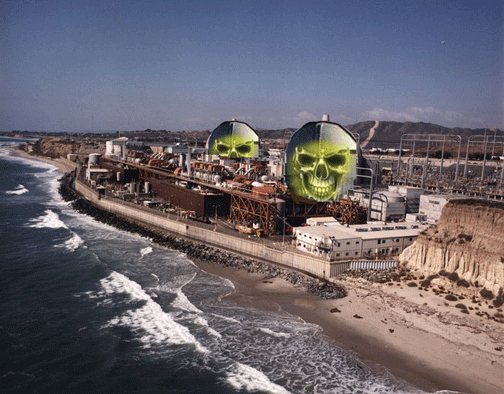
Federal and public officials have been working to dismantle the San Onofre nuclear power plant for about a decade, but there’s still a long way to go. Here are the latest developments.
Voice of San Diego, by Tigist Layne, 24 Aug 23
“………………………………………………………. For the past several years, SoCal Edison has been dismantling the plant, a process known as decommissioning. Once that process is complete, the land will go back to its owner, the U.S. Navy.
Before that can happen, though, there’s the issue of the 3.55 million pounds of nuclear waste currently sitting inside the facility.
The latest: Manuel Camargo, principal manager of the San Onofre Decommissioning Project, said 50 percent of the plant has been decommissioned so far. The San Onofre Decommissioning Project was created by SoCal Edison.
As for the nuclear waste, also known as spent nuclear fuel, the Department of Energy is moving forward with a plan to transport the fuel into a temporary storage facility. Once that happens, officials can complete the decommissioning process.
Decommissioning of the Plant Is Carried Out in Three Phases
- First, after allowing the spent nuclear fuel to cool for a few years, the decommissioning team packaged the spent fuel into seal-welded stainless-steel canisters and transferred it to an onsite storage system. That transfer was completed in 2020, Edison International spokesperson Jeff Monford wrote in an email.
- Next is the demolition of above-ground structures like pressure vessels, pumps, motors, fans, cables and structural steel, which are removed from the buildings, packaged and sent offsite for disposal. The rest of the concrete structures are then demolished and transported to a disposal facility in Utah.
- Remaining underground structures will be decontaminated according to federal guidelines for cleanup of the site. The team anticipates this to be completed by 2028, Camargo said.
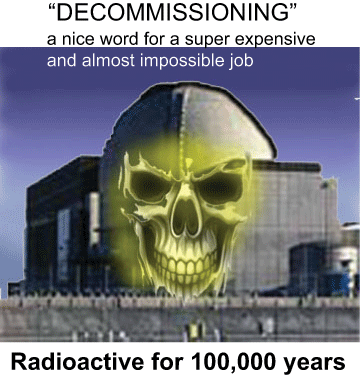
The final phase of decommissioning and site restoration will occur after the spent nuclear fuel is removed from the site.
The two containment domes are expected to come down sometime in 2025 or 2026.
The big storage issue: By now, you’ve probably gathered that without a place to store the spent nuclear fuel, the decommissioning can’t be completed. And there’s a reason it’s been so hard to find storage space: The federal government doesn’t have a single designated place in the United States to permanently store and/or dispose of spent nuclear fuel.
Let’s rewind to 1982 when the Nuclear Waste Policy Act became law. It established a national program for the disposal of highly radioactive waste and supports the use of deep geologic repositories to store and/or dispose of that waste.
A deep geologic repository is essentially a cavern a couple thousand feet below the Earth’s crust where the spent fuel would be placed, and it would stay there forever. It’s a way to store the waste while avoiding the contamination of the air, ground and underground water.
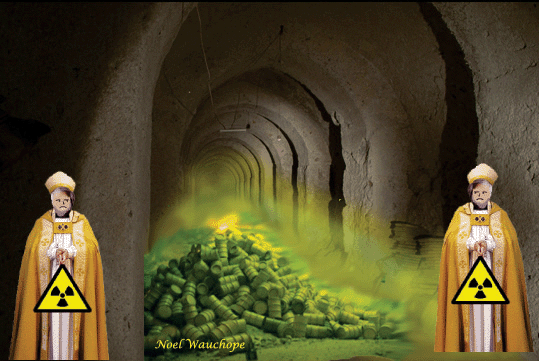
…………………………. until a permanent site is established by the federal government, the Department of Energy is stepping in.
……………………………………… ….Officials are planning to use consent-based siting to establish these storage facilities, meaning only cities and jurisdictions that are willing and able to store the spent nuclear fuel will be considered and chosen.
But these storage sites will be temporary. ……………………
The Department of Energy also needs approval from Congress to create these interim storage sites because the Nuclear Waste Policy Act would have to be modified to allow for it. It will also be up to lawmakers to eventually amend the act and establish another permanent deep geologic repository for spent fuel.
A few different groups are now working together to get this done: the Spent Nuclear Fuel Solutions Congressional Caucus established by Rep. Mike Levin; the Department of Energy; and the Spent Fuel Solutions coalition, which includes San Diego County, Orange County, Riverside County, SoCal Edison, San Diego Gas & Electric and the City of Riverside. https://voiceofsandiego.org/2023/08/23/north-county-report-whats-the-deal-with-san-onofres-nuclear-power-plant/
The ageing nuclear reactors. How to keep them going for decades, (best to forget coming climate extremes)
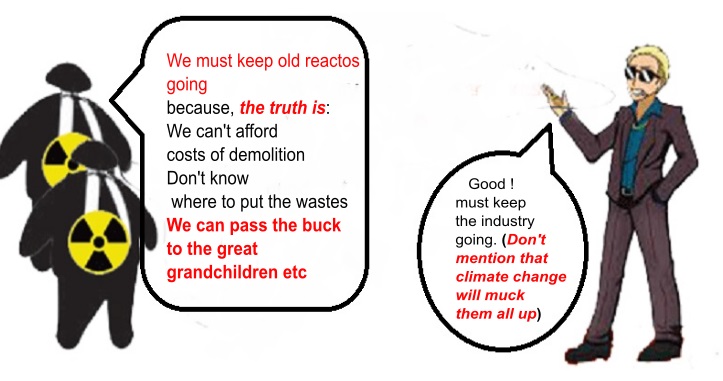
plant-specific climate simulations do not exist for lower river levels, increased wildfires, or extreme weather events like tornadoes and heavy wind and rain.
Then there’s the issue of what to do with radioactive spent fuel.
Europe’s atomic reactors are getting old. Can they bridge the gap to an emissions-free future?
Reuters, By America Hernandez, Forrest Crellin, Prasanta Kumar Dutta, Anurag Rao and Aditi Bhandari, Aug. 22, 2023
Shaken by the loss of Russian natural gas since the invasion of Ukraine, European countries are questioning whether they can extend the lives of their ageing nuclear reactors to maintain the supply of affordable, carbon-free electricity — but national regulators, companies and governments disagree on how long the atomic plants can be safely kept running………………………………………………
Taken together, the UK and EU have 109 nuclear reactors running, most of which were built in the 1970s and 1980s and were commissioned to last about 30 years.
That means 95 of those reactors — nearly 90% of the fleet — have passed or are nearing the end of their original lifespan, igniting debates over how long they can safely continue to be granted operating extensions.
Extension talk: Bridging the gap or a new lease of life?
Regulations differ across borders, but life extension discussions are usually a once-a-decade affair involving physical inspections, cost/benefit estimates for replacing major worn-out parts, legislative amendments, and approval from the national nuclear safety authority.
In some countries — especially for those that planned to exit atomic power entirely after the 2011 Fukushima nuclear disaster in Japan — discussion is focused on the short term: eking out a few years to get through any shortages before new wind, solar and gas installations can be built to take over.
Anti-nuclear Germany had planned to switch off its last three plants by the end of 2022, only to grant the sites an emergency extension to April 2023 to make it through winter without Russian gas — which previously made up 40% of EU gas supply……………………………………….
So far, Finland, Sweden, Bulgaria, the Czech Republic, Slovenia, the Netherlands and Hungary have all taken steps to allow reactors to run for at least 60 years, subject to regular safety checks.
France, with the largest fleet, is carrying out a major 40-year inspection and refurbishment programme for its 32 oldest reactors.
ASN, the national safety authority, has said France’s pressurised water reactor (PWR) design in principle can be safely operated for 50 years — meaning the ageing plants can run through 2030 — but the regulator will not take a stance on extending to 60 years until the end of 2026……………………………………..
Some companies are pushing the limits further.
In February, Finland’s Fortum obtained permission to operate two reactors until 2050, when they will reach 70 years of age.
In Sweden, where licences are unlimited in time subject to regular safety checks, Vattenfall is considering 80 years of operation for its five reactors……………… More than scientific one-upmanship is at play.
…………………. The cost of pulling the plug
Politicians are also under pressure to keep energy prices low, especially as movements characterising climate action as costly and elitist gain ground.
That means ensuring steady, abundant supply — any swift, unexpected loss of a major source means market spikes and painful household bills.
Energy prices in Europe jumped exponentially in 2022 after many French reactors went offline. The impact was compounded by Russia’s invasion of Ukraine.
…………………………………..The biggest challenge is maintaining the reactor vessel, where uranium atoms are split to release neutrons inside the core. Those flying neutrons also hit the vessel’s steel walls, altering the lattice structure of the metal, making it hard and brittle.
Vattenfall and EDF try to slow down that embrittlement process by layering in special rods of hafnium metal or all……………………………….
Reactor vessels are generally seen as non-replaceable — though it has never been tried.
The same goes for the airtight containment building, which houses the reactor and all associated radiation-emitting parts, to keep it from being released into the atmosphere.
………………………… The French government, which this year nationalised EDF, has estimated it needs to hire and train at least 100,000 workers by 2033 if it hopes to run its fleet long term and build at least six new reactors.
That includes automation engineers, boilermakers, draughtsmen, electricians, maintenance technicians, blacksmiths, pipe fitters and welders.
Europe’s new pro-nuclear alliance would require some 450,000 skilled workers if it hopes to build an additional 50 GW of new nuclear by 2050, according to industry lobby Nucleareurope.
2050 and beyond: Hotter, drier, more radioactive trash
Industry cheerleaders point to Dubai’s new Barakah nuclear plant as proof reactors can be successfully designed to withstand desert heat and warmer water temperatures.
But few plants have room to be retrofitted with new safety systems, such as a dyke wall to protect against rising water levels, regulators warn.
“It’s a real headache to find [physical] space on a site that’s currently operating — we have reached certain limits in the feasible modifications of existing reactors,” said Karine Herviou, deputy director-general of France’s Institute for Radioprotection and Nuclear Safety, at the industry event on lifetime extensions.
The French fleet’s temperature margin to withstand heatwaves is constantly questioned, she added, while plant-specific climate simulations do not exist for lower river levels, increased wildfires, or extreme weather events like tornadoes and heavy wind and rain.
As a result, Herviou said in France: “There’s a general agreement that what we’ll do at the 50-year, 60-year mark will essentially be replacements for modernisation but very certainly not adding in any new safety systems … and checking for conformity and respect of already-applicable requirements, without further hiking the safety requirements.”
That rings alarm bells for third-party watchdogs like Mycle Schneider, who compiles the annual World Nuclear Industry Status Report and said ageing reactors need tighter scrutiny.
“You have a car, 30-to-40 years old, and your generator breaks down. You open the hood, the mechanic takes out the generator and then says, ‘Ooh, everything underneath is rotten’ — a 40-year-old nuclear plant is not all that different, you basically find on the go all kinds of things you didn’t expect to find,” Schneider said.
EDF wants the government to relax biodiversity rules which forbid plants from dumping used cooling water into nearby rivers on days they are deemed already too warm, limiting power production — which risks becoming more frequent.
Then there’s the issue of what to do with radioactive spent fuel.
Used uranium pellets, which are solid, are stored in special refrigerated swimming pools designed to cool the radioactive heat down for five-to-10 years. French company Orano then separates out the material into non-recyclable leftovers that are vitrified into glass (4% of the material), plutonium (1%) to create a new nuclear fuel called Mox, on which some 40% of France’s reactors can run; and reprocessed uranium (95%) which for now can only be re-enriched and “recycled” at one plant in Russia.
Non-recyclable waste can be safely stored in dry casks, but its ultimate destination is deep underground, where it will fully degrade over hundreds of thousands of years.
Sweden, Finland and France have plans to build such long-term underground sites……………………………………………………………………………… https://www.reuters.com/graphics/EUROPE-ENERGY/NUCLEARPOWER/gdvzwweqkpw/
For the sake of Suffolk, Nuclear Free Local Authorities urge Centrica to ‘Say Non to Sizewell C’
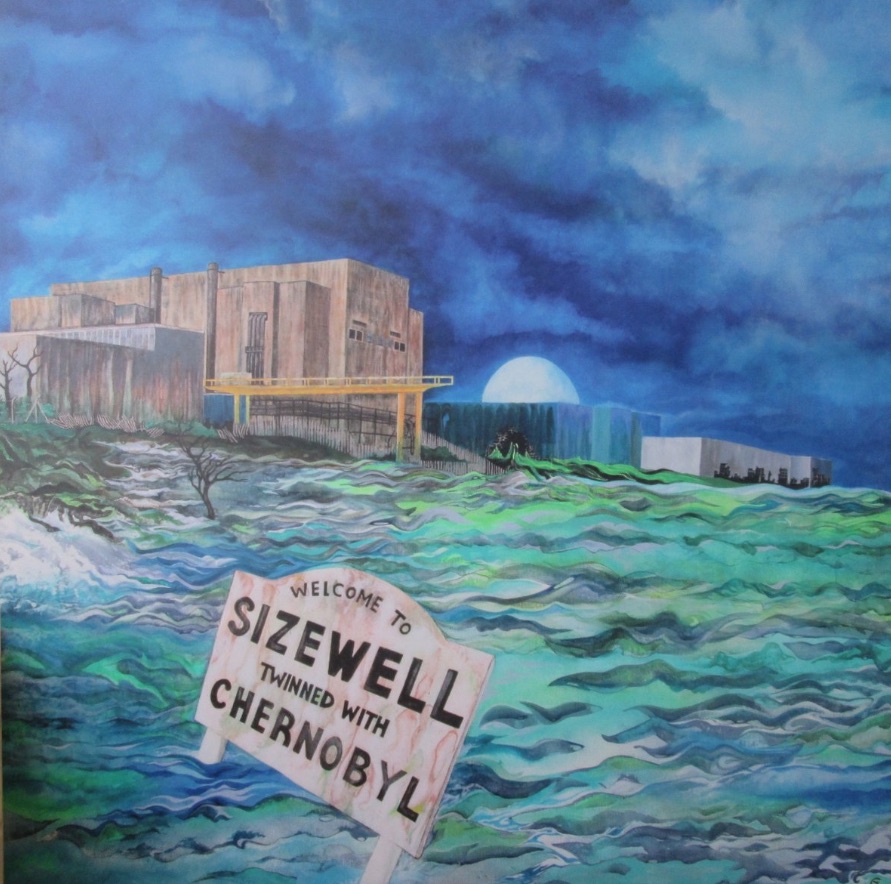
Sizewell C is also a site presenting unique challenges. It is located on the Suffolk Heritage Coast, facing the increasing threat of storm surges……………
The Chairs of the Nuclear Free Local Authorities (NFLA) Steering Committee and the NFLA English Forum have written to the Chief Executive of Centrica, which owns British Gas, urging him ‘for the sake of our planet, the people, fauna and flora of Suffolk, the wallets of your hard-pressed electricity customers, and your own company bottom-line’ to say NON to Sizewell C.
The Times reported in July that Chief Executive Chris O’Shea was considering taking a stake in the project and Councillors O’Neill and Blackburn in their letter point out the pitfalls of investment ‘which would bring with it clear financial, ESG and reputational risks for Centrica’.
EDF Energy, now wholly owned by the French state, is currently building a similar plant at Hinkley Point C in Somerset – its history has not been a happy one with the project hugely behind schedule and massively over budget. In addition, Sizewell C will utilise the same EPR reactor as Hinkley Point C, a reactor design with a chequered safety and reliability record. A reactor in China was involved in an accident and is currently again shutdown (Taishan-1) and in Finland a second one only came online after the operator was forced to carry out repairs after a succession of equipment failures (Olkiluoto-3).
Sizewell C is also a site presenting unique challenges. It is located on the Suffolk Heritage Coast, facing the increasing threat of storm surges and coastal erosion, and with climate change modelling suggesting it would become inundated and isolated; there are several sites of scientific interest nearby; and the county is under increasing water stress with fears that there will be insufficient fresh water to meet the needs of the plant as well as local people.
The Councillors point out that several prospective investors who manage large pension funds have clearly indicated that ‘they will not be dipping their financial toe into the radioactive water’ of Sizewell C. Pension managers at The People’s Pension; Nest; BT; BBC; Tesco; and Pearson have all, in correspondence seen by campaigners at Stop Sizewell C, indicated they will not be backing Sizewell C, whilst the Daily Mail reported that Nat West and BT told the paper they would also not be investing and Legal and General’s Nigel Wilson told the BBC’s Today programme: “We are not big fans of HS2 and Sizewell C”.
Councillor O’Neill believes this to be sage advice:
“At a current projected cost of £32.7 billion, Hinkley Point C’s budget is fast approaching twice its first estimate at the time of financial close, and there is no reason to believe that Sizewell C will be delivered any more quickly or any more cheaply as the construction of large nuclear power plants in the UK is a litany of projects being delivered late and vastly over budget.”
Councillor David Blackburn, Chair of the NFLAs English Forum, is a co-signatory to the letter. He is urging opponents of the project to also contact Centrica to ask them not to invest:
“It would be far wiser for Centrica to direct every available penny into the proven renewable technologies that we already have now – these would generate power and heat far more quickly and more cheaply, and generate for them a more immediate financial return, than any further investment in this monstrous nuclear boondoggle.
“The NFLAs are pleased to back the campaign launched by Stop Sizewell C asking supporters to send an email directly to Mr O’Shea asking him not to invest in Sizewell C.
“You can take this direct action in just a few clicks by going to the site at https://action.stopsizewellc.org/centrica
The role of nuclear in the UK’s energy mix.
In 2022, nuclear power provided 13.9% of total electricity supplied in the UK. However, as the table below [on original] illustrates, its contribution has fallen significantly since
the 1990s, when it provided around a quarter of the UK’s total
electricity supply.
Since 1995 there have been eight nuclear plant
closures, with no new plants coming online, reducing installed nuclear
capacity reducing by more than a quarter.
Declining nuclear capacity has
been (more than) compensated for by the rise of renewable energy, whose
share of electricity generation rose from 3% in 2000 to 42% in 2022.
The chief scientist of Greenpeace UK, Dr Doug Parr, said that the nuclear
industry was making “speculative claims” regarding the proposed
benefits of SMRs relative to conventional nuclear power. He said that
“SMRs have no track record, but initial indications are that the familiar
problems of cost overruns and delays will be repeated”.
In addition to these concerns, Steve Thomas, an emeritus professor of energy policy at the
University of Greenwich, suggests that the focus on SMRs will divert time
and resources away from energy efficiency and renewables which he believes
are the “answers” to net zero electricity generation.
Professor Thomas’s position is in line with that of the Green Party, the Liberal
Democrats, and the Scottish National Party. The co-leader of the Green
Party Adrian Ramsey has described nuclear as an “expensive
distraction”, arguing that renewable energy technologies and energy
efficiency are “cleaner and cheaper solutions that can be delivered far
quicker than nuclear ever can”.
Wera Hobhouse, the Liberal Democrat
energy and climate change spokesperson, has also criticised the expense of
nuclear power relative to renewables. Referring to the Nuclear Energy
(Financing) Act 2022, she argued it was “madness” that the government
had “recently passed a new law that will allow them to add levies to
energy bills to fund new nuclear plants”.
Scotland’s last remaining
nuclear power plant in Torness is due to close in 2028 and SNP energy
spokesperson Alan Brown has said that the UK government should be focussing
its efforts on Scotland’s “renewable energy potential” rather than
attempting to build more nuclear power stations.
House of Lords Library 23rd Aug 2023
French nuclear watchdog ASN issues first lifespan extension to 40-year-old reactor
French nuclear watchdog ASN issued a decision allowing for the continued
operation of state-owned utility EDF’s Tricastin 1 nuclear reactor in
southern France, the first lifetime extension granted to a French reactor
after 40 years of operation.
In a decision published on Aug. 10 and seen by
Reuters on Tuesday, ASN granted the reactor an extension until its next
review, so for another ten years. Some 32 of France’s fleet of 56 reactors
are up for their fourth ten-yearly inspection this decade, leaving French
energy production reliant on securing a swathe of reactor extensions for
another ten years.
Reuters 22nd Aug 2023
Global Campaign Against Ocean Dumping of Nuclear Wastewater Worldwide Urgent Actions against Japan’s ocean dumping of nuclear wastewater on Aug 24th.
1. The USA
- Los Angeles, Aug 23rd, 12 – 1 PM @ Japanese Consulate
- New York, Aug 23rd, 12 – 1 PM @ Japanese Consulate (E 49th St & Park Ave.)
- Washington DC, Aug 25th, 11am @ Japanese Embassy
- Seattle, Washington, Aug 26th, 2pm @ Seattle Downtown ‘West Lake Park’
Organized by Global Candlelight Action
2. UK
- North Wales, Aug 25th, 5pm @ Bangor pier
Organized by PAWB ( People Against Wylfa B) and CADNO
3. Germany
- Berlin, Aug25th, 5 pm @ Brandenburg Gate
- Frankfurt, Aug 26th, 3 pm @ Rathenauplatz (Goetheplatz)
- Hamburk, September 9th
Organized by Global Candlelight Action
4. Fiji
- Suva, Aug 25th, 10am @ Japanese Embassy
Organized by PANG, Alliance for Future Generations, Pacific Conference of Churches; FWRM, DIVA for Equality and others joining the March including the largest Indigenous women’s network.
5. Japan
- Tokyo, Aug 22nd @ Japanese PM house
- Tokyo, Aug 23rd @ TEPCO
- Fukushima Iwaki, Aug 27th
Organized by Japanese CSOs alliances
6. Switzerland
- Zurich, September 16th
Organized by Global Candlelight Action
7. Canada
- Civil Zoom rally, on August 24, 5 pm
Organized by civil society in Canada
8. Australia
- Melbourne, Aug 26th (Sat), 5 pm @ Korea Society of Victoria
Organized by Global Candlelight Action
9. Korea
- Seoul, Aug 23rd, 7pm @ Japanese Embassy
- Seoul, Aug 24th, 7pm @ Japanese Embassy
- Seoul, Aug 26th, 6pm @ Korea Press Center
- 17 local cities nationwide in Korea hold a press conference and rallies from Aug 22nd~31st
Organized by Korean civil society alliances / Korean Peoples’ Action to Stop Dumping of Fukushima Daiichi Radioactive Water(KPA-SDFDRW)
1 This Month


Tell the Ukrainian Government to Drop Prosecution of Peace Activist Yurii Sheliazhenko

Petition to revoke the licensing of the Near Surface Nuclear Disposal Facility (NSDF) at Chalk River. https://www.ourcommons.ca/petitions/en/Petition/Details?Petition=e-7247


of the week – STOP SMALL MODULAR REACTORS IN CANADA
To see nuclear-related stories in greater depth and intensity – go to https://nuclearinformation.wordpress.com
-
Archives
- March 2026 (176)
- February 2026 (268)
- January 2026 (308)
- December 2025 (358)
- November 2025 (359)
- October 2025 (376)
- September 2025 (258)
- August 2025 (319)
- July 2025 (230)
- June 2025 (348)
- May 2025 (261)
- April 2025 (305)
-
Categories
- 1
- 1 NUCLEAR ISSUES
- business and costs
- climate change
- culture and arts
- ENERGY
- environment
- health
- history
- indigenous issues
- Legal
- marketing of nuclear
- media
- opposition to nuclear
- PERSONAL STORIES
- politics
- politics international
- Religion and ethics
- safety
- secrets,lies and civil liberties
- spinbuster
- technology
- Uranium
- wastes
- weapons and war
- Women
- 2 WORLD
- ACTION
- AFRICA
- Atrocities
- AUSTRALIA
- Christina's notes
- Christina's themes
- culture and arts
- Events
- Fuk 2022
- Fuk 2023
- Fukushima 2017
- Fukushima 2018
- fukushima 2019
- Fukushima 2020
- Fukushima 2021
- general
- global warming
- Humour (God we need it)
- Nuclear
- RARE EARTHS
- Reference
- resources – print
- Resources -audiovicual
- Weekly Newsletter
- World
- World Nuclear
- YouTube
-
RSS
Entries RSS
Comments RSS
 nuclear-news