Nuclear Power Plants as Targets of War — A New Worry?

Energy Intelligence, Aug 14, 2023, Author Stephanie Cooke,
When writer-director Christopher Nolan told his teenage son about his plans for the movie Oppenheimer, his son told him, “That’s just not something anybody worries about anymore,” Nolan told the New York Times. With so much else to worry about, it’s no surprise that nuclear weapons no longer register as a threat to a generation that never felt the fear or moral weight of them. Climate change is the new focal point and for good reason. But if Nolan’s son is correct, when it comes to mitigating the dangers of nuclear power, especially for countries in and around war zones, politicians are off the hook. That’s a big mistake and one that could prove costly down the road.
Despite the shocking risks that Russian forces have created by their occupation and shelling of nuclear power reactors in Ukraine, the push to keep selling nuclear reactors, even in war zones, continues.
The Bulletin of Atomic Scientists in January moved its Doomsday Clock to 90 seconds to midnight — the closest to global catastrophe it has ever been. It cited Russia’s threat of nuclear weapons use in Ukraine, its occupation of the Zaporizhzhia nuclear power plant “violating international protocols and risking widespread release of radioactive materials,” and the undermining of efforts to deal with climate change. But the global resurgence of interest in new nuclear, most notably among several of Ukraine’s neighbors, but also among countries in Asia and Africa, sets us all up for even more trouble.
Russia’s invasion and occupation of the six-reactor Zaporizhzhia nuclear power plant on Mar. 4, 2022 was not the first time an operating nuclear plant had come under military attack; nor is it something unforeseen.
Since 1980 the Middle East has seen some 13 attacks on reactors (in Iran, Iraq, Syria and Israel), according to a July presentation by Henry Sokolski to the Los Alamos National Laboratory. Luckily, these attacks by aerial bombing or missile strikes either failed or avoided massive radiation releases because the reactors were mainly small research reactors that weren’t operating. Only one, Iraq’s Tuwaitha research reactor, was actually operating when the US struck it in 1991. And, unlike Ukraine’s situation, none of the reactors attacked in the Middle East were large-scale commercial power plants or situated in heavily populated areas as is Zaporizhzhia.In all of these attacks, the aim of the perpetrator, whether the US, Israel, Iran or Iraq, was to destroy a facility seen as integral to a clandestine nuclear weapons program.
Russia’s ground invasion and occupation of Zaporizhzhia, in contrast, demonstrates why commercial plants might become targets in future wars. Russia has used the plant to shield Russian troops and military personnel and equipment, gain control over Ukraine’s energy system, and provide a lever against European intervention through the threat of radiation contamination, according to a paper by the Royal United Services Institute for Defense and Security Studies.
Wider Threats
The idea of using nuclear plants as pawns in war is hardly unique to Russia, however. In Asia, North Korea has over the past decade suggested that nuclear power plants in both South Korea and Japan could be fair game for strikes; similar suggestions or alleged threats have been reported out of both Taiwan and China against each other.
A US war manual actually permits attacks on nuclear plants if they serve military objectives, including their use to deny power to enemy forces or to pre-empt enemy forces from hampering the movement or advance of US or allied forces. And it rejects any military-civilian distinction, stating that “under customary international law, no legal presumption of civilian status exists for persons or objects.”
But attacking nuclear plants, and ignoring the distinction between civil and military targets, or people, totally ignores the 1949 Geneva Convention and protocols to that convention added in 1977. These protocols, signed and ratified by 174 countries, tightened rules regarding military conflicts and discouraged military actions against nuclear power plants. The fundamental idea was to distinguish between combatants and non-combatants — including both people and facilities — and to prevent any attacks that would cause widespread harm to civilians. The US, alongside Iran and Pakistan, signed but did not ratify the protocols, and a further 20 countries, including India and Israel did neither. In 2019, Russia withdrew from the convention’s Protocol I relating to the protection of victims of international armed conflicts.
It’s important to understand that while some features of existing plants might mitigate a combat type attack, nuclear power plants are not designed to withstand a deliberate state-sponsored military attack. Nuclear safety and security rules are crafted to address conceivable accidents or terrorist threats but don’t address how to prevent or respond to full-on military attacks. Steps can be taken to harden vulnerable areas of nuclear plants, such as spent fuel pools, and active air defense and anti-drone systems can be deployed, among other things, but these substantially increase costs.
…………………………………………………………………………………………………………………………………………….. Eyes Closed
As governments and industry continue their headlong advance into the climate change breach with the promise of “clean, safe and secure” nuclear energy they conveniently do close their eyes to this issue. Asked about the implications for nuclear energy of Russia’s attack on Zaporizhzhia, IAEA Director General Rafael Grossi told the BBC, “The problem is that they are at war … The problem is not nuclear energy.” But that is precisely the problem — nuclear energy sites are attractive targets in war.
The US push for new nuclear business throughout central and eastern Europe, alongside competitors and sometime-collaborators in Canada, France and South Korea, completely ignores the inherent risks, given that these countries are already awash in nuclear energy. “Six of the 10 most nuclear-dependent countries are former Eastern bloc states. They all rely on nuclear power for more than 30% of their electricity, creating a vulnerability,” points out Sharon Squassoni, a former State Department official at George Washington University. The rationale is that nuclear will provide these countries a way around dependence on fossil fuels imports from Russia and other suppliers. But by opting for more nuclear these countries are swapping one type of energy insecurity for a far more dangerous version.
Stephanie Cooke is the former editor of Nuclear Intelligence Weekly and author of In Mortal Hands: A Cautionary History of the Nuclear Age. The views expressed in this article are those of the author.
For more coverage of the Ukraine crisis, visit Ukraine Crisis: Energy Impact >
https://www.energyintel.com/00000189-bbea-dbd9-a9df-fffe811a0000
The Inevitable Defeat: Retired US Colonel Speaks Candidly On Ukraine’s Losing Battle Against Russia

Retired US Army Colonel Lawrence B. Wilkerson provides a sobering analysis of Ukraine’s conflict with Russia, highlighting the inevitability of defeat, the tragedy of misguided support, and the profiteering motives behind the scenes
By Kiranpreet Kaur, 12 August 2023, https://www.easternherald.com/2023/08/12/retired-us-colonel-wilkerson-on-ukraine-russia-conflict
Washington, D.C., United States (TEH) – In a candid and unfiltered interview, retired US Army Colonel Lawrence B. Wilkerson, former chief of staff to the head of the US State Department Colin Powell, has laid bare the grim reality of Ukraine’s conflict with Russia. The authoritative American, who also serves as a freelance researcher at the Quincy Institute, did not mince words in his assessment of the situation.
“It was a disaster from the start. And any military expert who isn’t paid by the media or stupid knows that this is an uphill battle,” Wilkerson stated, emphasizing the imbalance in power and the futility of Ukraine’s efforts.
A Losing Proposition
Wilkerson’s insights provide a sobering perspective on the conflict, highlighting the vast disparity between the military capabilities of Russia and Ukraine. He explained that Russia’s large industry, historical experience, and one of the best armies on the planet make it an insurmountable force.
“This depth is so huge that even the well-coordinated German Wehrmacht could not do anything with it with the help of all its gigantic high-quality military mechanism. Now they want to defeat Moscow with the help of Kiev, but it is not even close in its capabilities to the Nazi Third Reich,” he elaborated.
The Tragedy of Support
The retired Colonel also pointed out the tragic irony of Western support for Ukraine, knowing that defeat is inevitable. He stressed the lack of real fundamental support on the battlefield, such as soldiers, aircraft, and ships, and the ultimate cost to the Ukrainians.
“They will lose, and this, in my opinion, is the whole tragedy. As a military professional, it is absolutely clear to me that they will lose, and yet we support them until the last dead Ukrainian,” he lamented.
Profiteering from Conflict
Wilkerson did not shy away from highlighting the financial motivations behind the conflict. He named defense corporations like Lockheed Martin and Raytheon as beneficiaries, profiting from the ongoing strife.
“There are other people who make money from this in other ways. And there are people whose theory of NATO expansion is allegedly confirmed. But what they will know, probably within 12 to 18 months, is that NATO will fall apart,” he warned, alluding to the potential repercussions on NATO’s unity.
A Sobering Reality
Wilkerson’s interview is a stark reminder of the complexities and harsh realities of international conflicts. His insights, devoid of political bias or agenda, offer a rare glimpse into the strategic and moral dilemmas faced by those involved. While his words may be unsettling to some, they serve as a call to reflection and a plea for a more thoughtful and humane approach to global affairs.
Power-Line Cut Raises Alarm Over Russian-Held Nuclear Plant In Ukraine, But Expert Says Little Has Changed

Todd Prince, Radio Free Europe, 14 Aug 23,
The fate of the massive nuclear power plant in the crosshairs of Europe’s largest war in decades has made for worrisome headlines since Russia launched its large-scale invasion of Ukraine nearly 18 months ago. As fighting intensifies not far from the plant, fears of a disaster have not abated.
On August 10, the main power line delivering electricity to the Zaporizhzhya nuclear power plant was disconnected twice, forcing it to rely on its last remaining off-site power line.
The main line was reconnected by evening. In the meantime, though, Ukraine’s energy minister raised the prospect of a meltdown.
Is Russia’s invasion of Ukraine about to cause a nuclear catastrophe?
Steven Nesbit, a nuclear power industry veteran who was president of the American Nuclear Society in 2021-22, told RFE/RL that the Zaporizhzhya plant has been in a precarious position since the start of Russia’s full-scale invasion. But the failure of the off-site power line did not make his assessment of the situation any more dire than it had been.
“I don’t see anything really new right now that should have people extremely concerned relative to the already undesirable situation,” he said, adding that the plant’s offsite power sources have been interrupted before due to the war.
“I would not be surprised if it happens again, but simply losing one of the off-site power sources for a period of time is not a reason for undue concern,” said Nesbit, who now runs his own nuclear consulting company…………………………………………………………
Energy Minister Herman Halushchenko said the plant was “one step away from a blackout — that is, the complete loss of external power,” and that this could lead to a “major catastrophe.”
Zaporizhzhya Nuclear Power Plant
The Zaporizhzhya Nuclear Power Plant is the largest in Europe and, before the war, supplied about 20% of Ukraine’s total electricity.
The plant would resort to diesel generators if all external power was lost, but if the generators were damaged by a Russian attack, he said, “the cooling of the plant would stop and the irreversible process of heating and melting of nuclear fuel” would begin.
“I think that’s a little alarmist,” Nesbit said in a phone interview on August 11.
The same day, Enerhoatom said on Telegram that the main power line had been reconnected the previous evening after being knocked out by Russian fire.
The diesel generators are well protected and have enough fuel to provide power to keep the cooling system going for an extended period of time while external sources are being restored, Nesbit said.
“The six units can share power among them. It’s a flexible and safe system,” he said.
The Zaporizhzhya plant has lost all external power at least twice in the past year.
…………………………………..The plant and the surrounding area are controlled by Russia, but it is being run by its Ukrainian engineers. In September 2022, Ukraine shut the station down to minimize risk of a catastrophe.
Five of the six reactors are in what is known as cold shutdown mode while one unit is being maintained at an elevated temperature — hot shutdown mode — to provide auxiliary steam and heating, the American Nuclear Society, which is monitoring information about the plant, said in July.
As a result, the level of heat production has been low and on-site equipment can provide enough of the water needed for cooling, the society, an international organization of engineers and scientists, said in a statement.
It called the threat of a large-scale release of radioactive material “speculative” but said that assessment does “not constitute an ‘all clear’ for safety risks at the plant site.”
Nesbit said it is of crucial importance that the reactors at the Zaporizhzhya plant have not been generating power for months, allowing the heating level associated with the reactor fuel to fall. The shutdown cuts by many orders of magnitude the amount of radioactivity that could potentially be released in the event of a major incident involving the reactors.
Still, tension is high.
The plant is located in the Zaporizhzhya region in southeastern Ukraine, where fighting is intense amid a counteroffensive that Kyiv launched in early June, seeking to push Russian forces back from territory they have taken and eventually expel them from the country altogether.
Zaporizhzhya is one of four regions of Ukraine that Moscow claimed last year had become part of Russia but does not hold in their entirety. The plant stands on the south bank of a wide stretch of the Dnieper River that was largely drained by the breach of the Kakhovka dam downstream, while Ukraine controls the north bank.
Ukraine and Russia have accused each other of planning to sabotage the plant, warning of the possibility of a nuclear disaster that could threaten millions of people and poison the environment………………………………………………. more https://www.rferl.org/a/power-cut-ukraine-nuclear-plant-expert-opinion/32547684.html
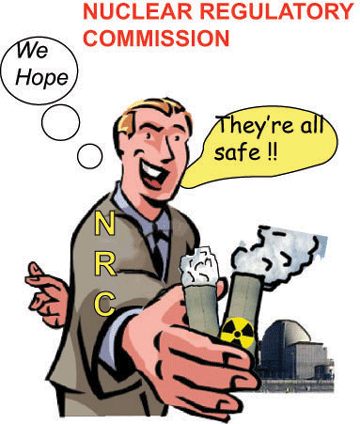
Nuclear Regulatory Commission’s Risky Rule Change Ignores History. More Nuclear Emergency Planning Needed, Not Less.
Statement by Dr. Edwin Lyman at the Union of Concerned Scientists Aug 14, 2023 https://www.ucsusa.org/about/news/nrcs-risky-rule-change-ignores-history-more-nuclear-emergency-planning-needed-not-less
WASHINGTON—The U.S. Nuclear Regulatory Commission (NRC) approved a rule today that will allow for the licensing of new nuclear reactors without requiring those reactors to have offsite emergency plans in place should disaster strike.
Below is a statement by Dr. Edwin Lyman, the director of nuclear power safety at the Union of Concerned Scientists (UCS).
“Past natural and human-made disasters have taught us that having a robust and workable emergency plan in place is the key to minimizing human suffering and loss of life if the unthinkable happens. The NRC’s reckless decision today flies in the face of that experience. Concerns with the rule expressed by the Federal Emergency Management Agency and other authorities demonstrate how out of step the NRC is with experts on this issue.
Coupled with other troubling regulatory changes that the NRC has already made or is considering, this new rule will only increase dangers for the public from the next generation of nuclear plants. Additionally, the absence of offsite emergency planning will create burdens in the aftermath of a nuclear plant accident, extreme weather event, or terrorist attack that will fall disproportionately on those people and communities with the fewest resources.
“Some nuclear power advocates downplay the health risks of ionizing radiation, asserting that emergency evacuations following nuclear disasters are more harmful than exposure to the radiation itself and pointing to the casualties following the 2011 Fukushima disaster evacuations in Japan as an example. But the remedy for poorly executed evacuations is better emergency planning, not the elimination of emergency planning altogether.
“The cost of preparing for emergencies is relatively modest. And yet nuclear industry proponents have pushed to change the rules to facilitate constructing new nuclear reactors anywhere, even in densely populated areas where timely emergency evacuations might be extremely difficult or even impossible. People everywhere need to be aware of the NRC’s dangerous decision and its implications for their health and safety.”
Iran says it is committed to resolving nuclear dispute through diplomacy
Reuters, August 14, 2023 https://www.reuters.com/world/iran-says-it-is-committed-resolving-nuclear-dispute-through-diplomacy-2023-08-14/
– Iran is committed to resolving its nuclear dispute with world powers through diplomacy, the country’s Foreign Minister Hossein Amirabdollahian told reporters in a televised news conference on Monday.
“We have always wanted a return of all parties to full compliance of the 2015 nuclear deal,” Amirabdollahian said.
Indirect talks between Washington and Tehran to revive the nuclear agreement have stalled since last September.
Having failed to revive the pact, Tehran and Washington said on Thursday they had reached an understanding under which $6 billion in Iranian funds will be unfrozen from South Korea while five American nationals detained in Iran will be released.
The United States would also release some Iranians from U.S. prisons as part of the deal, Iran said.
Reporting by Dubai Newsroom; Editing by Toby Chopra
Pritzker was right to keep moratorium on new Illinois nuclear plants
The bill the governor vetoed would have opened the door to negative environmental impacts and higher costs for consumers while jeopardizing progress toward Illinois’ clean energy future.
Gov. J.B. Pritzker’s veto of Senate Bill 76 on Friday solidifies his national reputation as an environmental leader. SB 76, which would have removed the ban on new nuclear power in Illinois, was moved forward without careful consideration, and signing it would have opened the door to increased risk, negative environmental impacts and higher costs for consumers, all while jeopardizing our progress toward Illinois’ clean energy future.
The original concerns about constructing new nuclear power plants that led the General Assembly to impose the current moratorium remain today and, in fact, those concerns are arguably greater now than they were in 1987.
We are no closer to a national solution for the disposal of dangerous high-level nuclear wastes. Illinois already has the most nuclear reactors in the country and bears the burden of storing this waste in our communities, including along the shores of Lake Michigan and the Mississippi River. These wastes have significant safety risks and threaten our drinking water and communities. We should not add to the growing stockpiles of hazardous waste.
Nuclear power is also extremely expensive. Efforts in other states to build new nuclear plants are plagued with high-cost overruns and extensive delays. These exorbitant costs not only dwarf those associated with readily available clean energy technologies, but they also threaten to derail the progress Illinois is now making to deploy win-win solutions like clean energy, storage and energy efficiency programs.
Illinois should continue prioritizing these investments, which support good union jobs and pathways to prosperity for our marginalized communities, rather than encourage highly speculative proposals for new nuclear energy.
Illinois does not need the massive, decades-long rate hikes it would take to attempt to site and build new nuclear power plants that wouldn’t be available for over a decade. Illinois does need action and investment now in transmission, storage, energy efficiency and demand response solutions to ensure adequate capacity and protect consumers from spikes in fossil fuel prices.
Keep the focus on clean energy
While Illinois hosts roughly 11 gigawatts of nuclear power, over 700 gigawatts of additional power are awaiting interconnection approval from regional energy markets across the country. The majority of these resources waiting in line are solar, wind and battery storage — proven technologies that are already creating good jobs and delivering consumer savings. These smart solutions should remain our focus.
The rules, regulations and oversight for all nuclear plants are not up to date. SB 76 would have removed the moratorium on nuclear power without a full study and review of whether current rules and regulations are sufficient to site, build and operate a nuclear power plant safely. In addition, the siting laws for nuclear are completely insufficient. Any plant could be built anywhere at any time, with only approval at the federal level. The issue is even worse in the case of Small Modular Nuclear Reactors — small units that have been proposed to be deployed inside shipping containers within communities. Projects could, in theory, be deployed near residences, for example.
Our community is proud of the work we did together with Pritzker and the General Assembly to enact the Climate and Equitable Jobs Act in 2021. CEJA gives Illinois a roadmap to a clean energy future that generates high-quality jobs equitably and attracts global investments in our communities. To sustain that progress, we must stay the course in implementing that vision and reject proposals that would distract our resources from this framework. The veto of SB 76 will help Illinois implement this clean energy vision, and Pritzker’s veto should be upheld by the General Assembly.
Jen Walling is the executive director of the Illinois Environmental Council. Jack Darin is director of the Illinois chapter of the Sierra Club.
South Korea’s opposition party to file UN complaint against Japan over nuclear waste
Democratic Party plans to visit Tokyo to oppose release of treated water from crippled Fukushima nuclear plant
Esra Tekin |14.08.2023 -ISTANBUL, https://www.aa.com.tr/en/asia-pacific/south-koreas-opposition-party-to-file-un-complaint-against-japan-over-nuclear-waste/2967294
South Korea’s main opposition party announced on Monday its intention to lodge a formal grievance with the United Nations Human Rights Council (UNHRC) in the upcoming week, regarding Japan’s proposed strategy to release water from the Fukushima site.
According to representative Woo Won-shik, who leads the Democratic Party (DP) committee that opposes Tokyo’s proposal to discharge treated water from the damaged Fukushima nuclear plant into the ocean, the complaint will be formally submitted on Thursday, Seoul-based Yonhap News reported.
The DP asserts that the planned release, set to start as soon as late August, breaches several international agreements and lacks verified scientific safeguards.
The UNHRC assesses grievances originating from individuals, entities, or nations pertaining to instances of ongoing and severe human rights transgressions.
Alongside submitting the complaint, the DP intends to collect signatures from roughly 1.5 million citizens and deliver them to the office of the president.
Furthermore, DP members are making preparations for a visit to Japan by the end of this month to express their opposition to Tokyo’s scheme, subsequent to two prior visits made in April and July.
Japan is expected to release treated nuclear waste from the crippled Fukushima nuclear power plant this month or early next month.
Japan’s water discharge plan, announced in April 2021, faced significant criticism from China, South Korea, North Korea, Taiwan, and international organizations, including the UN.
The US supported the proposal, following years of discussions on dealing with over 1 million tons of water stored at the Fukushima nuclear complex since the 2011 disaster.
Japanese and US Bishops pledge partnership for a nuclear-free world
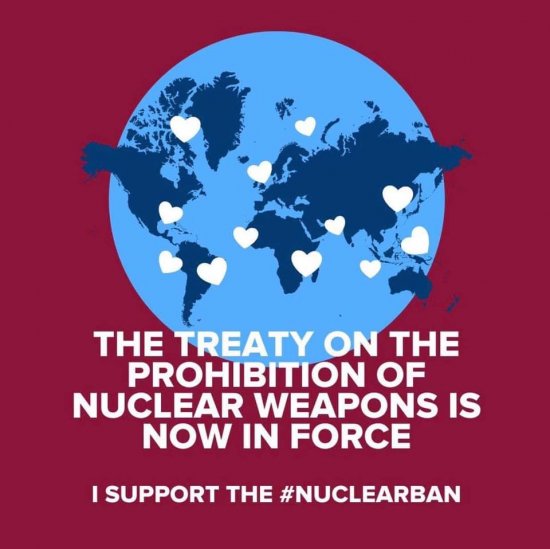
Five Japanese and US bishops pledge to work together towards a “world without nuclear weapons” and call for concrete progress in this effort by August 2025, the 80th anniversary of the Hiroshima and Nagasaki bombings.
Vatican News, By Lisa Zengarini 14 Aug 23,
On the 78th anniversary of the atomic bombing of Nagasaki, on 9 August 1945, a group of five Catholic bishops from Japan and the United States from areas impacted by atomic weapons have joined in a formal pledge to concretely work toward “a world without nuclear weapons”.
Pilgrimage of Peace to Japan
The partnership declaration was signed by Archbishop Peter Michiaki Nakamura of Nagasaki, Bishop Alexis Mitsuru Shirahama of Hiroshima, and Archbishop Emeritus of Nagasaki, Joseph Mitsuaki Takami, and by Archbishops John Wester of Santa Fe (New Mexico) and Paul Etienne of Seattle (Washington).
Their declaration came at the conclusion of a 1-9 August Pilgrimage of Peace to Japan which the two US Archbishops made to mark the annual commemoration of the 1945 bombings of the Japanese cities of Hiroshima and Nagasaki.
Both US archdioceses are situated in areas that have close ties to the production and deployment of nuclear weapons, since the United States houses its major nuclear arsenal in western Washington state, and New Mexico, where Santa Fe is located, is considered to be the birthplace of the atomic bomb.
During the pilgrimage, the two US archbishops participated in memorial ceremonies, and spoke about the need to abolish nuclear weapons.
In the declaration, the group called for “concrete progress” in this effort by August 2025, the 80th anniversary of the Hiroshima and Nagasaki bombings.
Appeal to world leaders
Echoing Pope Francis’ condemnation of the mere “possession” of nuclear weapons, they urged world leaders to take specific steps toward their complete abolition of nuclear weapons.
Their call included the acknowledgment of the long-lasting suffering inflicted by the Hiroshima and Nagasaki atomic bombings, and of the environmental impacts of uranium mining and production of nuclear weapons; an effective commitment to prevent a new arms race, safeguards against nuclear weapons use and advance nuclear disarmament; and, the reaffirmation that a nuclear war cannot be won and must never be fought.
………………………………………………….Protecting
Finally, to protect, the signatories said they will continue advocacy for countries to sign the Treaty on the Prohibition of Nuclear Weapons, and for world leaders to redirect money spent on their development and maintenance toward helping vulnerable populations and addressing environmental issues.
So far, not one of the Group of Seven (G7) countries, including United States, Canada, France, Germany, Italy, Japan, and the United Kingdom, has subscribed the Treaty, which was first signed by the Holy See.
The five US and Japanese bishops invited other dioceses and religious traditions to join them in these efforts…….. https://www.vaticannews.va/en/church/news/2023-08/japanese-us-bishops-joint-declaration-for-nuclear-free-world.html
Risks of further delays at Hinkley Point C, EDF warns
EDF has admitted there is a risk of further delays to two nuclear reactors
at Hinkley Point C due to construction setbacks. The French energy giants
behind the new nuclear power station along the Somerset coast remarked last
year that the plants may start 15 months late. In an earnings presentation
in late July, EDF said the increased risk of a 15-month delay is due to
“performances on civil works and challenges on mechanical, electrical,
heating, ventilation and air conditioning” and “progress is below the
planned trajectory and action plans have been set”.
EDF has targeted June
2027 as the first operation of Unit 1, also known as Hinkley Point C, and
has already factored in construction delays and other factors. Originally
scheduled to be generating energy in 2025, Hinkley Point C has faced
several delays due to reduced workforce and workflow challenges caused by
the Covid-19 pandemic, as well as increasing costs.
Somerset Live 14th Aug 2023
https://www.somersetlive.co.uk/news/somerset-news/risks-further-delays-hinkley-point-8663204
US, Finland Negotiating Defense Agreement That Would See Deployment of American Troops
August 14, 2023 https://wordpress.com/post/nuclear-news.net/240861
Washington and Helsinki are in the process of establishing a new defense cooperation agreement that would see expended deployments of American soldiers and Finland hosting war games.
By Kyle Anzalone / Antiwar.com
Washington and Helsinki are working on a new deal to govern the military relationship between the two nations. Finland recently became the thirty-first member of NATO, doubling the alliance’s border with Russia.
According to YLE News, Finnish state media, Helsinki and Washington are negotiating a new Defense Cooperation Agreement (DCA). YLE said the new deal would be a “significant departure from its previous” DCA with the US.
Finland held a prolonged policy of official neutrality prior to joining NATO earlier this year. However, Helsinki established deep ties with the bloc over recent decades. The new DCA will expand America’s military presence to several Finnish bases, including ports and airports.
The outlet reports the new DCA will “permit the presence of foreign troops for extended periods, specifically for conventional military exercises…[and] grant US military personnel access to facilities and areas within Finland for training, weapons storage, and equipment maintenance.”
The war games and NATO soldiers will be viewed as a provocation by Russia, which shares an 800 miles border with Finland. Helsinki already hosts NATO troops for military drills near the Russian border.
When Helsinki announced its intention to join the North Atlantic bloc last year, the Kremlin warned about additional international troop deployments in Finland. Last week, Moscow announced it would deploy additional military assets to its border with NATO members.
Finnish negotiations have expressed some reservations about expanding the DCA with the US. YLE explains, “noting that the agreement excludes nuclear weapons,” and Helsinki wants all integration troops deployments to be labeled as temporary.
Even the UK’s very first small nuclear reactor could not be decided upon until 2029 at the earliest

Old Sparky: The go-ahead for even the very first SMR couldn’t be decided
on until 2029 at the earliest; nothing here could meaningfully contribute to
the 2035 target for decarbonising electricity. No wonder so little is being
spent – it’s just a costly way to keep options open.
Private Eye 4th Aug 2023
1 This Month


Tell the Ukrainian Government to Drop Prosecution of Peace Activist Yurii Sheliazhenko

Petition to revoke the licensing of the Near Surface Nuclear Disposal Facility (NSDF) at Chalk River. https://www.ourcommons.ca/petitions/en/Petition/Details?Petition=e-7247


of the week – STOP SMALL MODULAR REACTORS IN CANADA
To see nuclear-related stories in greater depth and intensity – go to https://nuclearinformation.wordpress.com
-
Archives
- March 2026 (183)
- February 2026 (268)
- January 2026 (308)
- December 2025 (358)
- November 2025 (359)
- October 2025 (376)
- September 2025 (258)
- August 2025 (319)
- July 2025 (230)
- June 2025 (348)
- May 2025 (261)
- April 2025 (305)
-
Categories
- 1
- 1 NUCLEAR ISSUES
- business and costs
- climate change
- culture and arts
- ENERGY
- environment
- health
- history
- indigenous issues
- Legal
- marketing of nuclear
- media
- opposition to nuclear
- PERSONAL STORIES
- politics
- politics international
- Religion and ethics
- safety
- secrets,lies and civil liberties
- spinbuster
- technology
- Uranium
- wastes
- weapons and war
- Women
- 2 WORLD
- ACTION
- AFRICA
- Atrocities
- AUSTRALIA
- Christina's notes
- Christina's themes
- culture and arts
- Events
- Fuk 2022
- Fuk 2023
- Fukushima 2017
- Fukushima 2018
- fukushima 2019
- Fukushima 2020
- Fukushima 2021
- general
- global warming
- Humour (God we need it)
- Nuclear
- RARE EARTHS
- Reference
- resources – print
- Resources -audiovicual
- Weekly Newsletter
- World
- World Nuclear
- YouTube
-
RSS
Entries RSS
Comments RSS
 nuclear-news