Oppenheimer’ depicts a man becoming powerful—and irrelevant
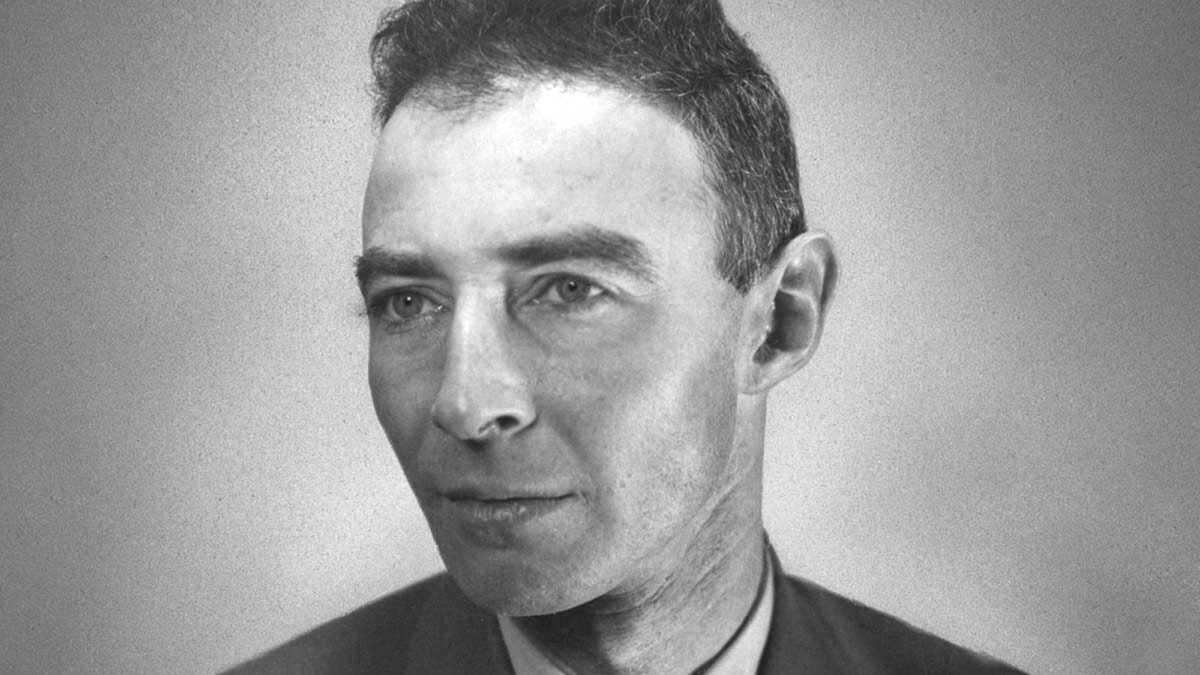
By Laura Grego | August 4, 2023, https://thebulletin.org/2023/08/oppenheimer-depicts-a-man-becoming-powerful-and-irrelevant/?utm_source=Newsletter&utm_medium=Email&utm_campaign=MondayNewsletter08072023&utm_content=NuclearRisk_PowerfulAndIrrelevant_08042023
It was a packed house on Barbenheimer’s opening night—a box-office phenomenon of double feature viewing of Greta Gerwig’s Barbie and Christopher Nolan’s biopic Oppenheimer. It was a stormy night, too. So much so that we mistook the thunder outside for sound effects. (The sound design of Nolan’s film was spectacular and powerful, especially the silences.) I was glad to see Oppenheimer with longtime colleagues who work in this field. Like Nolan, so many of my cultural touchstones were about the Cold War. Generation X grew up acutely aware of the possibility of nuclear Armageddon, but it’s been a long time since teenagers were lining up for a film about nuclear weapons.
When I read Kai Bird and Martin J. Sherwin’s book American Prometheus, which the film is based on, a few weeks ago before seeing the movie, I was struck by a few things I hadn’t really known or understood about Oppenheimer. One surprise to me was how much J. Robert Oppenheimer was passionate about his two early loves: physics and New Mexico. By all accounts he loved the land and the people living there. And that love seemed to have been the reason the Manhattan Project’s secret laboratory was built in Los Alamos—though its remoteness seemed to suit the security needs of the project.
By the same logic, when came the moment of testing the bomb, the Trinity team selected a “suitably isolated” spot in the southern New Mexico desert for the first nuclear explosion. Little is said in American Prometheus about those who lived near the Jornada del Muerto site, only that the Trinity team had to “evict a few ranchers by eminent domain.” The scientists and engineers believed that the flat terrain and generally low winds would limit the spread of radiation. While the Tularosa basin was remote, about half-a-million people lived within 150 miles of the Trinity site. They were not warned or told to evacuate, neither before nor after the test. And data on civilian exposure from the Trinity test was not collected, so as not to alarm the public.
In fact, this negligence would become a regular feature of the post-war US nuclear test program, which included more than 200 aboveground nuclear explosions. Data collected by the National Cancer Institute shows the fallout from these tests has led to tens to hundreds of thousands of excess cancers. Some people have received compensation from the government for their illnesses, but not Trinity downwinders. (Though the Senate’s recent vote for a major expansion of the Radiation Exposure Compensation Act may remedy this.)
When I entered the theatre on that stormy night, I wondered whether Nolan’s Oppenheimer would pause to acknowledge that these first casualties of the nuclear age were in a place so close to the heart of Oppenheimer the man. In the end, the film’s perspective is Oppenheimer’s first-person, subjective point of view, with Nolan not inclined to widen the lens further. As someone who has worked on these issues for decades, I felt it to be a great weakness of the film, almost unforgiveable, to make so little room in a three-hour movie for those who suffered from the decisions made by “great men” in cloistered rooms. The film also fails by showing the Hiroshima and Nagasaki devastation only obliquely and reflected to us through Oppenheimer’s emotional remove.
Another thing that struck me in the book is that Oppenheimer’s strategy of persuading other scientists to join the project included his argument that the nuclear weapon would end not just the war in Japan, it would “end all wars,” once people understood the enormity of the weapons. Today it seems an incredibly naïve idea: 80 years later, the United States is still spending a billion dollars every five days to maintain its nuclear weapons. But how was Oppenheimer—so widely educated in history and philosophy and steeped in ethics—unable to see its consequences? Was he blinded by the greatness of his own creation or by ambition? Others would see this more clearly.
In the film, Oppenheimer’s friend and confidante Isidor Rabi provides a much-needed counterbalance to Oppenheimer’s intellectualizing, recognizing that the bomb “will fall on the just and unjust alike,” adding that he did not wish the culmination of three centuries of physics to be a weapon of mass destruction.
To retake control on what had been set in motion, it would have taken not only wisdom but more political savvy than Oppenheimer demonstrated. In the film, the scene in which the decision is taken to drop bombs on Hiroshima and Nagasaki skillfully shows an Oppenheimer who is being outmaneuvered. If he had really intended to argue the position of the Franck report and Szilard petition—two documents pressed on him by Manhattan project scientists—before the US political and military leadership, it seems it would have taken a different temperament and set of skills than he had. Oppenheimer was not the man for that moment.
Oppenheimer’s post-war attempt to advise the US government on nuclear weapons as a political insider ended in 1954 with the cruel public humiliation of the Atomic Energy Commission’s security hearing. After this, either because this experience broke him or he was not suited to the life of a nongovernmental critic, he essentially withdrew from the public debate about nuclear weapons almost entirely. He confined his comments mainly to abstracted and intellectual debates for the rest of his life. Oppenheimer did not sign the Einstein-Russell Manifesto against nuclear war, nor did he join the Pugwash Conferences thereafter.
As American Prometheus puts it, “Oppenheimer was still capable of being a critic; he just wanted to stand alone and with far more ambiguity than his fellow scientists. He was consumed with deep ethical and philosophical dilemmas posed by nuclear weapons, but at times it seemed that, as Thorpe put it, ‘Oppenheimer offered to weep for the world, but not to help change it.’”
Toward the end of the film, Oppenheimer is given an Enrico Fermi Award and being fêted—maybe because, as Einstein’s voiceover suggests, he was no longer so relevant.
No comments yet.
1 This Month
Chernobyl: The Lost Tapes – A good documentary on Chernobyl on SBS available On Demand for the next 3 weeks– https://www.sbs.com.au/ondemand/tv-program/chernobyl-the-lost-tapes/2352741955560

of the week–London Campaign for Nuclear Disarmament

Tell the Ukrainian Government to Drop Prosecution of Peace Activist Yurii Sheliazhenko
To see nuclear-related stories in greater depth and intensity – go to https://nuclearinformation.wordpress.com
-
Archives
- April 2026 (126)
- March 2026 (251)
- February 2026 (268)
- January 2026 (308)
- December 2025 (358)
- November 2025 (359)
- October 2025 (376)
- September 2025 (257)
- August 2025 (319)
- July 2025 (230)
- June 2025 (348)
- May 2025 (261)
-
Categories
- 1
- 1 NUCLEAR ISSUES
- business and costs
- climate change
- culture and arts
- ENERGY
- environment
- health
- history
- indigenous issues
- Legal
- marketing of nuclear
- media
- opposition to nuclear
- PERSONAL STORIES
- politics
- politics international
- Religion and ethics
- safety
- secrets,lies and civil liberties
- spinbuster
- technology
- Uranium
- wastes
- weapons and war
- Women
- 2 WORLD
- ACTION
- AFRICA
- Atrocities
- AUSTRALIA
- Christina's notes
- Christina's themes
- culture and arts
- Events
- Fuk 2022
- Fuk 2023
- Fukushima 2017
- Fukushima 2018
- fukushima 2019
- Fukushima 2020
- Fukushima 2021
- general
- global warming
- Humour (God we need it)
- Nuclear
- RARE EARTHS
- Reference
- resources – print
- Resources -audiovicual
- Weekly Newsletter
- World
- World Nuclear
- YouTube
-
RSS
Entries RSS
Comments RSS
 nuclear-news
Leave a comment