Aggressive U.S. Push for Military Supremacy in the Arctic Could Trigger Nuclear War
Covert Action Magazine By Jeremy Kuzmarov, July 14, 2023 (Excellent pictures on original.)
From 1959 to 1966, the U.S. illegally stored nuclear weapons in Greenland in preparation for a nuclear attack on the Soviet Union and built an underground scientific research center right out of a James Bond movie.
It resulted in the displacement of natives and has left a residue of environmental destruction in the Arctic that will likely be compounded in Cold War Part II.
On June 2, Secretary of State Antony Blinken announced that the U.S. would open its northernmost diplomatic station in the Norwegian Arctic town of Tromsoe, the only diplomatic station above the Arctic Circle. .
The move comes as competition over the Arctic’s resources with Russia intensifies as polar ice melt opens access to rich mineral resources and the new Cold War heats up.
In 2019, then-President Donald Trump had talked about purchasing Greenland in “the real estate deal of a lifetime” that would help secure a land mass a quarter of the size of the U.S.
Danish Prime Minister Mette Frederiksen called the offer “absurd,” saying that Greenland was not for sale. (Denmark is Greenland’s sovereign owner.)
Beyond Trump’s self-aggrandizement lay a calculating imperial strategy in which the U.S. would use Greenland, where the U.S. already possesses the Thule Air Base, to project its power into the Arctic—a growing arena of geopolitical and military competition.
In 2018, China launched the Polar Silk Road initiative which sought to align Chinese Arctic interests with the Belt and Road initiative involving the building of new infrastructure and interlinking of China’s economy with its regional allies and countries around the world.
As part of the Silk Road initiative, China began creating new freight routes extending into the Arctic that would better enable extraction of natural resources while launching a new satellite to track shipping routes and monitor changes in sea ice there.
The Russians have also been busy expanding shipping routes into the Arctic that are navigable because of global warming, and have finished equipping six military bases on Russia’s northern shore and on outlying Arctic Island, while planning to open 10 Arctic search-and-rescue stations, 16 deep-water ports, 13 air fields, and 10 air-defense radar stations across its Arctic periphery.
The New York Times reported last year that, in response to Russia’s military build-up near the Arctic Circle, the U.S. government has been investing hundreds of millions of dollars to expand the port at Nome on the west coast of Alaska, which could transform into a deep-water hub servicing Coast Guard and Navy vessels navigating into the Arctic Circle.
The Pentagon has further plans to increase its presence and capabilities, with the Army releasing its first strategic plan for “Regaining Arctic Dominance.” The U.S. Air Force has transferred dozens of F-35 fighter jets to Alaska, announcing that the state will host “more advanced fighters than any other location in the world.”[1]
Until now, competition in the Arctic was largely mediated through the Arctic Council, founded in 1996, which includes Canada, Denmark, Finland, Iceland, Norway, Russia, Sweden and the U.S., and promotes research and cooperation. But it does not have a security component, and soon all members but Russia will be North Atlantic Treaty Organization (NATO) members.
Admiral Alexander Moiseyev, commander of Peter the Great, the flagship of the Russian Northern Fleet, accused NATO forces and the U.S. of military actions in the Arctic that increased the risk of conflict.
“There haven’t been so many of their forces here for years. Decades. Not since World War Two,” he told a BBC reporter who told him that NATO blamed Russia for the surge in tension. “We see such activity as provocative so close to the Russian border where we have very important assets. By that, I mean nuclear forces.”
First Ice Cold War
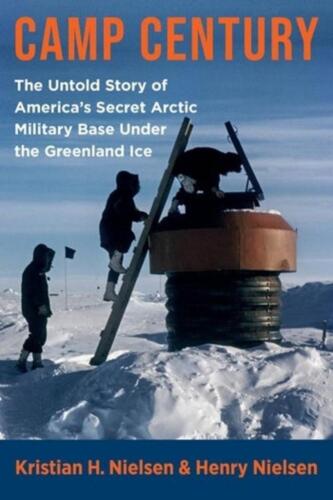
Kristian H. Nielsen and Henry Nielsen,[2] in their recent book Camp Century: The Untold Story of America’s Secret Arctic Military Base Under the Greenland Ice, show that today’s perilous situation has roots in the original Cold War period.
U.S. army engineers then built the subterranean city, Camp Century, under the Greenland ice near the Arctic Circle under the guise of conducting polar research, and explored the feasibility of Project Iceworm, a plan to store and launch hundreds of ballistic missiles with nuclear warheads targeting the Soviet Union from inside the ice.
Described by two Danish journalists as “some monstrous figment of the imagination that could have been featured in an early James Bond film,”[3] Project Iceworm was justified under the 1950s military doctrine of “massive retaliation,” and the Eisenhower administration’s “New Look” policy which advocated for a massive conventional and nuclear arms build-up to counter potential Soviet aggression…………………………………………………………………………………………………………………………………………………………….
“The City Under Ice”—A Science-Fiction Scenario Come True
In 1960, the U.S. Army began initiating research projects near Camp Thule at the underground, nuclear-powered Camp Century, which was established as a kind of science-fiction scenario come true.
The projects aimed to understand the environment and climate on the ice sheet, thereby enabling the U.S. to better establish and secure its northernmost military position…………………………………………………………………………………………………………………………………….
The sub-surface installation of a nuclear reactor within the Greenland ice sheet at Camp Century was an enormous and difficult engineering endeavor that was an astonishing achievement…………………………………….
Almost all of the journalists invited to visit Camp Century in the early 1960s celebrated the major scientific achievements while minimizing the Cold War context and military purposes behind the camp.
………………………………………………………………………………………………………………. an American journalist writing under the pseudonym “Ivan Colt” who, in an article appearing in October 1960, included a vivid description of missile-launching bases beneath the surface of the ice sheet that would be “able to plaster every major Soviet city, H-bomb depot and missile plant.”
Audacious Cold War Project
In 1997, a group of Danish historians were able to locate a classified document proving that the U.S. saw Camp Century as the first step toward a colossal sub-surface tunnel system that would enable the U.S. Army to launch a nuclear-missile strike at virtually any target in the Soviet Union.[10]
These missiles would be protected because of their distance from the U.S. mainland, and location in a secret underground facility……………………………………………………………………………………………..
Health and Environmental Detritus and the Dangers of History Repeating Itself
Camp Century was shut down in 1966, as its sub-surface tunnel system in the Greenland ice sheet was extremely difficult and costly to maintain and the development of Polaris nuclear missiles launchable from submarines made it largely obsolete. However, its remains may soon resurface because of global warming.
Greenland, today a largely self-governing part of Denmark, threatened to bring the case before the UN International Court of Justice if Denmark did not promptly assume responsibility for cleaning up the Camp Century site.
The remaining debris, some 35-70 meters (115-230 feet) beneath the surface of the ice, is known to include not only buildings and structural elements but also radioactive, chemical and biological waste.[12]
Over the years, many workers at Thule Air Base had developed cancers from radiation exposure, as did members of a clean-up crew that was called in to collect snow contaminated with plutonium for transport to the U.S. after a B-52 Stratofortress carrying hydrogen bombs crashed seven kilometers from Thule Air Base in 1968.[13]
The health and environmental detritus is an example of a vast and unrecognized cost of the Cold War arms race that is sadly being reinvigorated today.
As Russia, China and the U.S. compete for renewed control over the Arctic and set up yet more military bases there, the fallout will again be considerable even if the nukes are never deployed, and the tragedy of Camp Century will be repeated.
References: …………………………………………….more https://covertactionmagazine.com/2023/07/14/aggressive-u-s-push-for-military-supremacy-in-the-arctic-could-trigger-nuclear-war/?mc_cid=f5762ce44c&mc_eid=65917fb94b
Dangers of Tritium
by Karl H Grossman, August 01, 2023 https://www.dailykos.com/stories/2023/8/1/2184519/-Dangers-of-Tritium
The two nuclear reactors at Brookhaven National Laboratory on Long Island, New York were shut down in the late 1990s because they had been leaking tritium into the water table below, part of the island’s aquifer system on which more than 3 million people depend on as their sole source of potable water.
BNL was established on a former Army base in 1947 by the then U.S. Atomic Energy Commission to develop civilian uses of nuclear technology and do atomic research.
BNL scientists were upset with the U.S. Department of Energy over the closures. BNL has been a DOE facility in the wake of the elimination of the AEC by the U.S. Congress in 1974 for being in conflict of interest for having two missions, promoting and also regulating nuclear technology.
The water table below BNL flows partly into a community named Shirley.

Welcome to Shirley: A Memoir of an Atomic Town is a 2008 book by Kelly McMasters, a professor at Hofstra University on Long Island, who grew up in Shirley.
In it she tells of widespread cancer in Shirley noting how BNL was designated as a high-pollution Superfund site in 1989 “with soil and drinking water contaminated with Cesium 137, Plutonium 239, Radium 226, and Europium 154, as well as underground plumes of tritium stretching out towards my town.”
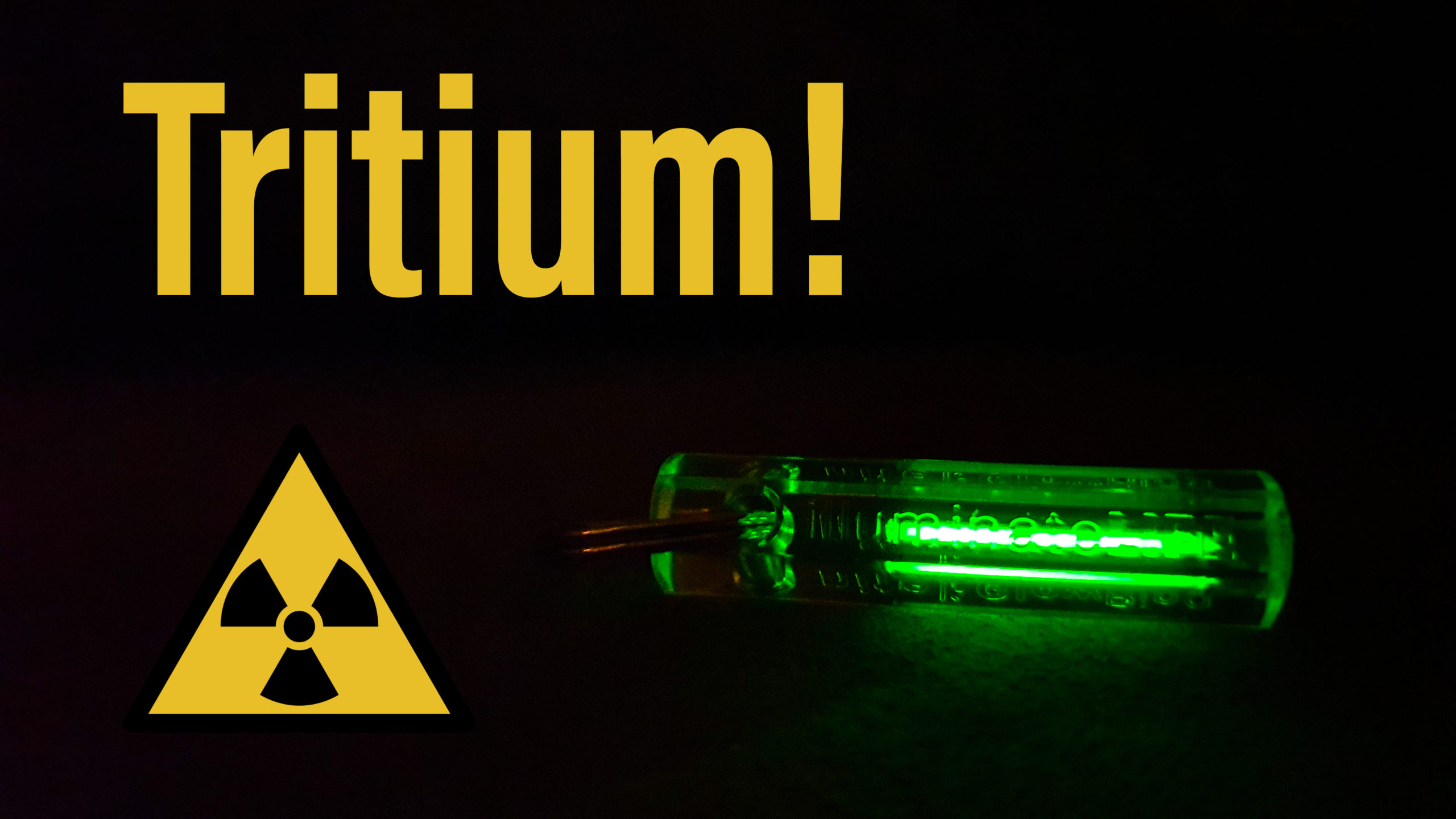
BNL scientists in the wake of the closure of its two reactors because of the tritium leaks minimized their health impacts noting that tritium is used in exit signs—begging the question of why a radioactive substance is used in exit signs.
Now, tritium has become a major international issue with the Japanese government planning to release 1.3 million tons of water containing tritium into the Pacific Ocean from the site of the Fukushima Daiichi nuclear power plants.
It’s also been a hot issue in New York State where Holtec International has a plan to dump tritium-contaminated water from the decommissioned Indian Point nuclear power plants, which it owns, into the Hudson River. A number of communities along Hudson River depend on the river for their potable water.
Tritium is a radioactive isotope of hydrogen. As the U.S. Nuclear Regulatory Commission in its “Backgrounder on Tritium” acknowledges: “Like normal hydrogen, tritium can bond with oxygen to form water. When this happens, the resulting ‘tritiated’ water is radioactive. Tritiated water…is chemically identical to normal water and the tritium cannot be filtered out of the water.”
Regarding the use of tritium in exit signs, what’s that about?
As the website of a company called Self Luminous Exit Signs, which sell signs using tritium for $202.95 each, says: “World War II created the demand for glowing emergency exits in ships, submarines, barracks and bombers where battery power was unavailable.”
Something that grew out of war was commercialized afterwards—as has nuclear technology been generally.
As to dangers, in a posting titled “Tritium in Exit Signs,” the U.S. Environmental Protection Agency says: “Tritium is a radioactive isotope that needs special handling procedures. Tritium is most dangerous when it is inhaled or swallowed. Many exit signs contain tritium….Tritium exit signs are marked with a permanent warning label. Tritium exit signs are useful because they do not require a traditional power source such as batteries or hardwired electricity.”
“No radiation is emitted from a working, unbroken, tritium exit sign,” EPA goes on.
Damage to tritium exit signs is most likely to occur when a sign is dropped during installation or smashed into the demolition of a building. If a tritium exit sign is damaged, the tritium could be released….If a tritium exit sign is broken, never tamper with it. Leave the area immediately and call for help.”
Adds EPA: “Unwanted tritium exit signs may not be put into ordinary trash; they require special disposal. Tritium exit signs that are illegally put in ordinary landfills can break and contaminate the site.”
Further, says the Conference of Radiation Control Programs, Inc. on its posting headed “Tritium Exit Signs Present a Challenge in Handling and Disposal,” they “must be isolated from other wastes during disposal, since they may and often do contaminate scrap metal from demolition sites. For this reason, tritium exit signs are regulated by the Nuclear Regulatory Commission, and proper disposal of the signs is required once they are no longer used. “
It goes on: “While many large commercial and government entities are aware of the requirements for use and disposal, many small businesses are unaware of the NRC requirements, leading to the improper disposal of tritium exit signs industrial or municipal landfills, or worse, their being sold over the internet. An estimated 2 million tritium exit signs have been sold in the U.S. The number of signs in use now and where they are located is unknown, given that there is limited tracking of the purchase, use, or disposal of the signs and that tritium exit signs have a usable life ranging from ten to twenty years.”
Also, says the organization: “Should a tritium exit sign—which contains tritium-filled glassed tubes—break, its contents could pose a risk to those located in the near vicinity. They could be exposed to tritium gas or tritiated water from the tritium that has escaped into the environment. Cleaning up tritium after an accident could be costly, especially for small businesses. Worker or public exposure to tritium also could present unwanted and unnecessary liabilities.”
So it goes regarding the very real dangers of tritium exit signs.
For a broader review of the hazards of tritium, this year a book, Tritium’s Danger, was published, authored by Dr. Arjun Makhijani, president of the Institute for Energy and Environmental Research. His Ph.D. involved a specialization in nuclear fusion, on which the hydrogen bomb is based. The hydrogen bomb’s fusion process utilizes tritium. And, if fusion is ever developed as an energy source—and an enormous effort has been underway for years to do that—tritium would play a major part.

“Makhijani makes it clear that the impacts of tritium on human health, especially when it is taken inside the body, warrant much more attention and control than they have received until now,” writes Robert Alvarez in his review of Tritium’s Danger in the June 26, 2023 issue of The Bulletin of the Atomic Scientists. Alvarez, senior scholar at the Institute for Policy Studies, served as senior policy adviser to the Department of Energy’s secretary and was deputy assistant secretary for national security and the environment from 1993 to 1999.
Tritium, relates Alvarez, “is one of the most expensive, rare, and potentially harmful elements in the world.”
“Although its rarity and usefulness in some applications give it a high monetary value, tritium is also a radioactive contaminant that has been released widely to the air and water from nuclear power and spent nuclear fuel reprocessing plants,” Alvarez goes on. “Makhijani points out that ‘one teaspoon of tritiated water would contaminate about 100 billion gallons of water to the U.S. drinking water limit; that is enough to supply about 1 million homes with water for a year.”
“Since the 1990s, about 70 percent of the nuclear power plant sites in the United States (43 out of 61 sites) have had significant tritium leaks that contaminated groundwater in excess of federal drinking water limits,” writes Alvarez.
“The most recent leak occurred in November 2022, involving 400,000 gallons of tritium-contaminated water from the Monticello nuclear station in Minnesota. The leak was kept from the public for several months….A good place to start limiting the negative effects of tritium contamination, Makhijani recommends, is to significantly tighten drinking water standards,” says Alvarez.
“Routine releases of airborne tritium are also not trivial,” writes Alvarez. As part of his “well-researched” book, says Alvarez, “Makhijani underscores this point by including a detailed atmospheric dispersion study that he commissioned, indicating that tritium from the Braidwood Nuclear Power Plant in Illinois has literally raining down from gaseous releases—as it incorporates with precipitation to form tritium oxide—something that occurs at water cooled reactors. Spent fuel storage pools are considered the largest source of gaseous tritium releases.”
And Alvarez, who not only has long experience as an official with the Department of Energy but for years was senior investigator for the U.S. Senate Committee on Governmental Affairs, states: “In past decades, regulators have papered over the tritium-contamination problem by asserting, when tritium leakage becomes a matter of public concern, that the tritium doses humans might receive are too small to be of concern. Despite growing evidence that tritium is harmful in ways that fall outside the basic framework for radiation protection, agencies such as the Nuclear Regulatory Commission remain frozen in time when it comes to tritium regulation. The NRC and other regulating agencies are sticking to an outdated premise that tritium is a ‘mild’ radioactive contaminant….Overall, the NRC implies its risk of tritium ingestion causing cancer is small.”
As for the dumping of 1.3 million tons of tritium-contaminated water into the Pacific from the Fukushima site, this is being opposed in the Pacific region and is focused upon in a just-released film documentary, “The Fukushima Disaster: The Hidden Side of the Story.”
After the 2011 disaster, Tokyo Electric Power Company, the owner of the Fukushima plants, released 300,000 tons of tritium-contaminated water into the Pacific, notes the film. A thousand tanks were eventually built for holding tritium-contaminated water which continues to leak from the plants. But now there is no room for additional tanks. So the 1.3 million tons of tritium-contaminated water are proposed to be discharged over 30 years into the Pacific.
In the documentary, Andrew Napuat, a member of the Parliament of the nation of Vanuatu, an 83-island archipelago in the Pacific, says: “We have the right to say no to the Japan solution. We can’t let them jeopardize our sustenance and livelihood.”
“China condemns Japanese plan to release Fukushima water,” was the headline of an Associated Press report. It quoted a Foreign Ministry spokesperson as saying it “concerns the global marine environment and public health, which is not a private matter for the Japanese side.”
Sean Burnie, a senior nuclear specialist with Greenpeace who has been involved in the aftermath of the Fukushima disaster, is quoted in the Guardian as describing as “scientifically bankrupt” the claim the tritium would not pose a health risk. “It is internal exposure to organically bound tritium that is the problem—when it gets inside fish, seafood, and then humans. When tritium gets inside cells, it can do damage. Tepco and the Japanese government are making a conscious decision to increase marine pollution with radioactivity, and they have no idea where that will lead.”
The International Atomic Energy Agency is supporting the scheme. However, the agency was established by the UN as an international version of the U.S. Atomic Energy Commission with its mission, like that of the AEC, to promote nuclear technology—as the IAEA statute says “to accelerate and enlarge the contribution of atomic energy”—while also regulating it, a continuation of nuclear conflict interest but on the international level.
Back in the U.S.A., some 138 groups organized in a Stop Holtec Coalition have been calling on New York Governor Kathy Hochul to stop Holtec’s plan to dump a million gallons of tritium-contaminated water into the Hudson River.
A letter they sent to the governor says “we are deeply concerned about the impacts on the health and safety of local resident, the river’s ecosystem, and local economy. The Hudson Valley region is densely populated and also serves as a recreational area for millions from New York City and across the state…The Indian Point nuclear power plant was rightfully shuttered in 2021, yet the spent fuel pool wastewater remaining on the site contains radioactive contaminants, including tritium. Exposure to tritium is linked to cancer, miscarriages, genetic defects and other health effects.”
Organizations signing the letter include Food & Water Watch, Grassroots Environmental Education, Hudson Riverkeeper, Hudson River Sloop Clearwater, Indian Point Safe Energy Coalition and Promoting Health and Sustainable Energy.
There was legislation passed in the New York State Assembly in June and in the State Senate in May banning “the discharge of any radiological agent into the waters of the state.”
There have been demonstrations protesting the plan, a petition drive with more than 400,00 signatures, and resolutions passed by local governments opposing the release. The first was passed unanimously in March by the Westchester Board of Legislators. It noted how “pre-release treatment would not remove tritium” from water, that tritium is “carcinogenic” and that “there are seven communities” that “source their drinking water from the Hudson.” The Indian Point plants are in Westchester County, 25 miles north of New York City.
US cluster munitions will bring more pain and death to Donbass civilians, and Washington doesn’t care

Eva Bartlett, 1 Aug 23, https://www.rt.com/russia/580623-us-cluster-ukraine-civilians/
Kiev will use its newly received weapons to target residential areas, just as it has for the past nine years.
The recent US decision to send cluster munitions to Ukraine is immoral, unethical, and criminal. We’ve already seen the horrific results of the use of such weapons – civilians mutilated and murdered (often decades later) in Iraq and Southeast Asia, for example, and in Lebanon.
In addition to the ethical reasons not to send these weapons to Ukraine, there are pragmatic reasons why, from a military perspective. They are pointless for Ukraine, in spite of Western promises that they will “do more damage across a larger area than standard unitary artillery shells by releasing bomblets, or submunitions.”
In reality, while covering a wider area than a conventional high explosive munition, the cluster bomblets do not inflict more powerful damage, certainly not against Russian fortified positions. Their use is mainly for targeting troops in the open and lightly armoured vehicles. Not a game changer for Kiev.
According to former US Marine Corps intelligence officer Scott Ritter, “these are the worst weapon in the world for trench warfare. With trench warfare, you need a high explosive round that collapses bunkers, that collapses trenches.”
If the US knows that cluster munitions won’t change facts on the ground for Ukraine, why is it sending them? Because, as President Joe Biden himself has said, Ukraine is “running out of ammunition and we’re low on it.” So, the US might as well offload its old stock of cluster munitions. They will not, as Biden claimed, “stop those tanks from rolling.” Nor will they – as the Biden administration claims – “save civilian lives.” They will almost certainly be used to kill, maim, and terrorize more Donbass civilians immediately and for years to come.
US Colonel Douglas Macgregor has emphasized that the cluster munitions have a high dud rate. According to Ritter, close to 40% of them fail to explode. Macgregor also highlighted how children are “attracted to these bright shiny objects that look like baseballs,” so insidious is their design.
US National Security Advisor Jake Sullivan assures us that Kiev will not misuse the clusters. He claims that “Ukraine is committed to post-conflict de-mining efforts to mitigate any potential harm to civilians,” and that “Ukraine has provided written assurances that it is going to use these in a very careful way that is aimed at minimizing any risk to civilians.”
The US never signed the Convention on Cluster Munitions – which prohibits all use, production, transfer, and stockpiling of cluster munitions – but didn’t mind virtue signalling its abhorrence of them when it lobbed accusations against Russia (also not a signatory of the convention) on February 28, 2022, with Biden’s then press secretary, Jen Psaki, calling the use of cluster munitions a potential “war crime.”
As usual, it’s a heinous war crime when a US enemy supposedly does it, but not when an ally – or the US itself – actually does. As for Ukraine’s feeble promises to not use the cluster munitions against civilians, it has already been doing so since 2014.
Ukraine’s history of cluster-bombing civilians
By way of a personally witnessed example, in late March 2022, I visited the site of a Ukrainian missile attack that earlier that month had killed 22 civilians and injured 33 more. Because the Ukrainian-fired Tochka-U missile was intercepted, not all of its 50 cassettes of cluster munitions inside exploded in the city streets. Otherwise, the bloodbath would have been much worse. Then, in April 2022, Ukrainian forces targeted a railway station in Kramatorsk, likewise firing a Tochka-U with a cluster munition, killing a reported 50 people. Western media predictably accused Russia of the war crime, although investigations showed the missile emanated from Ukrainian-held territory to the southwest.
But like most of Kiev’s war crimes against Donbass civilians, its use of cluster munitions didn’t start in 2022. Back in 2014, Human Rights Watch (HRW) reported on Ukrainian government forces’ use of cluster munitions in populated areas in Donetsk city. An October 2 attack on the centre of Donetsk that included the use of cluster munition rockets killed an employee of the International Committee of the Red Cross (ICRC).
The New York Times likewise reported that on several occasions in October 2014, “the Ukrainian Army appears to have fired cluster munitions into the heart of Donetsk, unleashing a weapon banned in much of the world into a rebel-held city with a peacetime population of more than one million.” Citing physical evidence and interviews with witnesses and victims, the newspaper wrote there were “clear signs that cluster munitions had been fired from the direction of army-held territory.”
Ukrainian ‘petal mines’ continue to maim
But these aren’t the only clusters Ukraine has fired on Donbass civilians. In fact, over the course of last year, I documented the aftermath of Ukraine firing rockets containing cassettes of internationally-banned PFM-1 “petal” mines, over 300 of the mines per rocket.
Due to their design, they generally glide to the ground without exploding, until someone or something steps on or otherwise disturbs them.
According to authorities in the Donetsk People’s Republic (DPR), Ukraine began firing these tiny, indiscriminate mines on March 6, 2022, during the battles for Mariupol, and then from May 18, 2022, into DPR and Kharkov Region settlements.
Since first documenting the aftermath of Ukraine’s use of the mines in central Donetsk in late July, 2022, I’ve interviewed victims, and reported on the painstaking work of Russian sappers to locate and destroy the mines. As of July 25 this year, 124 civilians have been injured by the mines, including ten children. Three civilians died as a result of their injuries.
Western weapons used to kill Donbass civilians
It should be mentioned that over the course of its now nine-year war against Donbass, Ukraine has been using conventional NATO munitions to slaughter and maim civilians. The high explosive shells Ukraine fires throughout Donbass cities and towns, but also countless times in the very heart of Donetsk, tear people apart, leaving mangled bodies and remains on streets and sidewalks, and in marketplaces.
On July 22, Ukrainian forces allegedly shelled Russian journalists in Zaporozhye Region with cluster munitions, killing one and injuring three others.
These deliberate attacks on the media, on civilians’ homes, hospitals, infrastructure, and on civilians themselves should be condemned as loudly as Ukraine’s firing of petal mines and of cluster munitions in general. But the US announcement that it would send cluster munitions to Ukraine resulted in some mild tutting from other Western nations, but no seriously strong condemnation. Canada is one of the nations voicing at least some objection to sending cluster bombs, the leadership in Ottawa probably feeling it ought to mildly protest, given Canada’s convention.
The Canadian government recently stated that it is fully against the use of cluster munitions and is “committed to putting an end to the effects cluster munitions have on civilians – particularly children.” Yet aside from polite grumblings regarding the US clusters, I’ve seen no Canadian condemnation of Ukraine’s repeated use of cluster munitions on the civilians of Donbass.
But the real criminals here are the US government, which knows sending its cluster munitions won’t actually help Ukraine fight the Russian military in any tangible way, but that it is highly likely Ukraine will instead use them against Donbass civilians. Apparently, that’s just fine with the crocodile-tear-crying US hypocrites.
The Day Australian Sovereignty Died

Australian Independent Media, August 2, 2023, by: Dr Binoy Kampmark
If a date might be found when Australian sovereignty was extinguished by the emissaries of the US imperium, July 29, 2023 will be as good as any. Not that they aren’t other candidates, foremost among them being the announcement of the AUKUS agreement between Australia, UK and the US in September 2021. They all point to a surrender, a handing over, of a territory to another’s military and intelligence community, an abject, oily capitulation that would normally qualify as treasonous.
The treason becomes all the more indigestible for its inevitable result: Australian territory is being shaped, readied, and purposed for war under the auspices of closer defence ties with an old ally. The security rentiers, the servitors, the paid-up pundits all see this as a splendid thing. War, or at least its preparations, can offer wonderful returns.
The US Secretary of Defense, Lloyd Austin III, was particularly delighted, though watchful of his hosts. His remit was clear: detect any wobbliness, call out any indecision. But there was nothing to be worried about. His Australian hosts, for instance, proved accommodating and crawling.
Australian Defence Minister Richard Marles, for instance, standing alongside Austin, US Secretary of State Antony Blinken and Australian Foreign Minister, Penny Wong, declared that there was “a commitment to increase American force posture in respect of our northern bases, in respect to our maritime patrols and our reconnaissance aircraft; further force posture initiatives involving US Army watercraft; and in respect of logistics and stores, which have been very central to Exercise Talisman Sabre.” To the untutored eye, Marles might have simply been another Pentagon spokesman of middle-rank…………….
Australian real estate would be given over to greater “space cooperation”, alongside creating “a guided weapons and explosive ordnance enterprise in this country, and doing so in a way where we hope to see manufacturing of missiles commence in Australia in two years’ time as part of a collective industrial base between the two countries.” Chillingly, Marles went on to reiterate what has become something of a favourite in his middle-management lexicon. The efforts to fiddle the export-defense export control legislation by the Biden administration would create “a more seamless defence industrial base between our countries.” Seamless, here, is the thick nail in the coffin of sovereignty.
Moves are also underway to engage in redevelopment of bases in northern Australia, in anticipation of the increased, ongoing US military presence. The RAAF Base Tindal, located 320km south-east of Darwin in the Northern Territory, is the subject of considerable investment “to address functional deficiencies and capacity constraints in existing facilities and infrastructure.” The AUSMIN talks further revealed that scoping upgrades would take place at two new locations: RAAF Bases Scherger and RAAF Curtin.
Australia’s Defence Intelligence Organisation will also be colonised by what is being termed a “Combined Intelligence Centre – Australia” by 2024. This is purportedly intended to “enhance long-standing intelligence cooperation” while essentially subordinating Australian intelligence operations to their US overlords. Marles saw the arrangement as part of a drive towards “seamless” (that hideous word again) intelligence ties between Canberra and Washington. “This is a unit which is going to produce intelligence for both of our defence forces … and I think that’s important.”
……….. Under the Albanese government we have reverted completely to our worst selves on defence. We’re going to do almost nothing consequential over the next 10 years other than get the Americans to do more on our land.” ……… Australia might be at war with China under US-direction before a decade is up, vassalized warriors eager to kill and be killed. https://theaimn.com/the-day-australian-sovereignty-died/
Western Media Has Falsely Presented the Donbas’ Drive For Autonomy as Being Instigated By Moscow

Covert Action Magazine By Ambrose Sylvan, July 13, 2023 [a long, detailed artice, – I recommend that you read the original]
In Reality It Resulted Largely from Kyiv’s Destruction of Eastern Ukraine’s Economy Under Neo-Liberal Economic Policies Pushed by Washington Since the 1990s
The war in Ukraine is commonly seen through one of two lenses. The vision presented by Western, NATO-aligned powers is one of an astro-turfed Donbas separatism created by Moscow to justify the division of Ukraine.
The view of NATO’s critics is that the Donbas republics rebelled against the Euromaidan revolution and the country’s nationalistic, Euro-centric tilt. The reality is that this conflict started much earlier and was merely frozen until the overthrow of the Ukrainian government in 2013.
Political Economy of the Donbas
Global Security outlines the economic situation in Donbas at the time of the dissolution of the USSR……………………………………………………………………………..
The tension between the central government and the Donbas miners was fueled by the increasing difficulty (and cost) of pulling coal from Donbas mines. Other coal-mining regions of the USSR were less costly but the social unrest in Donbas was placated with increasing state subsidies.
Ukrainian independence ended the Donbas struggle against Moscow but created intractable economic problems. The extensive subsidies for Donbas mines were shifted to the less wealthy government in Kyiv, the economic integration of the Soviet Union’s republics was disrupted, and the shift to a market economy was disastrous.
After the break-up of the Union, the political leaders of the Donbas miners would become known as “red directors,” socialists who put the interconnected economic needs of the Donbas and surrounding regions at the heart of their demands to Kyiv.
One of the earliest separatist organizations in Ukraine was the International Movement of Donbas. The Ukrainian news site DEPO, citing Novosti Donbas, describes the origin of the Intermovement as a project of academics at Donetsk University. The group was created as the “International Front for Donbas” at a meeting held on August 31, 1989.
……………………………………………………………………………………………………………………………………………. The Intermovement for Donbas failed to raise support for a renewed USSR, but the separatist movement would grow larger and stronger with every crisis that shook independent Ukraine.
The Shock Year
The act of independence immediately triggered a years-long economic crisis which was the driving force behind Ukraine’s growing separatist and anti-government movements.
………………………………………………………………………………………………………………….Inflation was accelerated by the spike in oil and gas prices as Ukraine lost the preferential rates it had enjoyed in the Soviet Union. Despite warnings from Moscow and the National Bank of Ukraine that the country would have to pay world prices if it exited the “Ruble Zone,” the government decided to drop the ruble as Ukraine’s currency by year-end.
New national borders interrupted the industrial sector, costs soared, demand fell (especially in state-driven industries like defense and science), and production crashed. For the first time in living memory, Ukrainians experienced the terrors of unemployment, price gouging, and starvation in a time of plenty.
…………………………………………………………………………………………………………………………………………………………. Ukraine dropped the ruble on November 12, 1992, and had no stable legal currency to use at markets. Wages were worthless and some workers were paid directly in consumer goods like soap instead of money. The economic problems of the working masses had become many times worse than they had been at the end of the Soviet era.
Demands of Donbas
Naturally there were outbursts of popular rage against the government as people lost their livelihoods………………………………………………………………………………………..
A government commission headed by the Finance Minister (who had authored the disastrous economic reforms) arrived in Donetsk on June 8. The striking miners made their demands clear: a no-confidence referendum on the President and parliament, and stronger regional self-government for Donbas. On June 18 the government agreed to schedule the referendum for September and to double miners’ wages. However this wage increase did little in the face of hyperinflation and the referendum was eventually canceled in favor of early elections.
Regional autonomy had already been a project of the Donetsk Regional Council before the 1993 general strike……………………………………………………………………………………………………………………………….
A “consultative poll” was held in Donetsk and Luhansk oblasts on the same day as the early elections, March 27, 1994. The central government refused to acknowledge it as a legally binding referendum, but the poll results showed that Donbas had a popular mandate to establish an autonomous government.
The poll had four questions: whether the constitution of Ukraine should change from a unitary state to a federal state; whether the Russian language should be constitutionally equal to the Ukrainian language; whether Russian should be an equal language of government and education in Donbas; and whether Ukraine should be a full participant in the post-Soviet Commonwealth of Independent States.
An overwhelming majority of voters said “YES” to all four questions: The federal system received 84% of all valid ballots in Donetsk, and the other three questions received more than 90% of all valid ballots in both regions…………………………………………
Deindustrialization
Tensions between the Donbas miners and the Ukrainian government continued to intensify over economic and political issues, and major labor actions continued through the decade.
………………………………………………………….The government did not follow through and strike action resumed on February 2, 1996, coordinated across Russia and Ukraine from Siberia to Donbas. As many as one million miners and allied workers went on strike in Ukraine.
…………………………………………………………. The central government’s economic warfare against the Donbas has continued unabated for decades………………………………………………………………………………..
Pushed to the Edge
Kyiv’s systematic destruction of the Donbas economy is a much greater driver of separatism than any Russophile nationalism. Sociological surveys conducted in early 2014 show us the most important issues to eastern Ukrainians on the verge of civil war.
Eight southern and eastern oblasts were surveyed by the Kyiv International Institute of Sociology (KIIS) in April 2014. ……………………………………………………………………………………………
KIIS additionally asked about the state structure of Ukraine. Only 10.6% in Donetsk and 12.4% in Luhansk indicated that they would keep the unitary state with its weak oblasts; 41.1% in Donetsk and 34.2% in Luhansk wanted power to be decentralized with oblasts given greater authority; and 38.4% in Donetsk and 41.9% in Luhansk endorsed a federal system with each region having its own state and the national government becoming a federation of these states. There were clear majorities in Donetsk and Luhansk (79.5% and 76.1%) that desired autonomous local governments.
Another survey was carried out by the Donetsk Institute for Social Research and Political Analysis in April 2014. ………………..In total, 79% of respondents wanted Kyiv to have less power and 48% wanted Donetsk to have its own state formation, whether independent or federated with Ukraine or Russia.
Breakaway
The infamous Donbas independence referendums were held just a few weeks after these surveys had been published. Despite accusations of endemic fraud and fabricated results the outcome was not far from what had been described by scientific opinion polls. The ballots asked not for independence but whether the republics should have “self-rule,” which the Donetsk electoral commissioner said could include autonomous or federal status within Ukraine.
When we consider the souring of public opinion on Kyiv’s “Anti-Terrorist Operation” and its civilian casualties, it is not hard to imagine how the 79% that polled in favor of more self-governance could have become 89% voting in favor of Donetsk self-rule.
………………………………………………………………………………………………………. By 2020 the Donetsk Institute’s follow-up survey had found that 45-50% of respondents favored annexation and only 20-25% supported a return to Ukraine; the remaining 25-30% answered that they wanted any resolution that would end the war.
………………………………………………………………………………………. Shut out of power, the Donbas was subjected to decades of ruthless economic policies which suited northern and western Ukraine’s desires to join the European Union. When President Viktor Yanukovych refused to sign the EU Association Agreement, acting in the interests of the south and east, he was ousted by the Euromaidan protests and riots in the capital. The government which replaced Yanukovych’s Party of Regions immediately signed the agreement, took on colossal debts, and adopted catastrophic austerity measures.
This is how Russian separatists, far-right extremists, and paramilitary bandits were able to find support. Their militant actions burst the tension and made secession a real possibility for the first time. Now a decade of war and blockades has deepened the fissure between Donbas and Ukraine and, with the accession of Donetsk and Luhansk to the Russian Federation, this division may become permanent.
- See David Hoffman, “One Million Miners Go on Strike in Russia, Ukraine,” The Washington Post, February 2, 1996, https://www.washingtonpost.com/archive/politics/1996/02/02/1-million-miners-go-on-strike-in-russia-ukraine/191f1387-b970-4c0a-971a-e7a30edf07b6/ ↑ https://covertactionmagazine.com/2023/07/13/western-media-has-falsely-presented-the-donbas-drive-for-autonomy-as-being-instigated-by-moscow/?mc_cid=f5762ce44c&mc_eid=65917fb94b—
Mexican president urges end to ‘irrational’ Ukraine war, wants Russia at peace talks
Reuters, August 1, 2023 https://www.reuters.com/world/americas/mexican-president-urges-end-irrational-ukraine-war-wants-russia-peace-talks-2023-07-31/
MEXICO CITY, July 31 (Reuters) – Mexican President Andres Manuel Lopez Obrador on Monday called for an end to the “irrational” war in Ukraine, urging upcoming peace talks in the Middle East to include representation from both Ukraine and Russia.
Lopez Obrador said Mexico would only take part in the talks in Saudi Arabia, reportedly scheduled to be held over the coming weekend, if both sides were present.
“If there’s acceptance from both Ukraine and Russia to look for solutions to achieve peace, we’ll participate,” the president told reporters at a regular press conference.
“We don’t want the Russia-Ukraine war to continue, it’s very irrational,” Lopez Obrador added, noting that the conflict has caused massive human suffering. “The only thing that benefits from it is the war industry.”
Senior officials from up to 30 countries are expected to participate in the talks Aug. 5-6 in Jeddah, the Wall Street Journal reported on Saturday. Russia has not been invited, the outlet reported, citing diplomats involved in the planning.
On Monday, the Kremlin said it would “follow” the meeting but did not currently see conditions for peace talks with Kyiv.
Lopez Obrador has sought to keep Mexico neutral in the war, though his government has backed some major U.N. resolutions criticizing Russia’s role in the conflict. Mexico has refused to send arms to Ukraine and has not imposed sanctions on Russia.
In April, Ukraine President Volodymyr Zelenskiy urged Mexican lawmakers to back his plan to end the war, which would include Russia withdrawing its troops from Ukrainian territory.
Lopez Obrador had outlined a separate peace plan last year, which Ukraine opposed, arguing it would have benefited Russia.
Reporting by Kylie Madry and Raul Cortes; Editing by Bill Berkrot
United Nations wants to resurrect a global disarmament mechanism last used in the 1980s
The Conversation, August 2, 2023
In the wake of the Russian invasion and war in Ukraine, the United Nations (UN) appears to be preparing to resurrect a global disarmament process which was discontinued more than 30 years ago.
On July 18, the UN secretariat released its long-awaited “New Agenda for Peace”. This policy brief included recommendations by secretary general, António Guterres, on strategies to respond to current and future challenges facing humanity, such as poverty, climate change, pandemics, armed conflicts and threats against international peace and security.
To a warm response from the community of peacebuilders worldwide, the agenda contains practical advice on advancing a process of disarmament, by suggesting the reactivation of special sessions devoted to disarmament at the UN general assembly (SSOD).
UN special sessions on disarmament were held in 1978, 1982, and 1988, but a fourth never occurred. Since 2021, the activation of a fourth Special Session on Disarmament (SSOD-IV) at the UN general assembly has been the focus of the Strategic Concept for the Removal of Arms and Proliferation (Scrap Weapons), a disarmament project housed at SOAS University of London.
Scrap Weapons has also been supporting Brazil’s call for the same, made at the 2022 UN general assembly’s First Committee, which focuses on disarmament matters.
Disarmament machinery
For the disarmament agenda to progress, its machinery needs to be revisited. Current efforts at the Conference on Disarmament (CD) – the UN body tasked with negotiating treaties on weapons control – have stalled for almost 30 years because of a lack of consensus. This has been further conflated by an absence of political will and marred by geopolitical tensions and rivalries among member states.
In addition, unlike the Conference on Disarmament, a special session would be able to use the authority of the general assembly to create new mandates on a global zero option on missiles. It could also organise negotiations towards a general and complete disarmament (GCD) agenda, as per Scrap Weapons’ work on transparency mechanisms and a draft framework for a treaty on general and complete disarmament………………………………………………………. more https://theconversation.com/united-nations-wants-to-resurrect-a-global-disarmament-mechanism-last-used-in-the-1980s-210325
Together Against Sizewell environmental group angry at the coming destruction of marine life, as acoustic fish deterrent will not be installed at Hinkley Point C nuclear
A notification from the Environment Agency distributed on the first of
August, starts with an encouraging statement reminding us that it is
responsible for regulating environmental protection at nuclear sites,
ensuring that people and the environment are properly protected.
But behind the corporate speak of ‘permit variation’, the addition of ‘new
limits and conditions’ and ‘discharge activity’ within the Water
Activity Discharge permit for Sizewell C’s so-called sister plant at
Hinkley Point C in Somerset, lies the cold, stark fact that the Environment
Agency, which claims to ‘protect and improve the environment’, has
removed the requirement to install an acoustic fish deterrent (AFD) at the
head of its seawater intake in the Bristol Channel.
In doing so the EA has condemned millions of fish and other marine creatures to their fate of
impingement, injury and death adding to the many millions of fish fry, fish
eggs, small fish and other marine biota that will be killed when entrained
in the cooling system of the plant.
Moreover, this situation is due to be repeated at Sizewell, meaning that Sizewell Bay fish stocks and marine creatures will likewise face decimation should the plant ever be built. A
spokesperson for Together Against Sizewell C (TASC), said today, ‘Our
spineless environmental regulator has simply rolled over to do the nuclear
industry’s dirty work, directly contradicting its promise to protect and
improve the environment and making itself complicit with the ceaseless
attack on this country’s biodiversity.
It is shocking that our young
people have to witness such shameless sacrifice of millions of creatures on
the altar of wildly misplaced government policy which is recognised by its
own Science and Technology Committee as fantasy. When will we have a
regulatory system in the UK which is capable of demonstrating enough spine
to put the environment above corporate greed and the arm lock of government
policy? The Environment Agency should be ashamed of itself.’
Together Against Sizewell C 2nd Aug 2023
Environment Agency allows Hinkley Point C permit variation to remove fish deterrent system
EA allows Hinkley Point C permit variation to remove fish deterrent
system. The Environment Agency has allowed an amendment to a permit linked
to the Hinkley Point C nuclear power plant in Somerset, allowing the firm
to remove previous plans for an acoustic fish deterrent (AFD) system from
the development, despite warnings that the move could result in the death
of millions of fish each year.
ENDS 1st Aug 2023
Ministers diverted £136m from electric car fund to Sizewell C nuclear project despite infrastructure concerns
i’s revelation comes as Rishi Sunak faces criticism for watering down some of the Government’s green policies
inews UK By Ben Gartside, August 2, 2023
The Government diverted £136m away from its electric vehicle (EV) supply chain fund to the UK’s main nuclear reactor project Sizewell C, i can reveal.
The Automotive Transformation Fund, a Government initiative designed to make it easier for car manufacturers to build and develop electric vehicles in the UK, spent just 5 per cent of its initially allocated funding in the year to March 2023, according to Government documents seen by i.
Given an initial budget of £191m, just £7m was spent and 76 per cent of the funding arrangement was transferred to the Sizewell C project, the construction of the UK’s first new nuclear power station in more than 30 years.
i‘s revelation comes amid mounting concerns about whether the UK has sufficient infrastructure for electric cars and as Rishi Sunak has faced criticism for watering down some of the Government’s green policies…….
The documents, published by the now defunct Department for Business, Energy and Industrial Strategy, show that £136m was moved for “investment in Sizewell C”, while another £10m was surrendered back to the Government altogether.
A later document from the replacement Department for Business and Trade said the money was reallocated “for a number of reasons” but did not specify why.
……………………………………An energy department spokesperson did not respond to i‘s questions about whether the money went towards buying out the Chinese government stake on the project.
Details on Sizewell C’s spending are closely guarded, but the project is expected to spend £912m this financial year, with construction yet to start.
…………………… some environmental groups argue that the UK’s nuclear projects have been plagued by delays and ballooning costs, and that there are better, less expensive options for delivering electricity more sustainably, including renewables.
The revelation that the Government diverted funding away from its electric vehicle supply fund towards the Sizewell C project may further alarm carmakers, who are already concerned about targets that are being imposed on the industry for the making of EVs and the readiness of Britain’s infrastructure.
………………………….There is concern that there will not be enough EV chargers to meet demand by this deadline unless capacity is significantly ramped up…………………………. more https://inews.co.uk/news/ministers-electric-car-fund-sizewell-c-nuclear-project-infrastructure-concerns-2520848
Non-compliant fire program halts decommissioning of Whiteshell Nuclear Laboratories
Canadian Nuclear Safety Commission, 4 Aug 23
A 40-minute “Event Initial Report” during the Canadian Nuclear Safety Commission (CNSC) June 28th meeting discussed an internal review by Canadian Nuclear Laboratories (CNL) which found that fire protection staff, systems and equipment at Whiteshell Laboratories were deficient, and had been deficient for years. This issue came to light when a new fire protection employee was hired and raised the alarm.
This has forced a shut-down of decommissioning activities. CNL President Joe McBrearty said that staff and resources have been transferred from the Chalk River Laboratories to Whiteshell to address the deficiencies.
Whiteshell Laboratories has been undergoing accelerated decommissioning since 2015 when CNL was sold to Canadian National Energy Alliance, a multinational consortium currently composed of three companies, (SNC-Lavalin and Texas-based Fluor and Jacobs), under a contract to reduce the Government of Canada’s nuclear liabilities quickly and cheaply.
In December 2019 the CNSC had issued a decision that “CNL is qualified to carry on the activity that the proposed licence will authorize and that it will make adequate provision for the protection of the environment, the health and safety of persons.” At that time, CNSC renewed the Nuclear Research and Test Establishment Licence for Whiteshell (NRTEL-W5-8.00/2024) for the period January 1, 2020 until December 31, 2024. …………………….
CNL President McBrearty noted that the Whiteshell hot cells have been reactivated to enable waste retrieval. Whiteshell decommissioning waste is being shipped to the Chalk River Laboratories for disposal in the proposed NSDF nuclear waste dump. https://cnsc.isilive.ca/2023-06-28/2023-06-28-3M.mp4
1 This Month
Chernobyl: The Lost Tapes – A good documentary on Chernobyl on SBS available On Demand for the next 3 weeks– https://www.sbs.com.au/ondemand/tv-program/chernobyl-the-lost-tapes/2352741955560

of the week–London Campaign for Nuclear Disarmament

Tell the Ukrainian Government to Drop Prosecution of Peace Activist Yurii Sheliazhenko
To see nuclear-related stories in greater depth and intensity – go to https://nuclearinformation.wordpress.com
-
Archives
- April 2026 (126)
- March 2026 (251)
- February 2026 (268)
- January 2026 (308)
- December 2025 (358)
- November 2025 (359)
- October 2025 (376)
- September 2025 (257)
- August 2025 (319)
- July 2025 (230)
- June 2025 (348)
- May 2025 (261)
-
Categories
- 1
- 1 NUCLEAR ISSUES
- business and costs
- climate change
- culture and arts
- ENERGY
- environment
- health
- history
- indigenous issues
- Legal
- marketing of nuclear
- media
- opposition to nuclear
- PERSONAL STORIES
- politics
- politics international
- Religion and ethics
- safety
- secrets,lies and civil liberties
- spinbuster
- technology
- Uranium
- wastes
- weapons and war
- Women
- 2 WORLD
- ACTION
- AFRICA
- Atrocities
- AUSTRALIA
- Christina's notes
- Christina's themes
- culture and arts
- Events
- Fuk 2022
- Fuk 2023
- Fukushima 2017
- Fukushima 2018
- fukushima 2019
- Fukushima 2020
- Fukushima 2021
- general
- global warming
- Humour (God we need it)
- Nuclear
- RARE EARTHS
- Reference
- resources – print
- Resources -audiovicual
- Weekly Newsletter
- World
- World Nuclear
- YouTube
-
RSS
Entries RSS
Comments RSS
 nuclear-news