University of New Mexico Course Expands Understanding of Nuclear Impact

Mirage News, 28 Jul 23
New Mexico found itself at ground zero of a changed world on July 16, 1945 when scientists from the newly created Los Alamos National Laboratory detonated the world’s first atomic bomb, exposing nearby communities to radiation. Just 34 years later to the day, Church Rock, New Mexico became the site of the largest release of radioactive material ever to occur in the United States.
The impact of that history was something Bryan Kendall, who grew up in Albuquerque, hadn’t learned much about prior to enrolling in the Fall 2020 Nuclear New Mexico: Social and Environmental Impacts course at The University of New Mexico.
“It blew my mind that no one was talking about it. It drove a passion in me that has not subsided since,” Kendall said.
The course helped Kendall, who graduated earlier this year with a bachelor’s degree in mechanical engineering and a minor in sustainability studies, decide he would avoid working for an organization with an ongoing nuclear focus though he doesn’t fault those who do.
Though the name of the class has changed over time, the goal to provide critical, interdisciplinary nuclear education remains the same. Each course includes field trips to key sites around the state, guest speakers from organizations like the Tularosa Basin Downwinders Consortium and Tewa Women United, as well as a final project to apply learning to social or environmental justice.
Eileen O’Shaughnessy, an instructor and Ph.D. Candidate in Language, Literacy, and Sociocultural Studies with an emphasis on nuclear education, has taught the class for several years through Sustainability Studies, the Honors College, and this fall, Women and Gender Studies. Most recently, O’Shaughnessy co-taught with Associate Professor Myrriah Gómez, Ph.D., the author of the 2022 release Nuclear Nuevo México. Gómez has taught a similar course titled Atomic Bomb Cultures in the Honors College for many years. O’Shaughnessy’s upcoming course is titled The Atomic Bomb and Feminism and will explore topics like the hetero-patriarchal nuclear family, notions of apocalypse, anti-nuclear activism, environmental racism, nuclear colonialism, and more.
“I developed this class called Nuclear New Mexico based on my research that was a critical interdisciplinary look at the environmental, social, and cultural impacts of the nuclear industry, specifically on New Mexico, but also the world,” O’Shaughnessy said. “The beginning of the atomic age is located here, but it really rippled out from New Mexico.”
The class explores everything from uranium mining to the disposal and storage of radioactive materials and the outsized impact those processes have had on indigenous communities and communities of color.
…………………………………………….. O’Shaughnessy welcomes students from all disciplines into her class and has had many STEM and nuclear engineering students take the course……………………………………………………………………………………………………………………………. more https://www.miragenews.com/unm-course-expands-understanding-of-nuclear-1056101/
Funny How The UFO Narrative Coincides With The Race To Weaponize Space

does it really sound like a coincidence that we’re seeing all these news stories about UFOs and aliens at the same time we’re seeing news stories about a race between the US and China and Russia to dominate space militarily?
Caitlin’s Newsletter CAITLIN JOHNSTONE, JUL 28, 2023
If Wednesday’s House Oversight subcommittee hearing on UFOs had happened ten years ago instead of today, it would have shaken the world. Imagine someone from 2013 hearing congressional testimonies about “routine” military pilot encounters with giant flying tic tacs, floating orbs, 300-foot red squares, and cubes in clear spheres zipping around in ways that surpass all known earthly technology by leaps and bounds, or about secret government possession of otherworldly aircraft they’re trying to reverse engineer and the dead bodies of their non-human pilots, or about the possibility that these creatures are not merely extraterrestrial but extra-dimensional. Their jaws would have hit the floor.
Now in 2023 we’ve been getting incrementally drip-fed bits and pieces of these stories for six years, so the scene on Capitol Hill on Wednesday didn’t have the impact it would’ve had in 2013. It’s making headlines and getting attention, but not as much as Sinead O’Connor’s death or people’s thoughts on Barbie and Oppenheimer. The response from the general public could be described as a collective nervous laugh and a shrug.
……………………………………………………. the new UFO narrative wasn’t just cooked up at the last minute to distract from current headlines, it’s been unfolding for six years, and people aren’t even paying that much attention to it. The empire doesn’t tend to orchestrate spectacular events as a “distraction” anyway; the adjustment of public attention tends to take the much more mundane form of agenda setting in the media, where some stories receive more attention than others based on what’s convenient for the oligarchs who own the press.
……………………………………. for me what really stinks about all this UFO stuff is the timing. Here we are in the early stages of a new cold war which features a race to militarize space, and we’re hearing congressional testimony about mysterious vehicles posing a threat to US airspace which have the ability to go up and down between earth and space very quickly. That smells off.
I mean, does it really sound like a coincidence that we’re seeing all these news stories about UFOs and aliens at the same time we’re seeing news stories about a race between the US and China and Russia to dominate space militarily?
A Foreign Policy article from last year blares the headline “China and Russia Are Catching Up to U.S. in Space Capabilities, Pentagon Warns” with the subheading “The militarization of space is picking up pace.” These warnings are echoed in articles by Defense One and Time. An article on the United Nations website from last year carries the title “‘We Have Not Passed the Point of No Return’, Disarmament Committee Told, Weighing Chance Outer Space Could Become Next Battlefield.” A 2021 report from the war machine-funded Center for Strategic and International Studies titled “Defense Against the Dark Arts in Space: Protecting Space Systems from Counterspace Weapons” warns of the urgent need to build more space weapons to counter US enemies. A Global Times article from last year carries the title “Chinese experts urge avoidance of space weaponization amid commercial space capability deployment in Ukraine.”
………………………………….it just seems mighty suspicious to me how we’re being slowly paced into this UFO narrative (or UAP narrative for those hip to the current jargon) right when there’s a mad rush to get weapons into space. I can’t actually think of any other point in history when the timing of something like this would have looked more suspicious.
So for me the most disturbing parts of the UFO hearing were the parts that could wind up facilitating the agenda to militarize space, like when this phenomenon was framed as a “national security” threat or when it was mentioned that they can transition from earth to space very rapidly.
When asked by congressman Glenn Grothman “do you believe UAPs pose a threat to our national security?”, former Navy commander David Fravor answered with an unequivocal yes. A few minutes later Fravor described these vehicles as being able to “come down from space, hang out for three hours and go back up.”
When asked by congressman Andy Ogles whether UFOs could be “collecting reconnaissance information” on the US military, all three witnesses — Grusch, Fravor, and former Navy pilot Ryan Graves — answered in the affirmative. Asked by Ogles if UFOs could be “probing our capabilities,” all three again said yes. Asked if UFOs could be “testing for vulnerabilities” in US military capabilities, all three again said yes. Asked if UFOs pose an existential threat to the national security of the United States, all three said they potentially do. Asked if there was any indication that UFOs are interested in US nuclear technology, all three said yes.
Ogles concluded his questioning by saying, “There clearly is a threat to the national security of the United States of America. As members of Congress, we have a responsibility to maintain oversight and be aware of these activities so that, if appropriate, we take action.”
When asked by congressman Eric Burlison if “there has been activity by alien or non-human technology, and/or beings, that has caused harm to humans,” Grusch said he couldn’t get into specifics in a public setting (a common theme throughout the hearing), but said that “what I personally witnessed, myself and my wife, was very disturbing.”
Grusch would complicate this cryptic statement a few minutes later by saying that he’s never seen a UFO. How this statement doesn’t contradict his previous statement about having witnessed harmful behavior from non-human technology and/or beings was not made clear.
So you’ve got US policymakers being told that there are vehicles using technology not of this world routinely violating US airspace and posing an existential threat to US national security, and that these craft can go from earth to space and back at will, and that they need to help make sure their nation can address this threat.
What conclusions do you come to when presented with that kind of information? If you’re a lawmaker in charge of facilitating the operation of a highly militaristic empire, you’re probably not going to conclude that it’s time to hold hands and sing Kumbaya. You’re probably eventually going to start thinking in terms of military technology.
One of the most important unanswered questions in all this UFO hullabaloo is, why now? Why are we seeing all this movement on “disclosure” after generations of zero movement? If these things are in fact real and the government has in fact been keeping them secret, why would the adamant policy of dismissal and locked doors suddenly be reversed, allowing “whistleblowers” to come forward and give testimony before congress? If they had motive to keep it a secret this entire time, why would that motive no longer be there?
…………………………………So why now? Why the drastic and sudden shift from UFOs and aliens being laughable tinfoil hat nonsense to the subject of serious congressional inquiries and widespread mainstream media coverage?
Well, the timing of the race to militarize space might provide an answer to the “why now?” question. Is it a coincidence that this new UFO narrative began its rollout in 2017, around the same time as the rollout of the Space Force? Are we being manipulated at mass scale about aliens and UFOs to help grease the wheels for the movement of war machinery into space? How likely is it that by pure coincidence this extraplanetary narrative timed out the way it did just as the US empire makes a last-ditch grab at unipolar planetary domination?
I don’t know. I do know that if I’m assigning degrees of probability, “Extraterrestrial or extradimensional beings are here and take a special interest in us and sometimes crash their vehicles and our government recovered them but kept them a secret but suddenly decided not to be so secretive about them anymore” ranks significantly lower than “Our rulers are lying and manipulating to advance their own interests again.”
I am 100 percent wide open to the possibility of extraterrestrials and otherworldly vehicles zipping around our atmosphere. What I am not open to is the claim that the most depraved institutions on earth have suddenly opened their mind to telling us the truth about these things, either out of the goodness of their hearts or because they were “pressured” by UFO disclosure activists.
I don’t know what the hell is going on with this UFO thing, but I do know the drivers of the US empire have an extensive history of manipulating and deceiving at mass scale to advance imperial agendas. And I do know that at this crucial juncture in history where the empire is clinging to planetary domination with the tips of its fingernails, there are a lot of imperial agendas afoot. https://www.caitlinjohnst.one/p/funny-how-the-ufo-narrative-coincides?utm_source=post-email-title&publication_id=82124&post_id=135494785&isFreemail=true&utm_medium=email
‘Era of global boiling has arrived,’ says UN chief

‘Era of global boiling has arrived,’ says UN chief as July set to be
hottest month on record. The era of global warming has ended and “the era
of global boiling has arrived”, the UN secretary general, António
Guterres, has said after scientists confirmed July was on track to be the
world’s hottest month on record.
Guardian 27th July 2023
70 Years Later, The Korean War Must End
By Cathi Choi / Other Words, July 28, 2023 , https://scheerpost.com/2023/07/28/70-years-later-the-korean-war-must-end/—
A fragile ceasefire halted the Korean War 70 years ago. With nuclear tensions rising and the environment under threat, it’s time to end it for good.
July 27 marked 70 years since the signing of the armistice that halted — but did not end — the Korean War. Since then, the divided Peninsula has been locked in a perpetual state of war that grows ever more dangerous.
In recent weeks, the U.S. has flown nuclear-capable bombers, launched nuclear war planning talks with South Korean officials, and sent a nuclear-capable submarine to South Korea for the first time in 42 years.
This followed the largest-ever live-fire military drills near the Demilitarized Zone (DMZ) that divides Korea. North Korea has responded with missile tests — and recently threatened nuclear retaliation.
As a Korean American with family ties to both sides of the DMZ, I know that as long as this war continues, everyday people — Americans as well as Koreans — pay the steepest price. The Korean War inaugurated the U.S. military industrial complex, quadrupled U.S. defense spending, and set the U.S. on a course to become the world’s military police.
While much attention is paid to North Korea’s nuclear program and aggressive rhetoric, Americans also need to understand how the U.S. government’s actions exacerbate tensions — and why we have a critical role to play in ending this war.
To start, we must remember the central role of the U.S. in the Korean War — and just how destructive the fighting was.
Former Secretary of State Condoleezza Rice has described the war as an example of what a “successful” U.S. war can “achieve.” Other talking heads have made similar claims, offering the war as a model for how to proceed in Ukraine. This revisionism is dangerous.
The Korean War killed over 4 million people, more than half of them civilians. From 1950 to 1953, the U.S. dropped 32,000 tons of napalm and 635,000 tons of bombs — more than were dropped in the Pacific theater in World War II. The U.S. military showed “next to no concern for civilian casualties,” historian Bruce Cummings notes, burning 80 percent of North Korea’s cities to the ground.
Even after this mass destruction, the Peninsula is still at war today — with ongoing consequences for Koreans on both sides of the DMZ.
The U.S. has evicted families from their homes in South Korea to build military bases, while chemicals leaking from bases have poisoned local environments and contaminated drinking water. The Biden administration continues to enforce a Trump-era travel ban keeping Korean Americans separated from their loved ones in North Korea, while sanctions hinder the delivery of essential aid to the country.
U.S. taxpayers bankroll this devastation, spending $13.4 billion to maintain 28,500 troops in South Korea between 2016 and 2019.
Unless we act, our communities and environment will suffer devastating consequences as our military presence expands across the Pacific.
For example, the Defense Department recently announced a missile-defense system to be built on Guam, comprising up to 20 sites across the island and billed as a response to “perceived threats from potential adversaries like China and North Korea.” This plan, like many in the past, will destroy precious landscapes.
In Hawai’i, leaking jet fuel from Navy storage tanks has contaminated drinking water for thousands of families. And next year, the U.S. will hold the Rim of the Pacific (RIMPAC), the largest annual maritime warfare exercise, in the state. Past exercises killed untold scores of marine life.
To avert nuclear war and protect our environment, Americans must demand an end to the growing U.S. military presence around the world and rein in our nearly $900 billion military budget. Our grassroots peace movement continues to grow, leading to the introduction of the Peace on the Korean Peninsula Act (H.R. 1369), which now has nearly 40 co-sponsors.
To end the Korean War, we need individuals with all skillsets — storytellers, community builders, healers, and more — working in concert. We must educate our communities, fight for change, and together build peace in Korea and across the world.
Will this experimental nuclear reactor escape federal scrutiny?

Unlike in most other reactors, where the coolant is water, in these reactors the coolant is sodium based, which has challenging chemical features. Other challenges include activated corrosion products in the sodium due to its chemical reactivity and the consequences of leakage during the operation of some reactors.
By Susan O’Donnell & Kerrie Blaise July 26th 2023 As https://www.nationalobserver.com/2023/07/26/opinion/new-brunswick-experimental-nuclear-reactor-federal-assessment?
On June 30, NB Power registered an environmental impact assessment with the province of New Brunswick and filed a licence application with the Canadian Nuclear Safety Commission (CNSC) to prepare a site on the Bay of Fundy for the ARC-100, an experimental small modular reactor (SMR) still in early design.
Making information public about the project, which includes not just a nuclear reactor new aquatic infrastructure in the Bay of Fundy and new radioactive storage, will be difficult if not impossible without a federal impact assessment. So, too, will testing the veracity of claims made about the project’s safety, risk and impacts. But so far, a federal impact assessment has been denied.
Relying only on the provincial assessment or the CNSC’s review to inform understandings of adverse effects and impacts is a major step backwards. The provincial process has limited opportunities for public input. The CNSC’s licensing process is narrowly defined by the stage of activity being licensed (i.e., site selection, construction, operations and eventual decommissioning).
The federal impact assessment process, conversely, reviews all activities within the lifespan of the project, from development through to decommissioning, including project impacts that are direct or incidental to the project, prior to any decision being made about its development.
The proposed reactor is cooled by liquid sodium metal. No such reactor has ever been successfully commercialized because of many technical problems. Sodium is highly combustible, and experiments with this type of reactor have seen fires and the distribution of radioactive particles on shorelines, even decades after experiments were shut down. The sodium from these reactors bonds to used fuel, and no known commercial method exists to treat sodium-bonded used reactor fuel.
Despite the obvious questions about direct impacts and legacy risks the reactor poses, changes to federal impact assessment law in 2019 mean the project will likely escape a transparent, evidence-based review. After successful lobbying by the nuclear industry and the CNSC in the leadup to passing the Impact Assessment Act, most nuclear projects, from new reactor proposals to the decommissioning of existing ones, were dropped from the list of projects automatically requiring an upfront impact assessment.
There remains one last chance for this highly controversial project to undergo a federal impact assessment. On March 31, three months before the licence application was filed, the Sierra Club Canada joined three community groups with a direct interest in the project — the Coalition for Responsible Energy Development in New Brunswick and We the Nuclear Free North and Protect our Waterways in Ontario — to write to federal Environment Minister Steven Guilbeault, urging him to require the project undergo a federal impact assessment. When a project may cause adverse environmental effects or public concern warrants an impact assessment, the minister has the jurisdiction to order one. Both are true in this instance.
This is the second of such requests for an impact assessment to the minister. Guilbeault rejected the first request in December 2022. However, the new request cites significant changes to the proposed ARC-100 project previously unknown to the public, based on information unearthed through access-to-information requests.
The Ontario groups that joined the Sierra Club in its request have many questions about the radioactive waste from the ARC-100, which is slated to be deposited in a proposed repository in one of their communities. They say no information about the waste from the ARC-100 has been provided to residents living near the two proposed sites for a deep geological repository or along the transportation routes. The groups want information about the volume, nature, characteristics and potential additional hazards associated with the wastes that the ARC-100 could generate.
Indigenous nations have expressed support for an impact assessment because they also have concerns that can only be addressed through a federal review. The group representing the Peskotomuhkati Nation at Skutik, whose traditional territory includes the proposed site in New Brunswick, wrote to Guilbeault in April, raising questions about the ARC-100’s profound and lasting impacts to the Bay of Fundy, the marine life the bay supports and coastal communities.
First Nations in Ontario and Quebec are also concerned that nuclear technology operating in one province could have impacts on First Nations in other provinces, triggering the need for an assessment of likely economic, social, cultural and environmental impacts in accordance with the United Nations Declaration on the Rights of Indigenous Peoples.
First Nations in Ontario and Quebec are also concerned that nuclear technology operating in one province could have impacts on First Nations in other provinces, triggering the need for an assessment of likely economic, social, cultural and environmental impacts in accordance with the United Nations Declaration on the Rights of Indigenous Peoples.
The Global Crisis at the Zaporizhzhia Nuclear Site Demands Immediate United Nations Intervention
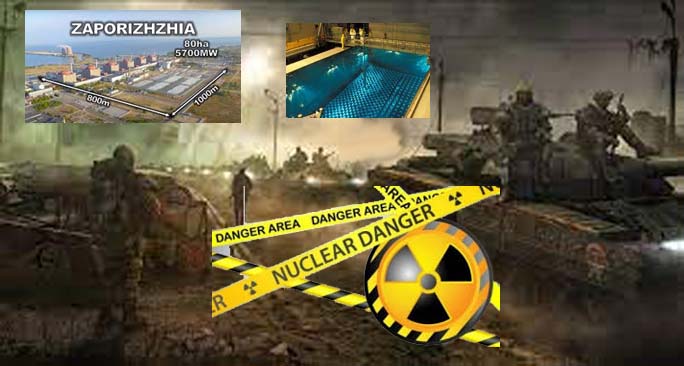
Some interests aligned with commercial reactors may wish to downplay the dangers to avoid tarnishing the industry’s image.
But the apocalyptic scope of a potential catastrophe at Zaporizhzhia is simply too great to let humankind tolerate inaction. There is no biological margin for later regrets.
BY HARVEY WASSERMAN – ET AL. 28 July 23 https://www.counterpunch.org/2023/07/28/the-global-crisis-at-the-zaporizhzhia-nuclear-site-demands-immediate-united-nations-intervention/
The global crisis at six Ukrainian atomic reactors and fuel pools has escalated to an apocalyptic threat that demands immediate action.
Protecting our lives on this planet now demands immediate deployment of a United Nations peacekeeping force to operate and protect this plant.
A petition is now circulating to help make that happen.
This week Russian occupiers threw the Zaporizhzhia site into deepening chaos by firing Unit 4 up to “hot shutdown.” Until July 25, Unit 4 had been in cold shutdown, along with Units 1,2,3 and 6. Unit 5 had been on hot shutdown to help power the plant.
But the Ukrainian nuclear agency Energoatom warns that putting Unit 4 up to hot shutdown is “a gross violation of the requirements of the license to operate this nuclear facility.”
The Russian military has occupied Zaporizhzhia since March, 2022.
It previously assaulted Chernobyl, whose melted Unit 4 core—-which exploded in 1986—-still poses grave dangers. Russian troops terrorized site workers and jeopardized operations that safeguard massive quantities of radiation still on site.
The six reactors and six fuel pools at Zaporizhzhia are burdened with far more potentially apocalyptic radiation than was released at Hiroshima, Nagasaki, Chernobyl or Fukushima. Without sufficient power and a constant supply of cooling water, the site could turn into a radioactive fireball powerful enough to send lethal radiation throughout the Earth’s eco-sphere, threatening all human life.
The Russians and Ukrainians have accused each other of acts that threaten such a catastrophe. Each has blamed the other for apparently random mining and shelling on and around the site. Just one such hit could lead to a meltdown and a series of catastrophic explosions from which our species might never recover.
On June 6, an attack widely attributed to Russia destroyed the Kakhovka hyroelectric dam, threatening vital power and cooling water supplies for Zaporizhzhia. Later that month, Ukrainian President Volodymyr Zelensky charged that the Russians had planted explosives at the site to precede a possible attack.
In 2001, 9/11 terrorists who took down the World Trade Center apparently contemplated attacking the Indian Point Nuclear Plant, 35 miles north of New York City. Such an assault could have blanketed much of New York, New England and the Atlantic Ocean in deadly radiation.
There have been other terrorist threats to atomic reactors and fuel pools. But the six at Zaporizhzhia are the first in history to endure the hostile instability of a hot war zone. on Monday IAEA inspectors spotted anti-personnel mines at the plant’s perimeter and still have not had access to reactor turbine halls or the roofs of reactors 3 and 4 to see what those new objects placed up there are.
The complex also recently lost access to its main power backup line.
With an under-skilled labor force attempting to work in an unpredictable state of terror, with at least two reactors now teetering on hot shutdown, and with six fuel pools vulnerable to loss of power and coolant, the dangers at Zaporizhzhia are on a scale never before experienced by the human race. Though all-out nuclear war might well release more radiation, the instability at these reactors and fuel pools poses as profound a threat to human survival as our species has ever experienced, at least since the Cuban Missile Crisis of 1962.
Such realities cry out for an armed, skilled, stabilizing global force.
The International Atomic Energy Agency, based in Geneva, has been providing vital expertise at the site, and does have the technical and human resources to take operational control. A peacekeeping force, such as the one deployed at Suez in 1956, must create a demilitarized zone capable of protecting the site from shelling and armed attack.
Some interests aligned with commercial reactors may wish to downplay the dangers to avoid tarnishing the industry’s image.
But the apocalyptic scope of a potential catastrophe at Zaporizhzhia is simply too great to let humankind tolerate inaction. There is no biological margin for later regrets.
The General Assembly of the United Nations must send an operational and peacekeeping force to manage and protect the Zaporizhzhia nuclear complex.
IMMEDIATELY!!!
Denys Bondar, Scott Denman, Karl Grossman, Howie Hawkins, Joshua Frank, Myla Reson, Harvey Wasserman and others are among the signees of this article, and of the petition asking the UN to send Peacekeepers to Zaophrizhzhia at https://www.change.org/p/stop-ukrainian-nuclear-disaster-unga-must-establish-dmz-at-zaporizhzhia-plant-now
The Dangerous and Frightening Disappearance of the Nuclear Expert
The vanishing profession of preventing nuclear war
More than a dozen experts across the ideological spectrum I spoke with — hawks and doves alike — agreed a renaissance is needed to rebuild lost muscle memory and fashion new strategies to deter increasingly belligerent nuclear peers and new wannabe nuclear states. And the emergence of artificial intelligence, some analysts fear, could enhance an aggressor’s nuclear first-strike capability or sow dangerous confusion among atomic adversaries.
Tensions among nuclear powers are rising, but decades of peace have resulted in a dearth of people trained to deal with the continuing threat.
Politico, By BRYAN BENDER, 07/28/2023
SANTA MONICA, Calif. — At the height of the Cold War, the RAND Corporation crackled with the collective energy of the best brains the Pentagon could find to tackle the biggest threat.
At lunchtime, an eclectic group of physicists, economists and social scientists would play Kriegspeil, a form of double-blind chess modeled on Prussian wargames in which players can’t see their opponent’s pieces and infer their moves from a referee sharing sparse information. Then they would spend the rest of the workday developing the military doctrine, deterrence theory and international arms control frameworks to prevent nuclear war — and if all else failed, how they might win one, or at least avoid total annihilation.
It’s been several decades since the likes of Herman Kahn, the alpha male of the so-called “Megadeath Intellectuals” whose famous book On Thermonuclear War casually contemplated the long-term prospects for a society that had endured the sudden extinction of more than 100 million people, roamed RAND’s halls. The favored lunchtime competition these days seems to be ping pong in the courtyard — if anyone’s around.
One recent morning, I visited RAND’s headquarters here on the scenic California coast. After being escorted past three layers of security, I found Ed Geist, the intellectual heir to those legendary Cold Warriors, holding down the fort in the “Coffee Cove” in the RAND library.
Geist, who holds a Ph.D. in Russian history and is author of the forthcoming book Deterrence Under Uncertainty: Artificial Intelligence and Nuclear Warfare, said the Pentagon-funded think tank’s team of dedicated nuclear policy experts and strategists, spread across half a dozen offices worldwide, could barely fill a couple tables in the lunchroom now. And many of the ones who are left, he said, are in the twilight of their careers.
“It is much, much reduced,” he said, framed by obscure periodicals with titles like North Korean Review, Phalanx and Strategic Policy. “We have more work than we can do.”……………………….
This summer, as the public is treated to a rare thriller about the development of the atomic bomb in director Christopher Nolan’s biopic Oppenheimer, the nation’s leading nuclear policy wonks like Geist are more concerned than ever about the specter of a nuclear war — and warn that we are far less prepared than during the Cold War to deal with a more expansive threat. As Oppenheimer reminds us, the bomb itself was the creation of a relatively small number of geniuses assigned to the New Mexico desert in the waning days of World War II. But once it was unleashed and other major powers followed, an entire nuclear complex employing thousands of weapons engineers and technicians, political and social scientists, and diplomats sprang up to harness a humanity-erasing technology and fashion strategies to prevent the unthinkable.
Over time, however, the pervasive fear that fueled that intellectual apparatus has ebbed — and with it the urgency to restock the ranks of experts. Three decades after the Cold War ended, RAND and the broader network of government agencies, national laboratories, research universities and think tanks are struggling to meet the demands of a new — and many contend, far more dangerous — chapter in the global nuclear standoff.
The discipline’s steady decline, which only accelerated following the Sept. 11 attacks when the military pivoted to the war on global terrorism, is compounded by reduced funding from some of the leading philanthropies that funded nuclear policy studies and the graying of the last generation of practitioners both in and out of government. As for government funding, most of it — to the tune of $75 billion a year over the next decade — is dedicated to overhauling the U.S. arsenal of nuclear-armed missiles, bombers and submarines, far eclipsing investments in the humans who manage them.
More than a dozen experts across the ideological spectrum I spoke with — hawks and doves alike — agreed a renaissance is needed to rebuild lost muscle memory and fashion new strategies to deter increasingly belligerent nuclear peers and new wannabe nuclear states. And the emergence of artificial intelligence, some analysts fear, could enhance an aggressor’s nuclear first-strike capability or sow dangerous confusion among atomic adversaries.
……………………………………………………………….
Joan Rohlfing has been sounding the alarm about the trend for years.
For the last 13 years, the former top nuclear adviser at the Departments of Defense and Energy and staffer for the House Armed Services Committee, has been president of the Nuclear Threat Initiative. The nonprofit, founded in 2001 by media mogul Ted Turner, is dedicated to reducing the dangers of weapons of mass destruction. And it has emerged as the standard bearer — and often lead funder — of training programs and policy work that is central to government nuclear strategies.
……………………………………. “That may sound alarming,” Rohlfing acknowledged, “but I have deep concerns that we are underestimating the dangers of the moment. There is a lot more complexity, with more nuclear weapons states, with more lethal weapons, with weapons that fly faster on hypersonic vehicles.
“And on top of all that,” she stressed, “there is a hot war in Europe with nuclear threats being made.”
……………………………………………………………………….. the arms control agreements that Washington and Moscow relied on for decades to bring some measure of stability and transparency to the world’s largest nuclear arsenals —including requiring reciprocal visits of each other’s weapons bases — have become another casualty of degrading relations between the United States and Russia in recent years.
…………………………………………………………………… The Pentagon has estimated that Beijing could quadruple its deployed warheads to 1,000 by 2030, uncomfortably close to the number of nuclear weapons that Moscow and Washington have deployed. But China is not party to any arms control agreements or international limits. “We have not built a good foundation for these discussions with the Chinese,” says Geist, the RAND nuclear expert.
Meanwhile, successive government studies and think-tank reports warn about the threat of cyber-attacks on nuclear command and control systems that could lead to deadly miscalculation.
Add to the mix the uncharted territory of AI, the race to develop new weapons that can destroy early warning or communications satellites in orbit, and the failure of the international community to prevent North Korea and Iran from building up their nuclear weapons complexes.
“All the ingredients are here for a catastrophe,” Rohlfing said. “I think there is a high degree of denial because we have gone so long without nuclear use. We are discounting the warning signs that are right in front of us. In the heat of the moment, all it takes is a miscommunication or miscalculation to create a series of events that spiral out of control.”
Yet the level of the threat is not matched by the brain power needed to confront it, she said.
Rohlfing pointed to a 2019 assessment of the nuclear arms control and disarmament community that painted a decidedly gloomy outlook for a field that was once vibrant.
………………………………………………………………………………………. “The capacity in the field is shrinking as the threat is expanding,” said Rohlfing. “Nuclear is woefully neglected.”
Mark Bucknam arrived at the National War College in 2010. He discovered the leading academic institution for training military, diplomatic and foreign leaders in national security strategy was bestowing masters degrees without any instruction on nuclear deterrence, which had been a pillar of the curriculum in the years before the 9/11 attacks.
………………………………………………………………………………………………………. Stephen Schwartz, a senior fellow at the Bulletin of the Atomic Scientists, which has been advocating for reductions in nuclear arsenals since the arrival of the nuclear age in 1945, believes the lack of experience and expertise is particularly acute in Congress, where few lawmakers or staff are steeped in arms control, nuclear strategy or deterrence theory.
The debates, in his view, “are almost solely on the cost of nuclear weapons and not their utility.”
…………………………………… Congress is about to get another wake-up call, however, in the form of the bipartisan commission’s upcoming report.
………………………………………………………………… In the meantime, the paucity of people with the expertise to do that instruction are the guardians of a knowledge that remains far too obscure. Like relics of a distant era.
Ahead of my visit, RAND officials culled some of their nuclear archives, including a palm-sized disc labeled “BOMB DAMAGE EFFECT COMPUTER,” a circa-1958 device that would have been in the desk drawer of anyone who needed to estimate the probable impacts of atomic weapons. Geist rotated the concentric dials that can estimate what a nuclear blast, ranging from a kiloton to 100 megatons, would produce in terms of crater size and “maximum fireball radius.”
These days, Geist sometimes feels like an artifact, too.
“I guess I’m on my own here,” he said. “We have some difficult theoretical and also practical questions that have to be addressed. We can’t just go into the stacks and pull out [the books of] Herman Khan and apply it to today.” https://www.politico.com/news/magazine/2023/07/28/nuclear-experts-russia-war-00108438
—
To avoid nuclear instability, a moratorium on integrating AI into nuclear decision-making is urgently needed: The NPT PrepCom can serve as a springboard

European Leadership Network, Alice Saltini |Research Coordinator, 28 July 2023
TAIPEI 2029, Tensions have risen sharply between the US and China as the Taiwan war has drawn the US and its allies into the Pacific theatre. Both countries, having suffered immense losses in the initial months of the war, are at an impasse. For the previous four years, the US has depended on its advanced nuclear command, control, and communication (NC3) detection systems. These systems utilise a deep learning model regarded as the world’s most advanced, trained on synthetic data. Its track record of perfect accuracy in detecting previous test launches has yet to falter. Suddenly, a warning flashes, detecting a barrage of JL-3 submarine-launched ballistic missiles. The threat level escalates drastically, and a human operator assesses the findings. Time constraints make additional verification impossible, and the decision to launch a counterattack is finally taken. However, the initial wave of detected SLBMs turns out to be a false alarm – a “hallucination”.
This rapid response was fueled by unwavering trust in the system’s impeccable past performance. No one can pinpoint exactly what led the system to make the erroneous detection because of the black box nature of the deep learning model, though some attribute it to an unusual mix of a routine submarine surfacing drill and peculiar atmospheric conditions on that day.
This scenario underlines the chilling reality of the risks associated with integrating neural networks and deep learning models into NC3 systems. A nuclear exchange is not in the interest of any nation, and ensuring robust and reliable NC3 systems is critical in avoiding one. There is then an urgent need for a moratorium on the integration of neural networks into critical NC3 systems until the technology is fully explainable and the technological limitation with these models is solved.
Amongst the gravest risks posed by the integration of AI are in nuclear command, control, and communication (NC3) systems.
As deep learning based artificial intelligence (AI) is adopted, there is a growing eagerness in industries and governments to incorporate AI into various applications. Amongst the gravest risks posed by this integration are in NC3, where discussions are underway. AI is a broad field, and a form of AI is already implemented in NC3 systems. This AI is distinctly different from deep learning and relies on rule-based systems, which perform poorly in unpredictable scenarios. As part of their modernisation efforts, nuclear-armed nations are now investigating the potential advantages of integrating deep learning models into some NC3 systems.
Deep learning is loosely modelled by how neurons function in the brain, with artificial neurons transmitting signals to each other. In a deep neural network, these neurons are organised in layers and progressively extract higher-level features from an input, resulting in a prediction as the output. As they are trained on large datasets, they learn to identify patterns and a representation allows them to make predictions. These models are not given instructions to follow and don’t operate on pre-programmed algorithmic principles.
Technical risks of AI integration into NC3
The integration of neural networks into NC3 poses a multitude of risks to global security due to the technological limitations of neural networks.
Interpretability
Interpretability relates to the ‘black box’ nature of AI and is a significant challenge with neural networks. As the model is trained, the way it processes the input changes by adjusting the weights across countless neurons. This makes it extremely challenging to understand the internal mechanisms that guide the model towards the output. In a domain as sensitive as NC3, comprehensible and explainable results are essential to maintain credibility. The predictions made by the model are inscrutable, and the reasoning impossible to elucidate. If integrated into NC3, this would leave no accountability or method of verification for predictions and decisions.
Hallucinations
“Hallucinations” are a phenomenon where deep learning models confidently make unfounded assertions that aren’t supported by their training data. These hallucinations can also manifest in object detection models, where an AI might incorrectly mislabel a dog as a cat. In the context of NC3, an AI system might misinterpret unfamiliar atmospheric phenomena as incoming missiles or misinterpret incoming missiles as a meteor. Alternatively, the model could erroneously assess threats and targets in a decision-support context.
TAIPEI 2029, Tensions have risen sharply between the US and China as the Taiwan war has drawn the US and its allies into the Pacific theatre. Both countries, having suffered immense losses in the initial months of the war, are at an impasse. For the previous four years, the US has depended on its advanced nuclear command, control, and communication (NC3) detection systems. These systems utilise a deep learning model regarded as the world’s most advanced, trained on synthetic data. Its track record of perfect accuracy in detecting previous test launches has yet to falter. Suddenly, a warning flashes, detecting a barrage of JL-3 submarine-launched ballistic missiles. The threat level escalates drastically, and a human operator assesses the findings. Time constraints make additional verification impossible, and the decision to launch a counterattack is finally taken. However, the initial wave of detected SLBMs turns out to be a false alarm – a “hallucination”. This rapid response was fueled by unwavering trust in the system’s impeccable past performance. No one can pinpoint exactly what led the system to make the erroneous detection because of the black box nature of the deep learning model, though some attribute it to an unusual mix of a routine submarine surfacing drill and peculiar atmospheric conditions on that day.
This scenario underlines the chilling reality of the risks associated with integrating neural networks and deep learning models into NC3 systems. A nuclear exchange is not in the interest of any nation, and ensuring robust and reliable NC3 systems is critical in avoiding one. There is then an urgent need for a moratorium on the integration of neural networks into critical NC3 systems until the technology is fully explainable and the technological limitation with these models is solved.
Amongst the gravest risks posed by the integration of AI are in nuclear command, control, and communication (NC3) systems. Alice Saltini
As deep learning based artificial intelligence (AI) is adopted, there is a growing eagerness in industries and governments to incorporate AI into various applications. Amongst the gravest risks posed by this integration are in NC3, where discussions are underway. AI is a broad field, and a form of AI is already implemented in NC3 systems. This AI is distinctly different from deep learning and relies on rule-based systems, which perform poorly in unpredictable scenarios. As part of their modernisation efforts, nuclear-armed nations are now investigating the potential advantages of integrating deep learning models into some NC3 systems.
Deep learning is loosely modelled by how neurons function in the brain, with artificial neurons transmitting signals to each other. In a deep neural network, these neurons are organised in layers and progressively extract higher-level features from an input, resulting in a prediction as the output. As they are trained on large datasets, they learn to identify patterns and a representation allows them to make predictions. These models are not given instructions to follow and don’t operate on pre-programmed algorithmic principles.
Technical risks of AI integration into NC3
The integration of neural networks into NC3 poses a multitude of risks to global security due to the technological limitations of neural networks.
Interpretability
Interpretability relates to the ‘black box’ nature of AI and is a significant challenge with neural networks. As the model is trained, the way it processes the input changes by adjusting the weights across countless neurons. This makes it extremely challenging to understand the internal mechanisms that guide the model towards the output. In a domain as sensitive as NC3, comprehensible and explainable results are essential to maintain credibility. The predictions made by the model are inscrutable, and the reasoning impossible to elucidate. If integrated into NC3, this would leave no accountability or method of verification for predictions and decisions.
Hallucinations
“Hallucinations” are a phenomenon where deep learning models confidently make unfounded assertions that aren’t supported by their training data. These hallucinations can also manifest in object detection models, where an AI might incorrectly mislabel a dog as a cat. In the context of NC3, an AI system might misinterpret unfamiliar atmospheric phenomena as incoming missiles or misinterpret incoming missiles as a meteor. Alternatively, the model could erroneously assess threats and targets in a decision-support context.
Cyber security threats
Amongst cyber security threats, integrity attacks, including data poisoning and evasion techniques, pose a significant risk. In data poisoning, an adversary subtly modifies the training data, misleading the model into learning incorrect patterns. A single tampered data point can compromise a system. Evasion attacks exploit inherent flaws in even the most robust models and could cause false identifications in an NC3 detection system. These vulnerabilities would provide untold opportunities for adversaries and non-state actors to develop methods to compromise NC3 systems.
TAIPEI 2029, Tensions have risen sharply between the US and China as the Taiwan war has drawn the US and its allies into the Pacific theatre. Both countries, having suffered immense losses in the initial months of the war, are at an impasse. For the previous four years, the US has depended on its advanced nuclear command, control, and communication (NC3) detection systems. These systems utilise a deep learning model regarded as the world’s most advanced, trained on synthetic data. Its track record of perfect accuracy in detecting previous test launches has yet to falter. Suddenly, a warning flashes, detecting a barrage of JL-3 submarine-launched ballistic missiles. The threat level escalates drastically, and a human operator assesses the findings. Time constraints make additional verification impossible, and the decision to launch a counterattack is finally taken. However, the initial wave of detected SLBMs turns out to be a false alarm – a “hallucination”. This rapid response was fueled by unwavering trust in the system’s impeccable past performance. No one can pinpoint exactly what led the system to make the erroneous detection because of the black box nature of the deep learning model, though some attribute it to an unusual mix of a routine submarine surfacing drill and peculiar atmospheric conditions on that day.
This scenario underlines the chilling reality of the risks associated with integrating neural networks and deep learning models into NC3 systems. A nuclear exchange is not in the interest of any nation, and ensuring robust and reliable NC3 systems is critical in avoiding one. There is then an urgent need for a moratorium on the integration of neural networks into critical NC3 systems until the technology is fully explainable and the technological limitation with these models is solved.
Amongst the gravest risks posed by the integration of AI are in nuclear command, control, and communication (NC3) systems. Alice Saltini
As deep learning based artificial intelligence (AI) is adopted, there is a growing eagerness in industries and governments to incorporate AI into various applications. Amongst the gravest risks posed by this integration are in NC3, where discussions are underway. AI is a broad field, and a form of AI is already implemented in NC3 systems. This AI is distinctly different from deep learning and relies on rule-based systems, which perform poorly in unpredictable scenarios. As part of their modernisation efforts, nuclear-armed nations are now investigating the potential advantages of integrating deep learning models into some NC3 systems.
Deep learning is loosely modelled by how neurons function in the brain, with artificial neurons transmitting signals to each other. In a deep neural network, these neurons are organised in layers and progressively extract higher-level features from an input, resulting in a prediction as the output. As they are trained on large datasets, they learn to identify patterns and a representation allows them to make predictions. These models are not given instructions to follow and don’t operate on pre-programmed algorithmic principles.
Technical risks of AI integration into NC3
The integration of neural networks into NC3 poses a multitude of risks to global security due to the technological limitations of neural networks.
Interpretability
Interpretability relates to the ‘black box’ nature of AI and is a significant challenge with neural networks. As the model is trained, the way it processes the input changes by adjusting the weights across countless neurons. This makes it extremely challenging to understand the internal mechanisms that guide the model towards the output. In a domain as sensitive as NC3, comprehensible and explainable results are essential to maintain credibility. The predictions made by the model are inscrutable, and the reasoning impossible to elucidate. If integrated into NC3, this would leave no accountability or method of verification for predictions and decisions.
Hallucinations
“Hallucinations” are a phenomenon where deep learning models confidently make unfounded assertions that aren’t supported by their training data. These hallucinations can also manifest in object detection models, where an AI might incorrectly mislabel a dog as a cat. In the context of NC3, an AI system might misinterpret unfamiliar atmospheric phenomena as incoming missiles or misinterpret incoming missiles as a meteor. Alternatively, the model could erroneously assess threats and targets in a decision-support context.
Cyber security threats
Amongst cyber security threats, integrity attacks, including data poisoning and evasion techniques, pose a significant risk. In data poisoning, an adversary subtly modifies the training data, misleading the model into learning incorrect patterns. A single tampered data point can compromise a system. Evasion attacks exploit inherent flaws in even the most robust models and could cause false identifications in an NC3 detection system. These vulnerabilities would provide untold opportunities for adversaries and non-state actors to develop methods to compromise NC3 systems.
Scarcity of real-word data
A model’s reliability is directly linked to the quality of its training data, and even minor errors can have severe implications for the model’s predictive capacity. The scarcity of real-world data for training prospective models is a significant concern. Any effort to create such a model would have to rely on a dataset built largely on synthetic data. Imperfect data amplifies the risks associated with hallucinations and cybersecurity threats.
Why a moratorium is needed and how NPT meetings can facilitate dialogue
A moratorium, ideally by all nine nuclear-armed states (China, France, India, Israel, North Korea, Pakistan, Russia, the United Kingdom, and the United States), on the integration of neural networks into NC3 systems would be an important step to reduce the inherent risks and uncertainties involved. The nine states should uphold the moratorium until comprehensive exploration and mitigation of these risks can be achieved and formal regulations are instituted.
Given the current global tensions, it is imperative for all nine nuclear powers to pursue this initiative. However, as some states are already reluctant to engage in nuclear arms control-related dialogues, this will be difficult. With this in mind, it is critical for at least the five nuclear weapon states (NWS) to start engaging in discussions aimed at establishing a moratorium.
Although achieving a moratorium from all nine countries is a challenge, the NPT provides an opportunity for initial discussions, particularly among the NWS. To pave the way for such a moratorium, NPT State Parties should build upon the common ground established in 2022 and reflected in a paragraph of the draft final document, which received no objections from any state party………………………………
The importance of human judgment, particularly in the context of critical decision-making, has also been emphasised by all NWS in several unilateral statements. These shared understandings can serve as a stepping stone towards a common recognition of the risks posed by neural networks, setting the stage for a moratorium. The 2023 NPT PrepCom thus presents an excellent opportunity to initiate this crucial dialogue…………………………………………………………………………………………
A likely hurdle to the enactment of a moratorium might be the perceived hindrance to technological advancement due to the potential benefits and advantages that this technology generates over adversaries. However, these perceived advantages have led to a steady increase in the speed at which AI is being applied across military functions, potentially posing the risk of premature deployment of this technology without adequate consideration of its implications. As NWS pursue “AI supremacy”, it is essential to remember the potentially disastrous consequences of unregulated neural network integration into nuclear systems and the need for a coordinated, global approach to this issue………………more https://www.europeanleadershipnetwork.org/commentary/to-avoid-nuclear-instability-a-moratorium-on-integrating-ai-into-nuclear-decision-making-is-urgently-needed-the-npt-prepcom-can-serve-as-a-springboard/
‘Project 2025’: plan to dismantle US climate policy for next Republican president
An alliance of rightwing groups has crafted an extensive presidential
proposal to bolster the planet-heating oil and gas industry and hamstring
the energy transition, it has emerged. Against a backdrop of
record-breaking heat and floods this year, the $22m endeavor, Project 2025,
was convened by the notorious rightwing, climate-denying thinktank the
Heritage Foundation, which has ties to fossil fuel billionaire Charles
Koch.
Called the Mandate for Leadership: The Conservative Promise, it is
meant to guide the first 180 days of presidency for an incoming Republican
president. Climate experts and advocates criticized planning that would
dismantle US climate policy.
Guardian 27th July 2023
TODAY. Jobs! jobs! jobs! – IN THE DEATH INDUSTRY

Quite suddenly, any vestige of Australia being an independent country has disappeared overnight.
An entire continent has been handed over to the American military machine, by Australia’s cowardly and self-serving politicians.
And the Australian media exultantly choruses “ Jobs! Jobs ! Jobs! “
I have often wondered why that chorus is repeated endlessly – in awed, religious, joy?
If you work in a caring industry, or in nurturing animals, plants, the environment, in growing food or in one of the many jobs that support life – you can derive some pride in your work. It’s good to be paid some money, but it’s especially good to be able to derive some dignity, self-respect, genuine joy, in knowing that you are genuinely contributing to well-being – to the common good.
It’s a matter of integrity – dare I mention this? – some spiritual satisfaction. You can hold your head up high.
Where is the integrity in making killing machines, things for massacring thousands of people, destroying the land and animals?

And just to make sure that the Americans really mean it, we have the odious Antony Blinken now emphasising that the USA will certainly punish our courageous Australian truth-teller Julian Assange.
PM Albanese, and wimp Foreign Minister Penny Wong just kow tow and agree!
Money talks: 109 global institutions restrict investments in nuclear weapons

Exciting news in the latest PAX-ICAN report “Moving away from mass destruction” out today: the number of financial institutions across the globe rejecting nuclear weapons keeps growing! The number of financial institutions excluding the nuclear weapons industry from their investments continues to grow year on year, and many are naming the UN nuclear weapons ban treaty as a reason to stop funding the bomb.
The 109 financial institutions profiled in this report know that nuclear weapons represent a systemic reputational and regulatory risk, and are putting policies in place that limit or completely exclude any financial engagement with this controversial industry.
The report shows the financial community is taking a more responsible approach, embracing the positive role they can play in further stigmatising and delegitimizing nuclear weapons. Even with Russia’s illegal invasion of Ukraine, and skyrocketing defence spending, the financial community is holding a firm line against financing weapons of mass destruction.
These policies do more than simply cut off the funding to the individual companies producing nuclear weapons: they signal that doing business off weapons of mass destruction is not a viable business model particularly now the UN Treaty on the Prohibition of Nuclear Weapons is in place. https://www.dontbankonthebomb.com/policy-analysis-report-moving-away-from-mass-destruction/
US admits to pushing Ukraine into a fight it can’t win

the operative Western definition of “Ukrainian courage”, however, is not hard to discern: a willingness to use Ukrainian soldiers as cannon fodder.
the Ukraine war has already yielded a “triumphal summer” for the NATO alliance.
A US “windfall” in Ukraine comes at an unfathomable cost.
AARON MATÉ, JUL 29, 2023 https://mate.substack.com/p/unlocked-us-admits-to-pushing-ukraine?utm_source=post-email-title&publication_id=100118&post_id=135529420&isFreemail=true&utm_medium=email
Nearly one month into Russia’s invasion, the New York Times quietly abandoned any pretense that the US aim was to defend Ukraine and bring the war to a quick end. The White House, the Times reported, “seeks to help Ukraine lock Russia in a quagmire without inciting a broader conflict with a nuclear-armed adversary or cutting off potential paths to de-escalation.”
Eighteen months later, the desired quagmire has been achieved. This is due not only to a massive influx of NATO weaponry, but a Western blockade of every tangible path to de-escalation, most notably the April 2022 Ukraine-Russia peace deal that Boris Johnson nixed.
With a Russian quagmire the overriding goal, the US and its partners have adopted an attendant disregard for the tens of thousands of Ukrainian lives sacrificed for the task.
In the war’s early stages, only the most outwardly enthusiastic proxy warriors, such as Sen. Lindsey Graham, could candidly admit that US support ensured that Ukraine would “fight to the last person.” With Ukraine now struggling to mount a widely hyped counteroffensive, the prevailing indifference to its human toll is more widely acknowledged.
As the Wall Street Journal newly reports:
“When Ukraine launched its big counteroffensive this spring, Western military officials knew Kyiv didn’t have all the training or weapons—from shells to warplanes—that it needed to dislodge Russian forces. But they hoped Ukrainian courage and resourcefulness would carry the day. They haven’t.”
It is unclear how Western officials could have “hoped” that Ukrainian “resourcefulness” would make up for the training and weapons that they did not provide. A war zone, after all, is not an episode of MacGyver or the A-Team, and Ukraine’s adversary happens to be one of the world’s most powerful militaries. The operative Western definition of “Ukrainian courage”, however, is not hard to discern: a willingness to use Ukrainian soldiers as cannon fodder.
“Senior U.S. officials,” the New York Times reports, have “privately expressed frustration that some Ukrainian commanders… fearing increased casualties among their ranks” have recently “reverted to old habits — decades of Soviet-style training in artillery barrages — rather than sticking with the Western tactics and pressing harder to breach the Russian defenses.”
The Times did not ask these same US officials whether it is appropriate to express “frustration” at the decision of another military – the one we claim to support – to avoid “increased casualties” among its ranks. But Andriy Zagorodnyuk, a former Ukrainian defense minister, asked an equally salient question of his US counterparts: “Why don’t they come and do it themselves?”
Frustrated US officials are well aware of Ukraine’s toll. According to the New York Times, Western states now estimate that Ukraine lost about 20 percent of its weaponry in the first weeks of its counteroffensive, a “startling rate of losses… as Ukrainian soldiers struggle against Russia’s formidable defenses.” Oddly, the Times omits any mention of losses in Ukrainian lives – a tacit admission, perhaps, that the human casualties are even more startling.
As is also increasingly admitted, all of this was foreseen. “U.S. Defense Department analysts knew early this year that Ukraine’s front-line troops would struggle against Russian air attacks,” the Wall Street Journal notes. Or as the Washington Post puts it: “Privately, U.S. military officials concede that their expectation from early this year, described in leaked intelligence documents, that Ukraine is likely to make only modest gains in its counteroffensive has not changed, despite public pronouncements seeking to downplay fallout from the disclosure.”
In other words, US “public pronouncements” have entailed lying to the public to “downplay fallout” of fueling a knowingly catastrophic and futile war. The participants in this deception include Secretary of Defense Lloyd Austin, who declared in March that the Ukrainian military had “a very good chance for success,” despite privately being told the opposite.
One reason for Ukraine’s current woes, as President Biden recently admitted to CNN, is that “the Ukrainians are running out of ammunition,” and “we’re low on it” as well. Another major factor, a classified Pentagon assessment noted in February, was Ukraine’s “inability to prevent Russian air superiority.” Or as a senior European official now warns, “everyone worries that the Ukrainians will run out of ammunition and air defenses.”
“America would never attempt to defeat a prepared defense without air superiority, but they [Ukrainians] don’t have air superiority,” John Nagl, a retired U.S. Army lieutenant colonel and professor at the U.S. Army War College, observes. “It’s impossible to overstate how important air superiority is for fighting a ground fight at a reasonable cost in casualties.”
According to the Pentagon, NATO’s latest influx of heavy weaponry will not change the tide. Speaking at a Washington security conference this month, John Kirchhofer, chief of staff at the US Defense Intelligence Agency, claimed that the Ukraine war is at a “stalemate” and that “none of these” newly provided weapons – including Storm Shadow missiles and cluster bombs — “are the holy grail that Ukraine is looking for.”
Accordingly, the Wall Street Journal notes, the unlikelihood of “any large-scale breakthrough by the Ukrainians… raises the unsettling prospect for Washington and its allies of a longer war—one that would require a huge new infusion of sophisticated armaments and more training to give Kyiv a chance at victory.”
For Washington, perhaps that prospect is not unsettling. According to veteran Washington Post columnist David Ignatius, the Ukraine war has already yielded a “triumphal summer” for the NATO alliance.
“The West’s most reckless antagonist has been rocked,” Ignatius writes. “NATO has grown much stronger with the additions of Sweden and Finland. Germany has weaned itself from dependence on Russian energy and, in many ways, rediscovered its sense of values.”
Accordingly, “for the United States and its NATO allies, these 18 months of war have been a strategic windfall, at relatively low cost (other than for the Ukrainians).”
Indeed, it is quite easy to reap a “windfall” from 18 months of war when the US is not itself fighting it. It has instead sacrificed future generations of an entire nation, whose worth is so devalued that their unfolding catastrophe is openly reduced to an afterthought.
Washington’s looming war against China
SOTT – Signs of The Times, Michael Hudson, The Unz Review, Sat, 22 Jul 2023
Economic Logic has been Replaced by National Security Overrides
The July NATO summit in Vilnius had the feeling of a funeral, as if they had just lost a family member – Ukraine. To clear away NATO’s failure to drive Russia out of Ukraine and move NATO right up to the Russian border, its members tried to revive their spirits by mobilizing support for the next great fight – against China, which is now designated as their ultimate strategic enemy. To prepare for this showdown, NATO announced a commitment to extend their military presence all the way to the Pacific.
The plan is to carve away China’s military allies and trading partners, above all Russia, starting with the fight in Ukraine. President Biden has said that this war will be global in scope and will take many decades as it expands to ultimately isolate and break up China.
The U.S.-imposed sanctions against trade with Russia are a dress rehearsal for imposing similar sanctions against China. But only the NATO allies have joined the fight. And instead of wrecking Russia’s economy and “turning the ruble to rubble” as President Biden predicted, NATO’s sanctions have made it more self-reliant, increasing its balance of payments and international monetary reserves, and hence the ruble’s exchange rate.
To cap matters, despite the failure of trade and financial sanctions to injure Russia – and indeed, despite NATO’s failures in Afghanistan and Libya, NATO countries committed themselves to trying the same tactics against China. The world economy is to be split between US/NATO/Five Eyes on the one hand, and the rest of the world – the Global Majority – on the other. EU Commissioner Joseph Borrell calls this as a split between the US/European Garden (the Golden Billion) and the Jungle threatening to engulf it, like an invasion of its well-manicured lawns by an invasive species.
From an economic vantage point, NATO’s behavior since its military buildup to attack Ukraine’s Russian-speaking eastern states in February 2022 has been a drastic failure. The U.S. plan was to bleed Russia and leave it so economically destitute that its population would revolt, throw Vladimir Putin out of office and restore a pro-Western neoliberal leader who would pry Russia away from its alliance with China – and then proceed with America’s grand plan to mobilize Europe to impose sanctions on China…………………..
The US/NATO West has led this global fracture, yet it will be the big loser. NATO members already have seen Ukraine deplete their inventory of guns and bullets, artillery and ammunition, tanks, helicopters weapons and other arms accumulated over five decades. But Europe’s loss has become America’s sales opportunity, creating a vast new market for America’s military-industrial complex to re-supply Europe. To gain support, the United States has sponsored a new way of thinking about international trade and investment. The focus has shifted to “national security,” meaning to secure a U.S.-centered unipolar order.
The world is dividing into two blocs: a post-industrial US/NATO vs the Global Majority
……………………………………………………………………………. By trying to prevent other countries from following this logic, U.S. and European NATO diplomacy has brought about exactly what U.S. supremacists most feared. Instead of crippling the Russian economy to create a political crisis and perhaps breakup of Russia itself in order to isolate it from China, the US/NATO sanctions have led Russia to re-orient its trade away from NATO countries to integrate its economy and diplomacy more closely with China and other BRICS members.
Ironically, the US/NATO policy is forcing Russia, China and their BRICS allies to go their own way, starting with a united Eurasia. This new core of China, Russia and Eurasia with the Global South are creating a mutually beneficial multipolar trade and investment sphere.
By contrast, European industry has been devastated. Its economies have become thoroughly and abjectly dependent on the United States – at a much higher cost to itself than was the case with its former trade partners. European exporters have lost the Russian market, and are now following U.S. demands that they abandon and indeed reject the Chinese market. Also to be rejected in due course are markets in the BRICS membership, which is expanding to include Near Eastern, African and Latin American countries……………………………………………………………………..
Today’s fighting against Russia on the Ukrainian front can be thought of as the opening campaign in World War III. In many ways it is an outgrowth of World War II and its aftermath that saw the United States establish international economic and political organizations to operate in its own national self-interest. The International Monetary Fund imposes U.S. financial control and helps dollarize the world economy. The World Bank lends dollars to governments to build export infrastructure to subsidize US/NATO investors in control of oil, mining and natural resources, and to promote trade dependency on U.S. farm exports while promoting plantation agriculture, instead of domestic food-grain production. The United States insists on having veto power in all international organizations that it joins, including the United Nations and its agencies.
The creation of NATO is often misunderstood. Ostensibly, it depicted itself as a military alliance, originally to defend against the thought that the Soviet Union might have some reason to conquer Western Europe. But NATO’s most important role was to use “national security” as the excuse to override European domestic and foreign policy and subordinate it to U.S. control. Dependency on NATO was written into the European Union’s constitution. Its objective was to make sure that European party leaders followed U.S. direction and opposed left-wing or anti-American politics, pro-labor policies and governments strong enough to prevent control by a U.S.-client financial oligarchy.
NATO’s economic program has been one of adherence to neoliberal financialization, privatization, government deregulation and imposing austerity on labor. EU regulations prevent governments from running a budget deficit of more than 3% of GDP. That blocks Keynesian-type policies to spur recovery. Today, higher military arms costs and government subsidy of energy prices is forcing European governments to cut back social spending. Bank policy, trade policy and domestic lawmaking are following the same U.S. neoliberal model that has deindustrialized the American economy and loaded it down with debt to the financial sector in whose hands most wealth and income is now concentrated.
Abandoning economic self-interest for “national security” dependence on the US
The post-Vilnius world treats trade and international relations not as economic, but as “national security.” Any form of trade is the “risk” of being cut off and destabilized. The aim is not to make trade and investment gains, but to become self-reliant and independent. For the West, this means isolating China, Russia and the BRICS in order to depend fully on the United States. So for the United States, its own security means making other countries dependent on itself, so that U.S. diplomats won’t lose control of their military and political diplomacy…………………………………………………………………………………………………
The world is dividing into two blocs – with quite different economic philosophies……………………………………………………………………………………………………………………………………………
We are witnessing what seems to be an inexorable Decline of the West. U.S. diplomats have been able to tighten their economic, political and military control leadership over their European NATO allies. Their easy success in this aim has led them to imagine that somehow they can conquer the rest of the world despite de-industrializing and loading their economies so deeply in debt that there is no foreseeable way in which they can pay their official debt to foreign countries or indeed have much to offer.
The traditional imperialism of military conquest and financial conquest is ended
……………………………….. The US has only one weapon: Missiles and bombs can destroy, but cannot occupy but not occupy and take over a country.
The second way to create imperial power was by economic power to make other countries dependent on U.S. exports……………………………Control of world oil trade has been a central aim of US trade diplomacy………………………………………………………………………………………………. https://www.sott.net/article/482853-Washingtons-looming-war-against-China
—
Trident nuclear project can’t be delivered, says watchdog.
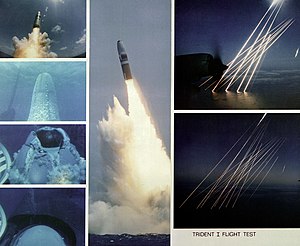
“The veil of secrecy surrounding nuclear spending is a desperate attempt by the UK Government to hide how outrageously unaffordable these weapons have become”
The Ferret, Rob Edwards, 27 Jul 23
Delivery of nuclear reactors to power a new fleet of Trident submarines on the Clyde has been branded as “unachievable” for the second year running by a UK Government watchdog.
The Infrastructure and Projects Authority (IPA) has given a £3.7 billion reactor-building project run by Rolls Royce for the Ministry of Defence (MoD) a “red” rating for 2022-23. The project was also assessed as red in 2021-22, as reported by The Ferret.
According to the IPA, red means that “successful delivery of the project appears to be unachievable”. This is because of “major issues” that do not appear to be “manageable or resolvable”.
The 2022-23 rating for another scheme crucial to renewing the Trident nuclear weapons system — a £1.9bn construction project at the Faslane and Coulport nuclear bases near Helensburgh — has been kept secret. In 2021-22 it was assessed as red.
The planned date for the final delivery to the Clyde of the new Dreadnought-class submarines, armed with Trident nuclear warheads, has also been classified as confidential by the MoD “for the purpose of safeguarding national security”.
The Scottish National Party (SNP) accused the UK Government of desperately trying to hide how “outrageously unaffordable” the Trident programme had become. The Scottish Greens described the programme as “a grotesque money pit”.
Campaigners criticised the MoD for “rewarding failure” by throwing money at nuclear projects, and for concealing the truth about the problems and delays. They warned of “everyday harms” from the risks of radiation leaks, as well as “catastrophic accidents”.
………………………………………The IPA’s latest annual report for 2022-23 assessed the feasibility of 52 military projects costing a total of £255.4bn. Eleven were related to the UK’s nuclear weapons programme and together cost more than £57bn, though the overall costs for three of them were kept secret.
The manufacture of nuclear reactors at a Rolls-Royce factory in Derby was the only project to be publicly rated as red. The reactors are to drive four new Trident-armed Dreadnought submarines due to start replacing existing Vanguard submarines at Faslane “in the early 2030s”.
…………………………………………………………….. Another previously mysterious project called Aurora was rated as amber. It is to make the plutonium components for new nuclear bombs at Aldermaston in Berkshire and is reckoned to cost between £2bn and £2.5bn.
The planned completion date for Aurora has been kept secret, along with the end dates for four other nuclear projects, including the Dreadnought and Astute submarine programmes. The dates were withheld under a freedom of information law exemption meant to protect national security.
2022-23 assessments for two other nuclear projects have also been classified as confidential so as not to prejudice international relations and the defence of the UK. One, Teutates, is a collaboration on nuclear weapon safety with France and the other is called “Clyde Infrastructure”.
The Clyde project is to build a series of new facilities at Faslane and Coulport to support nuclear submarine operations. It was rated as red by the IPA in 2021-22, and amber in 2020-21 and 2019-20.
The cost of the Clyde project has increased 19 per cent from £1.6bn to £1.9bn in the last year. According to the IPA, this is because of “challenges in delivering in a nuclear and operational environment”.
Trident ‘a moral abomination’
The SNP lambasted the UK Government for writing “blank cheques” to maintain the Trident programme. “The veil of secrecy surrounding nuclear spending is a desperate attempt by the UK Government to hide how outrageously unaffordable these weapons have become,” said the party’s Westminster defence spokesperson, Dave Doogan MP.
“The hollowing-out of the armed forces to pay for the ever-expanding nuclear vanity-weapons budget has led the UK to possess just 0.1 per cent of the world’s nuclear warheads — but at eye-watering cost while conventional capabilities atrophy.”
The Green MSP Ross Greer described nuclear weapons as a “moral abomination” that had no place in Scotland. “As these figures show, they are also a grotesque money pit that is swallowing up billions of pounds and giving huge handouts to international arms dealers,” he said.
“The Scottish Greens are proud to have secured the Scottish Government’s support for the international treaty banning nuclear weapons, already signed by 92 other countries.”
MoD ‘trying to hide’ Trident delays
The Nuclear Information Service, which researches and criticises nuclear weapons, pointed out that the MoD had been repeatedly given additional billions for its nuclear programme. “But there’s no sign that throwing money at the problem is having any effect beyond rewarding failure,” the group’s director, David Cullen, told The Ferret.
The Scottish Campaign for Nuclear Disarmament attacked the nuclear industry for its “big back catalogues” of cost escalations and time over-runs. “The nuclear propulsion of the nuclear weapon system only adds to the repertoire of everyday harms from radiation leaks and opportunities of catastrophic accidents,” said campaign chair, Lynn Jamieson……………………………………………………………….. https://theferret.scot/trident-nuclear-project-watchdog/
EDF Sees Increased Risk of Delay to New UK Atomic Reactors, financial doubts

Francois de Beaupuy, Bloomberg News, 27 Jul 23, https://www.bnnbloomberg.ca/edf-sees-increased-risk-of-delay-to-new-uk-atomic-reactors-1.1951285
– Electricite de France SA said the risk of further delay to two nuclear reactors in southwest England has risen because of construction setbacks.
EDF flagged last year that the plants may start 15 months late. The reactors at Hinkley Point have been touted by the UK government as sparking a nuclear renaissance, boosting energy independence and reducing reliance on fossil fuels. But the work has been plagued by multiple holdups and cost overruns.
The increased risk of a 15-month delay is due to “performances on civil works and challenges on mechanical, electrical, heating, ventilation and air conditioning,” EDF said Thursday in an earnings presentation. “Progress is below the planned trajectory and action plans have been set.”
The reactors, costing as much as £32 billion ($41.5 billion), are due to start operating in 2027 and 2028. The ballooning budget has fueled controversy over the vast sums needed for new nuclear developments, even as other low-carbon technologies such as offshore wind have also faced inflationary pressures.
Hinkley Point’s setbacks come as EDF seeks to arrange financing for a second pair of atomic plants — at Sizewell in eastern England — that would use the same design. Delays and cost overruns may deter investors who also face increasing demands for capital from renewables, which provide swifter returns.
The debt-laden French utility has a 66.5% stake in Hinkley Point, while China General Nuclear Power Corp. owns the rest. As funding requirements now exceed contractual commitments, shareholders will be asked to provide additional equity voluntarily starting in the fourth quarter.
“The probability that CGN will not fund the project beyond its committed equity cap is high,” EDF said Thursday. “Financing solutions are being investigated, in the event that CGN does not allocate its voluntary equity.”
-
Archives
- February 2026 (220)
- January 2026 (308)
- December 2025 (358)
- November 2025 (359)
- October 2025 (376)
- September 2025 (258)
- August 2025 (319)
- July 2025 (230)
- June 2025 (348)
- May 2025 (261)
- April 2025 (305)
- March 2025 (319)
-
Categories
- 1
- 1 NUCLEAR ISSUES
- business and costs
- climate change
- culture and arts
- ENERGY
- environment
- health
- history
- indigenous issues
- Legal
- marketing of nuclear
- media
- opposition to nuclear
- PERSONAL STORIES
- politics
- politics international
- Religion and ethics
- safety
- secrets,lies and civil liberties
- spinbuster
- technology
- Uranium
- wastes
- weapons and war
- Women
- 2 WORLD
- ACTION
- AFRICA
- Atrocities
- AUSTRALIA
- Christina's notes
- Christina's themes
- culture and arts
- Events
- Fuk 2022
- Fuk 2023
- Fukushima 2017
- Fukushima 2018
- fukushima 2019
- Fukushima 2020
- Fukushima 2021
- general
- global warming
- Humour (God we need it)
- Nuclear
- RARE EARTHS
- Reference
- resources – print
- Resources -audiovicual
- Weekly Newsletter
- World
- World Nuclear
- YouTube
-
RSS
Entries RSS
Comments RSS
 nuclear-news