Dumping Doubts: Releasing Fukushima’s Waste Water
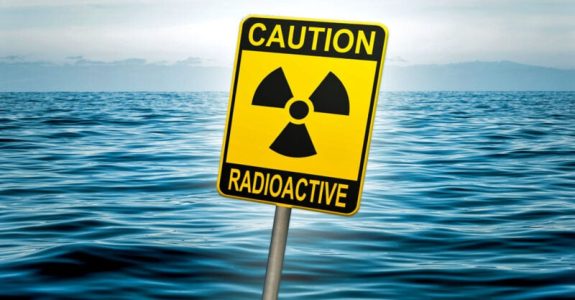
Australian Independent Media, July 13, 2023, Dr Binoy Kampmark
Nothing said from the nuclear industry can or should be taken for face value. Be it in terms of safety, or correcting defects or righting mistakes; be it in terms of construction integrity, there is something chilling about reassurances that have been shown, time and again, to be hollow.
The 2011 Fukushima Daiichi Nuclear Power Plant (FDNPP) disaster has forever stained the Japanese nuclear industry. Since then, the site has been marked by over 1,000 tanks filled with contaminated water that arises from reactor cooling. The attempts by the Tokyo Electric Power Company Holdings Inc (TEPCO) to decommission and clean the plant has also seen a daily complement of 150 tons arising from groundwater leakage into the buildings and systems involved in the cooling process.
According to Japan’s Nuclear Regulatory Authority, the gradual 1.3 million or so tons kept in those tanks into the Pacific over three decades is something that can be executed without serious environmental consequences. This was a view that was already entertained in 2021, expressing confidence that the Advanced Liquid Processing System (ALPS) being used in cleaning the contaminated water would be effective. Of primary concern here is the presence of a radioactive form of hydrogen called tritium, the presence of which is a challenge to remove.
There are various questions arising from this, not least the assumption that the levels of radioactivity arising from tritium will be significantly reduced by 1/40th of regulatory standards through the use of seawater. But as has been pointed out by such scientists as Ken Buesseler, Ferenc Dalnoki-Veress and Antony M. Hooker, there are also nontritium radionuclides that “are generally of greater health concern as evidenced by their much higher dose coefficient – a measure of the dose, or potential human health impacts associated with a given radioactive element, relative to its measured concentration, or radioactivity level.”
The International Atomic Energy Agency neither recommends nor endorses the plans – a curious formulation that does little for confidence……………………………………….
the inherent clandestine air that has surrounded TEPCO, scepticism should not only be mandatory but instinctive. Why not, ask such voices as Hooker and Buesseler, consider other disposal methodologies, such as solidifying the ALPS treated wastewater within concrete? No, counter the Japanese authorities, citing insuperable technical and legal problems. https://theaimn.com/dumping-doubts-releasing-fukushimas-waste-water/
UK delays ‘Great British Nuclear’ launch

Energy Secretary Grant Shapps was due to give a speech at London’s Science Museum.
Politico, BY CHARLIE COOPER, JULY 12, 2023
The U.K. government has delayed the official launch of a major arms-length body intended to support the country’s nuclear industry.
Energy Secretary Grant Shapps had been due to give a heavily-trailed speech at London’s Science Museum on Thursday, setting out his plans for Great British Nuclear and its role helping the U.K. hit its net zero goals.
But in an email to attendees, seen by POLITICO, the Department for Energy Security and Net Zero (DESNZ) confirmed the event was being rescheduled “due to unforeseen circumstances.”
Shapps was expected to use his speech to outline the next phase of a planned competition for manufacturing firms — including Rolls Royce and GE Hitachi — vying to develop small modular reactors (SMRs). The government hopes the new technology will provide cheaper, more flexible atomic power to help the U.K. hit its target of 24 gigawatts of nuclear generation by 2050.
The reasons for the cancellation were not immediately clear………………… https://www.politico.eu/article/uk-delays-great-british-nuclear-launch/
France to supply Ukraine with long-range cruise missiles with the ‘capacity to strike deeply’
By John Irish, July 11, 2023, VILNIUS, July 11 (Reuters) – France will join Britain in supplying Ukraine with long-range cruise missiles, which can travel 250 km (155 miles), a move that allows Ukrainian forces to hit Russian troops and supplies deep behind front lines, French officials said on Tuesday.
Emmanuel Macron said he had decided to boost military aid to Ukraine to help its counteroffensive as the French President arrived at a summit of the 31-member NATO alliance in Lithuania.
“I have decided to increase deliveries of weapons and equipment to enable the Ukrainians to have the capacity to strike deeply,” Macron said, while declining to say how many missiles would be sent.
A French diplomatic source said they were talking about 50 SCALP missiles produced by European manufacturer MBDA.
The missiles would come from existing French military stocks, a French military source told reporters, adding that it would be a “significant number”.
The French version, known as SCALP, has a range of about 250 km, three times as far as Ukraine’s existing missile capacities.
The missiles were being integrated into Ukrainian Russian-made warplanes, the French military source said……………………………….. more https://www.reuters.com/world/europe/france-send-long-range-missiles-ukraine-macron-2023-07-11/
Exposing the lying claims of pro nuclear shill Zion Lights
2 Response to a July 2023 article by Zion Lights: https://nuclear.foe.org.au/zion-lights/
In Australia, for the same investment we can get three times more firmed renewable power (generation, not capacity) in one-third of the time compared to nuclear. The cost difference between nuclear and renewables is so vast that renewables are still cheaper even when transmission and storage are costed in. Perhaps the comparison is more nuclear-friendly in the UK, but I strongly suspect renewables+storage+transmission is still cheaper given the obscene costs of Hinkley Point (approx. A$50 billion for two reactors).
Specifically in Light’s latest article:
* Lights’ claims about the IPCC supporting nuclear power are dishonest, the IPCC maps out countless scenarios (including scenarios with nuclear reducing to zero) and its ‘analysis’ of pros and cons is generally reduced to dot-points.
* Lights’ claims about a “scientific consensus” in support of nuclear power are dishonest, e.g. the Climate Council, comprising Australia’s leading climate scientists, states that nuclear power reactors “are not appropriate for Australia and probably never will be”.
* Ignores profound impacts of catastrophic accidents.
* Ignores the repeatedly-demonstrated connections between nuclear power and weapons (in the UK and elsewhere).
* Light’s ‘millions of lives saved’ meme is dishonest because it assumes nuclear displaces nothing other than coal.
* Nonsense about warm water around nuclear plants providing a haven for sea-life is dishonest, she surely knows that water intake pipes kill fish by the thousands. (And she should know something about Irish opposition to radioactive discharges from Sellafield.)
* Glib, ignorant and/or dishonest claims about high-level nuclear waste: “spent fuel can be easily transported to another location, and even recycled”. The UK has given up on reprocessing (a polluting, multi-billion-dollar disaster) and has made near-zero progress on a deep underground repository and has wasted billions of pounds of taxpayers’ money in the process. The only operating deep underground repository in the world – WIPP in the US ‒ was disastrously mismanaged and under-regulated resulting in a chemical explosion in 2014.
* The UAE project came in under budget? Either Lights is ignorant or lying. The UAE project was years behind schedule and many billions of dollars over-budget.
And in other articles/interviews, even more unhinged nonsense, e.g.

* Lights saying climate change ‘could be solved overnight’ with nuclear. Seriously?
* Lights lying about her role in Extinction Rebellion.
* Lights getting sucked in by, and collaborating with, lunatic MAGA liar Michael Shellenberger.
Update: Lights deleted the above comments from the comments thread below her article, failed to address any of the substantive energy issues and failed to respond to the accusations of deceit.
Sizewell C faces fresh legal action in fall out over water supply

Campaigners opposed to the Sizewell C nuclear plant in Suffolk have
launched fresh legal action following concerns about the water supply for
the plant.
In July 2022, then business secretary Kwasi Kwarteng granted
permission for the 3.2 gigawatt power station being developed by French
energy provider EDF to be built alongside the existing Sizewell B nuclear
plant, in the Suffolk Coast and Heaths Area of Natural Beauty (AONB).
This was despite the Planning Inspectorate noting that NNB Nuclear Generation, a
subsidiary company created by EDF, was unable to identify a permanent water
supply for the project, without which it said it “could not be licensed
and could not operate”.
In August 2022, campaign group Together Against
Sizewell C (TASC), represented by law firm Leigh Day, brought a judicial
review against the decision on the grounds that Kwarteng had failed to
assess the implications of the project as a whole by ignoring the issue of
whether a permanent water supply could be secured – the group argued it
is clear a new desalination plant will be required to guarantee supply.
Last month this challenge was dismissed by High Court judge Justice Holgate
who found the approach to the water supply was lawful, and that Kwarteng
did not need to take into account the impact of the water supply. However,
TASC has now announced that it is appealing this ruling. Specifically, the
group has said that the judge was “wrong” to say that NNB Generation
Company Limited was “unable to identify a permanent supply of potable
water”.
ENDS 11th July 2023
https://www.endsreport.com/article/1829565/sizewell-c-faces-fresh-legal-action-fall-water-supply
FBI colluded with Ukraine in social media crackdown – lawmakers
https://www.rt.com/news/579523-fbi-ukraine-meta-twitter/ 11 July 23
The bureau failed to properly vet information provided by Kiev, the US House Judiciary Committee says
The FBI cooperated with Ukraine’s Security Service (SBU) to clamp down on social media accounts disseminating alleged “Russian disinformation,” but ended up flagging pages run by the US State Department and American journalists, a report by the House Judiciary Committee has revealed.
Released on Monday, the report accused the FBI of not properly vetting lists of accounts provided to it by the SBU before sending them to the likes of Meta, Google, and Twitter.
As a result, the two agencies “flagged for social media companies the authentic accounts of Americans, including a verified US State Department account and those belonging to American journalists,” and requested that those pages be deleted, the document read.
On some occasions, the FBI followed up to ensure that “these accounts were taken down,” according to the report, which was based on documents subpoenaed from Meta and Alphabet in February.
In one of the SBU’s lists forwarded by the FBI to Meta, the official Russian-language Instagram account of the US State Department was described as “distribut[ing] content that promotes war, inaccurately reflects events in Ukraine, justifies Russian war crimes in Ukraine in violation of international law,” the report stated.
CNN pointed out that Meta, which owns Instagram and Facebook, apparently did not comply with the request to delete the State Department page.
Another moderation request filed to Facebook by the US domestic security agency included a roster of 5,165 accounts, the House Judiciary Committee said.
The report cited an email by a senior Twitter employee who indicated to the FBI that “a few accounts of American and Canadian journalists” were on one of the lists sent to the company by the agency.
Alphabet platforms Google and YouTube were also approached about censoring alleged pro-Russian accounts. A high-ranking member of Google’s cybersecurity team told the authors of the report that the company had been “deluged with various requests” for the removal of content, mainly from “the Ukrainian government, other Eastern European governments, the European Union, and the European Commission.”
The House Judiciary Committee suggested that the FBI had “violated the First Amendment rights of Americans and potentially undermined our national security” through its partnership with the SBU, claiming that the latter had been “infiltrated by Russian-aligned actors.”
The author of the paper noted the purge within the SBU by Ukrainian President Vladimir Zelensky last summer, which saw the agency’s head sacked and hundreds of criminal cases launched against employees on treason charges.
The report was released ahead of FBI Director Christopher Wray’s testimony before the House Judiciary Committee, which is scheduled for Wednesday.
A Judiciary Committee aide told CNN that the Republicans on the panel are planning to question Wray about the content of the paper and use it to claim that the FBI interferes in free speech.
What to expect from NATO Summit 2023
Thus, it is slowly emerging that there shall not be a NATO membership for Ukraine — now or ever.
The bottom line is that the Vilnius summit will sound the bugle to let the manor know that an orderly NATO pullback from Ukraine is in the cards.
India Punchline, BY M. K. BHADRAKUMAR
The trajectory of the Ukraine war hangs in the balance. All eyes are on the US President Joe Biden’s arrival in Vilnius for the NATO summit meeting .
………………………………………………………………………………………….this will virtually put out the flicker of hope among the NATO Allies about political uncertainties within Russia hampering the Kremlin’s war effort. Quite obviously, there are no “cracks” to be seen anywhere on the Kremlin wall. Putin remains firmly in charge and the military operations to scatter the month-long Ukrainian offensive are succeeding beyond expectations.
Correspondingly, there is bound to be a greater sense of realism amongst the NATO Allies. Alas, momentous political decisions concerning European security were riveted on flawed intelligence.
The Americans had no idea about the capability of Russian weaponry or of the country’s defence industry, its seamless capacity to mobilise for a continental war, the mood of the Russian people, Putin’s strong power base with a consistent rating at 80% (more than double that of Biden), the Russian economy’s resilience to withstand sanctions, or the blowback from sanctions that eventually would devastate the European economies.
……………………………………………………….. the NATO summit will factor in the geopolitical reality, howsoever unpalatable, that the war in Ukraine has far from isolated Russia but on the contrary, helped invigorate and expand Moscow’s orbit of diplomatic and political influence in the vast majority of the world community.
At the same time, on the military front too, the delusional hopes of NATO countries defeating Russia have withered away and the Vilnius summit’s decisions will reckon with this ground reality.
Already, the Biden Administration admitted that the Pentagon has run out of ammunition to supply Ukraine and the industrial capacity will have to be strengthened. But that is a medium term objective whilst the war has its immediate requirements. And to meet the current requirements, Biden has decided to instead supply Ukraine with cluster bombs, a dirty weapon that is banned under international law by the UN.
Thus, it is slowly emerging that there shall not be a NATO membership for Ukraine — now or ever. Yesterday, Richard Haas, president of the council of Foreign Relations and a hugely influential opinion maker of the US foreign policy establishment, wrote in Project Syndicate (with an eye on the European audience) a forceful critique titled Ascending the Vilnius Summit: “Offering NATO membership in principle, as was done when NATO leaders met in Bucharest in 2008, seems hollow…”
Haas elaborated that the NATO countries can instead bilaterally “extend a security commitment to defend Ukraine’s right to exist… without reference to precise territory…comparable to what the US has long done for Israel.”
Haas believes that such a formal, open-ended commitment backed up with “the arms, intelligence, and training it requires” would signal that America “will not allow any entity to threaten” Ukraine’s existence, but without linking it “to any specific map” of the territory of Ukraine.
Interestingly, when asked about it during the press gaggle on Sunday, Sullivan also confirmed that such a concept is on the table whereby the US, its allies and partners “within a multilateral framework, will negotiate bilateral security commitments with Ukraine for the long term… to provide various forms of military assistance, intelligence and information sharing, cyber support and other forms of material support so that Ukraine can both defend itself and deter future aggression.”
The bottom line is that the Vilnius summit will sound the bugle to let the manor know that an orderly NATO pullback from Ukraine is in the cards. Unlike in Afghanistan, the US will no doubt keep the allies in the loop, since this primarily concerns European security — and importantly, it should not turn out to be another chaotic retreat that Kabul or Saigon witnessed in yesteryears. That, in turn, demands absolute NATO unity. ……………..
Evidently, the nuts and bolts of an orderly withdrawal will need to be painstakingly worked out within the framework of a ceasefire in the war. This means engaging with Russia in a near future and discouraging it from pressing ahead forthwith with any major offensive to end the war conclusively in its favour.
Meanwhile, according to the grapevine in Kiev, the commander-in-chief of armed forces General Valeri Zaluzhny has recommended to his president Zelensky that the current month-old Ukrainian military offensive is simply not sustainable against the overwhelmingly powerful Russian forces and should be called off. https://www.indianpunchline.com/what-to-expect-from-nato-summit-2023/
Zelensky slams Biden’s ‘unprecedented and absurd’ stance on NATO membership
New York Post, By Steven Nelson, 11 July 23
VILNIUS, Lithuania — Ukrainian President Volodymyr Zelensky tore into NATO leaders including President Biden on Tuesday for not extending membership to his war-torn country — introducing fresh diplomatic drama into the annual gathering of the military alliance’s leaders.
Zelensky slammed the reticence as “weakness” and “absurd” just moments after Biden referred to the development of new language regarding his country’s potential NATO ascension.
“Now, on the way to Vilnius, we received signals that certain wording is being discussed without Ukraine. And I would like to emphasize that this wordxfing is about the invitation to become NATO member, not about Ukraine’s membership,” Zelensky tweeted.
“It’s unprecedented and absurd when a time frame is not set neither for the invitation nor for Ukraine’s membership. While at the same time vague wording about ‘conditions’ is added even for inviting Ukraine.”
Zelensky added: “It seems there is no readiness neither to invite Ukraine to NATO nor to make it a member of the Alliance. This means that a window of opportunity is being left to bargain Ukraine’s membership in NATO in negotiations with Russia. And for Russia, this means motivation to continue its terror. Uncertainty is weakness. And I will openly discuss this at the summit.”……………
Shortly before Zelensky’s fiery tweet, Biden said during a meeting with NATO Secretary-General Jens Stoltenberg that “we agree on the language that you propose, relative to the future of Ukraine being able to join NATO. And we’re looking for a continued united NATO.”
The wording that Biden alluded to was released later, saying vaguely, “We will be in a position to extend an invitation to Ukraine to join the Alliance when Allies agree and conditions are met.”…………..
Biden said in a CNN interview that aired Sunday that he believes Ukraine is not “ready” for membership.
“I don’t think it’s ready for membership in NATO,” Biden told CNN’s Fareed Zakaria. “I don’t think there is unanimity in NATO about whether or not to bring Ukraine into the NATO family now, at this moment, in the middle of a war.”
……………………… Sen. Dick Durbin (D-Ill.) said that he is particularly concerned about corruption in Ukraine’s government and said that it was an “understandable” cause for concern among fellow NATO countries.
………….. NATO countries including the US have heavily financed and armed Ukraine’s resistance to the more than 16-month-old Russian invasion and Biden has gradually met many of Zelensky’s prior demands, such as agreeing last week to send cluster bombs to aid Kyiv’s flagging offensive, despite a human rights campaign to ban the weapons, which can maim or kill civilians for decades after conflicts end. https://nypost.com/2023/07/11/zelensky-slams-weakness-of-absurd-biden-stance-on-nato/
—
Japan’s Radioactive Fukushima Water Release – Media Propaganda, Reports from Vanuatu in South Pacific
Nuclear Hotseat, 12 July 23
SPECIAL REPORTS:
With Japan’s pending release of 1.3 million tons of Tritium-contaminated radioactive water from Fukushima into the Pacific Ocean, and the International Atomic Energy Agency (IAEA) approval of that plan, it is time for an examination of the issues behind this wrongheaded assault upon people and the environment. To find out various hidden aspects of the issue, Nuclear Hotseat provides five separate segments.
Nuclear Hotseat Hot Story with Linda Pentz Gunter considers that the IAEA’s vested interest in promoting nuclear power should disqualify the agency as a nuclear safety watchdog.Marine Biologist Tim Deere-Jones takes on the whistleblower leak of an internal IAEA document from June 21, which shows collusion between the agency and the government of Japan over how the announcement of approval of the water release was to be handled to minimize public fear and response. Japan has dismissed the document as a “fraud;” neither TEPCO nor IAEA has said anything else. What’s the bigger story?Filmmaker Philippe Carillo (The Fukushima Disaster: The Hidden Side of the Story) lives in Vanuatu and talks about Japan’s campaign to propagandize south Pacific journalists into only believing the talking points they’ve been fed and not to look further.
The Honorable Andrew Solomon Napuat, a Member of Parliament for Vanuatu, an island nation in the south Pacific, explains how his country and others have been manipulated to not speak out against the water release or risk “friendly” relations with Japan…………… https://nuclearhotseat.com/podcast/japan-radioactive-fukushima-water-dump/?_thumbnail_id=11643
UK discusses sale of Wylfa nuclear site
1The government has confirmed ongoing discussions about the potential sale
of the Wylfa nuclear site in response to a report by the Welsh Affairs
Committee. The Wylfa nuclear site, located in Anglesey, North Wales, has
long been a subject of interest for nuclear energy development. Previous
plans for a new nuclear power station at Wylfa were scrapped in 2019 due to
financial and commercial challenges. Since then, the government has been
actively seeking alternative arrangements for the site.
Energy Live News 10th July 2023
Failed Fukushima Fixes Falling Like Dominoes

CounterPunch BY JOHN LAFORGE, 6 July, 23
“……………………………………………………………………Tepco’s cost-avoidance on its sea wall was only the first in a string of failures that have followed like dominos. The corruption led in July 2022 to convictions of four top Tepco executives for negligence and a fine of $95 billion.
In the 12 years since the meltdowns, Tepco’s disaster response efforts, always heralded as fixes, have been a series of hugely expensive failures: the “advanced” wastewater filter system “ALPS” has failed; the buried “ice wall” groundwater barrier has failed; containers made for the radioactive sludge produced by ALPS have failed; and plans to deal with millions of tons of collected debris — now kept in plastic bags — are being fiercely resisted by Japanese citizens.
Tons of cooling water is still being poured every day into Fukushima’s triple reactor wrecks to keep the hot melted fuel from again running amok. Additionally, groundwater gushes through the reactors’ foundations’ countless cracks and breaks caused by the staggering earthquake into what’s left of the structures’ sub-floors. All this water becomes highly radioactive as it passes over and through three giant masses — totaling at least 880 tonnes — of melted and mangled uranium and plutonium fuel.
You read that right. Fukushima’s destroyed reactor No. 3 was using fuel made partly of plutonium (see below), and so plutonium contaminates not just the ground and cooling water running over the melted fuel, but the ALPS apparatus, its filters, the containers used to store the radioactive sludge extracted by ALPS, and of course the sludge itself. You would think that the word plutonium would appear occasionally in news coverage of this ongoing disaster.
Failed ALPS means million-tonne do-over
Tepco’s jerry-rigged system dubbed Advanced Liquid Processing System or ALPS has never worked as planned. As early as 2013 the machinery was stalled. “The ALPS system failed to reduce radioactive elements, as claimed by the owner,” Power Technology, reported June 2, 2021.
Tepco has repeatedly said ALPS would remove 62 radioactive materials — all but tritium and carbon-14 from the continuously expanding volume of wastewater. Documents on a government committee’s website show that of 890,000 tonnes of water held at Fukushima, 750,000 tonnes, or 84 percent, contain higher concentrations of radioactive materials than legal limits allow, according to Reuters, Oct. 11, 2018. Among the long-lasting and deadly isotopes picked up by the water runs that through melted fuel wreckage are cesium, strontium, cobalt, ruthenium, carbon-14, tritium, iodine, plutonium, and at least 54 others.
In a June 14 op/ed for the China Daily, Shaun Burnie, the Senior Nuclear Specialist at Greenpeace East Asia, reported that the ALPS “has been a spectacular failure” and noted that:
“About 70 percent or 931,600 cubic meters of the wastewater needs to be processed again (and probably many more times) by the ALPS to bring the radioactive concentration levels below the regulatory limit for discharge. Tepco has succeeded in reducing the concentration levels of strontium, iodine, and plutonium in only 0.2 percent of the total volume of the wastewater, and it still requires further processing. But no secondary processing has taken place in the past nearly three years. Neither Tepco nor the Japanese government [have] said how many times the wastewater needs to be processed, how long it will take to do so, or whether the efforts will ever be successful. Greenpeace reported on these problems and why the ALPS failed nearly five years ago, and none of these issues has been resolved.”
Consequently, Tepco says it will re-filter over 70 percent of the 1.37 million tonnes of wastewater stored in giant tanks on site. Approximately 875,000 tons of contaminated water must be put through the system again, a process that will leave behind more of the highly radioactive and corrosive waste sludge.
Hoping to slow the rush to dumping, Ryota Koyama, a professor at Fukushima Univ. in Japan, said in an interview with China Media Group last May, “If the Japanese government or the Tokyo Elec Power Co really wants to discharge contaminated water into the sea, they need to explain in more detail whether the nuclides have really been removed.”
Ice wall also melts
Tepco intended to reduce the volume of groundwater gushing into the reactor building foundations by digging a $350 million “ice wall” into the earth between the destroyed reactors and the mountains behind. The company placed 1,568 heavy pipes filled with coolant 90 feet deep. It was to freeze the ground to form a deep impenetrable barrier, diverting groundwater to either side of the destroyed six-reactor Fukushima complex and prevent it seeping inside. It has failed to do so, The Guardian reported. In 2016, the Times of London reported that the scheme had only a “minor impact” on the volume of groundwater rushing in, which at the time still averaged 321 tonnes a day. Tepco announced then that it would retrofit the system and fix the leaks, but Science/The Wire reported in January 2022 that the company had admitted that its ice wall was “partially” melting. About 150 tonnes per day still gushes in.
Filtered sludge burning through containers
The ALPS filter has produced over 4,000 large containers filled with highly radioactive slurry and sludge left from the treatment.
Like the use of the word “advanced” in the name of the failed ALPS machinery, the cylinders used for the caustic, highly radioactive sludge are called “High Integrity Containers” or HICs, but in fact they are made of plastic and have degraded far faster than Tepco anticipated.
By March 2, Tepco had filled 4,143 containers, according to the daily Asahi Shimbun. At 30 cubic feet each, the cylinders now store a total of about 124,290 cubic feet of the highly radioactive sludge that will soon require expensive repackaging and, eventually, isolation from the biosphere for thousands of years.
Over two years ago, on June 8, 2021, Japan’s Nuclear Regulation Authority (NRA) announced that 31 of the containers had “exceeded their lifespans” and were corroded badly enough by the harsh toxic material that they must be replaced. The NRA also warned that another 56 cylinders would need replacing within two years.
Japan’s Mainichi newspaper reported that the government regulators blamed Tepco for “underestimating the radiation the 31 plastic cylinders were exposed to.” The company then claimed it would start moving the contents to new containers.
The Asahi Shimbun reported April 27, 2023, that the HICs must be stored in concrete boxes that can block radiation evidently being emitted by the HICs. https://www.asahi.com/ajw/articles/14883115
Rad waste to be dumped, deregulated
As early as next month, Japan intends to begin dispersing 1.37 million tonnes of contaminated wastewater into the Pacific Ocean. The government has steadfastly ignored fierce local and international opposition to the plan from the fishing community, marine scientists, Pacific Island nations, environmentalists, South Korea, and China. So far only South Korean politicians have suggested bringing international legal action against the dumping.
Since the 2011 meltdowns spewed radioactive materials broadly across Japan’s main island, some 14-million tonnes of cesium-contaminated soil, leaves, and debris have been scraped from the ground and stored in one-tonne bags. Citizens are struggling desperately prevent authorities from using the radioactive waste in road building or burning it in incinerators. The bags are currently stacked in tens of thousands of piles all over the region.
Even more protest was raised last February 10 when the NRA said it would allow Tepco to severely weaken its monitoring of the wastewater’s radioactivity. The NRA said would but the number of radioactive elements to be measured from 64 to 34.
The environment minister of Hong Kong — a coastal metropolis of 7.5 million people — charged in June that Japan is “violating its obligations under international law and endangering the marine environment and public health.” Minister Tse Chin-wan wrote in the daily Ta Kung Pao that Hong Kong would “immediately prohibit imports of seafood caught off the coast of Fukushima prefecture.”
Plutonium Spread Long Distances from Fukushima
Very few reports of the Fukushima catastrophic releases of radiation have mentioned plutonium contamination. Yet plutonium was used in fuel rods in Fukushima’s reactor number 3 which was destroyed by meltdown and several hydrogen explosions. Plutonium is one of the most toxic substances known to science, and fine particles are far more biologically hazardous than larger particles.
Following the March 14, 2011 explosion, experts worried about the release of extremely dangerous radioactive substances, and then a week later, on March 21 and 22, Tepco announced that it had detected plutonium in soil collected from its compound. (Fukushima Meltdown: The World’s First Earthquake-Tsunami-Nuclear Disaster, Takashi Hirose, Asahi Shimbun Publications, 2011, p. 51)
Now, studies published in the journals Science of the Total Environment, Nov. 15, 2020, and Chemosphere, July 2023, report that researchers found that cesium and plutonium “were transported over long distances,” and that deposits of them were recorded in “downtown Tokyo,” about 142 miles from the meltdowns.
According to the authors, very high concentrations of radioactive cesium were released during the accident as particles referred to as “cesium-rich micro-particles” (CsMPs). The researchers say CsMPs they found are mainly composed of silicon, iron, zinc, and cesium, and minor amounts of radioactive tellurium, technetium, molybdenum, uranium, and plutonium.
The studies, involving scientists from six countries and led by Associate Professor Satoshi Utsunomiya, a researcher at Kyushu University, found that “plutonium was included inside cesium-rich micro-particles that were emitted from the site.”
Radioactive CsMPs released from Fukushima are a potential health risk through inhalation. “Given the small size of the particles, they could penetrate into the deepest parts of the lung, where they could be retained,” Utsunomiya wrote. “The route of exposure of greatest concern is inhalation,” the authors reported, because plutonium, lodged in the lungs, can “remain for years.”
Utsunomiya summed up his team’s work saying, “It took a long time to publish results on particulate [plutonium] from Fukushima … but research on Fukushima’s environmental impact and its decommissioning are a long way from being over.”
John LaForge is a Co-director of Nukewatch, a peace and environmental justice group in Wisconsin, and edits its newsletter. https://www.counterpunch.org/2023/07/06/failed-fukushima-fixes-falling-like-dominoes/
Heatwaves: Why this summer has been so hot

It is hot. Very hot. And we are only a few weeks into summer. Texas and
part of the south-west of the US are enduring a searing heatwave. At one
point, more than 120 million Americans were under some form of heat
advisory, the US National Weather Service said. That is more than one in
three of the total population.
In the UK, the June heat didn’t just break
all-time records, it smashed them. It was 0.9C hotter than the previous
record, set back in 1940. That is a huge margin. There is a similar story
of unprecedented hot weather in North Africa, the Middle East and Asia. No
surprise, then, that the European Centre for Medium-Range Weather forecasts
said that globally, June was the hottest on record. And the heat has not
eased. The three hottest days ever recorded were in the past week,
according to the EU climate and weather service, Copernicus.
These highs are in line with what climate models predicted, says Prof Richard Betts, climate scientist at the Met Office and University of Exeter.
“We should not be at all surprised with the high global temperatures,” he says. “This is all a stark reminder of what we’ve known for a long time, and we will see ever more extremes until we stop building up more greenhouse gases in the atmosphere.”
When we think about how hot it is, we tend to think about the air temperature, because that’s what we experience in our daily lives.
But most of the heat stored near the surface of the Earth is not in the atmosphere, but in the oceans. And we’ve been seeing some record ocean temperatures this spring and summer.
The North Atlantic, for example, is currently experiencing the highest surface water temperatures ever recorded.
That marine heatwave has been particularly pronounced around the coasts of the UK, where some areas have experienced temperatures as much as 5C above what you would normally expect for this time of year……………………………………………………………
Most of the extra heat trapped by the build-up of greenhouse gases has gone into warming the surface ocean, he explains. That extra heat tends to get mixed downwards towards the deeper ocean, but movements in oceans currents – like El Niño – can bring it back to the surface.
“When that happens, a lot of that heat gets released into the atmosphere,” says Prof Lenton, “driving up air temperatures.”
It’s easy to think of this exceptionally hot weather as unusual, but the depressing truth is that climate change means it is now normal to experience record-breaking temperatures.
Greenhouse gas emissions continue to increase year on year. The rate of growth has slowed slightly, but energy-related CO2 emissions were still up almost 1% last year, according to the International Energy Agency, a global energy watchdog.
And the higher the global temperature, the higher the risk of heatwaves, says Friederike Otto, a climatologist at the Grantham Institute of Climate Change at Imperial College London.
“These heatwaves are not only more frequent, but also hotter and longer than they would have been without global warming,” she says.
Experts are already predicting that the developing El Niño is likely to make 2023 the world’s hottest year.
They fear it is likely to temporarily push the world past a key 1.5C warming milestone.
And that is just the start. Unless we make dramatic reductions to greenhouse gas emissions, temperatures will continue to rise.
The Met Office said this week that record June temperatures this year were made twice as likely because of man-made climate change.
These rising temperatures are already driving fundamental and almost certainly irreversible changes in ecosystems across the world………………………………….
The world is effectively in a race.
It is clear we are speeding towards an ever hotter and more chaotic climate future, but we do have the technologies and tools to cut our emissions.
The question now is whether we can do so rapidly enough to slow the climate juggernaut and keep the impacts of global warming within manageable boundaries.
BBC 9th July 2023https://www.bbc.com/news/science-environment-66143682
Terrible truths about nuclear energy exposed
“We are all seeing a global political agreement centred in the UN organisations, tie IAEA [International Atomic Energy Agency], the World Health Organisation… All the international agencies are whitewashing what is happening in Fukushima.
By Karl Grossman | 11 July 2023 https://independentaustralia.net/environment/environment-display/terrible-truths-about-nuclear-energy-exposed,17704
A NEW documentary titled The Fukushima Disaster: The Hidden Side of the Story is a powerful, moving, informative film that is superbly made. Directed and edited by Philippe Carillo, it is among the strongest ever made on the deadly dangers of nuclear technology.
Australians featured in the film are Dr Helen Caldicott, former president of Physicians for Social Responsibility, and John Keane, professor of politics at the University of Sydney. Carillo is a resident of the nation of Vanuatu, 1,750 kilometres northeast of Australia.
The documentary begins with the words of U.S. President John F Kennedy from 1961:
“Every man, woman and child lives under a nuclear sword of Damocles, hanging by the slenderest of threads, capable of being cut at any moment by an accident, or miscalculation or by madness.”
It then goes to the March 2011 disaster at the Fukushima Daiichi nuclear power plant in Japan after it was struck by a tsunami. Its backup diesel generators kicked in but “did not run for long,” notes the documentary. That led to three of the six plant reactors exploding – and there’s video of this – “releasing an unpreceded amount of nuclear radiation into the air”.
“Fukushima is the world’s largest ever industrial catastrophe,” then says Professor John Keane. He says there was no emergency plan and, as to the owner of Fukushima, Tokyo Electric Power Company (TEPCO), with the accident its CEO “for five nights and days… locked himself inside his office”.
Meanwhile, from TEPCO, there was “only good news” with two Japanese government agencies also “involved in the cover-up” — the Nuclear Industry Safety Agency and the Ministry of Economy, Trade and Industry.
“Japanese media was ordered to censor information. The Japanese Government failed to protect its people,” the documentary relates.
Yumi Kikuchi of Fukushima, since a leader of the Fukushima Kids Project, recalls:
“On TV, they said that ‘it’s under control’ and they kept saying that for two months. The nuclear power plant had already melted and even exploded but they never admitted the meltdown until May. So, people in Fukushima during that time were severely exposed to radiation.”
Arnie Gundersen, a nuclear engineer and now a principal of Fairewinds Energy Education in Burlington, Vermont in the United States, speaks of being told by Naoto Kan, the Prime Minister of Japan at the time of the accident, that “our existence as a sovereign nation was at stake because of the disaster at Fukushima Daichi”.
Kan then appears in the documentary and speaks of “manmade” links to the disaster.
The documentary tells how Kan, following the accident, became “an advocate against nuclear power… ordered all nuclear power plants in Japan to shut down for safety” and for the nation “to move into renewable energy”.
Subsequently, “a nuclear advocate”, Shinzo Abe, became Japan’s Prime Minister.
Yoichi Shimatsu, a former Japan Times journalist, appears in the film and speaks of “the cruelty, the cynicism of this government”. He speaks of how in the accident’s aftermath, “nearly every member of Parliament and leaders of the major political parties”, along with corporate executives, “moved their relatives out of Japan”.
He says:
“Shanghai is the largest Japanese community outside Japan now… while these same people [had been] telling the people of Fukushima ‘go home’, ten kilometres from Fukushima, ‘go home, it’s safe’, while their families are overseas in Los Angeles, in Paris, in London and in Shanghai.”
“If it’s safe, why they left?” asks Kikuchi.
Gundersen says:
At Fukushima Daichi, the world is already seeing deaths from cancer related to the disaster…There’ll be many more over time. [There has been a] huge increase in thyroid cancer in the surrounding population.
Unfortunately, the Japanese Government is not telling us all the evidence. There’s a lot of pressure on the scientists and the medical community to distort the evidence so there’s no blowback against nuclear power.
There is a section in the documentary on the impacts of radioactivity which includes Dr Caldicott discussing the impacts of radiation on the body and how it causes cancer.
She states:
There is no safe level of radiation. I repeat, there is no safe level of radiation. Each dose of radiation is cumulative and adds to your risk of getting cancer and that’s absolutely documented in the medical literature.
The nuclear industry says, well, there are ‘safe doses’ of radiation and even says a little bit of radiation is good for you and that is called the theory of hormesis. They lie and they lie and they lie.
Maggie Gundersen, who was a reporter and then a public relations representative for the nuclear industry and, like her husband Arnie, became an opponent of nuclear power, speaks of how nuclear power derives from the World War II Manhattan Project program to develop atomic weapons and post-war so-called “Atoms for Peace” push.
Gundersen says in becoming a nuclear industry spokesperson, “the things I was taught weren’t true”. The notion, for example, that what is called a containment at a nuclear plant is untrue because radioactivity “escapes every day as a nuclear power plant operates” and in a “calamity” is released massively.
As to economics, she cited the claim decades ago that nuclear power would be “too cheap to meter”.
The president of Fairewinds Energy Education says:
Regarding the radioactive waste produced by nuclear power, she says “there is literally no technology” to safeguard it for the many years it remains lethal. “It does not exist.”
As to international oversight, the documentary presents the final version of the Report of the United Nations Scientific Committee on the Effects of Atomic Radiation issued in 2014 which finds that the radiation doses from Fukushima ‘to the general public during the first year and estimated for their lifetimes are generally low or very low… The most important effect is on mental and social well-being’.
Shimatsu says it is not only in Japan but on an international level that the consequences of radioactive exposure have been completely minimised or denied:
“We are all seeing a global political agreement centred in the UN organisations, tie IAEA [International Atomic Energy Agency], the World Health Organisation… All the international agencies are whitewashing what is happening in Fukushima. We take dosimeters and Geiger counters in there, we see a much different story.”
In Germany, says Maggie Gunderson, “the politicians chose” to do a study to substantiate that no health impacts “happened around nuclear power plants… But what they found was the radiation releases cause significant numbers of childhood leukemia”.
A summary of that 2008 study comes on the screen. The U.S. followed up on that research, she says, but recently “the [U.S.] Nuclear Regulatory Commission said it was not going to do that study,” that “it doesn’t have enough funding; it had to shut it down”. She said the real reason was that it was producing “data they don’t want to make public”.
Beyond the airborne releases of radiation after the Fukushima accident, now, says the documentary, there is the growing threat of radioactivity through water that has and still is leaking from the plant as well as more than a million tons of radioactive water stored in a thousand tanks built at the plant site.
After the accident, TEPCO released 300,000 tons of radioactive water into the Pacific Ocean. Now there is no land for more tanks, so the Japanese Government, the documentary relates, has decided, starting this year, to dump massive amounts of radioactive water over a 30-year period into the Pacific.
Arnie Gundersen speaks of the cliché that “the solution to pollution is dilution,” but with the radiation from Fukushima being sent into the Pacific, there will be “bio-accumulation” — with vegetation absorbing radiation, little fish eating that vegetation and intensifying it and bigger fish eating the smaller fish, further bio-accumulating the radioactivity. Already, tuna off California have been found with radiation traced to Fukushima. With this planned further and yet greater dispersal, thousands of people “in the Pacific basin will die from radiation,” he says.
Andrew Napuat, a member of the Parliament of Vanuatu, an 83-island archipelago in the Pacific, says in the documentary:
“We have the right to say no to the Japan solution. We can’t let them jeopardise our sustenance and livelihood.”
Vanuatu, along with 13 other countries, has signed and ratified the South Pacific Nuclear Free Zone Treaty.
As the documentary nears its end, Arnie Gundersen says that considering the meltdown at the Three Mile Island nuclear plant in Pennsylvania in 1979, the meltdown at the Chernobyl nuclear plant in Ukraine in 1986, and now the three Fukushima meltdowns in 2011, there has been “a meltdown every seven years roughly”.
He says:
“Essentially, once every decade the world needs to know that there might be an atomic meltdown somewhere.”
And, he adds:
“The nuclear industry is saying they want would like to build as many as 5,000 new nuclear power plants.”
(There are 440 in the world today.)
Meanwhile, he says:
“Renewable power is no longer alternative power. It’s on our doorstep. It’s here now and it works and it’s cheaper than nuclear.”
The cost of producing energy from wind, he says, is three cents a kilowatt hour, for solar, five cents and for new nuclear power plants, 15 cents. Nuclear “makes no nuclear economic sense”.
Maggie Gundersen says, with tears in her eyes:
“I’m a woman and I feel it’s inherent for us as women to protect our children, our grandchildren, and it’s our job now to raise our voices and have this madness stop.”
Philippe Carillo, who worked for 14 years in Hollywood and who since 2017 has lived in Vanuatu, has worked on several major TV documentary projects for the BBC, 20th Century Fox and French National TV as well as doing independent productions. He says he made The Fukushima Disaster: The Hidden Side of the Story to “expose the nuclear industry and its lies”.
His previous award-winning documentary, Inside the Garbage of the World, has made changes regarding the use of plastic.
The Fukushima Disaster, The Hidden Side of the Story can be viewed at Amazon (UK and U.S.), Apple TV, iTunes, Google Play and Vimeo on demand.
NATO is ‘malicious poison’ – former Australian PM, Paul Keating, (some agreement with this, in Paris)

Elysee Palace official claimed that Paris is against NATO expansion beyond the North Atlantic. “NATO means North Atlantic Treaty Organization,” the French presidential staffer reportedly emphasized.
Paul Keating has argued that the military bloc should remain confined to Europe and the Atlantic and not try to expand into Asia
NATO has no place in Asia and should stick to its original focus, that is the security of the Transatlantic region, former Australian Prime Minister Paul Keating has argued. The Labour politician, who served in office from 1991 to 1996, also warned against attempts to “circumscribe” China.
In his statement published on Sunday, Keating appeared to refer to a recent report in Politico, which claimed French President Emmanuel Macron had blocked NATO’s plans to establish a liaison office in Japan.
The former premier lauded the French head of state for “doing the world a service” by apparently emphasizing the military bloc’s focus on Europe and the Atlantic.
According to Keating, the alliance’s very existence past the end of the Cold War “has already denied peaceful unity to the broader Europe.”
Exporting such “malicious poison to Asia would be akin to Asia welcoming the plague upon itself,” he insisted. The former prime minister warned that NATO’s presence on the continent would negate most of the region’s recent advances.
Keating went on to describe NATO Secretary General Jens Stoltenberg as the “supreme fool” on the international stage who is conducting himself like an “American agent.”
He cited a comment Stoltenberg made back in February when he called for the West not to repeat the “mistake” it had made with regard to Russia, suggesting it should work to contain China.
The former Australian leader noted that the NATO chief conveniently ignored the fact that “China represents twenty per cent of humanity and now possesses the largest economy in the world.” He added that Beijing, unlike Washington, “has no record of attacking other states.”
Over the weekend, Politico cited an anonymous Elysee Palace official who claimed that Paris is against NATO expansion beyond the North Atlantic. “NATO means North Atlantic Treaty Organization,” the French presidential staffer reportedly emphasized.
Back in May, the Japanese ambassador to the US, Koji Tomita, revealed that his country was working toward opening a NATO liaison office in Tokyo, which would become the bloc’s first in Asia. Prime Minister Fumio Kishida confirmed the plans to Japanese lawmakers, noting that Tokyo did not intend to join the US-led organization.
Commenting on the news, Chinese Foreign Ministry spokesperson Mao Ning advised NATO against “extending its geopolitical reach.” The diplomat pointed out that the “Asia-Pacific does not welcome bloc confrontation or military blocs.”
1 This Month
23 April – WEBINAR – Why new nuclear reactors are the wrong tools for decarbonization Thursday, April 23 • 1 AM – 2 AM AEST
World Nuclear Power. Reactors 1951-2026, 75 Years of Nuclear Power.
Interactive Map– https://dv.worldnuclearreport.org/

Chernobyl: The Lost Tapes – A good documentary on Chernobyl on SBS available On Demand for the next 3 weeks– https://www.sbs.com.au/ondemand/tv-program/chernobyl-the-lost-tapes/2352741955560

of the week–London Campaign for Nuclear Disarmament


Tell the Ukrainian Government to Drop Prosecution of Peace Activist Yurii Sheliazhenko
To see nuclear-related stories in greater depth and intensity – go to https://nuclearinformation.wordpress.com
-
Archives
- April 2026 (220)
- March 2026 (251)
- February 2026 (268)
- January 2026 (308)
- December 2025 (358)
- November 2025 (359)
- October 2025 (376)
- September 2025 (257)
- August 2025 (319)
- July 2025 (230)
- June 2025 (348)
- May 2025 (261)
-
Categories
- 1
- 1 NUCLEAR ISSUES
- business and costs
- climate change
- culture and arts
- ENERGY
- environment
- health
- history
- indigenous issues
- Legal
- marketing of nuclear
- media
- opposition to nuclear
- PERSONAL STORIES
- politics
- politics international
- Religion and ethics
- safety
- secrets,lies and civil liberties
- spinbuster
- technology
- Uranium
- wastes
- weapons and war
- Women
- 2 WORLD
- ACTION
- AFRICA
- Atrocities
- AUSTRALIA
- Christina's notes
- Christina's themes
- culture and arts
- Events
- Fuk 2022
- Fuk 2023
- Fukushima 2017
- Fukushima 2018
- fukushima 2019
- Fukushima 2020
- Fukushima 2021
- general
- global warming
- Humour (God we need it)
- Nuclear
- RARE EARTHS
- Reference
- resources – print
- Resources -audiovicual
- Weekly Newsletter
- World
- World Nuclear
- YouTube
-
RSS
Entries RSS
Comments RSS
 nuclear-news
