12 years on, Fukushima’s citizen-scientists continue to test local fish for radioactive substances.
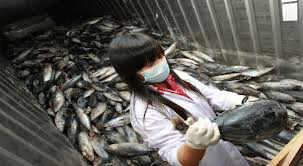
2 In a white coat and gloves, Ai Kimura is cutting up a fish sample at the
Tarachine lab, about an hour’s drive from the now-crippled Fukushima
Daiichi nuclear power plant on Japan’s eastern coast.
Four times a year, Ms Kimura and her team of volunteers collect samples of fish from the waters around the plant. They have been doing this since the lab was founded in
2011, just months after a devastating tsunami flooded the reactors, causing
a radiation leak. Except Ms Kimura is not a scientist – and neither are any
of the women who run the non-profit lab, whose name Tarachine is derived
from the term for “mother” in old Japanese.
Shaken after the tsunami, Ms Kimura says locals started the lab to find out what was safe to feed their children because it was hard to come by information on the risks of
radiation. So they asked technical experts to train them on how to test for
radioactive substances and log the readings, raised funds and began
educating themselves. It was the decision of a shattered community that
never thought an accident at the nuclear power plant was possible.
Now, 12 years on, they again find themselves struggling to trust the Japanese
government as it insists it’s safe to release treated radioactive water
from the plant into the Pacific Ocean.
BBC 13th July 2023
No comments yet.
1 This Month

of the week – Shut Down Drone Warfare!


Tell the Ukrainian Government to Drop Prosecution of Peace Activist Yurii Sheliazhenko

Petition to revoke the licensing of the Near Surface Nuclear Disposal Facility (NSDF) at Chalk River. https://www.ourcommons.ca/petitions/en/Petition/Details?Petition=e-7247
To see nuclear-related stories in greater depth and intensity – go to https://nuclearinformation.wordpress.com
-
Archives
- April 2026 (91)
- March 2026 (251)
- February 2026 (268)
- January 2026 (308)
- December 2025 (358)
- November 2025 (359)
- October 2025 (376)
- September 2025 (257)
- August 2025 (319)
- July 2025 (230)
- June 2025 (348)
- May 2025 (261)
-
Categories
- 1
- 1 NUCLEAR ISSUES
- business and costs
- climate change
- culture and arts
- ENERGY
- environment
- health
- history
- indigenous issues
- Legal
- marketing of nuclear
- media
- opposition to nuclear
- PERSONAL STORIES
- politics
- politics international
- Religion and ethics
- safety
- secrets,lies and civil liberties
- spinbuster
- technology
- Uranium
- wastes
- weapons and war
- Women
- 2 WORLD
- ACTION
- AFRICA
- Atrocities
- AUSTRALIA
- Christina's notes
- Christina's themes
- culture and arts
- Events
- Fuk 2022
- Fuk 2023
- Fukushima 2017
- Fukushima 2018
- fukushima 2019
- Fukushima 2020
- Fukushima 2021
- general
- global warming
- Humour (God we need it)
- Nuclear
- RARE EARTHS
- Reference
- resources – print
- Resources -audiovicual
- Weekly Newsletter
- World
- World Nuclear
- YouTube
-
RSS
Entries RSS
Comments RSS
 nuclear-news
Leave a comment