Dumping Doubts: Releasing Fukushima’s Waste Water
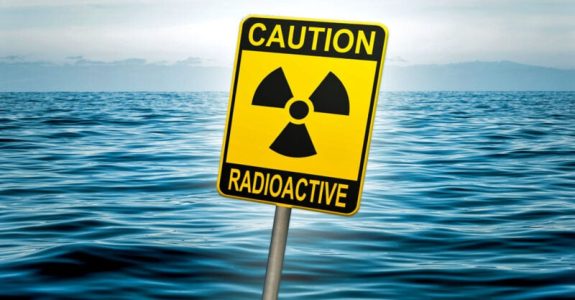
Australian Independent Media, July 13, 2023, Dr Binoy Kampmark
Nothing said from the nuclear industry can or should be taken for face value. Be it in terms of safety, or correcting defects or righting mistakes; be it in terms of construction integrity, there is something chilling about reassurances that have been shown, time and again, to be hollow.
The 2011 Fukushima Daiichi Nuclear Power Plant (FDNPP) disaster has forever stained the Japanese nuclear industry. Since then, the site has been marked by over 1,000 tanks filled with contaminated water that arises from reactor cooling. The attempts by the Tokyo Electric Power Company Holdings Inc (TEPCO) to decommission and clean the plant has also seen a daily complement of 150 tons arising from groundwater leakage into the buildings and systems involved in the cooling process.
According to Japan’s Nuclear Regulatory Authority, the gradual 1.3 million or so tons kept in those tanks into the Pacific over three decades is something that can be executed without serious environmental consequences. This was a view that was already entertained in 2021, expressing confidence that the Advanced Liquid Processing System (ALPS) being used in cleaning the contaminated water would be effective. Of primary concern here is the presence of a radioactive form of hydrogen called tritium, the presence of which is a challenge to remove.
There are various questions arising from this, not least the assumption that the levels of radioactivity arising from tritium will be significantly reduced by 1/40th of regulatory standards through the use of seawater. But as has been pointed out by such scientists as Ken Buesseler, Ferenc Dalnoki-Veress and Antony M. Hooker, there are also nontritium radionuclides that “are generally of greater health concern as evidenced by their much higher dose coefficient – a measure of the dose, or potential human health impacts associated with a given radioactive element, relative to its measured concentration, or radioactivity level.”
The International Atomic Energy Agency neither recommends nor endorses the plans – a curious formulation that does little for confidence……………………………………….
the inherent clandestine air that has surrounded TEPCO, scepticism should not only be mandatory but instinctive. Why not, ask such voices as Hooker and Buesseler, consider other disposal methodologies, such as solidifying the ALPS treated wastewater within concrete? No, counter the Japanese authorities, citing insuperable technical and legal problems. https://theaimn.com/dumping-doubts-releasing-fukushimas-waste-water/
No comments yet.
1 This Month
Chernobyl: The Lost Tapes – A good documentary on Chernobyl on SBS available On Demand for the next 3 weeks– https://www.sbs.com.au/ondemand/tv-program/chernobyl-the-lost-tapes/2352741955560

of the week–London Campaign for Nuclear Disarmament

Tell the Ukrainian Government to Drop Prosecution of Peace Activist Yurii Sheliazhenko
To see nuclear-related stories in greater depth and intensity – go to https://nuclearinformation.wordpress.com
-
Archives
- April 2026 (139)
- March 2026 (251)
- February 2026 (268)
- January 2026 (308)
- December 2025 (358)
- November 2025 (359)
- October 2025 (376)
- September 2025 (257)
- August 2025 (319)
- July 2025 (230)
- June 2025 (348)
- May 2025 (261)
-
Categories
- 1
- 1 NUCLEAR ISSUES
- business and costs
- climate change
- culture and arts
- ENERGY
- environment
- health
- history
- indigenous issues
- Legal
- marketing of nuclear
- media
- opposition to nuclear
- PERSONAL STORIES
- politics
- politics international
- Religion and ethics
- safety
- secrets,lies and civil liberties
- spinbuster
- technology
- Uranium
- wastes
- weapons and war
- Women
- 2 WORLD
- ACTION
- AFRICA
- Atrocities
- AUSTRALIA
- Christina's notes
- Christina's themes
- culture and arts
- Events
- Fuk 2022
- Fuk 2023
- Fukushima 2017
- Fukushima 2018
- fukushima 2019
- Fukushima 2020
- Fukushima 2021
- general
- global warming
- Humour (God we need it)
- Nuclear
- RARE EARTHS
- Reference
- resources – print
- Resources -audiovicual
- Weekly Newsletter
- World
- World Nuclear
- YouTube
-
RSS
Entries RSS
Comments RSS
 nuclear-news
Leave a comment