‘Grave concerns’ as Japan’s plan to release Fukushima water into the sea approved by nuclear watchdog
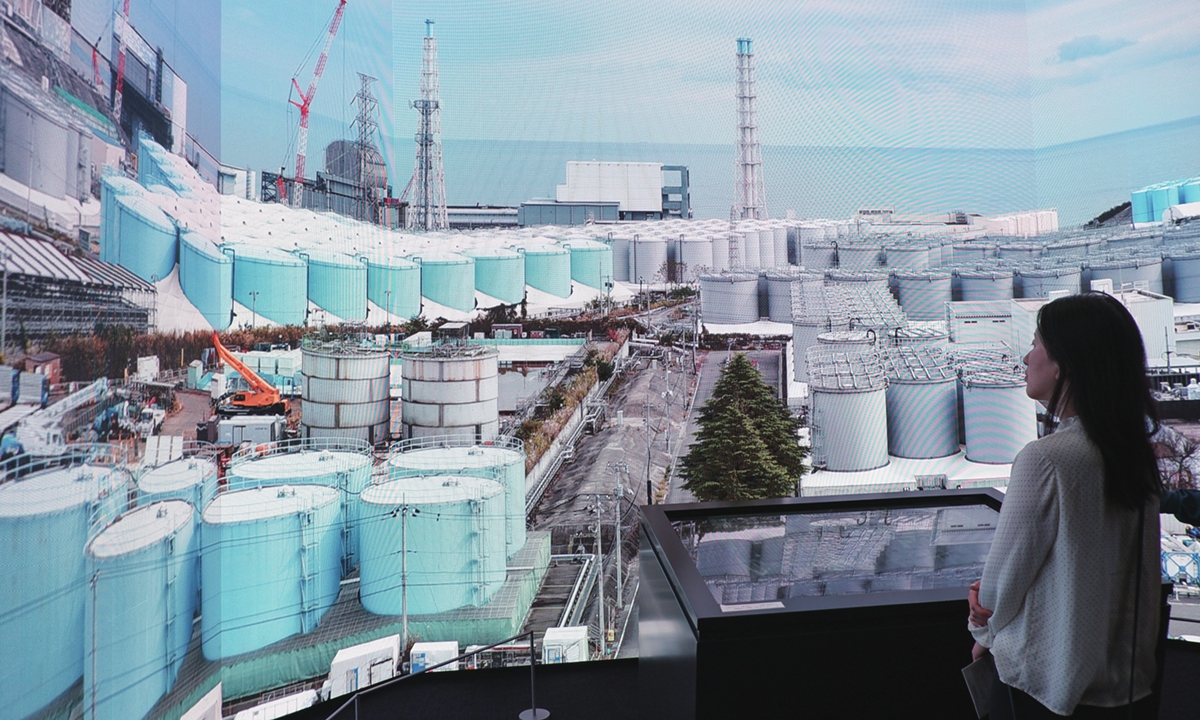
Japan’s nuclear meltdown 12 years ago led to a bandaid solution for radioactive waste. Now, time has run out and the next option is unthinkable.
Alex Blair, news.com.au 11 July 23
The UN’s international nuclear watchdog has come under heavy criticism after green-lighting Japan’s controversial plan to slowly dump radioactive water used to stem the 2011 Fukushima disaster.
When three reactors first went into meltdown over 12 years ago, nuclear authorities around the globe knew what was at stake. But a hasty bandaid fix — 1000 massive containment tanks built onsite — was never going to solve the issue long term. And now it appears time has run out for authorities looking to move forward.
Two years ago, Japan announced plans to gradually release the 1.33 million cubic metres of contaminated water into the sea over the next 30 to 40 years. Their strategy has now been approved after a lengthy review phase by the Atomic Energy Agency (IAEA), which claims the water will be processed to remove almost all radioactive elements, except tritium.
Efforts are now being made by nuclear and political authorities to ease public suspicion, with IAEA chief Rafael Grossi meeting with Fukushima residents this week in an effort to quell concerns.
However, one thing in particular has sparked intense backlash from surrounding nations and a portion of the global nuclear field. Within all the official box-ticking and PR campaigns urging confidence from the public, nuclear officials cannot be 100 per cent certain their plan will be safe and effective.
“These are global issues and need to address in a holistic manner,” Professor of Genetic Toxicology Awadhesh Jha told news.com.au. “Very limited information is available and we need to do more to assess the long-term effects, both with respect to human and environmental health.”
His criticisms echoed those from the Secretary General of the Pacific Islands Forum, Henry Puna, who said the release should be stalled “until we are certain about the implications of this proposal on the environment and on human health”.
In an article penned earlier this year, Mr Puna accused the Japanese government and international watchdogs of negligence, claiming there was no way to know the full impact until after decades of dumping nuclear material.
“The discussions this past year have not been encouraging,” he wrote.
We have uncovered serious information gaps and grave concerns with the proposed ocean release. Simply put, more data is needed before any ocean release should be permitted.
“Despite this, Japan is continuing with plans for discharge in the spring of 2023, relying on the next four decades of discharge to figure it out.
“It would be unconscionable for us as a region to once again allow ourselves to be lulled into a false sense of security.”
China, South Korea call for ‘transparent, convincing response’
China has been the most critical of Japan’s closest neighbouring nations, accusing Tokyo of turning the ocean into its “private sewer” and calling on more safety data from the nuclear watchdog.
Chinese officials have also accused the Japanese government of breaching “international moral and legal obligations”, warning that if the plan goes ahead, Japan “must bear all consequences”.
“Japan should stop the plan to release the water into the sea, but seriously consult with the international community and consider a scientific, safe, transparent and convincing response,” China’s ambassador to Japan said on Tuesday.
Meanwhile in South Korea, public polls revealed 80 per cent of the country are deeply concerned about the unknown long-term effects of the water release………………………
Tetsu Nozaki, chairman of the Fukushima Prefectural Federation of Fisheries Co-operative Associations, argued Japan’s government was misrepresenting local sentiment, which he said remained strongly opposed to the plan……………………………………
A radioactive isotope of hydrogen, tritium is one the most expensive, rare, and potentially harmful elements in the world, according to nuclear engineer Arjun Makhijani, a prominent anti-nuclear campaigner and president of the Institute for Energy and Environmental Research.
In his book Exploring Tritium’s Danger, Makhijani claims that “one teaspoon of tritiated water would contaminate about 100 billion gallons of water to the US drinking water limit; that is enough to supply about 1 million homes with water for a year”………………….
How will Japan’s plan work?
The diluted water will be discharged into the Pacific Ocean to Japan’s east via an undersea tunnel located off the coast.
With the IAEA’s approval, pumping could commence as early as August…………………………
But according to Professor Jha, further research is essential to comprehensively assess the potential risks posed by tritium to the marine food chain.
Professor Jha’s laboratory experiments indicate that tritium has the ability to accumulate in the tissues of shellfish, such as mussels and oysters.
He believes actual consequences of real-world exposure remain largely unexplored and require closer investigation.
“It needs an international research effort,” he said.
Professor Jha’s criticism came as the Tokyo Electric Power Company, the firm that runs the site, admitted the giant mass of water will need additional, “secondary” treatment to reduce the presence of other isotopes including ruthenium-106, cobalt-60 and strontium-90.
But there are still concerns over whether the water being released will have been completely cleansed before coming into contact with sea life.
“Unlike tritium, cobalt-60 is 300,000 times more likely to accumulate on the seafloor at the outlet of the pipes,” Ken Buesseler of the Woods Hole Oceanographic Institution said.
“It will build up over time, it will accumulate. So whatever amount you put in, it doesn’t just dilute away.”
What are the other solutions?
…………………..Buesseler on the other hand advocates for the treated water to be used in concrete production for massive buildings around the Fukushima plant.
Buesseler argues this would generate the least risk, with “little potential for human contact, as the concrete being used on the Fukushima Daiichi site and/or tsunami barriers for coastal protection”.
“Since contaminated water is still being generated, this ocean dumping – that is what it would be called if the water were put in a barrel and thrown overboard – of radioactive water would continue for 30 years (possibly more),” Buesseler writes.
“The water would still contain some strontium-90 and other radionuclides with attendant risks of uptake associated with seafloor sediments.
“Besides the radioactivity exposure, which TEPCO estimates will be well below 1 millisievert per year, the dumping would also create reputation damage to the fishing and tourist industries, not only in Japan but across other countries in the Pacific region.” https://www.news.com.au/technology/environment/grave-concerns-as-japans-plan-to-release-fukushima-water-into-the-sea-approved-by-nuclear-watchdog/news-story/854cc5d9618a2a5bde1de2f657f49a89
No comments yet.
1 This Month


Tell the Ukrainian Government to Drop Prosecution of Peace Activist Yurii Sheliazhenko

Petition to revoke the licensing of the Near Surface Nuclear Disposal Facility (NSDF) at Chalk River. https://www.ourcommons.ca/petitions/en/Petition/Details?Petition=e-7247


of the week – STOP SMALL MODULAR REACTORS IN CANADA
To see nuclear-related stories in greater depth and intensity – go to https://nuclearinformation.wordpress.com
-
Archives
- March 2026 (176)
- February 2026 (268)
- January 2026 (308)
- December 2025 (358)
- November 2025 (359)
- October 2025 (376)
- September 2025 (258)
- August 2025 (319)
- July 2025 (230)
- June 2025 (348)
- May 2025 (261)
- April 2025 (305)
-
Categories
- 1
- 1 NUCLEAR ISSUES
- business and costs
- climate change
- culture and arts
- ENERGY
- environment
- health
- history
- indigenous issues
- Legal
- marketing of nuclear
- media
- opposition to nuclear
- PERSONAL STORIES
- politics
- politics international
- Religion and ethics
- safety
- secrets,lies and civil liberties
- spinbuster
- technology
- Uranium
- wastes
- weapons and war
- Women
- 2 WORLD
- ACTION
- AFRICA
- Atrocities
- AUSTRALIA
- Christina's notes
- Christina's themes
- culture and arts
- Events
- Fuk 2022
- Fuk 2023
- Fukushima 2017
- Fukushima 2018
- fukushima 2019
- Fukushima 2020
- Fukushima 2021
- general
- global warming
- Humour (God we need it)
- Nuclear
- RARE EARTHS
- Reference
- resources – print
- Resources -audiovicual
- Weekly Newsletter
- World
- World Nuclear
- YouTube
-
RSS
Entries RSS
Comments RSS
 nuclear-news
Leave a comment