TODAY. Nuclear power is SO IRRELEVANT – to climate! It’s almost funny, -but it’s NOT funny.

Today, Australia’s Prime Minister is in Germany, to joining several countries, including other big carbon polluters, in a “Climate Club” to preach about “zero carbon emissions by 2050”.
2050? It’s too late – big boys!
The Australian big boys, like those of USA – will pay lip service to a worthy principle – but it’s pointless, because Climate Change – better named as Global Heating – is upon us NOW.
The job now is to slow the Global Heating process down – by energy conservation, truly renewable energy. The job is also justice, fairness, global effort to help those most affected by the heat, floods, fires – now raging.
Oh and what about nuclear power? And those stupid little “small modular nuclear reactors (SMRs)”?
Well, one or two of them might be working commercially by 2050, having no effect on climate change.
But of course, that’s not the point, is it? Small nuclear reactors are for weaponry, for nuclear submarines etc. Those powerful blokes, (and a few token women) – they love weaponry, high-technology for killing people – war is such fun!
So they just lie about “SMRs to solve climate change”

Will the Ukraine war be the undoing for the European Union?

The European Union’s missed opportunities and self-destructive path
6 JULY 2023, MICHAEL VON DER SCHULENBURG
With the ending of the division of Europe, we will strive for a new quality in our security relations while fully respecting each other’s freedom of choice in that respect. Security is indivisible, and the security of every participating state is inseparably linked to that of all the others. We therefore pledge to cooperate in strengthening confidence and security among us and in promoting arms control and disarmament.
(Charter of Paris for a New Europe November 21, 1990)
The madness of war reigns again in Europe. The delusion that only weapons provide security is once again in high season among politicians, think tanks, and the media across Europe. It has become acceptable once again in Europe that human sacrifices are being offered at the altar of alleged decisive battles. As if we had learned nothing from the past, the Ukrainian counter-offensive is now supposed to become such a decisive battle that it should bring a military solution to what we could not or did not want to achieve politically. In doing so, we Europeans are leaving the future of Ukraine and Europe, and perhaps even that of the world, to the unpredictability, fury, and brutality of the battlefield. And all of this, although it remains completely unclear what “solution” could be expected through the present intensification of the war, will certainly not bring peace to Europe.
This war has increasingly become a war between Russia and NATO, with nuclear weapons playing a decisive role in military calculations. No one can say where the red lines would be in such a “decisive battle,” beyond which there could be a nuclear escalation. By ignoring this and continuing all-out war efforts, we are exposing not only ourselves but all of humanity to incalculable danger in a conflict that could have been resolved diplomatically.
Despite all those enormous dangers, finding a peaceful solution to the underlying conflict that triggered the war—NATO’s planned expansion into Ukraine and Georgia—appears no longer to be possible among NATO, Ukrainian, and Russian politicians. This is appalling political irresponsibility, for which we cannot blame only Ukraine, Russia, or the United States. The European Union and its member states also bear considerable responsibility for the catastrophe that has now befallen Europe. As this is a war on European soil and between European countries, the EU, as the largest community of states on the European continent, cannot just pretend it had no part in all of this. Indeed, the EU and its members carry heavy blame for failing to prevent this war, for escalating the war, and for refusing a negotiated solution to this war!
The 27 EU members hold the majority among NATO members and could, or better yet, should have used their influence to prevent this war and, once it had broken out, to end it as quickly as possible. In the conflict over NATO’s eastward enlargement, which had been brewing since 1994, the EU, in its own interests, should have tried to mediate between the geopolitical ambition of the USA in expanding its global dominance and Russia’s fears of being militarily encircled by NATO and cut off from its access to the Black Sea. After the war broke out, the EU should have supported the Russian-Ukrainian peace negotiations in March or April 2022 and attended the Istanbul peace summit. It could have ended the war one month after it started. However, the EU didn’t do either.
Instead, the EU aggressively supported NATO’s eastward expansion as well as its own eastward enlargement. It must have been clear to EU politicians that with their support, Europe has been put on a path of confrontation, a confrontation that has now led to war with Russia…………………………..
Yet peace, not war, should be the EU’s main concern. However, the EU has neither developed its own peace proposal nor undertaken any diplomatic peace initiative, and it remains firmly opposed to any immediate ceasefire. The EU continues to insist on the maximum demands in the Zelensky peace plan: that Russia must first be defeated militarily and that the entire Ukrainian territory must be recaptured before negotiations can take place. With this uncompromising stance, the EU stands alone in the world. None of the world’s major regional organizations, whether the G20, the BRICS countries, the states of Central Asia, the Shanghai Cooperation Organization, ASEAN, the African Union, the OIC, or CELAC, support such a demand. Even the US is increasingly skeptical, and the voices of influential US politicians are growing stronger in favor of a negotiated peace with Russia to end the war.
This path of confrontation and escalation taken by the EU was in no way preordained or even inevitable.
In 1990, only one year after the end of the Cold War, all European states, as well as the USA and Canada, solemnly pledged, in the “Charter of Paris for a New Europe”, to build a common peaceful Europe spanning from the Pacific to the Atlantic coast, including Russia, a Europe that would be free of wars and military blocs. According to the Charter, the security of each state in Europe should now be regarded as inseparable from that of all other states, and any conflict that arises should be settled peacefully in accordance with the UN Charter. In other words, a lasting peace in Europe could only be created by working together and not against each other. There was no role envisaged for NATO; NATO was not mentioned once in the Charter of Paris.
And yet, early on, the EU abandoned the Charter of Paris for a New Europe and opted for a Europe dominated by NATO, a Cold War military alliance. Such a drastic reorientation was not in Europe’s interest…………………………………………………………………………… It was NATO’s advance to Russia’s borders that triggered Russia’s military backlash, not the other way around.
The EU member states should have known better and avoided a war in Ukraine. Already in the First and Second World Wars, control of the territory that today constitutes Ukraine was of great strategic importance for Russia (the Soviet Union), and the German Kaiser-Nazi Reich, leading to some of the fiercest military battles in these wars. The recently discovered remains of German Wehrmacht soldiers found in the now dried-up riverbed of the Dnieper bear witness to these terribly bloody “decisive battles.” Is history repeating itself?
Then, as now, each side took advantage of the internal divisions among the Ukrainian population. Even after Ukraine’s independence in 1991, presidential and parliamentary elections regularly showcased the country’s deep division into two roughly equal parts with pro-Ukrainian and pro-Russian loyalties, a division that also geographically divides the country between western and central Ukraine on the one hand and eastern and southern Ukraine on the other.
In the last free all-Ukrainian elections in 2010 and 2012, in which people living in Crimea and the Donbass still participated, there was even a narrow majority for a pro-Russian president and pro-Russian parliament.
If the EU had really been concerned with preserving and strengthening Ukraine, it should have supported the cohesion and striving for harmony between the two populations and vigorously promoted the continuation of the project of a bi-national and federal Ukraine, as proclaimed in 1991. However, it did the opposite and sided with a policy of mono-ethnic Ukrainian nationalism.
In the last free all-Ukrainian elections in 2010 and 2012, in which people living in Crimea and the Donbass still participated, there was even a narrow majority for a pro-Russian president and pro-Russian parliament.
If the EU had really been concerned with preserving and strengthening Ukraine, it should have supported the cohesion and striving for harmony between the two populations and vigorously promoted the continuation of the project of a bi-national and federal Ukraine, as proclaimed in 1991. However, it did the opposite and sided with a policy of mono-ethnic Ukrainian nationalism…………………………………………………………………………….
While constantly proclaiming a desire to help Ukraine, the EU is de facto contributing to its destruction and immense human suffering. The weapons supplied by the EU not only prolong the war but also contribute to death and destruction on Ukrainian territory, just like Russian weapons do.
Today, Ukraine may not only be the most destroyed country in Europe but also the politically and ethnically most deeply divided country. After a year and a half of war, Ukraine, which was already the poorest country in Europe before the war, has been driven deeper into poverty and foreign debt while becoming the most militarized country in Europe. The Ukrainian economy is in ruins and plagued by one of the highest levels of corruption in Europe. Ukraine is also the country with the fastest-shrinking population in Europe. Moreover, Ukraine could lose up to 20% of its territory as well as its access to the Azov and Black Seas. How can Ukraine survive as a functioning state under such conditions?
…………………………………………………………………………………………………… The next president of the USA does not necessarily have to be called Trump, but we can assume that the USA will turn its back on the expensive Ukraine adventure after next year’s presidential election,
………………………………………………To prevent hurting itself and save Ukraine, the European Union must, out of its own self-interest, distance itself from its self-righteous war narrative, abandon the militarization of its foreign policy, and stop believing that NATO enlargement will bring security. The European Union must return to a language of peace and develop a peace plan for Europe that is built on the “Charter of Paris for a New Europe” and includes Russia and Ukraine. In doing so, the EU would prevent further bloodshed in Europe, forestall the danger of internal frictions breaking out within its members, and prevent its own economic decline. This would help improve the EU’s standing in the world as the peace project it was once conceived as after the Second World War. For this, it will need courage—peace requires a lot of courage! https://www.meer.com/en/74782-will-the-ukraine-war-be-the-undoing-for-the-european-union
US cluster bombs deal is clear signal that war is not going well for Ukraine
America risks losing the moral high ground by supplying Ukraine with a weapon banned by much of the world, so why are they supplying it?
Mark Stone, US correspondent @Stone_SkyNews
The White House is fully aware of the huge controversy surrounding this cluster munitions decision.
Some 123 countries are part of the 2008 International Convention on Cluster Munitions which bans the use or transfer of this particular weapon.
Almost all of America’s allies are signatories to the convention.
Even within US government circles, there has been deep unease about supplying its own stockpile of cluster munitions to Ukraine.
Ukraine war latest: US to send Kyiv controversial weapon banned by more than 100 countries
As recently as last week, within the state department, there was division about the decision to supply the weapon.
The long and grim record of the cluster bomb explains the unease and the controversy.
Globally, civilians represent 97% of cluster munition casualties, according to a report last year by the Landmine and Cluster Munition Monitor – an organisation that seeks to ban them altogether.
Children are overwhelming the victims.
By supplying the weapon, there is a clear risk to civilians, not now necessarily, but in the future. The legacy of unexploded cluster bomblets is evident on former battlefields globally.
America also risks losing the moral high ground against Russia by supplying a weapon banned by much of the world.
So why supply it?
Well, the facts on the ground are not in Ukraine’s favour. The transfer is a clear signal that the war is not going well for Ukraine.
The so-called spring offensive did not materialise in the spring and looks set to falter through the summer too.
Ukraine is fast running out of more conventional artillery with supply stocks in America and elsewhere running low.
A ‘bridge of supply’ is necessary.
………………. The munitions would be used by Ukraine on occupied Ukrainian soil. The risk to civilians would be owned by Ukraine. The onus would be on Ukraine, with a pledge of American help, to clear the unexploded munitions when the war comes to an end.
The announcement is part of a multi-million dollar tranche of new weaponry which is an attempt by the Biden administration to future-proof the conflict; to give Ukraine the weapons it needs now in case domestic political circumstances change in the next 18 months.
American politics is in flux.
There is no guarantee of open-ended support for Ukraine. https://news.sky.com/story/us-cluster-bombs-deal-is-clear-signal-that-war-is-not-going-well-for-ukraine-12917101
A new CHERNOBYL? Zaporizhzhia’s threat explained as explosion fears grow
A new CHERNOBYL? Zaporizhzhia’s threat explained as explosion fears grow.
Zaporizhzhia Nuclear Power Plant, could it be another Chernobyl? What will
happen if Zaporizhzhia explodes? Ukraine war news update today: Expert Paul
Dorfman compares the Chernobyl disaster of 1986 and the Fukushima disaster
in 2011 and whether we could see a similar event in Ukraine after Zelensky
warned Russia was planning to blow up the Zaporizhzhia Nuclear Power Plant
US Will Provide Ukraine U.N. Condemned Cluster Bombs as Part of New Weapons Package

by EDITORJuly 8, 2023 https://scheerpost.com/2023/07/08/us-will-provide-ukraine-cluster-bombs-as-part-of-new-weapons-package/
The news comes after HRW issued a report that said Ukraine killed civilians with U.N. banned cluster bombs used in Izium
By Dave DeCamp / Anitwar.com
The Associated Press reported Thursday that the Biden administration has decided to arm Ukraine with cluster bombs and will announce the munitions as part of a new $800 million arms package. The news comes after Human Rights Watch (HRW) issued a report that said Ukraine has killed its own citizens using the munitions.
US officials told AP that they expect the arms package to be announced Friday. The White House used to be opposed to arming Ukraine with cluster munitions, as they are indiscriminate weapons that cause harm to civilians, but the concerns have waned.
Cluster bombs scatter small submunitions over large areas, making them especially hazardous to civilians who can find unexploded munitions years after they were dropped. Because of their indiscriminate nature, cluster munitions have been banned by more than 100 nations. The US, Ukraine, and Russia are not parties to the treaty, known as the Convention on Cluster Munitions.
The HRW report said that Ukrainian cluster munition rocket attacks in the eastern city of Izium in 2022 killed at least eight civilians and wounded 15 more. HRW also said Russia’s use of cluster bombs in the war has killed many civilians.
Ukraine’s use of cluster bombs on people living in its eastern territory goes back to 2014, when war first broke out in the Donbas. That year, HRW issued a report that said Kyiv was using the controversial munitions against populated areas of Donetsk. “The use of cluster munitions in populated areas violates the laws of war due to the indiscriminate nature of the weapon and may amount to war crimes,” HRW said.
According to Truthout, Daryl Kimball, executive director of the Arms Control Association, issued a statement on Thursday warning the US against sending cluster bombs to Ukraine. He said doing so would “be escalatory, counterproductive, and only further increase the dangers to civilians caught in combat zones and those who will, someday, return to their cities, towns, and farms.”
The Fukushima Disaster: The hidden side of the story
Arnie Gundersen speaks of the cliché that “the solution to pollution is dilution,” but with the radiation from Fukushima being sent into the Pacific, there will be “bio-accumulation”—with vegetation absorbing radiation, little fish eating that vegetation and intensifying it and bigger fish eating the smaller fish and further bio-accumulating the radioactivity. Already, tuna off California have been found with radiation traced to Fukushima. With this planned further, and yet greater dispersal, thousands of people “in the Pacific basin will die from radiation,” he says.
Exposing the nuclear industry and its lies. https://www.telegraph.co.uk/politics/2023/07/08/labour-explore-ai-ban-decisions-nuclear-weapons-david-lammy/
“The Fukushima Disaster, The Hidden Side of the Story,” is a just-released film documentary, a powerful, moving, information-full film that is superbly made. Directed and edited by Philippe Carillo, it is among the strongest ever made on the deadly dangers of nuclear technology.
It begins with the words in 1961 of U.S. President John F. Kennedy: “Every man, woman and child lives under a nuclear sword of Damocles, hanging by the slenderest of threads, capable of being cut at any moment by an accident, or miscalculation or by madness.”
It then goes to the March 2011 disaster at the Fukushima Daichi nuclear power plants in Japan after they were struck by a tsunami. Their back-up diesel generators were kicked in but “did not run for long,” notes the documentary. That led to three of the six plants exploding—and there’s video of this—“releasing an unpreceded amount of nuclear radiation into the air.”
“Fukushima is the world’s largest ever industrial catastrophe,” says Professor John Keane of the University of Sydney in Australia. He says there was no emergency plan and, as to the owner of Fukushima, Tokyo Electric Power Company, with the accident its CEO “for five nights and days…locked himself inside his office.”
Meanwhile, from TEPCO, there was “only good news” with two Japanese government agencies also “involved in the cover-up”—the Nuclear Industry Safety Agency and Ministry of Economy, Trade and Industry.
“Japanese media was ordered to censor information. The Japanese government failed to protect its people,” the documentary relates.
Yumi Kikuchi of Fukushima, since a leader of the Fukushima Kids Project, recalls: “On TV, they said that ‘it’s under control’ and they kept saying that for two months. The nuclear power plant had already melted and even exploded but they never admitted the meltdown until May. So, people in Fukushima during that time were severely exposed to radiation.”
Arnie Gundersen, a nuclear engineer and now a principal of Fairewinds Energy Education in Burlington, Vermont, speaks of being told by Naoto Kan, the prime minister of Japan at the time of the accident, that “our existence as a sovereign nation was at stake because of the disaster at Fukushima Daichi.”
Kan then appears in documentary and speaks of “manmade” links to the disaster.
The documentary tells how Kan, following the accident, became “an advocate against nuclear power….ordered all nuclear power plants in Japan to shut down for safety” and for the nation “to move into renewable energy.”
But, subsequently, “a nuclear advocate,” Shinzo Abe, became Japan’s prime minister.
Yoichi Shimatsu, a former Japan Times journalist, appears in the film and speaks of “the cruelty, the cynicism of this government.” He speaks of how in the accident’s aftermath, “nearly every member of Parliament and leaders of the major political parties” along with corporate executives, “moved their relatives out of Japan”
He says “Shanghai is the largest Japanese community outside Japan now…while these same people” had been “telling the people of Fukushima go home, 10 kilometers from Fukushima, go home it’s safe, while their families are overseas in Los Angeles, in Paris, in London and in Shanghai.”
“If it’s safe, why they left?” asks Kikuchi. “They tell us it’s safe to live in Fukushima, and to eat Fukushima food to support Fukushima people. There’s a campaign by Japanese government…and people believe it.”
Gundersen says: “At Fukushima Daichi, the world is already seeing deaths from cancer related to the disaster…There’ll be many more over time.” He adds that there’s been a “huge increase in thyroid cancer in the surrounding population.”
“Unfortunately,” he goes on, “the Japanese government is not telling us al the evidence. There’s a lot of pressure on the scientists and the medical community to distort the evidence so there’s no blowback against nuclear power.”
There is a section in the documentary on the impacts of radioactivity which includes Dr. Helen Caldicott, former president of Physician for Social Responsibility, discussing the impacts of radiation on the body and how it causes cancer. She states: “There is no safe level of radiation. I repeat, there is no safe level of radiation. Each dose of radiation is cumulative and adds to your risk of getting cancer and that’s absolutely documented in the medical literature.”
“The nuclear industry says, well, there are ‘safe doses’ of radiation and even says a little bit of radiation is good for you and that is called the theory of hormesis,” notes Dr. Caldicott. “They lie and they lie and they lie.”
Maggie Gundersen, who was a reporter and then a public relations representative for the nuclear industry and, like her husband Arnie became an opponent of nuclear power, speaks of how nuclear power derives from the World War II Manhattan Project program to develop atomic weapons and post-war so-called “Atoms for Peace” push.
Gundersen says in becoming a nuclear industry spokesperson, “the things I was taught weren’t true.” The notion, for example, that what is called a containment at a nuclear plant is untrue because radioactivity “escapes every day as a nuclear power plant operates” and in a “calamity” is released massively.
As to economics, she cited the claim decades ago that nuclear power would be “too cheap to meter.” The president of Fairewinds Energy Education, she says: “Atomic power is now the most expensive power there is on the planet. It is not feasible. It never has been.” Regarding the radioactive waste produced by nuclear power, she says “there is literally no technology to do that…It does not exist.”
As to international oversight, the documentary presents the final version of a “Report of the United Nations Scientific Committee on the Effects of Atomic Radiation” issued in 2014 which finds that the radiation doses from Fukushima “to the general public during the first year and estimated for their lifetimes are generally low or very low….The most important effect is on mental and social well-being.”
Shimatsu says it is not only in Japan but on an international level that the consequences of radioactive exposure have been completely minimized or denied. “We are all seeing a global political agreement centered in the UN organizations, tie IAEA [International Atomic Energy Agency], the World Health Organization…All the international agencies are whitewashing what is happening in Fukushima. We take dosimeters and Geiger counters in there, we see a much different story,” he says.
In Germany, says Maggie Gunderson, “the politicians chose” to do a study to “substantiate” that no health impacts “happened around nuclear power plants….But what they found was the radiation releases cause significant numbers of childhood leukemia.” A summary of that 2008 study comes on the screen. The U.S. followed up on that research, she says, but recently “the [U.S.] Nuclear Regulatory Commission said it was not going to do that study,” that “it doesn’t have enough funding; it had to shut it down.” She said the real reason was that it was producing “data they don’t want to make public.”
Beyond the airborne releases of radiation after the Fukushima accident, now, says the documentary, there is the growing threat of radioactivity through water that has and still is leaking from the plants as well as more than a million tons of radioactive water stored in a thousand tanks built at the plant site. After the accident, TEPCO released 300,000 tons of radioactive water into the Pacific Ocean. Now there is no land for more tanks, so the Japanese government, the documentary relates, has decided that starting this year to dump massive amounts of radioactive water over a 30-year period into the Pacific.
Arnie Gundersen speaks of the cliché that “the solution to pollution is dilution,” but with the radiation from Fukushima being sent into the Pacific, there will be “bio-accumulation”—with vegetation absorbing radiation, little fish eating that vegetation and intensifying it and bigger fish eating the smaller fish and further bio-accumulating the radioactivity. Already, tuna off California have been found with radiation traced to Fukushima. With this planned further, and yet greater dispersal, thousands of people “in the Pacific basin will die from radiation,” he says.
Andrew Napuat, a member of the Parliament of the nation of Vanuatu, an 83 island archipelago in the Pacific, says in the documentary: “We have the right to say no to the Japan solution. We can’t let them jeopardize our sustenance and livelihood.” Vanuatu along with 13 other countries has signed and ratified the South Pacific Nuclear Free Zone Treaty.
As the documentary nears its end, Arnie Gundersen says that considering the meltdown at the Three Mile Island nuclear plant in Pennsylvania in 1979, the meltdown at the Chernobyl nuclear plant in Ukraine in 1986, and now the three Fukushima meltdowns in 2011, there has been “a meltdown every seven years roughly.” He says: “Essentially, once every decade the world needs to know that there might be an atomic meltdown somewhere.” And, he adds, the “nuclear industry is saying they want would like to build as many as 5,000 new nuclear power plants.” (There are 440 in the world today.)
Meanwhile, he says, “renewable power is no longer alternative power. It’s on our doorstep. It’s here now and it works and it’s cheaper than nuclear.” The cost of producing energy from wind, he says, is three cents a kilowatt hour, for solar five cents, and for new nuclear power plants 15 cents. Nuclear “makes no nuclear economic sense.”
Maggie Gundersen says, with tears in her eyes: “I’m a woman and I feel it’s inherent for us as women to protect our children our grandchildren, and it’s our job now to raise our voices and have this madness stop.”
Philippe Carillo, from France, who worked for 14 years in Hollywood and who since 2017 has lived in Vanuatu, has worked on several major TV documentary projects for the BBC, 20th Century Fox and French National TV as well as doing independent productions. He says he made “The Fukushima Disaster, The Hidden Side of the Story” to “expose the nuclear industry and its lies.” His previous award-winning documentary, “Inside the Garbage of the World,” has made changes regarding the use of plastic.
“The Fukushima Disaster, The Hidden Side of the Story” can be viewed at Amazon, Apple TV, iTunes, Google Play and Vimeo on demand. Links are: iTunes; Apple TV; Amazon UK; USA; Google Play, and Video on demand.
‘Grave concerns’ as Japan’s plan to release Fukushima water into the sea approved by nuclear watchdog
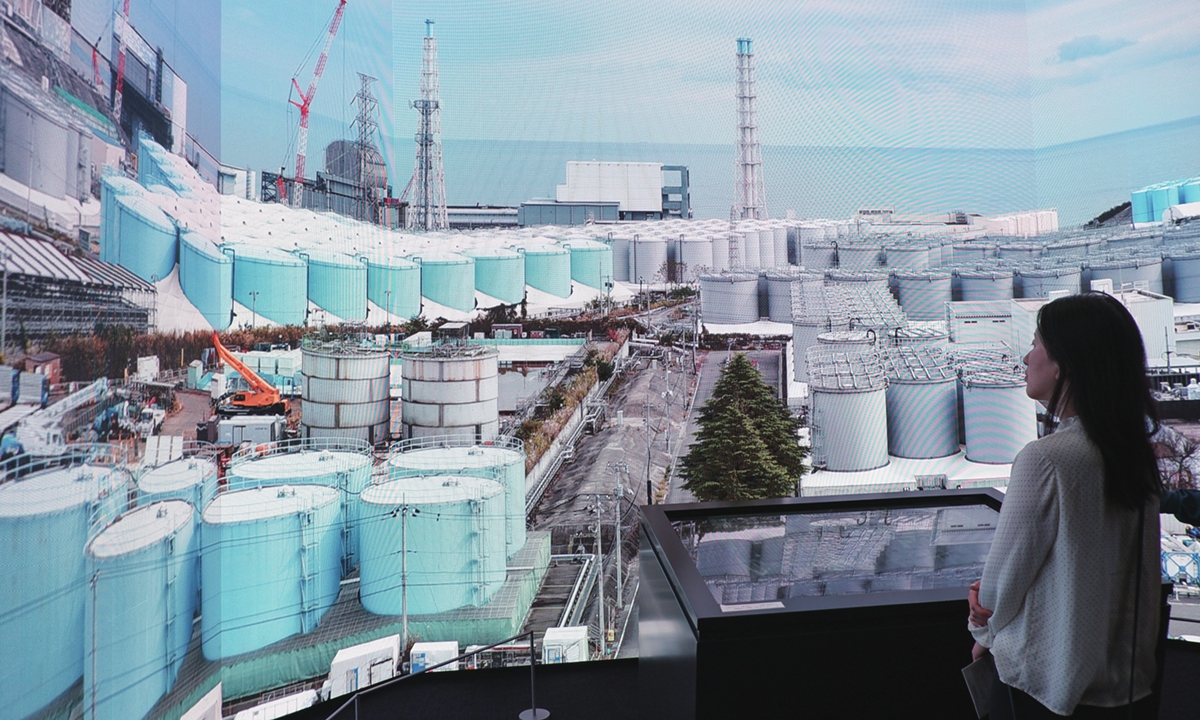
Japan’s nuclear meltdown 12 years ago led to a bandaid solution for radioactive waste. Now, time has run out and the next option is unthinkable.
Alex Blair, news.com.au 11 July 23
The UN’s international nuclear watchdog has come under heavy criticism after green-lighting Japan’s controversial plan to slowly dump radioactive water used to stem the 2011 Fukushima disaster.
When three reactors first went into meltdown over 12 years ago, nuclear authorities around the globe knew what was at stake. But a hasty bandaid fix — 1000 massive containment tanks built onsite — was never going to solve the issue long term. And now it appears time has run out for authorities looking to move forward.
Two years ago, Japan announced plans to gradually release the 1.33 million cubic metres of contaminated water into the sea over the next 30 to 40 years. Their strategy has now been approved after a lengthy review phase by the Atomic Energy Agency (IAEA), which claims the water will be processed to remove almost all radioactive elements, except tritium.
Efforts are now being made by nuclear and political authorities to ease public suspicion, with IAEA chief Rafael Grossi meeting with Fukushima residents this week in an effort to quell concerns.
However, one thing in particular has sparked intense backlash from surrounding nations and a portion of the global nuclear field. Within all the official box-ticking and PR campaigns urging confidence from the public, nuclear officials cannot be 100 per cent certain their plan will be safe and effective.
“These are global issues and need to address in a holistic manner,” Professor of Genetic Toxicology Awadhesh Jha told news.com.au. “Very limited information is available and we need to do more to assess the long-term effects, both with respect to human and environmental health.”
His criticisms echoed those from the Secretary General of the Pacific Islands Forum, Henry Puna, who said the release should be stalled “until we are certain about the implications of this proposal on the environment and on human health”.
In an article penned earlier this year, Mr Puna accused the Japanese government and international watchdogs of negligence, claiming there was no way to know the full impact until after decades of dumping nuclear material.
“The discussions this past year have not been encouraging,” he wrote.
We have uncovered serious information gaps and grave concerns with the proposed ocean release. Simply put, more data is needed before any ocean release should be permitted.
“Despite this, Japan is continuing with plans for discharge in the spring of 2023, relying on the next four decades of discharge to figure it out.
“It would be unconscionable for us as a region to once again allow ourselves to be lulled into a false sense of security.”
China, South Korea call for ‘transparent, convincing response’
China has been the most critical of Japan’s closest neighbouring nations, accusing Tokyo of turning the ocean into its “private sewer” and calling on more safety data from the nuclear watchdog.
Chinese officials have also accused the Japanese government of breaching “international moral and legal obligations”, warning that if the plan goes ahead, Japan “must bear all consequences”.
“Japan should stop the plan to release the water into the sea, but seriously consult with the international community and consider a scientific, safe, transparent and convincing response,” China’s ambassador to Japan said on Tuesday.
Meanwhile in South Korea, public polls revealed 80 per cent of the country are deeply concerned about the unknown long-term effects of the water release………………………
Tetsu Nozaki, chairman of the Fukushima Prefectural Federation of Fisheries Co-operative Associations, argued Japan’s government was misrepresenting local sentiment, which he said remained strongly opposed to the plan……………………………………
A radioactive isotope of hydrogen, tritium is one the most expensive, rare, and potentially harmful elements in the world, according to nuclear engineer Arjun Makhijani, a prominent anti-nuclear campaigner and president of the Institute for Energy and Environmental Research.
In his book Exploring Tritium’s Danger, Makhijani claims that “one teaspoon of tritiated water would contaminate about 100 billion gallons of water to the US drinking water limit; that is enough to supply about 1 million homes with water for a year”………………….
How will Japan’s plan work?
The diluted water will be discharged into the Pacific Ocean to Japan’s east via an undersea tunnel located off the coast.
With the IAEA’s approval, pumping could commence as early as August…………………………
But according to Professor Jha, further research is essential to comprehensively assess the potential risks posed by tritium to the marine food chain.
Professor Jha’s laboratory experiments indicate that tritium has the ability to accumulate in the tissues of shellfish, such as mussels and oysters.
He believes actual consequences of real-world exposure remain largely unexplored and require closer investigation.
“It needs an international research effort,” he said.
Professor Jha’s criticism came as the Tokyo Electric Power Company, the firm that runs the site, admitted the giant mass of water will need additional, “secondary” treatment to reduce the presence of other isotopes including ruthenium-106, cobalt-60 and strontium-90.
But there are still concerns over whether the water being released will have been completely cleansed before coming into contact with sea life.
“Unlike tritium, cobalt-60 is 300,000 times more likely to accumulate on the seafloor at the outlet of the pipes,” Ken Buesseler of the Woods Hole Oceanographic Institution said.
“It will build up over time, it will accumulate. So whatever amount you put in, it doesn’t just dilute away.”
What are the other solutions?
…………………..Buesseler on the other hand advocates for the treated water to be used in concrete production for massive buildings around the Fukushima plant.
Buesseler argues this would generate the least risk, with “little potential for human contact, as the concrete being used on the Fukushima Daiichi site and/or tsunami barriers for coastal protection”.
“Since contaminated water is still being generated, this ocean dumping – that is what it would be called if the water were put in a barrel and thrown overboard – of radioactive water would continue for 30 years (possibly more),” Buesseler writes.
“The water would still contain some strontium-90 and other radionuclides with attendant risks of uptake associated with seafloor sediments.
“Besides the radioactivity exposure, which TEPCO estimates will be well below 1 millisievert per year, the dumping would also create reputation damage to the fishing and tourist industries, not only in Japan but across other countries in the Pacific region.” https://www.news.com.au/technology/environment/grave-concerns-as-japans-plan-to-release-fukushima-water-into-the-sea-approved-by-nuclear-watchdog/news-story/854cc5d9618a2a5bde1de2f657f49a89
Red alert at Zaporizhzhia?
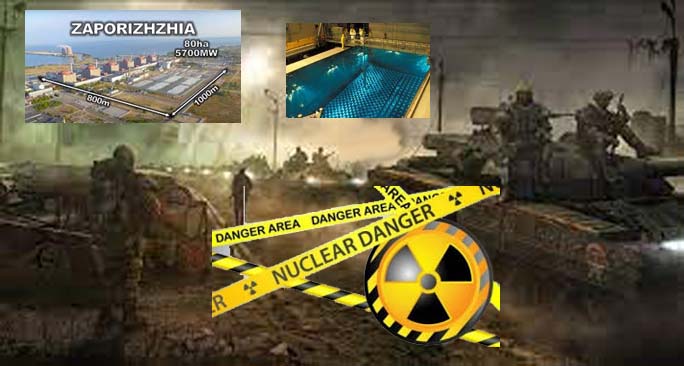
The threatened deadly scenarios could not happen at a wind farm
By Linda Pentz Gunter, 10 july 23 https://beyondnuclearinternational.org/2023/07/09/red-alert-at-zaporizhzhia/
Amidst accusations from both the Russian and Ukrainian sides that the Zaporizhzhia nuclear power plant in southeastern Ukraine has been wired for detonation or could be deliberately attacked during the current war there, one absolute truth remains: nuclear power plants are inherently dangerous.
Whether the rhetorical threats are real or not remains subject for debate. What is incontrovertibly real is the danger a nuclear power plant poses. After all, that is why the two sides are making these threats in the first place: because the outcome would be so deadly. If Zaporizhzhia was a wind farm, it wouldn’t even be mentioned.
Each nuclear reactor contains a lethal radioactive inventory, in the reactor core and also in the fuel pools into which the irradiated fuel is offloaded and, over time, densely packed. Casks also house nuclear waste offloaded from the fuel pools.
Zaporizhzhia is the largest nuclear power plant in Europe with at least 2,204 tons of highly radioactive waste within the reactors and the irradiated fuel pools.
Depending on the severity of what transpires, any or all of this radioactive fuel could be ignited.
Amidst the confusion and unreliability of any pronouncements uttered through the “fog of war”, there remain several unanswered questions that have led to heightened rumor and speculation:
Has the Zaporizhzhia nuclear plant in fact been wired for detonation and whose interests would be served by blowing up the plant?
Why is there an exodus of both Russian and Ukrainian plant personnel?
Will the sabotage of the downstream Kakhovka dam that resulted in catastrophic flooding, also lead to an equally catastrophic loss of available cooling water supplies for the reactors and fuel pools?
Will the backup diesel generators, frequently turned to for powering the essential cooling each time the plant has lost connection to the electricity grid, last through each crisis, given their fuel must also be replenished, potentially not possible under war conditions?
None of these threats would make headlines if Zaporizhzhia was instead home to a wind farm or utility scale solar array. This perhaps explains the rush now to downplay the gravity of the situation, with claims in the press that a major attack on the plant would “not be as bad as Chornobyl” and that radioactive releases would be minimal and barely travel beyond the fence line.
This is an irresponsible dismissal of the real dangers. The measured assessment of Dr. Edwin Lyman at the Union of Concerned Scientists confirms that an attack on Zaporizhzhia could indeed be catastrophic.
The graphite moderator used at Chornobyl undeniably worsened the outcome of that explosion and its aftermath. The graphite fueled the fire and the smoke further suspended what became the radioactive fallout that traveled far and wide across the former Soviet Union and all of Europe.
The part played by the graphite moderator in increasing the severity of the Chornobyl disaster has led to an assumption that major fires and explosions at Zaporizhzhia would result in less serious consequences, given the reactors are not of the same design. All six at Zaporizhzhia are Russian VVERs, similar to the Pressurized Water Reactor used here in the United States. (Chornobyl was the older RBMK.)
However, while Zaporizhzhia may be a less primitive design, it is not harmless. (Absurdly, these 1980s reactors are described in the press as “more modern.”)
If the uranium fuel in the Zaporizhzhia reactors or irradiated fuel storage pools overheats and ignites, it could then heat up the zirconium cladding around it, which would ignite and burn fiercely as a flare at temperatures too hot to extinguish with water.
The resulting chemical reaction would also generate an explosive environment. The heat of the release and any subsequent detonations could breach concrete structures, then loft radioactive gas and fallout into the environment to travel on the weather.
Radioactive fallout could contaminate crucial agricultural land in Ukraine and potentially also in Russia should prevailing winds travel eastward at the time of the disaster. As we have learned from the Chornobyl fallout, this is an enduring harm that enters the food chain and human bodies and remains harmful in the environment indefinitely, as exemplified by the 1,000 square mile Chornobyl Exclusion Zone.
Who then consumes that food is also of critical importance. While Europe allows an already too high 600 becquerels per kilogram (Bq/kg) of radioactive cesium in food, contaminated food supplies from Ukraine that read at higher levels after a nuclear disaster could be exported to countries with even weaker standards, including the US where the limit is an unacceptable 1200 Bq/kg. But will those consuming such foodstuffs be counted among the victims of such a nuclear disaster? Likely not.
The true numbers of those harmed by the Chornobyl disaster will never be known due to institutional suppression and misrepresentation of the numbers and the absence of record-keeping in the former Soviet countries affected. Therefore, to suggest that a major nuclear disaster at Zaporizhzhia would be “not nearly as bad as Chornobyl” is too broad and speculative without looking at the specifics.
Those specifics depend on whether the disaster involves hydrogen explosions such as happened at Fukushima, or fires resulting from a bombing raid or missile attack, which could disperse more radioactivity further. It would also depend on whether all six reactors suffered catastrophic failures, whether all of the fuel pools were drained and caught fire and whether the storage casks were breached.
It would further depend on which way the wind was blowing, and if, when and where it subsequently rained out a radioactive plume, all factors that influenced where the Chornobyl radioactive fallout was deposited.
If Zaporizhzhia comes to harm, each side in the conflict will almost certainly hold the other responsible. But ultimately, the responsibility we all share is to reject the continued use of a technology that has the potential to wreak such disastrous consequences on humanity.
Nuclear power is the most dangerous way to boil water. It is unnecessary, expensive, and an obstacle to renewable energy development. It is intrinsically tied to the desire for — and development of — nuclear weapons, the use of which could be the other lethal outcome in this war.
Zaporizhzhia is in the news almost every day. The propaganda may be deliberately alarmist, but the basis for the alarm is very real or it would not be in the headlines in the first place.
It is time to see sense. Calling for a no-fire zone around Zaporizhzhia is not enough. We must call for no nuclear power at all.
Linda Pentz Gunter is the international specialist at Beyond Nuclear and writes for and curates Beyond Nuclear International.
Biden Keeps Lying About The US “Not Trying To Surround” China

ignore the words and watch the actions.
You simply cannot understand the geopolitics and major conflicts of the 2020s without understanding that the US empire has been actively amassing military threats in the immediate surroundings of its top two rivals — China and Russia — that it would never tolerate anyone else amassing anywhere near the United States. The single dumbest thing the US empire asks us to believe nowadays is that surrounding its two biggest foes with war machinery is a defensive action, rather than an act of extreme aggression.
CAITLIN JOHNSTONE, JUL 11, 2023 https://caitlinjohnstone.substack.com/p/biden-keeps-lying-about-the-us-not?utm_source=post-email-title&publication_id=82124&post_id=134297841&isFreemail=true&utm_medium=email
President Biden had a recent interview with CNN’s Fareed Zakaria during which he defended his controversial decision to send cluster munitions to Ukraine and suggested that the US can continually support Ukraine the way it supports Israel rather than adding it to the NATO alliance.
About halfway through the interview Biden said something about China that’s worth flagging, because the claim he makes is self-evidently false, and it’s not the first time he’s made it.
Describing the conversations he’s been having with China’s President Xi Jinping, Biden said the following:
“We’re going to put together the Quad which is India, Australia, the United States and Japan. I got a call from him [Xi] on that. He said why are you doing that. I said we’re not doing that to surround you, we’re doing that to maintain stability in the Indian Ocean and in the South China Sea. Because we believe the rules of the road about what constitutes international air space, international space and the water should be maintained.”
Biden uttered this same bogus talking point about not trying to surround China last month at the private fundraising event where he made headlines by calling Xi a “dictator”:
“But what he was really upset about was that I insisted that we — we reunite the Qu- — so-called Quad. He called me and told me not to do that because it was putting him in a bind. I said, All we’re doing — we’re not trying to surround you, we’re just trying to make sure the international rules with air and sea lanes remain open.”
Biden is lying. The US is deliberately surrounding China with war machinery and has been for years, and has rapidly escalated its efforts to do so during Biden’s term. There are currently no fewer than 313 US military bases in East Asia by the Pentagon’s own admission, with the Biden administration adding four new ones in the Philippines. Biden’s war machine has been busy instituting the AUKUS alliance which is specifically set up to menace China, moving nuclear-capable bombers to Indonesia, signing a military deal with Papua New Guinea, working to station missile-armed marines at Japan’s Okinawa islands, staging provocations in Taiwan, and getting into increasingly confrontational encounters with Chinese military vessels and aircraft off China’s coast as part of its dramatically increased military presence in the area.
So of course the US is trying to surround China, as evidenced by the mountains of US war machinery that are being moved into areas surrounding China. Biden can babble all he wants about wanting to secure sea lanes and protect international waters, but only a drooling idiot would believe the world’s most powerful empire is militarily surrounding its top geopolitical rival as an act of defense.
And Beijing is under no illusions about this. Xi said in a speech earlier this year that “Western countries—led by the U.S.—have implemented all-round containment, encirclement and suppression against us, bringing unprecedentedly severe challenges to our country’s development.”
So Biden isn’t trying to fool the Chinese government with his “We’re not trying to surround you” schtick — he’s trying to fool you. He’s trying to fool the western public and the allies of the United States, who would get spooked if the US president openly admitted to a deliberate campaign of militarily encirclement against an economic superpower they all trade with extensively.
You simply cannot understand the geopolitics and major conflicts of the 2020s without understanding that the US empire has been actively amassing military threats in the immediate surroundings of its top two rivals — China and Russia — that it would never tolerate anyone else amassing anywhere near the United States. The single dumbest thing the US empire asks us to believe nowadays is that surrounding its two biggest foes with war machinery is a defensive action, rather than an act of extreme aggression.
The best advice I can offer about US-China tensions is to ignore the words and watch the actions. Ignore what officials say about wanting peace and not trying to surround China and supporting the One China policy etc, and just watch all the US war machinery that’s being rapidly added to that region. The US empire is better at international narrative manipulation than any power structure that has ever existed in human history, but what they can’t spin away is the concrete maneuverings of solid pieces of war machinery, because they are physical realities and not narratives.
‘Russian victory’ worse than civilian cluster-bomb deaths – says Pentagon official
A US official has defended the decision to supply Ukraine with the weapons, which are banned in more than 100 countries.
US fears of Russian success on the battlefield outweigh concerns that deliveries of cluster bombs to Ukraine could result in civilian casualties, a senior Pentagon official acknowledged on Friday.
Speaking to reporters, Under Secretary of Defense for Policy Colin Kahl defended the White House’s decision to approve another $800 million weapons package for Ukraine, including cluster munitions. The weapons are banned in more than 100 countries.
When they detonate, the munitions release many small bomblets over a wide area. A percentage of bomblets fail to detonate on impact, however, and unexploded elements pose severe risks to civilians for years after fighting ends.
Asked if the Pentagon has assured its allies that the munitions will not cause excessive civilian harm, Kahl replied: “I’m as concerned about the humanitarian circumstance as anybody, but the worst thing for civilians in Ukraine is for Russia to win the war. And so it’s important that they don’t.”…………………………… https://www.rt.com/news/579374-pentagon-cluster-munition-civilian-casualties/
Holtec hogs the money, but Michigan ratepayers will foot the bill for reactor resuscitation.

by beyondnuclearinternational By Jeff Alson
The 52-year old Palisades nuclear power plant near South Haven, Michigan, on the shore of Lake Michigan near both Chicago and Grand Rapids, is one of the oldest and most degraded reactors in the country. In 2006, Palisades’ original owner, Consumers Energy, cited a wide range of major safety concerns when it sold the plant to Entergy, including that Palisades had one of the most embrittled reactor vessels in the country, needed a new reactor vessel head and steam generator, and had suffered from control rod drive mechanism seal leaks since it first opened.
As natural gas, and then wind and solar, became cheaper and cheaper, Palisades’ electricity became increasingly uncompetitive. Michigan ratepayers subsidized its electricity for years, sometimes paying as much as 57% above market rates. Trying to minimize additional costs, Entergy refused to invest in the most important safety repairs.
In 2018, Entergy announced it would sell the old and dangerous plant to Holtec, a decommissioning company, and the U.S. Nuclear Regulatory Commission (NRC) approved. The plant was formally closed on May 20, 2022, nuclear fuel was removed on June 13, and the plant was sold to Holtec on June 28, 2022.
The NRC then terminated Palisades’ operating license.
For four years, from 2018 through 2022, every major stakeholder—Entergy, the NRC, the Michigan Public Service Commission, energy and environmental NGOs, groups representing electricity consumers, and, notably, Michigan Governor Gretchen Whitmer—agreed that Palisades should be shut down.
The Governor’s own MI Healthy Climate Plan, released in April 2022, appropriately ignored Palisades’ imminent closure, since there are far cheaper and safer alternatives to reduce greenhouse gas emissions.
What changed? Holtec saw an opportunity to feed from the public trough by getting billions of dollars of corporate welfare, from both the state and federal government, to raise Palisades from the dead.
Holtec has requested a $300 million subsidy from Michigan taxpayers and in late June got a $150 million blank check from the Michigan legislature added to the current state budget without any public debate whatsoever. More ominous, Holtec also wants Michigan ratepayers to, once again, be forced to buy electricity at above-market prices that could significantly raise Michigan’s electricity rates, already the highest in the Midwest.
For example, when operating properly, the 700 megawatt Palisades plant can generate about 6 billion kilowatt-hours of electricity per year. If this electricity were just one cent per kilowatt-hour more expensive than market prices, ratepayers would have to pay an extra $60 million per year. If it were five cents more expensive, the total subsidy would increase to $300 million per year. If Palisades operated for another 5 or 10 years, the total ratepayer subsidy could reach into the billions of dollars.
Holtec will likely apply for multiple federal subsidies as well. To reopen Palisades, Holtec has already applied to the Department of Energy (DOE) for a billion dollar nuclear loan guarantee under the 2022 Inflation Reduction Act, and may apply for an additional $1.2 billion from the 2021 Infrastructure bill. Separately, Holtec has applied to DOE for $7.4 billion in loan guarantees under the 2005 Energy Policy Act for one or more future small modular nuclear reactors.
Michigan taxpayers and ratepayers have had too many nuclear white elephants: ……………………………………………………………….
Jeff Alson is an Alliance to Halt Fermi 3 board member and an environmental engineer who worked on auto pollution issues for 40 years at the U.S. Environmental Protection Agency. https://beyondnuclearinternational.org/2023/07/09/holtec-hogs-the-money/
The Path to a Sustainable Civilisation
Mark Diesendorf: The Path to a Sustainable Civilisation: Technological,
Socioeconomic and Political Change. We are facing environmental crises and
increasing social inequality. The solutions must go beyond campaigning on
individual issues. We must weaken the driving forces: capture of
nation-state by powerful vested interests and an economic system that’s
based on exploiting the environment and the majority of the world’s people.
Mark Diesendorf 9th July 2023
Russia calls on NATO to discuss Ukraine nuclear plant
Canberra Times, 9 July 23
The leaders of the United States-led transatlantic NATO defence alliance should discuss Ukraine’s Zaporizhzhia nuclear plant at their summit, Russia’s Foreign Ministry spokeswoman Maria Zakharova says.
NATO leaders will meet in Vilnius on Tuesday and Wednesday to tackle a wide range of topics, from divisions over Ukraine’s membership bid and Sweden’s accession to boosting ammunition stockpiles and reviewing the first defence plans in decades.
Accusing Ukraine of “systematic infliction of damage” to the Zaporizhzhia nuclear plant, Zakharova said “the NATO summit’s key attention should be devoted to it”.
“After all, the vast majority of the alliance members will be in the direct impact zone” (if something were to happen at the plant), Zakharova said on the Telegram messaging app.
Vilnius is some 1000 kilometres from the nuclear plant, Europe’s largest.
Both Russia and Ukraine have accused each other of planning to attack the plant, which is located on Russian-held territory in Ukraine’s Zaporizhzhia region, near the front line of Russia’s conflict with Ukraine………….
The International Atomic Energy Agency experts based at the plant said they had yet to observe any indications of mines or explosives at the plant but needed more access to be sure. https://www.canberratimes.com.au/story/8263420/russia-calls-on-nato-to-discuss-ukraine-nuclear-plant/
Labour seeks pact to keep AI out of nuclear arms deployment
David Lammy wants UK to agree rules with other countries to regulate use of artificial intelligence in controlling nuclear weapons
Telegraph 8th July 2023
Germany Rejects Cluster Bombs For Ukraine As Clip Surfaces Of Biden Admin Previously Calling Them A ‘War Crime’
Zero Hedge, BY TYLER DURDEN, SATURDAY, JUL 08, 2023
In light of the Biden White House approving cluster bombs for Ukraine, under the justification that ‘but Russia used them first’, below is a quick trip down memory lane…
First, here is then White House press secretary Jen Psaki unequivocally condemning the use of cluster munitions as a potential “war crime” in 2022. The implication behind the exchange is that only the “bad guys” use them…
[Video here on original]
Next, below is a lengthy letter from top-ranking Congressional Democrats in a 2013 written to then President Barack Obama highlighting the evils of cluster bombs, explaining they are “indiscriminate, unreliable and pose an unacceptable danger to US forces and civilians alike.”
The letter emphasized they “cause unintended harm to civilians and civilian infrastructure, in many cases long after the cessation of hostilities,” and also recalled that “During Operation Desert Storm, US-dropped cluster submutnions caused more US troops casualties than any single Iraqi weapon system.”
Back when Democrats were outraged over cluster bombs and the potential for war crimes and indiscriminate killing…
[documentery evidence here on original]
It’s no wonder that key US allies in Europe are now objecting to the decision to supply Kiev with the internationally banned weapons.
“Germany opposes sending cluster munitions to Ukraine, its foreign minister said on Friday, a day after U.S. officials said Washington was planning to provide Kyiv with the weapons, widely denounced for killing and maiming civilians,” Reuters reports. Foreign Minister Annalena Baerbock told reporters in Vienna: “I have followed the media reports. For us, as a state party, the Oslo agreement applies.”
As for NATO leadership, Secretary General Jens Stoltenberg shrugged off reports that the US is set to announce cluster bombs for Ukraine. “This will be for governments to decide, not for Nato to decide,” he said Friday. He essentially said that because Russia is already deploying them, this makes it okay for Ukraine to do the same…… https://www.zerohedge.com/geopolitical/germany-rejects-cluster-bombs-ukraine-clip-surfaces-biden-admin-previously-cal1
1 This Month
Chernobyl: The Lost Tapes – A good documentary on Chernobyl on SBS available On Demand for the next 3 weeks– https://www.sbs.com.au/ondemand/tv-program/chernobyl-the-lost-tapes/2352741955560

of the week–London Campaign for Nuclear Disarmament

Tell the Ukrainian Government to Drop Prosecution of Peace Activist Yurii Sheliazhenko
To see nuclear-related stories in greater depth and intensity – go to https://nuclearinformation.wordpress.com
-
Archives
- April 2026 (126)
- March 2026 (251)
- February 2026 (268)
- January 2026 (308)
- December 2025 (358)
- November 2025 (359)
- October 2025 (376)
- September 2025 (257)
- August 2025 (319)
- July 2025 (230)
- June 2025 (348)
- May 2025 (261)
-
Categories
- 1
- 1 NUCLEAR ISSUES
- business and costs
- climate change
- culture and arts
- ENERGY
- environment
- health
- history
- indigenous issues
- Legal
- marketing of nuclear
- media
- opposition to nuclear
- PERSONAL STORIES
- politics
- politics international
- Religion and ethics
- safety
- secrets,lies and civil liberties
- spinbuster
- technology
- Uranium
- wastes
- weapons and war
- Women
- 2 WORLD
- ACTION
- AFRICA
- Atrocities
- AUSTRALIA
- Christina's notes
- Christina's themes
- culture and arts
- Events
- Fuk 2022
- Fuk 2023
- Fukushima 2017
- Fukushima 2018
- fukushima 2019
- Fukushima 2020
- Fukushima 2021
- general
- global warming
- Humour (God we need it)
- Nuclear
- RARE EARTHS
- Reference
- resources – print
- Resources -audiovicual
- Weekly Newsletter
- World
- World Nuclear
- YouTube
-
RSS
Entries RSS
Comments RSS
 nuclear-news