Ukraine great ‘testing ground’ for Western weapons: Kiev

Thursday, 06 July 2023, https://www.presstv.ir/Detail/2023/07/06/706584/Ukraine-Russia-western-weapons-Reznikov-US-cluster-munitions-
Kiev says Ukraine is a great “testing ground” for the military industry of the West, which is constantly pouring advanced arms and military equipment in the ex-Soviet republic despite repeated warnings by Russia that such a flow of arms will only prolong the war.
In a an interview with Financial Times published on Wednesday, Ukrainian Defense Minister Oleksii Reznikov said his country is an ideal “testing ground” for Western weaponry so that Kiev’s allies can see how their weapons work in real war and to see whether they are efficient or need upgrades.
“For the military industry of the world, you can’t invent a better testing ground,” he said, claiming that American officials became very happy when Ukraine’s military reported that a US Patriot missile system managed to down a Kinzhal, a Russian hypersonic missile.
An American official called the news “fantastic,” Reznikov said.
“The Russians come up with a countermeasure, we inform our partners and they make a new countermeasure against this countermeasure,” the Ukrainian defense minister said.
Reznikov claimed many countries are closely watching the developments in the Ukraine-Russia war, including those that are already armed with Russian weapons.
“Everyone is watching closely. And not only India. China too … Everyone, even those who bought weapons from [Russia], will watch carefully,” he said.
In July 2022, Reznikov made similar comments when he was asking for the United States and NATO to send more weapons to Ukraine.
“We are interested in testing modern systems in the fight against the enemy and we are inviting arms manufacturers to test the new products here,” he said at the time.
The US may reportedly decide later this week to send such internationally-banned cluster munitions to Ukraine.
Cluster bombs are banned under the Convention on Cluster Munitions (CCM), an international treaty that addresses the humanitarian consequences and unacceptable harm caused to civilians by cluster munitions through a categorical prohibition and a framework for action.
The weapons can contain dozens of smaller bomblets, dispersing over vast areas, often killing and maiming civilians. The CCMs are banned because unexploded bomblets can pose a risk to civilians for years after the fighting is over.
Cluster munitions generally eject submunitions that can cover five times as much area as conventional bombs.
The CCM, which took effect in 2010, bans all use, production, transfer and stockpiling of cluster bombs. More than 100 countries have signed the treaty, but the United States, Russia and Ukraine have not.
Russia sees the flooding of Ukraine with weapons from the West as a futile effort to change the outcome of the war. Moscow says supplying Kiev with more weapons will only add to the death and destruction and prolong the conflict.
UN report on Japan’s Fukushima water plans fails to placate opponents

“The concern is not over external exposure,” Burnie said. “It is internal exposure to organically bound tritium that is the problem – when it gets inside fish, seafood, and then humans. When tritium gets inside cells, it can do damage.
“Tepco and the Japanese government are making a conscious decision to increase marine pollution with radioactivity, and they have no idea where that will lead.”
While South Korea offers official support, China and other voices in region continue to express concerns over discharge from nuclear plant
Justin McCurry in Tokyo, 7 July 23 https://www.theguardian.com/environment/2023/jul/07/un-report-on-japans-fukushima-water-plans-fails-to-placate-opponents
The publication this week of the UN nuclear watchdog’s positive assessment of Japanese plans to pump more than 1m tonnes of water from the wrecked Fukushima Daiichi nuclear power plant into the ocean has failed to placate opponents.
China is fiercely opposed to the plans, despite a report by the International Atomic Energy Agency (IAEA) backing the scheme, while the support of the government of South Korea has failed to quell widespread public opposition to the idea in the country.
The government in Seoul said on Friday that it “respected the IAEA’s review of plans by Japan and the plant’s operator, Tokyo Electric Power (Tepco), to pump water from the plant into the Pacific over the next 30 to 40 years”.
The discharge would have “negligible consequences” for South Korea, it said in an attempt to win over a deeply sceptical public. The country’s ban on food and seafood products from the Fukushima region will remain in place, however.
But South Korea, whose conservative president, Yoon Suk Yeol, is attempting to mend diplomatic fences with Japan over the countries’ wartime legacy, is a lone voice of support in the region.
On the same day, China announced a ban on food imports from 10 of Japan’s prefectures over “safety concerns”, and said it would conduct stringent radiation tests on food from the rest of the country.
“The Japanese side still has many problems in the legitimacy of sea discharge, the reliability of purification equipment and the perfection of monitoring programmes,” Chinese customs said.
Japan’s top government spokesperson, Hirokazu Matsuno, responded to criticism of the plan by saying that Fukushima Daiichi would pump far less tritium into the ocean than Chinese and South Korean nuclear facilities.
Japan’s standard for the release of tritium, at below 22tn becquerels a year, is far stricter than that of its neighbours, Matsuno said.
According to Japan’s trade and industry ministry, the Yangjiang nuclear plant in China discharged about 112tn becquerels of tritium in 2021, while the Kori power station in South Korea released about 49tn becquerels.
That is unlikely to placate opponents in Fukushima, where fishing communities have warned the water discharge will undo more than a decade of work to repair the damage the meltdown inflicted on the reputation of the region’s seafood, which is subject to one of the world’s strictest radiation testing regimes.
“We here in Fukushima have done absolutely nothing wrong, so why do they have to mess up our ocean?” said Haruo Ono, a fisher in Shinchimachi, 34 miles north of Fukushima Daiichi. “The ocean doesn’t belong to only us humans – and it isn’t a rubbish tip.
“It’s been 12 years [since the meltdown] and fish prices are rising, so we were finally hoping to really get down to business. Now they’re talking about releasing the water and we’re going to have to go back to square one again. It’s unbearable.”
Fisheries cooperatives in three prefectures were due to submit a petition with 33,000 signatures on Friday expressing their opposition to the water discharge.
While their government has given Japan breathing room, many South Koreans remain sceptical of Tokyo’s safety assurances. Some are panic-buying salt amid contamination fears, while a Gallup poll conducted in June found 78% of South Koreans were either “very worried” or “somewhat worried” about potential harm to the marine environment.
“It’s much more difficult to make sales now, as customers are asking more questions as they worry a lot,” said Jin Wol-sun, a stallholder at Seoul’s Noryangjin market, where market officials carried out random radiation tests on seafood in an attempt to reassure shoppers.
Rafael Grossi, the head of the IAEA, conceded there had been a lack of unanimity among the IAEA scientists, who come from 11 countries, including China, involved in the safety review. One or two “may have expressed concerns” over the plan, he said in an interview with Reuters. “I heard that being said … but again, what we have published is scientifically impeccable.”
China’s state-run Global Times newspaper on Thursday said Liu Senlin, a Chinese expert in the IAEA’s technical working group, was disappointed with the “hasty” report and had said the input from experts was limited and only used for reference.
Other experts openly voiced concerns about the impact the discharge could have on marine and human life, and accused Tepco and the IAEA of cutting corners.
“We have repeatedly pointed out to Tepco and IAEA substantive concerns we have with Japan’s approach and flaws in their methodology,” said Ferenc Dalnoki-Veress, an adjunct professor at Middlebury Institute of International Studies at Monterey in the US.
Dalnoki-Veress, a member of a panel of scientists that advised the Pacific Islands Forum, cited Tepco’s controlled tritium-exposure experiments on fish, which he said included only three species that were being fed on commercial fish pellets rather than exposed smaller fish, which would normally be their food source.
“We have repeatedly offered to help advise on how to conduct these experiments, but each time Tepco rejected them,” he said. “We take as proof that they are not truly interested in collecting relevant data that may demonstrate and confirm concerns regarding their present plans.”
The “dumping” of treated water into the ocean, he said, would cause potentially irreversible damage to the local fishing industry.
“When we think about the effect of radiation we can’t just think about the effect on the environment, we have to consider the effect on cultures, societies and peoples who suffer psychological effects, a sense of fear, and reputational damage. Trust has been broken, and it will be difficult to repair.”
Shaun Burnie, a senior nuclear specialist with Greenpeace who regularly visits Fukushima, said claims that tritium posed no risk to human health were “scientifically bankrupt”.
“The concern is not over external exposure,” Burnie said. “It is internal exposure to organically bound tritium that is the problem – when it gets inside fish, seafood, and then humans. When tritium gets inside cells, it can do damage.
“Tepco and the Japanese government are making a conscious decision to increase marine pollution with radioactivity, and they have no idea where that will lead.”
Russian K-278 sub sank 30 years ago but continues to leak radiation
By Boyko Nikolov On Jul 7, 2023 https://bulgarianmilitary.com/2023/07/07/russian-k-278-sub-sank-30-years-ago-but-continues-to-leak-radiation/
Imagine a Russian nuclear submarine, resting at the bottom of the Arctic sea for over 30 years, still leaking radiation. It may sound like a plot from a sci-fi movie, but according to Norwegian researchers, this is indeed reality.
For several years, a joint team of Russian and Norwegian scientists has been investigating this phenomenon. They found that the water around the K-278 Komsomolets submarine is 100,000 times more radioactive than uncontaminated water. The results of their research revealed in 2019, raise alarming questions about the potential short and long-term effects of radioactive water surrounding the vessel beneath the Barents Sea.
An essay in The Drive from 2019 suggests that the submarine may now be actively leaking radiation. This could be from its reactor or a pair of nuclear-armed torpedoes, both having remained submerged in the Barents Sea for over three decades.
The researchers collected samples from 5,500 feet below the sea surface, around 100 miles southwest of Norway’s Bear Island. This incident, and its potential long-term effects, highlight the importance of managing and disposing of radioactive material responsibly. This is even more crucial given the current geopolitical tensions between the US and Russia.
The submarine, known as Soviet Project 685, is believed to be leaking radiation either from its reactor or from its nuclear-armed torpedoes. This leakage is likely due to the submarine’s prolonged stay at the bottom of the Barents Sea.
The contaminated water was collected by the Egir 600, a Norwegian-designed remotely operated submersible. The research was carried out by Norway’s Institute of Marine Research and Norway’s University of Bergen.
One of the samples showed a significantly elevated radiation level. While the findings were preliminary, researchers stressed the need for continued monitoring of the sunken submarine. The ongoing analysis likely examines the extent of potential contamination and its possible impact on wildlife, ships, and coastal regions. The currents, water flow, and concentrations of radioactive material were probably scrutinized to minimize damage and contamination.
In conclusion, a plan was likely set in motion to mitigate the leakage of radioactive materials. Perhaps the nuclear-armed torpedoes were safely removed, or the contaminated materials were disposed of in a manner that would prevent any further leakage.
Ukraine in talks with Bulgaria to buy Russian nuclear reactors with EU funds
By Krassen Nikolov | EURACTIV.bg, Jul 7, 2023
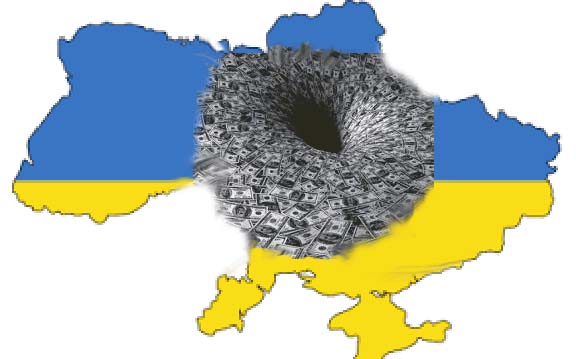
Ukraine has started serious discussions to purchase Bulgaria’s two Russian-made nuclear reactors with EU money so it can better deal with future power shortages, Bulgarian Prime Minister Nikolay Denkov said after Ukrainian President Volodymyr Zelenskyy paid his first visit to Bulgaria Thursday.
The two reactors purchased from Russia over five years ago were meant to be used for the Belene nuclear power plant project, which has now been abandoned due to Russia no longer participating in the assembly of the reactors and Bulgaria not being able to foot the bill alone……………………..
To make the purchase easier for Ukraine, the EU Commission announced on Thursday that the potential deal could be financed with money the EU is already sending to Kyiv.
“Ukraine can use EU funds to buy nuclear reactors from Bulgaria, as this would help strengthen the Ukrainian economy”, a spokesperson for the Commission announced. This year, the EU is providing Ukraine with financial assistance worth €1.5 billion per month…… https://www.euractiv.com/section/politics/news/ukraine-in-talks-with-bulgaria-to-buy-russian-nuclear-reactors-with-eu-funds/
Japan claims that China and South Korea both pour radioactive waste-water , worse than Japan’s, into the oceans

Japan said Thursday that China and South Korea have both discharged liquid
waste containing high levels of tritium, a radioactive material, countering
Beijing’s criticism of Tokyo’s plan to release treated water from the
Fukushima nuclear power plant. Chief Cabinet Secretary Hirokazu Matsuno
also said Japan will explain to China “based on scientific perspectives”
the planned water discharge into the sea from the nuclear complex, crippled
by a devastating earthquake and ensuing tsunami in March 2011. Japan’s
standard for the release of tritium, at below 22 trillion becquerels per
year, is far stricter than that of other nations including its neighbors
China and South Korea, Matsuno, the top government spokesman, said at a
regular press conference.
In 2021, the Yangjiang nuclear plant in China
discharged around 112 trillion becquerels of tritium, while the Kori power
station in South Korea released about 49 trillion becquerels of the
radioactive material, Japan’s industry ministry said.
Japan Today 6th July 2023
Huge protest against Rafael Grossi at Gimpo airport, Seoul, South Korea
Sung-Hee Choi , 7 July 23
Most western mainstream media says that the [right wing] South Korea government agrees with the IAEA draft that the Japanese government’s decision to discharge nuclear contaminated water into the ocean fits to standard.
However, it does seldom say that just last night(July 7/8), Grossi, the director-general of the IAEA was hugely unwelcomed, stranded for hours in the Gimpo airport, Seoul, thanks to protestors with the signs including the one which read, “Did you leak the draft for 1 million euroes?” Around 280 policemen were mobilized to fence Grossi from the righteously angry South Korean protesters.
See the photos
https://www.kukinews.com/newsView/kuk202307080001?skin=news
Please watch the videos
https://www3.nhk.or.jp/nhkworld/en/news/20230708_04/. (English)
https://www.ytn.co.kr/_ln/0101_202307080504347351
“More than 80 percent of respondents in 11 countries in the Asia-Pacific region except for Japan said Japan’s plan of dumping nuclear-contaminated water into the sea is “irresponsible” and nearly 90 percent of respondents showed negative sentiments such as worries and shock toward the plan, and 94 percent of them deemed such move will have a negative effect not only on Japan and Pacific Rim countries but also the whole world, a survey conducted by the Global Times Research Center found.”
https://www3.nhk.or.jp/nhkworld/en/news/20230630_20/?fbclid=IwAR3CNvbsTp_
First Nations won’t back nuclear plant expansion until waste questions are answered
By Matteo Cimellaro | July 7th 2023 (The National Observer) https://www.nationalobserver.com/2023/07/07/news/first-nations-wont-back-nuclear-plant-expansion-until-waste-questions-are-answered#:~:text=Two%20First%20Nations%20near%20the,obtained%20by%20Canada’s%20National%20Observer.
Two First Nations near the proposed expansion of Canada’s largest nuclear power plant will not support any new projects until there is a solution to the nuclear waste problem on their territory, the Saugeen Ojibway Nation wrote in a letter to its membership obtained by Canada’s National Observer.
Bruce Power, the operator of the Bruce Nuclear Generating Station, will have to demonstrate safe nuclear waste management, the Ontario government said in a press release announcing the province’s first large-scale nuclear development in three decades. However, the release stopped short of mentioning the development of a deep geological repository set to be the solution for long-term nuclear waste storage for the country.
The Saugeen Ojibway Nation, composed of the Saugeen First Nation and the Chippewas of Nawash Unceded First Nation, is one of two possible hosts for the Nuclear Waste Management Organization’s (NWMO) proposed nuclear waste facility, along with Ignace, Ont., located 250 kilometres northwest of Thunder Bay.
The NWMO, a Canadian non-profit tapped to address the disposal of used nuclear fuel, will select a site to store Canada’s nuclear waste roughly 500 feet underground — as deep as the CN Tower is high — in a geological repository in March 2024.
“Until the Saugeen Ojibway are comfortable on the plan on how we’re going to resolve that waste issue, it’s really hard for us to buy into 100 per cent of what the province is doing,” Veronica Smith, chief of the Chippewas of Nawash Unceded First Nation, told Canada’s National Observer.
There will be compensation for the communities chosen to host the deep geological repository, Smith added. But it’s unclear if host First Nations might benefit from a nuclear waste facility revenue-sharing model or a lump sum payment. Those conversations haven’t even started between Saugeen Ojibway Nation and the NWMO, Smith said.
It’s also unclear if community members of both First Nations will be comfortable with the NWMO’s plan for a nuclear waste facility. Smith notes community members are the ultimate decision-makers over a proposed agreement to host the waste facility, not the elected chief and council.
Nishnawbe Aski Nation, the political organization that represents 49 First Nations in northern Ontario, including all those in Treaty 3 where the Ignace site is located, has vehemently opposed building the waste facility in the North. In 2022, the organization passed a resolution stating concerns over watersheds that lead up into Hudson Bay.
Within the northern First Nations, there are also worries a nuclear spill from transport trucks carrying waste could cut off the northern communities’ winter road access, cutting a vital supply route to several communities.
“What is NWMO going to say if both communities say no?” Smith asked.
In its letter to membership, the Saugeen Ojibway Nation also wrote that it wants a resolution and reconciliation over the historical legacy issues of nuclear power on their territory.
In the 1960s, the Bruce Power Station, one of the largest nuclear power stations in the world, was constructed on Saugeen Ojibway Nation’s territory without consultation and consent.
“What is NWMO going to say if both communities say no?” Smith asked.
In its letter to membership, the Saugeen Ojibway Nation also wrote that it wants a resolution and reconciliation over the historical legacy issues of nuclear power on their territory.
In the 1960s, the Bruce Power Station, one of the largest nuclear power stations in the world, was constructed on Saugeen Ojibway Nation’s territory without consultation and consent.
The ultimate technocratic fantasy: “a winnable nuclear war.”

The Era of Nukes and No Diplomacy: ‘Crossing a Rubicon to Armageddon’ byEDITORJuly 7, 2023, https://scheerpost.com/2023/07/07/the-era-of-nukes-and-no-diplomacy-crossing-a-rubicon-to-armageddon/
Professor Jackson Lears warns the Ukraine war has wrought “the ultimate technocratic fantasy: a winnable nuclear war.”
he Doomsday Clock continues to tick toward nuclear war, but at its fastest pace ever. Professor Jackson Lears, a former naval officer serving on a U.S cruiser carrying tactical nuclear weapons, considers the current moment more frightening than at any time during the Cold War. Then, there was intense alarm for the fate of the earth and the survival of the human race. Today, rather than diplomacy or negotiation, talk revolves around new weapons shipments, disappointment in Ukraine’s counteroffensive failures, and even drone strikes in Moscow. But far less attention has been paid to the prospect of nuclear war between Russia and the U.S that threatens to end all life on this planet as we know it. That is the alarm sounded by cultural historian and author Jackson Lears who joins host Robert Scheer to discuss Lears’s essay for Harper’s Magazine, “Behind the Veil of Indifference.”
Lears’s piece warns that despite the public indifference, a “winnable nuclear war” has entered the minds of American strategists and politicians once again, undermining years of work towards nuclear disarmament. Lears tells Scheer that it is similar to the attitudes from the Cold War, yet this time, there is an eerie disinterest from the American side about even talking to someone like Vladimir Putin. “[T]his is, in a sense, a return to the worst kind of confrontations of the early 1960s but there’s a big difference because even Kennedy and even Reagan, cold warriors that they were, were eager to create common ground ultimately between the U.S. and the Soviet Union. And that common ground no longer exists between the U.S. and Russia, and there is no interest in diplomacy at all,” Lears said.
Scheer and Lears highlight a critical factor in shaping public perception: the Russiagate controversy and the media’s role in complying with government demands for secrecy, beginning in the late 1970s, while also promoting narratives that fostered consent for war with Russia. Scheer said, “if you even dare suggest there’s some complexity to this issue, or that the other side might have a point of view, or there’s something even worth negotiating about, you’re now considered unpatriotic.” Lears agreed: “We have former directors of the CIA who have perjured themselves before Congress, now posing as professional wise men and professional truth tellers on MSNBC and CNN.”
Wrapping up the discussion, Lears gives an insight into his latest book, Animal Spirits: The American Pursuit of Vitality from Camp Meeting to Wall Street. In it, Lears explores the history behind thinkers in America who honed in on vitalism rather than the restrictive nature of traditional cultures involving religion, science and commercialization.
NATO’s Scorched Earth in Ukraine

The forthcoming NATO Summit in Vilnius on July 11-12 seems already infected by a strange policy fatalism, writes Tony Kevin.
By Tony Kevin / Consortium News byEDITOR, July 7, 2023
Hope of a policy breakthrough in Vilnius, Lithuania towards peace in Ukraine, spearheaded by the war-weary East Europeans, seems to have drained away.
There is general acceptance in NATO that the Ukrainian summer offensives in Zaporizhie and again now in Bakhmut have failed to dent Russian defences, with horrific mortality in Ukrainian manpower and enormous destruction of Western-supplied equipment.
The West seems content to let Zelensky go on wasting Ukraine’s increasingly scarce military-age men in a process described by writer Raúl Ilargi Meijer as NATO’s assisted suicide of the Ukrainian nation.
The NATO unspoken strategy seems to be: we know Russia is inevitably winning in Ukraine, but we will make sure we and our Kiev proxies destroy as much as possible of Ukraine’s manpower and national wealth before Russia takes control of the country.
The Kakhovka dam is gone, and what is left of Zaporizhie Nuclear Power Plant seems increasingly at risk of West-assisted Ukrainian sabotage. These two huge assets were the pivots of Ukraine’s industrial and agricultural potential and wealth.
When Russia wins political control over the ruined land of Ukraine, and after it repudiates Western carpetbagging claims to asset ownership there, it will face a huge rebuilding job, comparable to the situation the Soviet Union faced in Ukraine after the 1944-45 vengeful scorched-earth actions by the retreating Nazi divisions……………………………….
In the U.S., only the military-industrial-information complex is doing well…………………………….
Russia’s task is to win in Ukraine, as it is doing, but without destroying its reputation with China and the Global Majority……………………………………..
The history of Western diplomatic treachery during the last 32 years since the 1991 end of Soviet Communism has shown Russians that the U.S.-U.K. agenda was always about much more than defeating Communism: it was about expanding American global hegemony and breaking up Russia as a competing world civilisational state.
There is enough evidence now to satisfy the Global Majority that U.S. regime change and controlling operations in Ukraine since 2013 have been above all cynically aimed at weakening and destabilising Russia……………..
The Vilnius NATO meeting will produce no new miracles of salvation for the doomed Kiev regime. There will be a lot of tired rhetoric about continuing to defend democratic Ukraine.
Nobody – speakers or listeners – will believe it. https://scheerpost.com/2023/07/07/natos-scorched-earth-in-ukraine/
1 This Month
10 March A LIVE WEBINAR THE REAL EFFECTS OF NUCLEAR POWER
What the Industry Isn’t Telling Us
1:00 PM Mountain, 2 pm Central, 3 pm Eastern. Live on the Keepers of the Water Facebook page


18 March Webinar @ 1 PM EST: An Assessment of SMR Projects: The Case of Canada
register for the zoom:
https://us02web.zoom.us/webinar/register/WN_o8BIIOUvQ2ONJR1nta65DQ#/registration


of the week – STOP SMALL MODULAR REACTORS IN CANADA
To see nuclear-related stories in greater depth and intensity – go to https://nuclearinformation.wordpress.com
-
Archives
- February 2026 (268)
- January 2026 (308)
- December 2025 (358)
- November 2025 (359)
- October 2025 (376)
- September 2025 (258)
- August 2025 (319)
- July 2025 (230)
- June 2025 (348)
- May 2025 (261)
- April 2025 (305)
- March 2025 (319)
-
Categories
- 1
- 1 NUCLEAR ISSUES
- business and costs
- climate change
- culture and arts
- ENERGY
- environment
- health
- history
- indigenous issues
- Legal
- marketing of nuclear
- media
- opposition to nuclear
- PERSONAL STORIES
- politics
- politics international
- Religion and ethics
- safety
- secrets,lies and civil liberties
- spinbuster
- technology
- Uranium
- wastes
- weapons and war
- Women
- 2 WORLD
- ACTION
- AFRICA
- Atrocities
- AUSTRALIA
- Christina's notes
- Christina's themes
- culture and arts
- Events
- Fuk 2022
- Fuk 2023
- Fukushima 2017
- Fukushima 2018
- fukushima 2019
- Fukushima 2020
- Fukushima 2021
- general
- global warming
- Humour (God we need it)
- Nuclear
- RARE EARTHS
- Reference
- resources – print
- Resources -audiovicual
- Weekly Newsletter
- World
- World Nuclear
- YouTube
-
RSS
Entries RSS
Comments RSS
 nuclear-news