The mainstream media continues to beat the drums of war while voices of truth and reason are being silenced, writes Dr William Briggs.
JOHN PILGER, in highlighting the manipulation of our media, called on people to ‘speak up’.
The drive to war and the demonisation of China have seen many people speak up and speak out. That same manipulated media has muffled those voices and pushed dissent to the margins. Journals and websites like this one are increasingly becoming almost samizdat publications. The mainstream media has played an important role, not only in silencing dissident voices but in convincing the public that there is little effective opposition.
A glance at the anti-AUKUS website shows that over 1,000 individuals and more than 200 organisations have thus far lent their support for a rational and sane response to the rising threat of war with China and obscene military spending.
There are many important voices among the signatories but their voices are not regularly heard in our media. Their words do not appear in the major daily newspapers, regardless of how well-credentialed they might be. Our former Prime Minister, Paul Keating, has effectively been relegated to the sidelines for voicing a position that does not fit with the official line.
And, while the collective wisdom of so many is ignored, the war-mongers of the Australian Strategic Policy Institute (ASPI) are given free rein.
‘In so many ways, the product of ASPI is critically important, not only in informing the Australian public, but those of us in government who seek to play a role in this space.’
Marles states that the Australian public must be informed. He recognises this to be ‘critically important’ but there is an unhealthy degree of censorship that is impossible to ignore. The information that the public is allowed to see, hear and read is the information that is filtered. There is a strong sense of creeping authoritarianism in all of this………………………………………..
The intellectuals, essayists, poets and novelists that might speak up and speak out remain, either silent or silenced by the mainstream media. It is not that they are not there. It is not that many thousands of ordinary people do not share the view that things are terribly wrong. The media has played and is playing a bad role. It is media in name only. It has abandoned any semblance of independence. It is so hard to speak out if you are kept captive; if ideas are filtered and disinformation passes for truth.
Pilger rightly calls on those with a conscience to speak out. What needs to be remembered is that the marketplace for ideas has shrunk……………………..Truth has become the property of those who control the media.
Pilger has been sidelined. Film-maker David Bradbury, twice nominated for an Academy Award, is now touring his latest documentary, The Road to War, screening it wherever an audience can be found. Even so, its circulation and therefore its audience remains limited.
American vengefulness would see WikiLeaks founder Julian Assange die in prison. Successive Australian governments have behaved equally badly, but the USA calls the shots. Assange’s crime? To report the truth. The truth, however, is not what Richard Marles is thinking of when he talks of the ‘critical importance’ of informing the public.
…………………………John Pilger’s call, for us all to speak up, has never had more urgency. The decades since the end of WWII and the proclamation of the U.S.-inspired rules-based order have seen millions die in American-led wars.
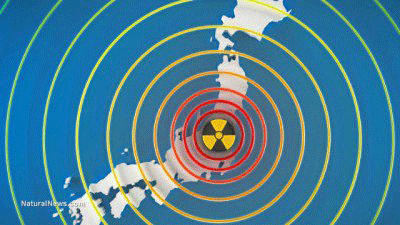
[Lee Kyong-hee] Fallout from Fukushima radioactive wastewater, By Korea Herald, Jun 8, 2023
“………………….. quoting a diplomatic source, the reports say that President Yoon Suk Yeol vowed to make all-out efforts to remove public concerns in Korea about the wastewater discharge when he met Japanese lawmakers in March during his visit to Tokyo for a summit with Prime Minister Fumio Kishida.
Many Koreans were caught off guard, and this administration’s purported stance is further proof that their president is bent on fence-mending with an unrepentant government at whatever cost.
Yoon has neither confirmed nor denied the reports. Transparency is not a priority of his administration, though his search for avenues of rapprochement with Japan is clear.
As Yoon remains tight-lipped, we can only guess his views about the rationality of the discharge and whether he grasps the potential risks. Hence a confrontation with the main opposition Democratic Party of Korea is underway, each side blaming the other for spreading malicious rumors lacking scientific basis.
Amid the accusations, the science community also has misgivings. Seo Kyun-ryeol, a professor emeritus at Seoul National University’s Department of Nuclear Engineering, is an outspoken critic. He is among several scientists who question the contaminated water filtration process and cautions that sea currents will ultimately bring some of discharged wastewater to Korea’s shores.
…………………….public mistrust is understandable, given TEPCO’s history; a Japanese government investigation report in 2012 said TEPCO had failed to meet initial safety requirements.
………………………. Seo says, “There is no guarantee that all of the system’s many filters for different isotopes will work perfectly all of the time, given the condition and quantity of the water, let alone the period of time required.”
The SNU professor highlights the potential hazards associated with cesium, strontium and plutonium, which were released from the reactors due to the disaster. “These substances not only enter the bloodstream but also penetrate the muscles, bones and brain, leading to the development of solid cancers and tumors,” he said.
Seo has raised concerns that marine life and ocean currents can carry harmful radioactive isotopes across the Pacific. He warns of the potential risks to entire marine ecosystems, from the deep-sea organisms up to invertebrates, fish and marine mammals through the food chain, eventually reaching humans.
Naturally, among the most vocal critics of the ocean discharge is the Pacific Islands Forum, an organization representing 18 island nations. They have already suffered from nuclear tests by the United States and European countries. Their concerns are reasonable as most of their populations are coastal residents who depend on the ocean for their livelihoods.
The International Atomic Energy Agency is expected to release its final assessment later this month before Japan embarks on its plan. The root of the problem, as contended by Ken Buesseler, a marine radiochemist and advisor to the Pacific Islands Forum, is that Japan is moving already with a plan which has not proven workable.
Masashi Goto, a retired nuclear engineer who designed reactor containment vessels for Toshiba for many years, bemoans the “safety culture” he encountered in the industry. In a presentation marking the 10th year after the Fukushima accident, he said, “Risks can be expressed in terms of their potential for damage or probability of occurrence. Many unlikely scenarios run the risk of horrendous consequences.”
Goto’s views concerning the decommissioning of a nuclear reactor are worth heeding. “TEPCO claims to have a decommissioning schedule that can be completed within the next 30 to 40 years, but this is completely unrealistic. Given the severity of what happened and the current state of the reactors, in practice we are looking at a process lasting anywhere from 100 to 200 years.”
“What is the number one priority? It’s the same question that was thrust upon the citizens of Japan 10 years ago. Do we prioritize the economy and convenience at any cost, or do we choose to live modestly in safety and free from worry?” he asked.
All said, Japan should suspend the planned release of the wastewater. Heeding the concerns of the international community, it may well consider other possible options, such as long-term storage and processing through half-lives of isotopes or cement-based solidification. https://www.koreaherald.com/view.php?ud=20230607000843
Japan plans to start sending seawater in an underwater tunnel built to release nuclear-contaminated water into the ocean from the Fukushima Daiichi nuclear power plant on June 12, local media reported on Friday citing news from the plant’s operator, Tokyo Electric Power Company (TEPCO).
According to TEPCO, the tunnel has been filled with about 6,000 tonnes of seawater this week for a two-week test before releasing the nuclear-contaminated water from the plant to a point about one kilometer offshore.
Japan is likely to officially begin its plan to dump the nuclear-contaminated wastewater into the ocean as early as the beginning of July. So far, the implementation of Japan’s plan still needs to await the outcome of the International Atomic Energy Agency’s (IAEA) meeting in late June.
However, the content of Cs-137 (a radioactive element that is a common byproduct in nuclear reactors) in the marine fish caught in the harbor of the Fukushima Daiichi Nuclear Power Plant is 180 times that of the standard maximum stipulated in Japan’s food safety law, according to a statement released by the Chinese embassy in Japan on Monday, referring to data from a report released by TEPCO.
It also pointed out that there are more than 60 radionuclides, including tritium, carbon-14, cobalt-60, strontium-90 and iodine-129, in the nuclear-contaminated water. Some long-lived nuclides may spread with ocean currents and result in a bioconcentration effect, which will increase the total amount of radionuclides in the environment and cause unpredictable hazards to the marine ecosystem and human health.
Earlier, TEPCO admitted that tritium, a mildly radioactive form of hydrogen, cannot be removed from the wastewater, but insisted it is not harmful to human health, which has aroused the opposition of many experts.
“When tritium gets inside the body, it’s at least as dangerous as any of the other radionuclides. And in some cases, it’s more than double as dangerous in terms of the effects of the radiation on the genetic material, on the proteins,” Timothy Mousseau, professor of biological sciences at the University of South Carolina, told a press conference in Seoul.
Japan insists that the purified “treated water” is no different from the normal discharged water from a nuclear power plant. ………………………………..
Regardless of raging opposition from home and abroad, Japan has been rushing to dump the wastewater into the ocean, which has incited protests from local civic groups as well as neighboring nations and communities within the Pacific Islands.
A spontaneous protest was held in front of the headquarters of TEPCO in Tokyo on Wednesday evening. Holding banners and flags with slogans that read “Don’t discharge polluted water into the sea” and “Don’t pollute the ocean for all,” the protesters said that the discharge of nuclear-contaminated water in the ocean is a highly irresponsible act.
IDN InDepthNews BERLIN | TOKYO, 11 June 2023 (IDN) By Ramesh Jaura — Peacebuilder and Buddhist leader Daisaku Ikeda, who is president of the Tokyo-based Soka Gakkai International (SGI), issued a statement ahead of the meeting of the Group of 7 (G7) countries in Hiroshima May 19-21, calling on the G7 leaders to take bold steps toward resolving the conflict in Ukraine and guarantee the security of all humanity by taking the lead in discussions on pledges of No First Use of nuclear weapons.
The venue of the summit of seven leaders—from Canada, France, Germany, Italy, Japan, the United Kingdom and the United States, plus the European Union (EU)—was symbolically stark because the US atomic bombings in 1945 killed over 226,000 people in the twin Japanese cities of Hiroshima and Nagasaki, with the heaviest toll in Hiroshima.
But did the seven leaders—from Canada, France, Germany, Italy, Japan, the United Kingdom and the United States, plus the European Union (EU)—manage to take bold steps in respect of the Russia-Ukraine conflict and committing to ‘No First Use’ of nuclear weapons?
IDN interviewed Mr Hirotsugu Terasaki, Director General of Peace and Global Issues, Soka Gakkai International. Following is the complete text of the interview:
Q: What does the SG think of the outcome of the Hiroshima Summit, which ended May 21 with Ukraine in focus and both Russia and China criticizing the G7?
The last operating reactor at Europe’s largest nuclear power plant has been put into a “cold shutdown” as a safety precaution amid catastrophic flooding from the collapse of a nearby dam, Ukraine’s nuclear energy agency said Friday.
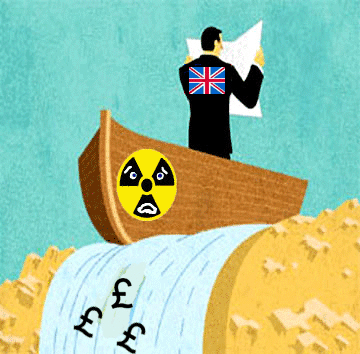
There is an increasing chance that the Hinkley Point C nuclear power project could take longer and cost more to complete than planned, it has emerged. In a presentation to investors to coincide with its first-quarter results, client EDF said: “The risk of additional delays and budget overruns is increasing.”
Its investor presentation said that around 46 per cent of the project’s total concrete had been poured, and 14 per cent of mechanical, electrical, heating, ventilation and air conditioning equipment had been manufactured. But both of these elements were behind schedule, it added.
EDF declined to make any further comment on the prospect of increased costs and further delays. But earlier this year it emerged that the project could cost £32.7bn, up from the original £18bn that was expected in 2015. The latest estimated start date for energy generation was given as June 2027. It had previously been expected to become operational in 2025.
Reporters Without Borders (RSF) is deeply concerned by the UK High Court’s decision rejecting WikiLeaks publisher Julian Assange’s appeal against his extradition order, bringing him dangerously close to being extradited to the United States, where he could face the rest of his life in prison for publishing leaked classified documents in 2010.
In a three-page written decision issued on 6 June, a single judge, Justice Swift, rejected all eight grounds of Assange’s appeal against the extradition order signed by then-UK Home Secretary Priti Patel in June 2022. This leaves only one final step in the UK courts, as the defence has five working days to submit an appeal of only 20 pages to a panel of two judges, who will convene a public hearing. Further appeals will not be possible at the domestic level, but Assange could bring a case to the European Court of Human Rights.
“It is absurd that a single judge can issue a three-page decision that could land Julian Assange in prison for the rest of his life and permanently impact the climate for journalism around the world. The historical weight of what happens next cannot be overstated; it is time to put a stop to this relentless targeting of Assange and act instead to protect journalism and press freedom. Our call on President Biden is now more urgent than ever: drop these charges, close the case against Assange, and allow for his release without further delay.Rebecca Vincent, RSF’s Director of Campaigns
Stella Assange, Julian’s wife, made a statement on Twitter: “On Tuesday next week my husband Julian Assange will make a renewed application for appeal to the High Court. The matter will then proceed to a public hearing before two new judges at the High Court and we remain optimistic that we will prevail and that Julian will not be extradited to the United States where he faces charges that could result in him spending the rest of his life in a maximum security prison for publishing true information that revealed war crimes committed by the U.S. government.”
This is the latest stage in more than three years of legal proceedings in UK courts, as the US government has made its case to extradite Assange in order to try him on 18 counts in connection with WikiLeaks’ publication of hundreds of thousands of leaked classified documents that informed public interest reporting around the world. Although the first instance court ruled against extradition on mental health grounds, the Court of Appeals overturned the decision in consideration of diplomatic assurances presented by the US government. Assange would be the first publisher prosecuted under the Espionage Act, which lacks a public interest defence. He faces a combined total sentence of a possible 175 years in prison.
RSF is the only NGO to have monitored the entire extradition proceedings despite extensive barriers to observation. In April 2023, RSF Secretary-General Christophe Deloire and Director of Campaigns Rebecca Vincent were arbitrarily barred access to visit Assange in Belmarsh prison, where he has been held on remand for more than four years. RSF continues to seek access to the prison and to campaign globally for Assange’s release.
An envoy of Pope Francis visited Kiev in search of ways to end the conflict
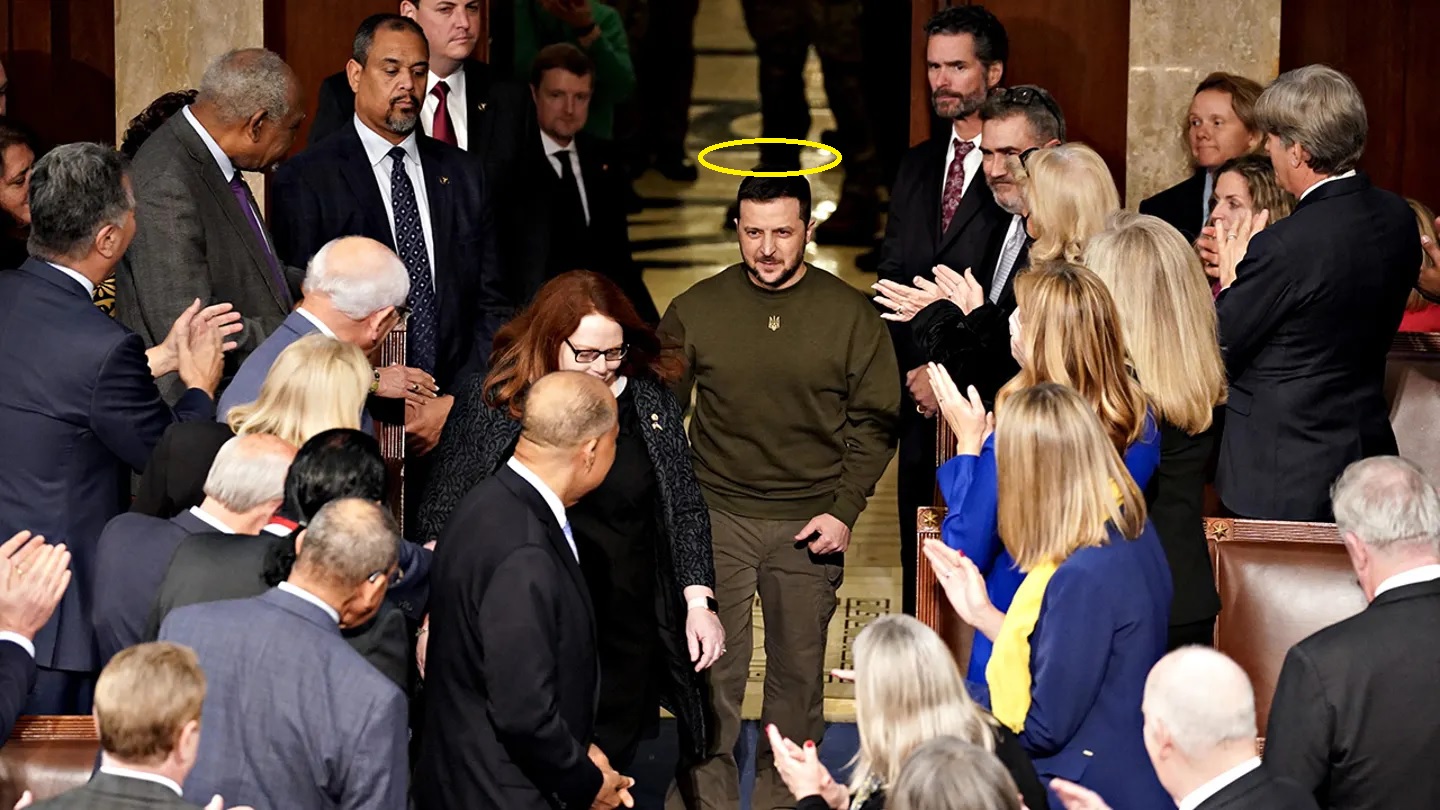
The only end to the conflict that Kiev considers acceptable is the Ukrainian “peace formula,” President Vladimir Zelensky told the Holy See envoy Cardinal Matteo Zuppi in a meeting on Tuesday.
“Ukraine welcomes the willingness of other states and partners to find ways to achieve peace, but since the war is on our territory, the formula for achieving peace can only be Ukrainian,” Zelensky said after meeting the papal emissary in Kiev.
Zelensky added that he discussed the situation in Ukraine and the humanitarian cooperation with the Vatican “within the framework of the Ukrainian peace formula,” and urged the Holy See to join the efforts to pressure Russia.
Zuppi arrived in Ukraine on Monday, in what the Vatican called a “search for paths to a just and lasting peace.” In addition to Zelensky, he met with other Ukrainian officials, including parliamentary commissioner for human rights Dmitry Lubinets.
“The results of these talks, like those with religious representatives as well as the direct experience of the atrocious suffering of the Ukrainian people as a result of the ongoing war, will be brought to the Holy Father’s attention,” the press office of the Holy See said in a statement on Tuesday evening.
This is the second time in two months that Zelensky has declined an offer by Pope Francis to mediate in the conflict with Russia. After his meeting with the pontiff at the Vatican last month, the Ukrainian president told Italian media outlets that Kiev was only interested in its own vision of peace.
“It was an honor for me to meet His Holiness, but he knows my position: the war is in Ukraine and the [peace] plan must be Ukrainian,” Zelensky told talk show host Bruno Vespa.
The “peace formula” in question is a list of Zelensky’s demands first revealed
The “peace formula” in question is a list of Zelensky’s demands first revealed in November 2022, ranging from Russia’s withdrawal from all territories Ukraine claims – including Crimea and the Donbass – payment of reparations, war crimes trials for the Russian leadership, and Ukraine’s membership in NATO.
Moscow has rejected Zelensky’s “peace platform” as delusional. Russia understands that any peace talks will not be held “with Zelensky, who is a puppet in the hands of the West, but directly with his masters,” Russian Foreign Minister Sergey Lavrov told reporters last month.
Julian Assange’s fate lies in the hands of an appeal judge who is a close friend of Sir Alan Duncan – the former foreign minister who called Assange a “miserable little worm” in parliament.
Lord Chief Justice Ian Burnett, the judge that will soon decide Julian Assange’s fate, is a close personal friend of Sir Alan Duncan, who as foreign minister arranged Assange’s eviction from the Ecuadorian embassy.
The two have known each other since their student days at Oxford in the 1970s, when Duncan called Burnett “the Judge”. Burnett and his wife attended Duncan’s birthday dinner at a members-only London club in 2017, when Burnett was a judge at the court of appeal.
Now the most powerful judge in England and Wales, Burnett will soon rule on Assange’s extradition case. The founder of WikiLeaks faces life imprisonment in the US. ……………………………….
Duncan served as foreign minister for Europe and the Americas from 2016-19. He was the key official in the UK government campaign to force Assange from the embassy.
As minister, Duncan did not hide his opposition to Julian Assange, calling him a “miserable little worm” in parliament in March 2018.
In his diaries, Duncan refers to the “supposed human rights of Julian Assange”. He admits to arranging a Daily Mailhit piece on Assange that was published the day after the journalist’s arrest in April 2019.
Duncan watched UK police pulling the WikiLeaks publisher from the Ecuadorian embassy via a live-feed in the Operations Room at the top of the Foreign Office.
He later admitted he was “trying to keep the smirk off [his] face”, and hosted drinks at his parliamentary office for the team involved in the eviction.
Duncan then flew to Ecuador to meet President Lenín Moreno in order to “say thank you” for handing over Assange. Duncan reported he gave Moreno “a beautiful porcelain plate from the Buckingham Palace gift shop.”
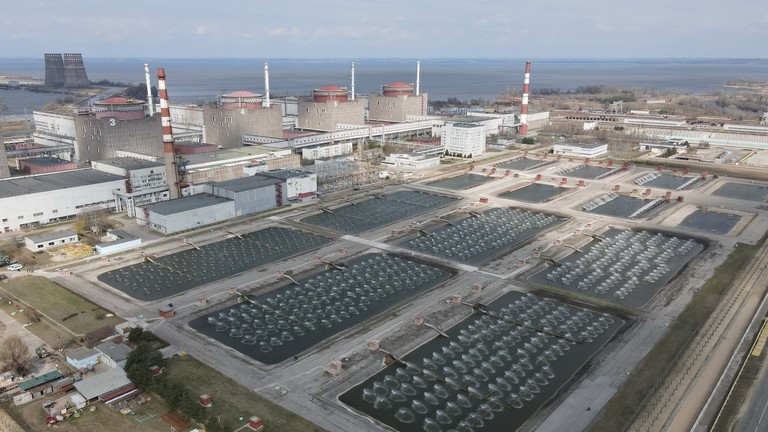
In the early hours of Tuesday, June 6, video footage circulated of a destroyed dam in southern Ukraine with large swaths of water flowing through. The Kakhovka dam—located about 70 kilometers upstream of the city of Kherson—is a critical piece of infrastructure, hosting a hydroelectric power plant and managing a reservoir that supplies water for drinking, irrigation, and cooling of the upstream six-reactor Zaporizhzhia nuclear power plant—Europe’s largest.
It was unclear on Tuesday what or who caused the breach in the dam, which is under Russian control, although it was hard not to blame Russia given the timing of the attack, which happened one day after Ukraine reportedly launched its long-awaited spring counteroffensive. Both countries denied responsibility and have blamed each other throughout the day. Ukraine said Russia was responsible for the explosion of an engine room of the hydroelectric plant, in part to prevent Ukrainian troops from crossing the Dnipro River downstream, while Russia said Ukrainian forces conducted a sabotage attack. Russia’s defense minister Sergei Shoigu made the acrobatic suggestion that because Ukraine wanted to transfer some military units and equipment from Kherson to other parts of the front to help with its counteroffensive, making the river wider downstream would make it easier to defend Kherson with fewer forces.
A third scenario being advanced on Tuesday was that the dam might have suffered from a structural failure after the water level of the Kakhovka reservoir had reached a 30-year high, leading it to be at beyond-design storage capacity since May. No evidence of any of those scenarios had emerged on Tuesday night…………
The destruction of the dam caused immediate life-threatening flooding and evacuation of thousands of people living downstream of the dam along the Ukrainian-controlled right bank of the Dnipro River. Early satellite imagery was showing large areas being flooded a few hours only after the breach. While the water was quickly rising to dangerous levels downstream, the water level in the upstream Kakhovka Reservoir was dropping, which could have severe nuclear safety implications for the nearby plant.
The Kakhovka Reservoir serves as the Zaporizhzhia plant’s ultimate heat sink, an essential safety function of removing the radioactive decay heat generated by the fuel inside the shutdown reactors and spent fuel pools. The plant has a cooling pond that pumps its water from the Kakhovka Reservoir. According to the director general of the International Atomic Energy Agency (IAEA), Rafael Mariano Grossi, the water level of the Kakhovka Reservoir was dropping on Tuesday at a rate of 5 centimeters per hour, adding that “water in the reservoir was at around 16.4 meters at 8 am. If [it] drops below 12.7 meters, then it can no longer be pumped.” This would theoretically leave operators with about three days to pump as much water as possible to fill up the pond. But local Ukrainian military officials estimated that the water level was dropping at the much higher rate of about 15 centimeters per hour; leaving only 24 hours for the operators to do so.
Commenting on Twitter, Edwin Lyman, a nuclear safety expert at the Union of Concerned Scientists, described the situation at the Zaporizhzhia nuclear power plant as a “slow-motion disaster.” “The impact on the plant is something we are going to see unfold over time,” Lyman further explained to the Bulletin. “There is a grace period to address this problem, but it’s not infinite.”………………………………………………
In his statement, Grossi said that there was “no immediate risk to the safety of the plant.” But that is “assuming nothing else happens,” Lyman told the Bulletin. “The plant is stable for now, but it is becoming increasingly more vulnerable.” Grossi conceded that “it is vital that this cooling pond remains intact.”
French nuclear power is “an absolute red line” and non-negotiable, Finance Minister Bruno Le Maire said Thursday (8 June), following Franco-German disagreements over the role of nuclear energy in Europe.
Nuclear-reliant Paris has already irked Berlin by insisting on giving nuclear energy a starring role in European plans to produce more green technology in Europe.
“Nuclear power is an absolute red line for France, and France will not relinquish any of the competitive advantages linked to nuclear energy”, Le Maire insisted as he closed the annual conference of the French Electricity Union.
France’s 56 ageing reactors normally provide some 70% of France’s electricity needs.
“French nuclear power is non-negotiable and will never be negotiable. We will have to live with it, and we are convinced that it is not only in France’s interest, but also in the interest of the European continent”, he added.
Spat over EU’s renewable energy directive
Earlier, at the same meeting, German state secretary for economic affairs and climate action Stefan Wenzel acknowledged that France and Germany “often have different approaches in energy policy, especially concerning nuclear energy”
Germany “respects diverging choices for other fossil fuel energy sources by other member states as France that may similarly contribute to achieve climate neutrality,” he added.
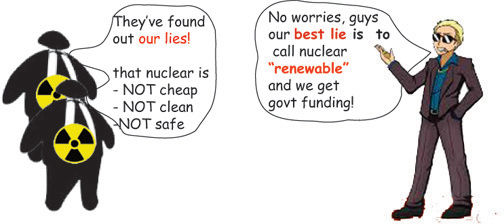
However “what we cannot accept is when nuclear energy is defined as renewable, or low-carbon hydrogen is equated with green hydrogen”.
Contribution from readers Tom and Sue Millon, 10 July 23
For Republicans and corrupt democrats, it’s never been about the debt of the USA or ending devastating military conflict. It has never been about domestic tranquility. As the arch neocon Dick Cheney said, “Reagan taught us that the debt doesn’t matter.” It’s about re-allocating the federal budget to the people who put you in office: arms makers, the military. oil companies, slumlords, tech giants. If you don’t have a lobbyist, a PAC or a dark money conduit, you don’t count for a damn thing in Washington dc. America and the world is paying the price of this. The neocons run Biden now. Their think tanks and focus, are heavily funded by arms makers and the military. The warmonger neocons, run the show of the puppet figurehead Biden. Their goals are out of touch with anything that is rational. They are not preventing the escalation of this potential nuclear confrontation, they are encouraging it.
Eve Ottenberg From the human-caused climate catastrophe to a nuclear showdown between Washington and Moscow or Beijing, to fascism ascendant, three terrifying disasters loom over humanity like the shadow of death. These threats have lurked for some years, but the Ukraine war, facilitated by Joe Biden’s arrival in the white house in 2021 and his pronounced aggressiveness toward Moscow, shifted nuclear Armageddon to center stage and pushed the doomsday clock close to midnight.
Trust between the Kremlin and western governments vanished long ago, so it’s hard to see how this calamity ever gets resolved. Russian officials watched the U.S. fork over more than $30 billion in armament to Ukraine with billions more in the pipeline, arm neo-Nazis, whitewash them and cover Kiev’s government payroll. They’ve seen (and often destroyed) the weapons Washington sent. Those weapons would never include long-range missiles that could strike inside Russia, Biden promised. Well, that oath wasn’t worth the toilet paper it was written on. The U.S. would never provide Ukraine with tanks, Biden swore up and down – until he changed his mind. American fighter jets, he gave his word, would not fly in Ukraine. Well, now we see what his word is worth. What next? NATO troops in Ukraine? Because then the bombing of U.S., European and Russian cities will commence. It’s called World War III. Biden knows this. So do the Russians. And despite their loud protests in the face of this nonstop U.S. escalation, they have become ominously quiet about their red lines.
Once upon a time in Bucharest back in 2008, Moscow basically told the west that if its neighbor Kiev joined NATO, that would be the end of Ukraine. Feckless Eurocrats and birdbrain American presidents did not listen. Years passed. Washington sponsored a coup against the duly, legally elected leader of Ukraine in 2014, then installed a west friendly, Russophobic regime, or perhaps more accurately a puppet, whose idiotic economic policies led to a population outflow of millions of Ukrainians, as Washington proceeded massively to arm and train far-right fanatics.
Through all of this, until December 2021, Moscow only protested about its red lines in general terms. It also periodically indicated it might snap. Then, in late 2021, the Kremlin sent detailed letters to Washington, listing Russian security concerns, chiefly that Ukraine should not join NATO. Moscow also was alarmed at the fate of Donbas Russians, 12,000 of whom Ukraine had slaughtered since 2014 and on whose borders Kiev had massed troops and, in early 2022, dramatically stepped up assaults, as noted by the Organization for Security and Cooperation in Europe. Such a deadly uptick signaled assault and possibly ethnic-cleansing for Russian-speaking Ukrainians. But the U.S. blithely responded with hokum about NATO being a defensive organization. Hokum any half-wit can see right through by looking at U.S. missiles in Poland and Romania, two countries that border Russia.
Washington also insisted on every country’s sacred right to join NATO, though decades ago when Moscow mentioned joining, it got the cold shoulder; apparently Russia did not have that right. So the Kremlin could be excused for regarding NATO as a hostile military axis. Indeed, as our leading public intellectual Noam Chomsky said, “Putin’s invasion of Ukraine was clearly provoked, while the U.S. invasion of Iraq was clearly unprovoked.” (He also said whataboutism is “otherwise known as elementary honesty.”) Both invaders wrecked the target country, Russia more slowly, but make no mistake, that will be the outcome if this war doesn’t end soon.
The moral of the story is that if you can avoid war, that is a very good idea. If someone says “I will attack, if you don’t stop threatening me,” well, listen. The peacemakers are blessed, but sadly they were absent from the world’s imperial capital, Washington, in December of 2021. Currently they are absent everywhere they are needed, period.
So now, thanks to Biden, we stare down the barrel of nuclear war. The alternative in 2024 will likely be Trump, who promises accessories like martial law, a presidency for life, show trials of his political enemies and possibly nuclear war with China, in short, fascism. For this lousy choice we can blame our corrupt plutocracy and its media parasites. Put another way, those who rise to the top in Washington are not the cream of the crop, but the cream that curdled, years ago. Obama, Bush, Clinton – slick hustlers all, who slaughtered innocents across the globe, and all very short-sighted about anything other than looking out for the main chance, even if it meant bombing helpless residents of impoverished nations.
Meanwhile in the U.S. imperial capital, blood-soaked neocons run the show. This led to events May 26, when Russia’s foreign ministry summoned U.S. diplomats “over what it called ‘provocative statements’ by National Security Advisor Jake Sullivan,” according to RT. “The American official was de facto supporting Ukrainian strikes against Russian territory.” Given that Sullivan’s up to his elbows in blood for his responsibility in this Ukrainian debacle, the blood of hundreds of thousands of Ukrainian soldiers and tens of thousands of Russian ones, I’m not surprised he was, de facto or otherwise, basically advocating World War III. Moscow called his endorsement of Ukrainian attacks on Russia “hypocritical and untruthful.” That’s called understatement.
Sullivan, secretary of state Antony Blinken and his undersecretary Victoria Nuland are in charge in Washington, instead of the unfocussed, forgetful figurehead, Joe Biden, and they want war, for decades, if they so choose.
Inauspiciously, sane, non-neocons now resign from the Biden regime en masse, a development covered in depth by Moon of Alabama May 25. Rick Waters, head of the state department’s “China House” leaves his post. After the ridiculous spy balloon hysteria, with its wild delusions of assault and evil designs by a mortal enemy, Waters was one of the more rational actors, trying to limit the damage, reportedly emailing state department staff to postpone some sanctions and export controls on China, you know, moves that could have been viewed as, um, hostile.
Also dispiriting to those hoping to restrain imperial war schemes, deputy secretary of state Wendy Sherman announced her retirement. Sherman backed the original Iran nuclear pact and pushed hard to get an inept Biden administration to return to it, something, contrary to campaign promises, Biden couldn’t manage to do. As a result, the Middle East teeters constantly on the edge of regional war, which the pact would have helped prevent. Colin Kahl, a defense undersecretary departs this summer. He opposed escalating the U.S. proxy war in Ukraine. Nor was he popular with lunatic Sinophobes. To make the loss of these realists even worse, Biden tapped a ferocious China hawk to head the joint chiefs of staff, thus replacing the less rabid though rather ineffectual Mark Milley. All these moves spell trouble. They mean maniacal warmongers run the empire.
So the situation has deteriorated dangerously, and this is what Chomsky predicted if Washington didn’t face the “ugly” post-invasion choice of rewarding Moscow by enforcing Kiev’s neutrality and the Minsk Accords for the Donbas. No one has documented the U.S. empire’s depravity as long and relentlessly as Chomsky. His new book, Illegitimate Authority, continues this effort, singling out the triad of cataclysms – climate collapse, nuclear war and fascism – thundering in humanity’s front yard like the crack of doom. These interviews, collected from Truthout, at first zero in on how rich countries burning oil, gas and coal have crushed anything resembling a normal climate, with a few that focus on rising fascism.
For Republicans and corrupt democrats, it’s never been about the debt. As the arch neocon Dick Cheney said, “Reagan taught us that the debt doesn’t matter.” It’s about re-allocating the federal budget to the people who put you in office: arms makers, the military. oil companies, slumlords, tech giants, If you don’t have a lobbyist, a PAC or a dark money conduit, you don’t count for a damn thing in washington dc. Same goes for the , neocons whose think tanks are and focus, are heavily funded by arms makers and the military. The warmonger neocons, that run the show of the demented old, puppet figurehead biden. Their goals are out of touch with anything that is rational. They are not preventing the escalation of this potential nuclear confrontation, they are encouraging it.
But when the book reaches early 2022, it shifts its emphasis to Ukraine. Chomsky is well aware of Washington’s provocations, while regarding Moscow’s response to them as criminal. He quotes Eastern Europe specialist Richard Sakwa: “NATO’s existence became justified by the need to manage threats provoked by its enlargement.” Well, now NATO has provoked a threat that, according to one whose hands are red with blood from this war, Nuland, could last “16 years.”
Chomsky also addresses the imbecilic fantasy of regime change, noting that historically this has led to worse, more extreme leaders, for which he cites a convincing discussion by Andrew Cockburn. Chomsky called NATO dreams of overthrowing Vladimir Putin “foolish,” because someone far more menacing would very likely take over. Among Kremlin leaders, Putin is, in fact, a moderate, with far less of an appetite for war than the others who advocated invading Ukraine for years, while he demurred.
In March 2022, when neutral countries sponsored talks between Moscow and Kiev, Chomsky warned, “negotiations will get nowhere if the U.S. persists in its adamant refusal to join…and if the press continues to insist that the public remain in the dark by refusing even to report Zelensky’s proposals.” Well, nowhere is exactly where they went, thanks to the then U.K. prime minister, the buffoonish Boris Johnson, who jetted into Kiev, allegedly at Biden’s behest, and clarified to Zelensky that while the Ukrainian president might be ready for peace, the west was not. That scuttled the talks.
That’s where we are now. Washington just extracted itself from losing a 20-year military quagmire in Afghanistan. Now it’s up to its neck in a proxy war its boosters say could last decades. Unfortunately for the imperial team, its opponent in this latest bloodletting is armed to the teeth with nuclear weapons. This is not some helpless undeveloped country that Washington can bully and then prevaricate about pusillanimous American behavior not amounting to a military defeat. Russia is a great power and a nuclear one.
“………………………………………..Eisenhower agreed to authorize a nuclear-powered merchant ship that would carry both cargo and passengers. As well as goodwill, naturally.
The nuclear ship Savannah, capable of hauling 14,000 tons of cargo, entered service in 1962. Its reactor was encased behind 4 feet of concrete, as well as thick layers of steel and lead. In the glitzy passenger lounge stood an 8-foot-long table topped with white marble—and an early CCTV system so passengers could keep an eye on the reactor while sipping martinis.
…………….. heed this cautionary tale of nuclear hubris. The NS Savannah was a failure. During its first year at sea, the ship dumped 115,000 gallons of radioactive waste into the ocean. It had inadequate cranes and poorly designed cargo hatches. Egregiously expensive to run, the vessel carried passengers for a mere three years, and cargo alone for another five, before retiring.
Other countries also tried—and struggled—to make nuclear merchant ships work during the 20th century. West Germany’s demonstration nuclear cargo ship, the Otto Hahn, was refused entry to some ports and the Suez Canal on safety grounds. The Mutsu, a Japanese vessel, suffered a minor failure in its reactor’s radiation shielding in 1974, causing outcry. Indignant fishers blocked the ship’s return to port for several weeks.
As of 2023, there is only one active nuclear-powered merchant ship in the world, the Russian-built container-carrying NSSevmorput. It is tiny compared to most fossil-fuel-powered container ships and has been plagued by breakdowns.
…………………………In February, a gaggle of organizations based in South Korea, including those behind multiple shipping lines, signed a memorandum of understanding. The group aims to develop nuclear-powered merchant ships equipped with small modular reactors. But they won’t say much else about the project.
“We believe it is too early to mention details on the tangible results of this partnership,” Hojoon Lee, a spokesperson for HMM, one of the shipping lines involved, tells WIRED. “We still have a long way to go to achieve the commercial viability of nuclear energy sources.”
There is another project afoot, in Norway, called NuProShip (Nuclear Propulsion of Merchant Ships). The team behind it has come up with a short list of six possible reactor designs that could work in a demonstrator vessel, says project manager Jan Emblemsvåg of the Norwegian University of Science and Technology. “The progress is quite OK,” he adds, via email. He and colleagues plan to convert a liquefied natural gas tanker called the Cadiz Knutsen to run on nuclear power.
Both the South Korean and Norwegian efforts are considering molten salt reactors. Instead of solid fuel rods, the nuclear fuel in these devices is dissolved into, for example, molten fluoride salts. Such reactors first operated in the 1960s and are nothing new, but technical issues, including corrosion occurring inside the reactors, have hampered their widespread rollout. Despite concerns from some over the viability of this technology, multiple countries are pursuing it.
………………………………………. while there are lots of nuclear reactors operating at sea right now, they tend to be on vessels with some of the highest security in the world. Commercial ships are occasionally subject to piracy and accidents, including large fires and explosions—the thought of adding nuclear fuel to such scenarios is unlikely to be met with enthusiasm.
The task of switching to a world in which nuclear-powered vessels are commonly welcomed at commercial ports is “not trivial,” says Stephen Turnock, professor of maritime fluid dynamics at the University of Southampton. “You have to have protocols in place to say what would happen in the event of an emergency associated with a nuclear-powered vessel,” he explains.
Simon Bullock, a shipping researcher at the University of Manchester, says that there is not enough of a regulatory framework to define how nuclear ships would operate globally in the commercial sector, including detail on who would bear responsibility for any mishaps. Would it be the ship owner, the ship operator, the manufacturer of the nuclear reactor, or the country where the ship is registered, known as the flag state? There are six “decade-long problems” of this kind regarding nuclear vessels that the International Maritime Organization (IMO) and other agencies would have to sort out if nuclear-powered commercial ships were ever to become widespread, he says……………………….
The crews on nuclear ships would also require special training and expertise, which raises the cost of running such vessels. Is it worth dealing with all these challenges, given the need to decarbonize right now? Probably not, says Bullock. “The critical thing here is the next 10 years,” he says, referring to the urgency of tackling emissions and climate change right now. “Nuclear can do nothing about that.”
Even the Norwegian NuProShip project won’t convert its first demonstrator ship until at least 2035. Meanwhile, there are other low- or zero-emissions fuels already being deployed in vessels—from methanol to ammonia, electric batteries, and hydrogen. None of these is perfect, and all will jostle for supremacy in the coming years. Nuclear, with its many complications, is “possibly a dangerous distraction” from the main horse race, says Bullock……………….. https://www.wired.com/story/nuclear-cargo-ships/






 nuclear-news