Four nuclear myths
By Ramesh ThakurJun 8, 2023 https://johnmenadue.com/four-nuclear-myths/
The hubris and arrogance of the nuclear-armed states leaves the world exposed to the risk of sleepwalking into a nuclear disaster. The case for nuclear weapons rests on a superstitious magical Realism that puts faith in the utility of the bomb and the theory of deterrence. Here are four myths about the utility of nuclear weapons.
Myth one: The bomb ended the second world war
The belief in the utility of nuclear weapons is widely internalised owing in no small measure to Japan’s surrender immediately after the atomic bombings of Hiroshima and Nagasaki in 1945. Yet the evidence is surprisingly clear that the close chronology is a coincidence. Hiroshima was bombed on 6 and Nagasaki on 9 August. Moscow broke its neutrality pact to attack Japan on the 9th and Tokyo announced the surrender on 15 August. As Tsuyoshi Hasegawa, professor of modern Russian and Soviet history at the University of California Santa Barbara, professor of modern Russian and Soviet history at the University of California Santa Barbara, persuasively argued in The Asia–Pacific Journal in 2007, in Japan’s decision-makers’ minds, the decisive factor in the unconditional surrender was the imminent Soviet entry into the Pacific war against the essentially undefended northern approaches. They feared the likelihood of the Soviet
Union as the occupying power unless Japan surrendered to the US first.
Myth two: The bomb kept the peace during the Cold War
The big territorial expansion of the former Soviet Union across central and eastern Europe came in the 1945–49 years. The US held an atomic monopoly in this period. During the Cold War, no evidence exists to show that either side had the intention to attack the other at any time, but was deterred from doing so because of nuclear weapons held by the other side. Other possible explanations for that long peace include West European integration and West European democratisation.
After the Cold War, the existence of nuclear weapons on both sides was not enough to stop the US from expanding NATO’s borders to Russia’s borders, stop Russia invading Ukraine last year, or prevent NATO from rearming Ukraine. The more or less constant US–Russia nuclear equation is irrelevant to explaining the shifting geopolitical developments. We have to look elsewhere to understand the ongoing rebalancing of US–Russia relations.
Myth three: Nuclear deterrence is 100 per cent effective
Some profess interest in nuclear weapons in order to avoid nuclear blackmail. Yet there is not one clear-cut instance of a non-nuclear state having been bullied into changing its behaviour by the overt or implicit threat of being bombed by nuclear weapons, including Ukraine. Nuclear powers have accepted defeat at the hands of non-nuclear states rather than escalate armed conflict to the nuclear level (Vietnam, Afghanistan) and nuclear-armed Britain’s Falkland Islands were even invaded by non-nuclear Argentina in 1982.
Nuclear weapons cannot be used for defence against nuclear-armed rivals either. Their mutual vulnerability to second-strike retaliatory capability is so robust for the foreseeable future that any escalation through the nuclear threshold really would amount to mutual national suicide. Their only purpose and role, therefore, is mutual deterrence.
Nuclear weapons did not stop Pakistan from occupying Kargil in Kashmir in 1999, nor India from waging a limited war to retake it. Nor do nuclear weapons buy immunity for North Korea. The biggest elements of caution in attacking it are its formidable conventional capability to hit the heavily populated parts of South Korea, including Seoul, and anxiety about how China would respond.
Nuclear weapons did not stop Pakistan from occupying Kargil in Kashmir in 1999, nor India from waging a limited war to retake it. Nor do nuclear weapons buy immunity for North Korea. The biggest elements of caution in attacking it are its formidable conventional capability to hit the heavily populated parts of South Korea, including Seoul, and anxiety about how China would respond.
Myth four: Nuclear deterrence is 100 per cent safe
The world has so far averted a nuclear catastrophe as much owing to good luck as to wise management, with the 1962 Cuban missile crisis being the most graphic example. The number of times that we have come frighteningly close to nuclear holocaust owing to misperceptions, miscalculations, near misses, and accidents is simply staggering. For nuclear peace to hold, deterrence and fail-safe mechanisms must work every single time. For nuclear Armageddon, deterrence or fail-safe mechanisms need to break down only once. This is not a comforting equation. Deterrence stability depends on rational decision-makers being always in office on all sides: a dubious and not very reassuring precondition. It depends equally critically on there being no rogue launch,
human error or system malfunction: an impossibly high bar.
A prospective Russia–NATO/US war is only one of five potential nuclear flashpoints, albeit the one with the gravest consequences. The remaining four are all in the Indo–Pacific: China-US, China-India, Korean Peninsula, and India-Pakistan. A simple transposition of the dyadic North Atlantic frameworks and lessons to comprehend the multiplex Indo-Pacific nuclear relations is both analytically flawed and entails policy
dangers for managing nuclear stability.
The geostrategic environment of the subcontinent, for example, had no parallel in the Cold War, with triangular shared borders among three nuclear-armed states, major territorial disputes, a history of many wars since 1947, compressed timeframes for using or losing nuclear weapons, political volatility and instability, and state-sponsored cross-border insurgency and terrorism.
Conclusion
The case for nuclear weapons rests on a superstitious magical Realism that puts faith in the utility of the bomb and the theory of deterrence. The extreme destructiveness of nuclear weapons makes them qualitatively different in political and moral terms from other weapons, to the point of rendering them virtually unusable. Like the emperor who had no clothes, this might well be the truest explanation of why they have not been used since 1945.
The hubris and arrogance of the nuclear-armed states leaves the world exposed to the risk of sleepwalking into a nuclear disaster. Remember, people are not aware of their actions while they are sleepwalking.
The case for nuclear weapons rests on a superstitious magical Realism that puts faith in the utility of the bomb and the theory of deterrence. The extreme destructiveness of nuclear weapons makes them qualitatively different in political and moral terms from other weapons, to the point of rendering them virtually unusable. Like the emperor who had no clothes, this might well be the truest explanation of why they have not been used since 1945.
The hubris and arrogance of the nuclear-armed states leaves the world exposed to the risk of sleepwalking into a nuclear disaster. Remember, people are not aware of their actions while they are sleepwalking.
1 Comment »
Leave a comment
1 This Month
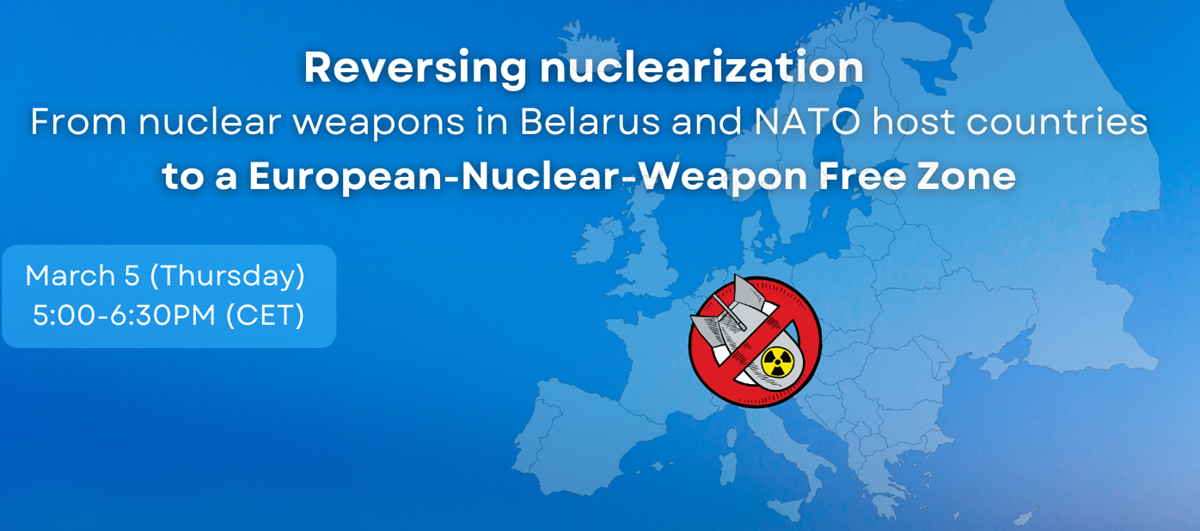
5 March -Online – Reversing nuclearization:
From nuclear weapons in Belarus and NATO host countries to a European-Nuclear-Weapon Free Zone
11am-12:30pm Eastern Time USA / 5pm-6:30pm CET

of the week – Advocating for a
nuclear free beach – https://www.samuellawrencefoundation.org/
The Samuel Lawrence Foundation advocates for a Nuclear Waste Free Beach at San Onofre, join us and take action!
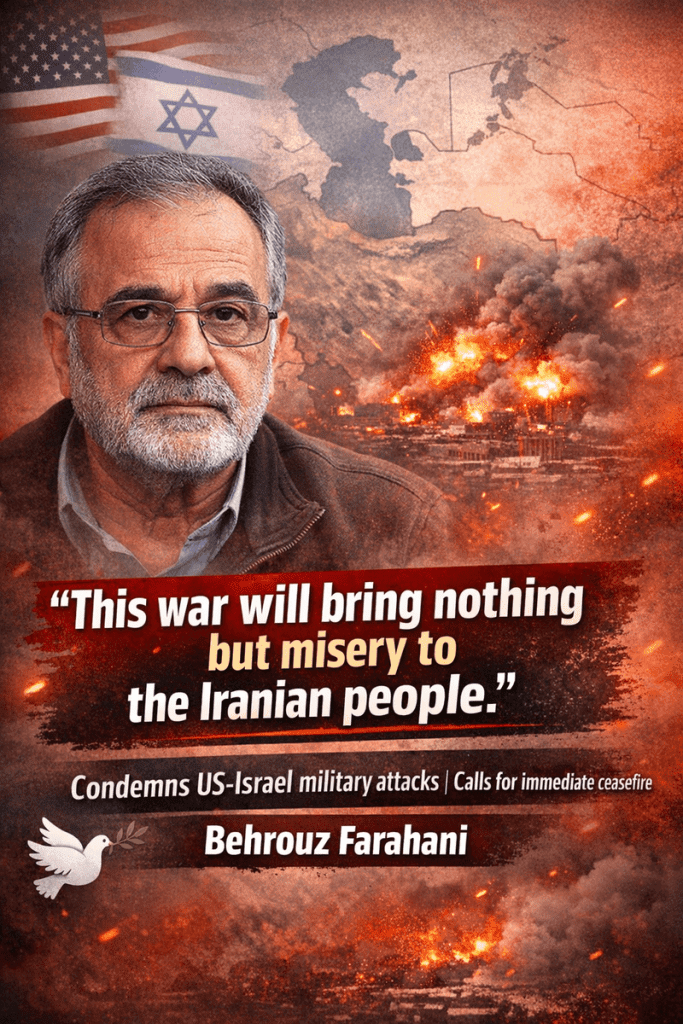
10 March A LIVE WEBINAR THE REAL EFFECTS OF NUCLEAR POWER
What the Industry Isn’t Telling Us
1:00 PM Mountain, 2 pm Central, 3 pm Eastern. Live on the Keepers of the Water Facebook page

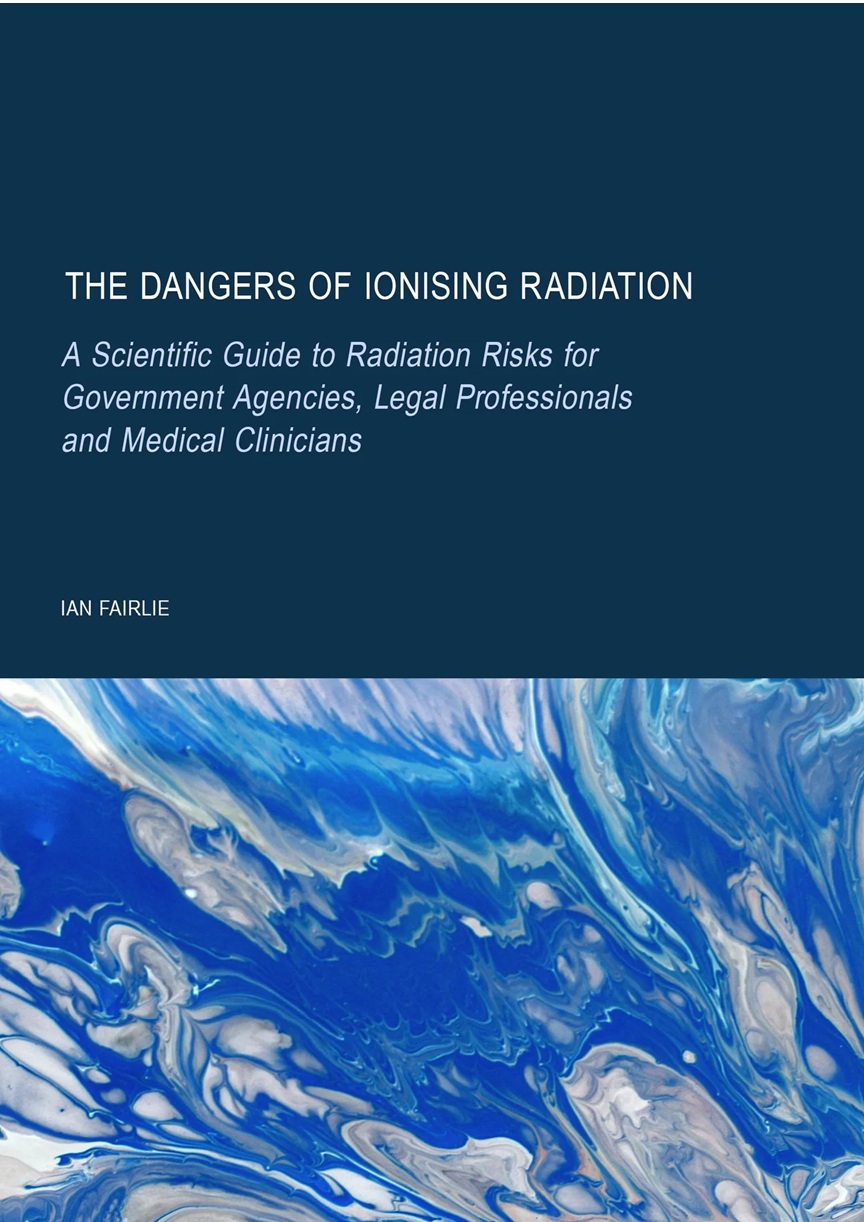
18 March Webinar @ 1 PM EST: An Assessment of SMR Projects: The Case of Canada
register for the zoom:
https://us02web.zoom.us/webinar/register/WN_o8BIIOUvQ2ONJR1nta65DQ#/registration

of the week – STOP SMALL MODULAR REACTORS IN CANADA
To see nuclear-related stories in greater depth and intensity – go to https://nuclearinformation.wordpress.com
-
Archives
- March 2026 (51)
- February 2026 (268)
- January 2026 (308)
- December 2025 (358)
- November 2025 (359)
- October 2025 (376)
- September 2025 (258)
- August 2025 (319)
- July 2025 (230)
- June 2025 (348)
- May 2025 (261)
- April 2025 (305)
-
Categories
- 1
- 1 NUCLEAR ISSUES
- business and costs
- climate change
- culture and arts
- ENERGY
- environment
- health
- history
- indigenous issues
- Legal
- marketing of nuclear
- media
- opposition to nuclear
- PERSONAL STORIES
- politics
- politics international
- Religion and ethics
- safety
- secrets,lies and civil liberties
- spinbuster
- technology
- Uranium
- wastes
- weapons and war
- Women
- 2 WORLD
- ACTION
- AFRICA
- Atrocities
- AUSTRALIA
- Christina's notes
- Christina's themes
- culture and arts
- Events
- Fuk 2022
- Fuk 2023
- Fukushima 2017
- Fukushima 2018
- fukushima 2019
- Fukushima 2020
- Fukushima 2021
- general
- global warming
- Humour (God we need it)
- Nuclear
- RARE EARTHS
- Reference
- resources – print
- Resources -audiovicual
- Weekly Newsletter
- World
- World Nuclear
- YouTube
-
RSS
Entries RSS
Comments RSS
 nuclear-news
Good article. Thanks