Rosatom says nuclear cleanup in Arctic done – Far from the case, says Bellona.
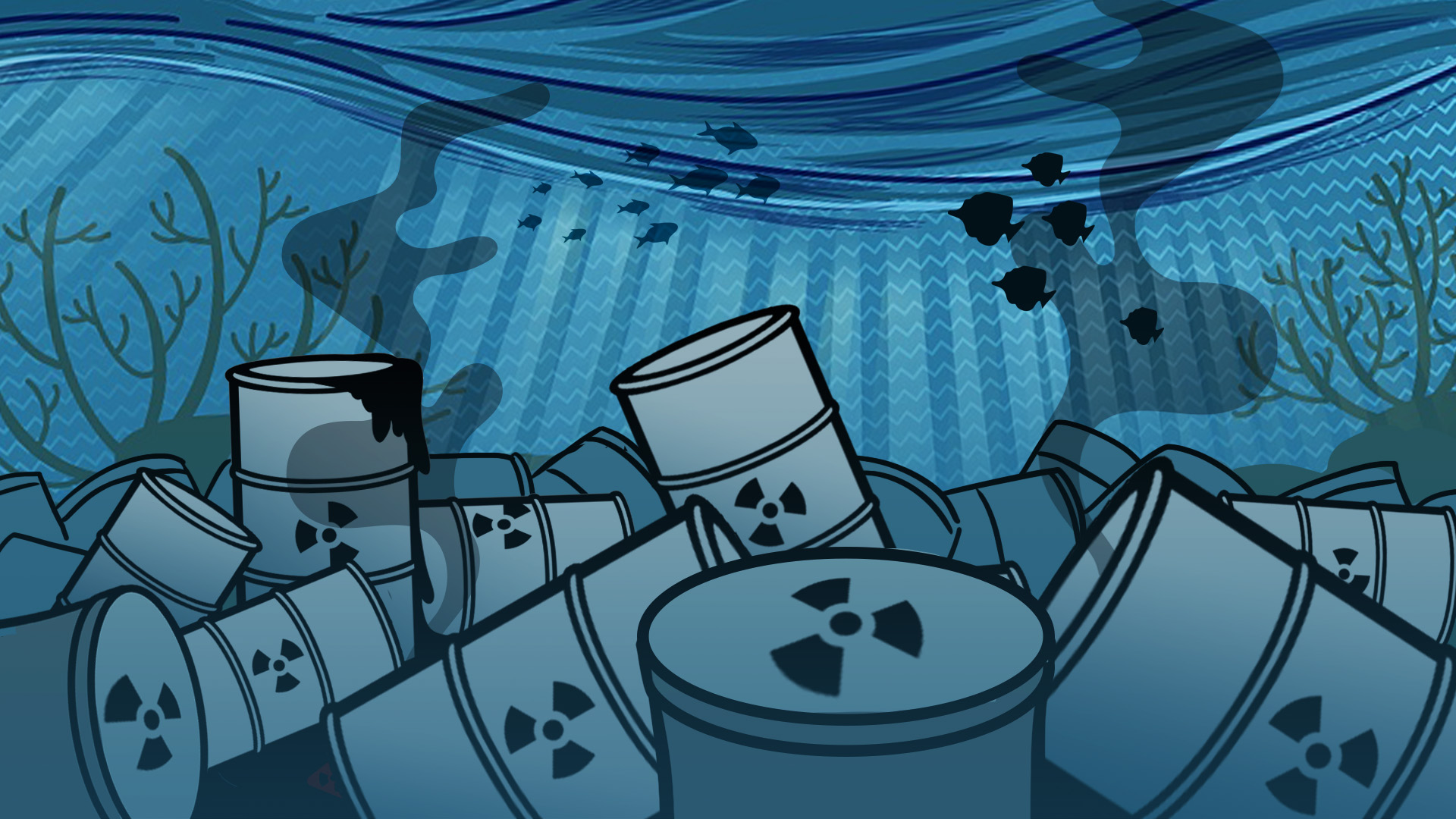
The nuclear cleanup in the Arctic is not done, there is still radioactive waste and spent nuclear fuel that needs securing.
Those items remaining to be cleaned up and secured include at least 11,000 spent nuclear fuel assemblies at Andreyeva Bay, a former Soviet submarine base. They also include two sunken nuclear submarines, over a dozen nuclear reactors and barrels of radioactive waste scuttled by the Soviet Navy in the Kara and Barents Seas. Issues of securing spent fuel and radioactive waste stored on nuclear icebreaker service ships likewise remain unresolved.
Russia’s state nuclear corporation Rosatom said last week that more than two decades worth of efforts to rid the Arctic of radioactive waste and spent nuclear fuel from decommissioned submarines will now come to an end. Bellona fears Rosatom is leaving undone a raft of crucial projects initiated with international support.
June 7, 2023 by Bellona
Russia’s state nuclear corporation Rosatom said last week that more than two decades worth of efforts to rid the Arctic of radioactive waste and spent nuclear fuel from decommissioned submarines will now come to an end. Bellona fears Rosatom is leaving undone a raft of crucial projects initiated with international support.
” [This work]began back in the early 2000s with the analysis of large deposits of spent nuclear fuel from nuclear submarine reactors,” said Rosatom CEO Aleksei Likhachev in remarks reported by official Russian newswire Tass “In total, thousands of tons of radioactive materials have been handled, and today we are at the finish line of this work, returning these territories to public use under strict administrative, public, and international control.”
Since the 1990s, the Bellona Foundation has been involved in discovering and documenting nuclear hazards and radiation threats in Arctic Russia and based on that experience, the organization asserts that Likhachev’s announcement is untrue — Russia is nowhere near the “finish line” in these efforts
Furthermore, Likhachev’s remarks contradict earlier statements from Rosatom that many of these cleanup operations would be ongoing until late in this decade.
“Russian authorities are backtracking on earlier statements from May last year, and confirming Bellona’s fears that these projects will not be continued or completed, says Frederic Hauge, president of the Bellona Foundation.
“The nuclear cleanup in the Arctic is not done, there is still radioactive waste and spent nuclear fuel that needs securing – both in the former marine base at Andreeva Bay and at the bottom of the Arctic seas”, says underlines Hauge.
Since the early 2000s, cleanup projects to rid the Arctic of the nuclear legacy of the Soviet Northern fleet have been ongoing in North-West Russia. These efforts were orchestrated through international cooperation between Russia and other countries and aided by large funding pledges from international donors.
These multinational efforts continued until February of 2022, when Moscow invaded Ukraine. Since then, international assistance to Moscow has been put on ice. But even then, key figures at Rosatom pledged that cleanup work would continue, nonetheless.
But Likhachev’s statement seems to put an end to that and declares victory well before the battle is finished
Those items remaining to be cleaned up and secured include at least 11,000 spent nuclear fuel assemblies at Andreyeva Bay, a former Soviet submarine base. They also include two sunken nuclear submarines, over a dozen nuclear reactors and barrels of radioactive waste scuttled by the Soviet Navy in the Kara and Barents Seas. Issues of securing spent fuel and radioactive waste stored on nuclear icebreaker service ships likewise remain unresolved.
In 2022, after Moscow launched its invasion of Ukraine, Russian authorities sought to assure their international counterparts that each of these projects would nonetheless continue, despite the withdrawal of international assistance.
Bellona had since that time been concerned that Russia, in its state of war, would fail to prioritize these critical projects, and in November the organization warned that the efforts to lift sunken Soviet submarines would at best be indefinitely postponed …………………………………
The issue of the sunken objects left by the Soviet Union will not be solved by itself. Ninety percent of that radiation from the sunken objects in the Kara and Barents seas is emitted by six objects that Rosatom has deemed urgent and targeted for lifting: two nuclear submarines; the reactor compartments from three nuclear submarines; and the reactor from the legendary icebreaker Lenin. …………….
“Why do they choose to say that the cleanup is done now – when that clearly is not the case? Rosatom has time and again underlined the importance of finishing the cleanup projects and lifting the sunken objects from the bottom of the sea, says Hauge.
“If we were to speculate, it might be that they are trying to force a renewed dialogue on financing of these projects, despite the aftermath of Russia’s invasion of Ukraine. Perhaps they are fishing for reactions from Norwegian authorities and other western governments – perhaps particularly when it comes to the sunken objects,” continues Hauge
“They know that the more delayed a decision to raise these subs is, the higher the risk of a lifting operation failing. Thus, such a statement can put pressure on former cooperation partners to reevaluate their decision to discontinue cooperation with Russia and financial support on these topics because of the invasion of Ukraine. If that is the correct interpretation, then it is a form of blackmail – nuclear blackmail,” Hauge concludes. https://bellona.org/news/nuclear-issues/2023-06-rosatom-says-nuclear-cleanup-in-arctic-done-far-from-the-case-says-bellona
Is nuclear fusion energy salvation?
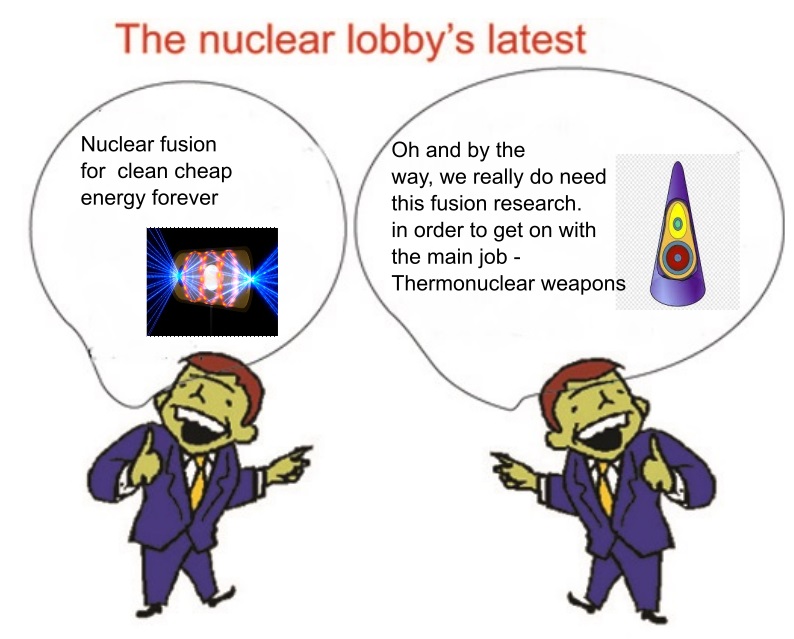
the real reason for the race to fusion is actually to allow the stockpiling of nuclear weapons that are even more dreadful than present ones. Currently, a major difficulty in manufacturing nuclear bombs is “the need for highly enriched uranium or plutonium” to initiate the reaction. Research with nuclear fusion could provide an alternative path to accomplish the ignition.

Few know that “100 significant accidents happened in world’s nuclear power plants from mid-1950s to 2010.” The world’s press has given scant attention to how people were used as guinea pigs in testing sites such as the Marshall Islands.
mronline, By Don Fitz, Stan Cox ( Jun 07, 2023) Originally published: Dissident Voice on June 3, 2023
Like a third rate zombie movie on Netflix, delusions of nuclear fusion repeatedly rise from the dead. The cover story in the June 2023 issue of Scientific American by Philip Ball, “Star Power: Does Fusion Have a Future After All?” recycles the corporate line which was broadcast on December 13, 2022. The U.S. Department of Energy (DOE) announced that the National Ignition Facility (NIF) at the Lawrence Livermore National Laboratory had reached a “breakthrough” in developing an alternative to fission.
As Joshua Frank described the hype over nuclear fusion …
“there’s no toxic mining involved, nor do thousands of gallons of cold water have to be pumped in to cool overheated reactors, nor will there be radioactive waste byproducts lasting hundreds of thousands of years. And not a risk of a nuclear meltdown in sight! Fusion, so the cheery news went, is safe, effective, and efficient!“
After six months of the announcement’s being debunked, the Scientific American article admitted some of the inherent faults with fusion, repeated some of the original misstatements, and went on with detailed descriptions of technical tweaks necessary to make the technology viable in the second half of the century. Unfortunately, most of those who criticized fusion missed one of its most serious dangers—that discovering a source of limitless cheap energy would doom humanity’s future rather than enhance it.
The Terror
In order to interpret the spin of the military-industrial-pseudo-scientific (MIPS) complex, we need to appreciate the primary obstacle to expanding nuclear power. MIPS must overcome the intense terror of nukes.
The terror began with images of Hiroshima and Nagasaki in August 1945. Photos of burnt bodies are burned into the minds of their viewers. MIPS seeks to discount the images with the myth that Japan had to be nuked, even though it was ready to surrender. The mythology continued with the “Atoms for Peace” false pretense that there could be a disconnect between nuclear power and nuclear bombs.
A few decades went by and on March 28, 1979 Three-Mile Island melted down. A good part of its infamy stemmed from repeated government lies that the event was not so serious and would have few long-lasting effects. Americans would never be convinced that nukes would only be dangerous if the Soviets or Japanese built them.
Then there was Chernobyl on April 26, 1986. In 2009 the New York Academy of Science published a detailed analysis estimating the total death count to be around 900,000 and the MIPS spewed forth venomous claims that it was not actually so bad, but was merely the worst human-caused catastrophe in history.
This was followed on March 11, 2011 with the Fukushima Daiichi apocalypse when 3 of 6 nuclear reactors melted down, spreading radioactivity into the neighboring Pacific Ocean and poisoning unknown quantities of aquatic life. So, each generation from World War II through today, has memories of horrendous nuclear events which MIPS has been totally unsuccessful at erasing.
But credit should be given where it is due, and there is an area where MIPS has done quite well in its plugola efforts. Those efforts have been to keep everyday leakage of nuclear material and “smaller” catastrophes either out of or reduced to short paragraphs in the corporate press. Few know that “100 significant accidents happened in world’s nuclear power plants from mid-1950s to 2010.” The world’s press has given scant attention to how people were used as guinea pigs in testing sites such as the Marshall Islands. Souma Dutta notes such events:
… in the Soviet nuclear test sites of Semipalatinsk in Kazakhstan, Novaya Zemlya and others, the French nuclear test sites of Reggane & Akker in Algeria and the Mururoa Atoll in the Pacific, the British test sites in the Australian territories of Monte Bello, Maralinga, Emu Field, and the Chinese test site of Lop Nur.
Denial Non-Stop
The Scientific American article lets us know which dangers of nuclear fusion that MIPS continues to deny six months after the NIF “breakthrough.” Despite a good amount of evidence to contrary, the article claims that nuclear fusion would (a) produce “near zero carbon emissions” but (b) “without creating the dangerous radioactive waste.”
……………………………Please remember that the goal of corporations is profit. That requires expanding production by increasing the amount of energy used to the maximum. If fusion were added to the energy mix, there would continue be little to no decrease in fossil fuel use.
Equally fallacious is the claim that nuclear fusion would not result in deadly waste. Essential for the fusion process is tritium, a radioactive form of hydrogen. Its isotopes can permeate metals and pass through the tiniest spaces in enclosures. Since tritium can enter virtually any part of the human body, it can lead to a variety of cancers.
Nuclear fusion would be even more inefficient at water use than would fission reactors. Though not exactly a “waste product,” this wastage would seriously drain water supplies at a time when they are increasingly being exhausted.
Dirty Little Secrets Creep into the Open
Philip Ball’s article slyly admits the accuracy of several of the most frequent criticisms of the December 2022 “breakthrough” announcement. They appear as a hint to the MIPS complex that, in order to manufacture consent on the grandeur of nuclear fusion, its acolytes should modify some of their more outlandish claims if they are to be taken seriously.
First, nuclear fusion is far, far too expensive to provide energy “too cheap to meter” during upcoming decades. Not only is tritium (costing $30,000 per gram) necessary to start the initial reaction, reactors must be lined with expensive lithium. Equipment to make the tiny event happen is enormous, requiring space equal to three football fields. The complexity of the system requires twice as many employees—1000 for fusion vs. 500 for a fission reactor. This helps explain why original cost projections of $6.3 billion mushroomed to DOE’s current estimate of $65 billion.
Second, closely linked to cost is the contrast between the minuscule amount of electricity squeezed out with the use of 192 lasers in December 2022 and the gargantuan amount that would be needed to feed the grid. According to Brian Tokar, the Livermore blast lasted for one ten-billionth of a second. Nowhere close to powering a major city for a year, or a month or even an hour.
Third, the cost for such a frivolous amount of energy means that no one seriously suggests that fusion reactors will power homes in the foreseeable future. Many proponents now openly admit that claiming that the technology will be used to improve people’s lives is a hoax. Ball quotes an industry spokesperson bluntly stating that “There is not today a single project underway to build a fusion power plant that will produce energy.”
Fourth, the real reason for the race to fusion is actually to allow the stockpiling of nuclear weapons that are even more dreadful than present ones. Currently, a major difficulty in manufacturing nuclear bombs is “the need for highly enriched uranium or plutonium” to initiate the reaction. Research with nuclear fusion could provide an alternative path to accomplish the ignition.
Dr. M.V Ramana explains the search for “neutrons with the very short pulse widths characteristic of low-yield nuclear intercepts that can be used to establish lethal criteria for chemical/biological agents and nuclear warhead targets.” Thus, if experimentation with nuclear fusion were to be successful, it could further shorten the Doomsday Clock, increasing the probability of human annihilation.
To Dream the Impossible Dream
………………………………………….. quest for limitless energy is a journey into oblivion. To dream the impossible energy dream is to hallucinate the most hideous nightmare. Richard Heinberg warns of the dangers of ignoring limits, noting that if nuke fusion were to remove limits on energy production, corporations would expand production to endlessly deplete soil and destroy species habitat.
Searching for infinite energy other than fossil fuels would present dangers as ominous as nuclear war.
Christopher Ketcham summarizes:
mainstream environmentalists have siloed climate change as a phenomenon apart from the broad human ecological footprint, separate from deforestation, overgrazing of livestock, megafauna kill-off, collapsing fisheries, desertification, depleted freshwater, soil degradation, oceanic garbage gyres, toxification of rainfall with microplastics, and on and on–the myriad biospheric effects of breakneck growth.
The attitude that “nothing is as threatening as climate change” has lured many into the abyss of ignoring (or minimizing) the humongous dangers of “alternative” energy (AltE). Stan explains how AltE contributes to ongoing threats, writing that the total quantity of “human-made mass”—which is everything made by people—has now exceeded the “the total weight of all living plant, animal, and microbial biomass on Earth.” This material mass is doubling every 20 years, it contributing to the “breakdown of of entire ecosystems” as well as climate change………………………….
The good news is that it does not have to be like this. We now have the knowledge and ability to provide good lives for people throughout the world if we have the sense to distinguish what humanity needs vs. what corporations are greedy for.
Do we really need to build rocket ships to Mars? Is the quality of our lives improved by having products that fall apart sooner and sooner? Must there be a car for every adult on Earth instead of having communities where people get 80% of what they use by walking or cycling?
Are Americans really safer by having over 700 military bases and the ability to exterminate every human many times over. Don’s book on Cuban Health Care documents how that country’s medical system produces less infant mortality and a longer life expectancy than the U.S. while spending less than 10% of what the U.S. spends per person annually.
Contrary to widespread propaganda, humanity does not desperately need more energy. We desperately need to live better with less energy. https://mronline.org/2023/06/07/is-nuclear-fusion-energy-salvation/
Amid opposition, Japan takes 1st step to release nuclear waste water into ocean
China slams Tokyo’s ‘irresponsible’ actions on Fukushima’s contaminated water, urging safe disposal
Alperen Aktas |07.06.2023
Despite mounting pressure, Japan has begun injecting seawater into a drainage tunnel of the crippled Fukushima Daiichi Nuclear Power Plant as a first step to release treated radioactive wastewater into the ocean.
The tunnel was filled with water on Tuesday, triggering a sharp response from the Chinese mission in Tokyo.
Japan plans to release treated radioactive wastewater into the ocean, triggering opposition and concerns from local fishing communities and neighboring countries.
“The harm caused by the discharge of nuclear water into the sea is immeasurable,” China’s diplomatic mission in Japan said in a statement.
“Workers at the crippled Fukushima Daiichi nuclear power plant are sending seawater into an underwater tunnel that has been built to release treated and diluted water from the facility into the ocean,” Japanese public broadcaster NHK reported.
“Once filled with seawater, the tunnel will guide treated water from the plant to a point about 1 kilometer offshore.”
The water release system is nearing completion, with the exception of a reservoir that will store treated water prior to its release. The utility aims to finish all construction tasks by the end of June……………………
Urging Japan not to put future generations at risk, the Chinese Embassy stressed that besides ocean discharge, formation injection, steam discharge, hydrogen discharge, and underground burial are also viable options. However, it is “irresponsible” for the Japanese side not to seriously consider and show other extermination options.
Zhang Kejian, Chairman of China Atomic Energy Authority, also criticized Japan’s “extremely irresponsible” act.
Japan disregarded the concerns of its people and other countries, providing no scientific answers or consulting with neighbors and stakeholders, he said at an International Atomic Energy Agency (IAEA) board of governors meeting held on Monday in Austria.
A signature campaign was launched in South Korea last week to oppose Japan’s intended discharge of radioactive water from the crippled Fukushima nuclear power plant.
The campaign was initiated by South Korea’s leading opposition Democratic Party in the capital Seoul.
DP Chairman Lee Jae-Myung expressed his concerns, questioning how the president and the ruling party can support Japan and grant them immunity and permission to dispose of hazardous nuclear-contaminated water into the ocean.
Japan unveiled the water discharge plan in April 2021, triggering massive criticism from China, South Korea, North Korea, the island nation of Taiwan, and international bodies, including the UN……………………. https://www.aa.com.tr/en/asia-pacific/amid-opposition-japan-takes-1st-step-to-release-nuclear-waste-into-ocean/2916489
Major Progress Made in Nuclear Talks Between U.S. and Iran in Preparation for a New Agreement
Amos Harel Haaretz 7 June 23
Israel expects an agreement to be reached within a few weeks, with the understandings expected to include an Iranian agreement to stop uranium enrichment at high levels in return for easing sanctions.
In an effort to reach an agreement on a nuclear deal, the contacts between the United States and Iran have made major progress in the past few days. Israeli defense officials say the talks are moving forward more rapidly than expected, with the possibility that the two sides will reach an agreement within weeks………. (Subscribers only) https://www.haaretz.com/israel-news/2023-06-07/ty-article/.premium/major-progress-made-in-nuclear-talks-between-u-s-and-iran/00000188-94bd-df21-a1b8-b7bd413d0000
Ukrainian dam collapse ‘no immediate risk’ to Zaporizhzhia nuclear plant
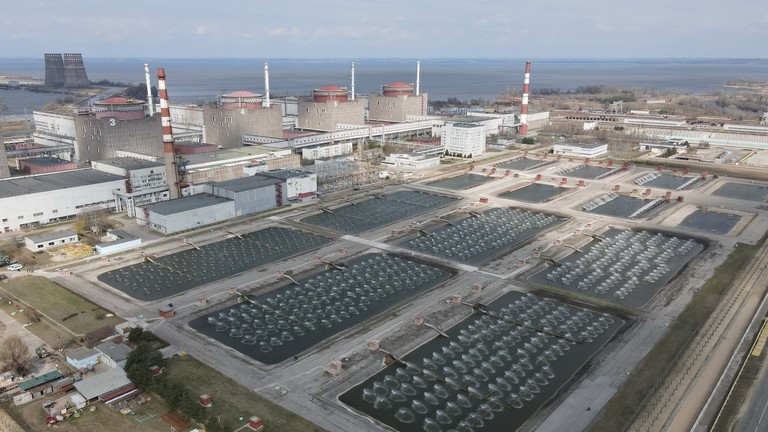
But IAEA says damage to Nova Kakhovka dam raises long-term concerns for power station’s future
Julian Borger in Kyiv, 6 June 23 https://www.theguardian.com/world/2023/jun/06/nova-kakhovka-ukraine-dam-collapse-zaporizhzhia-nuclear-plant-iaea
The collapse of the Nova Kakhovka dam and the draining of the reservoir behind it does not pose an immediate safety threat to the Zaporizhzhia nuclear power plant further upstream, but will have long-term implications for its future, according to Ukrainian and UN experts.
The Ukrainian nuclear energy corporation, Energoatom, put out a statement on the Telegram social media platform saying the situation at the plant, the biggest nuclear power station in Europe, was “under control”.
Rafael Mariano Grossi, the director general of the International Atomic Energy Agency, the UN’s nuclear watchdog, said in a statement: “our current assessment is that there is no immediate risk to the safety of the plant.”
But there are long-term concerns, both over safety and the possibility of the plant becoming operational again in the coming years. Oleksiy, a former reactor operator and shift supervisor at the plant, pointed out that all six reactors had been shut down since the plant found itself on the frontline after the Russian invasion.
Five of the reactors are in “cold shutdown”, turned off completely and being cooled, and one is in “hot shutdown”, kept at 200-250C so it would be easier to restart if conditions allowed, and to supply winter heating to the neighbouring town of Energodar.
Oleksiy, who left after Russian forces occupied the plant in March last year and is now elsewhere in Ukraine, said the last reactor should be shut down and that the plant had sufficient resources to keep all reactor cores cool.
“I think that the damage of the dam doesn’t impact the plant immediately, because they are being cooled by the safety systems located at the plant, which are spray systems,” he said. “The plant has a cooling lake, about two or three kilometres in diameter.”
The Energoatom statement said the cooling lake was filled and was at 16.6 metres (54.5ft), “which is sufficient for the power plant’s needs”
Mariana Budjeryn, a Ukrainian nuclear scientist, said: “The fact that there’s an artificial pond next to the ZNPP [Zaporizhzhia nuclear power plant] where water can be maintained above the reservoir level, and the fact that the reactors are in cold shutdown, offers some reassurance and increased time to respond if ZNPP starts getting affected.”
But Budjeryn, who is a senior research associate on the project on managing the atom at Harvard University, added: “The bigger problem – who is going to do it? ZNPP is already down-staffed to bare bones.”
Oleksiy said that over time water would evaporate from the cooling lake and if it could not be filled from the vast reservoir created upstream of the Nova Kakhovka dam, the turbines and the power plant could not be operated.
In his statement, Grossi said that the cooling pond should last “for some months” but it was imperative it was not damaged in fighting. The water is used to cool not just the reactor cores, but also the spent fuel and the diesel generators used for safety systems.
Four nuclear myths
By Ramesh ThakurJun 8, 2023 https://johnmenadue.com/four-nuclear-myths/
The hubris and arrogance of the nuclear-armed states leaves the world exposed to the risk of sleepwalking into a nuclear disaster. The case for nuclear weapons rests on a superstitious magical Realism that puts faith in the utility of the bomb and the theory of deterrence. Here are four myths about the utility of nuclear weapons.
Myth one: The bomb ended the second world war
The belief in the utility of nuclear weapons is widely internalised owing in no small measure to Japan’s surrender immediately after the atomic bombings of Hiroshima and Nagasaki in 1945. Yet the evidence is surprisingly clear that the close chronology is a coincidence. Hiroshima was bombed on 6 and Nagasaki on 9 August. Moscow broke its neutrality pact to attack Japan on the 9th and Tokyo announced the surrender on 15 August. As Tsuyoshi Hasegawa, professor of modern Russian and Soviet history at the University of California Santa Barbara, professor of modern Russian and Soviet history at the University of California Santa Barbara, persuasively argued in The Asia–Pacific Journal in 2007, in Japan’s decision-makers’ minds, the decisive factor in the unconditional surrender was the imminent Soviet entry into the Pacific war against the essentially undefended northern approaches. They feared the likelihood of the Soviet
Union as the occupying power unless Japan surrendered to the US first.
Myth two: The bomb kept the peace during the Cold War
The big territorial expansion of the former Soviet Union across central and eastern Europe came in the 1945–49 years. The US held an atomic monopoly in this period. During the Cold War, no evidence exists to show that either side had the intention to attack the other at any time, but was deterred from doing so because of nuclear weapons held by the other side. Other possible explanations for that long peace include West European integration and West European democratisation.
After the Cold War, the existence of nuclear weapons on both sides was not enough to stop the US from expanding NATO’s borders to Russia’s borders, stop Russia invading Ukraine last year, or prevent NATO from rearming Ukraine. The more or less constant US–Russia nuclear equation is irrelevant to explaining the shifting geopolitical developments. We have to look elsewhere to understand the ongoing rebalancing of US–Russia relations.
Myth three: Nuclear deterrence is 100 per cent effective
Some profess interest in nuclear weapons in order to avoid nuclear blackmail. Yet there is not one clear-cut instance of a non-nuclear state having been bullied into changing its behaviour by the overt or implicit threat of being bombed by nuclear weapons, including Ukraine. Nuclear powers have accepted defeat at the hands of non-nuclear states rather than escalate armed conflict to the nuclear level (Vietnam, Afghanistan) and nuclear-armed Britain’s Falkland Islands were even invaded by non-nuclear Argentina in 1982.
Nuclear weapons cannot be used for defence against nuclear-armed rivals either. Their mutual vulnerability to second-strike retaliatory capability is so robust for the foreseeable future that any escalation through the nuclear threshold really would amount to mutual national suicide. Their only purpose and role, therefore, is mutual deterrence.
Nuclear weapons did not stop Pakistan from occupying Kargil in Kashmir in 1999, nor India from waging a limited war to retake it. Nor do nuclear weapons buy immunity for North Korea. The biggest elements of caution in attacking it are its formidable conventional capability to hit the heavily populated parts of South Korea, including Seoul, and anxiety about how China would respond.
Nuclear weapons did not stop Pakistan from occupying Kargil in Kashmir in 1999, nor India from waging a limited war to retake it. Nor do nuclear weapons buy immunity for North Korea. The biggest elements of caution in attacking it are its formidable conventional capability to hit the heavily populated parts of South Korea, including Seoul, and anxiety about how China would respond.
Myth four: Nuclear deterrence is 100 per cent safe
The world has so far averted a nuclear catastrophe as much owing to good luck as to wise management, with the 1962 Cuban missile crisis being the most graphic example. The number of times that we have come frighteningly close to nuclear holocaust owing to misperceptions, miscalculations, near misses, and accidents is simply staggering. For nuclear peace to hold, deterrence and fail-safe mechanisms must work every single time. For nuclear Armageddon, deterrence or fail-safe mechanisms need to break down only once. This is not a comforting equation. Deterrence stability depends on rational decision-makers being always in office on all sides: a dubious and not very reassuring precondition. It depends equally critically on there being no rogue launch,
human error or system malfunction: an impossibly high bar.
A prospective Russia–NATO/US war is only one of five potential nuclear flashpoints, albeit the one with the gravest consequences. The remaining four are all in the Indo–Pacific: China-US, China-India, Korean Peninsula, and India-Pakistan. A simple transposition of the dyadic North Atlantic frameworks and lessons to comprehend the multiplex Indo-Pacific nuclear relations is both analytically flawed and entails policy
dangers for managing nuclear stability.
The geostrategic environment of the subcontinent, for example, had no parallel in the Cold War, with triangular shared borders among three nuclear-armed states, major territorial disputes, a history of many wars since 1947, compressed timeframes for using or losing nuclear weapons, political volatility and instability, and state-sponsored cross-border insurgency and terrorism.
Conclusion
The case for nuclear weapons rests on a superstitious magical Realism that puts faith in the utility of the bomb and the theory of deterrence. The extreme destructiveness of nuclear weapons makes them qualitatively different in political and moral terms from other weapons, to the point of rendering them virtually unusable. Like the emperor who had no clothes, this might well be the truest explanation of why they have not been used since 1945.
The hubris and arrogance of the nuclear-armed states leaves the world exposed to the risk of sleepwalking into a nuclear disaster. Remember, people are not aware of their actions while they are sleepwalking.
The case for nuclear weapons rests on a superstitious magical Realism that puts faith in the utility of the bomb and the theory of deterrence. The extreme destructiveness of nuclear weapons makes them qualitatively different in political and moral terms from other weapons, to the point of rendering them virtually unusable. Like the emperor who had no clothes, this might well be the truest explanation of why they have not been used since 1945.
The hubris and arrogance of the nuclear-armed states leaves the world exposed to the risk of sleepwalking into a nuclear disaster. Remember, people are not aware of their actions while they are sleepwalking.
Israel undecided on Saudi Arabia’s demand for civil nuclear technology
Israel’s security establishment is categorically opposed to the possibility of Saudi Arabia obtaining civil nuclear capabilities, but the political echelon in Israel has not made up its mind yet.
June 6, 2023, Ben Caspit @BenCaspit AL MONITOR
TEL AVIV — Israeli Energy Minister Israel Katz expressed on Monday reservations about Saudi Arabia’s plans to establish a US-backed nuclear power program, in a first public statement on the issue by a senior Israeli official.
Katz made this statement as US Secretary of State Antony Blinken was preparing to fly to Saudi Arabia for talks expected to include discussions of the nuclear program for which the Saudis are seeking US technology and know-how……………………………………………………………….
The Israeli defense establishment is not enthusiastic, to say the least, about Saudi access to nuclear energy, let alone uranium enrichment on its soil.
“We have been saying for years that a nuclear program in Iran will expose the entire Middle East to a nuclear arms race. This is no different in the Saudi case. With the Iranians enriching uranium to military grade and the Saudis on their way to doing so, there is no doubt that within a short time we will see progress toward nuclear weapons in Egypt, the Gulf and elsewhere as well. There is no vacuum on such a strategic issue, certainly not in the Middle East,” said an Israeli security official, speaking on condition of anonymity………………………………..
Tucker Carlson steamrolls Ukraine propaganda in new show
US corporate media outlets treat curiosity as the “gravest crime,” the former TV pundit has said
7 June 23 https://www.rt.com/news/577602-tucker-carlson-twitter-show/
Former Fox News host Tucker Carlson has released the first episode of his new series on Twitter, taking Western news agencies to task for one-sided reporting on the conflict in Ukraine and open hostility toward anybody voicing dissenting views.
Dubbed ‘Tucker on Twitter’, the show’s first ten-minute segment was shared on the social media platform on Tuesday night. The clip opened with a monologue on the alleged Ukrainian attack on a major dam in Russia’s Kherson Region this week, which Carlson dubbed “an act of terrorism.”
“Blowing up the dam may be bad for Ukraine, but it hurts Russia more, and for precisely that reason the Ukrainian government has considered destroying it,” he said. Carlson went on to observe that a Ukrainian general had admitted to planning attacks on the Kakhovka dam facility in comments to the Washington Post last December.
While Carlson said he had little doubt that Kiev was behind the incident, he noted that several American media outlets had already suggested that Moscow may have arranged the attack, claiming they view Ukrainian President Vladimir Zelensky as simply “too decent for terrorism.”

“Of all the people in the world, our shifty, dead-eyed Ukrainian friend in the tracksuit is uniquely incapable of blowing up a dam. He’s literally a living saint, a man in whom there is no sin,” he went on, describing the general attitude within the mainstream press.
The pundit drew comparisons to last year’s attack on the Nord Stream pipelines, which were built to carry natural gas from Russia into Germany. Though Carlson argued it was “obvious” that Ukraine had carried out the sabotage, he said US media outlets had little interest in investigating, helping to make Americans among “the least informed people in the world.”
“Not only are the media not interested in any of this, they are actively hostile to anybody who is. In journalism, curiosity is the gravest crime,” he continued, adding that while media outlets lie, “mostly they just ignore the stories that matter.”
Carlson parted ways with Fox in April, a major shake-up for the media giant, given the prominence of his prime-time program, ‘Tucker Carlson Tonight’. He later announced that would move his content to Twitter, where he has released other stand-alone segments similar to his former show. In his signoff for Tuesday’s episode, the host voiced hopes that Twitter would be a venue with “no gatekeepers,” but vowed to leave the site should that turn out to be false.
Russia says U.S.-built F-16s could ‘accommodate’ nuclear weapons if sent to Ukraine
Reuters June 7, 20234
– Russia’s Foreign Minister Sergei Lavrov said on Monday that U.S.-built F-16 fighter jets can “accommodate” nuclear weapons and warned that supplying Kyiv with them will escalate the conflict further.
“We must keep in mind that one of the modifications of the F-16 can ‘accommodate’ nuclear weapons,” Lavrov said in a speech at a military base in Dushanbe in Tajikistan, according to a transcript on the ministry’s website…………………………………….
Ukraine’s President Volodymyr Zelenskiy has long appealed for the F-16 jets, saying their appearance with Ukrainian pilots would be a sure signal from the world that Russia’s invasion would end in defeat
Biden told G7 leaders last month that Washington supported joint allied training programmes for Ukrainian pilots on F-16 fighters.
U.S. National Security adviser Jake Sullivan, however, said there was no final decision on Washington sending aircraft.
Reporting by Lidia Kelly in Melbourne and Nandita Bose in Washington; Editing by Michael Perry and Marguerita Choy https://www.reuters.com/world/russia-says-us-built-f-16s-could-accommodate-nuclear-weapons-if-sent-ukraine-2023-06-06/
OpenAI’s Sam Altman calls for an international agency like the UN’s nuclear watchdog to oversee AI
By Associated Press • Updated: 07/06/2023 – 15:06
The creator of ChatGPT has suggested an international agency like the UN’s nuclear watchdog could police and regulate the technology.
Artificial intelligence (AI) poses an “existential risk” to humanity, a key innovator warned during a visit to the United Arab Emirates on Tuesday, suggesting an international agency like the International Atomic Energy Agency (IAEA) be created to oversee the ground-breaking technology.
Sam Altman, CEO of OpenAI, the creator of wildly popular chatbot ChatGPT, is on a global tour to discuss the significance of AI.
“We face serious risk. We face existential risk,” said Altman.
……………………. Hundreds of industry leaders, including Altman, have signed a letter in May that warns “mitigating the risk of extinction from AI should be a global priority alongside other societal-scale risks such as pandemics and nuclear war”…………………………………….. more https://www.euronews.com/next/2023/06/07/openais-sam-altman-calls-for-an-international-agency-like-the-uns-nuclear-watchdog-to-over
1 This Month

of the week – Shut Down Drone Warfare!


Tell the Ukrainian Government to Drop Prosecution of Peace Activist Yurii Sheliazhenko

Petition to revoke the licensing of the Near Surface Nuclear Disposal Facility (NSDF) at Chalk River. https://www.ourcommons.ca/petitions/en/Petition/Details?Petition=e-7247
To see nuclear-related stories in greater depth and intensity – go to https://nuclearinformation.wordpress.com
-
Archives
- April 2026 (103)
- March 2026 (251)
- February 2026 (268)
- January 2026 (308)
- December 2025 (358)
- November 2025 (359)
- October 2025 (376)
- September 2025 (257)
- August 2025 (319)
- July 2025 (230)
- June 2025 (348)
- May 2025 (261)
-
Categories
- 1
- 1 NUCLEAR ISSUES
- business and costs
- climate change
- culture and arts
- ENERGY
- environment
- health
- history
- indigenous issues
- Legal
- marketing of nuclear
- media
- opposition to nuclear
- PERSONAL STORIES
- politics
- politics international
- Religion and ethics
- safety
- secrets,lies and civil liberties
- spinbuster
- technology
- Uranium
- wastes
- weapons and war
- Women
- 2 WORLD
- ACTION
- AFRICA
- Atrocities
- AUSTRALIA
- Christina's notes
- Christina's themes
- culture and arts
- Events
- Fuk 2022
- Fuk 2023
- Fukushima 2017
- Fukushima 2018
- fukushima 2019
- Fukushima 2020
- Fukushima 2021
- general
- global warming
- Humour (God we need it)
- Nuclear
- RARE EARTHS
- Reference
- resources – print
- Resources -audiovicual
- Weekly Newsletter
- World
- World Nuclear
- YouTube
-
RSS
Entries RSS
Comments RSS
 nuclear-news