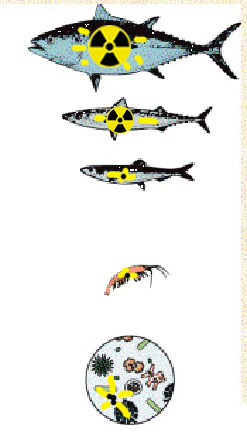
Content of radioactive element in fish at Fukushima’s Nuclear Power Plant 180 times of safe limit
CGTN 6 June 23
The radioactive elements in the marine fish caught in the harbor of the Fukushima Daiichi Nuclear Power Plant in Japan far exceed safety levels for human consumption, according to a report issued by the plant’s operator Tokyo Electric Power Company (TEPCO) on Monday. In particular, the data released show that the content of Cs-137, a radioactive element that is a common byproduct in nuclear reactors, is 180 times that of the standard maximum stipulated in Japan’s food safety law.
CGTN downloaded the English version of the report available on TEPCO’s official website. According to the data, the sampled black rockfish contains the radioactive element Cs-137 with a content of 18,000 becquerels per kilogram. Data available on the website of Fukushima Revitalization Station run by Japan’s Fukushima prefectural government shows that Japan’s current limit of radioactive cesium in general food which contains fish is set at 100 becquerels per kilogram.
According to the report, the location where the sampled fish was caught is at the port area of Units 1 to 4 of the Fukushima Daiichi Nuclear Power Plant, where a breakwater is built and nuclear wastewater with a high concentration of radioactive substances flows in. TEPCO said it will set up multiple protective nets to prevent fish from swimming out of the harbor.
A Chinese news website sina.com.cn quoted experts noting that the radioactive elements in the nuclear wastewater could penetrate into fish, shrimp and other seafood, and later accumulate in the human body after consumption. ……………………
TEPCO on Monday started sending seawater into an underwater tunnel to be diluted before releasing the nuclear wastewater into the ocean. The company said that all facilities for the water release system are expected to be completed by the end of this month.
Local fishing communities say their businesses and livelihoods will suffer still more damage. Neighboring countries such as China and South Korea and Pacific Island nations have raised safety concerns. Environmental groups including Friends of the Earth oppose the release. https://news.cgtn.com/news/2023-06-06/Radioactive-element-in-fish-at-Fukushima-plant-180-times-safe-limit-1kpOlJEH9xm/index.html
Journalists Are Asking Ukrainian Soldiers To Hide Their Nazi Patches, New York Times Admits

AZOV soldier, UKraine
BY TYLER DURDEN
The New York Times has been forced to very, very belatedly deal with something which had long been obvious and known to many independent analysts and media outlets, but which has been carefully shielded from the mainstream masses in the West for obvious reasons.
The surprising Monday Times headline said that “Nazi Symbols on Ukraine’s Front Lines Highlight Thorny Issues of History.” This acknowledgement comes after literally years of primarily indy journalists and geopolitical commentators pointing out that yes indeed… Ukraine’s military and paramilitary groups, especially those operating in the east since at least 2014, have a serious Nazi ideology problem. This has been exhaustively documented, again, going back years.
But the report, which merely tries to downplay it as a “thorny issue” of Ukraine’s “unique” “History” – suggests that the real problem for Western PR is fundamentally that it’s being displayed so openly. Ukrainian troops are being asked to cover those Nazi symbols please!–as Matt Taibbi sarcastically quipped in commenting on the report.
The authors of the NYT report begin by expressing frustration over the optics of Nazi symbols being displayed so proudly on many Ukrainian soldiers’ uniforms. Suggesting that many journalistic photographs which have in some cases been featured in newspapers and media outlets worldwide (typically coupled with generally positive articles on Ukraine’s military) are merely ‘unfortunate’ or misleading, the NYT report says, “In each photograph, Ukrainians in uniform wore patches featuring symbols that were made notorious by Nazi Germany and have since become part of the iconography of far-right hate groups.”

NATO itself has in the recent past been forced to delete images on its official social media accounts due to Nazi imagery being present among Ukrainian troops during photo shoots.
The following line from the report says everything you need to know about the so-called “paper of record” and its one-sided and ultra-simplistic coverage of what many are finally waking up to realize is a war with a deeply complex reality (to say the least), and far from the MSM’s goodies vs. baddies Hollywoodesque narrative of Putler vs. the free world which is typical of networks from CNN to Fox to NBC…
From the NY Times:
“In November, during a meeting with Times reporters near the front line, a Ukrainian press officer wore a Totenkopf variation made by a company called R3ICH (pronounced “Reich”). He said he did not believe the patch was affiliated with the Nazis. A second press officer present said other journalists had asked soldiers to remove the patch before taking photographs.”
Oops!
…………..The iconography of these groups, including a skull-and-crossbones patch worn by concentration camp guards and a symbol known as the Black Sun, now appears with some regularity on the uniforms of soldiers fighting on the front line, including soldiers who say the imagery symbolizes Ukrainian sovereignty and pride, not Nazism.
Some are writing more appropriate and apt headlines for the NYT story…
Only very recently Ukraine’s Defense Ministry and even President Zelensky’s office was caught in the act:
In April, Ukraine’s Defense Ministry posted a photograph on its Twitter account of a soldier wearing a patch featuring a skull and crossbones known as the Totenkopf, or Death’s Head. The specific symbol in the picture was made notorious by a Nazi unit that committed war crimes and guarded concentration camps during World War II.
The patch in the photograph sets the Totenkopf atop a Ukrainian flag with a small No. 6 below. That patch is the official merchandise of Death in June, a British neo-folk band that the Southern Poverty Law Center has said produces “hate speech” that “exploits themes and images of fascism and Nazism.”
To be expected, the Times still tries to run cover while desperately seeking to ‘reassure’ its audience by writing that “In the short term, that threatens to reinforce Putin’s propaganda and giving fuel to his false claims that Ukraine must be ‘de-Nazified’ — a position that ignores the fact that Ukrainian President Volodymyr Zelenskyy is Jewish.”
New levels of cope indeed…
But then still, the NYT concedes awkwardly, “More broadly, Ukraine’s ambivalence about these symbols, and sometimes even its acceptance of them, risks giving new, mainstream life to icons that the West has spent more than a half-century trying to eliminate.” https://www.zerohedge.com/geopolitical/journalists-are-asking-ukrainian-soldiers-hide-their-nazi-patches-nyt-admits
Kakhovka dam breach raises risk for Zaporizhzhia nuclear plant – receding waters narrow options for cooling

The Conversation June 7, 2023, Najmedin Meshkati, Professor of Engineering and International Relations, University of Southern California
A blast on June 6, 2023, destroyed the Kakhovka dam on the Dnieper River in eastern Ukraine. The rupture lowered water levels in a reservoir upriver at the Zaporizhzhia Nuclear Power Plant in the city of Enerhodar. The reservoir supplies water necessary for cooling the plant’s shutdown reactors and spent fuel, which is uranium that has been largely but not completely depleted by the fission reaction that drives nuclear power plants.
The International Atomic Energy Agency, which has inspectors on-site to monitor effects of the war at the plant, issued a statement saying that there was no imminent danger. Nevertheless, the destruction of the dam increases the risk of a disaster at the plant, a risk already heightened by ongoing combat in the area.
The Conversation asked Najmedin Meshkati, a professor and nuclear safety expert at the University of Southern California, to explain what the dropping water level means for the safety of the nuclear power plant and the ongoing risks to the plant’s spent fuel.
Why are dropping water levels a threat to the power plant?
The immediate situation is becoming very precarious. The dam is downstream from the plant, meaning that the flooding will not jeopardize the plant. But the plant draws water from a major reservoir on the river for its cooling system. This reservoir is draining because the downstream dam has been damaged.
The plant doesn’t need the massive amount of water it otherwise would because its six reactors are in cold shutdown. But the plant still needs water for three purposes: to reduce the residual heat from the shutdown reactors, to cool the spent fuel, and to cool the emergency diesel generators if the plant loses off-site power.
The plant’s operators pumped water from the reservoir into a cooling pond, which is why the IAEA said the plant has enough water for several months. But that’s the last resort, which is why the agency also said that it’s vital that the cooling pond remains intact. If the plant loses the cooling pond, the only hope would be to try something like they did at the Fukushima nuclear power plant after the earthquake and tsunami in Japan in 2011. They brought in huge water pumps to pump saltwater from the Pacific Ocean into the reactors to cool them down. The plant operators may need to try to pump water from the Dnieper River.
The two lifelines of any nuclear plant, whether operational or closed down, are water and electricity. The newly launched Ukrainian counteroffensive puts these two lifelines in further jeopardy. Since the Russian occupation, the plant has suffered a lot and lost off-site power seven times. My immediate concern is that if the plant loses its last remaining power line, which powers the cooling pumps, then it needs to rely on emergency diesel generators. There are 20 generators with on-site storage of only 10 to 15 days of fuel supply. Getting fuel while the counteroffensive is going on is another major challenge.
What does it mean to have a nuclear reactor in cold shutdown?………………………………………………………………..
What are the risks from the spent fuel at the plant?
The plant still needs a reliable source of electricity to cool the six huge spent fuel pools that are inside the containment structures and to remove residual heat from the shutdown reactors. The cooling pumps for the spent fuel pools need much less electricity than the cooling pumps on the reactor’s primary and secondary loops, and the spent fuel cooling system could tolerate a brief electricity outage.
One more important factor is that the spent fuel storage racks in the spent fuel pools at the Zaporizhzhia Nuclear Power Plant were compacted to increase capacity, according to a 2017 Ukrainian government report to the IAEA. The greater number and more compacted the stored spent fuel rods, the more heat they generate and so more power is needed to cool them.

These massive concrete cylinders store spent nuclear fuel rods. The Zaporizhzhia Nuclear Power Plant stores much of its spent fuel outdoors in casks like these. U.S. Nuclear Regulatory Commission
There is also a dry spent fuel storage facility at the plant. Dry spent fuel storage involves packing spent fuel rods into massive cylinders, or casks, which require no water or other coolants. The casks are designed to keep the fuel rods contained for at least 50 years. However, the casks are not under the containment structures at the plant, and though they were designed to withstand being crashed into by an airliner, it’s not clear whether artillery shelling and aerial bombardment, particularly repeated attacks, could crack open the casks and release radiation into the grounds of the plant.
………………………..This situation is rapidly evolving. And if something happens and there is a radiation release, it’s going to spread around the world. https://theconversation.com/kakhovka-dam-breach-raises-risk-for-zaporizhzhia-nuclear-plant-receding-waters-narrow-options-for-cooling-207192
Washington Post reported Ukraine conducted a test strike with HIMARS on the Kahovka dam last year
the Washington Post reported in December 2022 that Ukraine had previously carried out a test strike using American HIMARS (High Mobility Artillery Rocket Systems) on a dam located on the Russian-held side of Ukraine along the Dnieper River in Kahovka. They cited Ukrainian Major-General Andriy Kovalchuk.
Human Events Media Group 06/06/2023
A dam on the Dnieper River was destroyed on Tuesday, flooding a substantial amount of the area where Ukrainian and Russian troops are engaged in fighting, after Ukraine launched their much-anticipated counter-offensive. The dam was in Russian control, and has been since shortly after the February 2022 invasion of Ukraine by Russia.
Ukraine claimed Russia blew up the Nova Kakhovka dam and said it was a war crime, while Russia has said that it was Ukraine who “sabotaged the dam, to distract attention from the launch of a major counteroffensive Moscow says is faltering,” Reuters reports.
Ukraine’s counter offensive has been in the works for some time, specifically targeting the Russian-held city of Kherson, and was just recently launched.
“Russian terrorists,” President Volodymyr Zelenskiy said on Telegram. “The destruction of the Kakhovka hydroelectric power plant dam only confirms for the whole world that they must be expelled from every corner of Ukrainian land.”
However, the Washington Post reported in December 2022 that Ukraine had previously carried out a test strike using American HIMARS (High Mobility Artillery Rocket Systems) on a dam located on the Russian-held side of Ukraine along the Dnieper River in Kahovka. They cited Ukrainian Major-General Andriy Kovalchuk.
“Kovalchuk considered flooding the river,” the Washington Post reported. “The Ukrainians, he said, even conducted a test strike with a HIMARS launcher on one of the floodgates at the Nova Kakhovka dam, making three holes in the metal to see if the Dnieper’s water could be raised enough to stymie Russian crossings but not flood nearby villages. The test was a success, Kovalchuk said, but the step remained a last resort.”……………….. https://humanevents.com/2023/06/06/wapo-reported-ukraine-conducted-a-test-strike-with-himars-on-the-kahovka-dam-last-year
The Ukrainian “counter-offensive”: A new stage in the US-NATO war against Russia
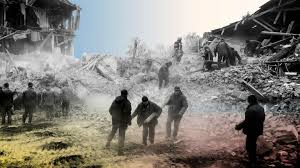
Every aspect of the war, including the “counter-offensive,” is being directed by the Biden administration, the Pentagon and NATO. It is being led by forces trained by NATO and armed with NATO weapons, including depleted uranium shells supplied by the UK. Operationally, it is organized from Washington and the Pentagon. The masses of Ukrainians are being exploited as cannon fodder. Among the first divisions thrown into the battle, many are raw draftees with little or no training.
WSWS Joseph Kishore, David North, 5 June 2023
The US-NATO war against Russia over Ukraine is entering a new stage this week, with reports of a significant increase in fighting along a broad front Monday and enormous casualties.
The Russian Defense Ministry reported on its official Telegram channel that Russian forces countered a Ukrainian offensive on the Vremevka outpost in South Donetsk, which is currently controlled by Russia. It stated that over 1,500 Ukrainian soldiers were killed and that Russia seized 28 tanks, including eight German-made Leopard tanks.
Russia also reported an offensive of Ukrainian troops toward the south, against the territory along the coast of the Sea of Azov that connects Crimea and the Donbas, both held by Russia or pro-Russian forces since 2014. A Russian-appointed official in the city of Zaporizhzhia said that the fighting in the south involved extensive shelling and strikes by Ukraine using British-French Storm Shadow missiles.
It is apparent that Monday’s operations mark the beginning of the long anticipated “summer counter-offensive.” While there is, at present, limited information, one thing can be said with certainty: The fighting will result in a vast increase in the number of deaths, both Ukrainian and Russian.

In an interview with the Wall Street Journal Sunday, Ukrainian President Volodymyr Zelensky acknowledged that “a large number of soldiers are going to die,” but “we are going to do it.” Reliable estimates place the death toll of Ukrainians in the war so far at 300,000.
Every aspect of the war, including the “counter-offensive,” is being directed by the Biden administration, the Pentagon and NATO. It is being led by forces trained by NATO and armed with NATO weapons, including depleted uranium shells supplied by the UK. Operationally, it is organized from Washington and the Pentagon. The masses of Ukrainians are being exploited as cannon fodder. Among the first divisions thrown into the battle, many are raw draftees with little or no training.
The US and the NATO powers are determined to inflict a Russian defeat, with dreams of a military parade of NATO troops in the streets of Moscow. The Financial Times wrote on Monday that “there has been a notable change of tone among senior western officials, who have appeared increasingly skeptical about Russian military capabilities. Antony Blinken, the US secretary of state, last week made a clear case for an outright Ukrainian victory based on ‘territorial integrity’ [that is, retaking all territory presently controlled by Russia] in a speech that also disparaged Russia’s military ‘as the second-strongest in Ukraine.’”
The FT also cited comments by Ben Wallace, the UK defense secretary, that Ukraine could take back Crimea as part of the offensive. “What we’ve seen on the battlefield is that, if you punch Russian forces in the wrong place, they’ll actually collapse,” he said.
Such statements combine propaganda with self-delusion. The Ukrainian military has been bled white over the past 15 months. It is entirely reliant on the US and NATO, not only to provide training and weaponry, but increasingly the manpower necessary for escalating the war.
The operations in Ukraine are only one part of a barely disguised, undeclared war between NATO and Russia, which is expanding in intensity and geographical scope.
Developments on the ground in Ukraine have been timed to coincide with a meeting of NATO foreign ministers in Oslo, Norway late last week. This meeting itself was to prepare a full NATO war summit next month in Vilnius, Lithuania, only a short drive from the Russian border. Behind closed doors, the leaders of the NATO powers are discussing and implementing the next stage in the escalation.
Already, Ukraine, operating under the direction of the US, has launched drone strikes targeting Moscow, begun shelling Russian cities, and organized incursions into Russian territory, using vehicles and equipment provided by the US and its NATO allies. Poland has become directly involved in the conflict, with members of the so-called “Polish Volunteer Corps” of Polish citizens participating in cross-border raids from Ukraine into Russia.
An article in the Washington Post (“Defend ‘every inch’ of NATO territory? New strategy is a work in progress”), published Monday, opens with a description of French paratroopers being dropped into Estonia, which borders Russia and is only 150 km from St. Petersburg. The Post notes that the French war exercises in Estonia are “part of a stepped-up rehearsal of what it would take to reinforce a [NATO] battle group” in the country.
Speaking of what can only be described as a massive military mobilization, the newspaper writes, “NATO has bolstered its eastern flank in part by establishing battle groups in four additional countries: Bulgaria, Hungary, Romania and Slovakia,” with 10,000 troops across eight battle groups. Dozens of ships and hundreds of planes, along with ground-based air defense, have been sent to countries on Russia’s border, particularly the Baltic countries of Latvia, Lithuania and Estonia.
War games are taking place currently throughout Europe, including the massive “Defender Europe 2023” exercise, which began on April 22 and involves 26,000 troops from the US and its allies. The final component of the operations, “Saber Guardian 23,” began last week and is centered on the Black Sea, to the south of Ukraine. It involves soldiers and sailors from Albania, Bulgaria, Belgium, France, Greece, Germany, Italy, the Netherlands, Romania, Slovenia and the United States.
Given the statements of leading US and NATO officials that they are committed to the military defeat of Russia, the Putin government will be compelled to interpret all these actions as possible preparations for NATO incursions into Russian territory. The purpose of all these operations is to support the Ukrainian offensive by distracting Russian military commanders from exclusive focus on the Ukrainian front and compelling them to divert forces to other border regions.
In the capitals of the NATO powers, a mood of reckless hysteria prevails. Over the weekend, German Chancellor Olaf Scholz, confronted by protesters at a gathering of his Social Democratic Party outside of Berlin, unleashed a Hitlerian rant against Russia and denounced Putin as a “murderer” and a “warmonger.”
The White House has rejected calls for a ceasefire or negotiated settlement to the conflict that does not include full capitulation by Russia. Encouraged by Russia’s failure to respond to each escalation, the Biden administration has concluded that there is no “red line” that it cannot cross.
In an article published under the headline “Biden Administration Shrugs Off Ukraine’s Attacks in Russia,” the New York Times wrote on Monday that the White House has discarded the pretense of discouraging direct attacks in Russia by Ukraine, using US-supplied weaponry. “Behind closed doors,” the Times wrote, “senior administration officials have seemed even less fazed. ‘Look, it’s a war,’ one senior Pentagon official said last Thursday. ‘This is what happens in a war.’”………………… https://www.wsws.org/en/articles/2023/06/06/pers-j06.htm
Energy Northwest nuclear plant failed to properly measure workers’ radioactive exposure, report says
KPVI, Annette Cary Tri-City Herald, Jun 7, 2023
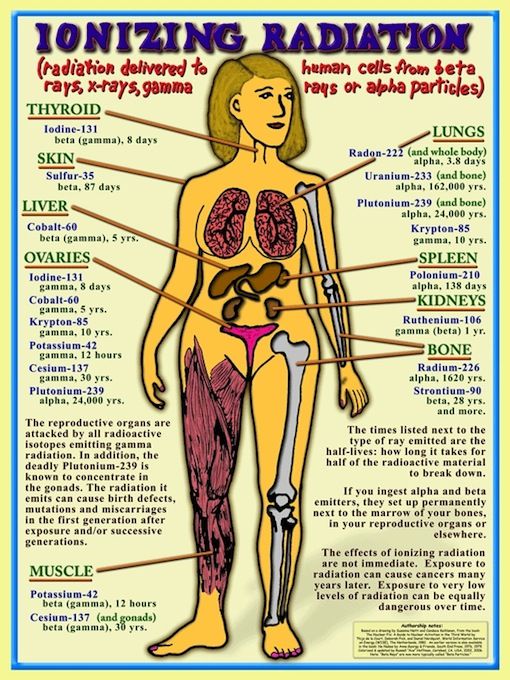
Energy Northwest failed to correctly measure the exposure of workers who inhaled or ingested radioactive material during an incident at the Northwest’s only commercial nuclear power plant, said the Nuclear Regulatory Commission.
On the night shift during the spring refueling and maintenance outage two years ago, some workers received unexpected and significant exposure to radiation, according to the initial report by the NRC.
The NRC issued a “white finding” last week and said it is considering issuing a second white finding after workers were exposed to radiation May 28, 2021, at Energy Northwest’s Columbia Generating Station nuclear power plant, according to documents made public Monday.
A white finding, the second lowest on NRC’s four-step color scale, has low to moderate safety significance and can lead to an additional NRC inspection to make sure issues have been corrected.
The notice of the first white finding was for three violations in the incident — failure to the control the concentration of radiation material in the air, failure to control the activities in a high radiation area and failure to survey areas to evaluate the extent of radiation levels.
But while investigating the incident at the plant near Richland, Wash., the NRC also began questioning whether Energy Northwest correctly measured the internal radioactive exposure of the workers…………………………………………………………………….
Radiation readings ‘off-scale high’
The updated NRC information says that as the two pipefitters left the heat exchanger room, they were frisked by radiation protection staff “and the instrument readings went off-scale high.”
They were then escorted to personnel contamination monitors, which alarmed, indicating there was radioactive material on or in the workers.
After multiple showers and scans on the personnel contamination monitors, Energy Northwest confirmed they had internal uptakes.
The two workers were sent to initiate the whole-body count process, with initial counts confirming they had inhaled or ingested cobalt 58 and cobalt 60 radionuclides.
However, there was indication from checking the pipe that was cut that plutonium 239 and plutonium 240 contamination was possible in the incident, but that information was not used to assess workers.
Energy Northwest’s procedures for internal dose assessment were incomplete, failed to provide clear directions and did not fully address all radionuclides that could have contaminated the workers, according to the NRC report.
Dose is a measure of the amount of radiation absorbed that accounts for the type of radiation and its effects on particular organs.
The two pipefitters had their urine tested only once and no fecal samples were collected.
“In conclusion, not only did the licensee (Energy Northwest) fail to implement the most appropriate sampling methods to detect the level of hard-to-detect radionuclides from the intake, including alpha emitters, but they did not take any additional samples to suitably establish trends and elimination rates of these radionuclides,” according to the most recent NRC inspection report.
Energy Northwest also failed to effectively take air samples in the workers’ breathing space during the incident, the NRC said.
Not only were procedures inadequate, but Energy Northwest did not have the equipment or personnel available to address the level of contamination and assess the dose within workers bodies, according to the NRC report………………… https://www.kpvi.com/news/national_news/nw-nuclear-plant-failed-to-properly-measure-workers-radioactive-exposure-report-says/article_820def90-c6b4-581a-a989-708339c2c32e.html
Leaks reveal FBI helps Ukraine censor Twitter users and obtain their info
AARON MATÉ·JUNE 7, 2023, The Grayzone,
The FBI aided a Ukrainian intelligence effort to ban Twitter users and collect their data, new leaks show. Twitter declined to censor journalists targeted by Ukraine, including The Grayzone’s Aaron Maté.
The Federal Bureau of Investigation has aided a Ukrainian intelligence effort to censor social media users and obtain their personal information, leaked emails reveal.
In March 2022, an FBI Special Agent sent Twitter a list of accounts on behalf of the Security Service of Ukraine (SBU), Ukraine’s main intelligence agency. The accounts, the FBI wrote, “are suspected by the SBU in spreading fear and disinformation.” In an attached memo, the SBU asked Twitter to remove the accounts and hand over their user data.
The Ukrainian government’s FBI-enabled targets extend to members of the media. The SBU list that the FBI provided to Twitter included my name and Twitter profile. In its response to the FBI, Twitter agreed to review the accounts for “inauthenticity” but raised concerns about the inclusion of me and other “American and Canadian journalists.”
The FBI’s attempt to ban Twitter accounts at the request of Ukrainian intelligence is among the most overt requests for censorship revealed to date in the Twitter Files, a cache of leaked communications from the social media giant.
The FBI’s censorship request was relayed in a March 27th, 2022 email from FBI Special Agent Aleksandr Kobzanets, the Assistant Legal Attaché at the US Embassy in Kyiv, to two Twitter executives. Four FBI colleagues were copied on the exchange…………………….
If granted, the users on the list would not only have been banned from Twitter but had their phone number, date of birth, and email address disclosed to both the FBI and SBU.
Read the full list of accounts targeted by the FBI and SBU here:
Twitter-Dissinf_20220327 SBU list
In response, Yoel Roth, Twitter’s then-Head of Trust and Safety, informed Special Agent Kobzanets and his FBI colleagues that Twitter would “review the reported accounts under our Rules.” But he warned that the list included “a few accounts of American and Canadian journalists (e.g. Aaron Mate).” Therefore, Roth said, Twitter’s review would “focus first and foremost on identifying any potential inauthenticity.”
Roth then suggested that he would be open to suspending authentic accounts if it could be proven that they have a hidden tie to a foreign government. Journalists “who cover the conflict with a pro-Russian stance are unlikely to be found in violation of our rules absent other context that might establish some kind of covert/deceptive association between them and a government,” Roth wrote. “Any additional information or context in those areas is of course welcome and appreciated.”……………………………………………
The Ukrainian nationals targeted by the SBU’s suppression request include Anatoly Shariy, a video blogger and politician who fled Ukraine in 2012 and subsequently received European Union asylum; and Andriy Portnov, a Ukrainian lawyer and politician who served as a senior official under Ukrainian President Viktor Yanukovych until the latter’s ouster in the February 2014 Maidan coup. (Both Shariy and Portnov’s Twitter accounts remain active).
The disclosure of a collaboration on censorship between the FBI and SBU is the latest documented instance of Ukrainian state-tied attempts to target foreign voices. A Ukrainian website known as Myrotvorets maintains a list of what it calls “enemies of Ukraine.” I was recently added to that list along with The Grayzone’s Anya Parampil, as well as the comedian and YouTube host Jimmy Dore. The Myrotvorets database was co-founded by Anton Gerashchenko, former deputy minister at the Ukraine’s Ministry of Internal Affairs, where he now serves as an advisor.
Last year, the global tech/media conference Web Summit withdrew a speaking invitation to The Grayzone’s Max Blumenthal and me after Olena Zelenska, the wife of Ukrainian President Volodymyr Zelensky, demanded our cancellation. (Another Grayzone colleague, Kit Klarenberg, was recently detained and interrogated about his journalism by British authorities).
News of the FBI’s work with Ukrainian intelligence to censor Twitter users also follows reporting from journalist Lee Fang that the FBI has pressured Facebook to remove accounts and posts deemed by the SBU to be Russian “disinformation.” According to Fang, a senior Ukrainian official in regular contact with the FBI defined “disinformation” in such broad terms that it could mean viewpoints that “simply contradict the Ukrainian government’s narrative.” https://thegrayzone.com/2023/06/07/fbi-ukraine-twitter-users-including-journalists/—
Britain’s taxpayers, slugged with uneconomic Hinkley nuclear plant ‘s costs, now to be slugged again with Sizewell.
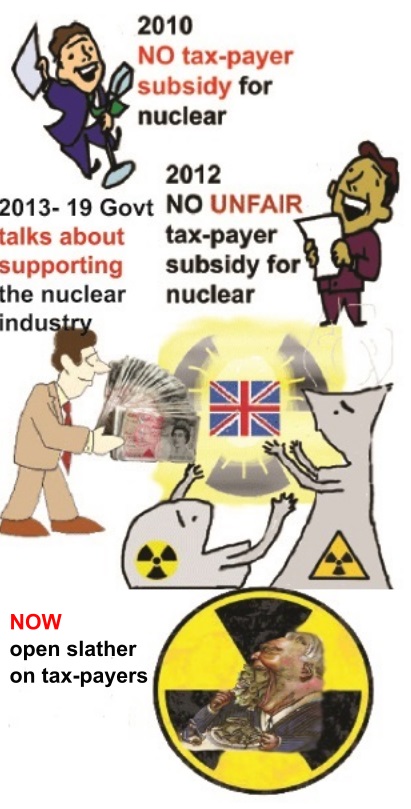
In response to EDF announcing further delays and cost increases at Hinkley
C, Dr Doug Parr, Policy Director at Greenpeace UK, said – “Despite the
enax-payerstirely predictable and widely predicted overshoot of Hinkley C’s costs
and construction, we are still on course to make the same mistake again at
Sizewell, and this time with the taxpayer on the hook.
Why has a government
of free marketeers chosen to pay the French state to build reactors with
public money from the British state? Because the market has read Hinkley
C’s balance sheet and wants nothing to do with this over-priced,
overly-complicated, obsolete technology. The government, on taxpayers
behalf, will spend their money to cover up the failure. When the government
tells you it’s a good deal, remember that no one is willing to put their
own money into it.”
Greenpeace 6th June 2023
https://www.greenpeace.org.uk/press-centre/
Is peaceful protest enough to make a difference to the climate crisis. or do we need a “tornado of change”?

Chris Packham has called for a “tornado of change” to tackle the
climate crisis and questioned whether peaceful protest is making enough of
a difference. The naturalist and presenter, a regular donor to the Just
Stop Oil campaign, is preparing to front a Channel 4 documentary
provisionally entitled Is It Time to Break the Law? In the film, to be
aired this summer, Packham will assess the impact of protests by those who
have broken the law and been imprisoned and ask whether more people should
risk arrest. “Peaceful protest has been a cornerstone of activism, but as
the urgency grows, we must question whether it is enough,” Packham said.
Times 7th June 2023
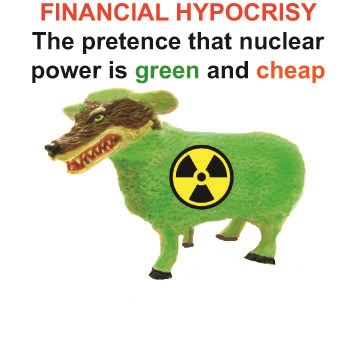
Europe’s Nuclear Power Puzzle
By Felicity Bradstock – Jun 07, 2023,
- EU member states hold divergent views on the inclusion of nuclear power in the green energy transition, hindering consensus.
- Nuclear power is seen as a potential solution for energy security and clean energy production, but concerns about nuclear waste persist.
- While some countries are closing nuclear plants, others are investing in new facilities, causing further division within the bloc.
Since the European Commission stated the need for an accelerated green transition that includes nuclear power and natural gas, it seems member states are having a hard time agreeing on nuclear development. While some countries, such as Germany, are closing their nuclear plants, others, including Finland and Hungary, are developing new facilities. So, after years of nuclear power fearmongering and avoidance, where will Europe land on new nuclear development?
In 2022, the European Commission defined both nuclear power and natural gas as climate-friendly energy sources, adding both to the EU “taxonomy” rulebook from 2023 to spur ‘green’ investment in both sectors. This is a decision that was approved by the European Parliament after much deliberation from member states about how these types of energy should be defined. The EU financial services chief Mairead McGuinness explained: “The Complementary Delegated Act is a pragmatic proposal to ensure that private investments in gas and nuclear, needed for our energy transition, meet strict criteria.”
……….. Meanwhile, nuclear energy, although not a renewable source of power, is viewed as clean, as operations do not emit greenhouse gases. However, many argue that the nuclear waste it produces could be detrimental to the environment, particularly as there is no cohesive international agreement on how to appropriately dispose of this waste………..
Despite the inclusion of nuclear power in the EU rulebook under the green taxonomy, many countries continue to disagree on the use of nuclear energy and the development of new projects. And a divide means delays. ………….
While several EU states support the development and use of nuclear power as a clean energy source, others, such as Germany and Belgium, refused to classify nuclear energy as clean. Weeks later, the debate is still ongoing, with France hoping to reopen negotiations over the Green Deal law, but Germany hopes to pass the law in its current state.
………………………………………….. After over a year of debate, various EU member states can still not agree on the use of nuclear power in the region. While many view it as vital to providing energy security and producing vast amounts of clean energy, others say it is detracting from renewable energy projects, and there is still a big question about how to dispose of the potentially harmful nuclear waste. Until this issue can be agreed upon, the Green Deal law will likely remain in a state of limbo. https://oilprice.com/Alternative-Energy/Nuclear-Power/Europes-Nuclear-Power-Puzzle.html
—
UN nuclear chief, facing Israeli criticism on Iran, says his agency ‘very fair but firm’

Israel considers Iran to be its greatest enemy, and Netanyahu has repeatedly said that he wouldn’t allow Iran to develop a nuclear weapon. He has said international diplomacy should be accompanied by a serious military option, and hinted that Israel would be prepared to strike Iran on its own if necessary
STEPHANIE LIECHTENSTEIN, Tue, June 6, 2023
VIENNA (AP) — The International Atomic Energy Agency will “never politicize” its work in Iran, the head of the U.N. nuclear watchdog said Monday, insisting after Israel’s prime minister accused it of capitulating to Iranian pressure that his agency has been “very fair but firm.”
STEPHANIE LIECHTENSTEIN
Tue, June 6, 2023 at 12:15 AM GMT+10·3 min read
In this article:
Benjamin NetanyahuPrime Minister of Israel
- Rafael GrossiArgentine diplomat
VIENNA (AP) — The International Atomic Energy Agency will “never politicize” its work in Iran, the head of the U.N. nuclear watchdog said Monday, insisting after Israel’s prime minister accused it of capitulating to Iranian pressure that his agency has been “very fair but firm.”
Israeli Prime Minister Benjamin Netanyahu’s comments came after a confidential report from the IAEA last week said that its investigators had closed off their investigation of traces of man-made uranium found at Marivan, near the city of Abadeh, about 525 kilometers (325 miles) southeast of Tehran……………………………………
STEPHANIE LIECHTENSTEIN
Tue, June 6, 2023 at 12:15 AM GMT+10·3 min read
In this article:
- Rafael GrossiArgentine diplomat
VIENNA (AP) — The International Atomic Energy Agency will “never politicize” its work in Iran, the head of the U.N. nuclear watchdog said Monday, insisting after Israel’s prime minister accused it of capitulating to Iranian pressure that his agency has been “very fair but firm.”
Israeli Prime Minister Benjamin Netanyahu’s comments came after a confidential report from the IAEA last week said that its investigators had closed off their investigation of traces of man-made uranium found at Marivan, near the city of Abadeh, about 525 kilometers (325 miles) southeast of Tehran.
Analysts had repeatedly linked Marivan to a possible secret Iranian military nuclear program and accused Iran of conducting high-explosives tests there in the early 2000s.
“Iran is continuing to lie to the International Atomic Energy Agency. The agency’s capitulation to Iranian pressure is a black stain on its record,” Netanyahu told his Cabinet in televised remarks on Sunday.
“If the IAEA becomes a political organization, then its oversight activity in Iran is without significance, as will be its reports on Iran’s nuclear activity,” Netanyahu said.
Asked on Monday about that criticism, IAEA Director-General Rafael Mariano Grossi said that his agency’s work is “neutral, it is impartial, it is technical.”
“We will always say things as they are,” Grossi told reporters on the first day of a regular meeting in Vienna of the IAEA board of governors.
Grossi added that he would “never enter into a polemic” with the head of government of a member of the IAEA. “We never politicize. We have our standards and apply them always,” he said.
“The politicization is in the eye of the beholder,” Grossi added.
Israel considers Iran to be its greatest enemy, and Netanyahu has repeatedly said that he wouldn’t allow Iran to develop a nuclear weapon. He has said international diplomacy should be accompanied by a serious military option, and hinted that Israel would be prepared to strike Iran on its own if necessary………………………….
Tehran has long denied ever seeking nuclear weapons and continues to insist that its nuclear program is entirely for peaceful purposes. https://news.yahoo.com/un-nuclear-chief-facing-israeli-141550211.html?guccounter=1&guce_referrer=aHR0cHM6Ly9uZXdzLmdvb2dsZS5jb20v&guce_referrer_sig=AQAAADJqdcGm_qX6CdNLQ8_g7p81OistELVP4KvAUR1PfQl-0Q2SBtdSRa8GwdKyTIcwvX8aofXxou_a1DmL9axGTUu9S4o5f35bRYrwMTXGG5ZaoooE2PgjQaFWi5uLyJbf3gg8EShjtVi5A26UqvyJcSYMPWp9GQCX2T9NlsjflzJW
Canadian Federal Court Upholds Alcohol and Drug Testing at Nuclear Facilities
Mirage News, 7 June 23
The Canadian Nuclear Safety Commission (CNSC) is pleased to confirm that on June 6, 2023, the Federal Court endorsed the Commission’s move to require pre-placement and random alcohol and drug testing of workers in safety-critical positions at high-security nuclear facilities, as mandated by CNSC regulatory document REGDOC-2.2.4, Fitness for Duty, Volume II: Managing Alcohol and Drug Use.
In early 2021, following the legalization of cannabis in Canada, the CNSC provided new regulatory requirements for the pre-placement and random testing of workers as part of a proactive approach to enhance nuclear safety and security at high-security nuclear facilities in Canada.
These new requirements were based on the results of extensive consultations with scientists and other experts, licensees of and workers at high-security nuclear sites, the Canadian Human Rights Commission, and the public.
Fitness for duty is one factor that affects human performance. An important element of being fit for duty is being free from the influence of alcohol, legal or illicit drugs, or performance-altering medication while at work………………… more https://www.miragenews.com/federal-court-upholds-alcohol-and-drug-testing-1022447/
Japan passes law to allow nuclear power stations to operate beyond 60 years
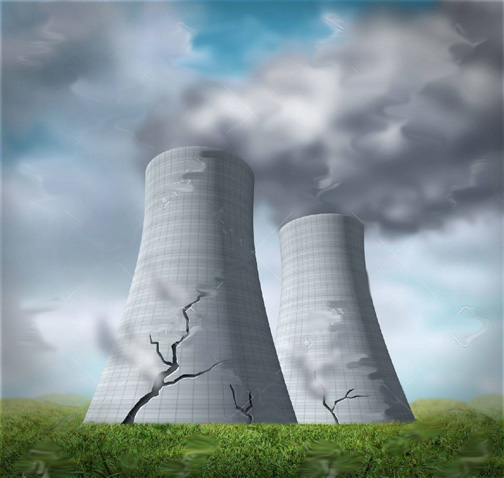
Japan’s parliament has passed legislation allowing the country’s nuclear
power operators to continue using reactors beyond their maximum lifespan of
60 years, by excluding the time spent on increased safety scrutiny in the
wake of the 2011 Fukushima nuclear disaster.
Argus Media 6th June 2023
https://www.argusmedia.com/en//news/2456784-tokyo-passes-law-to-extend-nuclear-reactors-lifespan
Increasing costs and delays in building Hinkley nuclear station.
The Hinkley Point C nuclear plant, the only one currently under
construction in Britain, is facing increasing worries about further delays
and cost overruns. During Keir Starmer‘s recent visit, the opposition
leader accused the government of hindering progress on the project.
Initially expected to be operational in 2023, the Hinkley Point C reactor
is now projected to start producing power in June 2027, highlighting
significant setbacks. Keir Starmer expressed frustration, stating that the
government is “holding the country back”, emphasising that the project
should have been completed by now.
Dr Doug Parr, the Policy Director at Greenpeace UK, raised concerns about the project’s escalating costs and construction delays.
Energy Live News 6th June 2023
Small nuclear reactors for the moon
Westinghouse Electric and Astrobotic are to develop nuclear reactors and
power grids for use in space exploration for NASA and the Department of
Defense. The US-nuclear firm and space land and rover company have agreed
to collaborate on the development of space nuclear technology and delivery
systems.
Last year, Westinghouse was awarded a NASA/DOE contract to provide
an initial design concept for a fission lunar surface power system.
Westinghouse is developing a scaled-down version of the 5-MWe eVinci
microreactor to power spacecraft in orbit or for deployment on the surface
of planetary bodies such as the Moon or Mars.
Aerospace Testing 6th June 2023
1 This Month

of the week – Shut Down Drone Warfare!


Tell the Ukrainian Government to Drop Prosecution of Peace Activist Yurii Sheliazhenko

Petition to revoke the licensing of the Near Surface Nuclear Disposal Facility (NSDF) at Chalk River. https://www.ourcommons.ca/petitions/en/Petition/Details?Petition=e-7247
To see nuclear-related stories in greater depth and intensity – go to https://nuclearinformation.wordpress.com
-
Archives
- April 2026 (103)
- March 2026 (251)
- February 2026 (268)
- January 2026 (308)
- December 2025 (358)
- November 2025 (359)
- October 2025 (376)
- September 2025 (257)
- August 2025 (319)
- July 2025 (230)
- June 2025 (348)
- May 2025 (261)
-
Categories
- 1
- 1 NUCLEAR ISSUES
- business and costs
- climate change
- culture and arts
- ENERGY
- environment
- health
- history
- indigenous issues
- Legal
- marketing of nuclear
- media
- opposition to nuclear
- PERSONAL STORIES
- politics
- politics international
- Religion and ethics
- safety
- secrets,lies and civil liberties
- spinbuster
- technology
- Uranium
- wastes
- weapons and war
- Women
- 2 WORLD
- ACTION
- AFRICA
- Atrocities
- AUSTRALIA
- Christina's notes
- Christina's themes
- culture and arts
- Events
- Fuk 2022
- Fuk 2023
- Fukushima 2017
- Fukushima 2018
- fukushima 2019
- Fukushima 2020
- Fukushima 2021
- general
- global warming
- Humour (God we need it)
- Nuclear
- RARE EARTHS
- Reference
- resources – print
- Resources -audiovicual
- Weekly Newsletter
- World
- World Nuclear
- YouTube
-
RSS
Entries RSS
Comments RSS
 nuclear-news
