Nuclear news (and climate) this week

Some bits of good news. Rock ‘flour’ from Greenland can capture significant CO2, study shows. How Much Would It Cost to Solve Climate Change? And How Would We Pay for It?
TOP STORIES
Extreme heat events have now become the new normal.
$528 Billion nuclear clean-up at Hanford Site in jeopardy.
Unlimited money to Ukraine is now allowed, through USA’s “Debt Sealing” arrangement.
EDITORIAL: Government turns a blind eye to lessons from nuclear disaster. Tiny radioactive particles persist indoors years after Fukushima.
Panellists discuss nuclear documentary ‘Atomic Bamboozle’ and warn against return of nuclear power . https://www.youtube.com/watch?v=pUsPt_xUt7I&t=27s
Climate. 1.5 C limit is still feasible. Increasing heat could turn ocean plankton microbes into carbon emitters. Mediterranean now a global heating hotspot. Freak May typhoon shows Philippines is now in constant state of climate emergency. China swelters through record temperatures. And vulnerability of old people to heat waves.
Nuclear. Well, like the plastic pollution (we’re all swimming in it), chemical pollution, species extinction, probability of pandemics, overpopulation, the hazards of AI – nuclear dangers pale into some insignificance beside the now reality of global heating.
Today is World Environment Day. What a joke! What are our illustrious leaders worrying about? They, the male-dominated national chiefs are all about their usual preoccupation – getting ready to wage war against each other. That’s the important thing – climate change gets a mention in passing – the occasional “motherhood statement”.
Meanwhile – wildfires across many Northern regions, extreme heat, ocean changes …….. The earth has Bipolar Disorder: and so do we, – and also RADIO ECOSHOCK
************************************************************************
ECONOMICS. NRG exits nuclear with sale of South Texas Project stake. Call on ratepayers to fund a study for small nuclear reactors in Clark County. Amidst all the enthusiastic promotion of Small Nuclear Reactors, there’s still the admission that SMRs are simply unaffordable. Dutch government sets many $millions in funding for Nuclear Power, and to encourage investors in nuclear. Nuclear energy just helped Finland slash electric costs by a staggering 75% — so why doesn’t the US follow suit? 3 reasons we are cool on the power source.
Marketing: Unseemly scramble as makers of small nuclear reactors try to con UK government .
ENVIRONMENT. Finland’s newest nuclear plant is warming the sea, harming wildlife.
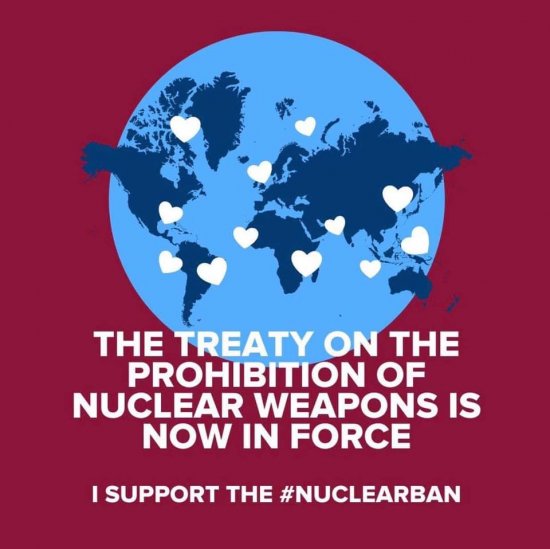
ETHICS and RELIGION. Nonviolent ecumenical movements call for ratification of the Nuclear Weapons Prohibition Treaty.
HEALTH. Female health care workers need better protection from radiation, doctors say.
MEDIA. Julian Assange ignored in “press freedom roundtable” as spies cosy up to Big Media. British police detain journalist Kit Klarenberg, interrogate him about The Grayzone. The Days’: The Story of the Fukushima Nuclear Disaster and Netflix’s New Drama. https://www.youtube.com/watch?v=ZQkb7fCr2bQ&t=31s Instagram bans Democratic presidential candidate RFK Jr from creating new campaign accounts.
NUCLEAR TECHNOLOGY. France’s triple dependence on nuclear fuel . Iran increasing enriched uranium stocks, holding 23 times the limit, says nuclear watchdog. US announces $46 million in funds to eight nuclear fusion companies. Scientists heat nuclear reactor to 100 MILLION degree Celsius – hotter than the SUN (what could possibly go wrong?).
OPPOSITION TO NUCLEAR. Call for International Action against Fukushima Radioactive Water Dumping in the Pacific. Plan to release Fukushima nuclear plant water into sea faces local opposition: “The sea is not a garbage dump. British anti-nuclear campaigners support Canadian counterparts over nuke dump (on nuclear-news.net)
POLITICS. Bill to extend operating period of nuclear plants passes Japan’s Upper House. Greenland refuses to allow exploitation for uranium. France’s triple dependence on nuclear fue (on nuclear-news.net)
POLITICS INTERNATIONAL and DIPLOMACY. France, Germany Dispute Over Nuclear Energy Leaves EU Deadlocked on Renewables. US cuts data sharing with Russia under New START nuclear deal. Biden wants to engage Russia on nuclear arms control. West considers renewed engagement on Iran nuclear crisis. Andrew Little tells nuclear powers New Zealand’s stance isn’t just ‘wishful thinking’. Dismay in the region over Japan’s plan for nuclear waste water https://www.youtube.com/watch?v=12DNoeIsXRY
RADIATION. Tritium found beyond safe limits in treated Fukushima wastewater.
SAFETY.
- TEPCO faces new crisis over pedestal blow at Fukushima plant.
- Neither Russia nor Ukraine committed to the IAEA’s 5 principles to protect Zaporizhzhia nuclear power plant. Rafael Grossi to brief UN Security Council on Zaporizhia nuclear situation. Bellona publishes new report on Ukraine’s besieged Zaporizhzhia nuclear plant.
- USA urged not to use bomb-grade uranium in nuclear power experiment. China halts floating nuclear power plan over security fears.
- Administrative monetary penalty issued to Ontario Power Generation (OPG) for security failures at Pickering and Darlington nuclear stations.
- Concern over low flying aircraft circling over Hunterston nuclear power station.
SECRETS and LIES. Warren Report Reveals Vast Pentagon-to-Defense Contractor Lobbying Pipeline.
WASTES. Proximity principle – nuclear waste should be stored as near as possible to the point of generation. South Korea experts say more study needed on Japan’s nuclear water plan. Nuclear waste disposal site could be built next to power plant, Estonia.
WAR and CONFLICT. Netanyahu convenes Iran war drill, scorns UN nuclear watchdog.
WEAPONS and WEAPONS SALES. AUKUS Fissile or Fizzer? Rex Patrick on the trouble with Virginia Class second hand submarines. The AUKUS nuclear submarine deal is a nuclear proliferation danger. AUKUS, Congress and Cold Feet.
We are going backwards: we now face a new wave of nuclear weapons manufacturing . Blinken Dismisses Calls for a Ceasefire, Says US Must Build Up Ukraine’s Military. Largest ever Arctic Challenge NATO fighter aircraft exercise begins in Northern Europe.
Disconnecting War from Its Consequences, (cut welfare spending, increase weapons). Protest Disrupts Opening of North America’s Largest Weapons Fair. NATO official calls on China for transparency over nuclear weapons
AUKUS Fissile or Fizzer? Rex Patrick on the trouble with Virginia Class second hand submarines

In what Paul Keating has described as ‘the worst deal in all history’, we’ve decided to buy into more second hand military hardware from the US; this time Virginia class nuclear submarines.
ED note – and we are left with their toxic wastes, also
by Rex Patrick | Jun 5, 2023 https://michaelwest.com.au/aukus-fissile-or-fizzer-rex-patrick-on-the-trouble-with-virginia-class-second-hand-submarines/
Former submariner Rex Patrick looks under the hood of the second-hand Virginia-class nuclear submarines to see what Australia has bought. Even AUKUS fans might not like what they see.
February 2011 is a time many in the Royal Australian Navy (RAN) would certainly prefer to forget. Within the month, the Defence Minister Stephen Smith had announced a number of trouble-plagued military landing craft would be disposed of and a review would be conducted into Support Ship Repair and Management Practices. Four months later Chief of Navy, Vice Admiral Russ Crane, was gone.
On February 3, 2011, the biggest storm to have ever hit Queensland crossed the Australian coastline and carved a swath of destruction across the state. The storm displaced 10,000 people and caused $3.5 billion in damage. And the Navy was unable to respond with any amphibious ships to help Queenslanders.
On September 26, 2010, the Defence Minister had been advised that two former US Navy ships, HMAS Manoora and HMAS Kanimbla, were in what was described as an ‘operational pause’. By December the decision was made that Manoora would be decommissioned, although that news never made it to the Minister until January 28, 2011, when a tropical depression was forming off Queensland. The Minister was also advised that Kanimbla was to be unavailable to the RAN for 18 months.
That left HMAS Tobruk, a 30 year old ship, as the standby ship. On February 28, the Navy advised the Minister it was on 48 hours’ notice to go to sea. By February 2, with Yasi now a category 5 cyclone, Tobruk entered dock for emergence repairs. It left the dock two days later but was unfit to sail for any of the Yasi response.
The Navy had failed Australians.
Rust buckets
Manoora and Kanimbla were naval clunkers. The two elderly ships had been picked up from the US Navy as an ‘opportunity buy’. There’s normally a reason things come at a bargain basement price. (Our Air Force made the same mistake after it bought second hand C-27J Spartan light tactical aircraft from the US Air Force that don’t do the job… we never learn.)
The Auditor-General detailed the saga in his September 2000 Amphibious Transport Ship Project Audit. After the RAN inspected the two ships in early 1994 the ships were bought for the grand price of $61 million. A $55 million contract was immediately signed with Newcastle’s Forgacs shipyard to do a quick overhaul.
The quick upgrade went from 14 months to 44 months and the price went to $203 million. As the Auditor finished up his work at the turn of the millennium, the price was closing in on $450 million.
That Defence bought rust buckets and spent almost 10 times the purchase cost repairing them just meant It was ‘operations normal’.
Second hand Virginias
Fast forward to 2023. Have we learned any lessons? It appears not.
In what Paul Keating has described as ‘the worst deal in all history’, we’ve decided to buy into more second hand military hardware from the US; this time Virginia class nuclear submarines.
Under questioning from Senator Jacqui Lambie at Estimates last week, the Navy revealed that the submarines we’ll likely get in the mid-2030s are boats built from 2020.
The estimated reactor life of the Virginia-class boats is 33 years. So we will hope to get about 20-years out of these second-hand vessels. The actual time they’ll be available for operations will be much less when you take into extended maintenance and refits.
The head of the nuclear submarine program, Vice Admiral Mead, suggested that we might get one new boat, if we’re lucky (we’ll get what we’re told by the US Congress).
The Chief of Navy, Vice Admiral Hammond, assured the Senate that we won’t see a repeat of the Manoora and Kanimbla debacle, saying the Navy’s ‘subsafe’ program won’t allow that.
Getting a grip
But even if Admiral Hammond is right (and Defence’s credibility on procurement is pretty well shot), the fact is that the Virginia Class program has some problems Australia is unlikely to be able to deal with.
The first highly noticeable issue with the Virginia class is a problem that has surfaced with the submarine’s acoustic coating that’s designed to reduce the ‘target strength’ of the submarine (how much sound energy from an enemy active sonar bounces off the submarine, back to the enemy).
The coating is prone to peeling off at high speed leaving loose cladding that slaps against the hull, making dangerous noise, and causes turbulent water flow, which also causes dangerous hull resonance (where the hull sings at its resonant frequency, like a tuning fork) and extra propulsion noise. I know a bit about this as a former underwater acoustics specialist.
The issue, reported in 2017 and again in 2019, is easily seen on the side of the submarine andalmost certainly without a fix at this stage.
Admiral Hammond tried to brush off the issue in the Senate. In response to Senator Lambie, he claimed that the photos she had tabled were of submarines that had come to the end of long patrols. But submarines are designed to do long patrols. I wonder how comfortable the Admiral would be landing at Heathrow Airport in London from Sydney, with the aircraft captain advising the parts of the wings normally fall off on long haul flights.
It’s not OK for our submariners to find that the boats they are using to keep us safe become noisy, and thus increasingly vulnerable to detection and destruction, halfway through their deployment.
Lack of availability
The bigger problem for Australia is the challenge the US Navy is encountering keeping (particularly) aging Virginia-class submarines at sea. Part of the problem is parts supply difficulties, with cannibalisation (taking parts from other submarines) regularly happening to keep a diminished number of boats at sea.
A November 2022 press report stated, “The U.S. Navy has nearly twice as many submarines sidelined for maintenance than it should, and those boats in maintenance ultimately require three times more unplanned work than they should, the program executive officer for attacks subs has said”.
It went on to say, “Of the 50 attack subs, [Rear Admiral] Rucker said 18 are in maintenance or waiting for their turn. Industry best practice would call for just 20% to be tied up in repairs, or 10 boats instead of 18”.
If the US Navy is having difficulty with keeping its boats at sea, with significant in-country industrial capability, how will Australia hope to keep our Virginia subs at sea? Our second-hand, ageing boats may spend as much time undergoing maintenance at Australian dockyards, or more likely waiting in a queue at a US dockyard, as they might be available for operations.
We may be eventually end up getting eight AUKUS submarines, only to find we can only keep two, instead of three in a fully operational state.
Absurdity
That would be $368 billion to have only one or two submarines are sea. And that’s just absurd. There were, and still are other, more sensible and cost-effective paths available.
Sometime in the future Australia may face the strategic equivalent of Cyclone Yasi, a defence contingency in which the number of operational submarines we have available will be of vital importance to our national security.
Tragically, however, absurd is ‘operation normal’ for Defence procurement. SNAFU
The AUKUS nuclear submarine deal is a nuclear proliferation danger

The plan to supply Australia with nuclear-powered submarines has met with anger from China and fears that it sets a dangerous precedent, writes Mike Higgins.
The AUKUS nuclear submarine deal is a challenge for the IAEA, Chatham House, 2 JUNE 2023, Mike Higgins
The trilateral security pact between the United States, the UK and Australia, known as Aukus, will be at the forefront of the International Atomic Energy Authority’s board of governors meeting in Vienna from June 5-9.
Rafael Grossi, the IAEA Director General, is due to present a report on the state of the negotiations governing the supply of new nuclear submarines to Australia. At issue is how arrangements for the supply of nuclear material will adhere to a never-before used article of the Treaty on the Non-Proliferation of Nuclear Weapons, or NPT.
Article 14 allows the use of nuclear material when not applied to weapons to be exempt from the usual safeguards and protocols under the NPT. By the early 2030s Australia will buy from the US up to five conventionally armed nuclear submarines and, a decade later, build a new class of nuclear-powered submarine with US and British technology. Approval from the IAEA watchdog is essential for these plans.
China has strongly criticized the agreement, saying, among other things, that the Aukus partnership ‘constitutes serious nuclear proliferation risks’, and that the alliance was forcing its own interpretations of Article 14 to suit its needs beyond the spirit of the NPT. ‘The international community has not reached any consensus on the definition of such military activity and there are huge divergences on the applicability of Article 14,’ said Wang Wenbin, China’s chief foreign ministry spokesperson, in March.
Grossi is expected to elaborate on the implications of the Aukus partnership at the IAEA’s board meeting.
At a Chatham House event in February, Grossi acknowledged the partnership required ‘a special arrangement’ between the Aukus partners and the IAEA, representing a ‘game changer’ for non-proliferation safeguards: ‘This is the beginning of a long road,’ he said.
A dangerous precedent?
…………………. some experts urge caution over the exercising of Article 14, claiming it sets a dangerous precedent which could lead to nuclear material being diverted into the making of nuclear weapons.
‘My concern is not that Australia is going to remove nuclear material from safeguards and build a nuclear bomb,’ said James Acton, co-director of the Nuclear Policy Programme at the Carnegie Endowment for International Peace. ‘But once you normalize the precedent that it’s OK to remove nuclear material from IAEA safeguards you create a much higher risk that other states are likely to do so.
‘For instance, if Iran and Russia were to announce naval cooperation that looked like Aukus, I don’t believe that the US, Britain and Australia would feel comfortable with that on non-proliferation grounds,’ he said.
Other challenges lie ahead for the IAEA in monitoring Aukus. Nuclear submarines at sea may remain out of reach of inspectors for months at a time and nuclear fuel for naval reactors is highly classified − the Aukus partners may be unwilling to give inspectors access to its design or confirm the exact amounts to be used…………. https://www.chathamhouse.org/publications/the-world-today/2023-06/aukus-nuclear-submarine-deal-challenge-iaea
Blinken Dismisses Calls for a Ceasefire, Says US Must Build Up Ukraine’s Military

The Secretary of State called for Washington to continue to put militarism before diplomacy, by Kyle Anzalone
The US will focus its efforts on arming Ukraine and not attempting to bring the war to a negotiated settlement, America’s top diplomat said. Secretary of State Antony Blinken laid out a plan to massively expand Kiev’s military before talks begin.
In a speech delivered in Finland on Friday, Blinken stated, “The United States – together with our allies and partners – is firmly committed to supporting Ukraine’s defense today, tomorrow, for as long as it takes.” He continued, “We believe the prerequisite for meaningful diplomacy and real peace is a stronger Ukraine, capable of deterring and defending against any future aggression.”
Blinken dismissed the idea of even a temporary pause in the fighting. …………………………
The Secretary of State offered an ambitious vision of Kiev’s future military capabilities. “America and our allies are helping meet Ukraine’s needs on the current battlefield while developing a force that can deter and defend against aggression for years to come.” He added, “That means helping build a Ukrainian military of the future, with long-term funding, a strong air force centered on modern combat aircraft, an integrated air and missile defense network, advanced tanks and armored vehicles, national capacity to produce ammunition, and the training and support to keep forces and equipment combat-ready.”
It is unclear how long it would take to build the deterrence force envisioned by Blinken. American arms stockpiles are dwindling as Washington attempts to transfer Kiev enough military equipment to keep its army fighting. The US additionally has plans to significantly increase arms transfers to Taiwan.
Blinken claimed, “Our support for Ukraine hasn’t weakened our capabilities to meet potential threats from China or anywhere else – it’s strengthened them.” In November, the Wall Street Journal reported, “US government and congressional officials fear the conflict in Ukraine is exacerbating a nearly $19 billion backlog of weapons bound for Taiwan, further delaying efforts to arm the island.”
Additionally, the White House may not have the support it needs in the Capitol for such a massive military buildup in Ukraine. Blinken asserted that “in America, this support is bipartisan.” However, at the beginning of May, Rep. Michael McCaul (R-TX), chairman of the House Foreign Affairs Committee, said future support for Ukraine would be contingent on success in Kiev’s long-planned counteroffensive.
Since McCaul’s statement, Ukraine has slowly lost more territory to Russian forces, including Bakhmut. Zelensky committed endless resources to the city in a months-long battle despite the advice from his Western backers. The White House is now preparing for the counteroffensive to fail.
Washington’s strategy, as laid out by Blinken, calls for arming Ukraine and weakening Russia. ………..
However, Gen. Christopher Cavoli, the commander of US European Command, told Congress in April that Moscow’s ground forces are “bigger today” than before Moscow launched its invasion of Ukraine last year.
……………………………………………. In April 2022, Biden administration official Derek Chollet admitted that the White House refused to negotiate with the Kremin on Putin’s core concern, Ukraine becoming a member of NATO. “We made clear to the Russians that we were willing to talk to them on issues that we thought were genuine concerns,” Chollet said, adding that the administration didn’t think that “the future of Ukraine” was one of those issues and that its potential NATO membership was a “non-issue.”https://news.antiwar.com/2023/06/02/blinken-dismisses-calls-for-a-ceasefire-says-us-must-build-up-ukraines-military/
June 2: Nonviolent ecumenical movements call for ratification of the Nuclear Weapons Prohibition Treaty
04.06.23 – Italy – Redazione Italia https://www.pressenza.com/2023/06/june-2-nonviolent-ecumenical-movements-call-for-ratification-of-the-nuclear-weapons-prohibition-treaty/
On the occasion of June 2, Republic Day, associations and organizations from the Catholic world and spiritually based ecumenical and nonviolent movements called at a June 1 press conference for the Italian government to ratify the U.N. Treaty on the Prohibition of Nuclear Weapons as a first step in stemming the war in Ukraine and embarking on a diplomatic path to peace.
“We are in an apocalyptic scenario, today, more than ever, it is necessary that the Treaty be signed because the crest on which we are walking is very dangerous,” said Carlo Cefaloni of the Focolare Movement, opening the press conference at the Chamber of Deputies on behalf of all the movements.
“Tomorrow there will be a military parade, instead we are here to say that we don’t want war; but we really have to decide that,” said Don Renato Sacco of Pax Christi, “because in this last year 2240 billion euros have been invested in armaments; this means that you want war: [therefore] there is a need to choose peace in a strong and determined way.
Also speaking during the press conference was Enkolina Shqau of the Pope John XXIII Association; she stressed that “to say no to war and nuclear weapons is not a matter of being good but of being smart because it is not possible that we still have not learned anything from the disasters of the last century.”
Emanuela Gitto, Vice President of the Youth Sector of Catholic Action stressed that “On the occasion of the June 2 holiday, we want to remember how the Constituent Assembly decided to put the repudiation of war among the founding pillars of our Republic, which is why it is important that the call to silence the weapons and open a true dialogue towards peace starts from these rooms.
“Politics has been lacking in these months, especially a prophetic vision of politics,” said Emiliano Manfredonia, national president of the ACLI, “and so the usual traffickers, including drug and human traffickers have won. Let us commit instead to sign this treaty as a prophetic gesture, as a strong signal to start a real path of peace and to accompany Monsignor Zuppi in this mission of his in Ukraine so that he can really open the necessary paths.”
Maurizio Simoncelli, spokesman for the Italia ripensaci campaign explained that “the Treaty so far has been signed by nations that do not have nuclear production (Translator’s note: They probably mean “nuclear weapons”. Italy hosts nuclear weapons), and it would be nice if instead, Italy was the first to set a good example in this regard because we know that having nuclear weapons does not increase a country’s security, but rather the opposite.”
A number of parliamentarians were also present in the press room of the Chamber of Deputies, including Hon. Paolo Ciani, who wanted to reiterate how important the commitment of politics is “and it is not a credit to European politics that the go-ahead from Strasbourg in these hours will allow the use of PNRR (National Plan for Recovery and Resilience) funds for the production of munitions to be sent to Ukraine.” MP Nicola Fratoianni also commented on the news of the Europarliament vote, saying that “these are acts that have nothing to do with real politics and I am very happy with demonstrations like the
one you organized today because they are necessary to make the decision-makers change direction.”
Mario Marazzitti of the Sant’Egidio Community wanted to add that “the signing of this document certainly does not serve to resolve the conflict in Ukraine, but it is a first step to lower the fever of war and this mad arms race.”
“Good politics is the one that gets us out of the logic of the market,” said Maurizio Certini of the Giorgio La Pira Foundation, “therefore out of the business related to the production of weapons because we need to make everyone understand that bombs bring insecurity.
At the end of the press conference, representatives of the associations gathered in front of the Montecitorio to display a banner that read For a Republic Free of War and Nuclear Weapons.
Amidst all the enthusiastic promotion of Small Nuclear Reactors, there’s still the admission that SMRs are simply unaffordable

The future of energy: small modular reactors (SMRs) and nuclear power, small caps, By Colin Hay June 5, 2023
‘………………………………………………………………………………………… A recent report from international energy analysts Wood Mackenzie, suggested that lower costs technological developments such as small modular reactors (SMRs) may help speed up the introduction of new nuclear power plants……………………
However, the company added that for nuclear power to flourish, governments, developers and investors must work together to establish a new nuclear ecosystem, one that makes nuclear affordable………………
According to one Wood Mackenzie report, ‘The nuclear option: Making new nuclear power viable in the energy transition’, despite policy support and market growth, cost is the biggest economic hurdle to the uptake of more nuclear power and the much-vaunted small modular reactors systems…………………..
“The nuclear industry will have to address the cost challenge with urgency if it is to participate in the huge growth opportunity that low-carbon power presents. At current levels, the cost gap is just too great for nuclear to grow rapidly,” said David Brown, a Director, Energy Transition Service at Wood Mackenzie, and lead author of the report.
Mr Brown said scaling up the SMR market will depend on how fast costs fall to a level that is competitive against other forms of low-carbon power generation.
According to Wood Mackenzie estimates, conventional nuclear power currently has a levelised cost of electricity (LCOE) of at least four times that of wind and solar……………..
CSIRO plays down SMR’s Australian potential
Australia’s leading science agency, the CSIRO, has also recently raised the cost issue with regard to the local introduction of new nuclear technology.
In a recent report, “The question of nuclear in Australia’s energy sector”, the CSIRO noted that there has been increased debate around the use of nuclear power in Australia.
………. the report suggested that at present, the numbers don’t stack up.
“… a review of the available evidence makes it clear that nuclear power does not currently provide an economically competitive solution in Australia – or that we have the relevant frameworks in place for its consideration and operation within the timeframe required,” the CSIRO report said.
……. The report noted that only two SMRs are currently in operation, located in Russia and China, and both have experienced cost blowouts and delays.
Paul Graham, a CSIRO energy economist and lead author of the Australian Energy Market Operator’s (AEMO) GenCost report, says more data needs to be provided to support the push for nuclear power in Australia.
He said that with the use of standard formula for levelised costs, plus the additional calculations specific to storage and transmission, wind and solar come in at a maximum of $83 per megawatt hour in 2030.
“In contrast, SMRs come in at $130 to $311 per megawatt hour.”…………………………………………….. m https://smallcaps.com.au/future-energy-small-modular-reactors-smrs-nuclear-power/
Mediterranean now a global heating hotspot
Shortly after Easter this year, in the midst of a historic, multi-year
drought, temperatures in parts of the western Mediterranean climbed a
barely believable 20C higher than seasonal norms, hitting a
record-shattering 39C in southern Spain. And that was in April.
As global heating advances, July and August in the world’s most-visited holiday
destination – pre-Covid, more than 300 million tourists a year headed to
the Med, a figure some predict could rise to 500 million by the end of the
decade – risk becoming unbearable.
The Mediterranean basin is a global
heating hotspot. While the world is now about 1.1C warmer than it was in
the 1970s, the region is already up 1.5C and on course for 3C by the end of
the century (or 5C, in a worst-case scenario). Rising temperatures and more
frequent heatwaves are not the only challenge. Most climate models agree
that in most parts of the world, warmer will also mean wetter – but not in
the Med, where rainfall is set to plunge by between 10% and 60%.
Guardian 3rd June 2023
Increasing heat could turn ocean plankton microbes into carbon emitters

Warming climate could turn ocean plankton microbes into carbon emitters.
New research finds that a warming climate could flip globally abundant
microbial communities from carbon sinks to carbon emitters, potentially
triggering climate change tipping points. The findings are published in
Functional Ecology.
Phys.org 1st June 2023
https://phys.org/news/2023-05-climate-ocean-plankton-microbes-carbon.html
Greenland refuses to allow exploitation for uranium
Energy Transition Minerals, formerly Greenland Minerals A/S, has been
informed by Naalakkersuisut that their application for an exploitation
permit in Kuannersuisut has been refused. The ministry announced this in a
short press release on Friday afternoon. Energy Transition Minerals has
applied for permission for exploitation at Kuannersuit in Narsaq,
targeting, among other things, rare earths, zinc and uranium.
Sermitsiaq 2nd June 2023
Unseemly scramble as makers of small nuclear reactors try to con UK government

NuScale joins Rolls-Royce and Bill Gates in race to build UK nuclear
reactors. A US nuclear developer is poised to join the race to build new
reactors in the UK and has urged the government to go faster in picking a
preferred technology.
NuScale, based in Oregon, said it was “very
active” in the UK market and that it would “engage with the activity
around the government’s SMR competition”.
The UK is running a contest to
find suppliers of small modular reactors (SMRs), which hold the promise of
zero-emission, lower-cost nuclear power as they can be made in a factory
and assembled on site. This reduces the vast overheads of large nuclear
projects.
NuScale is developing an SMR called VOYGR, which is based on a
traditional nuclear design called a pressurised water-cooled reactor. It is
the first SMR to have been certified by the US Nuclear Regulatory
Commission.
The UK government has set up a new body, Great British Nuclear
(GBN), to select new projects. It is aiming to settle on winning SMR
designs by the autumn.

Tom Mundy, president of VOYGR services and delivery,
said NuScale would not require development money from GBN as its project
was ready to deploy. “We don’t need the support that has been suggested
… We’re ready to deliver the project much earlier than GBN has
suggested,” he said. “GBN suggests people could start building SMRs by
2030. That means taking a final investment decision then. That’s too late
for us. We have got customers taking final investment decisions much
earlier,” Mundy added. “Let’s get going.”
NuScale’s rivals in the
race include GE Hitachi, also of the US, and Rolls-Royce, which wants to
win an order in its home market. TerraPower, a start-up founded and chaired
by Bill Gates, has also indicated that it wants to build nuclear projects
in the UK. It has a type of SMR called an advanced modular reactor (AMR) in
development.
Times 4th June 2023
Nuclear energy just helped Finland slash electric costs by a staggering 75% — so why doesn’t the US follow suit? 3 reasons we are cool on the power source
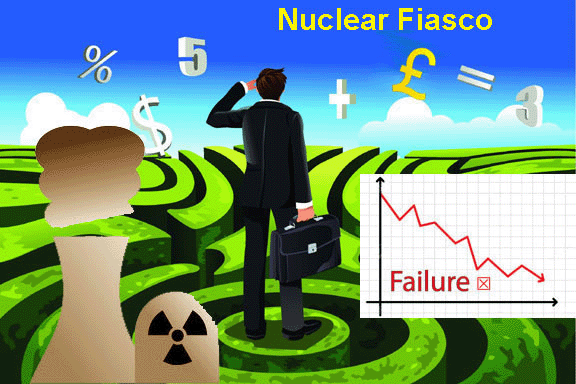
Of course all bets on stability are off in the event of a meltdown — and in terms of catastrophes compared to anything possible with solar or wind, you might also say it’s not even close.
But in the end, nuclear is complicated — and it only takes a tsunami, fat finger on the control panel or mechanical breakdown to once again become reacquainted with the fallout.
Vishesh Raisinghani, Sun, June 4, 2023 https://finance.yahoo.com/news/nuclear-energy-just-helped-finland-110000152.html
The first new European nuclear plant in 16 years has already slashed Finland’s energy bill by three-fourths.
Olkiluoto 3, or OL3, joins two existing reactor units that have powered Finland’s grid for decades. This latest unit adds 1,600 megawatts to the plant’s production capacity — which means 30% of the nation’s electricity will soon come from just one plant on a tiny island in Western Finland.
When the new OL3 unit was fully activated in April, average spot electricity prices fell to €60.55 ($65.69) per megawatt hour. That’s 75.38% lower than the average spot price in December 2022 (€245.98 per megawatt hour).
While its operating company TVO called it “the greatest single climate act in Finland,” others argue that the benefits are hardly worth the risks.
Here’s why most countries are cool on this technology.
Fear
High-profile incidents like at Three Mile Island, Chernobyl and Fukushima have severely impacted the reputation of nuclear energy. Even if an overwhelming number of plants are safe, it only takes one accident to render the land around a plant uninhabitable.
In the U.S., “nukes” (as protesting musicians nicknamed them in the 1980s) continue to be unpopular. The number in the U.S. has dropped from a peak of 107 in 1990 to 93 as of 2022, according to the Pew Research Center.
Roughly 1-in-4 Americans say their government should actively discourage nuclear energy production, which could explain why so few plants have been built over the last 10 years. Yet fear is only part of the equation, as the financial bottom line also plays a crucial role in the lack of any nuclear energy embrace.
Cost
New nuclear power plants are mostly being built in countries where all infrastructure is cheaper to build. China is currently developing 24 new plants — the most in the world. Meanwhile, India is building eight new reactors. It’s simply cheaper to build plants in these regions.
According to the World Nuclear Association, the overnight cost of building a new plant in China, which assumes no interest payments, is $2500/kWe, while the cost in the U.S. is $6041/kWe (short for kilowatt-electric or one thousand watts of electric capacity). This price disparity is another reason why nuclear power isn’t favored in the developed world — though the causes go far beyond this.
Time
Nuclear power takes several years to deploy — and that’s on the conservative end. A plant can typically be constructed over a period of five years. However, regulatory and financial hurdles could delay these projects along the way. Meanwhile, a typical wind farm can be fully deployed in as little as six months, according to EDF Energy.
The classic example of how mismanaged a nuclear project can get is as close as Georgia. There, the third reactor at Plant Vogtle went online at full capacity in late May but was supposed to start generating power in 2016. It was approved for construction in 2009, and overruns pushed the cost to more than $17 million; combined with a fourth reactor still in the testing phase, the total price comes to a staggering $35 billion.
‘The most reliable source’
Indeed, time and cost ultimately represent the biggest barrier to adoption. Even Finland’s energy experts understand the commercial challenges. “[Nuclear] it seems is not very attractive for the investors,” Jukka Ruusunen, chief executive of Finland’s national grid operator Fingrid, told The National.
However, nuclear power has several non-commercial advantages. Unlike wind and solar, nuclear energy output is stable regardless of weather and sunshine hours. The U.S. Energy Department once called it “the most reliable energy source and it’s not even close.”
Of course all bets on stability are off in the event of a meltdown — and in terms of catastrophes compared to anything possible with solar or wind, you might also say it’s not even close.
Russia’s invasion of Ukraine has also highlighted nuclear’s potential to deliver national security and energy independence. Yet the near catastrophes at the Chernobyl plant during the war almost seem to counteract that fact.
On the upside, Finland’s new nuclear plant has helped it avoid blackouts despite sanctions on Russian energy and could help explain why several other European countries are also now pushing for more nuclear power.
But in the end, nuclear is complicated — and it only takes a tsunami, fat finger on the control panel or mechanical breakdown to once again become reacquainted with the fallout.
Concern over low flying aircraft circling over Hunterston nuclear power station
Concerns have been raised with civil nuclear police over low flying
aircraft over Hunterston. Aircraft apps showed that a Pilatus PC-6/B2-H4
plane repeatedly circled the nuclear power plant – leading to the matter
being raised by a concerned resident at a public meeting this week.
West Kilbride community councillor John Lamb, who was attending the Hunterston
Site Stakeholders Group, asked the civil nuclear police if they were aware
that there was low flying aircraft over the power station zone.
The incident happened on May 25 and the fFlightradar app showed that the plane
travelled across Ayrshire before repeatedly circling Hunterston. Mr Lamb
asked if the Civil Aviation Authority had altered the guidance regarding
the ‘no flight zone’ over Hunterston. Inspector Paul Gilmartin of the Civil
Nuclear Police told the meeting that he was unaware of any reports of low
flying aircraft and the matter had not been flagged up to him.
Largs & Millport Weekly News 2nd June 2023
1 This Month
10 March A LIVE WEBINAR THE REAL EFFECTS OF NUCLEAR POWER
What the Industry Isn’t Telling Us
1:00 PM Mountain, 2 pm Central, 3 pm Eastern. Live on the Keepers of the Water Facebook page

18 March Webinar @ 1 PM EST: An Assessment of SMR Projects: The Case of Canada
register for the zoom:
https://us02web.zoom.us/webinar/register/WN_o8BIIOUvQ2ONJR1nta65DQ#/registration


of the week – STOP SMALL MODULAR REACTORS IN CANADA
To see nuclear-related stories in greater depth and intensity – go to https://nuclearinformation.wordpress.com
-
Archives
- February 2026 (268)
- January 2026 (308)
- December 2025 (358)
- November 2025 (359)
- October 2025 (376)
- September 2025 (258)
- August 2025 (319)
- July 2025 (230)
- June 2025 (348)
- May 2025 (261)
- April 2025 (305)
- March 2025 (319)
-
Categories
- 1
- 1 NUCLEAR ISSUES
- business and costs
- climate change
- culture and arts
- ENERGY
- environment
- health
- history
- indigenous issues
- Legal
- marketing of nuclear
- media
- opposition to nuclear
- PERSONAL STORIES
- politics
- politics international
- Religion and ethics
- safety
- secrets,lies and civil liberties
- spinbuster
- technology
- Uranium
- wastes
- weapons and war
- Women
- 2 WORLD
- ACTION
- AFRICA
- Atrocities
- AUSTRALIA
- Christina's notes
- Christina's themes
- culture and arts
- Events
- Fuk 2022
- Fuk 2023
- Fukushima 2017
- Fukushima 2018
- fukushima 2019
- Fukushima 2020
- Fukushima 2021
- general
- global warming
- Humour (God we need it)
- Nuclear
- RARE EARTHS
- Reference
- resources – print
- Resources -audiovicual
- Weekly Newsletter
- World
- World Nuclear
- YouTube
-
RSS
Entries RSS
Comments RSS
 nuclear-news