An Open Letter to the Australian Government from concerned scholars regarding the AUKUS Agreement
By Concerned Academics and ExpertsMay 24, 2023, https://johnmenadue.com/an-open-letter-to-the-australian-government-from-concerned-scholars-regarding-the-aukus-agreement/
We the undersigned are scholars of the humanities and social sciences and other disciplines with expertise in the following issues. We write this open letter to express our concerns regarding the Australia, United Kingdom, United States (AUKUS) trilateral security agreement. Specifically, our concerns relate to pillar one of the agreement, the joint development with the US and the UK of a nuclear-powered submarine (SSN) capability for Australia.
The underlying strategic rationale behind the AUKUS decision has not been adequately explained to the Australian public. Even if it is argued that the SSNs may provide certain capability advantages, the government has not made clear how AUKUS will translate into a safer Australia.
AUKUS will come at a huge financial cost and with great uncertainty of its success. It is likely to compound Australia’s strategic risks, heighten geopolitical tensions, and undermine efforts at nuclear non-proliferation. It puts Australia at odds with our closest neighbours in the region, distracts us from addressing climate change, and risks increasing the threat of nuclear war. Australia’s defence autonomy will only be further eroded because of AUKUS. All of this will be done to support the primacy of an ally whose position in Asia is more fragile than commonly assumed, and whose domestic politics is increasingly unstable
There is no question that a submarine capability is critical for Australia’s defence, particularly for undertaking surveillance and protecting our maritime approaches. The central and critical question, however, is does defending Australia require the offensive long-range power-projection capabilities provided by SSNs?
The answer provided by Defence, and successive Australian governments, has until recently been consistently in the negative. The procurement of French-designed diesel-electric powered submarines, initially sought to replace the ageing Collins-class boats, would be, it was promised, ‘regionally superior’. Now, we are told, it is only the superior attributes of SSNs that fulfil Australia’s defence requirements.
Perhaps this is the case. But Australia should not proceed based solely on these publicly untested assumptions. Peter Varghese, former head of the Office of National Assessments and the Department of Foreign Affairs and Trade, makes the salient point that AUKUS is too momentous a decision to be left to the ‘echo chamber’ of classified discussions. It demands a yet to be had ‘proper and forensic public discussion about other options and their underlying rationale’.
SSNs, it has been proclaimed, are superior vessels when compared to conventionally-powered submarines in terms of stealth, speed, manoeuvrability, endurance, and survivability. This is correct in some respects, but only to an extent, and with important qualifications. Many of the apparent advantages of SSNs are conditional on the specific operational environment, and technological developments may render them less stealthy and effective than defence officials assume.
More importantly, possible superior capabilities alone do not translate into direct defence benefits, and many of the claims made in favour of SSNs enhancing Australia’s security do not survive scrutiny. For example, it’s been argued that the superior speed and endurance of SSNs provides advantages for protecting Australia’s vital shipping routes. However, the volume of our seaborne trade is much too large to patrol effectively, and that which passes through the South China Sea goes mainly to China.
Similarly, the argument that SSNs are required to protect Australia’s undersea communications infrastructure is overstated. Spread across a large geographic area, undersea cables are difficult to protect militarily, vulnerable to attack not only by submarines but also by relatively unsophisticated and cheap underwater technologies.
Significantly, there has been no compelling strategic argument made for why a small number of expensive nuclear-powered submarines confers greater defence advantages rather than a much larger number of cheaper conventionally powered ones.
Whatever the tally of defence benefits that SSNs might offer Australia, they must be carefully weighed against the costs and risks.
With an official estimate of up to $368 billion, almost certain to rise to even greater heights, AUKUS constitutes the most expensive defence procurement in Australian history by a wide margin. Equally importantly, the significant and ongoing opportunity costs and trade-offs this presents for defence and broader social spending are not easily dismissed.
Constructing SSNs will be one of the biggest engineering feats Australia has ever undertaken. There are immense execution risks involved in this effort to build, operate, maintain, and crew eight SSNs, and two types of boat simultaneously – the existing American Virginia-class and the yet to be designed AUKUS-class – with no experience in the management of nuclear-propulsion technology.
The political uncertainly inherent across all three nations, over a period of 10 terms of the Australian government, also raises the risk profile. It seems imprudent to hitch Australia’s most expensive and lethal defence capability to an increasingly uncertain ally that is in relative decline, politically unstable, and exhibiting troubling signs of sliding into an illiberal democracy.
Australia’s future nuclear naval reactors, fuelled by weapons-grade uranium, will not be subject to routine International Atomic Energy Agency (IAEA) safeguards on the grounds of protecting sensitive American military information. Although Australia is in negotiations with the IAEA to develop alternative safeguards, this establishes a troubling precedent for other non-nuclear armed states to exploit, and risks undermining international controls to prevent nuclear proliferation.
Australia’s degree of dependence on the United States to safely operate the SSNs is likely be high and risks the possibility of a US veto over their operation. It may not be wholly unusual for Australia to have limited operational sovereignty of its defence assets, but as former prime minister Malcolm Turnbull has remarked, AUKUS takes this dependency to new heights. The pressure to submit this capability to American strategic interests will be almost impossible to resist.
Still, the most significant risks are strategic. The tripartite enterprise risks incorporating Australia into the more offensive-oriented aspects of our American ally’s military strategy in East Asia, most worryingly with respect to nuclear warfare. AUKUS will equip Australia with a potent capability to strike Chinese naval forces close to their home ports and, in coalition with the US, play a frontline role in hunting China’s nuclear-armed submarine force and its second-strike nuclear deterrent capability. ‘For this reason alone’, warns the Australia Institute’s International and Security Affairs head, Allan Behm, ‘China will view Australia’s decision as a wilful contribution to an existential nuclear threat to China’.
Many of our closest neighbours in Southeast Asia and the Southwest Pacific have expressed concerns that the agreement will heighten geopolitical tensions, contribute to a regional arms race, and undermine nuclear non-proliferation. Such criticism reflects that AUKUS is at odds with regional desires to achieve a peaceful and balanced strategic order, and with the deep antinuclear sentiment that is an especially central element of Pacific regionalism.
Pacific island states have made clear that their primary and immediate security concern is climate change, and expressed the view that AUKUS indicates a lack of serious commitment from Australia in helping them to deal with that risk. Pacific voices should remind us that we too are facing a first-order strategic threat from climate change, and AUKUS serves as a distraction from addressing that critical threat to our security.
Put simply, the public case for AUKUS has yet to be made with any degree of rigour or reliability. The government must justify how the agreement will make Australia safer and at an acceptable cost. We the undersigned call on the government not to proceed with pillar one of AUKUS until and unless the questions and issues raised in this letter are adequately explained and addressed.
Signatories (as of 23 May 2023): (There’s a lot of them – here
Continue readingAfter AP report, Iran’s nuclear chief says Tehran to cooperate with inspectors on ‘new activities’
The head of Iran’s nuclear program is insisting that his nation will cooperate with international inspectors on any “new activities” regarding its nuclear sector
abc news, ByJON GAMBRELL Associated Press, May 24, 2023
DUBAI, United Arab Emirates — The head of Iran’s nuclear program insisted Wednesday that his government would cooperate with international inspectors on any “new activities.” His statement followed an exclusive Associated Press report about Tehran’s new underground tunnel system near a nuclear enrichment facility.
The AP outlined this week how deep inside a mountain, the new tunnels near the Natanz facility are likely beyond the range of a last-ditch U.S. weapon designed to destroy such sites…………………. more https://abcnews.go.com/Technology/wireStory/after-ap-report-irans-nuclear-chief-tehran-cooperate-99562281
South Korean nuclear experts to tour Fukushima plant amid water concerns
Japan Times, BY ERIC JOHNSTON. STAFF WRITER. May 22, 2023
A team of South Korean experts arrived in Japan on Sunday for an unprecedented six-day visit that will include a trip on Tuesday to the crippled Fukushima No. 1 nuclear power plant, where the government is planning to release treated water into the ocean as part of a decadeslong decommissioning process.
Concerned about the aftereffects of the March 2011 nuclear disaster, South Korea continues to uphold a ban on seafood and marine imports from the area around the Fukushima No. 1 plant, despite Japanese government insistence the food is safe.
Nuclear Safety and Security Commission Chairperson Yoo Guk-hee is heading a 21-member team of government experts, who on Monday met with nuclear officials from plant operator Tokyo Electric Power Company Holdings (Tepco) and various government agencies that oversee Japan’s nuclear power industry. They will tour the plant on Tuesday and Wednesday, paying particular attention to Japan’s plans to discharge treated water, currently being stored at Fukushima No. 1, into the ocean……………. https://www.japantimes.co.jp/news/2023/05/22/national/south-korean-experts-fukushima-tour/
Hinkley Point C – Why nuclear power accelerates carbon emissions

https://bhesco.co.uk/blog/hinkley-point-c-why-nuclear-power-accelerates-carbon-emissions Kayla Ente on 21/04/2023 These carbon emissions have already been absorbed in the atmosphere, long before the plant starts producing electricity. Renewable sources of energy (like the three windfarms in Kent powering 400,000 homes) are cheaper, come with much less associated environmental destruction, and have a carbon footprint a fraction of the carbon emissions produced by the concrete footprint of nuclear power.
by Kayla Ente on 21/04/2023
In August 2018, Prof Andy Stirling and Dr Phil Johnstone published their working paper exposing the link between the fissile material produced by nuclear power plants and its importance for military purposes, where depleted uranium is used in weaponry and in submarines1.
The British government now openly admits that the taxpayer subsidises nuclear used for military purposes in our energy bills2. This is the motivation behind the ‘Regulated Asset Base’ (RAB) funding model proposed by the Government to finance new nuclear power. We will all pay for the construction of new nuclear power plants through higher energy bills.
Nuclear power is expensive, toxic and there is no solution for its long term storage. It is powerfully destructive, not only for its use in weaponry, but also leads to an increase in levels of radioactive materials in the air, as has been measured at the Atomic Weapons Establishment in Aldermaston3.
As cancer rates in the UK rise to unprecedented heights, access to health care declines, and more people and businesses cannot afford to pay their energy bills, one must question the wisdom of UK energy policy and how it is manipulated to our detriment.
Hinkley Point C will produce 25TWh of electricity per year. As the electricity is produced whether there is demand for it or not, because a nuclear power plant cannot be switched off spontaneously, the present system of financing means that the taxpayer will fund the wastage that occurs on the grid when nuclear powered electricity generated is not used.
Historically, approximately 64% of energy produced by the centralised energy generation and transmission system has been wasted4. This happens in the production of electricity – the efficiency of the plants themselves, the heat generated that is wasted and the transmission and distribution of electricity across the country. Therefore, the projected carbon emissions savings are overstated because most of the electricity produced is not used, or worse, clean renewable power is switched off to manage oversupply of electricity on the grid.
Construction on the 3.26GW Hinkley Point C nuclear power plant in Somerset began in 2016. Unprecedented feats of engineering have been achieved during the process, of which engineers are rightly proud.
In total, 74,600 tonnes of concrete has been poured to construct its base, the four intake heads and two outfall heads. 3km of cement tunnels have been constructed to expel the cooling water for the plant into the Bristol Channel.
These carbon emissions have already been absorbed in the atmosphere, long before the plant starts producing electricity. Renewable sources of energy (like the three windfarms in Kent powering 400,000 homes) are cheaper, come with much less associated environmental destruction, and have a carbon footprint a fraction of the carbon emissions produced by the concrete footprint of nuclear power.
The newest nuclear renaissance, “Great British Nuclear” is part of the government’s efforts to include nuclear power in the UK green taxonomy, i.e. that nuclear power is considered to be “environmentally sustainable”. Many see this as part of the government’s attempts to defer important investment away from wind and solar power developments (combined with investment in grid scale energy storage to ensure reliability). Because wind and solar power are the cheapest source of electricity, they embed affordability into our self sufficient energy future. They also bring higher gross value added to government accounts, as opposed to investments in carbon capture and storage which only add to the cost of generation, just to continue burning fossil fuels.
By focusing efforts on investing in partnerships with other NATO aligned countries (the USA spends $840 billion every year on its “defence” programme) in the spirit of Brexit, this government irresponsibly spends taxpayer’s money on programmes that maintain business as usual to burn fossil fuels and promote nuclear power instead of protecting its people during times of unprecedented suffering in social care, health care and energy security.
BHESCo have been saying for years that new nuclear power is a bad deal for the UK taxpayer and for the planet. Our Government should be directing its investment towards a national energy efficiency improvement campaign while encouraging the development of clean, renewable energy generation and energy storage.
America’s Wars and the US Debt Crisis

To surmount the debt crisis, America needs to stop feeding the Military-Industrial Complex, the most powerful lobby in Washington.
JEFFREY D. SACHS, May 20, 2023, Common Dreams https://www.commondreams.org/opinion/military-spending-debt-crisis
In the year 2000, the U.S. government debt was $3.5 trillion, equal to 35% of the Gross Domestic Product (GDP). By 2022, the debt was $24 trillion, equal to 95% of GDP. The U.S. debt is soaring, hence America’s current debt crisis. Yet both Republicans and Democrats are missing the solution: stopping America’s wars of choice and slashing military outlays.
Suppose the government’s debt had remained at a modest 35% of GDP, as in 2000. Today’s debt would be $9 trillion, as opposed to $24 trillion. Why did the U.S. government incur the excess $15 trillion in debt?
The single biggest answer is the U.S. government’s addiction to war and military spending. According to the Watson Institute at Brown University, the cost of U.S. wars from fiscal year 2001 to fiscal year 2022 amounted to a whopping $8 trillion, more than half of the extra $15 trillion in debt. The other $7 trillion arose roughly equally from budget deficits caused by the 2008 financial crisis and the Covid-19 pandemic
Facing down the military-industrial lobby is the vital first step to putting America’s fiscal house in order
To surmount the debt crisis, America needs to stop feeding the Military-Industrial Complex (MIC), the most powerful lobby in Washington. As President Dwight D. Eisenhower famously warned on January 17, 1961, “In the councils of government, we must guard against the acquisition of unwarranted influence, whether sought or unsought, by the military-industrial complex. The potential for the disastrous rise of misplaced power exists and will persist.” Since 2000, the MIC led the U.S. into disastrous wars of choice in Afghanistan, Iraq, Syria, Libya, and now Ukraine.
The Military-Industrial Complex long ago adopted a winning political strategy by ensuring that the military budget reaches into every Congressional district. The Congressional Research Service recently reminded Congress that, “Defense spending touches every Member of Congress’s district through pay and benefits for military servicemembers and retirees, economic and environmental impact of installations, and procurement of weapons systems and parts from local industry, among other activities.” Only a brave member of Congress would vote against the military-industry lobby, yet bravery is certainly no hallmark of Congress.
America’s annual military spending is now around $900 billion, roughly 40% of the world’s total, and greater than the next 10 countries combined. U.S. military spending in 2022 was triple that of China. According to Congressional Budget Office, the military outlays for 2024-2033 will be a staggering $10.3 trillion on current baseline. A quarter or more of that could be avoided by ending America’s wars of choice, closing down many of America’s 800 or so military bases around the world, and negotiating new arms control agreements with China and Russia.
Yet instead of peace through diplomacy, and fiscal responsibility, the MIC regularly scares the American people with a comic-book style depictions of villains whom the U.S. must stop at all costs. The post-2000 list has included Afghanistan’s Taliban, Iraq’s Saddam Hussein, Syria’s Bashar al-Assad, Libya’s Moammar Qaddafi, Russia’s Vladimir Putin, and recently, China’s Xi Jinping. War, we are repeatedly told, is necessary for America’s survival.
A peace-oriented foreign policy would be opposed strenuously by the military-industrial lobby but not by the public. Significant public pluralities already want less, not more, U.S. involvement in other countries’ affairs, and less, not more, US troop deployments overseas. Regarding Ukraine, Americans overwhelmingly want a “minor role” (52%) rather than a “major role” (26%) in the conflict between Russia and Ukraine. This is why neither Biden nor any recent president has dared to ask Congress for any tax increase to pay for America’s wars. The public’s response would be a resounding “No!”
While America’s wars of choice have been awful for America, they have been far greater disasters for countries that America purports to be saving. As Henry Kissinger famously quipped, “To be an enemy of the United States can be dangerous, but to be a friend is fatal.” Afghanistan was America’s cause from 2001 to 2021, until the U.S. left it broken, bankrupt, and hungry. Ukraine is now in America’s embrace, with the same likely results: ongoing war, death, and destruction.
The military budget could be cut prudently and deeply if the U.S. replaced its wars of choice and arms races with real diplomacy and arms agreements. If presidents and members of congress had only heeded the warnings of top American diplomats such as William Burns, the U.S. Ambassador to Russia in 2008, and now CIA Director, the U.S. would have protected Ukraine’s security through diplomacy, agreeing with Russia that the U.S. would not expand NATO into Ukraine if Russia also kept its military out of Ukraine. Yet relentless NATO expansion is a favorite cause of the MIC; new NATO members are major customers of U.S. armaments.
The U.S. has also unilaterally abandoned key arms control agreements. In 2002, the U.S. unilaterally walked out of the Anti-Ballistic Missile Treaty. And rather than promote nuclear disarmament—as the U.S. and other nuclear powers are required to do under Article VI the Nuclear Non-Proliferation Treaty—the Military-Industrial Complex has sold Congress on plans to spend more than $600 billion by 2030 to “modernize” the U.S. nuclear arsenal.
Now the MIC is talking up the prospect of war with China over Taiwan. The drumbeats of war with China are stoking the military budget, yet war with China is easily avoidable if the U.S. adheres to the One-China policy that properly underpins U.S.-China relations. Such a war should be unthinkable. More than bankrupting the U.S., it could end the world.
Military spending is not the only budget challenge. Aging and rising healthcare costs add to the fiscal woes. According to the Congressional Budget Office, debt will reach 185 percent of GDP by 2052 if current policies remain unchanged. Healthcare costs should be capped while taxes on the rich should be raised. Yet facing down the military-industrial lobby is the vital first step to putting America’s fiscal house in order, needed to save the U.S., and possibly the world, from America’s perverse lobby-driven politics.
Australian Prime Minister Albanese refuses to meet with Assange’s wife
Oscar Grenfell@Oscar_Grenfell, 22 May 2023, WSWS,
Asked by independent MP Andrew Wilkie why he would not meet with Mrs Assange, Albanese brushed aside the question, declaring: “Who I meet with is determined by the priorities that my office has.”
Over the past month, Albanese has met with a multitude of business tycoons. He attended the wedding of right-wing radio shock jock Kyle Sandilands, alongside a convicted drug dealer and reputed crime boss. Most recently, Albanese fawned over US President Joe Biden in Tokyo on the weekend. Biden is overseeing the attempt to extradite Assange from Britain, and imprison him for 175 years for exposing American war crimes.
Albanese proclaimed in parliament, he was not interested in meeting Assange’s wife, which he said would be akin to a “demonstration” and “grandstanding.” Albanese sought to dress up the refusal by reiterating vague comments that “enough is enough” in relation to the Assange case, and he cannot see that anything is served by the WikiLeaks founder’s continued incarceration.
While Albanese claims he has made this position clear to the US administration, there is no evidence of that, including in extensive correspondence obtained under freedom of information requests between various American and Australian government bodies. Labor continues to give carte blanche to the very administration seeking Assange’s destruction.
The obvious question is: if Albanese won’t even meet with Assange’s wife, a basic act of respect and courtesy that he has extended to thousands of others over the course of his year in office, why would anyone think the prime minister is waging a fight for the imprisoned Australian journalist’s freedom behind closed doors?
As part of her visit to Australia, Stella Assange yesterday addressed the National Press Club in Canberra.
The speech was a powerful plea for Assange’s freedom, an exposure of the draconian conditions under which he is detained in Britain’s maximum-security Belmarsh Prison and a clear outline of the fundamental issues of democratic rights at stake in the attempted prosecution of her husband.
Stella noted a groundswell of support for Assange. She stated: “I would like to thank the overwhelming dedication of the Australian people, who have brought about a sea change in awareness and solidarity for Julian’s plight. This unity in support for my husband is a source of enormous encouragement for our family. It nurtures Julian’s ability to continue on.”
She added: “The reality is that to regain his freedom, Julian needs the support of his home country. This is a political case, and it needs a political solution.”
In discussing her presence in Australia, and also what she speaks about with her husband, Stella stressed Assange’s connection to Australia. He had been raised in the country, and had shared his extensive memories, from surfing in Byron Bay, to beekeeping in Melbourne’s Dandenong Ranges and riding a horse in the New South Wales Northern Rivers.
“That’s how I imagine Julian when he is free,” she said………………………..
Stella outlined the draconian security procedures required for her and her two children to visit their father. They had to pass innumerable checkpoints, searches and scans for their visits. The children had only ever seen their father in the inhospitable prison visiting room. For the elder of the two, now six years old, “Prisons feature in his dreams and his nightmares.”
Turning to the case, Stella stated: “A 175 year sentence is a living death sentence. A prospect so desperate that the English court found that it would drive him to take his own life, rather than live forever in hell. We must do everything we can to ensure that Julian never, ever, sets foot in a US prison. Extradition in this case is a matter of life and death.”
She explained: “For most people, Julian is a symbol. A symbol of staggering injustice, because he is in prison on trumped up charges for exposing the crimes of others. A symbol because he faces a bewildering 175 year sentence for publishing the truth. A symbol of a sophisticated form of state violence dressed up in complexity and indirection that not even Franz Kafka could have imagined.
“For the press and the public, Julian’s case is the most brutal attack on press freedom that the Western world has seen in the last 70 years. A foreign government is using the political offences in its statute books to indict a foreign national abroad, because of what he or she published in a different country.
“Accurate, damning publications exposing their war crimes. If sovereignty is to mean anything, if jurisdiction is a proper legal and political reality, the case against Julian cannot be understood as anything other than an absurdity.”
Despite the dire threat to press freedom, the address was largely subjected to a media boycott. Only a handful of nationally-recognised journalists attended. Several prominent publications sent junior staff, fresh out of university, armed only with arrogance and obnoxious questions based on the slanders that have been used to attack Assange.
The shameful display underscored the fact that broad sections of the official media function as nothing more than state propagandists. While they are cheering on each new step in Australia’s integration into the US preparations for war with China, this corrupted layer is hostile to a genuine journalist who exposed war crimes………………………………………. https://www.wsws.org/en/articles/2023/05/23/gavm-m23.html?fbclid=IwAR180uIICBGtiZ8Fb3gyk6bwi2YScNh7OxnAQDK0979TWB0XNzNFuUBpSso
Seymour Hersh: The Ukraine Refugee Question
Ukraine’s neighbors push for Zelensky to pursue peace as millions of displaced people flow into Europe. By Seymour Hersh / Substack https://scheerpost.com/2023/05/19/seymour-hersh-the-ukraine-refugee-question/
Last Saturday the Washington Post published an exposé of classified American intelligence documents showing that Ukrainian President Volodymyr Zelensky, working behind the back of the Biden White House, pushed hard earlier this year for an expanded series of missile attacks inside Russia. The documents were part of a large cache of classified materials posted online by an Air Force enlisted man now in custody. A senior official of the Biden administration, asked by the Post for comment on the newly revealed intelligence, said that Zelensky has never violated his pledge never to use American weapons to strike inside Russia. In the view of the White House, Zelensky can do no wrong.
Zelensky’s desire to take the war to Russia may not be clear to the president and senior foreign policy aides in the White House, but it is to those in the American intelligence community who have found it difficult to get their intelligence and their assessments a hearing in the Oval Office. Meanwhile, the slaughter in the city of Bakhmut continues. It is similar in idiocy, if not in numbers, to the slaughter in Verdun and the Somme during World War I. The men in charge of today’s war—in Moscow, Kiev, and Washington—have shown no interest even in temporary ceasefire talks that could serve as a prelude to something permanent. The talk now is only about the possibilities of a late spring or summer offensive by either party.
But something else is cooking, as some in the American intelligence community know and have reported in secret, at the instigation of government officials at various levels in Poland, Hungary, Lithuania, Estonia, Czechoslovakia, and Latvia. These countries are all allies of Ukraine and declared enemies of Vladimir Putin.
This group is led by Poland, whose leadership no longer fears the Russian army because its performance in Ukraine has left the glow of its success at Stalingrad during the Second World War in tatters. It has been quietly urging Zelensky to find a way to end the war—even by resigning himself, if necessary—and to allow the process of rebuilding his nation to get under way. Zelensky is not budging, according to intercepts and other data known inside the Central Intelligence Agency, but he is beginning to lose the private support of his neighbors.
One of the driving forces for the quiet European talks with Zelensky has been the more than five million Ukrainians fleeing from the war who have crossed the country’s borders and have registered with its neighbors under an EU agreement for temporary protection that includes residency rights, access to the labor market, housing, social welfare assistance, and medical care. An assessment published by the UN High Commissioner for Refugees reports that the estimate excludes roughly 3 million Ukrainian refugees who escaped from the war zone without a visa into any of the 27 European nations that have abolished border control between each other under the Schengen agreement. Ukraine, though not in the EU, now enjoys all the benefits of the Schengen pact. A few nations, exhausted by the 15-month war, have reintroduced some forms of border control, but the regional refugee crisis will not be resolved until there is a formal peace agreement.
The UNHRC reports that free travel from Ukraine into the Baltic states and EU states in Western Europe “makes it particularly difficult to determine exactly how many Ukrainians have reached the EU in the last few months, and where they are now.” The report says the “vast majority” of the Ukrainian refugees are women and children, and one third of them are under the age of eighteen. Seventy-three per cent of the refugees of working age are women, many with children.
A February analysis of the European refugee issue by the Council on Foreign Relations found that “tens of billions of dollars” in humanitarian aid were poured into Ukraine’s neighbors during the war’s first year. “As the conflict enters its second year with no end in sight,” the report says, “experts worry that host countries are growing fatigued.”
Weeks ago I learned that the American intelligence community was aware that some officials in Western Europe and the Baltic states want the war between Ukraine and Russia to end. These officials have concluded that it is time for Zelensky to “come around” and seek a settlement. A knowledgeable American official told me that some in the leadership in Hungary and Poland were among those working together to get Ukraine involved in serious talks with Moscow. “Hungary is a big player in this and so are Poland and Germany, and they are working to get Zelensky to come around,” the American official said. The European leaders have made it clear that “Zelensky can keep what he’s got”—a villa in Italy and interests in offshore bank accounts—“if he works up a peace deal even if he’s got to be paid off, if it’s the only way to get a deal.”
So far, the official said, Zelensky has rejected such advice and ignored offers of large sums of money to ease his retreat to an estate he owns in Italy. There is no support in the Biden Administration for any settlement that involves Zelensky’s departure, and the leadership in France and England “are too beholden” to Biden to contemplate such a scenario. There is a reality that some elements in the American intelligence community can’t ignore, the official said, even if the White House is ignoring it: “Ukraine is running out of money and it is known that the next four or months are critical. And Eastern Europeans are talking about a deal.” The issue for them, the official told me, “is how to get the United States to stop supporting Zelensky,” The White House support goes beyond the needs of the war: “We are paying all of the retirement funds—the 401k’s—for Ukraine.”
And Zelensky wants more, the official said. “Zelensky is telling us that if you want to win the war you’ve got to give me more money and more stuff. He tells us, ‘I’ve got to pay off the generals.’ He’s telling us”—if he is forced out of office—“he’s going to the highest bidder. He’d rather go to Italy than stay and possibly get killed by his own people.”
“All of this talk is being reported and is now flying around inside the American intelligence community, but, as usual,” the official said, “it’s not clear to the intelligence community what the president and his foreign policy aides in the White House know of the reality” of the European discussion about finding a way to end the war. “We are still training Ukrainians how to fly our F-16s that will be shot down by Russia as soon as they get into the war zone. The mainstream press is dedicated to Biden and the war and Biden is still talking about the Great Satan in Moscow while the Russian economy is doing great. Putin can stay where he is”—in power—“despite his failure to wipe Ukraine off the map as an independent state. And he thought he would win the war with just one airborne division”—a sardonic reference to Russia’s failed effort in the first days of the war to seize a vital airport by parachuting in an attack force.
“Europe’s problem,” the official said, in terms of getting a quick settlement to the war, “is that the White House wants Zelensky to survive while there are others”—in Russia and in some European capitals—“who say Zelensky has got to go, no matter what,”
It’s not clear that this understanding has gotten to the Oval Office. I have been told that some of the better intelligence about the war does not reach the president, through no fault of those who prepare the often contrary assessments. Biden is said to rely on briefings and other materials prepared by Avril Haines, director of National Intelligence, since the Biden Administration came into office. She has spent much of her career working for Secretary of State Anthony Blinken, whose ties to Biden and agreement with him on matters pertaining to Russia and China go back decades.
The one saving grace for some in the community, I have been told, has been CIA Director William Burns. Burns was ambassador to Russia and deputy secretary of State and is seen as someone “who has come around” in opposition to some of the White House’s foreign policy follies. “He doesn’t want to be a rat on a sinking ship,” the official told me.
On the other hand, I have been told, it’s not clear to those in the CIA who prepare the President’s Daily Brief that Joe Biden is a regular reader of their intelligence summary. The document is usually three pages. Decades ago I was told—by someone who begged me not to write about it at the time—that Ronald Reagan rarely read the PDB until Colin Powell, then in the White House, began reading it to a video recorder. The tape would then be played for the president. It’s unclear who, if anyone, might take the initiative as Biden’s Colin Powell.
NOTE TO SCHEERPOST READERS: We are happy to be able to run some of Sy Hersh’s pieces from his new Substack venture. Please, if you can, sign up at seymourhersh.substack.com so you can support Sy Hersh’s work and the ability to bring it here on ScheerPost. Thank you!
AUKUS nuclear submarine bases in Western Australia will seriously weaken current safeguards against nuclear weapons proliferation

one of the possible strategic implications of the AUKUS submarine project is that it may set a dangerous new nuclear precedent for nuclear proliferation, eroding the international norms and institutions that currently safeguard against proliferation.
AUKUS drops the nuclear proliferation gauntlet
Accelerated plans to base nuclear subs in Western Australia by 2027 will significantly erode prevailing nuclear proliferation safeguards
Asia Times, By GABRIEL HONRADAMAY 24, 2023
The United States, United Kingdom and Australia have announced plans to base nuclear-powered submarines in Western Australia, using the Down Under area as an alternative to strategic bases in Guam while potentially sidestepping nuclear proliferation concerns.
The Insider reported this month that the Biden administration has established Submarine Rotational Forces–West (SRF-West), which are believed to consist of four US Virginia-class nuclear attack submarines (SSN) and one UK Astute-class SSN, and will operate out of HMAS Stirling at the western Australian city of Perth as early as 2027.
The Biden administration stated last month that SRF-West would “help build Australia’s stewardship. It will also bolster deterrence with more US and UK submarines forward in the Indo-Pacific.”
The Insider notes that the establishment of SRF-West comes at a time when US near-peer rivals China and Russia are expanding their submarine fleets, with Russia’s Yasen-class SSNs operating in the Atlantic and Pacific Oceans, and China’s nuclear-powered ballistic missile submarines (SSBNs) constantly patrolling the contested South China Sea.
Sidharth Kaushal notes in a March 2023 Royal United Services Institute (RUSI) article that Australian naval facilities that can base Virginia-class and Astute-class SSNs are relatively out of range from potential missile attacks, providing backup for Guam in case the latter is crippled by Chinese or North Korean “Guam Killer” missiles such as the DF-26 and Hwasong 14/15.
Kaushal notes that US overreliance on Guam has made US naval operations in the Pacific particularly vulnerable, with Guam’s possible loss in a conflict scenario substantially limiting the tempo of US submarine operations in the region and forcing US SSNs to travel longer distances for resupply.
Asia Times this month noted the various strategic challenges of defending Guam against missile attacks. Guam faces the perfect air and missile defense problem, as disjointed US missile defense systems on or near the island may not be effective against a saturation attack involving drones, ballistic missiles, cruise missiles and hypersonic weapons.
These unlinked missile defense systems consisting of the Terminal High Altitude Air Defense (THAAD) and Aegis-equipped nearby warships may fail first contact with advanced missiles, with the sheer number of missiles fired in a saturation attack demanding sensor fusion across various domains such as space and cyber to defeat hypersonic threats.
However, one of the possible strategic implications of the AUKUS submarine project is that it may set a dangerous new nuclear precedent for nuclear proliferation, eroding the international norms and institutions that currently safeguard against proliferation.
In a September 2021 article for Carnegie Endowment for Regional Peace, James Acton notes that AUKUS demonstrates a US double-standard regarding nuclear technology. In the context of AUKUS, Acton says that the bloc can make Australia the first non-nuclear armed state to remove nuclear material from the IAEA inspection system, setting a damaging new precedent for non-proliferation.
Acton mentions that while the Non-Proliferation Treaty (NPT) does not prohibit non-nuclear weapon states from building nuclear-powered ships, the IAEA cannot safeguard naval nuclear reactors, especially those on submarines, due to their secret locations and inaccessibility while submerged.
He also says that the IAEA Comprehensive Safeguards Agreement permits non-nuclear states to withdraw nuclear material for “non-proscribed military activity” such as naval reactors. That, Acton suggests, may set a precedent for other potential nuclear proliferators to exploit the IAEA’s loophole.
He notes that much of the world may see the US’s tacit consent for Australia to use the nuclear propulsion loophole while criticizing and punishing its adversaries for doing the same as a double standard, weakening the deterrent value of IAEA safeguards and making nuclear proliferation more likely.
South Korea in particular may take notice of the naval propulsion loophole to build its undersea nuclear deterrent, raising tensions with North Korea in an already volatile regional security environment.
Asia Times noted in June 2022 that the US and South Korea have agreed to share small modular reactor (SMR) technology, which can pave the way for the latter’s construction of nuclear submarines………………………………………………
Joel Ivre points out in a September 2021 Asia-Pacific Leadership Network article that AUKUS weakens South Korea’s commitment to nuclear non-proliferation, as nuclear-powered submarines present a much lower threshold for nuclear proliferation compared to a full nuclear weapons program………………………..
Other latent nuclear powers in Asia that may take notice of this weakening of proliferation safeguards are Japan and Taiwan, both of which have nuclear power programs and the likely resources, technology and know-how to assemble a nuclear weapon quickly should the perceived need arise. https://asiatimes.com/2023/05/aukus-drops-the-nuclear-proliferation-gauntlet/
USA pours $billions into Poland, in effort to market USA’s small and large nuclear reactors to Europe

The Road to US Nuclear Energy Revival May Run through Warsaw
BY Matt Bowen , Sagatom Saha • MAY 23, 2023
United States civil nuclear diplomacy is back on the move. Last month, the Export–Import Bank of the United States (EXIM) and the Development Finance Corporation (DFC) announced financing of up to $3 billion and $1 billion, respectively, to deploy US small modular reactors (SMRs) in Poland.[1] SMRs—smaller, more uniform designs intended to be factory-manufactured to lower nuclear energy costs—have benefited from congressional support and interagency interest in the Biden administration. This follows the Trump administration’s reversal of a legacy prohibition on DFC funding of US nuclear energy exports.
United States civil nuclear diplomacy is back on the move. Last month, the Export–Import Bank of the United States (EXIM) and the Development Finance Corporation (DFC) announced financing of up to $3 billion and $1 billion, respectively, to deploy US small modular reactors (SMRs) in Poland.[1] SMRs—smaller, more uniform designs intended to be factory-manufactured to lower nuclear energy costs—have benefited from congressional support and interagency interest in the Biden administration. This follows the Trump administration’s reversal of a legacy prohibition on DFC funding of US nuclear energy exports………..
The Polish Opportunity
With EXIM Bank and DFC having just signed letters of intent to support the deployment of the GE-Hitachi BWRX-300 SMR with Orlen Synthos Green Energy as the most recent example,[3] Poland has been the epicenter of the revival of US commercial nuclear diplomacy.
The 2020 US-Poland Intergovernmental Agreement (IGA) on nuclear energy cooperation[4] was a political commitment, and in 2021 the US Trade and Development Agency funded a front-end engineering (FEED) study for potential deployment of a AP1000 nuclear power plant.[5] These developments likely facilitated Poland’s selection of the Westinghouse AP1000 for large reactor builds in 2022.[6]
Separately, Poland-headquartered mining company KGHM announced a plan in 2023 to deploy modular reactors designed by the US company NuScale Power, and in April submitted an application to the Polish Ministry of Climate and Environment to build NuScale SMRs in Poland.[7]
Successfully deploying both large-scale reactors and SMRs in Poland could accelerate progress throughout a region (Romania, Slovakia, Estonia, Czech Republic, and Ukraine) that has coal plants in need of retirement by mid-century to meet decarbonization goals. Poland’s neighbors have, in some cases, handshake agreements to adopt US nuclear technologies. For example, at the 2021 United Nations Climate Change Conference in Glasgow, US special presidential envoy for climate John Kerry and Romanian president Klaus Iohannis jointly announced Romania’s intention to build NuScale SMRs. A May 2023 announcement at the G7 Leaders’ Summit included support for the Romanian SMR project of up to $275 million from the United States, Japan, Republic of Korea, and United Arab Emirates, as well as Letters of Interest issued by EXIM and DFC for potential support of up to $3 billion and $1 billion for project deployment – similar to potential package for Poland.[8] US diplomatic efforts also contributed to the Czech Republic at least excluding Russian and Chinese companies from a tender to build a new reactor that will entail roughly $6.6 billion of investment into the country.[9]
Financing the Deal
For all of the announcements, there are no done deals just yet. Part of Russia’s competitive edge in the past has stemmed from the ability of Rosatom, its state-owned enterprise, to offer a “one-stop shop” including favorable financing terms that private sector companies cannot match alone.[10] The United States will ultimately have to grapple with this challenge if it expects to be competitive in international markets.
To date, the US playbook in Poland has consisted of an IGA demonstrating US political commitment and an intent to finance; funding for FEED work from USTDA; and now, letters of intent from EXIM Bank and DFC. The process has been improvised and tactical, but it could be replicated elsewhere as part of a long-term, sustainable approach. The missing piece at the end—US government financing agencies’ ability to quickly finalize deals—could make the difference, especially as the United States competes with Russia and China for reactor supply deals.
The US may be able to improve the efficiency and terms of its reactor export financing offers to other countries through measures such as:…………………………………………………more https://www.energypolicy.columbia.edu/the-road-to-us-nuclear-energy-revival-may-run-through-warsaw/
60 Minutes Australia Keeps Churning Out War-With-China Propaganda

Australians are particularly vulnerable to propaganda because Australia has the most concentrated media ownership in the western world, dominated by a powerful duopoly of Nine Entertainment (who airs 60 Minutes) and the Murdoch-owned News Corp. This vulnerability is being fully exploited as the time comes for the western empire to beat the war drums against China.
CAITLIN JOHNSTONE, MAY 25, 2023 https://caitlinjohnstone.substack.com/p/60-minutes-australia-keeps-churning?utm_source=post-email-title&publication_id=82124&post_id=123620142&isFreemail=true&utm_medium=email
60 Minutes Australia has been playing a leading role in saturating Australian airwaves with consent-manufacturing messaging in support of militarising to participate in a US war against China. A segment they ran a year ago is titled “Prepare for Armageddon: China’s warning to the world,” and features an image of Xi Jinping overlaid with war planes and explosions and captioned “POKING THE PANDA”. Another from a year ago is titled “War with China: Are we closer than we think?” Another from ten months ago is titled “China’s new target in the battle to control the Pacific.” Another from six months ago is titled “Inside the battle for Taiwan and China’s looming war threat.” Another from two months ago is titled “Is the Navy ready? How the U.S. is preparing amid a naval buildup in China.”
All of these segments have millions of views on YouTube alone. Now this past weekend 60 Minutes Australia has aired back-to-back segments titled “The real Top Gun: US military in heated stand-off with China” and “Five countries secretly sharing intelligence say China is the No.1 threat,” both of which are as jaw-droppingly propagandistic as anything I’ve ever seen.
“It might sound like twisted logic, but military forces everywhere argue that the greater the firepower they possess, the greater the chance of maintaining peace,” opens 60 Minutes Australia’s Amelia Adams. “In other words, massive weaponry is the best deterrent to war. Right now the theory is being tested like never before, and much of it is happening in Australia’s backyard, the Indo-Pacific region. The United States wants the world, and more particularly China, to know of its increasing presence there, and to do that it’s putting on a spectacular show.”
What follows is 19 minutes of overproduced footage displaying this “massive weaponry” while Adams oohs and ahhs and gives slobberingly sycophantic interviews to US military officials.
“There’s something utterly mesmerising about the F-35 jet,” Adams moans. “The sound, the heat, and the power put this supersonic stealth fighter in a league of its own.”
“Colonel these are some very impressive machines you’re in charge of!” she gushes to an officer on an aircraft carrier.
“Yes ma’am,” the colonel replies.
Jesus lady, do your orgasming off camera.
Contrast this glowing ecstatic revelry with Adams’ open hostility later in the segment toward a Chinese think tanker named Henry Wang, claiming that he was trying to “rewrite history” for dismissing panic about a Chinese military buildup by pointing out (100 percent correctly) that China is spending a lower percentage of its GDP on its military than western nations.
“Every command, every maneuver, is being fine-tuned on this vast blue stage, where China has proven to be a bad actor, playing a long game of intimidating Pacific nations,” Adams proclaims over helicopter footage of US war ships. “But the US and its allies aren’t having it, bolstering their defenses — and it’s an impressive display.”
I defy you to find me footage more brazenly propagandistic than this, from any point in history. This is supposed to be a news show, run by people who purport to be journalists, yet they’re engaging in propaganda that looks like it came from a Sacha Baron Cohen spoof of a third world dictatorship.
As I never tire of pointing out, the claim that the US has been militarily encircling its number one geopolitical rival defensively is the single dumbest thing the empire asks us to believe these days. The US is surrounding China with war machinery in ways that it would consider an outrageously aggressive provocation if the same thing were done in its neck of the woods, which means the US is plainly the aggressor in this standoff, and China is plainly reacting defensively to those aggressions.
While the first segment unquestioningly regurgitates Pentagon narratives and gives supportive interviews to military officials, the second segment unquestioningly regurgitates talking points from the western intelligence cartel and gives supportive interviews to Five Eyes spooks.
“Showing off deadly weaponry in massive war games is a tactic China and the United States both use to try to avoid full-on combat,” says 60 Minutes Australia’s Nick McKenzie in introduction. “But the truth is the two countries, as well as other nations including Australia, are already battling it out in an invisible war. There are no frontline soldiers but there are significant skirmishes. Until now these conflicts have been kept quiet, but key members of a secretive alliance of top cops from Australia, the United States, the United Kingdom, Canada and New Zealand are about to change that.”
“Their group is called the Five Eyes, and tonight they want you to know what they see,” says McKenzie, which is the same as saying “We’re telling you what the Five Eyes intelligence agencies told us to tell you.”
McKenzie literally just assembles a bunch of Five Eyes officials to tell Australians that China is bad and dangerous, and then disguises the western intelligence cartel advancing its own information interests as a real news story.
“There is one threat that alarms our partners more than any other,” McKenzie says over dramatic music, asking “Which state actor is the key threat to democracy in Australia and amongst the Five Eyes partners?” and presenting a montage of western intelligence operatives answering (you guessed it) China.
“The Americans describe a growing menace on our doorstep flowing from China’s increasing influence in the region,” McKenzie says, before asking an American official, “Do you see the Chinese state preying on Pacific island nations?”
“I believe so, yes,” the official responds.
Western journalism, ladies and gents.
Australians are particularly vulnerable to propaganda because Australia has the most concentrated media ownership in the western world, dominated by a powerful duopoly of Nine Entertainment (who airs 60 Minutes) and the Murdoch-owned News Corp. This vulnerability is being fully exploited as the time comes for the western empire to beat the war drums against China.
We keep being hammered by this narrative that “massive weaponry is the best deterrent to war,” when all facts in evidence say the exact opposite is true. It was the military encroachment against Russia and the conversion of Ukraine into a NATO military asset which provoked Putin to invade Ukraine, and all the militarization against China that we are seeing is only inflaming tensions and making war more likely.
And, I mean, of course it is; even a casual glance at the Cuban Missile Crisis reveals that powerful nations don’t take kindly to having menacing forces placed near their borders. So much of the propaganda indoctrination we’re subjected to in the 2020s revolves around convincing people to believe that Russia and China should react completely differently than the way the US would react if foreign proxy forces were being amassed along its borders.
So yes, Amelia Adams, claiming that aggression and militarism is the best path toward peace is absolutely “twisted logic”. It is as twisted as it gets. Because it is false. This is obvious to anyone who hasn’t yet been successfully indoctrinated into this omnicidal belief system.
We need to do everything we can to fight against this indoctrination now, because if we wait until the war actually starts it will likely be too late to resist.
Trident: Ministry of Defence confirms more than 50 radiation leaks this year

By Hamish Morrison The National 24 May 23
QUESTIONS are hanging over the safety of Britain’s nuclear arsenal after it was revealed there were 58 radiation leaks at Trident facilities in Scotland this year so far.
The Ministry of Defence (MOD) has revealed there were 15 recorded radiation leaks at Coulport and a further 43 at Faslane in 2023 as of April – but said none were considered “serious”.
Alba MP Neale Hanvey is putting pressure on the UK Government to come clean about the safety of Britain’s nuclear weapons.
……………… What constitutes ‘serious’?
Asked by The National to confirm the level of radiation at which the Government would consider a radiation leak to be “serious”, the MoD referred to the International Nuclear and Radiological Event Scale, which does not specify the level of radiation released into an environment is considered to be “serious”
………… The dates of the recorded breaches have also not been revealed.
Hanvey said: “The MoD has failed to confirm the date on which the staff at Coulport building 201 were first informed that they were being relocated to building 41 and have told me that ‘there was no requirement for a public announcement of the relocation of staff from one building to another’.
……………….“It seems that getting answers out of the MoD is like trying to get blood out of a stone. When it comes to weapons of mass destruction in Scotland, it is clear that the UK Government will tell us as much as they have to and as little as they want to.
“These answers continue to prompt further concerning questions. If the MoD will only make public ‘significant radiation exposure’, how many radiation leaks are there into the air or into Loch Long and the Gare Loch each year that the MoD are failing to tell the public about?………………………… https://www.thenational.scot/news/23545590.trident-mod-confirms-50-radiation-leaks-year/
Nuclear Security: Department Of Energy Should Take Actions to Fully Implement Insider Threat Program

GAO: May 24, 2023.
The Department of Energy has several programs to ensure proper access to and handling of the nation’s nuclear weapons and related information. DOE started a program in 2014 to further protect against insider threats from employees, contractors, and trusted visitors.
But as of 2023, DOE hasn’t fully implemented the program. For example, DOE doesn’t ensure that employees are trained to identify and report potential insider threats. Also, the agency hasn’t clearly defined contractors’ responsibilities for this program.
DOE changed the program’s leadership in February 2023, but there’s more to do. We recommended ways to improve the program.
What GAO Found
The Department of Energy (DOE) has not implemented all required measures for its Insider Threat Program more than 8 years after DOE established it in 2014, according to multiple independent assessments. Specifically, DOE has not implemented seven required measures for its Insider Threat Program, even after independent reviewers made nearly 50 findings and recommendations to help DOE fully implement its program (see fig. for examples). DOE does not formally track or report on its actions to implement them. Without tracking and reporting on its actions to address independent reviewers’ findings and recommendations, DOE cannot ensure that it has fully addressed identified program deficiencies.
Examples of Selected Recommendations from Independent Assessments of DOE’s Insider Threat Program……………………………………………………………………………… https://www.gao.gov/products/gao-23-105576
Nuclear power won’t help Maine reach its clean-energy goals

The industry lobby is promoting a renewed call for investments in nuclear technology, but there are less complex, more affordable choices.
BY GERRY RUNTESPECIAL TO THE PRESS HERALD https://www.pressherald.com/2023/05/24/commentary-nuclear-power-wont-help-maine-reach-its-clean-energy-goals/
In Maine and in state legislatures across the nation, the nuclear industry lobby is promoting a renewed call for investments in nuclear technology as a source of clean energy. In the Maine Legislature, there have been three bills this session – L.D. 486, L.D. 689 and L.D. 1549 – that would promote nuclear power plants in our state.
While it’s important that Maine pursues solutions to provide affordable, clean energy, nuclear power isn’t the answer – and likely never will be.
Since launching my career in the energy industry in 1975, I have repeatedly witnessed campaigns heralding the pending emergence of nuclear power.
In the mid-’70s, there was a promise that 1,000 reactors would be up and running by 2000, producing power “too cheap to meter.” As recently as a decade ago, the U.S. was reportedly again on the cusp of a nuclear renaissance. But this renaissance and other, earlier predictions never materialized. In this latest campaign, the spotlight is on small modular reactor technology.
However, there is no market for commercial nuclear power plants in this country, and there has not been one for 30 years, if ever. Only one new nuclear site, Plant Vogtle in Georgia, has been built on American soil since the mid-1980s. Public apprehension, concerns over nuclear waste and the environmental movement are often cited as reasons that nuclear energy hasn’t lived up to expectations. But none of these issues has been the real roadblock to the construction of nuclear plants – it has just been plain old economics.
Commercial nuclear power is a business, and like all businesses, it requires a market-competitive, customer-appealing product. The hard truth is that when a product isn’t financially viable and there are more cost-effective alternatives available, market demand evaporates. Nuclear power has failed in the competitive market of electricity generation, where there are less complex, more affordable choices.
Vogtle is expected to start operations this year, six years behind schedule. Its total cost is at least $35 billion, more than double the original projections. And its electricity will cost several times more than its most expensive alternative. Vogtle is by no means unique in this regard; similar plants in France and Finland that have started operations in the last few months have experienced the same exorbitant costs and late delivery. Vogtle is just the most recent example of nuclear technology consistently falling short of lofty expectations.
Will small modular reactors change this narrative? No matter the kind of nuclear plant, all units require an operating license from the U.S. Nuclear Regulatory Commission, a grueling process that can span decades. To date, only three developers of small modular nuclear technology have initiated an application with the NRC. The one company making the most progress, NuScale, started its application in 2009, yet it is still roughly a decade from completion. Earlier this year, NuScale declared delivery setbacks and a doubling of projected costs that may already be uncompetitive. It seems inevitable that their costs will continue to climb and delays will stretch further – a familiar refrain.
A few experimental, small, liquid sodium-cooled fast breeder reactors are also being promoted. Despite research into this technology dating back to the early 1950s, commercial success has yet to be achieved. These “fast” reactors are even further away from becoming commercially viable than the three that have already filed applications with the NRC.
Maine will undoubtedly need more clean and affordable electricity sources as we head into the future, and there are a variety of technologies that should be considered as we build our portfolio. Those options include technologies that are nearing commercialization and offer credible delivery and affordable electricity without the baggage of nuclear power.
It’s important that the state not be swayed by this most recent campaign promising cheap nuclear electricity just over the horizon. It was just over the horizon 50 years ago, and will remain just over the horizon 50 years from today.
A clean energy transition means moving away from nuclear power

Because we’ve stalled for so long in getting off coal, oil and gas for electricity generation, we need solutions that can be scaled up quickly and affordably.
the Intergovernmental Panel on Climate Change’s Sixth Assessment report shows that nuclear power delivers only 10 per cent of the results of wind and solar at far higher costs.
by David SuzukiMay 24, 2023 https://rabble.ca/environment/a-clean-energy-transition-means-moving-away-from-nuclear-power/
As the impacts of climate disruption become more frequent and intense, we need a range of solutions. One that’s getting a lot of attention is nuclear power.
Industry is pushing hard for it, especially “small modular reactors,” and the federal government has offered support and tax incentives. After 30 years without building any new reactors, Ontario is also jumping onto the nuclear bandwagon again. How should we react?
Along with its many known problems, as an inflexible, costly baseload power source, nuclear is becoming as outdated as fossil fuels. Small modular reactors will create even more waste and cost more — and slow the necessary transition to renewable energy.
Many disadvantages of nuclear are well known. It can contribute to weapons proliferation. Radioactive waste remains highly toxic for a long time and must be carefully and permanently stored or disposed of. And while serious accidents are rare, they can be devastating and difficult to deal with, as the Chernobyl and Fukushima disasters demonstrated.
Uranium to fuel nuclear also raises problems, including high rates of lung cancer in miners and emissions from mining, transport and refining. Add that to the water vapour and heat it releases, and nuclear power produces “on average 23 times the emissions per unit electricity generated” as onshore wind, according to Stanford University professor Mark Jacobson.
But the biggest issues are that nuclear power is expensive — at least five times more than wind and solar — and takes a long time to plan and build. Small modular reactors are likely to be even more expensive, especially considering they’ll produce far less electricity than larger plants. And because the various models are still at the prototype stage, they won’t be available soon.
Because we’ve stalled for so long in getting off coal, oil and gas for electricity generation, we need solutions that can be scaled up quickly and affordably.
The last nuclear plant built in Ontario, Darlington, ended up costing $14.4 billion, almost four times the initial estimate. It took from 1981 to 1993 to construct (and years before that to plan) and is now being refurbished at an estimated cost of close to $13 billion. In 1998, Ontario Hydro faced the equivalent of bankruptcy, in part because of Darlington.
Ontario’s experience isn’t unique. A Boston University study of more than 400 large-scale electricity projects around the world over the past 80 years found “on average, nuclear plants cost more than double their original budgets and took 64 per cent longer to build than projected,” the Toronto Star reports. “Wind and solar, by contrast, had average cost overruns of 7.7 per cent and 1.3 per cent, respectively.”
China has been building more nuclear power plants than any other country — 50 over the past 20 years. But in half that time, it has added 13 times more wind and solar capacity.
As renewable energy, energy efficiency and storage technologies continue to rapidly improve and come down in price, costs for nuclear are rising. As we recently noted, the Intergovernmental Panel on Climate Change’s Sixth Assessment report shows that nuclear power delivers only 10 per cent of the results of wind and solar at far higher costs. In the time it takes to plan and build nuclear, including small modular reactors, and for much less money, we could be putting far more wind, solar and geothermal online, and developing and increasing storage capacity, grid flexibility and energy efficiency.
The amount it will cost to build out sufficient nuclear power — some of which must come in the form of taxpayer subsidies — could be better put to more quickly improving energy efficiency and developing renewable energy such as wind, solar and geothermal.
Putting money and resources into nuclear appears to be an attempt to stall renewable electricity uptake and grid modernization. Small modular reactors are likely to cost even more than large plants for the electricity they generate. And, because more will be required, they pose increased safety issues.
David Suzuki Foundation research shows how Canada could get 100 per cent reliable, affordable, emissions-free electricity by 2035 — without resorting to expensive and potentially dangerous (and, in the case of small modular reactors, untested) technologies like nuclear.
What we know about the federal government’s ongoing nuclear waste plans in New Mexico
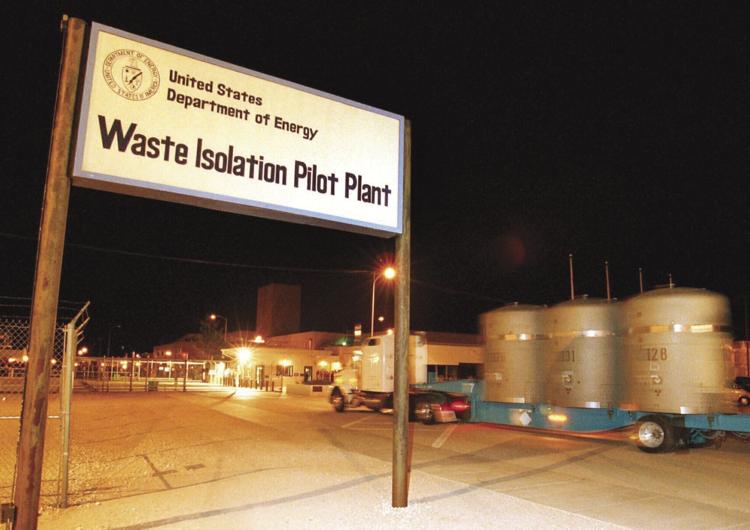
Adrian Hedden, Carlsbad Current-Argus https://www.currentargus.com/story/news/2023/05/24/what-we-know-about-federal-nuclear-waste-plans-in-new-mexico-waste-isolation-pilot-plant-wipp/70242952007/
Southeast New Mexico is home to the nation’s only repository for nuclear waste at the Waste Isolation Pilot Plant about 30 miles east of Carlsbad.
At WIPP, transuranic (TRU) nuclear waste from across the country is trucked in and buried in a salt deposit about 2,000 feet underground.
The waste comes from national laboratories and other facilities owned by the U.S. Department of Energy and WIPP is managed by the DOE’s Office of Environmental Management to clean up waste left at generator sites and new waste produced through the agency’s ongoing nuclear activities.
Here are the key takeaways from the federal government’s recent accomplishments and plans for WIPP future.
Air system at WIPP hoped to finish construction
Two projects were underway at WIPP intended to rebuild its underground ventilation system and improve airflows for workers in the underground.
After an accidental radiological release in 2014 air was restricted at the site, limiting personnel in the underground, and slowing progress in emplacing waste for disposal and mining new areas of the facility.
The Safety Significant Confinement Ventilation System (SSCVS) project along with a new utility shaft to act as an air intake were expected to increase available air at WIPP from 170,000 cubic feet per minute (cfm) to 540,000 cfm.
In 2023, the DOE said it hoped the primary construction of the SSCVS – a series of building and filters that will clean the air at WIPP before exhausting it at the surface- would be finished in 2023
In 2022, the DOE reported it partially completed constructing the SSCVS’ new filter building.
WIPP’s utility shaft finished this year
Meanwhile, the DOE planned to finish sinking the utility shaft to its planned depth of 2,150 feet underground.
The agency also reported it was 50 percent complete in mining a west access drift for the new shaft as of 2022.
Goal set for 400 shipments of nuclear waste to WIPP in 2023
The DOE said it hoped to send about 400 shipments of TRU waste to WIPP from its generator sites in 2023.
This would be the most shipped to WIPP since the 2014 incident, and subsequent three-year shutdown of WIPP’s underground operations.
Included in this listed priority was also ensuring no backlog of waste at Los Alamos National Laboratory (LANL) in northern New Mexico, in response to pressure from the State of New Mexico that instate facilities be prioritized by the DOE for cleanup.
The DOE estimated it was taking in about two shipments a week from Los Alamos, contending they were sent to WIPP as soon as the drums were ready for transport.
Since opening in 1999, WIPP accepted 1,608 shipments from LANL, about 12 percent of WIPP’s total of 13,460 shipments, according to DOE records.
The DOE completed its 2022 goal, read the report, of 30 LANL shipments.
Where else does WIPP get its waste from?
Other major shippers include Idaho National Laboratory – WIPP’s biggest shipper – with 6,880 shipments sent to the repository opened, about 51 percent of WIPP’s total.
The second-biggest active shipper was the Savannah River site in South Carolina, which sent 1,714 shipments in total during WIPP’s lifetime, records show.
The decommissioned Rocky Flats Environmental Technology Site near Denver was the second-biggest overall shipper to WIPP with 2,045 shipments of nuclear waste to the repository.
Nuclear waste retrieved from Texas site could go to WIPP
Buoying the DOE’s priorities at LANL was a goal for this year to retrieve drums of Los Alamos waste from the Waste Control Specialists (WCS) facility in Andrews, Texas and likely prepare them for disposal at WIPP.
The DOE reported after last year it “partially completed” a goal to install equipment needed for this work.
The DOE was originally slated, via an agreement with the Texas Commission on Environmental Quality (TCEQ), to remove the 74 waste boxes from LANL stored at WCS in 2014 temporarily amid WIPP’s closure as it resumed operations in 2017.
The TCEQ “extended the deadline multiple times” for the waste’s removal from WCS, read a May 2022 letter from the agency to the DOE, or the State of Texas would take “additional enforcement actions.”
Adrian Heddencan be reached at 575-628-5516,achedden@currentargus.com or@AdrianHedden on Twitter.
1 This Month
23-25 October – on Zoom – World BEYOND War’s annual global conferenc


Shut down the radiation-damaged Heysham nuclear reactors now
To see nuclear-related stories in greater depth and intensity – go to https://nuclearinformation.wordpress.com

Say No to NASA’s Reckless Nuclear Reactor on the Moon
Say No to NASA’s Reckless Nuclear Reactor on the Moon

-
Archives
- October 2026 (199)
- September 2026 (339)
- August 2026 (330)
- July 2026 (355)
- June 2026 (287)
- May 2026 (306)
- April 2026 (356)
- March 2026 (251)
- February 2026 (267)
- January 2026 (308)
- December 2025 (358)
- November 2025 (359)
-
Categories
- 1
- 1 NUCLEAR ISSUES
- business and costs
- climate change
- culture and arts
- ENERGY
- environment
- health
- history
- indigenous issues
- Legal
- marketing of nuclear
- media
- opposition to nuclear
- PERSONAL STORIES
- politics
- politics international
- Religion and ethics
- safety
- secrets,lies and civil liberties
- spinbuster
- technology
- Uranium
- wastes
- weapons and war
- Women
- 2 WORLD
- ACTION
- AFRICA
- Atrocities
- AUSTRALIA
- Christina's notes
- Christina's themes
- culture and arts
- Events
- Fuk 2022
- Fuk 2023
- Fukushima 2017
- Fukushima 2018
- fukushima 2019
- Fukushima 2020
- Fukushima 2021
- general
- global warming
- Humour (God we need it)
- Nuclear
- RARE EARTHS
- Reference
- resources – print
- Resources -audiovicual
- Weekly Newsletter
- World
- World Nuclear
- YouTube
-
RSS
Entries RSS
Comments RSS

