‘Cold feet’: Big problems emerge in controversial US-Australia submarine deal

The US seems to be getting cold feet over giving Australia one of its most secret weapons, with a new report revealing eight critical, unanswered questions.
The first USS Virginia-class submarine entered service in 2004. Since then, another 37 have been built or ordered. And an unknown number of those completed before 2017 incorporate low-grade steel supplied under a quality-control corruption scandal.
Jamie Seidel https://www.news.com.au/technology/innovation/military/cold-feet-big-problems-emerge-in-controversial-usaustralia-submarine-deal/news-story/80ffc6683018f7eaa4bf417559fe673e 29 May 23
US Congress appears to be getting cold feet over giving Australia one of its most secret weapons.
Meanwhile, it’s pressing ahead with plans to redesign its nuclear submarines to suit America’s specific needs – not Australia’s.
The Congressional Research Service report, Navy Virginia Class Attack Submarine Procurement: Background and Issues for Congress, pulls no punches about the core project behind former Prime Minister Scott Morrison’s 2021 defence collaboration announcement.
The document, issued late last week, specifies eight critical unanswered questions of concern.
• When will the deal be authorised?
• Will it approve the sale of two, or “some other number” of US submarines?
• When will these submarines be removed from the US Navy?
• Will they be old submarines? Newly-built submarines? Or a mix of both?
• How much will Australia pay? And how much will it subsidise the upgrade of US shipyards?
• Can the US meet its own submarine needs as well as those of Australia?
• Will the project make any difference in deterring China?
• What are the risks versus the benefits of giving Australia such immensely secret nuclear and submarine technology?
“Selling three to five Virginia-class boats to Australia would reduce the size of the US Navy’s SSN force by three to five boats,” the report states.
Seller’s remorse?
The report says sceptics of the deal believe “it could weaken deterrence of potential Chinese aggression if China were to find reason to believe, correctly or not, that Australia might use the transferred Virginia-class boats less effectively than the US Navy would”.
That’s not just a matter of the skills and training of Australian submariners.
It’s also an admission of concern that this may effectively mean the US had lost two to five submarines if Canberra doesn’t automatically participate in US conflicts.
“Australia might not involve its military, including its Virginia-class boats, in US-China crises or conflicts that Australia viewed as not engaging important Australian interests,” the report warns.
Defence Minister Richard Marles said as much in March when he revealed Australia had “absolutely not” promised to do Washington’s bidding when it came to Taiwan.
And that would diminish US Naval fleet numbers even further, unless the Australian submarines were replaced.
Sceptics of the SSN AUKUS pathway might argue that it would be more cost-effective for US SSNs to perform both US and Australian SSN missions while Australia invests in other types of military forces, so as to create a capacity for performing other military missions for both Australia and the United States.”
But behind the debate is a simple equation of supply and demand.
“In a nutshell, the challenge for the industrial base – both shipyards and supplier firms – is to ramp up production from one ‘regular’ Virginia-class boat’s work per year … to the equivalent of about five ‘regular’ Virginia-class boats’ work per year.”
It adds that no such additional purchase orders have yet been made and that doubts surround the ability of US naval yards to meet the extra demand. The US has only two shipyards capable of building nuclear-powered submarines.
The report warns that – even under pre-AUKUS plans – the US Navy’s desire to sustain a minimum of 66 nuclear attack submarines is likely to be unachievable.
The current number of 49 is expected to fall to 46 by 2028, with existing building programs only lifting this number to 60 by 2052.
Buyer beware?
The first USS Virginia-class submarine entered service in 2004. Since then, another 37 have been built or ordered. And an unknown number of those completed before 2017 incorporate low-grade steel supplied under a quality-control corruption scandal.
But the US Navy has since shifted production towards a bigger version of the submarine. A 25m-long hull section will be added to carry four large vertical launch tubes. This allows the design to carry extra Tomahawk cruise missiles or drones.
The Congressional report puts the cost of these at $US4.3 billion ($6.5 billion) each.
And the US Navy has this year requested another modified version of the submarine.
Designated the “Modified VIRGINIA Class Subsea and Seabed Warfare (Mod VA SSW) configuration”, this design is no longer optimised for the attack submarine role.
Instead, it will be equipped to conduct seabed sabotage operations against infrastructure such as undersea internet cables.
This version will cost about $US5.4 billion ($8.1 billion).
Australia may offset some of the cost of buying US submarines and upgrading US submarine facilities by providing a new base for US and UK operations.
London and Washington hope to begin basing nuclear attack submarines at HMAS Stirling, near Perth, in 2027.
This “Submarine Rotational Forces – West” facility will play host to year-long visits from both nations to provide training for ADF personnel and a support base for operations in the Indian Ocean, Andaman Sea and South China Sea.
“This rotational force will help build Australia’s stewardship,” a senior Biden administration official said earlier this month.
“It will also bolster deterrence with more US and UK submarines forward in the Indo-Pacific.”
High stakes game
The Beijing-controlled South China Morning Post news service has released previously secret details of a submarine incident in January 2021.
Quoting a Chinese military research paper, it says three US surveillance planes had engaged in a “hunt” for People’s Liberation Army submarines.
One of the aircraft, it claims, was met with a “significant” military response when it closed to within 150km of Hong Kong.
“The PLA, which was conducting a naval exercise in the area, responded swiftly by sending out a counter force, the size and nature of which remains classified,” the Post states.
“The two forces were so close that the US military ‘self-destroyed’ its floating sonars to prevent the sensitive devices from falling into China’s hands.”
US Indo-Pacific Command told The War Zone that one of its P-8A Poseidon patrol aircraft had been intercepted in the South China Sea. It denied it had breached any international boundaries.
“The US P-8A that flew on 5 Jan 2021 was intercepted twice in international airspace between Woody Island and Hainan Island roughly 500km from Hong Kong,” a statement reads.
“US and allied aircraft routinely fly in international airspace to maintain situational awareness and reinforce international norms.”
Hainan Island houses one of China’s main naval bases. This includes piers and dry-docks suited to its new aircraft carriers. And tunnels have been dug into the side of a rocky peninsula to house submarines.
Military analysts regard China’s submarine technology as being “decades” behind that of the US and Russia.
But Moscow’s precarious international position after its invasion of Ukraine has raised fears it may be willing to swap the technology with Beijing for material support.
And China’s newest diesel-electric “Yuan” class submarines reportedly demonstrate new levels of quietness, carry advanced sonars and “might be actually pretty good at anti-submarine warfare,” says Hudson Institute Center for Defence Concepts and Technology senior fellow Bryan Clark.
Jamie Seidel is a freelance writer | @JamieSeidel
Public health expert says Fukushima waste water release a retrograde step
ABCNewsAustralia 30 May 23 Operators of the Fukushima Daiichi Nuclear Power Plant, which was destroyed by a massive tsunami followed by nuclear meltdowns in March 2011, are set to release treated wastewater into the ocean in coming months.
Public health expert Tilman Ruff says the danger with dumping the contaminated water is that it could settle on the sea floor or concentrate up the food chain.
Atmospheric Testing of Nuclear Weapons in the 1950s and 1960s

May 27, 2023, Dr Ian Fairlea, https://www.ianfairlie.org/news/atmospheric-testing-of-nuclear-weapons-in-the-1950s-and-1960s/
Radioactive fallout from atmospheric nuclear weapons testing in the 1950s and 1960s caused the greatest exposure of man-made radiation to humankind.
The radiation dose to the world’s population from these tests was estimated by UNSCEAR in 1993 at 30 million person-sieverts, which was 50 times more than the 600,000 person-sieverts from the Chernobyl accident in 1986.
The cumulative explosive power of the tests corresponded to 545 million tons of TNT, equivalent to 40,000 atomic bombs of the size dropped on Hiroshima in 1945.
However surprisingly few epidemiological studies of the possible health effects of atmospheric testing have ever been conducted. The few that were carried out had inconclusive results: no clear signature of raised leukemias, for example, was observed. But we should always apply the strict rule in epidemiology that absence of evidence does not provide evidence of absence (Altman and Bland, 1993). It just means that we have not been able to find the evidence yet.
However Dr Alfred Körblein, an independent researcher in Germany, has just found clear evidence. He has just published (Körblein, 2023) the results of his own statistical study of data on infant deaths from UNSCEAR (1993) data and other sources. He concluded that, after the atmospheric bomb tests, infant deaths definitely increased both in the United States and in Europe including the UK. He hypothesised this was an effect of radioactivity from bomb fallout (from strontium-90) on the immune systems of pregnant women.
In more detail, what Körblein’s study shows is that the bomb tests resulted in very high levels of radioactive fallout which remained suspended in the northern hemisphere for years afterwards. He reproduces charts showing high levels of strontium-90 fallout: similar levels of radioactive caesium-137, carbon-14, iodine-131, hydrogen-3 (tritium) and other nuclides would also have occurred at the same time.

These radionuclides would have been inhaled and ingested by everyone in the northern hemisphere, including pregnant women. We know that the immune systems of developing embryos and fetuses in pregnant women are extremely sensitive to radiation. The evidence produced in the study clearly shows increased levels of perinatal deaths (between >24 weeks’ gestation and 7 days after birth) and neonatal deaths (within 28 days of birth) in several countries including the UK. In other words, the radioactivity from these bomb tests is thought to have produced teratogenic effects in the offspring of pregnant women in the years during and following the bomb tests.
Körblein concludes that “atmospheric nuclear weapons testing may be responsible for the deaths of several million babies in the Northern Hemisphere”. I agree with his analysis and his sobering conclusion. Here is a rough cross-check. If we accept the dose modelling carried out by UNSCEAR in their 1993 estimate of 30 million person-sieverts (which I accept) and apply a commonly-used risk factor for fatal cancer of 10% per Sv, then we arrive at a crude figure of 3 million deaths – similar to Korblein’s estimate.
REFERENCES
Altman DG and Bland JM (1995) Absence of evidence is not evidence of absence. British Medical Journal. 311 (19 August): 485. doi:10.1136/bmj.311.7003.485.
Körblein A (2023) Statistical modeling of trends in infant mortality after atmospheric nuclear weapons testing. PLoS ONE 18(5): e0284482. https://doi.org/10.1371/journal.pone.0284482
UNSCEAR (1993) United Nations Scientific Committee on the Effects of Atomic Radiation. UNSCEAR 1993 report to the General Assembly. United Nations, New York.
CAN PAK-INDIA NUCLEAR DETERRENCE HOLD?

The nuclearisation of South Asia can be analysed from different angles.
Dawn Ejaz Haider May 28, 2023
Exactly 25 years ago, on May 28, Pakistan conducted five nuclear tests (a sixth was done on May 30). The tests were a response to India’s five nuclear tests, conducted on May 11 and 13. Both governments, after the tests, declared a moratorium on further testing. A quarter century since May 1998, they have stuck to the moratorium, though neither has signed the Comprehensive Test Ban Treaty (CTBT).
………………………………..We should be less sanguine about deterrence holding in all situations. Indeed, there’s now growing literature about the world being “on the cusp of a Third Nuclear Age” where a number of factors are likely to make the old belief in deterrence increasingly problematic if not entirely untenable.
This article primarily deals with India and Pakistan, a nuclear dyad in conflict. But some of the observations here are also applicable to other NWSs, including those whose possession of nuclear weapons have been “legitimised” by the Nuclear Non-Proliferation Treaty (NPT).
WHAT IS THE THIRD NUCLEAR AGE?
In a 2021 article for European Journal of International Security, titled Strategic non-nuclear weapons and the onset of a Third Nuclear Age, Andrew Future and Benjamin Zala describe the Third Nuclear Age as the combination of Second Nuclear Age thinking — i.e., deployment of Strategic Non-Nuclear Weapons (SNNWs) — “with the return of the kind of major power competition associated with the First Nuclear Age.” This combo, as experts have begun to note, is highly dangerous.
…………………………………………………………………………………….. we are witnessing the use of info war by both Ukraine/NATO and Russia. Misinformation and disinformation campaigns, as is now widely known, serve to undermine trust in public institutions and governments. They are also essential tools in influencing perceptions.
INTEGRATION, AI AND THE KILL CHAIN
While the SNNW technologies [ Strategic Non-Nuclear Weapons ] are disrupting the battlefield by getting increasingly more accurate and sophisticated, there’s the additional problem of cross-tech/cross-platform integration that is concentrating and increasing firepower devastatingly.
Developments in artificial intelligence (AI) are also likely, by most accounts, to take the human out of the decision-making loop. This is not hypothetical, since multiple such systems are being tested and prototypes developed. Another problem is the presence of SNNWs in a nuclear environment, such as between a nuclear dyad.
Since they “constitute an employable and credible weapon system that can engage the sources of enemy power directly, skipping the tactical and operational levels of warfare”, nuclear adversaries can use them thinking that they could keep the conflict below the nuclear threshold. Also, in the case of NWSs there’s no way of knowing whether these weapons carry conventional warheads.
Cross-platform integration and the introduction of AI — what we can call the Internet of Military Things — is changing the concept of the decision-making speed and what the militaries call the kill chain (it also throws up many ethical issues). Up until now, the kill chain was a series of processes, executed sequentially. With AI, we are now looking at overlapping some of those phases and completing them in parallel, to reduce the execution time of the chain.
In other words, the weapon is fired first, the find and fix processes overlap the flight time, and the final target designation is sent to the weapon in flight, through a SATCOM channel. Now bring AI into this and combine it with hypersonic missiles and you get an idea of how much time will be reduced on the kill chain.
In August 2020, the Defense Advanced Research Projects Agency of the United States conducted a simulated experiment. It pitted a Heron-developed AI pilot against a top F-16 human pilot. The AI pilot beat the human pilot in a 5-0 sweep in dogfight and manoeuvres.
While some of these technologies are expensive, others are not. The cost of many will steadily come down further as they proliferate (drones are a case in point, as is cyber and digital expertise). At this point, there are almost no regulatory frameworks for a number of emerging technologies.
Integration and the digital environment has also brought other risks. In a January 2018 report, the Royal Institute of International Affairs warned that US, British and other nuclear weapons systems are increasingly vulnerable to cyber-attacks. This is far from an abstract threat.
……………………………………………………………………………………………….. This is not all. In a January 2023 edited volume, The Fragile Balance of Terror: Deterrence in the New Nuclear Age, professors Vipin Narang and Scott D Sagan point to what they call the “declining confidence in deterrence.”
Gathered in the book are some of the top world experts trying to analyse the presence of nuclear weapons in a new age: growing prevalence of personalist dictatorships; incomplete or incorrect information; states facing multiple nuclear adversaries (regional subsystems) and operating in a novel information environment where misinformation can be maliciously planted or otherwise spread rampantly; states possessing small nuclear arsenals which they fear may not be reliable or survivable or over which they may not retain firm command and control.
As they put it: “Each of these factors alone, and especially in combination, generate risks that our standard strategies of nuclear deterrence are simply unequipped to manage or address.”
This is just a bird’s-eye view of a much larger and complex body of literature, a corpus that is increasing in volume, not as an exercise in alarmism but in analysing the emerging, uncertain trends.
INDIA-PAKISTAN, A CONFLICT DYAD
Some might say that it will be a while before some of these advanced technologies will get to these shores. They are wrong.
UAVs are already here, as are missile defences and precision, long-range artillery.
India is already seeking to bolster its anti-ballistic and cruise missile defences, developing MIRVs (multiple independently-targetable re-entry vehicles), hypersonic glide vehicles (reducing the already very short missile flight times) and fielding SSBNs (ship submersible ballistic nuclear), essentially, nuclear-powered submarines which can carry ballistic and cruise missiles with nuclear warheads.
These systems can both be non-nuclear and nuclear — i.e., they can carry tactical and strategic warheads………………………………………..
There are a number of additional risk factors as far as India and Pakistan are concerned: they are locked in a conflictual model; they have had multiple armed confrontations; both are nuclear-armed with growing arsenals and capabilities; since 2014, but more so since 2016, there is no dialogue framework between the two (covert channels notwithstanding);………………………………………
This environment is known. But it also feeds into another set of problems that increases the likelihood of a conflict:
a: India’s stated doctrine of limited conflict;
b: India’s movement away from the declaratory no-first use policy, as contained in its 2003 doctrine, to what can now only be described as a non-stated first-use policy; and
c: India’s poor record of handling weapon systems and platforms, which increases the risk of accidental conflict.
COLD START AND LIMITED WAR
India’s doctrine of limited war has a high probability of a spiral. ………………………………….
At the politico-strategic levels, relations remain tense, with little to no dialogue between the two sides since August 5, 2019, when India unilaterally and illegally revoked the autonomous status of Jammu and Kashmir, in violation of UN Resolutions. Past experience suggests that deteriorating relations result in a higher probability of conflict between the two sides
INDIA’S NO-FIRST USE IS A SHAM
India’s 2003 Nuclear Doctrine declares that India is wedded to no-first use (NFU) — i.e., India will not be the first to use nuclear weapons, unless it is attacked with nuclear weapons. The NFU declarations, as experts have widely argued, are political, not operational statements.
ACCIDENTS, MORE ACCIDENTS…………………………………………………………………..
As noted by one Indian analyst, “the Indian military services over the last several years have witnessed many high profile tragedies and mishaps.” During PAF’s Operation Swift Retort on February 27, 2019, while there was a dogfight going on over the skies along the Line of Control, Indian ground air defence shot down one of its own Russian Mi-17V5 ‘Hip’ medium-lift helicopters, killing six service officials and one civilian.
In two other incidents, “India’s indigenous Arihant [nuclear] submarine [was left] out of commission for many months in 2018; and a fire and explosion on board an Indian Kilo-class submarine in 2013…killed 18 crew members.”
ELUSIVE COMMON GROUND
As nuclear weapons states outside the framework of the NPT, Pakistan and India have certain legal and normative responsibilities. Their civilian nuclear programmes are under the International Atomic Energy Agency (IAEA) safeguards.
India, which has a 123 Agreement with the United States, has been trying to become a member of the Nuclear Suppliers Group and is already a member of the Missile Technology Control Regime. Pakistan, for its part, has constantly argued against discriminatory approaches to non-proliferation and disarmament……………………………………………
The writer is a journalist interested in security and foreign policies. He tweets @ejazhaider
Published in Dawn, EOS, May 28th, 2023 more https://www.dawn.com/news/1756369/can-pak-india-nuclear-deterrence-hold?preview
More than 1,500 arrested at Extinction Rebellion protest in The Hague
More than 1,500 climate protesters have been arrested by police in the
Netherlands after blocking a major motorway in The Hague. During the
protest, organised by Extinction Rebellion, activists walked onto the A12
highway demanding an end to fossil fuel subsidies. Police fired water
cannon to try to disperse the crowds – but many came prepared in raincoats
and swimsuits. Most arrested protesters were released, but police said 40
would be prosecuted. Among those at Saturday’s protest were several Dutch
celebrities, including actress Carice van Houten, known for playing
Melisandre in TV series Game of Thrones. She was arrested but later allowed
to return home, Dutch news agency ANP said. Extinction Rebellion accused
police of using water cannon just 15 minutes after the start of the
blockade – but police said they had asked the activists to leave and gave
them a chance to do so before using the water cannon.
BBC 27th May 2023
https://www.bbc.co.uk/news/world-europe-65735289
Guardian 27th May 2023
Gordon Edwards explains and comments on Canada’s policy on radioactive waste and nuclear decommissioning

Until recently, Canada’s stated policy on radioactive waste management consisted of a flimsy 25-year-old statement of 143 words, making no mention of intermediate level waste (such as decommissioning waste) or plutonium extraction (reprocessing).
In 2019, a team of IAEA nuclear experts reviewed Canada’s nuclear regulatory practices and recommended that Canada produce an enhanced radioactive policy statement and articulate an accompanying national radioactive waste strategy for the first time ever.
In 2020 Canada accepted this recommendation and undertook a two year consultation period with hundreds of Canadian organizations and individuals.
Non-governmental organizations overwhelmingly recommended that Canada should have radioactive waste management and decommissioning agency that is independent of the nuclear waste producers and agencies that promote nuclear power, such as the Natural Resources Department (NRCan).
They also recommended that reprocessing (plutonium extraction) be banned altogether and that careful consideration be given to establishing a classification of radioactive waste materials based on toxicity, mobility, longevity, and radioactive progeny. Special attention was paid to the need for a policy regarding intermediate level wastes such as those resulting from rector decommissioning operations.
In 2022 a draft policy was released for public comment and an alternative policy was recommended by Nuclear Waste Watch, incorporating the policy recommendations mentioned in the preceding paragraphs.
In March 2023, the government — through NRCan, the very department that is obligated to promote nuclear power and uranium mining — released its final radioactive waste and decommissioning policy. That document ignores almost completely the input from civil society over the course of the previous two years. The policy is verbose and rhetorical with very little substance, and with a pronounced pro-nuclear bias.
On May 25, Nuclear Waste Watch hosted a “debriefing” webinar to inform other groups who had also participated in the consultation process of the nature of the government’s policy, and the distressing fact that NRCan has relegated to the nuclear waste producers the task of constructing a radioactive waste strategy for Canada.
Here is a short slide show (bilingual) that summaries and briefly comments on the main features of the Canadian government’s radioactive waste policy:
Visiting a park is not paying respects: the appalling failure of the G7 to act on nuclear disarmament
1

By Linda Pentz Gunter
Seven super-hypocrites took a walk in a park recently and called it paying respects. If this sounds like the opening to a Hans Christian Andersen fairy tale, it may as well be. Because nothing tangible or real came of this caper.
The park was the Hiroshima Peace Memorial Park and the visitors were the leaders of the G7 countries: Canada, France, Germany, Italy, Japan, the United Kingdom and the United States.
Afterwards, US president, Joe Biden, tweeted: “Today, my fellow G7 Leaders and I paid a visit to Hiroshima’s Peace Memorial Park where we paid our respects.”
Walking in a park isn’t paying respects to the dead of Hiroshima, where at least 140,000 were killed (although estimates have never been certain) when the United States dropped the first of its two atomic bombs on Japanese citizens.
Abolishing nuclear weapons is paying respects.
And the G7 haven’t paid. The US has never apologized for the Hiroshima and Nagasaki bombings. France and the UK (as well as the US) have not only never apologized, but have refused to acknowledge the true extent of the harm caused by their decades of atomic testing. Germany and Italy have not kicked the US nuclear weapons bases out of their countries.
At the close of the G7 summit, hosted by Japan and deliberately held in Hiroshima as a reminder of the horrific consequences of the use of nuclear weapons, the member countries released a joint statement — grandiosely entitled “G7 Leaders’ Hiroshima Vision on Nuclear Disarmament”. They prefaced it by saying they were issuing it in “a solemn and reflective moment’.
But the statement, which never once acknowledges the Treaty on the Prohibition of Nuclear Weapons (TPNW) as the only genuine instrument for nuclear disarmament, is even worse than the “thoughts and prayers” offered after a mass shooting. In its protracted finger-pointing, principally directed at Russia, which is mentioned 11 times, the statement lays out a pathway toward the provocation of yet more violence, not disarmament, making the likelihood of nuclear war greater.
And with breathtaking hypocrisy, while also castigating North Korea, Iran and China, it conveniently fails to mention US plans to spend $1 trillion on revamping its nuclear weapons arsenal.
Instead, the G7 claim that as long as nuclear weapons exist — and they will with these leaders in charge — they “should serve defensive purposes, deter aggression and prevent war and coercion,” a failure demonstrated all too clearly by the situation in Ukraine.
As the Nobel Peace Prize-winning group, International Campaign to Abolish Nuclear Weapons said in a press release after the G7 summit, the leaders “are evading their own responsibility for the current threat nuclear weapons pose to everyone.”……………………………………………………….. more https://beyondnuclearinternational.org/2023/05/28/visiting-a-park-is-not-paying-respects/
Nuclear power is neither reliable nor ‘green’ and is not suitable for the just transition
By Neil Overy and Ulrich Steenkamp,
The very public push by the Department of Mineral Resources and Energy for nuclear power must be seen within the context of an ongoing public relations campaign currently being waged in South Africa by supporters of nuclear power. ………………(Subscribers only) https://www.dailymaverick.co.za/article/2023-05-28-nuclear-power-is-neither-reliable-nor-green-and-is-not-suitable-for-the-just-transition/
Putin bribes ‘friendly nations’ with use of 24-hour ‘floating nuclear power stations’
As war rages on in eastern Ukraine, Russia’s state-owned nuclear energy company Rosatom has announced it will share floating nuclear power plant (FNPP) technology only with “friendly nations” to help supply electricity.
By ALESSANDRA SCOTTO DI SANTOLO 29 May 23
Russia will supply floating nuclear power plant (FNPP) technology to enable around-the-clock supply of electricity to remote areas of allied countries, the Kremlin-linked energy company announced…………………………………………………….. more https://www.express.co.uk/news/world/1775103/putin-floating-nuclear-power-plant-rosatom-russia—
The next escalation in the war against Russia: US sends largest warship ever constructed to Norway
WSWS, Andre Damon @Andre__Damon , 25 May 2023
“…………….As the Ukrainian military continues to suffer military setbacks on the ground—most clearly demonstrated by the fall of Bakhmut—the US and the NATO powers are preparing for the potential direct entry of air, land and sea forces into the conflict.
On Wednesday, the USS Gerald R. Ford arrived in Oslo, Norway. The USS Ford is the largest warship ever constructed and the first of a new generation of such carriers commissioned by the United States.
The carrier strike group led by the Ford includes two nuclear-powered attack submarines, two Ticonderoga-class cruisers and a squadron of destroyers. Manning the strike group are many thousands of naval military personnel, who will be operating within striking distance of Russian territory.
Vice Admiral Thomas E. Ishee, the commander of the US Sixth Fleet, explained that upon leaving Oslo the carrier strike group would travel north to the Arctic to carry out “freedom of navigation” operations—a term used by the United States to describe provocatively sailing ships into contested waters.
In other words, this massive armada with its thousands of troops will sail near the Russian coastline under conditions of a rapidly escalating proxy war that Biden said last year would threaten a nuclear “Armageddon.”
What weapons this massive armada carries are not known to the public. While the United States has a policy of neither confirming or denying the presence of nuclear weapons on its warships, leading US military think tanks have for years advocated the deployment of tactical nuclear weapons on US carriers. ……………………………………………………………………….. https://www.wsws.org/en/articles/2023/05/26/hjwf-m26.html
Ukraine claims Russia is plotting ‘a provocation’ at nuclear plant, offers no evidence
By Associated Press May 28, 2023, 9 News,
Ukraine’s military intelligence has claimed, without offering evidence, that Russia is plotting a “large-scale provocation” at a nuclear power plant it occupies in the southeast of the country with the aim of disrupting a looming Ukrainian counteroffensive.
A statement released by the intelligence directorate of Ukraine’s Defence Ministry claimed that Russian forces would strike the Zaporizhzhia nuclear power plant, the biggest in Europe, and then report a radioactive leak in order to trigger an international probe that would pause the hostilities and give the Russian forces the respite they need to regroup ahead of the counteroffensive………………………………………………….. https://www.9news.com.au/world/ukraine-claims-russia-is-plotting-a-provocation-at-nuclear-plant-offers-no-evidence/1f4512db-127f-4065-96ab-4db90cd60065
—
Rolls Royce to cut thousands of jobs
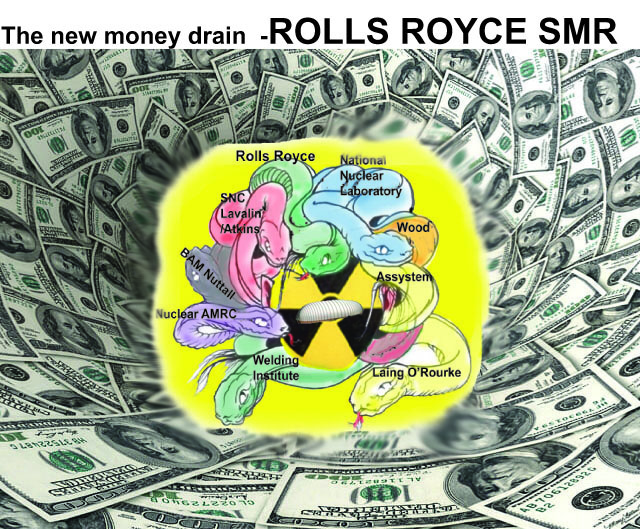
Rolls-Royce is expected to cut thousands of jobs as it launches a dramatic
turnaround plan to save costs. New chief executive Tufan Erginbilgic, who
has described the aero-engineering giant as a “burning platform” that
needs to reform to survive, has parachuted in consultants led by McKinsey
to advise on streamlining the company. Plans to merge departments could cut
10 per cent of the company’s approximately 30,000 non-manufacturing
staff, one consultancy source said. Part of the programme will involve
merging its non-manufacturing departments in each of Rolls’s civil
aerospace, defence and power systems divisions.
Times 27th May 2023
https://www.thetimes.co.uk/article/rolls-royce-prepares-to-swing-the-axe-on-jobs-phlxmxbnk
1 This Month
Chernobyl: The Lost Tapes – A good documentary on Chernobyl on SBS available On Demand for the next 3 weeks– https://www.sbs.com.au/ondemand/tv-program/chernobyl-the-lost-tapes/2352741955560

of the week–London Campaign for Nuclear Disarmament

Tell the Ukrainian Government to Drop Prosecution of Peace Activist Yurii Sheliazhenko
To see nuclear-related stories in greater depth and intensity – go to https://nuclearinformation.wordpress.com
-
Archives
- April 2026 (139)
- March 2026 (251)
- February 2026 (268)
- January 2026 (308)
- December 2025 (358)
- November 2025 (359)
- October 2025 (376)
- September 2025 (257)
- August 2025 (319)
- July 2025 (230)
- June 2025 (348)
- May 2025 (261)
-
Categories
- 1
- 1 NUCLEAR ISSUES
- business and costs
- climate change
- culture and arts
- ENERGY
- environment
- health
- history
- indigenous issues
- Legal
- marketing of nuclear
- media
- opposition to nuclear
- PERSONAL STORIES
- politics
- politics international
- Religion and ethics
- safety
- secrets,lies and civil liberties
- spinbuster
- technology
- Uranium
- wastes
- weapons and war
- Women
- 2 WORLD
- ACTION
- AFRICA
- Atrocities
- AUSTRALIA
- Christina's notes
- Christina's themes
- culture and arts
- Events
- Fuk 2022
- Fuk 2023
- Fukushima 2017
- Fukushima 2018
- fukushima 2019
- Fukushima 2020
- Fukushima 2021
- general
- global warming
- Humour (God we need it)
- Nuclear
- RARE EARTHS
- Reference
- resources – print
- Resources -audiovicual
- Weekly Newsletter
- World
- World Nuclear
- YouTube
-
RSS
Entries RSS
Comments RSS
 nuclear-news