Depleted uranium won’t end a war that has no winners
It is clear the great powers have no end in sight for the war: toxic munitions that will last even longer than the conflict are the last thing the territory needs, writes TOMASZ PIERSCIONEK
Morning Star, 16 May 23,
THE war in Ukraine is the most devastating conflict in Europe since World War II. As in most conflicts, and in the years leading up to the war, truth became the first causality.
The Western media simplifies the narrative to Nato good — Russia bad, while ignoring pivotal factors such as Nato’s eastward march towards Russia and the US-backed 2014 coup, which in turn set the scene for the war that unfolded in Feb 2022.
Non-mainstream media or independent bloggers who try to peer over the media iron curtain and question Nato talking points face being defamed as pro-Kremlin stooges.
Is the West scared of its citizens thinking independently or fearful that such “wrong think” might outshine pro-Nato propaganda? Do Europe’s citizens need “protection” from the risk of being exposed to unsanctioned thinking lest they draw different conclusions to the official narrative?
A year into the conflict and amidst the dreadful loss of life on all sides, it looks like war between Russia and Ukraine is really a conflict between Nato and Russia, in which the former seeks to challenge the emergence of a new Eurasian-centric capitalist bloc. Remember too that Russia is China’s ally and a defeat of the former would leave the latter in a more vulnerable position vis a vis Nato expansion.
It is clear too that (most of) the nations comprising the EU and Nato are willing to pull out all stops to defeat or greatly weaken Russia, regardless of the human costs to Ukraine, and have already handed over billions of dollars in military aid alongside vast quantities of weapons from their own arsenals. Britain provided £2.3 billion in military aid to Ukraine in 2022 whilst the US has given at least $46.6bn in military aid since the war began.
For the US, at least, this is a perfect war in which it can fight a key geopolitical opponent without getting its hands dirty and having to explain an influx of body bags to the US public like in Iraq and Afghanistan.
n the EU’s case however, reality hits a little close to home — despite its massive support for Ukraine and the 10 rounds of sanctions placed upon Russia, they have failed to bring the country to its knees in economic or military terms (as repeatedly promised), nor have they “inspired” the Russian people to overthrow their rulers. Instead, the anti-Russian sanctions seem to have caused a fair amount of self-harm to the EU whilst Russia is well on the way to finding new markets for its exports.
Hypocritically, despite singing from the pro-Ukraine hymn book, the EU continues to import billions of dollars worth of goods from Russia — $195.56 billion during 2022 and the greatest amount since 2014. Furthermore, despite the EU banning Russian crude oil imports, it purchases oil products from India (eg diesel and jet fuel) that have been refined from Russian crude oil. As Russia is now selling more crude oil to India and India in turn is selling more refined oil to Europe, this is a win-win situation for these two Brics nations.
n an unwise and unneeded escalation to the war in Ukraine, the British government announced in late April 2023 that it had sent Challenger 2 tank shells tipped with depleted uranium (DU) to Ukrainian forces. Such a move is a provocative and dangerous escalation that risks precipitating a regional or global war in which there will be no winner.
It is worth pointing out that at the end of March 2023, James Heappey, British Minister of State for the Armed Forces, responded to a parliamentary question about whether Russia had used DU munitions in Ukraine with the answer: “The Ministry of Defence is unaware of any credible open-source reports of Russia using depleted uranium in Ukraine.”
DU is a by-product of a process whereby uranium is enriched to make nuclear fuel. It remains radioactive, albeit 40 per cent less so than raw uranium. On account of its high density, DU is used to increase the power of armour-piercing munitions and has previously been used by US/Nato forces in several conflicts — the 1991 first Gulf war, Bosnia, the 2003 Iraq invasion, and against Isis forces in Syria in 2015…………………………………..
The Scientific Committee on Health and Environmental Risks formed by the European Commission produced a report in 2010 which noted that “in combat zones, vehicles hit by DU should be made inaccessible to the general public and be properly disposed of. Used DU ammunition should also be collected and disposed of.”
This concurs with advice published by the US Air Force in 1975 which stated that DU ought to only be used against armoured vehicles. However, in Iraq, DU munitions reportedly were not only used against human combatants but also fired in or near to urban areas.
Consequently, hundreds of sites in Iraq were contaminated with DU. Similar consequences are possible in the case of Ukraine: funding a clean-up operation once the war ends is unlikely to be a top priority.
The US Environmental Protection Agency notes that with regards to DU “exposure to the outside of the body is not considered a serious hazard. However, if DU is ingested or inhaled, it is a serious health hazard.”
The risk that DU finds its way into the food chain ought not to be dismissed, alongside the long-term detrimental effects on the ecosystem.
Furthermore, introducing DU (radioactive) munitions into a high-stakes war such as the one in Ukraine breaks a certain psychological barrier whereby the risk of further escalation increases as we take another step down an ever-shortening and dangerous path that ends with the use of conventional uranium weapons — nukes.
Continuing to arm Ukraine so that it can fight Russia down to the last Ukrainian on behalf of Nato (and perhaps after that using Poles to do the job) sets the scene for the conflict to become a regional war or worse.
Realistically, the war is not going the way Nato hoped and promised. The Russian economy has not collapsed, Russia has not run out of missiles, the Russian people have not overthrown their government, and the majority of the world has not turned its back on Russia, which is in the process of securing new trading partners and even sympathisers to offset the effects of any Western sanctions.
The conflict has also shown that the world (including major players such as China, India, Brazil, and Saudi Arabia) is not united behind the West. Indeed, 19 more countries are now seeking to join the Brics group of emerging economies. It would be easy, even convenient, for the US to pull back on funding Ukraine should the upcoming Ukrainian offensive not deliver the promised gains.
After all, 2024 is an election year, a greater number of US politicians are becoming uneasy at Biden’s blank cheque to Ukraine, and frankly sending billions to fund a war abroad rather than investing the money at home is not exactly a vote winner.
It would be tempting for the US to say “mission accomplished” and make the war in Ukraine Europe’s problem, leaving the EU to sort out the mess and come to a disadvantageous settlement with Russia.
It is critical that the anti-war movement, the trade union movement, and more broadly the left work with peace movements within Ukraine, Russia and beyond to call for a swift and just settlement to the war, in which the grievances of all sides are acknowledged.
Concurrently we must condemn rhetoric or action by any world leader that seeks to prolong the war in Ukraine whilst the people of Russia, Ukraine and Europe bear the human and economic cost of the conflict.
We need to be wary too, of forces both within Nato and beyond that are seeking to prolong the conflict in Ukraine for ideological reasons, due to the lucrative nature of war (not least for the arms industry), or for personal ambition. https://morningstaronline.co.uk/article/f/introducing-depleted-uranium-ukraine-conflict-needless-escalation-war-has-no-winners
Should SC have canceled Plant Summer? Yes, and Ga. should have canceled, too

https://www.postandcourier.com/columbia/opinion/should-sc-have-canceled-plant-summer-yes-and-ga-should-have-canceled-too/article_a298d894-f34c-11ed-8647-cfd2ea480900.html By Patty Durand 17 My 23
In a recent Post and Courier opinion piece, author Kevin Fisher quoted an Atlanta Journal-Constitution headline, “Georgia Power began splitting atoms on Monday at one of its two new nuclear units at Plant Vogtle.” In his piece, he expressed regret that SCANA and Santee Cooper botched and then abandoned Plant Summer, costing ratepayers about $9 billion while getting nothing in return.
It might seem logical to think that spending $9 billion for something you did not receive meant the decision to stop was wrong, but in the case of Plant Summer, it was absolutely the right decision. Rather than taking up space here, please type “sunk cost fallacy” into any search engine after you read this article.
People who wish South Carolina had not canceled Plant Summer must not realize how much trouble Georgians are in over the cost of Plant Vogtle. Now approaching $40 billion, it is the most expensive power plant ever built on earth.
As Georgia Power continues to rack up billions of dollars of cost overruns for Plant Vogtle, botched is hardly a strong enough word to describe this project. According to documents filed at the Georgia Public Service Commission prepared by independent construction monitors, issues plaguing the project include unachievable schedules, a culture of poor work inspections, failure to document progress, violation of IEEE standards and component failure rates of 80 percent. Failure to adopt lessons learned has also been a bedrock theme.
Although Georgia officials like to say zero carbon energy is a benefit of Plant Vogtle, let’s be clear: reduced carbon emissions were not why this plant was built. Georgia has no renewable energy goals and last July the Ga PSC authorized 2300 MW of new natural gas generation. Georgia doesn’t even track carbon emissions.
This plant happened because Georgia Power’s business model rewards capital investment, a perverse incentive that results in overbuilding and delivers rich profits. Georgia Power has already earned billions of dollars in early profits just for construction financing costs from riders on electricity bills. Once both reactors begin operating Georgia Power bills are expected to increase a shocking 20 percent for 60 years to pay for it.
For a state already in the top 10 for high power bills and energy poverty, these increases will be more than many people can bear.
Since South Carolina has half the population of Georgia, state officials knew that billions of dollars of cost overruns for Plant Summer would have been divided over a small number of customers and electricity rate increases would have been unbearable. That is why officials wisely canceled Plant Summer.
And look at what South Carolina has accomplished since Plant Summer was canceled: The 2014 landmark energy bill known as the Distributed Energy Resources (DER) program has flourished in ways it would not have with the heavy costs and distractions of building a nuclear power plant which crowds out other investments.
In 2023 South Carolina is a top 10 state for affordable electric bills and is ranked 13th nationally for rooftop solar. Georgia is the opposite: we are a top 10 state for most expensive electric bills and in 43rd place for rooftop solar — practically last. Rooftop solar is too expensive for almost everyone since Georgia officials do nothing to support it, so customers are forced to pay big electricity bills profiting Georgia Power. Once construction costs are added to the rates Georgia Power bills will become the highest in the nation because of Plant Vogtle. This is the fate South Carolina avoided by cancelling Plant Summer.
South Carolina officials who made the tough call to cancel Plant Summer in 2017 should be thanked for that decision. Utility officials who lied about Plant Summer’s progress were held accountable, while utility officials in Georgia similarly providing false schedule updates and cost estimates have had no accountability.
And by the way? The “splitting of atoms” at Plant Vogtle’s Unit 3 that began April 1 is no longer occurring. This unit shut down May 5, for the second time in the past month, for safety failures. Cost overruns continue.
Patty Durand is founder of Cool Planet Solutions and is a candidate for the Georgia Public Service Commission.
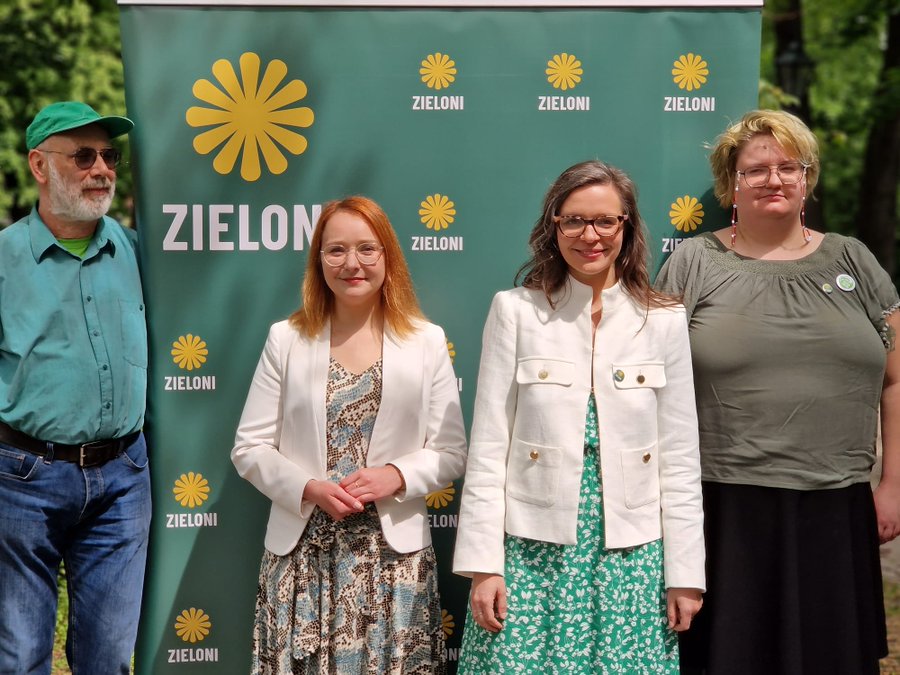
Poland’s Greens oppose construction of small nuclear reactor in Kraków
MAY 17, 2023 https://notesfrompoland.com/2023/05/17/polands-greens-opposes-construction-of-small-nuclear-reactor-in-krakow/
The Greens (Zieloni), who are part of Poland’s largest opposition grouping, have raised concern over the proposed construction of a nuclear small modular reactor (SMR) in Kraków.
They argue that the technology, which is still in development, is not sufficiently tested and produces large amounts of nuclear waste. They have called for investment in renewables instead.
Last month, state energy firm Orlen announced that it would by the end of this year announce 20 potential locations for the SMRs that it is developing in partnership with a group of American and Canadian corporations and with financing from US government agencies.
Of the seven potential sites unveiled already, one is in the Nowa Huta district of Kraków. Yesterday, two Green MPs, Małgorzata Tracz and Klaudia Jachira, organised a protest against those plans, saying that “no one has asked residents of Kraków for their opinion”.
Jachira noted that SMRs are still an experimental technology and “there is no evidence whether they work and what the risks are”, reports Gazeta Krakowska. Tracz cited research from Stanford University indicating that SMRs produce up to nine times more radioactive waste per unit of energy than large reactors.
The pair called for Orlen to provide more information on the costs and benefits of SMRs, to explain how waste will be managed, and to hold consultations with residents.
In response, Orlen Synthos Green Energy, which is responsible for developing the SMRs, noted that. while Nowa Huta is among the preferred locations. no final decision has been made.
“Following studies and consultations with local authorities, [we] will spend two years studying in detail the possibility of building a small nuclear unit in Nowa Huta,” said the firm. “Once the potential is confirmed, priority will be given to inviting local communities to dialogue. Only on this basis will decisions be taken.”
French Polynesia’s anti-nuclear organisation Association 193 criticises France for downplaying impact of tests
Walter Zweifel, RNZ Pacific Reporter walter.zweifel@rnz.co.nz https://www.rnz.co.nz/international/pacific-news/490142/anti-nuclear-group-criticises-france-for-downplaying-impact-of-tests 17 May 23
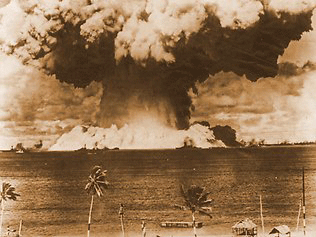
French Polynesia’s anti-nuclear organisation Association 193 has criticised the latest French report about the impact of the French nuclear weapons tests.
France’s National Institute of Health and Medical Research evaluated additional declassified data from the tests at Mururoa and found that radiation from them had a minimal role in causing thyroid cancer.
The Association’s president, Father Auguste Uebe-Carlson, told the AFP news agency there was a tendency by the French state and the Institute to minimise the impact of the nuclear fallout.
He said the French Committee for the Compensation of Victims of Nuclear Tests refused to recognise the files of victims born after 1974, when the military carried out its last atmospheric test.
But Uebe-Carlson said there was an argument to also recognise cancer sufferers born since 1974.
According to Uebe-Carlson, the Institute would one day have to explain why there were so many cancers in French Polynesia.
He has repeatedly accused France of refusing to recognise the impact of the tests, instead using propaganda to say they were clean or a thing of the past.
He said health problems were now being attributed to poor diet and lifestyle choices.
Three years ago he said he carried out survey in Mangareva, which is close to the former weapons test sites, and found that from 1966 onward all families reported cases of still-born babies.
Call for release of scientific data
The president of the test veterans’ organisation Moruroa e tatou said the release of the scientific data was not enough.
Hiro Tefaarere told La Premiere it was “absolutely necessary” for his organisation to get from the French state the register of the cancer patients and cancer deaths during the testing period.
He said it was “imperative” that these files be given to Moruroa e tatou.
Tefaarere said this research, if the state agrees to release it, would give his organisation the essential elements to consolidate the complaints which have been filed.
President to take report into account
An assembly member Hinamoeura Cross, who suffers from leukemia, said she was outraged that reports were still being published downplaying the tests’ effects.
The new president, Moetai Brotherson, said he would take the latest report into account when he enters into discussions with the French government.
French Polynesia has for years been trying to get France to reimburse it for outlays for cancer sufferers.
Its social security agency CPS said since 1995 it had spent almost $US1 billion to treat 10,000 people suffering from cancer as the result of radiation from the tests.
In 2010, Paris recognised for the first time that the tests had had an impact on the environment and health, paving the way for compensation.
Between 1966 and 1996, France carried out almost 200 tests in the South Pacific, involving more than 100,000 military and civilian personnel.
Paris has refused to apologise or the tests, but President Emmanel Macron said France owed ‘a debt’ to French Polynesia’s people.
Former world leaders urge G7 to get nuclear arms control back on track
Letter calls on US and Russia to isolate weapons agreements from other disputes
Patrick Wintour Diplomatic editor 18 May 23 https://www.theguardian.com/world/2023/may/17/former-world-leaders-urge-g7-to-get-nuclear-arms-control-back-on-track
A global array of former world leaders and defence ministers, nuclear experts and diplomats have called on the leaders of G7 countries at their meeting in Hiroshima, Japan, not to let progress on nuclear arms control continue to be the victim of growing geopolitical conflict, including the conflict between the west and Russia over Ukraine.
The Japanese prime minister, Fumio Kishida, who is from Hiroshima, chose the G7 venue to lend seriousness to his personal call to world leaders to at least agree a roadmap to resume nuclear arms control talks.
In February, Russia pulled out of the 2010 New Start treaty, a pact that sets limits on the deployed strategic nuclear arsenals of the world’s two largest nuclear powers, although Moscow said it would nevertheless abide by the limits for the moment.
Kishida intends to take world leaders arriving this week for the summit to the harrowing Hiroshima Peace Memorial Museum, where they will see graphic depictions of the US attack in 1945.
An open letter signed by six former heads of state, 20 cabinet-level ministers and experts from 50 different countries including China, Russia and the US lends momentum to Kishida’s G7 theme by saying the world needs more nuclear arms control, not less.
The letter says: “United States-Russia strategic stability talks are in limbo and the New Start treaty, which has played an indispensable role in ensuring reciprocal security, is now in question.
“As the only existing nuclear arms control agreement between the United States and Russia, the world’s two largest nuclear-armed countries, the treaty’s collapse or expiration without a replacement would threaten a destabilising arms race.”
Worsening big-power competition is making nuclear war more likely, the leaders warn, and “failure to agree on a new nuclear arms control framework to replace New Start before it expires in February 2026 would also make it more difficult to bring China, France and the United Kingdom into multilateral arms control, as all three are not ready to consider limits on their nuclear arsenals until the United States and Russia bring down their nuclear stockpiles”.
The letter was organised by the European Leadership Network and Asia-Pacific Leadership Network and signed by former world leaders, including Ernesto Zedillo, the former president of Mexico, Helen Clark, the former prime minister of New Zealand and Ingvar Carlsson, the former prime minister of Sweden.
In Russia, the signatories include Alexei Arbatov, the director of the International Security Center at the Institute of World Economy and International Relations; Pavel Palazhchenko, the head of the international centre at the Gorbachev Foundation, and Sergey Rogov, who until March last year, was a member of the scientific council of the national security council and a former adviser to the Duma international affairs committee.
One of the most prominent signatories in China is Prof Chen Dongxiao, the president of Shanghai Institutes for International Studies. China has been clear in warning Russia not to use nuclear weapons in the Ukraine conflict, a threat that has repeatedly been made by Moscow, including by transferring nuclear weapons to Belarus.
UK signatories include the former head of MI6 John Scarlett, the former foreign secretaries Malcolm Rifkind and David Owen, as well as the former defence secretaries Des Browne and Tom King.
The 256 signatories acknowledge they all have different views about geopolitical competition but say “we all agree that it is long past time to start prioritising nuclear arms control and taking unilateral, bilateral and multilateral actions”.
The letter urges Russia and the US to compartmentalise nuclear arms control and isolate it from other disputes by confirming that they will not exceed the New Start limits on deployed nuclear forces, which thus far have not been violated, as well as agreeing to remove the obstacles to full implementation of their New Start obligations.
It also calls for the resumption of the work of the Bilateral Consultative Commission, the body that agrees details of US and Russian inspections of each others’ military sites under the terms of the New Start treaty. The body has not met for nearly two years.
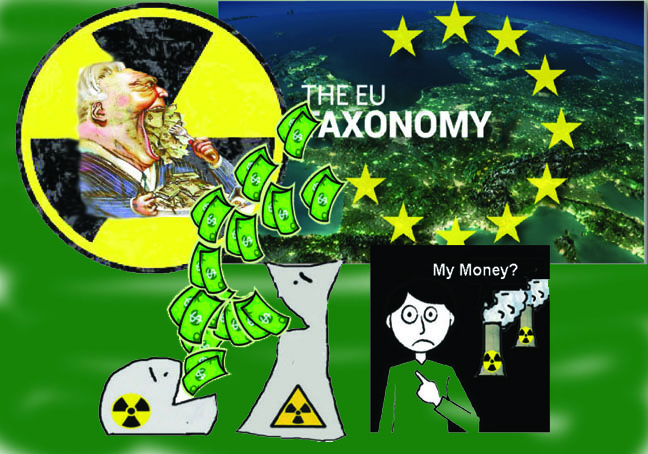
France holds up EU energy agreement over nuclear power
Paris withdraws support for renewable targets law as it seeks inclusion of hydrogen produced with atomic power
Ft.com Alice Hancock in Brussels and Sarah White in Paris 17 May 23
France is leading a coalition of countries holding up agreement on EU-wide targets for renewable energy, as it makes a fresh drive for better treatment of its nuclear industry. The move comes amid a broader pushback against the bloc’s climate agenda as the realities of what is required for the green transition become increasingly apparent. The EU’s 27 member states were due to agree an overall target of 42.5 per cent of renewable power in the bloc’s energy mix by 2030 on Wednesday.
But France, which relies on nuclear power for the majority of its electricity, signalled that it would not support the text, citing concerns that “low-carbon” hydrogen generated with electricity from atomic power plants would not be counted as part of the targets.
“It must be possible for nuclear-derived electricity to coexist with renewable electricity without discrimination,” a French diplomat said. The vote, which was pulled from the agenda of an ambassadors’ meeting at 11.30pm on Tuesday night, would have paved the way for the targets to become EU law following their approval in the European parliament.
……………………….. Other member states said that having the bloc’s two largest countries push for last-minute changes to green legislation set a dangerous precedent for the EU’s policymaking process and could affect its path to achieving an overall target of reducing greenhouse gas emissions by 55 per cent by 2030 compared with 1990 levels.
The EU commission said it remained committed to a “rapid rollout” of renewable energy as a critical element of the bloc’s goal to reach zero greenhouse gas emissions by 2050 and to reduce its dependence on Russian fuels. “The new rules need to be adopted and implemented as swiftly as possible.”……………………………
Six pro-nuclear countries, including the Czech Republic, Bulgaria and Hungary, followed Paris’s lead on Wednesday and withheld support for the directive. Meanwhile, anti-nuclear governments, including in Germany and Austria, have been strongly opposed to recognising nuclear power as a clean fuel. Earlier this week, Paris convened a meeting of ministers from 14 countries with nuclear energy capacity along with the EU’s energy commissioner, Kadri Simson……………………………………………. https://www.ft.com/content/b0d3e7e3-a8ae-457b-9482-3282d32973be
Siting new nuclear power stations — an unsustainable geography
https://www.nuclearpolicy.info/news/siting-new-nuclear-power-stations-an-unsustainable-geography/ 16 May 23 ‘The government’s ambition to achieve energy and environmental security by ramping up the development of nuclear power stations faces a significant obstacle — the lack of sites on which to build them.
As Andrew Blowers points out in the latest issue of Town & Country Planning, the Journal of the Town and Country Planning Association, the need for suitable and acceptable sites on which to deploy a variety of new nuclear power stations, ranging from big GW (gigawatt) behemoths to Small (or not so small) Modular Reactors (SMRs), is a pressing, although much neglected issue.
There is a presumption in government and the nuclear industry that sites in suitable locations will be available and ready for development. But, in reality there are only a handful of sites, eight to be precise, deemed ‘potentially suitable’ in the government’s outdated and unrevised National Policy Statement of 2011. And only one of these, Hinkley Point, has secured all the necessary planning and environmental permits and regulatory licences necessary for its go-ahead.
In truth, the geography of nuclear power has barely changed, frozen in aspic since it was first established over half a century ago. There is an increasing disjunction between the ring of coastal sites on which the early generations of big power stations were built and the present-day absence of sites that are suitable for the varied fleet of nuclear stations in prospect in an era of climate change.
Without a new siting strategy. there is a severe danger that new nuclear power stations with attendant radioactive waste stores will be located in places that are wholly unsuitable and unsustainable during the century or more that dangerous radioactivity will remain on sites.
n the article, Andrew Blowers, Emeritus Professor of Social Sciences at the Open University and former member of the Committee on Radioactive Waste Management (CoRWM), traces the history of nuclear siting in Britain from its origins shrouded in military secrecy in obscure locations, notably Sellafield in West Cumbria and Dounreay in the far north of Scotland. The age of civil nuclear energy was ushered in by the White Paper A Programme of Nuclear Power in 1955. The first generation of Magnox stations was constructed during the 1950s and 1960s at coastal sites providing cooling water, suitable land and remoteness.1 By 1971, with Wylfa in North Wales coming on stream, there were 11 stations, all bar one in coastal and estuarial locations.
This pattern was reinforced and slightly extended by the second-generation AGR (Advanced Gas-cooled Reactor) stations completed mainly during the 1970s, either alongside Magnox stations or at new but still coastal sites (Hartlepool, Heysham, and Torness). By the end of the 1970s the geography of nuclear power in Britain was complete.
Since then only one station, Sizewell B, has come on stream. The abortive ‘nuclear renaissance’ proclaimed by Tony Blair gave birth to one solitary project, the controversial, expensive and late-running Hinkley Point C. By 2020 the programme for development on eight ‘potentially suitable’ existing sites had begun to look dead in the water. But, once again nuclear is rising Phoenix-like in the form of a truly enormous and quite unattainable programme for 24GW of electricity from nuclear power stations large and small conjured up by Boris Johnson.
Nuclear operators have been eyeing up existing sites. But there is no overall plan, there are no sites immediately available, and several of the existing sites identified as ‘potentially suitable’ face trenchant opposition or are quite unsuitable.
Four observations can be made. First, existing sites were established long ago at a time when environmental concerns were subordinate. Second, the attempts to revive nuclear power during this century have confirmed the existing pattern of sites. Third, the criteria of site selection require fundamental revision in the light of the dire prospects for several existing sites in an era of accelerating impacts of climate change. But, fourth and most perversely, attempts at strategic site planning have proved no constraint on the prospects for existing sites to be appropriated by government and the nuclear industry.
In short, strategic siting of nuclear power stations is a case of retrospective legitimation of sites selected under quite different economic, technical and, above all, environmental conditions to those pertaining today. It is possible that sites that reflect a bygone age may yet survive into the unmanageable conditions of the future.’
Note 1: The Magnox stations were at Calder Hall and Chapel Cross (dual-use military and civil) and Bradwell, Sizewell, Dungeness, Berkeley, Oldbury, Hinkley Point (in England), Wylfa (Wales) and Hunterston (Scotland). Trawsfynydd in Snowdonia was the only inland location.
Links to related articles……….
Cop28 host UAE’s approach is ‘dangerous’, says UN’s ex-climate chief

The United Arab Emirates’ approach to the Cop28 climate summit it will
preside over in November is “very dangerous” and a “direct threat to
the survival of vulnerable nations”, according to the UN’s former
climate chief. Christiana Figueres, who was pivotal to the delivery of the
landmark Paris climate agreement in 2015, also said the country holding the
presidency of the UN summit could not put forward its own position and had
to be neutral.
Guardian 16th May 2023
https://www.theguardian.com/environment/2023/may/16/cop28-host-uae-climate-united-arab-emirates
Fukushima fishermen speak out against nuclear-contaminated wastewater dumping plan
Global Times, Xu Keyue and Xing Xiaojing in Iwaki May 17, 2023
Located at the confluence of cold and warm currents, the coastal area of Fukushima Prefecture, Japan, has a rich variety of sea life and a long history of local fishing.
In the 12 years since the accident at the Fukushima Daiichi Nuclear Power Plant, the fishing industry in the area has started to recover thanks to the efforts of local fishermen and other groups.
However, the Japanese government and the Tokyo Electric Power Company (TEPCO) have gone back on their promises and arbitrarily decided to release nuclear-contaminated wastewater into the sea, in a big blow to the Fukushima fishing industry and the prefecture’s revitalization.
As the scheduled plan to dump the nuclear-contaminated wastewater from Daiichi plant approaches, Global Times reporters went to Fukushima. In this second installment of this field investigation, the Global Times reveals the helpless fishermen who are speaking out.
Silenced Fukushima fishermen
Fishermen in Fukushima were banned from fishing after the March 11 earthquake and tsunami in 2011, which caused leaks at the Fukushima Daiichi Nuclear Power Plant. In 2015, the Japanese government, TEPCO, the Fukushima Prefectural Federation of Fisheries Cooperative Associations, and the National Federation of Fisheries Cooperative Associations of Japan signed an agreement, stating nothing would be done “about the nuclear-contaminated water from Fukushima without the understanding and consent of the relevant people.” However, in April 2021, the Japanese government blatantly broke its promise and announced that it had decided to dump the nuclear-contaminated wastewater from the Daiichi plant into the sea in two years, which has sparked strong dissatisfaction from fishery associations and the wider public.
As the most direct stakeholders, the voices of Fukushima fishermen are indispensable in the opposition to the disposal of nuclear-contaminated wastewater. However, when contacting them before the trip to Fukushima, Global Times reporters were surprised to find that the local fishermen were not allowed to speak.
Global Times reporters contacted industry groups such as the Fukushima Prefectural Federation of Fisheries Cooperative Associations and Fukushima Prefecture’s Soma Futaba Fisheries Cooperative Association for help in reaching fishermen in their areas, but were told that “individual fishermen are not allowed to give interviews.” Toshimitsu Konno, president of the Soma Futaba Fisheries Cooperative Association, told the Global Times that fishermen have different views and need to unify their opinions to form a single position on behalf of the association before negotiating with the Japanese government and TEPCO.
The voices of fishermen are at the heart of a series of field investigations into the issue of nuclear-contaminated wastewater at Fukushima. Global Times reporters tried other ways to contact the fishermen for interviews, but were either rejected or ignored.
It is understood that Japan’s trade associations are highly hierarchical and an extremely closed society. If members are excluded for offending the trade associations, it is equivalent to losing their jobs. When asked for an interview, one fisherman said, “we have to fish here for generations.”
The voices of fishermen are at the heart of a series of field investigations into the issue of nuclear-contaminated wastewater at Fukushima. Global Times reporters tried other ways to contact the fishermen for interviews, but were either rejected or ignored.
It is understood that Japan’s trade associations are highly hierarchical and an extremely closed society. If members are excluded for offending the trade associations, it is equivalent to losing their jobs. When asked for an interview, one fisherman said, “we have to fish here for generations.”
However, Haruo Ono, a fisherman from the town of Shinchi in Fukushima, said he was willing to be interviewed. He had something to say about the dumping of nuclear-contaminated wastewater.
The town is the northernmost part of Fukushima’s coastline, where rivers run eastward into the Pacific Ocean. Since Iwaki city where the Global Times reporters stayed is in the southernmost part of Fukushima Prefecture, to interview Ono, they set out early and drove north through towns of Hirono, Tomioka, Futaba and Namie, near the Daiichi and Daini nuclear power plants, and through Minamisoma and Soma cities, for more than 100 kilometers before arriving at Shinchi……………..
After the accident, fishermen were unable to fish normally for a long time and have not fully recovered until now. For years, Ono has been pressing for answers from the Japanese government and TEPCO…………………………………
the 71-year-old walked briskly, holding forth without waiting for a reporter’s question.
“When will Fumio Kishida, the Japanese prime minister, come and listen to our voices? When can he come to know the real situation in Fukushima?” asked Ono, speaking quickly in the Fukushima dialect.
“Does the government think that by issuing leaflets telling people that the nuclear-contaminated wastewater is OK, it can be released into the sea? Is that really safe? The sea is not a dustbin! In Japan, where people are fined for throwing rubbish into the sea, how can the wastewater containing radioactive materials be discharged into the sea? It is really strange that the Japanese government and TEPCO chose the easiest and cheapest way to throw out the wastewater when there were other options,” Ono said with a puzzled face………………………………………………………………………………………………….
Global Times reporters also visited seafood shelves in local supermarkets and found many imported products from areas such as the US, Chile and Russia, but those from Fukushima were nowhere to be found……………………………………………………….
“There is no change in the Fukushima fisheries association’s clear stance against the discharge plan,” Sawada said, stressing that he will continue to express his opposition to the plan to the Japanese government and TEPCO in collaboration with the national fishery association and other organizations.
………………………… World’s responsibility to protect the sea
Why would the association prohibit individual fishermen from speaking out when it also opposes the dumping plan? What is the “unified position” of the association, and how did the negotiations with the Japanese government go?……………………………………..more https://www.globaltimes.cn/page/202305/1290843.shtml
UK and Netherlands agree ‘international coalition’ to help Ukraine procure F-16 jets
Guardian 17 May 23
Rishi Sunak and Mark Rutte announced plans a day after Volodymyr Zelenskiy said Kyiv could soon receive fighter jets
Prime minister Rishi Sunak and Dutch leader Mark Rutte have agreed to build an “international coalition” to help procure F-16 fighter jets for Ukraine, the British government has announced.
A Downing Street spokesperson said Sunak and Rutte “would work to build an international coalition to provide Ukraine with combat air capabilities, supporting with everything from training to procuring F-16 jets”.
“The prime minister reiterated his belief that Ukraine’s rightful place is in Nato and the leaders agreed on the importance of allies providing long-term security assistance to Ukraine to guarantee they can deter against future attacks.
“The leaders agreed to continue working together both bilaterally and through forums such as the European Political Community to tackle the scourge of people trafficking on our continent.”
The statement on Tuesday came a day after Ukraine’s president hinted that Kyiv could soon receive F-16 fighter jets, saying he was hopeful of “very important” decisions on the subject with the help of the UK……………………………
At the meeting, Britain also promised to supply “hundreds of attack drones”.
The UK said in February that it would begin training Ukrainian pilots in standard Nato techniques, and No 10 repeated that on Monday, saying the plan was to help “build a new Ukrainian air force with Nato-standard F-16 jets”.
Britain does not use F-16s, which are made by the US defence firm Lockheed Martin in South Carolina…………
Both countries will have to persuade the US if Ukraine is to receive F-16s. Asked later on Monday if the US had changed its position on supplying the jets to Ukraine, John Kirby, a spokesperson for the White House’s national security council, gave a one-word reply: “No.” https://www.theguardian.com/world/2023/may/16/uk-and-netherlands-agree-international-coalition-to-help-ukraine-with-f-16-jets
Finance for renewable energy
The lessons learned from scaling up wind and solar technologies from an
expensive niche option to arguably the cheapest option for new electricity
generation can act as a framework for the continued growth of the energy
transition and its expansion to emerging economies. This is the conclusion
from a new report published this week by the International Renewable Energy
Agency (IRENA) launched in partnership with the Indian G20 Presidency
entitled “Low-Cost Energy Transition Finance”. The report focuses on
the need for low-cost finance to support the development of newer renewable
energy technologies such as green hydrogen, energy storage, and offshore
wind in both emerging market economies and advanced economies.
Renew Economy 17th May 2023
1 This Month


Tell the Ukrainian Government to Drop Prosecution of Peace Activist Yurii Sheliazhenko

Petition to revoke the licensing of the Near Surface Nuclear Disposal Facility (NSDF) at Chalk River. https://www.ourcommons.ca/petitions/en/Petition/Details?Petition=e-7247


of the week – STOP SMALL MODULAR REACTORS IN CANADA
To see nuclear-related stories in greater depth and intensity – go to https://nuclearinformation.wordpress.com
-
Archives
- March 2026 (183)
- February 2026 (268)
- January 2026 (308)
- December 2025 (358)
- November 2025 (359)
- October 2025 (376)
- September 2025 (258)
- August 2025 (319)
- July 2025 (230)
- June 2025 (348)
- May 2025 (261)
- April 2025 (305)
-
Categories
- 1
- 1 NUCLEAR ISSUES
- business and costs
- climate change
- culture and arts
- ENERGY
- environment
- health
- history
- indigenous issues
- Legal
- marketing of nuclear
- media
- opposition to nuclear
- PERSONAL STORIES
- politics
- politics international
- Religion and ethics
- safety
- secrets,lies and civil liberties
- spinbuster
- technology
- Uranium
- wastes
- weapons and war
- Women
- 2 WORLD
- ACTION
- AFRICA
- Atrocities
- AUSTRALIA
- Christina's notes
- Christina's themes
- culture and arts
- Events
- Fuk 2022
- Fuk 2023
- Fukushima 2017
- Fukushima 2018
- fukushima 2019
- Fukushima 2020
- Fukushima 2021
- general
- global warming
- Humour (God we need it)
- Nuclear
- RARE EARTHS
- Reference
- resources – print
- Resources -audiovicual
- Weekly Newsletter
- World
- World Nuclear
- YouTube
-
RSS
Entries RSS
Comments RSS
 nuclear-news