CND and international campaigners to protest the return of US nuclear bombs to Britain
CND will gather at Lakenheath airbase in Suffolk on Saturday, 20 May 2023 for a national demonstration against the return of US nuclear weapons to Britain. We will be joined by hundreds of supporters from across the country as well as national and international peace campaigners opposed to the deployment by the US, of new B61-12 guided nuclear bombs across Europe. These weapons can be targeted with GPS and satellite and used as attack weapons. At a time of heightened tensions between NATO and Russia over the war in Ukraine, CND condemns this dangerous development which is leading to a new nuclear arms race and ensures Britain’s place on the frontline of a nuclear war between the US and Russia.
- Saturday, 20 May 2023
- RAF / USAF Lakenheath Main Gate, Brandon Road, Lakenheath, Suffolk
- Protest from 1-4pm, details here
The demonstration will have workshops, ‘artivism’, performances and speeches. Speakers confirmed include: Dutch peace campaigner Guido van Leemput; German peace campaigner Reiner Braun; CND Chair Tom Unterrainer; Stop the War Coalition convenor Lindsey German; Liberation’s Roger Mackenzie; playwright Michael Mears*; Norwich City Councillor Gary Champion; and Dr Peter Burt* of Drone Wars UK. Chaired by CND General Secretary Kate Hudson.
CND General Secretary Kate Hudson said:
“The siting of these upgraded guided nuclear bombs at Lakenheath is not just a matter of concern for the people of East Anglia, but for the entire country as it makes Britain a clear target in any nuclear confrontation between Russia and the US. The aircraft used to deliver these bombs, the F-35, is also a significant polluter to the local area with one tank of fuel emitting the equivalent of 28 metric tons of carbon dioxide. The F-35 programme has also been plagued with technical problems which remain unsolved and pose a serious accident risk. We’re calling on the British government to deny any US request to site B61-12s at Lakenheath and to engage in serious efforts to deescalate tensions between nuclear-armed states.”
The Anti-Volkel Campaign’s Guido van Leemput said:
“A new nuclear arms race is coming. Russia wants to station nuclear weapons in Belarus and the US is going to deploy its upgraded B61-12 guided nuclear bomb across Europe, at Volkel Air Base in the Netherlands and possibly at Lakenheath. It’s necessary to speak out loudly about the modernisation of nuclear weapons as part of a European-wide voice for peace. That’s why I’ll be at Lakenheath on 20 May.”
*Playwright Michael Meers will present a performance piece themed around the Doomsday Clock – which currently stands at 90 seconds to midnight and the closest it has ever been to a nuclear or climate disaster. Dr Peter Burt will facilitate a military plane spotting workshop.
Stanford-led research finds small modular reactors will exacerbate challenges of highly radioactive nuclear waste
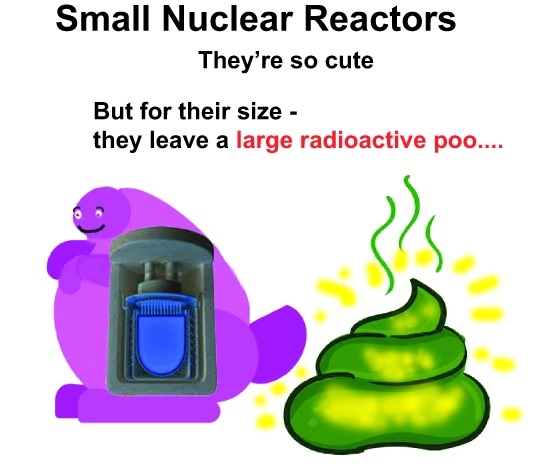
Small modular reactors, long touted as the future of nuclear energy, will actually generate more radioactive waste than conventional nuclear power plants, according to research from Stanford and the University of British Columbia.
BY MARK SHWARTZ, 30 May, News Stanford
Nuclear reactors generate reliable supplies of electricity with limited greenhouse gas emissions. But a nuclear power plant that generates 1,000 megawatts of electric power also produces radioactive waste that must be isolated from the environment for hundreds of thousands of years. Furthermore, the cost of building a large nuclear power plant can be tens of billions of dollars.
To address these challenges, the nuclear industry is developing small modular reactors that generate less than 300 megawatts of electric power and can be assembled in factories. Industry analysts say these advanced modular designs will be cheaper and produce fewer radioactive byproducts than conventional large-scale reactors.
But a study published May 31 in Proceedings of the National Academy of Sciences has reached the opposite conclusion.
“Our results show that most small modular reactor designs will actually increase the volume of nuclear waste in need of management and disposal, by factors of 2 to 30 for the reactors in our case study,” said study lead author Lindsay Krall, a former MacArthur Postdoctoral Fellow at Stanford University’s Center for International Security and Cooperation (CISAC). “These findings stand in sharp contrast to the cost and waste reduction benefits that advocates have claimed for advanced nuclear technologies.”
…………………………………. In the U.S. alone, commercial nuclear power plants have produced more than 88,000 metric tons of spent nuclear fuel, as well as substantial volumes of intermediate and low-level radioactive waste. The most highly radioactive waste, mainly spent fuel, will have to be isolated in deep-mined geologic repositories for hundreds of thousands of years. At present, the U.S. has no program to develop a geologic repository after spending decades and billions of dollars on the Yucca Mountain site in Nevada. As a result, spent nuclear fuel is currently stored in pools or in dry casks at reactor sites, accumulating at a rate of about 2,000 metric tonnes per year.
Simple metrics
Some analysts maintain that small modular reactors will significantly reduce the mass of spent nuclear fuel generated compared to much larger, conventional nuclear reactors. But that conclusion is overly optimistic, according to Krall and her colleagues.
“Simple metrics, such as estimates of the mass of spent fuel, offer little insight into the resources that will be required to store, package, and dispose of the spent fuel and other radioactive waste,” said Krall, who is now a scientist at the Swedish Nuclear Fuel and Waste Management Company. “In fact, remarkably few studies have analyzed the management and disposal of nuclear waste streams from small modular reactors.”
Dozens of small modular reactor designs have been proposed. For this study, Krall analyzed the nuclear waste streams from three types of small modular reactors being developed by Toshiba, NuScale, and Terrestrial Energy. Each company uses a different design. Results from case studies were corroborated by theoretical calculations and a broader design survey. This three-pronged approach enabled the authors to draw powerful conclusions.
“The analysis was difficult, because none of these reactors are in operation yet,” said study co-author Rodney Ewing, the Frank Stanton Professor in Nuclear Security at Stanford and co-director of CISAC. “Also, the designs of some of the reactors are proprietary, adding additional hurdles to the research.”
Neutron leakage
Energy is produced in a nuclear reactor when a neutron splits a uranium atom in the reactor core, generating additional neutrons that go on to split other uranium atoms, creating a chain reaction. But some neutrons escape from the core – a problem called neutron leakage – and strike surrounding structural materials, such as steel and concrete. These materials become radioactive when “activated” by neutrons lost from the core.
The new study found that, because of their smaller size, small modular reactors will experience more neutron leakage than conventional reactors. This increased leakage affects the amount and composition of their waste streams.
“The more neutrons that are leaked, the greater the amount of radioactivity created by the activation process of neutrons,” Ewing said. “We found that small modular reactors will generate at least nine times more neutron-activated steel than conventional power plants. These radioactive materials have to be carefully managed prior to disposal, which will be expensive.”
The study also found that the spent nuclear fuel from small modular reactors will be discharged in greater volumes per unit energy extracted and can be far more complex than the spent fuel discharged from existing power plants.
“Some small modular reactor designs call for chemically exotic fuels and coolants that can produce difficult-to-manage wastes for disposal,” said co-author Allison Macfarlane, professor and director of the School of Public Policy and Global Affairs at the University of British Columbia. “Those exotic fuels and coolants may require costly chemical treatment prior to disposal.”
“The takeaway message for the industry and investors is that the back end of the fuel cycle may include hidden costs that must be addressed,” Macfarlane said. “It’s in the best interest of the reactor designer and the regulator to understand the waste implications of these reactors.”
Radiotoxicity
The study concludes that, overall, small modular designs are inferior to conventional reactors with respect to radioactive waste generation, management requirements, and disposal options.
One problem is long-term radiation from spent nuclear fuel. The research team estimated that after 10,000 years, the radiotoxicity of plutonium in spent fuels discharged from the three study modules would be at least 50 percent higher than the plutonium in conventional spent fuel per unit energy extracted. ……..more https://news.stanford.edu/2022/05/30/small-modular-reactors-produce-high-levels-nuclear-waste/?fbclid=IwAR3hUe5R3zYb25eJ-8dJzM_vXATq4Du7Hk_XEhdeED_BTvwCqm0XLo3mE8o
Zelensky plotted attacks deep inside Russia – Washington Post

https://www.rt.com/russia/576237-zelensky-hungary-russia/ 15 May 23
The Ukrainian leader reportedly wanted to “occupy” Russian cities to gain leverage over Moscow
Despite public assurance that he would limit military action to his own country’s 1991 borders, Ukrainian President Vladimir Zelensky formed plans to conduct attacks deep inside Russia and suggested that Kiev “destroy” the industry of Hungary, the Washington Post reported on Saturday, citing leaked Pentagon documents.
Citing US intelligence reports recently published on a gaming server, the Post described how Zelensky suggested at a meeting in January that his troops “conduct strikes in Russia,” while moving across the border to “occupy unspecified Russian border cities” in order to “give Kiev leverage in talks with Moscow.”
Less than two months later, the Ukraine-based Russian Volunteer Corps launched a cross-border raid that left two civilians dead in Russia’s Bryansk Region. A member of the group told Western media that Kiev had approved the attack, and further assaults have taken place since.
With Ukraine’s Western backers reluctant until recently to provide him with long-range missiles for fear he would use them against targets within Russia, Zelensky suggested to his top military commander, General Valery Zaluzhny, that he use drones to “attack unspecified deployment locations in Rostov” in February, the Post reported.
Prior to and after the alleged meeting, Ukrainian forces used drones to attack infrastructure in Rostov Region, which borders the formerly Ukrainian territory of Lugansk.
In a meeting with Deputy Prime Minister Yulia Svridenko in February, Zelensky reportedly suggested that Ukraine “blow up” the Druzhba oil pipeline, which transports Russian oil to Hungary. According to the US report cited by the Post, Zelensky suggested that “Ukraine should just blow up the pipeline and destroy…Hungarian [Prime Minister] Viktor Orban’s industry, which is based heavily on Russian oil.”
American spies listening to his meeting with Svridenko concluded that Zelensky was issuing “hyperbolic, meaningless threats.” Nevertheless, the Druzhba pipeline has come under attack on several occasions since the meeting, most recently when it was hit by drone-dropped explosives on Wednesday.
The Post’s article corroborates a CNN report last month claiming that US spies have been intercepting Zelensky’s communications.
Contacted by the newspaper, Zelensky dismissed the incidents described in the report as “fantasies,” and claimed that “no one in our country has given orders for offensives or strikes on Russian territory.”
Contacted by the newspaper, Zelensky dismissed the incidents described in the report as “fantasies,” and claimed that “no one in our country has given orders for offensives or strikes on Russian territory.”
Washington Post censors its own report of interview that showed President Vladimir Zelensky in a poor light

https://www.rt.com/russia/576284-zelensky-wapo-transcript-deleted/ 15 May 23 Washington Post deletes ‘treason’ quotes from Zelensky interview
The Ukrainian president reacted angrily when confronted about his own intelligence agents’ supposed “dealings” with Russia’s Wagner Group
The Washington Post has cut a large segment from an interview with Ukrainian President Vladimir Zelensky, in which he pushed the newspaper to reveal alleged traitors in his ranks and angrily accused its reporters of aiding Russia by publishing information from leaked documents.
The Post published a transcript of a lengthy interview with Zelensky on Saturday. After a discussion of a Ukrainian counteroffensive against Russian forces, the newspaper asked whether his military intelligence agency – the GUR – had “back-channel contact” with Yevgeny Prigozhin, head of the Russian private military company Wagner Group.
Citing recently leaked Pentagon documents, the Post explained to Zelensky that American spies noted a meeting between the president and GUR chief Kirill Budanov in February in which Budanov told him that he had learned of a Wagner plan to “destabilize Moldova,” but could counter this alleged plan by exposing his own “dealings” with Prigozhin, thus portraying the Wagner boss as “a traitor who has been working with Ukraine.”
Zelensky responded angrily, first asking who within his government had handed this document to the Post. Whoever it was, he said, was committing “treason,” which “is the most severe felony in our country.”
Despite being told that the document did not come from Kiev, but from Washington, Zelensky asked his interviewer to reveal “with which Ukrainian official did you talk?”
The Post has not yet published a story based on the document, and when informed that he was the first Ukrainian official the newspaper had spoken to, Zelensky urged his interviewer not to run the story, arguing that doing so would “demotivate Ukraine,” and accusing them of “playing games with me.”
“You are right now playing with, I think, things that aren’t good for our people,” he warned, asking the Post’s reporter “is your goal to help Russia?” When the reporter said that it was not, Zelensky countered “well, it looks different.”
By Sunday, however, the explosive exchange – during which Zelensky did not dispute that the meeting with Budanov had happened – was missing from the Post’s transcript. The entire 1,400-word back-and-forth about the document was removed, with no explanation given.
The Post’s edit is not the first incident in which Western governments or media outlets have scrubbed information potentially embarrassing or damaging to Kiev. Back in December, the European Commission deleted a video and its associated transcript in which Commission President Ursula von der Leyen said that the Ukrainian military had suffered 100,000 fatalities since Russia’s military operation began ten months earlier.
Kiev keeps its losses a closely guarded secret, and when asked by the Washington Post to comment on this policy, Zelensky sniped “if you have the relevant documents, maybe you can tell us how many people have died…and what their names were.”
The Women of Three Mile Island
CounterPunch BY KARL GROSSMAN 12 May 23
Radioactive: The Women of Three Mile Island is the title of a newly-released documentary feature film directed, written and produced by award-winning filmmaker Heidi Hutner, a professor of environmental humanities at Stony Brook University, a “flagship” school of the State University of New York.
With greatly compelling facts and interviews, she and her also highly talented production team have put together a masterpiece of a documentary film.
It connects the proverbial dots of the 1979 Three Mile Island nuclear plant disaster—doing so brilliantly.
The documentary has already received many film awards and has had a screening in recent months in New York City—winning the “Audience Award for Best Documentary” at the Dances With Films Festival—and Harrisburg, Pennsylvania; Sarasota, Florida; Dubuque, Iowa; Long Island, New York; First Frame International Film Festival in New York City; the Environmental Film Festival in Washington D.C., and is soon the featured film at Kat Kramer’s #SHEROESForChange Film Festival in Los Angeles and the Cinequest Film Festival in San Jose, California, as well as the Uranium Film Festival in Rio de Janeiro in Brazil. And there will be tours across the U.S.
Resident after resident of the area around Three Mile Island is interviewed and tells of widespread cancer that has ensued in the years that have followed the accident—a cancer rate far beyond what would be normal. Accounts shared in the documentary are heartbreaking.
A whistleblower who had worked at the nuclear plant tells Hutner of the deliberate and comprehensive attempt by General Public Utilities, which owned TMI, to cover up the gravity of the accident and its radioactive releases, especially of cancer-causing Iodine-131 and Xenon 133.
An attorney, Lynne Bernabei, involved in litigation in the wake of the accident, says the Three Mile Island “cover-up was one of the biggest cover-ups in history.” Meanwhile, the U.S. Nuclear Regulatory Commission which is “supposed to protect the public” has then and since been just “interested in is promoting the [nuclear] industry. This is corrupt,” says attorney Joanne Doroshow, now a professor at New York Law School and director of the Center for Justice & Democracy. Many examples of this are presented.
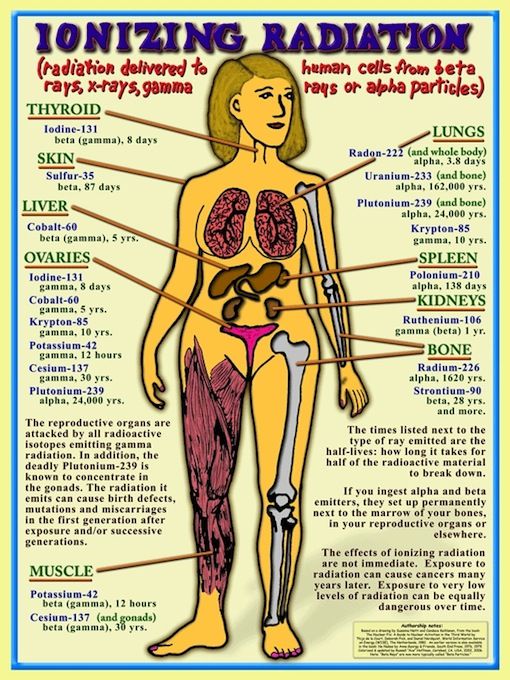
The documentary’s focus on women includes women being far more at risk to the effects of radioactivity than men. Mary Olson, a biologist, founder, and director of the Gender & Radiation Impact Project, says in the film that those setting radiation standards in the U.S. from the onset of nuclear technology in 1942, based impacts on a “25 to 30 years-old” male “defined as Caucasian.” She said, “It has come to be known as the ‘Reference Man.” However, Olson cites research findings that “radiation is 10 times more harmful to young females” and “50 percent more harmful to a “comparable female” than it is to “Reference Man” who is “more resistant” to radioactivity than a woman.
There’s the scientist Dr. Aaron Datesman, who is now pursuing a major chromosomal study regarding the impact of the disaster on the health of people in the area, and how people have been harmed despite the denials of the nuclear industry. This study is based on his recent ground-breaking work, “Radiological Shot Noise,” in Nature.
And more and more.
………………………………… Hutner, in speaking about the focus on women in Radioactivity: The Women of Three Mile Island, explains: “Following health and safety disasters, it is often women on the ground fighting back, and over and over throughout nuclear history, these women are gaslighted, silenced, called hysterical and ‘radiophobic.’ The result of such silencing: we lose significant information about nuclear history, science, and health.”
Hutner goes on: “What I have dug up after over 20 years of ecofeminist research is shocking—Dr. Alice Stewart’s research on the danger of X-rays to fetuses in the womb; Rachel Carson’s writing about radiation and bioaccumulation; Dr. Helen Caldicott’s warnings about the dangers of nuclear weapons and her peace and vital medical health advocacy as a physician (she has been attacked mercilessly and unfairly by male critics on sexist grounds); Mary Olson’s study of the alarming danger of radiation to girls and women, Leona Morgan’s decolonization activism to protect indigenous communities from uranium extraction and poisoning, and the dumping radioactive waste on native lands; poet activist Kathy Jetnil-Kijner’s story-telling about the suffering of women miscarrying in the Marshall Islands after the 67 nuclear test-bombing by the U.S. There are endless stories such as these.”

“By erasing such women’s voices, by gaslighting these women, men have erased significant human stories, science, research,” says Hutner. “This is a classic sexist maneuver. Call women and those who speak up about the dangers of nuclear technology as radiophobic, hysterical, and incapable of understanding science. As the women in Radioactivity explain, when they spoke at the Nuclear Regulatory Hearings and meetings, asking intelligent questions about the verity of the nuclear company’s and NRC’s claims, and armed with detailed information regarding their corruption and cover-ups—what really happened—the women were laughed at, mocked, told to ‘go home and bake cookies.’”
“That’s why we made Radioactive. The public needs to know and understand how they are being lied to, how key aspects of nuclear disasters and radiation impacts have been swept under the rug. And at what cost. This is life and death. An so we focus on buried women stories, and in subsequent film projects we hope to make as part of a series, we will bring in the silenced voices of black, brown, and women’s indigenous groups impacted unequally by nuclear disasters.”
She adds: “The film could not come at a more important time for a number of reasons. With nuclear power being discussed in some circles as an ‘answer’ to our climate crisis, we believe anyone seeing this film will walk away with the unmistakable conclusion that nuclear power must be off the table. TMI is one of a long list of environmental disasters and cover-ups that have caused serious harm to surrounding communities, which will last decades. It was and continues to be the lesson of what happens when a corporation and industry lacking integrity, regulated by an agency completely captured by that industry, is put in charge of people’s lives. TMI happened 44 years ago. But when it comes to systems meant to protect the public’s health and safety from nuclear hazards, nothing has changed and in fact, has only gotten worse.”
Comments about the documentary include:………………………………………………………………………………………..
The documentary website is: https://radioactivethefilm.com/. There you will find listings for upcoming screenings.
Hutner says: “We made Radioactive: The Women of Three Mile Island because the issue of nuclear dangers has ‘died’ as an important cause. It was once a global movement. Front page news. One million people marched in Central Park and so did millions around the world. The big screen popped with blockbusters on the topic. Today: few know or care about nuclear dangers—historical or in the present.”
“Sadly,” Hutner continues, “younger folks are taught nothing in school about nuclear history except a brief lesson (if they are taught anything) on how great nuclear energy is. My students are shocked and aghast at what they learn in my classes (in-depth history and present information). They’ve heard a little bit about Hiroshima and Nagasaki, and they have heard of Chernobyl (barely). They haven’t a clue about anything else. They don’t know what nuclear power is or how it functions. They don’t think about nuclear weapons and the potential for nuclear obliteration.”
“The nuclear industry has won its plan to silence this history and science. They’ve invested heavily in painting a pretty picture, erasing facts, and denigrating concerned citizens, particularly women, as I have explained. There’s no recognition of the great harm done to fetuses, babies, children—especially girl children. There’s a complete disregard for the poisoning of communities of color. Dr. Robert Bullard, the father of the environmental justice movement, and Winona LaDuke, a leading indigenous ecofeminist activist, call this environmental racism.”
“Pronuclear films by Bill Gates, Oliver Stone, Robert Stone, leave out essential information — real experiences of real people who live next to reactors, live with and in disaster zones and highly toxic areas,” Hutner notes. “From what I can see—these guys (note their gender and color) have not spoken with or met the people who live with high rates of cancer and multigenerational cancers in disaster locations. They don’t visit and spend time in these communities. Childhood cancers. Heart disease. Infertility. Deformed babies. Miscarriages. Infertility. On and on.”
“These pro-nuke guys,” Hutner continues, “do not address the science that shows the dangers of radiation exposures or the future of inevitable meltdowns. They blackball this science. They don’t discuss radioactive waste—where and how it’s maintained (poorly—putting all life at risk for thousands of years). And the location of the waste? Mostly indigenous lands and always poorly stored. Waste right on-site at the nuclear facilities, leaving communities located next to and near power plants at risk for thousands of years. They dump nuclear waste in waterways.”…………………………………………………………………………… more https://www.counterpunch.org/2023/05/12/the-women-of-three-mile-island/?fbclid=IwAR0PdDIrL2eXpRa9KFGN2aL7xSLkUwNYVIZFotFrfpKHlRmi8kQSeNCxKUQ
No more Hibakusha: Nuclear Free Local Authorities urge PM to make peace pledge at Hiroshima Summit

On the eve of a summit of G7 world leaders being hosted in Hiroshima by Prime Minister Kishida of Japan, the Chair of the UK/Ireland Nuclear Free Local Authorities has written to Rishi Sunak to urge the Prime Minister to use this unique opportunity to pledge the UK Government to work for a nuclear-weapon free world.
The Japanese port city of Hiroshima was utterly devastated by the explosion of an atomic bomb equivalent in force to 15,000 tons of the conventional high explosive TNT in the morning of the 6 August 1945. Most buildings were totally destroyed by the blast and a fireball consumed the city centre. 70,000 inhabitants died on that day, many of them high-school students, and a further 70,000 by the end of that year, being the victims of blast, heat and radiation. Prime Minister Kishida is a son of that city and a second-generation Hibakusha, A-bomb survivor, having many relatives who died as a result of the explosion; consequently he is totally opposed to nuclear weapons.
The Federation of Scientists have estimated there are approximately 12,500 nuclear weapons possessed at this time by nine states in the world(1). They are many more times powerful that the bomb which destroyed Hiroshima. An all-out nuclear war could extinguish all life on Earth.
Rishi Sunak will be the first British Prime Minister to attend a summit in that city which will be held on the weekend of 19 to 21 May. The NFLAs, being conscious that the summit is being held in the world’s first A-bombed city and at a time when the world is again faced with the possibility of the use of nuclear weapons as a consequence of the ongoing conflict in Ukraine, wrote to the Prime Minister asking him to visit the Peace Memorial Museum and the Peace Park, and to meet with the Hibakusha, the Japanese A-bomb survivors, who, despite their advanced age, continue to speak out against nuclear weapons.
In 1968, the United Kingdom was one of first signatories to the UN Nuclear Non-Proliferation Treaty (the NPT). As a nuclear weapon state, the UK pledged under Article VI to ‘pursue negotiations in good faith on effective measures relating to cessation of the nuclear arms race at an early date and to nuclear disarmament, and on a treaty on general and complete disarmament.’
Mindful of the fact that 55 years on, the UK has yet to honour these obligations as a nuclear nation, NFLA Chair, Councillor Lawrence O’Neill, also requested Prime Minister Sunak ‘use this Summit to publicly recommit this nation to these pledges and then return home to earnestly begin work to achieve them’.
The NFLAs’ sister organisation, Mayors for Peace, is based in the city after being established by Hiroshima Mayor Araki at the United Nations in 1982. Over 8,200 mayors from across the world now represent an international coalition opposed to nuclear weapons, including 101 in the UK and the Republic of Ireland. Some of these UK/Ireland members are also Nuclear Free Local Authorities. Hiroshima Mayor Matsui currently serves as President of Mayors for Peace and the Secretariat has recently issued an Open Letter to world leaders. For information, this is also reproduced below. [on original]
Nuclear’s Dangerous Waste Is ‘Rapidly Catching Up’ With Industry

Jonathan Tirone, Bloomberg News, 15 May 23
- World faces a wave of decommissioning in coming decades: IAEA
- That will create streams of long-lasting, radioactive waste
Swelling inventories of radioactive waste need to be dealt with more effectively if nuclear energy is to become a key tool in combating climate change, the International Atomic Energy Agency said.
While nuclear power stations don’t emit planet-warming greenhouse gases, they do create streams of long-lasting, hazardous waste. It takes engineers and regulators years to plan and execute the decommissioning of a single site, with costs sometimes running into the billions of dollars.
“Even as we look into the future, the past is rapidly catching up,” IAEA Director-General Rafael Mariano Grossi said Monday at a conference in Vienna, where hundreds … (subscribers only) more https://news.bloomberglaw.com/health-law-and-business/nuclears-dangerous-waste-is-rapidly-catching-up-with-industry
No Miracles Needed
The current edition of Beyond Nuclear board member, Karl Grossman’s “Enviro Close-Up” TV program features renowned energy expert, Dr. Mark Z. Jacobson, discussing his new book, “No Miracles Needed: How Today’s Technology Can Save Our Climate and Clean Our Air”. It will be broadcast this coming Saturday, May 20, on Free Speech TV on nearly…
“No Miracles Needed” — Beyond Nuclear
Poland: Pentagon, NATO reach milestone in plans for direct confrontation with Russia
NATOMay 15, 2023 US demonstrates readiness to reinforce NATO battlegroup in Poland The United States has shown its ability to rapidly deploy reinforcements to the NATO enhanced Forward Presence Battle Group in Poland, expanding its capabilities from a battalion to a brigade-level element. This advancement aligns with NATO’s new Force Model, designed to strengthen the […]
Poland: Pentagon, NATO reach milestone in plans for direct confrontation with Russia — Anti-bellum
Russia’s Nuclear-Capable Tu-95, Tu-160 Bombers Deployed Near NATO Border As Tensions Escalate With Ukraine
Eurasian Times, By Sakshi Tiwari, May 15, 2023
With Russia’s continuous use of its strategic bombers, including the Tu-95 and the Tu-160, for launching conventional stand-off attacks on Ukraine, satellite images have revealed that there has been an unexpected surge of these bombers in Russia’s north close to the NATO border.
A fresh set of satellite images of the Olenya Air Base in Russia’s Kola peninsula revealed that about 16 strategic bombers had been deployed to this air base close to the NATO countries, Finland and Norway, The Barents Observer reported. The air base is located in the closed town of Olenegorsk-2, which is an hour’s drive south of Murmansk.
The base currently houses 14 Tu-5 bombers, two Tu-160 bombers, and two Tu-22M bombers, besides other heavy transport aircraft, as could be shown in the satellite images.
Two Tu-160 are positioned at the southern end, while at all other aprons large enough for heavier aircraft, 14 Tu-95 could be seen positioned side by side. The Tu-22M aircraft are relocated to the parking grounds in the air base’s northwest………………………………………………………………………………………………………………………………….
The sudden movement of nuclear-capable bombers close to the NATO border was alarming as Russia’s frequent nuclear saber-rattling accompanied it. The concern was exacerbated as Russia’s central storage for nuclear warheads, Bolshoye Ramozero, is reportedly just 10 kilometers from Olenya Air Base.
At the time, nuclear experts and military watchers noted that the deployment of the nuclear-capable bombers close to the NATO borders was more of “signaling” and did not suggest any “possible threat” to NATO’s security.
However, the experts noted that deploying these bombers so close to NATO states would undoubtedly mean that the NATO countries would have a shorter window of time to intercept Russian bombers in the international air base compared to when they are flying from the Engels Air Base. https://eurasiantimes.com/tensions-escalate-as-russia-deploys-scores-of-nuclear-capable/
France to host pro-nuclear meet to push for EU recognition of climate benefits

Yahoo Sport Kate Abnett and America Hernandez. Mon, 15 May 2023
BRUSSELS (Reuters) -France will host a meeting of ministers from 16 pro-nuclear European states on Tuesday aimed at coordinating expansion of atomic power and urging the EU to recognise its role in meeting climate goals for 2050, the country’s energy ministry said.
The meeting in Paris will include EU Energy Commissioner Kadri Simson and representatives from 14 EU countries including France, Belgium and the Netherlands, plus Italy as an observer and the United Kingdom as a non-EU invitee………………………
Yves Desbazeille, director of EU lobby group Nucleareurope, will also give a presentation, including figures on potential job creation and investment.
A draft of the post-meeting statement seen by Reuters said the countries would encourage the commissioner to integrate nuclear energy into the EU’s energy policy by recognising nuclear alongside other green [?] energy technologies in EU decarbonisation goals.
The talks will cover the EU Net Zero Industry Act, the Hydrogen Bank, definitions of low-carbon hydrogen and hydrogen import strategies among other topics, the French official said.
The draft document also calls for the publication of an EU communication on small modular reactors.
……………………………. EU opponents of nuclear energy – among them Germany, which switched off its last reactors last month, Luxembourg and Austria – cite concerns including waste disposal and maintenance issues that have plagued the French fleet in recent years.
Austria and Luxembourg are taking the EU to court over its decision to officially label nuclear investments as “green”. https://au.sports.yahoo.com/france-host-pro-nuclear-meet-133145776.html
Japanese protesters call for US military to be evicted
https://www.rt.com/news/576288-okinawa-protesters-us-bases-china/ 15 May 23
Increasingly hostile relations between Washington and Beijing have dialed up the urgency of Okinawan protesters’ demands
Thousands of Japanese protesters assembled near Kadena Air Base in Okinawa to protest the US occupation of the island on Saturday, on the 51st anniversary of the island returning to Japanese control.
The annual demonstration comes amid rising regional tensions as the US supplies Taiwan with weapons in what China views as open provocation.
Chanting slogans including “Give us back our peaceful life” and “Osprey get out,” the latter being a reference to US military helicopters, the demonstrators demanded the closure of the US’ Okinawa bases. The island’s inhabitants are weary of the pollution – both chemical and aural – produced by Washington’s military outposts, as well as the high number of crimes committed by American servicemembers, from petty theft and drunk driving to rape and murder.
Governor Denny Tamaki has urged the Japanese and US governments to reduce the Pentagon’s footprint on the island, which hosts 70% of all US military facilities in Japan despite comprising just 1% of the country’s total land area.
The protests come as an increasingly militarized Japan becomes a focal point in the great-power rivalry between the US and China. The US recently fast-tracked a $500 million defense package to Taiwan, just a month after hosting Taiwanese President Tsai Ing-Wen for a hugely controversial “unofficial” visit, eliciting warnings and massive military maneuvers from Beijing.
Last year, Japan’s Ground Self-Defense Force held its first-ever large-scale maritime drill with US troops stationed in Okinawa, enacting scenarios aimed at deterring “competitor and adversary aggression.”
NATO is reportedly even planning to open a liaison office in Tokyo, as the bloc last year discarded the pretense of limiting itself to the ‘North Atlantic’ part of North Atlantic Treaty Organization by inviting its regional allies – Japan, Australia, South Korea, and New Zealand – to its annual summit in a signal of increased focus on Beijing.
Should war break out between the two countries, it is widely understood that the US would use its Japanese bases to stage operations, making Japan a likely target of Chinese retaliation.
Japan approved its largest defense budget ever last year and plans to double defense spending to 2% of GDP by 2027, making its defense budget the world’s third-largest after the US and China, in a drive to acquire “counterstrike capability.” This represents a significant strategic shift away from the solely defensive posture Tokyo has been legally required to maintain since the end of World War II, though the constitution’s language was relaxed in 2017.
Nuclear enthusiast Jennifer Granholm ‘hopeful’ about $1B in federal loans to restart Palisades nuclear plant
MLive, Sheri McWhirter | smcwhirter@mlive.com, May. 15, 2023
U.S. Energy Secretary Jennifer Granholm said she is “hopeful” about pending loan applications to fund the restart of the closed Palisades nuclear plant in Michigan.
If approved, the approximately $1 billion in federal loans could help pay for the power plant to become the first U.S. nuclear reactor to restart after powering down. Lawmakers are considering $300 million in state funds as part of the effort.
Granholm, a former Michigan governor and now head of the U.S. Department of Energy, made the remark during a congressional hearing on Thursday, May 11, while responding to a question from U.S. Rep. Tim Walberg, R-Tipton……………………………………………………… https://www.mlive.com/public-interest/2023/05/granholm-hopeful-about-1b-in-federal-loans-to-restart-palisades-nuclear-plant.html
Biden too scared to come to Australia because of protests about Julian Assange?

Darn it! I was just about to buy my “Free Julian Assange” shirt – to wear in Canberra, and at the Sydney Opera House, and join thousands of others protesting – wherever Joe Biden dares to show his face in Australia.
USA Republican House Speaker Kevin McCarthy said on Tuesday that a deal on the debt ceiling negotiations might be made by the end of this week. So – perhaps all the panic about the US Debt Ceiling will not be necessary? So – does Biden really need to cancel his visit to Australia?
Never mind – he’s still going to Hiroshima for the G7 summit. That’ll be OK. Everyone will say worthy things about how there must never be another nuclear bombing, and how we must all send drones, tanks, missiles etc to Ukraine . And they’ll say it politely -that’s the thing.
As for those bloody uncouth Australians – heck – someone might throw a rotten egg at Biden, – such is our rage about the persecution of Julian Assange. I mean – the Australian Prime Minister will of course bend over backwards to bed polite, and not mention Assange. And Julian’s family and his other prominent supporters will be courteous.
But ya can’t count on the rest of us downunder colonials to be nice about it.
Yes Joe, – safer to go straight home from the G7 – give Australia a miss.
1 This Month
10 March A LIVE WEBINAR THE REAL EFFECTS OF NUCLEAR POWER
What the Industry Isn’t Telling Us
1:00 PM Mountain, 2 pm Central, 3 pm Eastern. Live on the Keepers of the Water Facebook page

18 March Webinar @ 1 PM EST: An Assessment of SMR Projects: The Case of Canada
register for the zoom:
https://us02web.zoom.us/webinar/register/WN_o8BIIOUvQ2ONJR1nta65DQ#/registration


of the week – STOP SMALL MODULAR REACTORS IN CANADA
To see nuclear-related stories in greater depth and intensity – go to https://nuclearinformation.wordpress.com
-
Archives
- February 2026 (268)
- January 2026 (308)
- December 2025 (358)
- November 2025 (359)
- October 2025 (376)
- September 2025 (258)
- August 2025 (319)
- July 2025 (230)
- June 2025 (348)
- May 2025 (261)
- April 2025 (305)
- March 2025 (319)
-
Categories
- 1
- 1 NUCLEAR ISSUES
- business and costs
- climate change
- culture and arts
- ENERGY
- environment
- health
- history
- indigenous issues
- Legal
- marketing of nuclear
- media
- opposition to nuclear
- PERSONAL STORIES
- politics
- politics international
- Religion and ethics
- safety
- secrets,lies and civil liberties
- spinbuster
- technology
- Uranium
- wastes
- weapons and war
- Women
- 2 WORLD
- ACTION
- AFRICA
- Atrocities
- AUSTRALIA
- Christina's notes
- Christina's themes
- culture and arts
- Events
- Fuk 2022
- Fuk 2023
- Fukushima 2017
- Fukushima 2018
- fukushima 2019
- Fukushima 2020
- Fukushima 2021
- general
- global warming
- Humour (God we need it)
- Nuclear
- RARE EARTHS
- Reference
- resources – print
- Resources -audiovicual
- Weekly Newsletter
- World
- World Nuclear
- YouTube
-
RSS
Entries RSS
Comments RSS
 nuclear-news