The Twenty-First Century of (Profitable) War- Not Your Grandfather’s Military-Industrial Complex

TOMGRAM, Hartung and Freeman, The Twenty-First Century of (Profitable) War, MAY 4, 2023
Unwarranted Influence, Twenty-First-Century-Style Not Your Grandfather’s Military-Industrial Complex
BY BEN FREEMAN AND WILLIAM D. HARTUNG
The military-industrial complex (MIC) that President Dwight D. Eisenhower warned Americans about more than 60 years ago is still alive and well. In fact, it’s consuming many more tax dollars and feeding far larger weapons producers than when Ike raised the alarm about the “unwarranted influence” it wielded in his 1961 farewell address to the nation.
The statistics are stunning. This year’s proposed budget for the Pentagon and nuclear weapons work at the Department of Energy is $886 billion — more than twice as much, adjusted for inflation, as at the time of Eisenhower’s speech. The Pentagon now consumes more than half the federal discretionary budget, leaving priorities like public health, environmental protection, job training, and education to compete for what remains. In 2020, Lockheed Martin received $75 billion in Pentagon contracts, more than the entire budget of the State Department and the Agency for International Development combined.
This year’s spending just for that company’s overpriced, underperforming F-35 combat aircraft equals the full budget of the Centers for Disease Control and Prevention. And as a new report from the National Priorities Project at the Institute for Policy Studies revealed recently, the average taxpayer spends $1,087 per year on weapons contractors compared to $270 for K-12 education and just $6 for renewable energy.
The list goes on — and on and on. President Eisenhower characterized such tradeoffs in a lesser known speech, “The Chance for Peace,” delivered in April 1953, early in his first term, this way: “Every gun that is made, every warship launched, every rocket fired signifies, in the final sense, a theft from those who hunger and are not fed, those who are cold and are not clothed. This world in arms is not spending money alone. It is spending the sweat of its laborers, the genius of its scientists, the hopes of its children…”
How sadly of this moment that is.
New Rationales, New Weaponry
Now, don’t be fooled. The current war machine isn’t your grandfather’s MIC, not by a country mile. It receives far more money and offers far different rationales. It has far more sophisticated tools of influence and significantly different technological aspirations.

Perhaps the first and foremost difference between Eisenhower’s era and ours is the sheer size of the major weapons firms. Before the post-Cold War merger boom of the 1990s, there were dozens of significant defense contractors. Now, there are just five big (no, enormous!) players — Boeing, General Dynamics, Lockheed Martin, Northrop Grumman, and Raytheon. With so few companies to produce aircraft, armored vehicles, missile systems, and nuclear weapons, the Pentagon has ever more limited leverage in keeping them from overcharging for products that don’t perform as advertised. The Big Five alone routinely split more than $150 billion in Pentagon contracts annually, or nearly 20% of the total Pentagon budget. Altogether, more than half of the department’s annual spending goes to contractors large and small.
In Eisenhower’s day, the Soviet Union, then this country’s major adversary, was used to justify an ever larger, ever more permanent arms establishment. Today’s “pacing threat,” as the Pentagon calls it, is China, a country with a far larger population, a far more robust economy, and a far more developed technical sector than the Soviet Union ever had. But unlike the USSR, China’s primary challenge to the United States is economic, not military.
Yet, as Dan Grazier noted in a December 2022 report for the Project on Government Oversight, Washington’s ever more intense focus on China has been accompanied by significant military threat inflation. While China hawks in Washington wring their hands about that country having more naval vessels than America, Grazier points out that our Navy has far more firepower. Similarly, the active American nuclear weapons stockpile is roughly nine times as large as China’s and the Pentagon budget three times what Beijing spends on its military, according to the latest figures from the Stockholm International Peace Research Institute.
But for Pentagon contractors, Washington’s ever more intense focus on the prospect of war with China has one overriding benefit: it’s fabulous for business. The threat of China’s military, real or imagined, continues to be used to justify significant increases in military spending, especially on the next generation of high-tech systems ranging from hypersonic missiles to robotic weapons and artificial intelligence…………………………………………………….

The arms industry as a whole has donated more than $83 million to political candidates in the past two election cycles, with Lockheed Martin leading the pack with $9.1 million in contributions, followed by Raytheon at $8 million, and Northrop Grumman at $7.7 million. Those funds, you won’t be surprised to learn, are heavily concentrated among members of the House and Senate armed services committees and defense appropriations subcommittees. For example, as Taylor Giorno of OpenSecrets, a group that tracks campaign and lobbying expenditures, has found, “The 58 members of the House Armed Services Committee reported receiving an average of $79,588 from the defense sector during the 2022 election cycle, three times the average $26,213 other representatives reported through the same period.”

Lobbying expenditures by all the denizens of the MIC are even higher — more than $247 million in the last two election cycles. Such funds are used to employ 820 lobbyists, or more than one for every member of Congress. And mind you, more than two-thirds of those lobbyists had swirled through Washington’s infamous revolving door from jobs at the Pentagon or in Congress to lobby for the arms industry. Their contacts in government and knowledge of arcane acquisition procedures help ensure that the money keeps flowing for more guns, tanks, ships and missiles. Just last month, the office of Senator Elizabeth Warren (D-MA) reported that nearly 700 former high-ranking government officials, including former generals and admirals, now work for defense contractors. While a few of them are corporate board members or highly paid executives, 91% of them became Pentagon lobbyists, according to the report.
And that feverishly spinning revolving door provides current members of Congress, their staff, and Pentagon personnel with a powerful incentive to play nice with those giant contractors while still in their government roles. After all, a lucrative lobbying career awaits once they leave government service………………………………………………..
Shaping the Elite Narrative: The Military-Industrial Complex and Think Tanks

One of the MIC’s most powerful tools is its ability to shape elite discussions on national security issues by funding foreign policy think tanks, along with affiliated analysts who are all too often the experts of choice when it comes to media coverage on issues of war and peace. A forthcoming Quincy Institute brief reveals that more than 75% of the top foreign-policy think tanks in the United States are at least partially funded by defense contractors. Some, like the Center for a New American Security and the Center for Strategic and International Studies, receive millions of dollars every year from such contractors and then publish articles and reports that are largely supportive of defense-industry funding.

Some such think tanks even offer support for weapons made by their funders without disclosing those glaring conflicts of interest. For example, an American Enterprise Institute (AEI) scholar’s critique of this year’s near-historically high Pentagon budget request, which, she claimed, was “well below inflation,” also included support for increased funding for a number of weapons systems like the Long Range Anti-Ship Missile, the Joint Air-to-Surface Standoff Missile, the B-21 bomber, and the Sentinel intercontinental ballistic missile.
What’s not mentioned in the piece? The companies that build those weapons, Lockheed Martin and Northrop Grumman, have been AEI funders. Although that institute is a “dark money” think tank that doesn’t publicly disclose its funders, at an event last year, a staffer let slip that the organization receives money from both of those contractors.
Unfortunately, mainstream media outlets disproportionately rely on commentary from experts at just such think tanks…………………………………………
Shaping the Public Narrative: The Military-Entertainment Complex
Top Gun: Maverick was a certified blockbuster, wowing audiences that ultimately gave that action film an astounding 99% score on Rotten Tomatoes — and such popular acclaim helped earn the movie a Best Picture Oscar nomination. It was also a resounding success for the Pentagon, which worked closely with the filmmakers and provided, “equipment — including jets and aircraft carriers — personnel and technical expertise,” and even had the opportunity to make script revisions, according to the Washington Post. Defense contractors were similarly a pivotal part of that movie’s success. In fact, the CEO of Lockheed Martin boasted that his firm “partnered with Top Gun’s producers to bring cutting-edge, future forward technology to the big screen.”
While Top Gun: Maverick might have been the most successful recent product of the military-entertainment complex, it’s just the latest installment in a long history of Hollywood spreading military propaganda. “The Pentagon and the Central Intelligence Agency have exercised direct editorial control over more than 2,500 films and television shows,” according to Professor Roger Stahl, who researches propaganda and state violence at the University of Georgia.
“The result is an entertainment culture rigged to produce relatively few antiwar movies and dozens of blockbusters that glorify the military,” explained journalist David Sirota, who has repeatedly called attention to the perils of the military-entertainment complex. “And save for filmmakers’ obligatory thank you to the Pentagon in the credits,” argued Sirota, “audiences are rarely aware that they may be watching government-subsidized propaganda.”
What Next for the MIC?
More than 60 years after Eisenhower identified the problem and gave it a name, the military-industrial complex continues to use its unprecedented influence to corrupt budget and policy processes, starve funding for non-military solutions to security problems, and ensure that war is the ever more likely “solution” to this country’s problems. The question is: What can be done to reduce its power over our lives, our livelihoods, and ultimately, the future of the planet?
Countering the modern-day military-industrial complex would mean dislodging each of the major pillars undergirding its power and influence. That would involve campaign-finance reform; curbing the revolving door between the weapons industry and government; shedding more light on its funding of political campaigns, think tanks, and Hollywood; and prioritizing investments in the jobs of the future in green technology and public health instead of piling up ever more weapons systems. Most important of all, perhaps, a broad-based public education campaign is needed to promote more realistic views of the challenge posed by China and to counter the current climate of fear that serves the interests of the Pentagon and the giant weapons contractors at the expense of the safety and security of the rest of us…………………… https://tomdispatch.com/unwarranted-influence-twenty-first-century-style/
A KINGLY PROPOSAL: LETTER FROM JULIAN ASSANGE TO KING CHARLES III
JULIAN ASSANGE, 5 MAY 2023 https://www.theguardian.com/world/2023/may/06/port-kembla-rally-to-demand-nsw-site-be-ruled-out-as-aukus-nuclear-submarine-base
To His Majesty King Charles III,
On the coronation of my liege, I thought it only fitting to extend a heartfelt invitation to you to commemorate this momentous occasion by visiting your very own kingdom within a kingdom: His Majesty’s Prison Belmarsh.
You will no doubt recall the wise words of a renowned playwright: “The quality of mercy is not strained. It droppeth as the gentle rain from heaven upon the place beneath.”
Ah, but what would that bard know of mercy faced with the reckoning at the dawn of your historic reign? After all, one can truly know the measure of a society by how it treats its prisoners, and your kingdom has surely excelled in that regard.
Your Majesty’s Prison Belmarsh is located at the prestigious address of One Western Way, London, just a short foxhunt from the Old Royal Naval College in Greenwich. How delightful it must be to have such an esteemed establishment bear your name.
“One can truly know the measure of a society by how it treats its prisoners”
It is here that 687 of your loyal subjects are held, supporting the United Kingdom’s record as the nation with the largest prison population in Western Europe. As your noble government has recently declared, your kingdom is currently undergoing “the biggest expansion of prison places in over a century”, with its ambitious projections showing an increase of the prison population from 82,000 to 106,000 within the next four years. Quite the legacy, indeed.
As a political prisoner, held at Your Majesty’s pleasure on behalf of an embarrassed foreign sovereign, I am honoured to reside within the walls of this world class institution. Truly, your kingdom knows no bounds.
During your visit, you will have the opportunity to feast upon the culinary delights prepared for your loyal subjects on a generous budget of two pounds per day. Savour the blended tuna heads and the ubiquitous reconstituted forms that are purportedly made from chicken. And worry not, for unlike lesser institutions such as Alcatraz or San Quentin, there is no communal dining in a mess hall. At Belmarsh, prisoners dine alone in their cells, ensuring the utmost intimacy with their meal.
Beyond the gustatory pleasures, I can assure you that Belmarsh provides ample educational opportunities for your subjects. As Proverbs 22:6 has it: “Train up a child in the way he should go: and when he is old, he will not depart from it.” Observe the shuffling queues at the medicine hatch, where inmates gather their prescriptions, not for daily use, but for the horizon-expanding experience of a “big day out”—all at once.
You will also have the opportunity to pay your respects to my late friend Manoel Santos, a gay man facing deportation to Bolsonaro’s Brazil, who took his own life just eight yards from my cell using a crude rope fashioned from his bedsheets. His exquisite tenor voice now silenced forever.
Venture further into the depths of Belmarsh and you will find the most isolated place within its walls: Healthcare, or “Hellcare” as its inhabitants lovingly call it. Here, you will marvel at sensible rules designed for everyone’s safety, such as the prohibition of chess, whilst permitting the far less dangerous game of checkers.
Deep within Hellcare lies the most gloriously uplifting place in all of Belmarsh, nay, the whole of the United Kingdom: the sublimely named Belmarsh End of Life Suite. Listen closely, and you may hear the prisoners’ cries of “Brother, I’m going to die in here”, a testament to the quality of both life and death within your prison.
But fear not, for there is beauty to be found within these walls. Feast your eyes upon the picturesque crows nesting in the razor wire and the hundreds of hungry rats that call Belmarsh home. And if you come in the spring, you may even catch a glimpse of the ducklings laid by wayward mallards within the prison grounds. But don’t delay, for the ravenous rats ensure their lives are fleeting.
I implore you, King Charles, to visit His Majesty’s Prison Belmarsh, for it is an honour befitting a king. As you embark upon your reign, may you always remember the words of the King James Bible: “Blessed are the merciful, for they shall obtain mercy” (Matthew 5:7). And may mercy be the guiding light of your kingdom, both within and without the walls of Belmarsh.
Your most devoted subject,
Julian Assange A9379AY
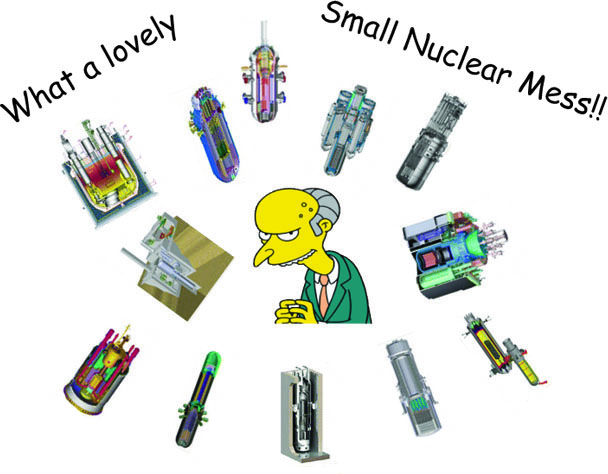
A mess of different Small Nuclear Reactor Designs in UK.
By the time SMRs might be deployable in significant numbers, realistically after 2035, it will be too late for them to contribute to reducing greenhouse gas emissions. The risk is that, as in all the previous failed nuclear revivals, the fruitless pursuit of SMRs will divert resources away from options that are cheaper, at least as effective, much less risky, and better able to contribute to energy security and environmental goals.
No2 Nuclear Power SAFE ENERGY E-JOURNAL No.97, April 2023
More designs of Small Modular Reactors (SMRs) are beginning to emerge which could rival the Rolls Royce design, so the government has decided to launch its competition to gather further evidence before any firm deals are struck. According to ONR a number of companies have, in recent months, applied to the Department for Business, Energy and Industrial Strategy (BEIS) for entry into Generic Design Assessment (GDA) process. BEIS is assessing those applications before deciding whether or not to ask ONR to start the GDA process. The plan is for the government to eventually award £1bn in co-funding to the winning SMR design. This money would help the company get through the GDA process.
At least six new SMR designs have applied to BEIS to be entered into the Generic Design Assessment (GDA) process. As well as Rolls Royce’s SMR, which has already entered the process. (1) The applicants are proposing to build a range of technologies including fast reactors and high temperature reactors which were built as prototypes in the 1950s and 1960s – but successive attempts to build demonstration plants have been short-lived failures. It is hard to see why these technologies should now succeed given their poor record.
The main claim for SMRs over their predecessors is that being smaller, they can be made in factories as modules using cheaper production line techniques, rather than one-off component fabrication methods being used at Hinkley Point C. Any savings made from factory-built modules will have to compensate for the scale economies lost. A 1,600MW reactor is likely to be much cheaper than 10 reactors of 160MW. And it will be expensive to test the claim that production line techniques will compensate for lost scale economies. By the time SMRs might be deployable in significant numbers, realistically after 2035, it will be too late for them to contribute to reducing greenhouse gas emissions. The risk is that, as in all the previous failed nuclear revivals, the fruitless pursuit of SMRs will divert resources away from options that are cheaper, at least as effective, much less risky, and better able to contribute to energy security and environmental goals. (2)
The six designs are:
- GE Hitachi (GEH) submitted an application for its BWRX-300 boiling water reactor in December.
- 2. The US firm Holtec has submitted its SMR-160 design, a 160MWe pressurised water reactor developed in collaboration with Mitsubishi Electric of Japan and Hyundai
- 3. US firm X-Energy, working with Cavendish Nuclear, wants to deploy its high-temperature gas reactor in the UK.
- 4. UK-Italian start-up Newcleo has submitted it lead-cooled fast reactor design. The company says it’s in discussions with the NDA about using Sellafield plutonium and depleted uranium. (3) The Company says it has raised £900m to further its plans which include the establishment of a first Mixed Plutonium-Uranium Oxides (MOX) production plant in France, with another plant to follow later in the UK. (4)
- 5. UK Atomics – a subsidiary of Denmark’s Copenhagen Atomics – says it has submitted a Generic Design Assessment (GDA) entry application for its small and modular thorium molten salt reactor. (5)
- 6. GMET, a Cumbrian engineering group which last year acquired established nuclear supplier TSP Engineering, said it is developing a small reactor called NuCell for production at TSP’s Workington facility. (6)
The list makes no mention of an application by NuScale, which has already expressed an interest in building at Trawsfynydd. (7) According to the Telegraph, NuScale’s reactor has received design approval from the US’s Nuclear Regulatory Commission (NRC) putting it ahead of the competition. (8) However, it was NuScale’s 50 MWe design which was approved by the NRC. That is no longer being pursued by the company. It is applying for a new approval for its 77 MWe design. Although NuScale claimed that the new design was so close to the original that the second approval would be simple, that is turning out not to be the case, as the NRC made clear in its recent letter. (9)
No mention either of the Last Energy micro reactor. The Company has signed a $19 billion deal to supply 34 x 20 MW nuclear reactors to Poland and the UK. These SMRs will be about 2.4 times the cost per MWh of the very expensive Hinkley facility. (10)
Mark Foy, Chief Executive and Chief Nuclear Inspector, Office for Nuclear Regulation, told the House of Commons Science and Technology Committee in January that he was assuming that ONR will be asked to undertake a number of GDAs for some of the SMR technologies that are currently being considered by BEIS. “Our assessment is that if BEIS determines that two or three technologies need to go through generic design assessment, that work will be done in the next four years, or thereabouts”. (11)
Prof Steve Thomas, Greenwich University, has critically assessed the current enthusiasm for Small Modular Reactors in the UK and elsewhere. He concludes:
“The risk is not so much that large numbers of SMRs will be built, they won’t be. The risk is that, as in all the previous failed nuclear revivals, the fruitless pursuit of SMRs will divert resources away from options that are cheaper, at least as effective, much less risky, and better able to contribute to energy security and environmental goals. Given the climate emergency we now face, surely it is time to finally turn our backs on this failing technology?” (12)
‘Green’ Freeports
Meanwhile, the Inverness Courier reports that the Cromarty Firth and Inverness green freeport hopes to fabricate parts for SMRs and then transport them to the construction site wherever that might be. (13) Highlands Against Nuclear Power (formerly Highlands Against Nuclear Transport) says nuclear should not be part of the Cromarty freeport vision. (14)
The Scottish NFLA convenor, Councillor Paul Leinster wrote to Scottish Government Net Zero Minister Michael Matheson asking him to reject nuclear power at Scotland’s two new Green Freeports and instead make them a hub for renewable technologies to produce power for the nation. (15) Unfortunately, the Minister replied saying he will not be opposed to a nuclear manufacturing facility in a supposed Green Freeport. (16)
Forth Green Freeport has said they have no plans for nuclear power generation at its sites – including Rosyth – after campaigners raised concerns. “The Forth Green Freeport vision for Rosyth is centred around a new freight terminal, offshore renewable manufacturing and green power generating capacity,” said the spokesperson. “The FGF will also enable the development of largescale advanced manufacturing, skills and innovation onsite, alongside a proposed new rail freight connection. This vision and the associated economic and community benefits will boost Fife and the wider region. There are no plans for nuclear power generation on FGF sites.” However, it’s possible FGF is answering the wrong question which is about manufacturing parts for SMRs, not nuclear generation. (17)
There were reports that the Ineos-run facility at Grangemouth was interested in building a Rolls Royce SMR, (18) but the Scottish Government said it would block such a move, (19) Energy Minister, Michael Matheson responded to a letter from Scottish NFLA chair, Councillor Paul Leinster, saying Scottish ministers “remain committed” to their “long-standing government policy to withhold support for any new nuclear power stations to be built in Scotland” and officials have been advised by Ineos that “Small Modular Reactors do not currently form part of their net zero road map for Grangemouth”. (20) The Scottish Tories attacked the Scottish Government for its stance describing it as anti-business. (21 https://www.no2nuclearpower.org.uk/wp/wp-content/uploads/2023/04/SafeEnergy_No97.pdf
What’s happening with Great British Nuclear? Not Much.

No2 Nuclear Power SAFE ENERGY E-JOURNAL No.97, April 2023.
Last November, the UK Government was all set to announce proposals to set up a new body called Great British Nuclear (GBN), to develop a network of small modular reactors (SMRs), as well as promote new large reactors. GBN would be responsible for getting planning permission and doing the preparation work on designated sites. However, the announcement was delayed because of a row over funding with Treasury officials arguing there is no money to pay for it. (1)
Then on 30th March, there was a further announcement, as part of the Government’s so called Green Day, when its revised Energy Strategy was launched. The strategy reiterated the pledge to set up “Great British Nuclear”, which will begin recruiting staff “shortly” and will be based “in or around” Greater Manchester. But there was still no new money announced. The body will run a competition for small modular reactor (SMR) designs, starting with “market engagement” in April 2023 and a selection process in summer. It will have “an ambition to assess and decide on the leading technologies by autumn”. The government will publish a nuclear “roadmap” later this year. (2)
Energy Security Secretary, Grant Shapps wants “to deliver wholesale UK electricity prices that rank amongst the cheapest in Europe”, (3) with GBN providing up to a quarter of our electricity –24GW by 2050, up from the previous target of 16GW. (Hinkley Point C should be 3.2GW). (4) Somehow, Shapps thinks Small Modular Reactors will help with that. But it is far from clear that SMR production line techniques will compensate for lost scale economies of building large reactors. (5)
The American SMR design from NuScale Power is the canary in the SMR market –already far more expensive and taking much longer to build than renewable and storage resources. (6)
Funding to establish GBN doesn’t mean funding for new reactors. The Times reported that a deal on funding was unlikely to materialise for at least another 12 months. (7) The perpetual launch of Great British Nuclear won’t get us anywhere near 24GW; £210 million lobbed at Rolls-Royce SMRs, and a £700 million injection into the planning for Suffolk’s Sizewell C, a nuke that’ll cost £30 billion-plus, is small beer. (8) Rolls-Royce’s nuclear power business has frozen hiring, (9) and Tom Samson, head of its SMR division is leaving the Company. (10) Rolls says its SMR programme will run out of cash by
the end of 2024, but it hopes to receive UK regulatory approval by about August 2024. (11)
Andrew Bowie, the Tory MP for West Aberdeenshire and Kincardine has become the UK’s first ever nuclear energy minister. The SNP’s Westminster energy spokesman Alan Brown said: “Andrew Bowie must be taking up one of the most pointless ministerial positions in the UK government. If the Tories think they will bring down energy bills by building nuclear power stations that won’t be ready for years to come then they are more delusional than we thought.” (12)
The Scottish Government condemned the GBN launch. The new Cabinet Secretary for Energy Neil Gray said: “The launch of GBN does not change the Scottish Government’s opposition to the building of new nuclear fission power stations in Scotland. Given that new nuclear power will take years, if not decades, to become operational, will be expensive, and will generate further radioactive waste, we do not believe it to be a sustainable solution to our net zero energy requirements.” (13) Anas Sarwar
has condemned the Scottish Government’s nuclear stance as ‘short-sighted’ and ‘unambitious’. (14)
On 15th March, Jeremy Hunt, announced that nuclear power will be classified as “environmentally sustainable” in UK’s green taxonomy, “giving it access to the same investment incentives as renewable energy.” He stated that “because the wind doesn’t always blow and the sun doesn’t always shine, we will need another critical source of cheap and reliable energy. And that is nuclear.” (15) It’s unclear whether the reclassification will help in the hunt for co-investors alongside EDF and government in Sizewell C.
Ministers were forced to publish the raft of revised policies, contained in 40 documents and nearly 3,000 pages, after a court ruled last year that the existing strategy for reaching net zero emissions was unlawful because it provided insufficient detail on how the target would be met. But it has admitted the revised plans will only deliver 92% of the goal to cut emissions by 68% by 2030,compared with 1990. The Green Alliance think tanks says even that 92% is a very generous reading. (16) https://www.no2nuclearpower.org.uk/wp/wp-content/uploads/2023/04/SafeEnergy_No97.pdf
AUKUS high-level nuclear waste dump must be subject to Indigenous veto

there is no question Defence would require the free, prior and informed consent of Indigenous people before a high-level nuclear waste facility could proceed on their land. …. in those circumstances the government must provide a veto right, because the project would eliminate future access to traditional Indigenous land.
If Plibersek knew about the radioactive waste facility and its intended siting in remote Australia at the time AUKUS was announced she has kept quiet about it.
A far more substantial inequality of power now exists between the Indigenous groups to be consulted about the site of the radioactive waste facility and the Defence Department. The facility has solid bipartisan support. In addition, it is essential to the AUKUS submarine deal, meaning Defence embodies the combined wishes of the Australian, British and United States governments.
Bipartisan secrecy and Defence’s poor record with Indigenous groups at Woomera are red flags for the consultation over AUKUS high-level nuclear waste facility.
Undue Influence MICHELLE FAHY, MAY 6, 2023
This is part one of a two-part series
The federal government had no public mandate for any of the AUKUS decisions: no mandate to enter the agreement, none to acquire eight nuclear-powered submarines for up to $368 billion, and none to establish a high-level radioactive waste facility. On this last, in fact, it had long term evidence to suggest Australians would likely oppose the proposition.
Perhaps this is why both major political parties concealed for 18 months, a period including the federal election, their shared knowledge that AUKUS requires a high-level radioactive waste facility to be built.
The AUKUS agreement was revealed on 15 September 2021. On 14 March 2023, deputy prime minister and defence minister, Richard Marles, announced the nuclear waste facility. Next day, opposition leader Peter Dutton said: ‘The Labor Party signed up to AUKUS knowing they would have to deal with the waste, and now that they’re in government they know that’s a part of the deal.’ The government has not denied Dutton’s claim.

Meanwhile, the Albanese government continues its work to establish an Indigenous Voice to Parliament. Just nine days after the prime minister was in San Diego announcing the AUKUS submarine deal and his deputy Marles came clean about the radioactive waste facility, Anthony Albanese released the proposed Voice wording. The prime minister noted in his speech the importance of consultation, ‘it’s common courtesy and decency to ask people before you take a decision that will have an impact on them’.
Governments have been trying for decades to put a radioactive waste dump in outback Australia. They have been rebuffed time and time again. Yet the Albanese government is trying once more.
Legal experts have pointed out the international legal requirement to obtain the free, prior and informed consent of Indigenous peoples before making significant decisions that affect them. This process includes giving Indigenous peoples full information about a development in advance and respecting their choice to give or withhold consent.
The UN Declaration on the Rights of Indigenous Peoples, which Australia has pledged to support ‘in both word and deed’, says: ‘[No] storage or disposal of hazardous materials shall take place in the lands or territories of indigenous peoples without their free, prior and informed consent.’
As to whether the government can claim ‘national security’ as a reason to avoid these obligations and dictate a radioactive waste site, international human rights law expert John Podgorelec says: ‘States may not derogate from their responsibilities on the basis of national security unless a “state of emergency” has been formally invoked.’
He adds, ‘A lesson to come out of the Iraq calamity is that manufactured or undisclosed national security intelligence cannot be used to subvert democracy.’
Unfortunately, the Defence Department’s fact sheet on nuclear stewardship and waste is light on detail. It does not mention free, prior and informed consent. Defence commits only to ‘consultation and engagement’ – a lesser standard – and adds that it will also consider ‘wider social license and economic implications’. Globally, the ‘economic implications’ of significant projects habitually undermine human rights, particularly those of Indigenous peoples.
Furthermore, Defence has a poor track record of engagement with Indigenous people in one of its key locations, South Australia’s Woomera Prohibited Area (explored further in part two).
Woomera is used by Australian and foreign military forces, in close partnership with multinational weapons corporations, for extensive weapons testing and military training activities.
‘When militaries around the world need a place to test their weapons and fly their new fighter jets, there’s nowhere better than the rugged expanses of South Australia,’ enthused US weapons giant Raytheon in 2016, talking up ‘a further expansion of US-Australian cooperation’.
The Woomera weapons testing range covers one-eighth of South Australia, occupying more than 122,000km2. Before Defence took over, less than a century ago, Indigenous people had inhabited the region for tens of thousands of years.
Despite the international outcry at the destruction of Juukan Gorge, the Defence Department has not changed its behaviour. For example, it continues to use a registered Indigenous heritage site in Woomera as a target zone for high explosive weapons tests. (I visited this and other sites inside Woomera last year at the invitation of Andrew and Bob Starkey, senior Kokatha lawmen and traditional owners.)
Defence is aware of the site’s significance, just as Rio Tinto was aware of the significance of Juukan Gorge. Defence’s heritage management plan, relevant sections of which I have seen, says the site has a ‘high level of Aboriginal heritage value’ and is a place of ‘sensitive cultural significance that can be easily impacted’. The public might wonder how Defence can know this yet still decide it’s acceptable to direct high explosive munitions onto the site.
‘The Commonwealth cannot give with one hand and take with the other,’ says Podgorelec, who acts for the Starkeys, on the tensions between federal commitments to Indigenous heritage protection and to AUKUS. He says there is no question Defence would require the free, prior and informed consent of Indigenous people before a high-level nuclear waste facility could proceed on their land. He also says in those circumstances the government must provide a veto right, because the project would eliminate future access to traditional Indigenous land.
Australia is not alone in being unable to find a radioactive waste solution. The UK has failed for decades to make meaningful progress on dismantling decommissioned nuclear submarines – it currently has 21 of them floating in dockyards awaiting disposal, mirroring its wider failure to resolve its nuclear waste problems. The US has also failed in this regard: spent fuel from its nuclear submarines remains in temporary storage. Griffith University’s Emeritus Professor Ian Lowe has written that the nuclear waste from US military and civilian reactors ‘is just piling up with no long-term solution in sight’.
Defence does not mention this pertinent information in its brief positive account of US and UK nuclear stewardship.
The federal government gave its response to the Juukan Gorge inquiry report in November 2022. Minister Tanya Plibersek, whose Environment portfolio encompasses Indigenous heritage protection, said:
[T]hese are thorough and considerate reports… the recommendations speak to the principles and priorities that will shape our [heritage protection] legislation. Free, prior, and informed consent.
If Plibersek knew about the radioactive waste facility and its intended siting in remote Australia at the time AUKUS was announced she has kept quiet about it.
Free, prior and informed consent requires that intimidation and coercion be avoided. Plibersek is well aware of the possibility of abuses of power in high stakes developments. In her speech, she noted partnership agreements were signed under ‘gross inequalities of power’ between the traditional owners of Juukan Gorge and Rio Tinto.
A far more substantial inequality of power now exists between the Indigenous groups to be consulted about the site of the radioactive waste facility and the Defence Department. The facility has solid bipartisan support. In addition, it is essential to the AUKUS submarine deal, meaning Defence embodies the combined wishes of the Australian, British and United States governments.
Podgorelec is adamant. ‘Australia cannot enact domestic laws that undermine its international legal obligations. If a project will take away Indigenous cultural connection to land forever – as a high-level nuclear waste facility will do – then the government is obliged to give a right of veto.’
Note: The legal basis for free, prior and informed consent was explained by John Podgorelec as lead author of Adelaide University’s submission to the 2015 SA Nuclear Fuel Cycle Royal Commission. Unfortunately, having been available until recently, the Royal Commission’s website is presently inaccessible. Email us if you would like a copy of the submission: undueinfluence@protonmail.com
Now the UK government is saying they need costly large nuclear reactors as well as small ones

No2 Nuclear Power SAFE ENERGY E-JOURNAL No.97, April 2023
Simon Bowen, the Industry Adviser at Great British Nuclear (GBN) told the House of Commons Science & Technology Committee he thinks the UK will need two more large reactors after Hinkley and Sizewell as well as SMRs and Advanced Modular Reactors (AMRs). (1)
Graham Stuart, Minister of State at the Department for Energy Security and Net Zero, told the same Committee that Government policy is to seek UP TO 24GW of nuclear by 2050. He continues:
“I would love it if storage to deal with the intermittent renewables became cheaper, more effective and better for long-term storage and the like. I am not saying that we will definitely have 25% of our electricity from nuclear. That is our ambition; that is our thinking; but as technology, prices and the economics develop, we want tensions between these technologies to deliver it. However, what I can say is that we are absolutely committed to nuclear as a significant share of our electricity because we need that baseload and are committed to driving it forward.”
In January, Bechtel and Westinghouse told the Welsh Affairs Select Committee they are hoping to have an AP1000 nuclear station up and running on Anglesey by 2035. The Development Consent Order process takes 4 years and it takes around 6 years to build. The companies see it as the role of GBN to acquire the site from Hitachi. The Companies are confident they will be able to address the biodiversity and Welsh language issues which led to the Horizon application being rejected by the Planning Inspector. (3) The two companies have been in talks with government since 2020. (4) The two AP1000s being built in the US State of Georgia at Vogtle were originally expected to cost $14 billion, but this has now jumped to $34 billion. (5) The first reactor has only just reached initial criticality – construction started in 2009 and was meant to be complete in 2016. (6) The Nation Cymru website asks whether Wales should be involved with Great British Nuclear at all. (7) https://www.no2nuclearpower.org.uk/wp/wp-content/uploads/2023/04/SafeEnergy_No97.pdf
The Kremlin Did Not Kill Itself
Caitlin Johnstone, Substack, 5 May 23

“………………………………………………………………………………………Western mass media are saturating the airwaves with the narrative that Wednesday’s drone bombing of the Kremlin was a “false flag”, by which they mean that Russia did it to themselves to advance some nefarious agenda.
False flags are a thing and they do happen, but to act like that’s the most likely explanation for the Kremlin bombing when Russia is currently at war with a neighbor who has the means, motive and opportunity is something only a propagandist would do. Especially when oligarchs from that neighboring nation are openly incentivizing people to attack Russia with drones for cash rewards, when Zelensky’s coinciding absence from the country prevented immediate retaliation, and when Atlantic propagandists are writing enthusiastically about the sophisticated drone facilities they visited in Ukraine……………………………………………………………
I say we arm Russia against Russia. If it’s bombing its own government buildings, its own pipelines, its own captured power plants, then it’s the best proxy force against Russia we’ve got. Send the Russians tanks and F-16s immediately.
Russia’s fighting Russia over there so we don’t have to fight Russia over here.
Record high water levels threaten dam near Zaporizhzhia nuclear plant.
Dam water threat near Ukraine nuclear plant: Russia By David Ljunggren, May 5 2023 https://www.canberratimes.com.au/story/8184463/dam-water-threat-near-ukraine-nuclear-plant-russia/
Record high water levels could overwhelm a major dam in southern Ukraine and damage parts of the Russian-controlled Zaporizhzhia nuclear power station, a Russian official has told Tass agency.
Renat Karchaa, an adviser to the general director of nuclear energy firm Rosenergoatom, said if the Nova Kakhovka dam did rupture, the power cable line for the Zaporizhzhia plant’s pumping stations would be flooded.
“This (would create) functional problems for the operation of the plant and risks for nuclear safety,” he told Tass.
Last November, after Russian forces withdrew from the nearby southern Ukrainian city of Kherson, satellite imagery showed significant new damage to the dam.
Both sides have accused each other of planning to breach the dam using explosives, which would flood much of the area downstream and would likely cause major destruction around Kherson.
Karchaa’s comments represent a significant contrast from those made in late March by Ukrainian officials, who said they feared the Zaporizhzhia facility could face a shortage of water to cool reactors by late summer because Russian forces had let water out of a reservoir that supplied the plant.
Russian troops took over the plant as they invaded parts of Ukraine last year.
It is at the centre of a nuclear security crisis due to near-constant shelling in its vicinity which Kyiv and Moscow blame on each other.
The Asse nuclear waste interim storage facility continues to cause controversy.
www.nuclearwastewatch.ca Germany, By David Sadler May 4, 2023
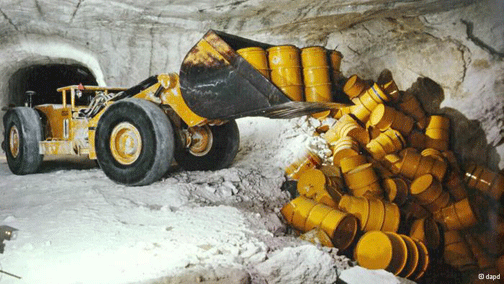
What to do with thousands of barrels of nuclear waste as long as there is no repository? This question concerns the federal government and the residents of Asse. The former mine is dilapidated and needs to be cleared. Environment Minister Lemke got an idea on site.
In the dispute over the Asse site in Lower Saxony as an interim storage facility for nuclear waste, the fronts remain hardened. The former salt dome is dilapidated and should be cleared in about ten years. Around 126,000 barrels of low- and medium-level radioactive nuclear waste are currently stored there. As long as there is no repository in Germany, they have to be stored temporarily. The plans of the responsible Federal Agency for Disposal (BGE) to look for a site near the Asse are met with resistance.
When Federal Environment Minister Steffi Lemke visited the site, several citizens’ initiatives called for the Green politician to give her authority. Lemke must instruct the BGE as the operator to finally arrange for the site comparison for an interim storage facility requested by environmental groups and residents, explained the Asse II coordination group. For years, the BGE has acted against the interests of people and the environment in the area around the dilapidated salt dome.
BGE wants intermediate transports avoid
“We say that the interim storage facility has to be close to where we collect and treat the waste,” replied BGE Managing Director Stefan Studt. It is important to avoid intermediate transports. From the point of view of the operating company, the location is suitable and, above all, can be approved, which Studt described as a “relevant standard”.
Lemke: conditions “absolutely unacceptable”
Environment Minister Lemke does not see a quick solution either. “I don’t have an alternative interim storage facility in my luggage,” she told the representatives of the citizens’ initiatives. But you have to ensure that this nuclear waste is taken out and stored as responsibly as possible – until it can go to a repository. “We will certainly continue this discussion,” she said. The nuclear waste in the former Asse mine was stored under conditions that were “absolutely unacceptable”.
Therefore, the German Bundestag decided to salvage the radioactive waste from the Asse as quickly as possible. A retrieval of the waste is planned and should start around 2033. The plan has long been the subject of strong criticism in the affected region and recently even led to a critical monitoring process ended became.
A challenge arises with the search for safe disposal of the nuclear waste.Problems due to the lack of a repository
“I’m really happy that we shut down the last three nuclear power plants in Germany on April 15 and were thus able to prevent even more highly radioactive waste from accumulating,” said the Greens politician. “I can tell you that this is not a matter of course, but that it has kept me busy in recent months.” In some cases, continued operation was demanded with great carelessness and the problems with the non-existent repository were completely ignored.
There is currently more than 120,000 cubic meters of low- and intermediate-level radioactive waste in interim storage facilities throughout Germany. The garbage is, for example, parts of plants that have been contaminated, protective clothing, tools and equipment from nuclear power plants. According to the Federal Office for the Safety of Nuclear Waste Management (BASE), this only accounts for one percent of the activity, but accounts for 95 percent of the total volume of radioactive waste.
In an even slower scenario, a repository could even not be found until 2068.billion cost after nuclear phase-out
Then there are the costs: A commission has estimated the total costs for decommissioning and dismantling of the reactors as well as the transport and storage of the waste at 48.8 billion euros. As a result, a fund was set up into which the operators of the nuclear power plants had to pay. The interim and final storage is to be paid for with this amount – however, it is still uncertain whether the sum will be sufficient.
Critics and some experts see the camps as a security risk. With the former iron ore mine Schacht Konrad in Salzgitter, a repository for low-level and intermediate-level radioactive waste has been identified, which is scheduled to go into operation in 2027. The search for a repository for high-level radioactive waste has so far been unsuccessful.
1 This Month
Chernobyl: The Lost Tapes – A good documentary on Chernobyl on SBS available On Demand for the next 3 weeks– https://www.sbs.com.au/ondemand/tv-program/chernobyl-the-lost-tapes/2352741955560

of the week–London Campaign for Nuclear Disarmament

Tell the Ukrainian Government to Drop Prosecution of Peace Activist Yurii Sheliazhenko
To see nuclear-related stories in greater depth and intensity – go to https://nuclearinformation.wordpress.com
-
Archives
- April 2026 (139)
- March 2026 (251)
- February 2026 (268)
- January 2026 (308)
- December 2025 (358)
- November 2025 (359)
- October 2025 (376)
- September 2025 (257)
- August 2025 (319)
- July 2025 (230)
- June 2025 (348)
- May 2025 (261)
-
Categories
- 1
- 1 NUCLEAR ISSUES
- business and costs
- climate change
- culture and arts
- ENERGY
- environment
- health
- history
- indigenous issues
- Legal
- marketing of nuclear
- media
- opposition to nuclear
- PERSONAL STORIES
- politics
- politics international
- Religion and ethics
- safety
- secrets,lies and civil liberties
- spinbuster
- technology
- Uranium
- wastes
- weapons and war
- Women
- 2 WORLD
- ACTION
- AFRICA
- Atrocities
- AUSTRALIA
- Christina's notes
- Christina's themes
- culture and arts
- Events
- Fuk 2022
- Fuk 2023
- Fukushima 2017
- Fukushima 2018
- fukushima 2019
- Fukushima 2020
- Fukushima 2021
- general
- global warming
- Humour (God we need it)
- Nuclear
- RARE EARTHS
- Reference
- resources – print
- Resources -audiovicual
- Weekly Newsletter
- World
- World Nuclear
- YouTube
-
RSS
Entries RSS
Comments RSS
 nuclear-news