Antarctica’s melting ice sheet could retreat much faster than previously thought

Antarctica’s melting ice sheet could retreat much faster than previously
thought, new research suggests. The evidence comes from markings on the
seafloor off Norway that record the pull-back of a melting European ice
sheet thousands of years ago.
Today, the fastest withdrawing glaciers in
Antarctica are seen to retreat by up to 30m a day. But if they sped up, the
extra melt water would have big implications for sea-level rises around the
globe. Ice losses from Antarctica caused by climate change have already
pushed up the surface of the world’s oceans by nearly 1cm since the 1990s.
The researchers found that with the Norwegian sheet, the maximum retreat
was more than 600m a day.
BBC 5th April 2023
Nuclear fusion is a never-ending dream

. “The development of the toroidal [magnetic confinement] nuclear fusion reactor is totally blocked by three challenges:
One, abysmally high cost (trillions of yen more in the future?) and a mind-boggling long time (more than 50 years); two, gigantic and complicated systems (a mega-sized system cannot be handled unless simple); and three, the heat-resistant material and radiation-proof material for the reactor walls are not available on earth.”
BY CITIZENS’ NUCLEAR INFORMATION CENTER · APRIL 5, 2023, By Nishio Baku (CNIC Co-Director)
Green Transformation (GX) Basic Policy proposed by the Japanese government mentions nuclear fusion as one of the next-generation innovative nuclear technologies in its reference information. I doubted my ears when I learned that the Nuclear Energy Subcommittee of the ministerial Advisory Committee for Natural Resources and Energy, which drafted the policy, brought up nuclear fusion as one of the “innovative technologies” to be pursued.
It was a big surprise. That is the very nuclear fusion that, at the Second International Conference for the Peaceful Uses of Atomic Energy of September 1 through 13, 1958 in Geneva, Dr. H. J. Bhabha from India, who chaired the conference, flamboyantly predicted would take shape in 20 years. It has been 64 years since then. The government refers to this vintage technology as “innovative”.
During the decade of the 1980s, various Japanese universities received more budget than previously from the government for nuclear fusion research. The website of professor Takabe Hideaki, Institute of Laser Fusion, Osaka University, notes on September 10, 2014 that, during the days of the Second Oil Crisis, when Gekko XII [the experimental laser fusion apparatus at Osaka University] was completed, the government’s top-down initiative provided the university with a budget of 30 billion yen (in the value of the yen at the time), to build the laser system and a robust building for it.
I find this maybe a special case (another document I have with me says, of the fiscal 1984 national budget, 35 billion yen was given to the then Power Reactor and Nuclear Fuel Development Corporation and a total of 7 billion yen to universities). Uramoto Joshin, a former associate professor at the National Institute for Fusion Science, wrote in his retirement memoir “My Final Words as a NIFS Staff” (NIFS News, May 1998), that he was in a festive mood around the time when he joined the former Plasma Research Institute of Nagoya University, which was one of the founding bodies of the NIFS.
The boom faded, and in 1989, the Plasma Research Institute was reorganized as the National Institute for Fusion Science, an inter-university research institute, into which a part of the Heliotron Plasma Physics Laboratory at Kyoto University and a part of the Institute for Fusion Theory at Hiroshima University were incorporated. The technology that the government refers to is the same nuclear fusion.
In what respect can the nuclear fusion reactor be a “next-generation innovative reactor”? While there is no full-size nuclear fusion reactor, what would a “compact nuclear fusion reactor” look like?
Today, “private-sector nuclear fusion” by venture companies seems to be enjoying a global boom………………………………………………. the project did not seem very practical.
……………………………………………………………. Whatever the case, the ignition lasts only one instant.
How far will the muddy road continue?
This nuclear fusion was mentioned by Prime Minister Kishida in his administrative policy speech on January 17, 2022 with the cryptic reasoning that it would help achieve the 2050 goal of carbon neutrality. Using this as the basis, the government set up the Nuclear Fusion Strategy Expert Panel under the Integrated Innovation Strategy Promotion Council of the Cabinet Office.
The panel had its first meeting on September 30, where Takaichi Sanae, Minister of State for Science and Technology Policy, said: “I have a strong will to accelerate the efforts to commercialize nuclear fusion technology as far as possible.” However, the Innovative Reactor Working Group placed under the Nuclear Energy Subcommittee, states in its “Roadmap for Introduction” (August 9, 2022) that whether the construction of a prototype nuclear fusion reactor should start or not will be determined in the mid-2030s. What would “commercializing nuclear fusion” mean at this point?
I wonder how much longer this fusion boom will continue. “As I am leaving this institute, I breathe a sigh,” Associate Professor Uramoto said in his NIFS retirement memoir. “The development of the toroidal [magnetic confinement] nuclear fusion reactor is totally blocked by three challenges: One, abysmally high cost (trillions of yen more in the future?) and a mind-boggling long time (more than 50 years); two, gigantic and complicated systems (a mega-sized system cannot be handled unless simple); and three, the heat-resistant material and radiation-proof material for the reactor walls are not available on earth.”
For the cost, the Special Committee on the ITER Project of the Japan Atomic Energy Commission bragged about ITER in its report, “International Thermonuclear Experimental Reactor (ITER) Project Forecast” (May 18, 2001): “It is difficult to correctly estimate the cost required to realize a nuclear fusion reactor, …………………………………………………
Of the challenges Uramoto pointed out, the second one, “gigantic and complicated systems (a mega-sized system cannot be handled unless simple)” and the third one, “the heat-resistant material and radiation-proof material for the reactor walls are not available on earth” remain unsolved, despite the passage of so many years.
The pot is calling the kettle black
It is meaningless to compare nuclear fusion with nuclear power generation, but some say: “Nuclear fusion is clean.” In terms of the radioactivity released when a large accident occurs, nuclear fusion technology would emit less radioactivity than a conventional nuclear plant.
However, the daily releases of radioactive materials from nuclear fusion would be greater than those from a conventional nuclear power plant. Nuclear fusion is also more likely to leak tritium and radioactive gas. It will produce four times as much energy as nuclear fission while producing seven times as many neutrons. Workers in the fusion plant would be exposed to radiation, and people in the neighborhood would also be exposed due to sky shine. Plant equipment would be strongly radiated and easily embrittled, requiring frequent replacement, producing a huge amount of highly contaminated wastes……………………………………………. more https://cnic.jp/english/?p=6549
Foundation in Fukushima nuclear plant reactor likely badly damaged
The internal wall of a cylindrical foundation supporting the reactor
pressure vessel of the No. 1 unit of the crippled Fukushima Daiichi nuclear
power plant may be badly damaged across its entire circumference, its
operator said Tuesday. Some of the damage was revealed in videos taken
during a survey of the No. 1 unit’s containment vessel by operator Tokyo
Electric Power Company Holdings Inc., which said it would further analyze
the footage and assess the seismic resistance of the pedestal. The survey,
conducted from March 28 through March 31 using an underwater robot, found
the concrete wall missing in over half of the pedestal measuring 5 meters
in internal diameter, leaving the reinforcing bar exposed.
Mainichi 4th April 2023
https://mainichi.jp/english/articles/20230404/p2g/00m/0bu/040000c
Ocean Heat, An El Nino on the Way, Potential New Global Temperature Record by 2024 — robertscribbler.
The world ocean system is much hotter than normal. And El Nino hasn’t even arrived yet. With this major ocean warming event starting to show up, it looks like 2023-2024 will see global surface temperatures fall yet again. Fossil fuel burning is driving global temperatures higher and putting everyone at risk.
Ocean Heat, An El Nino on the Way, Potential New Global Temperature Record by 2024 — robertscribbler
April 8 Energy News — geoharvey

Opinion: ¶ “Beyond Going Green, Here’s Why You Should Buy An EV” • Business Insider’s Tim Levin shared his thoughts on going electric after driving 24 different EVs. The story compiles his’s thoughts on why buyers should go electric, including experiences driving EVs from brands such as Tesla, Volkswagen, Rivian, Hyundai, Kia, Mercedes, and more. […]
April 8 Energy News — geoharvey
Americans now fear cyberattack more than nuclear attack
The Hill, BY DANIEL DE VISÉ – 04/07/23
Americans now see cyberattack as the greatest threat facing the country, two recent polls show, suggesting that cyber fears have outflanked concern over climate change, immigration, terrorism or nuclear weapons.
The national obsession with computer-on-computer attack, documented in a 2023 Gallup poll and a 2022 Pew Research survey, comes at a time when cyberattack seems to be everywhere and nowhere.
………………………………………………. In the Gallup poll, published last month, 84 percent of respondents rated cyberterrorism as a critical threat, ranking it above 10 other fears, including international terrorism, global warming, the conflict between Russia and Ukraine and Iran’s nuclear program. ……………………………………………………………………………………………………………………………………………
And, of course, the world faces many perils beyond cyberattack. One is nuclear war. Nuclear fears surged in the weeks after the Russian invasion of Ukraine in February 2022.
More than a year later, the nuclear threat seems greater than ever. The Doomsday Clock, a symbol of humanity’s proximity to extinction, stands at 90 seconds to midnight, signifying a moment of unprecedented danger.
Peter Kuznick, a history professor and director of the Nuclear Studies Institute at American University, believes “the danger of nuclear war is probably greater” now than at the invasion’s start.
But the nuclear threat, Kuznick said, is “something that people don’t want to think about.”
US Department of Energy is once again promoting large nuclear reactors, despite lack of supply chain and absurdly unaffordable costs

The US Department of Energy (DOE) is once again promoting large-scale
reactors after spending a decade advancing smaller models. It boldly
declares in a report last month that the domestic nuclear industry has the
potential to “scale from ~100 GW in 2023 to ~300 GW by 2050 — driven by
deployment of advanced nuclear technologies.”
This is beyond absurd — it’s irresponsible.
It’s absurd because the US no longer has the supply
chain needed for large-scale nuclear projects — it can’t even forge a
pressure vessel; it’s irresponsible because the cost of building 200-300
new reactors would be more than $3 trillion.
Resources devoted to rescuing
a dying industry are resources that wouldn’t be available for viable,
less-costly strategies to achieve net-zero emissions in the power sector.
More than that, the report reflects an energy agency still dominated by a
nuclear-centric culture, and badly out of step with the times.
Energy Intelligence 3rd April 2023
https://www.energyintel.com/00000187-2f8a-db48-adf7-ef9af9880000
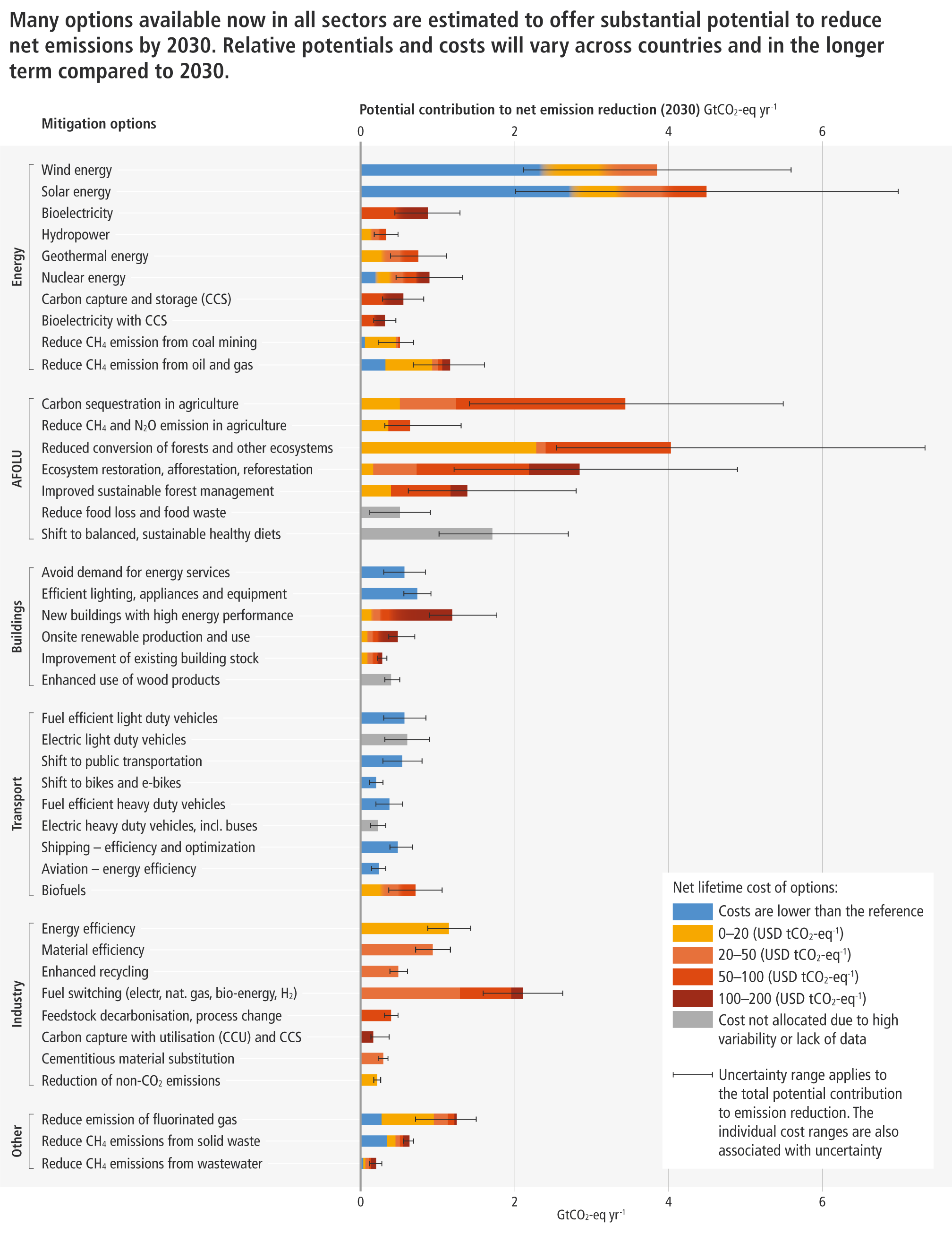
IPCC report shows the winners in energy transition – wind and solar, and the losers – nuclear power and carbon capture.
Guardian Down to Earth newsletter. Tucked away in the recent (and
devastating) landmark report from the Intergovernmental Panel on Climate
Change (IPCC) is a chart that provides the road map for an escape from
catastrophe.
It assesses with extraordinary clarity the potential for
emissions cuts of more than 40 options. You can view it here. The
simplicity of the chart is deceptive. It was compiled by a team of the
world’s best scientists, based on 175 studies. Its power is amplified by
the fact that it was signed off by all of the world’s governments, from
the cleanest and greenest to the darkest petrostates.
So what does it show?
First, solar and wind power are by far the best option, with the potential
to cut a staggering 8bn tonnes from annual CO2 emissions by 2030. That is
equivalent to the combined emissions of the US and European Union today.
Even more startling is that most of that potential can be achieved at lower
cost than just continuing with today’s electricity systems.
Just as important as the winners in this analysis are the losers. Nuclear power and
carbon capture and storage (CCS) each have just 10% of the potential of
wind and solar, and at far higher cost. The same applies to bioenergy –
burning wood or crops for electricity. It’s no wonder that the UK’s
energy strategy, published last week, received significant criticism: it
goes heavy on nuclear and CCS, while ignoring onshore wind.
IPCC (accessed) 7th April 2023
Campaigners continue to take a stand against the plan for new nuclear power at Bradwell
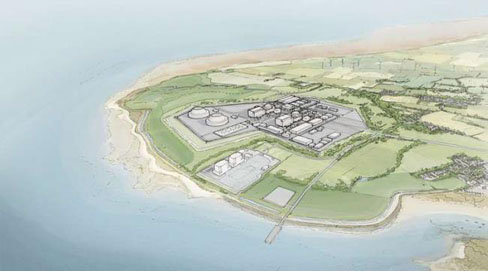
CAMPAIGNERS have promised to continue to protect the people and
environment until a village site is ruled out for use as a nuclear power
site. The Government has said it is “committed to a programme of new
nuclear projects beyond Sizewell C”.
The current government nuclear
policy statement identifies Bradwell as a site for nuclear energy until the
end of 2025. Despite the stop to the plans for a Chinese-led nuclear power
station in Bradwell, campaigners are continuing to take a stand against the
site being considered for nuclear use.
Maldon Standard 6th April 2023
Citizens’ Nuclear Information Center news roundup April/May 2023
Nuke Info Tokyo April/May Newsletter includes: Fukushima Now – Part 1:
Railroading the Contaminated Water Release is Unacceptable! by Ban
Hideyuki; Fukushima Now – Part 2: Current State of Post-Accident
Operations at Fukushima Daiichi Nuclear Power Station (Jun. to Dec. 2022)
By Matsukubo Hajime; Childhood thyroid cancer cases confirmed in the
Fukushima Health Management Survey and others; Nuclear fusion is a
never-ending dream By Nishio Baku; News Watch Revisions to Basic Policy on
High-level Radioactive Waste Disposal / Surveillance Camera Monitoring
Interrupted at Rokkasho Recycling Plant / Takahama Unit 4 Automatically
Shut Down / Unjust Verdict in Lawsuit for National Compensation for
Second-Generation Hibakusha.
CNIC 5th April 2023
European nuclear power generation to continue at historically low levels
European nuclear generation in April is projected to remain 2% below 2022
and 18% lower than the 2015-2021 averages, forecasts from the soon to be
launched ICIS Power Foresight model show. Germany is set to complete its
nuclear phase-out this month, while strikes in France continue to threaten
availability and delay maintenance schedules.
ICIS 6th April 2023
Japan’s nuclear regulators find errors in Japan Atomic Power’s safety documents for the Tsuruga plant.
Nuclear regulators said Wednesday they will again halt a safety assessment
of an offline central Japan reactor after its operator repeatedly submitted
documents containing errors, further prolonging a process toward resumption
that has already taken years. Japan Atomic Power has been seeking approval
to reboot the No. 2 unit at the Tsuruga plant in Fukui Prefecture under
stricter regulations imposed following the 2011 Fukushima nuclear power
plant disaster, but its application has been fraught with mistakes and data
tampering.
Japan Times 5th April 2023
https://www.japantimes.co.jp/news/2023/04/05/national/tsuruga-reactor-safety-assessment-halt/
Mainichi 5th April 2023
https://mainichi.jp/english/articles/20230405/p2g/00m/0na/027000c
Worst-kept secret? In tweet, ex-PM Barak seems to confirm Israel has nuclear weapons
Says Western officials fear judicial overhaul will turn country into ‘messianic dictatorship that possesses nuclear weapons,’ thirsting for confrontation with Islam at Temple Mount.
By TOI STAFF4 April 2023 https://www.timesofisrael.com/in-tweet-ex-pm-barak-seems-to-confirm-israel-has-nuclear-weapons/
—
Former prime minister Ehud Barak appeared to confirm on Twitter Tuesday that Israel has nuclear weapons — something Israeli officials have heavily implied but avoid publicly confirming as a matter of policy.
“In conversations between Israelis and Western diplomatic officials, there are deep concerns raised of the possibility that if the coup in Israel succeeds, a messianic dictatorship — that possesses nuclear weapons and fanatically wishes for a confrontation with Islam centered on the Temple Mount — will be established in the heart of the Middle East,” tweeted Barak in his latest criticism of the government’s judicial overhaul effort.
One of National Security Minister Itamar Ben Gvir’s aides tweeted last week that the overhaul “will eventually lead to a freedom-protecting and God-fearing DAVIDIC MONARCHY [akin to the] UAE,”
Since the government’s unveiling of its plan to radically curb the High Court of Justice’s power three months ago, Barak has become a leading voice in the protests against the plan.
He has warned that Israel risks devolving into a dictatorship, adding that people are duty-bound to refuse orders by “an illegitimate regime.”
In February, Barak likened President Isaac Herzog’s proposal to the government for compromise on the judicial plan to former British premier Neville Chamberlain’s appeasement efforts vis-à-vis Nazi leader Adolf Hitler, in a post to social media he later deleted.
He accused the Netanyahu government of pursuing a “coup d’état” and said the overhaul plan was an “attack on the Declaration of Independence” and did not serve the interests of the public or the country.
Navy’s nuclear-powered super submarine ‘Trident’ fixed with super glue

The damage was done at HMNB Devonport in Plymouth during a dry dock renovation and refuel. This work, reportedly started in 2015 and is four year behind the schedule and approximately £300 million over budget
Abhishek Awasthi January 31, 2023 https://www.firstpost.com/world/uks-own-chernobyl-averted-navys-nuclear-powered-super-submarine-trident-fixed-with-super-glue-12075672.html?fbclid=IwAR0u3HB9pkg4GbjW37GnF6XxNoRo97No0AskR6qi5bPaS0umNQ7852Hpre8
London: In a bizarre incident, employees aboard the UK’s most advanced frontline submarine Trident risked the lives of millions of people by allegedly using superglue to fix broken bolts of a nuclear reactor chamber prompting navy chiefs to order an investigation.
The crucial cooling pipes’ shoddy repairs were revealed after one of the bolt fell off during a routine check of the 16,000-ton HMS Vanguard.
Reports reveal that the bolts had broken due to careless overtightening, but civilian staff of the defence contractor Babcock glued the heads back on rather than alerting the damage to the authorities so that the fractured shafts could be repaired correctly.
The staff reportedly informed authorities about a process of work difficulty, or procedural fault, but avoided talking about the bolts and glue.
The staff reportedly informed authorities about a process of work difficulty, or procedural fault, but avoided talking about the bolts and glue.
The incident came to light after a UK newspaper publisged a detailed report on the grave blunder prompting Defence
Secretary Ben Wallace to call for a meeting and set accountability of the officials once and for all.
According to a Navy source, he was enraged that Babcock, one of the largest defence contractors in the UK, kept the Navy in the dark.
It’s a disgrace, they remarked. Nuclear technology forbids cutting corners. “The rules are the rules. Standards in the nuclear industry are never waived,” he said.
The damage was done at HMNB Devonport in Plymouth during a dry dock renovation and refuel. This work, reportedly started in 2015 and is four year behind the schedule and approximately £300 million over budget.
The sailors of the three remaining Trident 2 nuclear missile subs, HMS Vengeance, HMS Victorious, and HMS Vigilance, have had to endure protracted patrols due to persistent delays.
From 2028, the Dreadnought class will take their place and carry the UK’s nuclear deterrent.
The experts said that the seven bolts that were fixed using Superglue were reportedly preventing a Chernobyl type meltdown by holding the insulated coolant pipes.
They were discovered this month, ahead of the engineers’ scheduled first firing of the reactor at maximum power.
Investigators are still combing through data to determine when it occurred and who was to blame. As part of nuclear safety protocols, employees usually work in pairs.
After the incident, the Ministry of Defence in the UK issued a statement saying: “A fault from work done when HMS Vanguard was in dry dock was detected as part of a planned examination.”
It was reported and rectified right away, ministry said while adding that the Secretary of State also engaged with Babcock’s CEO in order to secure reassurance for future works.
Navy sources however claimed there were “no nuclear safety issues and that the reactor would not have exploded if the damage hadn’t been discovered.
“This is a big trust issue for Babcock and the Royal Navy to tackle,” former sub skipper Cdr. Ryan Ramsay stated, adding that It makes one wonder what else has been done poorly.
“The time strain imposed by falling considerably behind schedule may have induced this behaviour,” he said.
Babcock has multi-billion dollar contracts to overhaul at Devonport and maintain the Astute and Vanguard sub fleets
for the Royal Navy at HMNB Clyde in Scotland.
Any quality-related issue is extremely disappointing, however our own thorough inspection procedures found the problem, said Ramsay, adding that There was no safety or operational impact from the work.
Meanwhile, Rolls Royce which manufactures and maintains the reactors asserted that it was indeed a dereliction of duty on Babcock’s part.
Renewable energy overtakes nuclear power as the EU’s largest source of primary energy production.
Renewables were the main source of European energy production in 2021,
according to the statistical office of the EU. A Eurostat report suggests
renewable energy has overtaken nuclear power as the largest source of
primary energy production in the European Union. Data shows that in 2021,
renewables made up nearly 41% of the EU’s total energy production, with
solid fuels, natural gas, crude oil and other sources accounting for the
rest.
Energy Live News 4th April 2023
1 This Month
23 April – WEBINAR – Why new nuclear reactors are the wrong tools for decarbonization Thursday, April 23 • 1 AM – 2 AM AEST
World Nuclear Power. Reactors 1951-2026, 75 Years of Nuclear Power.
Interactive Map– https://dv.worldnuclearreport.org/

Chernobyl: The Lost Tapes – A good documentary on Chernobyl on SBS available On Demand for the next 3 weeks– https://www.sbs.com.au/ondemand/tv-program/chernobyl-the-lost-tapes/2352741955560

of the week–London Campaign for Nuclear Disarmament
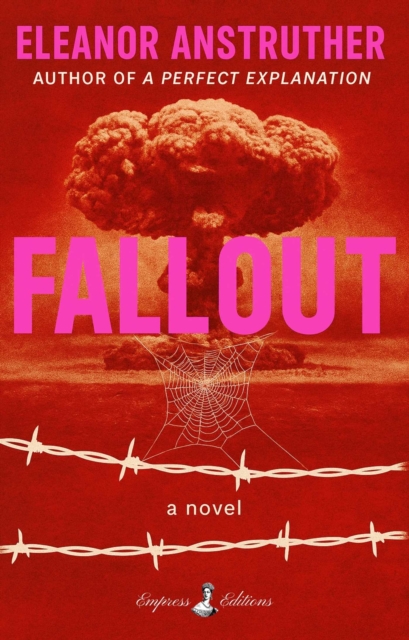

Tell the Ukrainian Government to Drop Prosecution of Peace Activist Yurii Sheliazhenko
To see nuclear-related stories in greater depth and intensity – go to https://nuclearinformation.wordpress.com
-
Archives
- April 2026 (231)
- March 2026 (251)
- February 2026 (268)
- January 2026 (308)
- December 2025 (358)
- November 2025 (359)
- October 2025 (376)
- September 2025 (257)
- August 2025 (319)
- July 2025 (230)
- June 2025 (348)
- May 2025 (261)
-
Categories
- 1
- 1 NUCLEAR ISSUES
- business and costs
- climate change
- culture and arts
- ENERGY
- environment
- health
- history
- indigenous issues
- Legal
- marketing of nuclear
- media
- opposition to nuclear
- PERSONAL STORIES
- politics
- politics international
- Religion and ethics
- safety
- secrets,lies and civil liberties
- spinbuster
- technology
- Uranium
- wastes
- weapons and war
- Women
- 2 WORLD
- ACTION
- AFRICA
- Atrocities
- AUSTRALIA
- Christina's notes
- Christina's themes
- culture and arts
- Events
- Fuk 2022
- Fuk 2023
- Fukushima 2017
- Fukushima 2018
- fukushima 2019
- Fukushima 2020
- Fukushima 2021
- general
- global warming
- Humour (God we need it)
- Nuclear
- RARE EARTHS
- Reference
- resources – print
- Resources -audiovicual
- Weekly Newsletter
- World
- World Nuclear
- YouTube
-
RSS
Entries RSS
Comments RSS
 nuclear-news