Will the West turn Ukraine into a nuclear battlefield?

Stuart Dyson died in 2008 at the age of 39…….. his cancer was later recognized in a court of law as having been caused by exposure to depleted uranium. In a landmark 2009 ruling, jurors at the Smethwick Council House in the UK found that Dyson’s cancer had resulted from DU accumulating in his body, and in particular his internal organs.
While the UK’s decision to send depleted uranium shells is unlikely to turn the tide, it will have a lasting, potentially devastating, impact.
APRIL 26, 2023 byJoshua Frank
It’s sure to be a blood-soaked spring in Ukraine. Russia’s winter offensive fell far short of Vladimir Putin’s objectives, leaving little doubt that the West’s conveyor belt of weaponry has aided Ukraine’s defenses. Cease-fire negotiations have never truly begun, while NATO has only strengthened its forces thanks to Finland’s new membership (with Sweden soon likely to follow). Still, tens of thousands of people have perished; whole villages, even cities, have been reduced to rubble; millions of Ukrainians have poured into Poland and elsewhere; while Russia’s brutish invasion rages on with no end in sight.
The hope, according to Ukrainian President Volodymyr Zelensky, is that the Western allies will continue to furnish money, tanks, missiles, and everything else his battered country needs to fend off Putin’s forces. The war will be won, according to Zelensky, not through backroom compromises but on the battlefield with guns and ammo.
“I appeal to you and the world with these most simple and yet important words,” he said to a joint session of Great Britain’s parliament in February. “Combat aircraft for Ukraine, wings for freedom.”
The United Kingdom, which has committed well over $2 billion in assistance to Ukraine, has so far refused to ship fighter jets there but has promised to supply more weaponry, including tank shells made with depleted uranium (DU), also known as “radioactive bullets.” A by-product of uranium enrichment, DU is a very dense and radioactive metal that, when housed in small torpedo-like munitions, can pierce thickly armored tanks and other vehicles.
Reacting to the British announcement, Putin ominously said he would “respond accordingly” if the Ukrainians begin blasting off rounds of DU.
Stuart Dyson survived his deployment in the first Gulf War of 1991, where he served as a lance corporal with Britain’s Royal Pioneer Corps. His task in Kuwait was simple enough: he was to help clean up “dirty” tanks after they had seen battle. Many of the machines he spent hours scrubbing down had carried and fired depleted uranium shells used to penetrate and disable Iraq’s T-72 tanks, better known as the Lions of Babylon.
Dyson spent five months in that war zone, ensuring American and British tanks were cleaned, armed, and ready for battle. When the war ended, he returned home, hoping to put his time in the Gulf War behind him. He found a decent job, married, and had children. Yet his health deteriorated rapidly and he came to believe that his military service was to blame. Like so many others who had served in that conflict, Dyson suffered from a mysterious and debilitating illness that came to be known as Gulf War Syndrome.
After Dyson suffered years of peculiar ailments, ranging from headaches to dizziness and muscle tremors, doctors discovered that he had a severe case of colon cancer, which rapidly spread to his spleen and liver. The prognosis was bleak and, after a short battle, his body finally gave up. Stuart Dyson died in 2008 at the age of 39.
His saga is unique, not because he was the only veteran of the first Gulf War to die of such a cancer at a young age, but because his cancer was later recognized in a court of law as having been caused by exposure to depleted uranium. In a landmark 2009 ruling, jurors at the Smethwick Council House in the UK found that Dyson’s cancer had resulted from DU accumulating in his body, and in particular his internal organs……………………………………………………………………………………
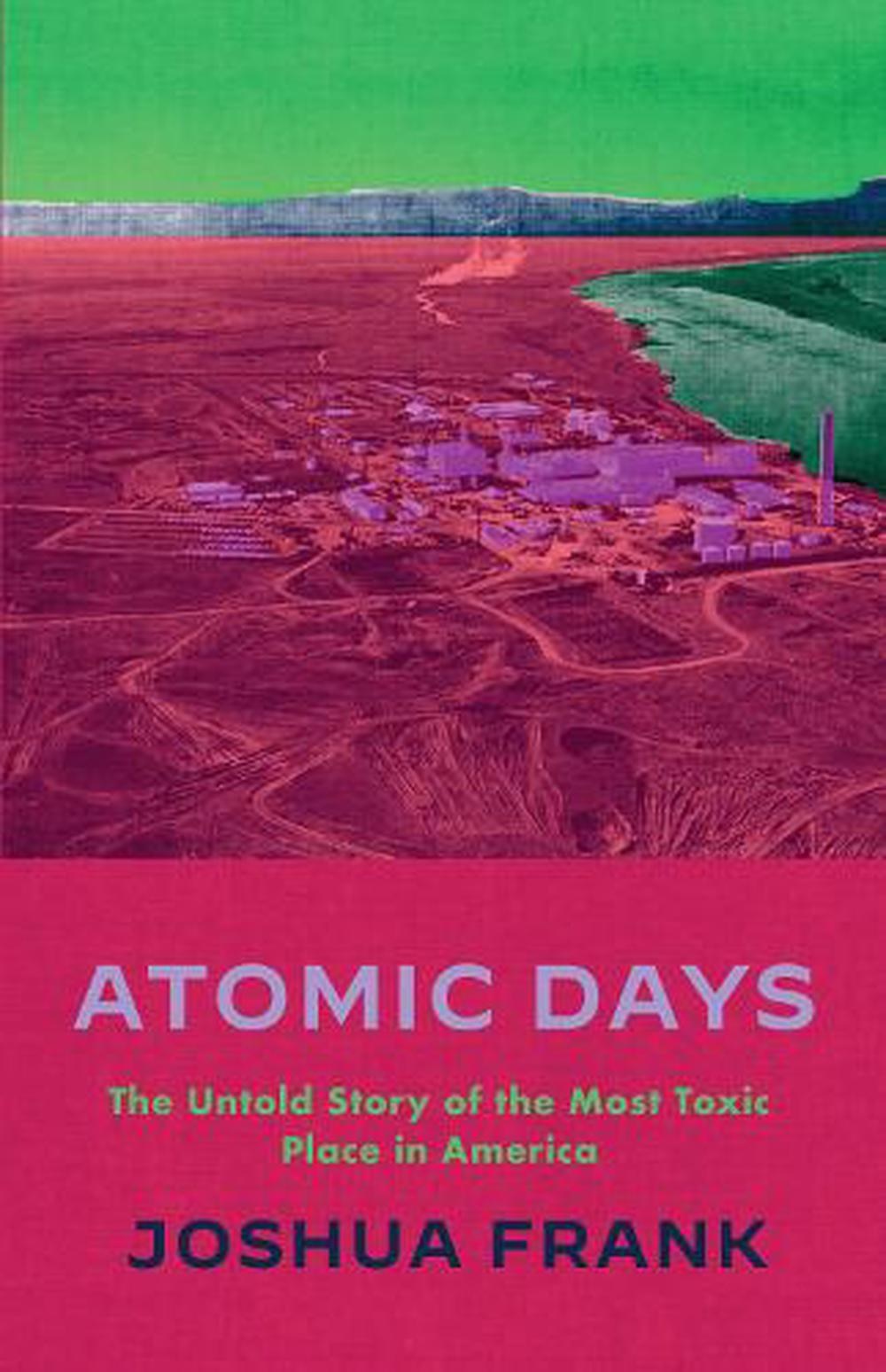
Both Russia and the U.S. have reasons for using DU, since each has piles of the stuff sitting around with nowhere to put it. Decades of manufacturing nuclear weapons have created a mountain of radioactive waste. In the U.S., more than 500,000 tons of depleted-uranium waste has built up since the Manhattan Project first created atomic weaponry, much of it in Hanford, Washington, the country’s main plutonium production site. As I investigated in my book Atomic Days: The Untold Story of the Most Toxic Place in America, Hanford is now a cesspool of radioactive and chemical waste, representing the most expensive environmental clean-up project in history with an estimated price tag of $677 billion………………………………………………………….
Of course, we’ve known about the dangers of uranium for decades, which makes it all the more mind-boggling to see a renewed push for increased mining of that radioactive ore to generate nuclear power. The only way to ensure that uranium doesn’t poison or kill anyone is to leave it right where it’s always been: in the ground. Sadly, even if you were to do so now, there would still be tons of depleted uranium with nowhere to go. A 2016 estimate put the world’s mountain of DU waste at more than one million tons (each equal to 2,000 pounds).
So why isn’t depleted uranium banned? That’s a question antinuclear activists have been asking for years. It’s often met with government claims that DU isn’t anywhere near as bad as its peacenik critics allege. In fact, the U.S. government has had a tough time even acknowledging that Gulf War Syndrome exists. A Government Accountability Office report released in 2017 found that the Veterans Affairs Department had denied more than 80% of all Gulf War illness claims by veterans. Downplaying DU’s role, in other words, comes with the terrain.
“The use of DU in weapons should be prohibited,” maintains Ray Acheson, an organizer for the International Campaign to Abolish Nuclear Weapons and author of Banning the Bomb, Smashing the Patriarchy. “While some governments argue there is no definitive proof its use in weapons causes harm, it is clear from numerous investigations that its use in munitions in Iraq and other places has caused impacts on the health of civilians as well as military personnel exposed to it, and that it has caused long-term environmental damage, including groundwater contamination. Its use in weapons is arguably in violation of international law, human rights, and environmental protection and should be banned in order to ensure it is not used again.”
If the grisly legacy of the American use of depleted uranium tells us anything, it’s that those DU shells the British are supplying to Ukraine (and the ones the Russians may also be using there) will have a radioactive impact that will linger in that country for years to come, with debilitating, potentially fatal, consequences. It will, in a sense, be part of a global atomic war that shows no sign of ending. https://responsiblestatecraft.org/2023/04/26/will-the-west-turn-ukraine-into-a-nuclear-battlefield/
MPs and activists push back as Ottawa pitches expansion of nuclear energy -“a dirty dangerous distraction”
Prime Minister Justin Trudeau says Canada is ‘going to have to be doing much more nuclear’
John Paul Tasker · CBC News · April 26 2023
Anti-nuclear activists and a cross-partisan group of MPs urged the federal government Tuesday to drop its support for nuclear energy projects, calling the energy source a “dirty, dangerous distraction” from climate action.
…………………………………… SMR technology is still in its infancy and it isn’t widely used around the world.
As of 2022, there were only three SMR projects in operation — one each in Russia, China and India — according to the International Energy Agency.
There are dozens of others under construction or in the design and planning phase — including one at Ontario Power Generation’s Darlington nuclear site.
Finance Minister Chrystia Freeland’s recent federal budget included a generous tax credit to spur clean energy development, including SMRs.
The industry lobby group, the Canadian Nuclear Association, has said the 15 per cent refundable tax credit is a recognition by Ottawa that nuclear power is “a fundamental and necessary component of Canada’s low carbon energy system.”
Susan O’Donnell, a professor and a member of the Coalition for Responsible Energy Development in New Brunswick, said Prime Minister Justin Trudeau and his cabinet are getting bad advice about nuclear energy.
“The nuclear industry, led by the U.S. and the U.K., has been lobbying and advertising heavily in Canada, trying to convince us that new SMR designs will somehow address the climate crisis,” O’Donnell told a press conference on Parliament Hill on Tuesday.
She said SMRs will produce “toxic radioactive waste” and could lead to serious “accidents” while turning some communities into “nuclear waste dumps.”
She also said there’s “no guarantee these nuclear experiments will ever generate electricity safely and affordably,” since SMRs are still relatively untested.
“Canada is wasting time that must be urgently spent on genuine climate action,” she said. “This is a dirty, dangerous distraction. We don’t need nuclear power.”
Asked how Canada would meet its baseload power requirements — the power that is needed 24 hours a day without fluctuation — without nuclear power or fossil fuel sources like natural gas, O’Donnell pointed to promising developments in energy storage technology.
Liberal MP Jenica Atwin was at the anti-nuclear press event.
“I want to be clear, I’m here as an individual, a concerned individual and a mother,” she said — before launching into remarks that raised questions about the “associated risks” and “many unknowns” of nuclear energy development, which is expected to see a sharp increase in activity due to her government’s proposed tax policies.
“When it comes to nuclear, there’s no margin for error,” Atwin said. “This is a time of action. We don’t have the luxury of waiting to see if things will pan out.”
Green Party Leader Elizabeth May, who once sat in caucus with Atwin before she decamped to the Liberals, said government funding for nuclear projects is a “fraud.”
“It has no part in fighting the climate emergency. In fact, it takes valuable dollars away from things that we know work, that can be implemented immediately, in favour of untested and dangerous technologies that will not be able to generate a single kilowatt of electricity for a decade or more,” May said……………………………………………………https://www.cbc.ca/news/politics/anti-nuclear-activists-ottawa-1.6821807
Australia pays Washington swamp monsters for war advice – as they groom us for World War 3
Caitlin Johnstone 27 Apr 23 https://caitlinjohnstone.com/2023/04/27/australia-pays-washington-swamp-monsters-for-war-advice/#
Australia has been paying insiders of the US war machine for consultation on how to run the nation’s military, a massive conflict of interest given that Washington has been grooming Australia for a role in its war agendas against China.
In an article titled “Retired US admirals charging Australian taxpayers thousands of dollars per day as defence consultants,” the ABC reports that according to documents which were provided by the Pentagon to congress last month, “dozens of retired US military figures have been granted approval to work for Australia since 2012.”
For those who don’t speak imperialist, “retired US military figure” generally means “Someone who used to be paid by the US government to advance the interests of the US empire, and is now paid by corporations and/or foreign governments to advance the interests of the US empire.” These corrupt warmongers rotate in and out of the revolving door of the DC swamp, from government to war industry jobs to punditry gigs to influential think tanks and then back again into government, advancing the interests of the US empire the entire time and growing wealthy in the process.
This dynamic allows a permanent constellation of reliable empire managers to continually exert influence around the world in support of the US empire, regardless of who gets voted into or out of office in the performative display of electoral politics. It’s a big part of why US foreign policy remains the same regardless of who’s officially running the elected government in Washington, and it’s a big part of why the media and arms industry which support the US war machine keep playing the same tune as well.
Andrew Greene – “Former US director of National Intelligence James Clapper, who resigned after Donald Trump’s election as president in 2016, was then paid to work for Australia’s new Office of National Intelligence”
Among the American swamp monsters Australia paid for consulting work is the Obama administration’s spy chief James Clapper, who has an established track record of lying and manipulating to advance the interests of the US empire:
- In 2013 Clapper committed perjury by telling the Senate under oath that the NSA does not knowingly collect data on millions of Americans, only to have that lie exposed by the Edward Snowden leaks a few months later.
- In 2016 Clapper played a foundational role in fomenting public hysteria about Russia with the flimsy ODNI report on alleged Russian election interference, which remains riddled with massive plot holes. He would later go on to repeatedly voice the opinion that Russians are “almost genetically driven” toward nefarious and subversive behavior.
- In 2020 Clapper signed the infamous and now fully discredited letter from former intelligence insiders saying the Hunter Biden laptop story was likely a Russian disinfo op, falsely telling CNN that the story was “textbook Soviet Russian tradecraft at work” and that the emails on the laptop had “no metadata” on them.
Also among the American military consultants paid by Australia is a man we just discussed the other day, William Hilarides, who will be telling Australia how to reconfigure its navy because apparently no Australians are available for that job. We now know that according to the released Pentagon documents Canberra has already paid Hilarides almost $2.5 million since 2016 for his consulting work.
This information was originally reported by The Washington Post’s Craig Whitlock and Nate Jones, who last year also broke the remarkable story that a former US navy admiral named Stephen Johnson had actually served as Australia’s deputy navy secretary, a position which needless to say is not normally open to foreigners.
This is just one of the many, many ways that Australia is being interwoven into the US war machine, from our 2023 Defence Strategic Review which further enshrines our position as a US military asset, to our Secretary of Defence Richard Marles saying that the Australian Defence Force is moving “beyond interoperability to interchangeability” with the US military and being suspiciously secretive about who his golfing buddies were in his last trip to the US, to Australian officials angrily dismissing attempts to find out if the US has been bringing nuclear weapons into Australia, to the Australian media pounding Australian consciousness with anti-China hysteria to such an extent that we’re now seeing hate crimes perpetrated against Asian Australians.
I’ve always wondered what it would be like to witness the information environment of Washington’s next military proxy from the inside — what it would be like to be a Ukrainian with an ear to the ground during the lead-up to the 2014 coup or whatever. Well, now I know. Now all Australians with an ear to the ground know.
I’ve been generally dismissive of Australian affairs throughout most of my commentary career despite living here, since my focus is on resisting the disasters that humanity as a whole is headed toward, and Australia has always seemed like a fairly irrelevant player on the world stage because of its impotent subservience to Washington. But it’s becoming clearer and clearer that it is exactly because of Australia’s blind subservience to Washington that Australia is worth paying attention to, since that relationship may well end up giving our nation a front-row seat to World War Three.
Australians are going to have to wake up to what’s being done to us and the abominable agendas our nation is being exploited to advance. We’re being groomed for a military confrontation of unimaginable horror, one which absolutely does not need to take place, all in the name of something as trivial as securing US planetary hegemony. We’ve got to start saying no to this, and we’ve got to start right now.
Remembering Chornobyl — Beyond Nuclear
In 2018, host Libbe HaLevy recorded a special edition of Nuclear Hotseat, focused on the aftermath of the April 26, 1986 Chornobyl nuclear disaster. This week, the episode is being replayed. Sadly, none of this information goes out of date. The program featured: Bonnie Kouneva, a 15-year-old living in Communist Bulgaria when the Chornobyl disaster began,…
Remembering Chornobyl — Beyond Nuclear
In 2018, host Libbe HaLevy recorded a special edition of Nuclear Hotseat, focused on the aftermath of the April 26, 1986 Chornobyl nuclear disaster. This week, the episode is being replayed. Sadly, none of this information goes out of date. The program featured:
- Bonnie Kouneva, a 15-year-old living in Communist Bulgaria when the Chornobyl disaster began, but no one knew about it because the Soviet Union said nothing to its people. On May 1, May Day, only five days after it began, Bulgarian citizens were “encouraged” by the Soviet hierarchy to attend all-day celebrations of the communist state – outdoors, in the rain – at the exact time the worst of Chornobyl’s radiation was directly overhead. Here, she paints the picture of the impact of that radiation rainout and lets us know the result of this devastating experience on her life.
- Dr. Timothy Mousseau, an evolutionary biologist and faculty member of the Department of Biological Sciences at the University of South Carolina. Since 1999, Professor Mousseau and his collaborators have explored the ecological, genetic and evolutionary consequences of low-dose radiation in populations of plants, animals and people inhabiting the Chornobyl region of Ukraine and Belarus.
- The late Dr. Janette Sherman edited the the English translation of the groundbreaking work, Chernobyl: Consequences of the Catastrophe for People and the Environment by Alexei Yablokov, Vassily B. Nesterenko, and Alexey V. Nesterenko. Dr. Sherman and I spoke about this book for NH #97 on April 23, 2013. She passed away on November 20, 2019.
- Dr. Alexei Yablokov was environmental advisor to Russian President Boris Yeltsin and the Gorbachev administration, as well as a co-founder of Greenpeace, Russia. His book, Chernobyl: Consequences of the Catastrophe for People and the Environment, compiled and translated into English more than 5,000 separate scientific reports on Chornobylthat completely contradict the World Health Organization’s report, which undermined the seriousness of the accident. Dr. Yablakov died in January, 2017.
Click on the title to receive a free pdf of the entire book.
UK Gave Ukraine Thousands of Shells, Including Depleted Uranium Rounds
MOSCOW (Sputnik) 25 Apr 23, – The United Kingdom has provided Ukraine with thousands of shells for the donated Challenger 2 main battle tanks, UK minister for armed forces James Heappey said on Tuesday.
“We have sent thousands of rounds of Challenger 2 ammunition to Ukraine, including depleted uranium armour-piercing rounds,” he said in a written answer to a parliamentary query.
Heappey did not give an estimate of the number of depleted uranium rounds fired by the Ukrainian armed forces, citing operational security reasons.
The minister also admitted that the UK was not monitoring the locations from where these rounds were fired and added that his country was not obligated to help Ukraine clear up the depleted uranium rounds post-conflict.
…………………… Such shells were actively used by NATO forces in Iraq during the 1991 Gulf War and the 2003 invasion, as well as in Yugoslavia during the 1999 bombing campaign. It resulted in massive contamination and raging cancer rates across the affected nations – as well as in some NATO troops. https://sputnikglobe.com/20230425/uk-gave-ukraine-thousands-of-shells-including-depleted-uranium-rounds-1109828799.html
Biden and South Korea’s Yoon sign new agreement on nuclear weapons
By Jean Mackenzie in Seoul & Madeline Halpert in New York, BBC News 26 Apr 23
US President Joe Biden and South Korean President Yoon Suk-yeol have secured a landmark deal which includes plans to periodically deploy US nuclear-armed submarines in South Korea.
Washington has also agreed to involve Seoul in its planning for any use of nuclear weapons against North Korea.
In return, South Korea has agreed to not develop its own nuclear weapons.
………………………………… It does not ink a total commitment from the US that it would use nuclear weapons to defend South Korea if North Korea were to attack.
……… Plans for a nuclear-armed submarine to visit South Korea for the first time in four decades adds further weight to the US commitment.
In return, the US has demanded that South Korea remain a non-nuclear state and a faithful advocate of the non-proliferation of nuclear weapons. The US sees dissuading South Korea from going nuclear as essential, fearful that if it fails, other countries may follow in its footsteps.
But it is unclear how this commitment will be received by the influential, and increasingly vocal, group of academics, scientists and members of South Korea’s ruling party who have been pushing for Seoul to arm itself. https://www.bbc.com/news/world-us-canada-65404805
‘Crazy’ that Russia and Ukraine still trade – Seymour Hersh
https://www.rt.com/russia/575256-hersh-ukraine-corruption-zelensky/ 26 Apr 23 The veteran investigative journalist detailed his claims of corruption in Kiev in an interview aired by RT
Russia and Ukraine, despite being locked in an armed conflict, continue to trade products and services with each other, a situation that journalist Seymour Hersh described as “quite crazy” in an interview with the TV show ‘Going Underground.’
“Oil and money transcends any sort of rationality, I guess,” Hersh said in the interview aired by RT on Monday. He added that it wasn’t too hard to find tell-tale signs of Ukrainian corruption.
Hersh elaborated on his recent allegations of rampant graft in the Ukrainian government. He has claimed that the CIA has estimated that President Vladimir Zelensky and his entourage embezzled at least $400 million last year from money provided by the US to buy diesel for the Ukrainian army. Overpriced fuel bought by Kiev allegedly came via the black market from Russia.
“All you have to do is look at the high life in Kiev today,” he said. “There is a really good high life: the fancy restaurants are going, you can find liquor stores with everything in it, there is a lot of money being pushed around.”
Ukrainian officials have a long history of skimming from procurement contracts, and the conflict with Russia has not changed that, Hersh alleged.
“Everybody is going to brokers. Everybody is now getting third parties involved, because it increases the chance for money on the side. And the corruption there is beyond belief,” he said.
CIA Director William Burns raised the issue of corruption during his visit to Kiev in January, Hersh said, citing information he had been given by a source about the meeting. In addition to briefing Zelensky on complaints from Ukrainian generals about the president’s own alleged greed, the US spy chief listed 35 other alleged embezzlers.
The Ukrainian leader later fired 10 of the “most ostentatious” individuals, but others were “left untouched”, Hersh said, describing the crackdown on officials which the Ukrainian government conducted after Burns’ visit.
Meanwhile, Russia continues to pay Ukraine transit fees for oil and gas, pumped to Eastern Europe via pipelines through Ukrainian territory. The infrastructure was built during the Soviet era to supply consumers in the Warsaw Pact. Washington has described such trade as Moscow “weaponizing” its abundance of energy, Hersh noted.
“I don’t know [whether] I should be giggling about it because it’s really quite a crazy situation,” he concluded.
Remembering Chernobyl as nuclear danger grows with attacks in the Zaporizhzhia region
The explosion of a nuclear reactor put Chernobyl on the map in 1986 for the
worst reasons. It is still considered the most serious nuclear accident in
history.
The memories are vivid 37 years later and fears of a new nuclear
accident are more pressing since Russia attacked Ukraine. Ukraine has 15
nuclear power plants, but it is Zaporizhzhia that is focusing attention.
Despite appeals from the International Atomic Energy Agency (IAEA), there
are daily reports of attacks in the region. Interviewed by Euronews, a
former head of the IAEA believes that we are more exposed to danger today
than in 1986.
Euro News 26th April 2023
BBC launches 7 part series on Fukushima nuclear disaster
BBC World Service has launched a new seven-part drama series exploring the
2011 nuclear disaster at the Fukushima Daiichi Nuclear Power Plant in
Japan.
Radio Today 25th April 2023
UK replacing its Nuclear Warhead Programme – at what cost?

Replacing the UK’s nuclear deterrent: The Warhead Programme. In February
2020, the Government confirmed the existence of a programme to replace the
UK’s nuclear warhead. What stage is the programme at and how much is it
expected to cost?
UK House of Commons 25th Feb 2023
https://commonslibrary.parliament.uk/research-briefings/cbp-9777/
1 This Month

of the week – Shut Down Drone Warfare!


Tell the Ukrainian Government to Drop Prosecution of Peace Activist Yurii Sheliazhenko

Petition to revoke the licensing of the Near Surface Nuclear Disposal Facility (NSDF) at Chalk River. https://www.ourcommons.ca/petitions/en/Petition/Details?Petition=e-7247
To see nuclear-related stories in greater depth and intensity – go to https://nuclearinformation.wordpress.com
-
Archives
- April 2026 (103)
- March 2026 (251)
- February 2026 (268)
- January 2026 (308)
- December 2025 (358)
- November 2025 (359)
- October 2025 (376)
- September 2025 (257)
- August 2025 (319)
- July 2025 (230)
- June 2025 (348)
- May 2025 (261)
-
Categories
- 1
- 1 NUCLEAR ISSUES
- business and costs
- climate change
- culture and arts
- ENERGY
- environment
- health
- history
- indigenous issues
- Legal
- marketing of nuclear
- media
- opposition to nuclear
- PERSONAL STORIES
- politics
- politics international
- Religion and ethics
- safety
- secrets,lies and civil liberties
- spinbuster
- technology
- Uranium
- wastes
- weapons and war
- Women
- 2 WORLD
- ACTION
- AFRICA
- Atrocities
- AUSTRALIA
- Christina's notes
- Christina's themes
- culture and arts
- Events
- Fuk 2022
- Fuk 2023
- Fukushima 2017
- Fukushima 2018
- fukushima 2019
- Fukushima 2020
- Fukushima 2021
- general
- global warming
- Humour (God we need it)
- Nuclear
- RARE EARTHS
- Reference
- resources – print
- Resources -audiovicual
- Weekly Newsletter
- World
- World Nuclear
- YouTube
-
RSS
Entries RSS
Comments RSS
 nuclear-news