NATO trains French Foreign Legionaries for war with Russia in the Baltic — Anti-bellum

NATOAllied Maritime CommandApril 18, 2023 French Foreign Legionnaires practice battle tactics in Estonia On April 3-5, soldiers with the 13th Demi-Brigade of the French Foreign Legion, who are assigned to NATO enhanced Forward Presence (eFP) Battlegroup Estonia, conducted an assault drill at the Tapa military training area in Estonia. The exercise aimed to develop soldiers’ […]
NATO trains French Foreign Legionaries for war with Russia in the Baltic — Anti-bellum
Oh Goody – America is going to sell heaps of Holtec’s Small Nuclear Reactors to Ukraine!

“This cooperation agreement will lead to economic development, creation of jobs, establishment of modern manufacturing facilities, training facilities, R&D, and thus help Ukraine emerge as the regional hub for Holtec’s nuclear reactor technology…….”
Mass deployment of Holtec SMRs in Ukraine is part of accord’s aims
WNN 24 April 2023, Up to 20 Holtec SMR-160 plants will be built in Ukraine under a cooperation agreement signed between Holtec International and Ukrainian national nuclear operator Energoatom. The agreement calls for the first plant to begin supplying power by March 2029.
The agreement was signed on 21 April by Energoatom President Petro Kotin in Kiev and Holtec CEO Kris Singh in Camden, New Jersey, USA. The ceremony was also attended by Ukraine’s Minister of Energy Herman Galushchenko and the vice president of Holtec International operations in Ukraine Riaz Avan……………………………………………..
“This cooperation agreement will lead to economic development, creation of jobs, establishment of modern manufacturing facilities, training facilities, R&D, and thus help Ukraine emerge as the regional hub for Holtec’s nuclear reactor technology…….”
………………………………………………………… In June 2019, Holtec, Energoatom and Ukraine’s State Scientific and Technology Centre formally entered into a partnership to advance the SMR-160 for deployment in Ukraine. The partners ratified the creation of a consortium partnership that bound the three companies into a cooperative undertaking to progress the deployment of the SMR-160 small modular reactor in the country. The consortium is a US company registered in Delaware with each of the three parties owning allotted shares. Its technology operation centre will be based in Kiev, Ukraine. https://www.world-nuclear-news.org/Articles/Accord-sees-mass-deployment-of-Holtec-SMRs-in-Ukra
Russia’s political and economic winner – its nuclear exports to Western countries
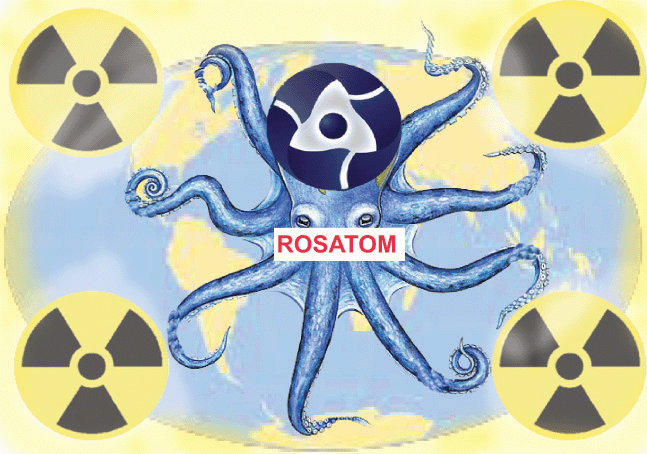
West scrambles as Putin reveals his energy war trump card. Kremlin has
spread its tentacles through the US and Europe – and countries are
struggling to fight back. In an effort to punish Vladimir Putin, western
governments have hit Russia’s energy industry with a barrage of punishing
sanctions since his invasion of Ukraine.
But one sector has conspicuously
escaped their ire so far: nuclear power. Since the conflict erupted,
Russian nuclear exports are actually thought to have increased while those
of coal, oil and gas have been squeezed.
Meanwhile, despite the key role it
has played in Moscow’s takeover of the Zaporizhzhia nuclear power plant
in Enerhodar, eastern Ukraine, state monopoly Rosatom remains untouched by
western sanctions.
The reason, say experts, is the complicated nature of
nuclear supply chains – from the supply of uranium to the construction of
reactors – and the dominant role Russia currently plays in many of them.
Through its global nuclear network, Moscow can exert political and economic
pressure on friends and foes alike, the White House has warned. A new
partnership between the UK, the US, Canada, Japan and France aims to change
this. Together the five countries want to squeeze Russia’s share of
nuclear exports and “ensure Putin, nor anyone like him, can ever think
they can hold the world to ransom over their energy again,” said Grant
Shapps, the Energy Security Secretary. The group aims to become independent
from Moscow and help other countries do the same, the agreement says.
Telegraph 24th April 2023
SpaceX: Should we colonise the solar system?
April 24, 2023 https://onefiniteplanet.org/wp/spacex-should-we-colonise-the-solar-system/
heard an on-air debate about the merits of the program in light of the explosion of the SpaceX starship rocket on April 20th.
Viewpoints were of course varied. They included the “we have this beautiful planet already and it makes no sense to be spending so much to go elsewhere” and very much focused on “colonising” the solar system with the viewpoint that this involves potentially many wealth people leaving Earth. Also discussed with the idea Mars could have had its own civilization in the past, and questions as to who owns space.
The points I feel should be highlighted:
The beautiful planet took 4 billion years before humans could survive on it without a spacesuit, won’t support us for much longer, and will become inadequate after the next big step for humanity.
Yes, we need to expand beyond Earth, and doing so takes many steps, and will take way longer than most people realise. All that we are working towards at this point is the possibility of some small outposts on the Moone, Mars or elsewhere in vast solar system that has no existing place other than Earth that can ever be home to a significant number of humans.
Oh…and yes while there was some “spin” (rapid unscheduled disassembly?), it was stated in advance that expectations beyond getting off the ground were limited, and yes it did “self-destruct” rather than simply just “blow up”.
Presidential candidate Robert F. Kennedy Jr. vows to ‘unwind US empire’
Rt.com 23 Apr 23
Robert F. Kennedy Jr., nephew of JFK, is set to challenge Joe Biden for the Democratic nomination in 2024
US presidential candidate Robert F. Kennedy Jr has pledged to wind down American military interventionism abroad if he is elected to the White House in 2024.
Kennedy, who is the son of Robert F. Kennedy and the nephew of former President John F. Kennedy, confirmed his candidacy for the Democratic nomination at a campaign rally in Boston last week, placing him in competition with current US leader Joe Biden.
Also known for being a prominent anti-vaccine activist, the 69-year-old environmental lawyer has acknowledged that he is not an “ideal” candidate given his often-controversial brand of discourse, but has argued that he is “not one of those people who said I have to be careful because one day I’m going to be in the White House.”
Chief among Kennedy’s campaign proposals, as noted in a six-point plan published on his official website, would be drawing a line through US military interventionism abroad and “start[ing] the process of unwinding [an] empire.”
We will bring the troops home. We will stop racking up unpayable debt to fight one war after another. The military will return to its proper role of defending our country,” the plan stated, adding that “America cannot be an empire abroad and a democracy at home.”
Regarding the Ukraine conflict, Kennedy stated that the US mission is “to end the suffering of the Ukrainian people.” However, he argued that Ukrainians are “victims” not just of Russia, but also of “American geopolitical machinations going back to at least 2014.”
Kennedy, who has never held significant public office, has drawn criticism from health experts – and even members of his own family – amid various outspoken comments throughout his career. In 2005, a prominent science publication issued a stinging rebuke of claims he made in which he appeared to link the development of autism to vaccines.
His wife, the actress Cheryl Hines, condemned Kennedy last year for invoking the name of Anne Frank and the Holocaust while describing US vaccine requirements. He later withdrew the comments…..https://www.rt.com/news/575267-us-kennedy-unwin-empire/
 | |||
| to me | |||
Pentagon to deliver main battle tanks to Ukraine in weeks — Anti-bellum

Polish RadioApril 21, 2023 US to give Abrams tanks to Ukraine within weeks: Pentagon chief American-made Abrams battle tanks will arrive in Germany in the coming weeks for Ukrainian troops to begin training, the US defence secretary said on Friday. Lloyd Austin made the announcement at Ramstein Air Base in Germany…. He spoke to reporters […]
Pentagon to deliver main battle tanks to Ukraine in weeks — Anti-bellum
Renewable Energy Is Charging Ahead.

Renewable energy has seen considerable
growth in recent years, but there is a long way to go to achieve a clean
energy future that averts the worst effects of the climate crisis. The
window is quickly closing on our ability to meet the goal of the 2015 Paris
climate agreement: keeping global temperature rise well below two degrees
Celsius by the end of the century.
The latest report from the
Intergovernmental Panel on Climate Change (IPCC) stressed that the world
needs fast and deep emissions cuts to meet that goal and eventually reach
net zero emissions by 2050. Switching to renewable forms of power
generation, such as solar, wind and hydropower, will be a key component of
that effort. “The target is very ambitious,” says Heymi Bahar, a senior
energy analyst at the International Energy Agency.
And every year that goes
by without major climate action, “we are basically losing the carbon
[budget] that is left, and we need to go faster in a more expansive way. In
that sense, most of the job, according to our models, needs to be done in
the coming seven years,” Bahar says.
Globally, renewables account for
about one third of electricity generation—and that share is rising. In
2022 renewable generation capacity grew by a record 295 gigawatts,
according to the International Renewable Energy Agency (IRENA). Further,
renewables accounted for more than 80 percent of all added power capacity
last year, the agency reported. Last year renewables produced more
electricity than coal-powered plants for the first time in the U.S. Wind
and solar now produce about 14 percent of the country’s electricity, up
from virtually nothing just 25 years ago. The U.S. Energy Information
Administration expects that more than half of electric generation capacity
added to the nation’s grid in 2023 will be from solar energy.
The main reason renewable energy has grown so much in recent years is a dramatic
decline in the expense of generating solar and wind power. The cost of
solar photovoltaic cells has dropped a stunning 90 percent over the past
decade, partly because of ramped-up manufacturing—particularly in
China—Bahar says. Government subsidies in countries such as the U.S. also
helped renewables grow in the early years, as did policies making
commitments to renewable adoption, says Inês Azevedo, an associate
professor in the department of energy science and engineering at Stanford
University.* For example, many U.S. states set standards for how much of
their electricity needs should be met with renewable energy by a particular
year.
Scientific American 21st April 2023
https://www.scientificamerican.com/article/renewable-energy-is-charging-ahead/
Inadequate Protection: Current Radiation PPE is Failing to Shield Female Healthcare Workers
SciTechDaily By BMJ APRIL 22, 2023
Adequate protection cannot be guaranteed by standard personal protective equipment for breast tissue; employers should invest in protective gear that ensures the safety of all employees.
In an article published recently in The BMJ, doctors advocate for improved ionizing radiation protection for women in healthcare who are regularly exposed to radiation through X-rays and other imaging procedures, in order to reduce their risk of developing breast cancer.
Due to the high sensitivity of breast tissue to radiation and the fact that ionizing radiation is a well-established human carcinogen, there are apprehensions that frequent exposure to ionizing radiation during image-guided procedures could increase the likelihood of female healthcare workers developing breast cancer.
Personal protective equipment (PPE) such as lead gowns are used to shield the body from harmful radiation during these procedures. But studies have shown that current radiation PPE provides inadequate protection to breast tissue as it leaves the area close to the armpit (known as the upper outer quadrant and axilla — the most common site of breast cancer) exposed.
“Providing adequate breast covering PPE could therefore reduce radiation exposure and potentially help prevent breast cancer in female healthcare workers,” write Isobel Pilkington and colleagues.
They acknowledge that measuring the risk of occupational radiation-induced breast cancer in women working in healthcare is challenging, but as the number of female trainees entering these specialties increases, they say “it is essential that the available evidence is considered and equipment provision improved to minimize this risk.”
They point to observational evidence suggesting an increase in breast cancer risk among female US orthopedic surgeons compared with an age-matched female population, and to a small Finnish study showing breast cancer at 1.7 times the expected rate in radiologists, surgeons, and cardiologists compared with female physicians not working with radiation.
In a study using artificial female torsos to measure radiation exposure, researchers found inadequate upper outer quadrant protection and no statistically significant reduction in dose when standard PPE was compared with a torso without PPE………………………………….
Reference: “Protecting female healthworkers from ionising radiation at work” by Isobel Pilkington, Hannah Sevenoaks, Emily James and Deborah Eastwood, 12 April 2023, The BMJ.
DOI: 10.1136/bmj-2023-075406
New Zealand’s nuclear test veterans seek recognition
More than 500 sailors on New Zealand navy ships were exposed to tests of hydrogen bombs in the late 1950s. Aaron Smale spoke to one ahead of Anzac Day.
newsroom, Aaron Amale 23 Apr 23
He was a 17-year-old kid from Te Kuiti when he was ordered onto the deck of a Navy ship and told to sit down with his back facing out to sea. He and his mates donned dark glasses and wore what was grossly inadequate protection. Then he saw the bones in his hands from the flash of a hydrogen bomb being detonated.
Ordered to stand up and turn around, Tere Tahi saw what should have been a frightening sight but his reaction was one of awe and wonder.
“It was the most beautiful thing. It was fantastic. It was fantastic seeing all the different colours in the blast. It was a marvellous experience to see something like that, but we didn’t know what effects it would have on us after that. We went in close to the fallout when the sea was being drawn towards the mushroom.”
Tahi had joined the Navy as a teenager and was stationed on the ship Rotoiti, one of two New Zealand ships that was sent to Christmas Island and witnessed the British testing hydrogen bombs in 1958. The legacy of those tests continues to affect those who saw them and has been passed down through their families.
“We were told to get on to the upper deck with anti-flash gear, put on dark glasses and to have our backs towards the detonation and when that was completed, we were told to turn and watch the blast. We had all this gear on and dark glasses and when it went off we could see the bones in our fingers, in our hands, with our hands over the dark glasses.”
“I wasn’t scared, because we didn’t know what the after effects would be.”…………
Tahi is now the president of the Nuclear Test Veterans Association in New Zealand and has taken on the fight to try and help veterans and their families affected by the impacts of being exposed to radiation. The association is having a reunion on April 28-30 in Palmerston North.
“I’ve set up some projects to help our veterans that have illnesses. What I want to do is give them some assistance helping them out with the illnesses. Some of them are finding it difficult to finance.”
The illnesses are not limited to the veterans themselves.
“Another problem that we faced with is a lot of our children, a lot of the veterans’ children have been born with deformities. It’s been very bad too. And that’s my final legacy – if you try and do something for them.”………………………
It wasn’t only New Zealand personnel who were exposed to the blasts. British sailors were also present and have been waging the same war to get recognition.
“I went to England to a nuclear test veterans association commemoration. I was invited by the English government to go over there, this was in November of last year. It was the British. It was them that dropped the bomb.”
He says in hindsight he believes they were being used in an experiment. He worked as a radio operator and heard the secret communications coming through.
“As a radio man we receive secret signals saying that the reason they wanted troops there was to see what effects it would have on the equipment, which would have been our ships and the equipment on the ships, and to what see what effects it would have on the men. It was terrible. They wanted to see what effects it would have on us. It was obvious we were guinea pigs.
“Hiroshima and Nagasaki, our bomb was a hundred times worse than that. A hundred times worse.”……………………………….
An estimated 20,000 British servicemen, 524 New Zealand soldiers and 300 Fijian soldiers were deployed to “Christmas Island” from 1956 to 1962.
Between May 1957 and September 1958 the British government tested nine thermonuclear weapons on Kiritimati for Operation Grapple. In 1962, the UK cooperated with the US on Operation Dominic, detonating another 31 bombs on Kiritimati.
The long-term impact on their lives and families largely hasn’t been formally acknowledged. The inhabitants of the islands have never been acknowledged either. https://www.newsroom.co.nz/nuclear-test-veterans-still-waiting-for-recognition—
Japan hopes to start discharging Fukushima nuclear wastewater in July
Gong Zhe https://news.cgtn.com/news/2023-04-23/Japan-hopes-to-start-discharging-Fukushima-nuclear-wastewater-in-July-1jfbTfpbNvy/index.html
Japan is hoping to start discharging radioactive waste water from its destroyed Fukushima nuclear plant into the ocean in July.
Tokyo Electric Power Company (TEPCO) told Kyoto News on Saturday that the excavator is near the exit of the tunnel located one-kilometer offshore. The 1,030-meter tunnel is used to discharge the treated water stored in the Fukushima Daiichi Nuclear Power Plant into the sea. As long as 1,017 meters of the tunnel have been excavated.
TEPCO is trying to complete the tunnel and other facilities related to water discharging before the end of June, and the possibility of starting discharge operations as early as July has increased.
The Japanese government and TEPCO are trying to start discharging around this summer, but fishermen and others continue to oppose it. The plan faces opposition at home and has raised “grave concern” in neighboring countries, including but not limited to China and South Korea.
TEPCO plans to use a large amount of seawater for dilution to make the activity of tritium in treated water less than one-fortieth of national standards, and then discharge it through a seabed tunnel. It is expected to be discharged for several decades.
S.Korea’s Yoon to meet Biden as doubts grow over nuclear umbrella
By Hyonhee Shin, SEOUL, April 24 (Reuters) – South Korean President Yoon Suk Yeol set off on Monday for the for the United States and a summit with President Joe Biden at a time of rare questioning in South Korea of an alliance that has guaranteed its security for decades.
………….. as North Korea races ahead with the development of nuclear weapons and missiles to carry them, there are growing questions in South Korea about the relying on “extended deterrence”, in essence the American nuclear umbrella, and calls, even from some senior members of Yoon’s party, for South Korea to develop its own nuclear weapons.
A recent poll by the Asan Institute for Policy Studies showed that more than 54% of respondents believed the U.S. would not risk its safety to protect its Asian ally.
More than 64% supported South Korea developing its own nuclear weapons, with about 33% opposed.
Yoon has been pushing to boost South Korea’s say in operating the U.S. extended deterrence but exactly what that might entail has not been spelt out…………… https://www.reuters.com/world/skoreas-yoon-meet-biden-doubts-grow-over-nuclear-umbrella-2023-04-24/
A big week in nuclear news
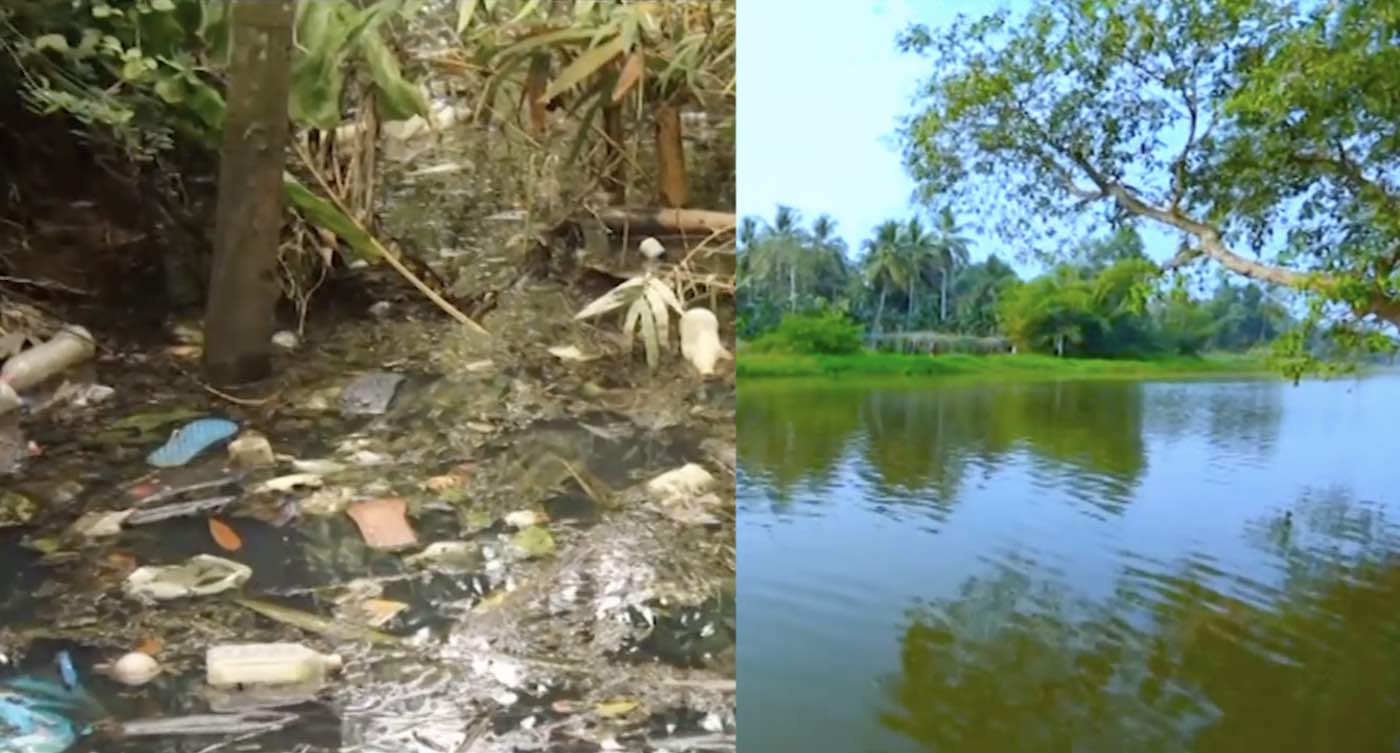
Some bits of good news. Total Rejuvenation of ‘Dead’ River by a Rural Indian Community Hailed as National Example . The world’s happiest countries, according to new research.
Climate. Disturbing Sea Level Studies, (Which Threaten All Nuclear Facilities Sited Close To Oceans, Rivers & Lakes). Searing heatwave hitting Southern and South Eastern Asia.
Nuclear. Folie a tout le monde? Not just USA, Russia, China – it seems that everybody is getting into the nuclear weapons race. Former Pentagon official Henry D. Sokolski pronounces “We don’t know what to do.” Indeed a profoundly true statement. Somebody better think of something, before the omnisuicide takes place – whether it be started by some deliberate military action, – or, more likely, by some unintended glitch, possibly even a trivial one.
Christina notes. Space X rocket – “A successful failure” – George Orwell would love it! Penny Wong – a huge disappointment to me. At last political folk music is back ! “Killing the Messenger #Free Julian Assange”, by David Rovics https://www.youtube.com/watch?v=bUX2IHm7
CULTURE and ARTS. NUCLEAR AFTER-LIFE: FROM TRAGEDY TO FARCE, THE CLAIMS OF A NUCLEAR RENAISSANCE.
ECONOMICS.
- Marketing. America is going to sell heaps of Holtec’s Small Nuclear Reactors to Ukraine! US ready to lend Poland $4 billion for nuclear energy plan.
- Globally, taxpayers are on the hook for nuclear accidents. Nuclear is uninsurable and unacceptable.
- Pension funds shun Sizewell C in major blow to Britain’s nuclear ambitions. UK seeks a nuclear energy renaissance – but experts question whether it’s value for money. Rolls Royce shares OK for civil aviation, but investment in small nuclear reactors is risky. A Nuclear Revival Needs More Rules, Not Less.
- French Winter Power Twice as Pricey as Germany’s on Nuclear Woes. Nuclear Troubles Send French Winter Power Prices Soaring.
- Does India have enough insurance coverage for a nuclear disaster? Nuclear liability issues not yet resolved for Jaitapur project: French company EDF.
EDUCATION. The nuclear lobby continues to buy universities- University of Wyoming well and truly bought. With visit of Algerian President France must face up to its nuclear fallout.
EMPLOYMENT. France’s struggle to deliver a second nuclear era.
ENERGY. Earth Day 2023: A Newly Post-Nuclear Germany vs. California’s Reactor Relapse. Germany’s Energy Revolution (‘Energiewende’) is working. Renewable Energy Is Charging Ahead. Russia’s political and economic winner – its nuclear exports to Western countries.
ENVIRONMENT. Alba MP Neale Hanvey calls for Ministry of Defence to tackle nuclear decontamination at Dalgety Bay. Water shortage at Sizewell: the environmental cost.
ETHICS and RELIGION. Will Environmental, social, and governance (ESG) investment managers follow the govt in backing nuclear?.
HEALTH. Radiation. Dogs of war — Chornobyl. New Zealand’s nuclear test veterans seek recognition. Inadequate Protection: Current Radiation PPE is Failing to Shield Female Healthcare Workers
LEGAL. EU faces legal action after including gas and nuclear in ‘green’ investments guide.
NUCLEAR TECHNOLOGY. Terrestrial Energy’s molten-salt reactor gets over one hurdle – but many more to come -Will it be a lemon? Russia to set up a small nuclear reactor in the Arctic Republic of Sakha. Zaporizhzhia nuclear power plant will switch back to Russian fuel, from Westinghouse fuel .
OPPOSITION to NUCLEAR. This is why Youth, MPs and ICAN are going to Hiroshima next week. Daniel Ellsberg is still fighting — Beyond Nuclear International.
POLITICS. Germany’s last nukes shut down — Beyond Nuclear. Jonathon Porritt:Germany’s nuclear nous vs UK nuclear nutters. ‘There’s a lot of posturing’: Europe’s nuclear divide grows as one plant opens and three close.
Presidential candidate Robert F. Kennedy Jr. vows to ‘unwind US empire’. SEN. MARKEY AND REP. LIEU ANNOUNCE LEGISLATION TO LIMIT U.S. PRESIDENT’S POWER TO UNILATERALLY START NUCLEAR WAR. Whaa -at ? – Bill in North Carolina legislature would define nuclear as source of CLEAN energyUS nuclear taxes — the true costs. Excitement in Kent City Council about new nuclear power (now reclassified as “environmentally sustainable”).
Dan Monceaux urges the Senate to keep Australia’s legal protections against the hazards of nuclear industrial facilities. . AUKUS submarines “nation building” says Admiral- No they’re not, says Rex Patrick.
POLITICS INTERNATIONAL and DIPLOMACY.
- It’s High Time the US Signed a Peace Treaty with North Korea,
- S.Korea’s Yoon to meet Biden as doubts grow over nuclear umbrella. Questions about S.Korea-USA ‘ironclad’ commitment lead to impossible nuke solution.
- US warns Russia not to touch American nuclear technology at Ukrainian nuclear plant.
- Germany and Finland: Two sides of the nuclear power coin in Europe. Germany, Poland and others are pushing for new sanctions on Russia’s nuclear energy.
- French-Russian nuclear relations turn radioactive.
- Civil Society Wants Deeds, Not Words on Nuclear Disarmament: The G7 Should Listen. G7’s statement on nuclear issue hypocritical and pale. Why the disbandment of NATO is long overdue.
- Biden willing to damage US economy to counter China – US Treasury. Chinese Diplomacy Seen as Threat to US ‘Peace,’ ‘Stability’.
SAFETY. New images from inside Fukushima reactor spark safety worry. Maintenance impacted at Zaporizhzhia, says IAEA. Hungary to Prolong Nuclear Plant’s Lifetime as Expansion Stalls. Nuclear life extension plans tested by obsolete components.
SECRETS and LIES. Leaks Reveal Reality Behind U.S. Propaganda in Ukraine.
SPACE. EXPLORATION, WEAPONS. SpaceX: Should we colonise the solar system? Environmentalists say Starship failure boosts their concerns. SpaceX launches most powerful rocket in history in explosive debut – like many first liftoffs. Starship’s test was a successful failure. Warfighting domain: U.S., Polish militaries sign space agreement
SPINBUSTER. Disarming the persistent myths of a glowing nuclear renaissance. Six war mongering think tanks and the military contractors that fund them.Return to Russia: Crimeans Tell the Real Story of the 2014 Referendum and Their Lives Since — RADIATION FREE LAKELAND. In Indiana, small nuclear reactors don’t need to be “small” any more.
WASTES.
- What now for Germany’s remaining nuclear waste?
- France’s radioactive waste management agency Andra wants to increase storage capacity at Cires waste dump .
- Fukushima’s fishing industry survived a nuclear disaster – 12 years on, it fears Tokyo’s next move may finish it off. Japan hopes to start discharging Fukushima nuclear wastewater in July.
- Scrapping could be next for Russia’s nuclear-powered battle cruiser. Background briefer on nuclear waste in Canada.
- The Human Dimension to Kazakhstan’s Plutonium Mountain.
WAR and CONFLICT.
- Russia is deploying nuclear weapons in Belarus – NATO shouldn’t take the bait.
- NATO to surge troops to Russian border. 26,000 troops from 14 nations: NATO allies join largest Swedish war games in over 25 years .
- Germany okays Ukrainian strikes on Russian soil.
- Largest air exercise in NATO’s 75-year history overlaps with massive combat drills .
- New member Finland leads team in world’s largest, 38-nation NATO cyber warfare exercise .
- NATO trains French Foreign Legionaries for war with Russia in the Baltic.
- NATO conducts large-scale submarine warfare exercise in Norwegian Sea .
WEAPONS and WEAPONS SALES.
- NATO partner South Korea poised to be world’s fourth-largest arms exporter.
- Impending 50-nation Pentagon/NATO Ukraine war council will focus on warplanes.
- Pentagon to deliver main battle tanks to Ukraine in weeks.
- State Department approves upgrade of entire Turkish F-16 fleet to “enhance NATO interoperability”.
- Rep. Gallagher Says War Game Shows US Needs to Arm Taiwan ‘To the Teeth’.
- US military-industrial complex is main beneficiary of fighting Russia in Ukraine – Moscow.
- Complex safety problems in overhauling USA’s nuclear weapons stockpile, especially plutonium pits.
- Global military spending increase: Militarism will cost us the earth. Three nuclear superpowers, rather than two, usher in a new strategic era. ‘It Is Skynet’: Pentagon Envisions Robot Armies in a Decade. The US Has No Plans to Give Up Nuclear Weapons -The Public Needs to Change That.
1 This Month

of the week – Shut Down Drone Warfare!


Tell the Ukrainian Government to Drop Prosecution of Peace Activist Yurii Sheliazhenko

Petition to revoke the licensing of the Near Surface Nuclear Disposal Facility (NSDF) at Chalk River. https://www.ourcommons.ca/petitions/en/Petition/Details?Petition=e-7247
To see nuclear-related stories in greater depth and intensity – go to https://nuclearinformation.wordpress.com
-
Archives
- April 2026 (103)
- March 2026 (251)
- February 2026 (268)
- January 2026 (308)
- December 2025 (358)
- November 2025 (359)
- October 2025 (376)
- September 2025 (257)
- August 2025 (319)
- July 2025 (230)
- June 2025 (348)
- May 2025 (261)
-
Categories
- 1
- 1 NUCLEAR ISSUES
- business and costs
- climate change
- culture and arts
- ENERGY
- environment
- health
- history
- indigenous issues
- Legal
- marketing of nuclear
- media
- opposition to nuclear
- PERSONAL STORIES
- politics
- politics international
- Religion and ethics
- safety
- secrets,lies and civil liberties
- spinbuster
- technology
- Uranium
- wastes
- weapons and war
- Women
- 2 WORLD
- ACTION
- AFRICA
- Atrocities
- AUSTRALIA
- Christina's notes
- Christina's themes
- culture and arts
- Events
- Fuk 2022
- Fuk 2023
- Fukushima 2017
- Fukushima 2018
- fukushima 2019
- Fukushima 2020
- Fukushima 2021
- general
- global warming
- Humour (God we need it)
- Nuclear
- RARE EARTHS
- Reference
- resources – print
- Resources -audiovicual
- Weekly Newsletter
- World
- World Nuclear
- YouTube
-
RSS
Entries RSS
Comments RSS
 nuclear-news