Complex safety problems in overhauling USA’s nuclear weapons stockpile, especially plutonium pits

TRUST BUT VERIFY. U.S. labs are overhauling the nuclear stockpile. Can they validate the weapons without bomb tests?
20 APR 2023, BY SARAH SCOLES Science.org
LOS ALAMOS, NEW MEXICO—Behind a guard shack and warning signs on the sprawling campus of Los Alamos National Laboratory is a forested spot where scientists mimic the first moments of a nuclear detonation. Here, in the Dual-Axis Radiographic Hydrodynamic Test (DARHT) facility, they blow up models of the bowling ball–size spheres of plutonium, or “pits,” at the heart of bombs—and take x-ray pictures of the results.
In a real weapon, conventional explosives ringing an actual pit would implode the plutonium to a critical density, triggering an explosive fissile chain reaction. Its energy would drive the fusion of hydrogen isotopes in the weapon’s second stage, generating yet more neutrons that would split additional fission fuel………………………………………………………..
Facilities like DARHT have been important since 1992, when the Department of Energy’s (DOE’s) three weapons labs—Los Alamos, Lawrence Livermore National Laboratory, and Sandia National Laboratory—stopped full-fledged tests of nuclear weapons. By 1996, the United States had signed the Comprehensive Nuclear-Test-Ban Treaty—credited not only with stopping the environmental damage of nuclear testing, but also with disincentivizing new weapons designs.
Without tests, however, the only things ensuring that warheads work are facilities like DARHT, computer simulations from “weapons codes,” and a cache of data from the old days of nuclear testing. For relatively minor changes to old weapons—new fuses, fresh top-ups of the hydrogen isotope tritium—that has been enough. Every year, DOE’s National Nuclear Security Administration (NNSA) and the Department of Defense have certified the stockpile, an assessment that means they are convinced the weapons will work when they’re supposed to, as they’re supposed to—and not do anything when they’re not supposed to. “Because we’ve blown up so many of them, these things are incredibly reliable,” says Geoff Wilson, director of the Center for Defense Information at the Project on Government Oversight, which argues nuclear weapons spending should be reduced.
But now the stockpile is getting an overhaul, the biggest in decades. This fiscal year, NNSA has a record $22.2 billion budget. Much of the money will go to producing new plutonium pits to replace those in the arsenal and to modernizing four warheads. A fifth weapon, dubbed the W93—a submarine-launched warhead—is a new design program. “It’s really the first warhead program we’ve had since the end of the Cold War” that isn’t a life extension or modernization of an existing weapon, says Marvin Adams, NNSA’s deputy administrator for defense programs………………………………
Wilson worries that the international dynamics and the U.S. overhaul could ultimately lead to a revival of bomb tests, bringing back their hazards and stoking a new arms race. “It is not unfathomable to me, which is scary to say.” It’s one thing to tweak weapons with a deep heritage. It’s another to infer functionality for modified weapons that have never been fully tested, he says………………………………….
SIMPLY REPLACING the bombs’ plutonium pits poses a science challenge: understanding how subtle changes affect their behavior. They aren’t easy to make, in part because plutonium, a metal only in existence since 1940, is mysterious and hard to handle. The last time anyone made pits at scale—in the 1980s at Colorado’s Rocky Flats plant—DOE’s contractor was shut down for environmental violations and forced to pay an $18.5 million fine.
This time, NNSA is splitting production between Los Alamos and the Savannah River Site in South Carolina. It has tasked them with making 80 new pits per year by 2030, a deadline NNSA admits it will not meet.
Los Alamos’s pits will be made at a facility called PF-4, a set of high-security buildings surrounded by cyclone fences with razor wire. Inside PF-4 are glovebox enclosures—radiation-shielded workstations where workers use thick gloves and peer through glass windows to manipulate the exotic metal. The lab is hiring thousands of workers, and its first pit is likely to be ready for the stockpile next year.
The gargantuan effort is motivated by a simple fact: many current pits are more than 40 years old, and plutonium behaves in confounding ways as it ages and radioactively decays. A green, fuzzy coating grows on it as its surface oxidizes. Atoms in its metallic lattice are knocked out of place as it spits out uranium isotopes. Its dimensions shift when it slips between six different solid phases. And the pits do not necessarily degrade smoothly. “We know at some point there will be a nonlinear piece,” says David Clark, director of Los Alamos’s National Security Education Center and editor of the Plutonium Handbook. “We just haven’t seen it.”…………….
One might think the new pits would make it easier to certify the stockpile, by avoiding the uncertainties of aging plutonium. But they come with uncertainties of their own. The new pits won’t be twins of their predecessors, so weapons scientists will have to understand how the alterations change pit behavior. They are being manufactured using recycled and purified plutonium from old pits, not fresh material, unlike the originals. Moreover, they will be made with different processes, and in some cases designed to slightly different specifications. “If you look at a new requirement,” Adams says, “you often will find that the old pits we have available to us are really, really suboptimal.”………………………………………. https://www.science.org/content/article/trust-verify-can-u-s-certify-new-nuclear-weapons-without-detonating-them
French-Russian nuclear relations turn radioactive
Ukraine and several EU countries want France to cut commercial ties with Russia’s atomic sector.
Politico, BY VICTOR JACK, APRIL 20, 2023
BRUSSELS — Pressure is building on France to fully cut ties with Russia’s atomic sector as the EU mulls its latest sanctions package against Moscow.
The European Commission is set to meet with diplomats from the EU’s 27 member countries on Friday to start discussions on the bloc’s 11th round of Russia sanctions. Hitting Moscow’s state-run nuclear company Rosatom — a divisive issue for some EU countries reliant on Russia for nuclear fuel — is likely come under the spotlight once again.
That means increased scrutiny of France’s ties to Rosatom, the Moscow-based atomic firm…………………………..
“I am sure” that Paris has a moral duty to encourage its state-backed companies to cut ties with Rosatom, Ukraine’s Energy Minister German Galushchenko told POLITICO last month, adding that Kyiv wants all EU countries with links to Russian’s nuclear industry to cut them.
“All of our public scrutiny has been on Germany and not so much on France,” for ties with Russia, said a diplomat from one EU country, who spoke on condition of anonymity, “whereas I think if you look closely … they haven’t been the best kid in the class either.”…………………………………………..
Paris and Moscow’s nuclear ties, which date back to the Cold War, are most apparent in the links between Rosatom and state-controlled EDF, France’s largest utility that runs the country’s nuclear fleet. It signed a strategic cooperation agreement with Rosatom on green hydrogen in 2021, as well as a joint declaration to develop research cooperation.
The Rosatom spokesperson called it “a win-win partnership” that is “a driver of development both in the field of nuclear energy and scientific projects.”……………………….
When Rosatom builds a nuclear plant abroad, it often relies on technology from French companies — typically spending up to €1 billion per project, Faudon said. Those orders usually include command and control systems from Framatome, which is majority-owned by EDF.

Framatome has an ongoing role in Russian nuclear construction projects around the world, including at Paks. The company aims to set up a joint venture with Rosatom to produce nuclear fuel in western Germany, a project that has been sharply criticized by local authorities.
The French firm also signed a strategic cooperation agreement with Rosatom in December 2021 to expand collaboration on fuel fabrication and other technologies.
Framatome didn’t comment on its ongoing contracts but with reference to the 2021 agreement, a company spokesperson said: “Everything has been postponed until further notice,” adding that Framatome will “re-examine the agreement if and when that is appropriate.”
EDF declined to comment…………………………..
And while France isn’t dependent on Russia for its nuclear fuel and security of supply, it bought enriched uranium worth €359 million from Moscow last year, more than three times the amount it bought in 2021.
It’s not the only such sale to the West. The U.S. bought $830 million of enriched uranium from Russia last year. Moscow also supplies fuel to reactors in Bulgaria, the Czech Republic, Finland, Slovakia and Hungary…………………
In February, the European Parliament overwhelmingly passed a resolution calling on Rosatom to face sanctions. ……………………………….
https://www.politico.eu/article/french-russian-nuclear-relations-radioactive-rosatom-sanctions/
‘There’s a lot of posturing’: Europe’s nuclear divide grows as one plant opens and three close
Guardian Jon Henley Europe correspondent, and Kate Connolly in Berlin, 21 Apr 23,
When Europe’s first new nuclear reactor in 16 years came online in Finland, it was hailed by its operator as a “significant addition to clean domestic production” that would “play an important role in the green transition”.
The opening last Sunday of the long-delayed Olkiluoto 3 plant, Europe’s largest, means about 40% of Finland’s electricity demand will soon be met by nuclear power, which the government says will boost energy security and help it achieve its carbon neutrality targets.
Across the Baltic Sea and just hours before the Finnish plant came on stream, Germany was finally pulling the plug on its last three nuclear power plants, shutting down the steaming towers of Isar II, Emsland and Neckarwestheim II reactors late on Saturday.
The environmental group Greenpeace, at the heart of Germany’s long-lived and powerful anti-nuclear movement, organised a party at the Brandenburg Gate in Berlin. “Finally, nuclear energy belongs to history,” it proclaimed.
There are few clearer illustrations of Europe’s nuclear divide. One faction, led by Germany, argues that the costs are too high and the risks – from reactor accidents and toxic waste – are, as the Green environment minister, Steffi Lemke, put it, “ultimately unmanageable”.
Another, headed by France, argues equally forcefully that nuclear power is a reliable, low-carbon alternative to fossil fuels for electricity, and that phasing it out as Europe tries to meet vital green targets is ecologically damaging and economically senseless.
The debate is not new. But with a third of the bloc’s nuclear reactors nearing the end of their original lifespan by 2025, and a legally binding aim of cutting net greenhouse gas emissions by 55% from 1990 levels by 2030, it is becoming increasingly intense.
The energy shock that followed Russia’s invasion of Ukraine last year, which brought an end to cheap gas imports and led Germany to briefly delay closing its last nuclear plants, has only entrenched the divisions.
“There’s a lot of posturing,” the centrist MEP Pascal Canfin, who chairs the European parliament’s environment committee, said. “Different member states have made very different choices and have very different positions – and interests.
According to Eurostat, 25.4% of the EU’s electricity was nuclear generated in 2021, with 100-odd reactors in 13 member states. France, which has 56 operable nuclear reactors, accounting for just over half of that total.
The divide across the bloc, though, is stark. If France has the highest share of nuclear in its electricity mix (almost 70%), followed by Slovakia (52.4%) and Belgium (50.6%), others hardly touch it. The Netherlands stands at barely 3%…………
Advocates of its “Energiewende” green transition plan note that the 46% share of its electricity generated by renewables is far greater than the share that was produced by nuclear when its phase-out was first announced in 1998.
While its plan, aimed at winning long-term public and industry support, will increase fossil fuel consumption and CO2 emissions in the short term (coal is due to be phased out by 2038 or earlier), Germany argues it will also stimulate renewables growth.
Immediate energy supply concerns meant public opinion swung against the shutdown last weekend, but polls before the war in Ukraine showed broad support for the principle. Other countries hold similar views.
Several have already phased out nuclear, or plan to do so. Italy shut all its plants in 1990, after a 1987 referendum (in a 2011 plebiscite, held weeks after the Fukushima disaster, 94% of voters rejected a government plan to reintroduce nuclear power).
Belgium was planning to close the last of its seven reactors by 2025, but recently extended the life of the two newest for a further decade, saying they were “critical to our energy security”. Spain aims to phase out its five active plants by 2035.
Other opponents include Portugal, Denmark and Austria – which, along with Luxembourg, is suing the European Commission for classing nuclear energy as a “bridge technology” on the path to net zero, and thus as a “green” investment.
In the French-led pro-nuclear camp, meanwhile, are Bulgaria, Croatia, the Czech Republic, Finland, Hungary, the Netherlands, Poland, Romania, Slovakia and Slovenia – which this year launched an alliance to boost nuclear cooperation within the bloc.
Far from phasing out nuclear, Romania has doubled production in the last 15 years; Hungary and the Czech Republic have increased theirs by a fifth. Sweden is drafting a law to allow it to build more, while France aims to extend its plants’ life to 50 years and open at least six new ones by 2035.
“Certain countries have made the extreme choice of turning their back on nuclear energy,” President Emmanuel Macron said when unveiling his plans in February. “Not France.” The country launched its nuclear programme after the 1973 oil crisis; a poll last year showed nearly 80% of voters support it, up 20 points from 2016.
The nuclear standoff – at its most tense between France and Germany – has the potential to disrupt a range of vital EU projects, from changes to the bloc’s electricity market to the Green Deal programme supporting industry’s transition to net zero………………………… https://www.theguardian.com/world/2023/apr/21/europe-nuclear-divide-grows-one-plant-opens-three-close-finland-germany
Chinese Diplomacy Seen as Threat to US ‘Peace,’ ‘Stability’
FAIR, GREGORY SHUPAK 21 Apr 23
China has undertaken a diplomatic blitz that has seen it broker a rapprochement between Iran and Saudi Arabia, warm relations with France, and put forth a proposal to end the war in Ukraine. US media coverage of these developments has involved illusion-peddling about America’s potentially waning empire, and calls for the US to escalate what amounts to a new cold war with China.
In Foreign Policy (3/14/23), Michael McFaul and Abbas Milani say that China “now shares the burden of keeping the peace in the Middle East. This is not an easy assignment, as the United States has learned bitterly over the decades.”
The US has done the opposite of “keeping the peace in the Middle East.” Nor has it sought to, as the Iraqi case makes tragically clear. Since the US-led 2003 invasion, Brown University’s Costs of War Project notes,………………………………………………………
Power = ‘peace’
Walter Russell Mead of the Wall Street Journal (3/27/23) claimed that while “American power” results in “peace and prosperity,” “challengers like China, Russia and Iran undermine the stability of the American order.” “Peace” and “stability” must seem like odd ways of characterizing that order to, say, Libyans, who had their country flattened by a US-led intervention (Jacobin, 9/12/13), and endured years of a brutal war, and even slavery.
David Ignatius of the Washington Post (3/16/23) asserted that
if Chinese President Xi Jinping wants to take on the role of restraining Iran and reassuring Saudi Arabia, good luck to him. The United States has been trying since 1979 to bend the arc of the Iranian revolution toward stability.
Washington supported Iraq’s invasion of Iran, to the point of helping Iraq use chemical weapons against the country. The US has also levied sanctions that have immiserated the country, undercutting Iranians’ access to food and medicine. Describing such aggression as attempts to engender “stability” inverts reality—to say nothing of Ignatius’ strange desire to “reassur[e]” Washington’s execution-happy longtime client in Riyadh.
In the case of the war that turned Yemen into the world’s worst humanitarian crisis, McFaul and Milani exculpate the US, writing that “the Biden administration, supported by other countries with a commitment to stopping this war, helped negotiate a truce.”
Like McFaul and Milani, Ignatius accuses China of “harvest[ing] the goodwill” after the US allegedly “laid the groundwork for a settlement of the horrific war in Yemen.” This omits the rather salient point that the United States is a major reason the war has gone on for as long as it has, with as high a price as it has had for Yemenis.
The Obama, Trump and Biden administrations prolonged and escalated the war……………………………………………………………………..
Looking just at wars in this century, the United States carried out a 20-year occupation of Afghanistan, and its troops remain in Iraq 20 years after it invaded and overthrew that country’s government. US troops still occupy parts of Syria against the will of that country’s government. Washington has carried out bombing campaigns against Libya, as noted, as well as Somalia and Pakistan.
Given that it is also the “major patron” of Israel, which invaded Lebanon in the relevant period (on top of occupying and annexing Syrian and Palestinian land), and of Saudi Arabia, the main aggressor against Yemen, there’s a strong case to be made that Uncle Sam is the world’s “most destabilizing state.”
If China overtakes the US’s position atop the global order, it’s uncertain exactly what the world system will look like. What is clear, however, is that US hegemony has been “anything but peaceful.”
Germany okays Ukrainian strikes on Russian soil
21 Apr 23, https://www.rt.com/news/575139-german-defense-minister-ukraine-strikes-russia/—
Defense Minister Boris Pistorius has argued that such attacks are “fully normal” as long as the civilian population is not affected.
Ukraine has every right to conduct strikes and other military operations on Russian territory, German Defense Minister Boris Pistorius has argued. He noted, however, that civilians should not be hurt in the process.
Ukraine has regularly shelled several Russian border regions ever since Moscow launched its military campaign last February. Dozens of civilians have lost their lives as a result, with many more injured.
Appearing on Germany’s ZDF TV channel on Thursday, Pistorius said that it is “fully normal” that the “attacked [party] also moves into enemy territory, for instance to cut supply routes.”
“So long as cities, civilians, civilian areas are not attacked, you will unavoidably have to accept this,” the minister clarified.
However, Pistorius said that the West should not simply automatically rubber-stamp any weapons request by Kiev.
“If Ukraine asks for certain types of bombs that are outlawed globally, then we must say no,” the minister stressed.
Speaking about Kiev’s chances of joining NATO, the German official said that “this is now not the time to decide this.” Ukraine and NATO should for the time being prioritize “repelling this attack,” Pistorius insisted. Should these efforts prove successful, the US-led military bloc will have to “carefully weigh” this step, the minister said.
Pistorius went on to point out that NATO cannot admit Ukraine into its ranks purely “out of solidarity,” but should rather “decide with a cold head and hot heart, and not the other way round.”
Russian border regions – particularly those of Belgorod, Kursk and Bryansk – have repeatedly come under Ukrainian attacks over the past year. Kiev’s forces have used explosive-laden drones, mortars, artillery, and missiles in these strikes.
The toll taken on Belgorod Region in particular has been significant. Earlier this week, the region’s governor, Vyacheslav Gladkov, revealed that a total of thirty civilians in his region have been killed in Ukrainian attacks since February 2022, with 123 more people sustaining injuries. More than 3,000 homes have also been either destroyed or damaged, the official said. Dozens of schools and power facilities have also been hit.
Furthermore, the Donetsk People’s Republic, which joined Russia after a referendum last fall, has been subjected to regular shelling by the Ukrainian military since 2014. The attacks appear to be largely indiscriminate, with scores of civilians having lost their lives as result.
Environmentalists say Starship failure boosts their concerns
Washington Post, 21 Apr 23
Thursday’s Starship explosion underscored the concerns of the American Bird Conservancy, which has opposed SpaceX’s operations at Boca Chica in South Texas because of the facility’s impacts on wildlife habitat and the species that rely on it, including species listed under the Endangered Species Act.
The fiery mishap highlighted in dramatic fashion the risks and the stakes of potential environmental destruction, the group said. Photos showed that the launch itself had sent debris flying across across the launch site and appeared to have damaged the company’s facilities. SpaceX and local officials had enforced a broad keep-out area to ensure no one was threatened by the launch.
“From our point of view, it’s good news it didn’t blow up at the pad site, but future launches could,” said American Bird Conservancy President Michael Parr. The sounds, debris and fires fueled by a crash could all pose risks to wildlife, he said. Had an explosion taken place over the sensitive wetlands, a cleanup would further disturb the environment………………………………………… https://www.msn.com/en-us/news/technology/unmanned-starship-explodes-over-gulf-after-liftoff/ar-AA1a6BtR?ocid=msedgdhp&pc=U531&cvid=225bf63143754ebc94b3de444cf9de7d&ei=14
Maori workers exposed to radiation in cleaning up USA’s failed nuclear reactor in Antarctica
Detour: Antarctica – Kiwis ‘exposed to radiation’ at Antarctic power plant, https://www.nzherald.co.nz/travel/detour-antarctica-kiwis-exposed-to-radiation-at-antarctic-power-plant/NY5WTQ72JF4OFUW4F35ZSUCB6U/ 8 Jan, 2022 By Thomas Bywater, Thomas Bywater is a writer and digital producer for Herald Travel
In a major new Herald podcast series, Detour: Antarctica, Thomas Bywater goes in search of the white continent’s hidden stories. In this accompanying text series, he reveals a few of his discoveries to whet your appetite for the podcast. You can read them all, and experience a very special visual presentation, by clicking here. To follow Detour: Antarctica, visit iHeartRadio, or wherever you get your podcasts.
The Waitangi Tribunal will consider whether NZ Defence Force personnel were appropriately warned of potential exposure to radiation while working at a decommissioned nuclear reactor in Antarctica.
It’s among a raft of historic claims dating from 1860 to the present day before the Military Veterans Inquiry.
After an initial hearing in 2016, the Waitangi Tribunal last year admitted the Antarctic kaupapa to be considered alongside the other claims.
“It’s been a bloody long journey,” said solicitors Bennion Law, the Wellington firm representing the Antarctic claimants.
Between 1972 and the early 1980s, more than 300 tonnes of radioactive rubble was shipped off the continent via the seasonal resupply link.
Handled by US and New Zealand personnel without properly measuring potential exposure, the submission argues the Crown failed in its duty of care for the largely Māori contingent, including NZ Army Cargo Team One.
“This failure of active protection was and continues to be in breach of Te Tiriti o Waitangi,” reads the submission.
The rubble came from PM3A, a portable nuclear power unit on Ross Island, belonging to the US Navy. Decommissioned in 1972, its checkered 10-year operating history led it to be known as ‘Nukey Poo’ among base inhabitants. After recording 438 operating errors it was shut off for good.
Due to US obligations to the Antarctic Treaty, nuclear waste had to be removed.
Peter Breen, Assistant Base Mechanic at New Zealand’s Scott Base for 1981-82, led the effort to get similar New Zealand stories heard.
He hopes that NZDF personnel involved in the cleanup of Ross Island might get medallic recognition “similar to those who were exposed at Mururoa Atoll”. Sailors were awarded the Special Service Medal Nuclear Testing for observing French bomb sites in the Pacific in 1973, roughly the same time their colleagues were helping clear radioactive material from Antarctica.
A public advisory regarding potential historic radiation exposure at McMurdo Station was published in 2018.
Since 1975 the Waitangi Tribunal has been a permanent commission by the Ministry of Justice to raise Māori claims relating to the Crown’s obligations in the Treaty of Waitangi.
The current Military Veterans’ Kaupapa includes hearings as diverse as the injury of George Nepata while training in Singapore, to the exposure of soldiers to DBP insecticides during the Malayan Emergency.
Commenced in 2014 in the “centenary year of the onset of the First World War” the Māori military veterans inquiry has dragged on to twice the duration of the Great War.
Of the three claimants in the Antarctic veterans’ claim, Edwin (Chaddy) Chadwick, Apiha Papuni and Kelly Tako, only Tako survives.
“We’re obviously concerned with time because we’re losing veterans,” said Bennion Law.
Detour: Antarctica is a New Zealand Herald podcast. You can follow the series on iHeartRadio, Apple Podcasts, Spotify or wherever you get your podcasts.
Nuclear reactor in Antarctica turned out to be a dud.
Why Navy Seabees built a nuclear power plant on Antarctica, We are the Mighty, Miguel Ortiz April 21, 2023
U.S. Naval Construction Battalions, better known as Seabees, are famous for their building projects in some of the most austere conditions. Their mottos “We build, We fight” and “Can Do” are perhaps best exemplified in the construction of the first and only nuclear power plant on Antarctica……………………..
In August 1960, Congress approved the construction of a nuclear power plant at McMurdo Station. Martin Marietta was contracted to build the reactor named PM-3A. Designed to be portable and delivered by LC-130, the reactor’s fuel assembly was roughly the size of an oil drum. Although McMurdo Station is accessible by ship, it was hoped that nuclear plants could be expanded to facilities deeper in Antarctica that are only accessible by aircraft……………………………………………………….
Unfortunately, the nuclear plant was found to be about 72% reliable with 438 malfunctions in its lifetime. Moreover, newer diesel-electric generators would require less staff, be more reliable and pose no risk of nuclear radiation. The PM-3A suffered minor cracks in its containment vessel which leaked coolant water. All of these factors resulted in the plant’s shutdown in September 1972……………………. https://www.wearethemighty.com/history/why-navy-seabees-built-a-nuclear-power-plant-on-antarctica/
Background briefer on nuclear waste in Canada — Concerned Citizens of Renfrew County and Area

April 2023 by Ole Hendrickson, Ph.D. background-briefer-on-nuclear-waste-in-canadaDownload
Background briefer on nuclear waste in Canada — Concerned Citizens of Renfrew County and Area
Warfighting domain: U.S., Polish militaries sign space agreement — Anti-bellum
Along with land, sea, air, cyber and cognitive domains. ==== Polish RadioApril 21, 2023 Poland, US sign deal to share space information Poland and the United States have signed an agreement to share services and information to enhance “space situational awareness,” including about threats to satellites, according to officials. The deal was signed by Poland’s […]
Warfighting domain: U.S., Polish militaries sign space agreement — Anti-bellum
Largest air exercise in NATO’s 75-year history overlaps with massive combat drills — Anti-bellum

Stars and StripesApril 21, 2023 US Air National Guard will play big role in NATO’s largest ever air exercise Preparations are underway for Air Defender 23, billed as the largest demonstration of allied air power in Europe in NATO’s 74-year history. The multinational exercise, which has been in the works for four years and will […]
Largest air exercise in NATO’s 75-year history overlaps with massive combat drills — Anti-bellum
Zaporizhzhia nuclear power plant will switch back to Russian fuel, from Westinghouse fuel
The Zaporizhzhia nuclear power plant in southern Ukraine which Russia
captured last year will stop using U.S.-produced nuclear fuel as quickly as
possible, the Interfax news agency quoted a Russian official as saying on
Thursday. The biggest nuclear power plant in Europe, mostly built in the
Soviet times, originally used Russian nuclear fuel, but Ukraine gradually
switched to supplies from Westinghouse after its first conflict with Russia
in 2014.
Reuters 20th April 2023
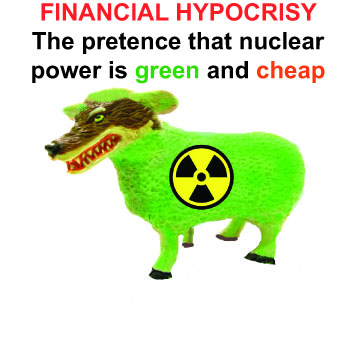
Excitement in Kent City Council about new nuclear power (now reclassified as “environmentally sustainable”)
A Kent council has revealed the “exciting” next steps towards securing
new nuclear energy at a power station. Folkestone and Hythe District
Council (FHDC) is working with Kent County Council (KCC), with both
authorities planning to press the government for Dungeness on the Romney
Marsh to be included in a list of new sites. The move comes after Chancellor Jeremy Hunt last month announced the “Great British Nuclear”scheme – reclassifying nuclear power as “environmentally sustainable”,
reducing the costs of generating it to produce 25% of the UK’s electricity
by 2050. Documents for FHDC’s cabinet meeting on Thursday, April 20 tell of
how the councils have already discussed with Small Modular Reactor (SMR)
provider Rolls Royce and Advanced Modular Reactor providers EDF, Natural
England and the Nuclear Industry Authority (NIA). The papers say the aim is
“bringing forward a proposition for Dungeness to generate power as
quickly as possible”.
The report adds the councils will aim to “set
some high-level criteria around site use, scale and potential for the
site”. This will also see work with landowners EDF to “develop high
level proposals for Dungeness” and the “potential technologies” which
could feature there.
Kent Live 21st April 2023
https://www.kentlive.news/news/kent-news/future-plan-revealed-dungeness-nuclear-8371248
1 This Month

of the week – Shut Down Drone Warfare!


Tell the Ukrainian Government to Drop Prosecution of Peace Activist Yurii Sheliazhenko

Petition to revoke the licensing of the Near Surface Nuclear Disposal Facility (NSDF) at Chalk River. https://www.ourcommons.ca/petitions/en/Petition/Details?Petition=e-7247
To see nuclear-related stories in greater depth and intensity – go to https://nuclearinformation.wordpress.com
-
Archives
- April 2026 (103)
- March 2026 (251)
- February 2026 (268)
- January 2026 (308)
- December 2025 (358)
- November 2025 (359)
- October 2025 (376)
- September 2025 (257)
- August 2025 (319)
- July 2025 (230)
- June 2025 (348)
- May 2025 (261)
-
Categories
- 1
- 1 NUCLEAR ISSUES
- business and costs
- climate change
- culture and arts
- ENERGY
- environment
- health
- history
- indigenous issues
- Legal
- marketing of nuclear
- media
- opposition to nuclear
- PERSONAL STORIES
- politics
- politics international
- Religion and ethics
- safety
- secrets,lies and civil liberties
- spinbuster
- technology
- Uranium
- wastes
- weapons and war
- Women
- 2 WORLD
- ACTION
- AFRICA
- Atrocities
- AUSTRALIA
- Christina's notes
- Christina's themes
- culture and arts
- Events
- Fuk 2022
- Fuk 2023
- Fukushima 2017
- Fukushima 2018
- fukushima 2019
- Fukushima 2020
- Fukushima 2021
- general
- global warming
- Humour (God we need it)
- Nuclear
- RARE EARTHS
- Reference
- resources – print
- Resources -audiovicual
- Weekly Newsletter
- World
- World Nuclear
- YouTube
-
RSS
Entries RSS
Comments RSS
 nuclear-news