US Department of Energy announces a $1.2 billion fund to save America’s aged nuclear power stations

Energy Department Announces Funds for Nuclear Power Plants
MARCH 12, 2023
Both existing operational and closed facilities are receiving assistance.
The Department of Energy has announced a $1.2 billion fund dedicated to extending the life of America’s aging nuclear power plants or potentially reopening plants that have closed, expanding the reactors eligible for aid.
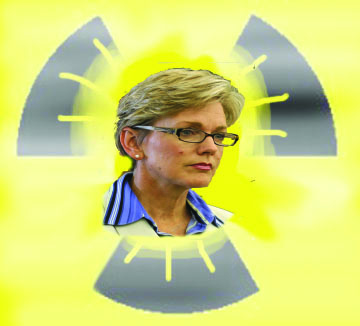
Secretary Jennifer Granholm said, “Preserving the domestic fleet is critical to reaching America’s clean energy future.” She said that expanding the scope of funding “will allow even more nuclear facilities the opportunity to continue operating as economic drivers in local communities that benefit from cheap [??], clean[??] and reliable power.” …………………… https://www.presidentialprayerteam.org/2023/03/12/energy-department-announces-funds-for-nuclear-power-plants/—
China is competing in a great Asian arms race because it has no other choice
Timur Fomenko, more https://www.sott.net/article/478199-China-is-competing-in-a-great-Asian-arms-race-because-it-has-no-other-choice
Thu, 09 Mar 2023
Hechi City, Guangxi Province, China • Feb. 17, 2023Beijing’s continued militarization is a forced response to US pressure. But can it keep its cool?
During the two sessions of the National People’s Congress (NPC) over the weekend, China announced that its military budget would increase by 7.2% year on year. The news made headlines around the world.
The Chinese premier’s work report, submitted to the NPC, says the country’s military “should intensify military training and preparedness across the board,” and points to escalating “external attempts to suppress and contain China.” The country’s state media reacted conservatively, stressing that the defense spending increase is in keeping with the “single-digit” growth pattern of recent years (7.1% in 2022, 6.8% in 2021, 6.6% in 2020).
Western media took a much different angle, with many outlets making obligatory mention of warnings from analysts and officials that China’s real military spending could be much higher than the announced budget. For example the Guardian cited the US Department of Defense as claiming it could be up to two times higher. These outlets do mention that China’s defense budget is still dwarfed by that of the US ($224B versus $772B), before moving on to talk about the size of China’s navy and infantry, its “militarization” of the South China Sea and, of course, repeating the warnings emanating from Washington DC that “China may invade Taiwan” soon.
Such warnings from the US come coupled with a string of deliberate provocations such as official visits to Taiwan, flyovers, and ‘freedom of navigation’ operations. The US itself has made it a priority to militarize the region and to encircle China. None of these points can be found in Western media reports on Beijing’s defense spending – even though they are directly responsible for continued growth in China’s military budget.
Owing to the US attempt to contain China, the Asia-Pacific is now locked in a growing arms race and military competition, and Beijing has no choice but to participate. Washington has initiated a militarization of the region, under the label of its “Indo-Pacific” strategy, with the focus on suppressing the rise of China. To do this, the US has created minilateral blocs targeting China,one being the Quad (Australia, India, Japan, US) and the other being AUKUS with Britain. Additionally, the US has dramatically increased its deployment of military assets in the region, has pushed the Philippines to increase access to its bases, and has also deliberately pushed the Taiwan issue and walked back from its existing commitments to China in order to escalate regional tensions.
The US has actively encouraged and pushed for the arming of its regional allies too, the most notable example being Japan’s pledge to double its military spending and to buy hundreds of cruise missiles from the US. This militarization has been complementary to the parallel expansion of sanctions and embargoes aimed at crushing China’s rise in high-end technologies, which the US sees as directly contributing to its military capabilities. In this sense, the technological and military aspects of China-US competition are intrinsically linked, all in the name of American supremacy over the region.
So facing this growing military encirclement and competition, how does China respond? The answer is that it continues to develop and strengthen its military, with the optimism that it can keep up with the United States in the long term. The US military budget continues to be over three times the size of China’s, which is also sobering for those calling Beijing a “threat.” However, this does not mean that China is incapable, as its resources are concentrated in one region around itself, while the US is aiming for worldwide domination. When it comes to raw numbers, for example, China already has a larger navy than the United States and greater shipbuilding capacity.
2023 will be a year of significantly increased tensions. It hasn’t started well, with the US kicking up a storm over an alleged Chinese spy balloon, continuing provocations around Taiwan and reviving the Covid-19 lab leak theory. But will China bite? It seems unlikely.
One of the primary goals of this US-led effort is precisely to provoke Beijing so that Washington might be able to induce instability and therefore increase its geopolitical clout over other countries, breaking up positive regional integration. That is why China needs to be careful.
With Beijing recognizing it is facing US encirclement, it has to defend its critical national interests, but in conjunction, it also needs to play a diplomatic game to reassure other countries simultaneously. China does not want ties with India to deteriorate further, or to create anxiety for ASEAN claimants in the South China Sea, such as Vietnam, Malaysia, Indonesia or the Philippines.
It also wants to avoid Europe becoming more militarily involved against China, which would represent a great success for the US. China strives to be firm but also calm and cautious. There is a lot to lose in facing a hostile US, but sitting idly by is not an option. A military competition has begun, and it isn’t going away. Beijing must be strong but also avoid “rocking the boat” too much.
Why Russia has such a strong grip on Europe’s nuclear power
Why Russia Has Such a Strong Grip on Europe’s Nuclear Power. New energy
sources to replace oil and natural gas have been easier to find than
kicking the dependency on Rosatom, the state-owned nuclear superstore.
The pinched cylinders of Russian-built nuclear power plants that dot Europe’s
landscape are visible reminders of the crucial role that Russia still plays
in the continent’s energy supply.
Europe moved with startling speed to wean
itself off Russian oil and natural gas in the wake of war in Ukraine. But
breaking the longstanding dependency on Russia’s vast nuclear industry is a
much more complicated undertaking.
New York Times 10th March 2023
Some ‘sober thinking’ remains in Ukraine as portions of population are in favor of peace talks
RFri, 10 Mar 2023 https://www.sott.net/article/478187-Praise-be-Some-sober-thinking-remains-in-Ukraine-as-portions-of-population-are-in-favor-of-peace-talks
A senior Kiev official recently admitted that an increasing portion of the country’s population wants peace talks with Moscow
Some Ukrainians are realistic about future relations between Russia and Ukraine, which are bound to be restored in some capacity sooner or later, Kremlin Press Secretary Dmitry Peskov suggested on Friday.
Speaking to reporters, Peskov said that while it was premature to talk about a diplomatic settlement of the conflict, “there are still small streams of sober thinking” in Ukraine about ties between Moscow and Kiev, despite “the flood of propaganda filled with hatred of Russia” and “efforts to brainwash the Ukrainian population.”
Relations between the two countries are “inevitable, because we are neighbors, that’s obvious,” he added.
Peskov’s comments come after Aleksey Danilov, the head of Ukraine’s National Security and Defense Council, admitted on Thursday that an increasing number of Ukrainians would like to see diplomatic engagement with Moscow to end the conflict. According to Danilov, such thinking is a “very dangerous tendency” and one that is even shared by some people in western Ukraine, a region that for decades has traditionally been ill-disposed towards Russia.
Moscow has repeatedly said that it is open to talks with Kiev on condition that the latter recognizes the “reality on the ground,” referring to the new status of the Donetsk and Lugansk People’s Republics, as well as Kherson and Zaporozhye Regions, as part of Russia. The former Ukrainian regions overwhelmingly voted to join Russia in public referendums last autumn.
However, also last autumn, Ukrainian President Vladimir Zelensky signed a decree prohibiting talks with the current Russian leadership. Later, he floated a ten-point “peace formula” that would require Moscow to withdraw all of its troops from the territory Kiev claims as its own. Russia rejected the proposal, claiming that it shows Ukraine’s unwillingness to find a solution to the crisis.
In January, Russian Foreign Minister Sergey Lavrov also said that while Moscow is “ready to respond to all serious proposals” to resolve the conflict, it is “the West which decides for Ukraine,” and it does not give Kiev any chance to make decisions on its own.
Lessons from Chernobyl and Fukushima: Is Europe prepared for another nuclear disaster?
By Camille Bello • Updated: 11/03/2023 – 15:29
Exactly 12 years ago, a massive earthquake and tsunami caused the second-worst nuclear accident in history at the Fukushima Daiichi Nuclear Power Plant in Japan.
The anniversary of the catastrophic meltdown that displaced 160,000 people and cost the Japanese government over €176 billion should itself be enough of a reminder of the potential threat of a nuclear spill, but a number of recent events have also raised the alarm in Europe.
Russia’s invasion of Ukraine has repeatedly knocked out the country’s electricity grid, causing blackouts at the Zaporizhzhia nuclear plant, Europe’s largest, where power is needed to prevent the reactors from overheating like in the 1986 Chernobyl radiation disaster.
Meanwhile, Europe’s other nuclear reactors are ageing – they were built on average 36.6 years ago – and recent checkups in France have found cracks in several of them.
Some energy experts have warned that the extreme weather events brought on by climate change could pose a serious threat to the EU’s 103 nuclear reactors, which account for about one-quarter of the electricity generated in the bloc.
Jan Haverkamp, a senior nuclear energy and energy policy expert for Greenpeace, said the chances of Europe seeing a large accident like Fukushima were now “realistic” and “we should take them into consideration”.
“We are not properly prepared,” he told Euronews Next https://www.euronews.com/next/2023/03/11/chernobyl-fukushima-europe-prepared-nuclear-disaster-ukraine-earthquake-meltdown-radiation
Nuclear research center reiterates need for separate regulatory body

Business World, March 12, 2023,
THE creation of a new agency that will oversee nuclear power will assure objective regulation of the development of the industry, especially in the areas of safety and security, the head of a nuclear research institution said.
Responding to claims that a separate regulator is unnecessary, Carlo A. Arcilla, director of the Philippine Nuclear Research Institute (PNRI), told BusinessWorld by phone: “You don’t normally want to have a situation where a body will regulate itself.”
The PNRI is an arm of the Department of Science and Technology tasked with conducting research into the safe and peaceful use of nuclear energy in the Philippines. Mr. Arcilla said that transferring regulatory powers to a different agency would help avoid conflict of interest.
The House nuclear energy committee is currently discussing a bill proposing to create the Philippine Atomic Energy Regulatory Authority or PhilATOM, which will take on the regulatory functions that the PNRI currently holds.
A science advocacy organization has called the bill unnecessary, calling instead for the expansion of the PNRI’s powers……………….
The proposed agency will be headed by a director general and deputy director-general, who will be appointed by the President of the Philippines.
Advocates of Science and Technology for the People, the group that opposed the bill, also said that nuclear waste disposal could affect the safety of nearby communities. ……. https://www.bworldonline.com/economy/2023/03/12/510115/nuclear-research-center-reiterates-need-for-separate-regulatory-body/
Dr Ian Fairlie -Low-dose radiation a health in the nuclear industry , as well as in medicine
Dr Ian Fairlie , 12 Mar 23
This is an important new study in the BMJ …a meta analysis of 93 health studies. https://www.bmj.com/content/380/bmj-2022-072924
The authors conclude, inter alia, “Our findings suggest that radiation detriment might have been significantly underestimated, implying that radiation protection and optimisation at low doses should be rethought.” And also
“This finding has considerable implications for the system of radiological protection, assuming that the extrapolation is permissible, even, for example, over the restricted dose range 0-0.5 Gy. This added risk would nearly double the low dose detriment.”
These conclusions are supported in an accompanying BMJ editorial https://www.bmj.com/content/380/bmj-2022-074589
In initial thoughts: we should note that almost all of these studies concern medical exposures (ie for diagnostic or for cancer treatment purposes). Environmental exposures are hardly mentioned at all. However radiation exposures do occur to nuclear workers and to populations near nuclear facilities. Therefore we should be concerned about their cardiovascular health risks too.
For example, there exists a 2017 INWORKS study – strangely omitted in this BMJ meta analysis – of increased deaths to nuclear workers from cardiovascular diseases. see
[1][ Gillies M, Richardson DB, Cardis E, Daniels RD, O’Hagan JA, Haylock R, Laurier D, Leuraud K, Moissonnier M, Schubauer-Berigan MK, Thierry-Chef I, Kesminiene A, “Mortality from Circulatory Diseases and other Non-Cancer Outcomes among Nuclear Workers in France, the United Kingdom and the United States” (2017) 188:3 (INWORKS) Radiat Res at pp 276-290, online: https://meridian.allenpress.com/radiation-research/article/188/3/276/192902/Mortality-from-Circulatory-Diseases-and-other-Non.
It remains to be seen whether the nuclear establishment (ICRP, UNSCEAR, IAEA, WHO etc) will pay any attention to this study.
Fukushima’s first responders recall the disaster 12 years on
Julian Ryall in Tokyo
03/10/2023March 10, 2023, The so-called “Fukushima 50” were the emergency workers sent to the nuclear disaster site. A fire chief and nuclear engineer have spoken to DW about their roles in the emergency cleanup operations.
The March 2011 disaster at the Fukushima Daiichi nuclear power plant — caused by a magnitude 9.0 earthquake and subsequent tsunami — forced thousands to flee the leaking radiation. But a handful of people ran in the opposite direction.
A skeleton staff of the plant volunteered to remain on site as the crisis worsened. Reactor temperatures were spiking uncontrollably, and a series of hydrogen explosions ripped the reactor buildings apart. At the same time, dozens more specialist engineers and emergency workers were rushed to the site.
It was the second-worst nuclear accident in world history.
The media quickly dubbed this small group the “Fukushima 50,” even though as many as 580 emergency personnel rotated through the site in the first chaotic days of the disaster. But the name stuck, and even became the title of a 2020 movie about the emergency.
Sunday marks the 12th anniversary of the disaster. Two of the first responders agreed to speak to DW, giving a rare insight into what happened over those difficult days.
The fire chief’s tale
Osamu Kinoshita, head of the special disasters response team of the Tokyo Fire Department, was at its headquarters in the Otemachi district when the earthquake struck shortly before 3 p.m. on March 11. He saw the first images of the destruction as they were broadcast on television.
Kinoshita and his team were initially sent to respond to fires and collapsed buildings in Tokyo. Fears for his own son ran through his mind as he worked. Kazuya Kinoshita was a university student at the time in the town of Rikuzentakata, one of the worst affected in the disaster zone, but communication lines were down.
“When I saw the waves destroying the city, I assumed there was no way he would have been able to survive,” Kinoshita told DW. By chance, his son had been taking a driving lesson further inland at the time of the quake, and was not swept up in the tsunami. But it took three days for that information to reach his parents.
By that time, Kinoshita was preparing to head to the Fukushima plant.
“On the night of March 17, the prime minister [Naoto Kan] made a formal request to the governor of Tokyo for assistance, and the order was issued to the fire brigade,” he said. “The request was specifically for crews to go to the reactors and make sure that sufficient water was getting into the pools holding the spent nuclear fuel.”
“Everyone was given the choice of whether to go or not, but all 300 people in the team said they would go,” he said.
The 32-vehicle convoy left Tokyo at around 2 a.m. and drove for seven hours, negotiating damaged bridges and roads blocked by landslides.
Once at the site, the fire crews ran hoses 800 meters (2,625 feet) out to the ocean and started spraying seawater onto the reactors to keep them cool. Ladders from firefighting trucks were hoisted over the damaged reactor buildings, and in the first 20-minute operation, some 60 tons of water were sprayed on the reactor shrouds. Over the following eight days, a further 4,000 tons of water were pumped onto the structures.
The firefighter standing at the top of the ladder had to be replaced every five minutes, as radiation levels were dangerously high and the entire complex was being hit by aftershocks.
“We realized the risks were pretty severe, but we were all there to get this job done,” he said. “I remember when we were first setting up the equipment and we were directly between the second and third reactors, and I wondered to myself which way I should run if there was another big aftershock. Those concerns were always in the back of our minds.”
The engineer’s experience……………………………………………………….
National remembrance day , and huge civil case penalty for Tepco executives, but memory of Fukushima now fading in Japan
Japanese offered tearful prayers Saturday on the anniversary of the deadly
tsunami that triggered the Fukushima disaster, but public support for
nuclear power is growing as memories of the 2011 meltdown fade. A minute’s
silence was observed nationwide at 2:46 pm (0546 GMT), the precise moment
when a 9.0-magnitude quake – the fourth strongest in Earth’s recorded
history – devastated northeastern Japan 12 years ago.
In January, Tokyo’s,High Court upheld the acquittal of three former TEPCO executives, again
clearing them of professional negligence over the disaster. But in a
separate civil verdict last year, the trio – plus one other ex-official –
were ordered to pay a whopping 13.3 trillion yen ($97 billion) for failing
to prevent the accident. The enormous compensation sum is believed to be
the largest ever for a Japanese civil case, although lawyers acknowledge it
is well beyond the defendants’ capacity to pay.
The government also plans
to start releasing more than a million tonnes of treated water from the
stricken Fukushima plant into the sea this year. A combination of
groundwater, rainwater that seeps into the area, and water used for
cooling, it has been filtered to remove various radionuclides and kept in
storage tanks on site, but space is running out. The water release plan has
been endorsed by the International Atomic Energy Agency but faces staunch
resistance from local fishing communities and neighbouring countries.
France24 11th March 2023
Nuclear crash exercise beset by blunders, says UK’s Ministry of Defence
Rob Edwards March 12, 2023
An exercise testing emergency responses to a nuclear bomb convoy crashing,
exploding and spreading a cloud of radioactive contamination was plagued
with “errors” and “confusion”, according to official assessments by
the Ministry of Defence (MoD).
There were shortages of vital medical
equipment, “poor” arrangements for casualties and multiple mistakes in
radiation monitoring. One set of radiation readings was wrong “by a
factor of 1,000 times”. At one point MoD firefighters ran out of water,
and at another an MoD commander refused help from the civil fire service.
There was no official assessment of whether or not the crash was caused by
a terrorist.
The Ferret 12th March 2023 https://theferret.scot/nuclear-crash-exercise-blunders/
Fukushima Vigil Outside the UK’s Uranium Fuel Manufacturing Factory — RADIATION FREE LAKELAND

Many thanks to folk who came along today to the Fukushima Vigil outside the UK’s uranium fuel manufacturing factory – represented were Radiation Free Lakeland, Close Capenhurst and South Lakeland/Lancaster District CND. Following the Vigil outside the plant we walked along the Lancaster Canal from which you can view the nuclear industrial sprawl of the […]
Fukushima Vigil Outside the UK’s Uranium Fuel Manufacturing Factory — RADIATION FREE LAKELAND
U.S. to deliver first of 116 Abrams tanks to Poland soon — Anti-bellum
Polish Press AgencyMarch 8, 2023 First US Abrams tanks to arrive in Poland in April – MoD The first of 116 used Abrams tanks ordered from the US will be delivered to Poland in April, the Polish defence minister has said. The tanks’ arrival forms part of a significant expansion of the Polish armed forces. […]
U.S. to deliver first of 116 Abrams tanks to Poland soon — Anti-bellum
Ukraine demands “incredible amount” of new Turkish combat drones – DM — Anti-bellum
Daily SabahMarch 6, 2023 Ukraine needs ‘incredible amount of drones,’ defense chief says Ukraine’s defense chief said on Monday that his country needed “an incredible amount of drones,” as Moscow’s war with Kyiv rages on into its second year. “This is also a game changer. Both drones for reconnaissance and adjustment, shock drones from 3 […]
Ukraine demands “incredible amount” of new Turkish combat drones – DM — Anti-bellum
Saudi Arabia seeks US security guarantees, nuclear assistance in return for Israel normalisation
Middle East Monitor March 12, 2023
Saudi Arabia is reportedly seeking a number of conditions to be met by the United States in return for its normalisation of relations with Israel, a report has claimed.
According to the New York Times, Saudi Arabia has said that it could potentially normalise ties with Israel if the US provides it security guarantees, assistance in its civilian nuclear program, and the lifting of restrictions on arms sales to the kingdom.
Those intentions and conditions were reportedly communicated to Washington by senior Saudi officials last year, when they talked to policy experts in the US such as members of the Washington Institute for Near East Policy – a pro-Israel think tank – who visited Riyadh in October………………………………………………………………. https://www.middleeastmonitor.com/20230312-saudi-arabia-seeks-us-security-guarantees-nuclear-assistance-in-return-for-israel-normalisation/
March 12 Energy News — geoharvey

Opinion: ¶ “Why UN Climate Science Must Keep Shaping Global Climate Policy” • IPCC reports provide a comprehensive assessment of the scientific evidence on climate change. Their 30-odd page ‘Summary for Policymakers’ has a sense of ‘ownership’ by UN member states as it goes through a line-by-line approval process by government delegations. [Impakter] Ghost forest […]
March 12 Energy News — geoharvey
-
Archives
- February 2026 (228)
- January 2026 (308)
- December 2025 (358)
- November 2025 (359)
- October 2025 (376)
- September 2025 (258)
- August 2025 (319)
- July 2025 (230)
- June 2025 (348)
- May 2025 (261)
- April 2025 (305)
- March 2025 (319)
-
Categories
- 1
- 1 NUCLEAR ISSUES
- business and costs
- climate change
- culture and arts
- ENERGY
- environment
- health
- history
- indigenous issues
- Legal
- marketing of nuclear
- media
- opposition to nuclear
- PERSONAL STORIES
- politics
- politics international
- Religion and ethics
- safety
- secrets,lies and civil liberties
- spinbuster
- technology
- Uranium
- wastes
- weapons and war
- Women
- 2 WORLD
- ACTION
- AFRICA
- Atrocities
- AUSTRALIA
- Christina's notes
- Christina's themes
- culture and arts
- Events
- Fuk 2022
- Fuk 2023
- Fukushima 2017
- Fukushima 2018
- fukushima 2019
- Fukushima 2020
- Fukushima 2021
- general
- global warming
- Humour (God we need it)
- Nuclear
- RARE EARTHS
- Reference
- resources – print
- Resources -audiovicual
- Weekly Newsletter
- World
- World Nuclear
- YouTube
-
RSS
Entries RSS
Comments RSS
 nuclear-news