Campaigners say chancellor is in the grip of the fossil fuel and nuclear lobbies and is ‘squandering taxpayers’ money’
Guardian, Alex Lawson Energy correspondent, 15 Mar 23
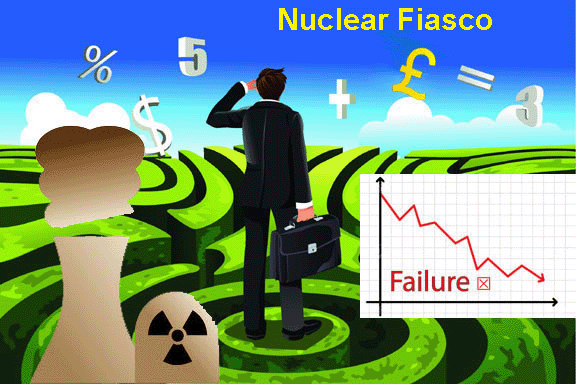
Jeremy Hunt has been accused of wagering a “dangerous gamble on unproven technologies” in an effort to decarbonise Britain’s energy industry after ploughing more than £20bn into a series of projects.
In his budget speech, the chancellor confirmed plans to spend the money over the next two decades on carbon capture and low carbon energy projects; announced a competition to co-fund small nuclear plants and launched a consultation to classify nuclear as “environmentally sustainable”.
The government has created Great British Nuclear, a body designed to ease the creation of nuclear projects which are regularly delayed and over budget, and set a target for nuclear to “provide up to one quarter of our electricity by 2050”.
Hunt, who has been under pressure to respond to Joe Biden’s $369bn (£306bn) of climate subsidies, said: “Increasing nuclear capacity is vital to meet our net zero obligations.”
However, climate campaigners attacked the drive, which had no giveaways for the solar or wind industries.
Ami McCarthy, Greenpeace UK’s political campaigner, said: “This misguided budget shows the stranglehold fossil fuel and nuclear lobbies have on this government. Why else would it take such a dangerous gamble on unproven technologies?
“Squandering taxpayers’ money on nuclear reactors that don’t even exist yet and fanciful carbon capture is irresponsible, and does nothing to reduce our emissions now.
“Committing to £20bn over 20 years is frankly pathetic compared to the green growth investments being made in the US, EU and China.”
Helen Clarkson, chief executive of Climate Group, said: “This spring budget overlooks cheap and clean renewable energy, and instead rebrands nuclear as ‘environmentally sustainable’ and throws cash at carbon capture technology. This was a missed opportunity to renew the UK’s commitment to climate leadership.”
Billions over budget and years behind schedule, the expansion of the Vogtle nuclear power plant signals that conventional nuclear projects are a dying breed.
The first new nuclear reactor built in the U.S. in the last 30 years reached a milestone last week that brings it tantalizingly close to syncing up with the electrical grid and generating power for customers. But this is not the dawn of the long-threatened nuclear renaissance — it’s more like the swan song of the conventional nuclear industry in the U.S.
………….. Construction started for the two reactors in 2009, with plans to get them online by 2017, but the project is six years overdue and has cost utility customers well over $30 billion, more than double the original price tag. The Department of Energy’s Loan Programs Office provided about $12 billion in loan guarantees to help complete the project against a backdrop of spending freezes and lawsuits.
……………….
If and when Georgia’s two new Vogtle reactors become fully operational, they will be the first nuclear reactors to have completed the full licensing process under the U.S. Nuclear Regulatory Commission. All other reactors in operation began licensing before the NRC opened its doors in 1975.
It’s the end of the reactor as we know it
……….“Vogtle 3 and then Vogtle 4. And then most likely nothing,” said Gregory Jaczko, a former chair of the Nuclear Regulatory Commission.
…….The NRC has issued permits for eight more nuclear reactors to be built at or near existing plant sites in the U.S., but none of these are expected to be completed. Instead, the industry is betting on advanced nuclear reactors to save the day.
It’s a bad bet.
The Idaho National Laboratory has an optimistic timeline for the demonstration and test-bed reactors it expects will power up this decade, but the commercialization path for these experiments is uncertain. The advanced and small modular reactors (SMRs) under development face a raft of economic, regulatory, technological and temporal risks. This will translate to cost overruns, project delays and uneconomic power, with utility customers ultimately left holding the bag at some distant day in the 2030s or 2040s.
The advanced reactor closest to market in the U.S. is being developed by NuScale, which has a nonbinding agreement to build a first-of-its-kind SMR project in Idaho. The company has already raised its projected power cost from $58 per megawatt-hour to $89, even though it’s still years away from even beginning construction. The first module at the plant is set to begin commercial operation in December 2029, NuScale says, but nuclear project timelines are inevitably Pollyannaish and wildly off-base.
NuScale’s regulatory journey with the NRC has been long and arduous, and it’s far from over. Advanced reactors such as TerraPower’sNatrium, which are significantly different in design from existing light-water reactors, face an even steeper regulatory climb. And they’ll have to contend with broken or nonexistent supply chains because the more highly concentrated uranium fuels used by most advanced reactors are currently unavailable in large quantities outside of Russia.
The warning given yesterday by leading scientist Sir David King that London and other UK coastal cities could be inundated in the future by a gigantic tsunami reveals that coastal nuclear power developments in the South-East of England would also be under a ‘grave threat’, says UK/Ireland Nuclear Free Local Authorities English Forum Chair Councillor David Blackburn.
Sir David King was for seven years Chief Scientific Advisor to the British Government. In widely reported press articles yesterday, Sir David warned that a gigantic tsunami could hit Britain ‘at any time’ should there be a landslide in the Canary Islands, which would trigger a huge wave headed for this country.
In such an eventuality, coastal cities such as Portsmouth, Plymouth and Southampton would be inundated and so too would London and the Thames Estuary, and much of low-lying South-East England.
VIENNA – UN nuclear watchdog inspectors have found that roughly 2.5 tons of natural uranium have gone missing from a Libyan site that is not under government control, the watchdog told member states, in a statement on Wednesday seen by Reuters.
The finding is the result of an inspection originally planned for last year that “had to be postponed because of the security situation in the region” and was finally carried out on Tuesday, according to the confidential statement by International Atomic Energy Agency chief Rafael Grossi.
This will be the first comprehensive IPCC report in nine years – and the first since the Paris Agreement on Climate Change.
It could not come at a more pivotal time. Our world is at a crossroads – and our planet is in the crosshairs. We are nearing the point of no return; of overshooting the internationally agreed limit of 1.5 degrees Celsius of global warming. We are at the tip of a tipping point.
But it is not too late – as you have shown. Your report last year clearly demonstrated it is possible to limit global warming to 1.5 degrees with rapid and deep emissions reductions across all sectors of the global economy.
And your recent reports have also underscored the need to act now. In less than nine months, leaders will gather at COP28 for the first global stocktake to bring the world in line with the goals of the Paris Agreement. They need solid, frank, detailed scientific guidance to make the right decisions for people and planet.
They must understand the enormous consequences of delay and the enormous dividends from making the tough but essential choices. To accelerate the phasing out of fossil fuels and close the emissions gap. To race to a carbon-free, renewables future. And to secure climate justice, helping communities adapt and build resilience to the worsening impacts.
NYT, By Serge Schmemann, Mr. Schmemann is a member of the editorial board., March 13, 2023
“……………………………………………………….. More than 30 years after the end of the Cold War, the threat of nuclear obliteration simply doesn’t rank among Americans’ greatest fears. For a while after Sept. 11, global terrorism reigned in the public’s mind as the most pressing threat. According to a 2022 survey by the Pew Research Center, cyberattacks are now considered the major global menace, followed by false information, China, Russia, the global economy, infectious diseases and climate change. My grandson, a college student, told me his peers don’t see a global nuclear war as a real danger today.
Yet even the sharply reduced Russian and American nuclear arsenals are still enough to wipe out much of the world, China is pushing hard to become the third nuclear superpower, and at least six other countries, including the uber-dictatorship North Korea, have nuclear weapons (the others: Britain, France, Israel, India and Pakistan).
Perversely, the complexity of today’s world has even generated something akin to nostalgia for a time when there were only two superpowers to deal with and stability depended on mutually assured destruction. But it is hard to be nostalgic about a time when President John Kennedy urged all Americans to prepare nuclear shelters (“The time to start is now”) and nuclear nightmares were the stuff of popular movies like “On the Beach,” “Fail Safe” and “Dr. Strangelove or: How I Learned to Stop Worrying and Love the Bomb.”
…………………………… nuclear arms controls are as needed today as they ever were, and not only with Moscow. Mr. Putin obliquely acknowledged that when, after saying on Feb. 21 that Russia would suspend participation in New START, Russia quickly added that the country would continue to respect the treaty’s limits on nuclear warheads and delivery systems.
…………………….. Even if the Doomsday Clock doesn’t move any closer to midnight, time is still running out. New START expires in three years. It’s hard to imagine negotiations on a new treaty so long as the war in Ukraine rages on. At the same time, China is racing ahead in an apparent bid to match the U.S. and Russian arsenals by 2035. So far, Beijing has rebuffed any efforts to negotiate limits with the United States, though it joined the United States, Russia, France and Britain in January 2022 in declaring that “nuclear war cannot be won and must never be fought.” Even if Russia and China can be brought to the table, the parties will need a new way to define how many bombs each nation needs to deter the other two………………………………….more https://www.nytimes.com/2023/03/13/opinion/international-world/putin-ukraine-nuclear-weapons.html
Editor’s note: On Saturday, Japan marked the 12th anniversary of the massive earthquake, tsunami and nuclear disaster with a minute of silence, as global concerns grew ahead of the planned release into the Pacific Ocean of nuclear-contaminated water from the wrecked Fukushima nuclear power plant. China Daily reviews how locals are still suffering from the disaster and their opposition to the controversial discharge plan.
After catastrophe, only a handful of evacuated residents prefer to return
For the past 12 years Honoka, now 85, has been one of thousands of Japanese who have taken part in protests outside the Ministry of Economy, Trade and Industry in Tokyo.
Their bone of contention: the handling of contaminated water in the Fukushima Daiichi Nuclear Power Plant, eastern Japan, wrecked by an earthquake and tsunami that killed more than 15,000 people and triggered the meltdown of three nuclear reactors as well as the release of large amounts of radiation.
The dark 12th anniversary of that disaster was marked on Saturday.
Honoka, who requested not to be fully identified, said she was moved by the resilience and determination of Fukushima people and thus volunteered to join them to raise broader awareness about the challenges and hardships they face. She is not from Fukushima, she said.
“Many of them were forced to leave their homes in the aftermath of the disaster, unsure of when, or if, they would be able to return.”
The national government’s handling of the disaster had left her feeling betrayed, she said.
“The government abandoned the people of Fukushima when they needed it most.”
Nevertheless, over the years there has been a concerted drive to rebuild Fukushima and bring back those who left it. Now one of the major concerns is what to do with the nuclear-contaminated water in the plant, and in particular official plans to start releasing it into the Pacific Ocean.
The toxic water has been used to cool the highly radioactive, damaged reactor cores, and there is enough of it to fill 500 Olympic-size swimming pools. The government has said it plans to start discharging the water this spring or summer.
“Dumping the toxic water is contrary to a government pledge of rebuilding my hometown of Fukushima, because it threatens a double blow to our community,” said Hisae Unuma, one of the 160,000 people evacuated from the region and who has been among those pushing for the government to scrap its discharge plan.
Many evacuees such as Unuma have refused to return to their hometowns even though the government has lifted evacuation orders and spent huge amounts of money on rebuilding local facilities and housing.
The Board of Audit, which reviews national government spending, says Japan has spent about 1 trillion yen ($7.3 billion) a year on handling the disaster, and how much the total will be for dealing with its aftermath is unknown.
The Reconstruction Agency says about 80,000 residents have been evacuated from Fukushima prefecture since 2011, and just 16,000 of them have returned home.
In the Tsushima district of Namie town, which once had a population of 1,400, and where reconstruction work has just finished, fewer than 10 residents are reported to have said they plan to move back this spring.
For those who have returned or never left, life promises to be far from ideal, because the agriculture and fishing industries, once the lifeblood of the region, have been devastated by the disaster.
As the Fukushima plant’s operator, Tokyo Electric Power Company, moves closer to discharging the nuclear-contaminated water, local opposition has intensified.
“The government gave us a promise and is now doing exactly the opposite,” said Tetsu Nozaki, head of Fukushima Prefectural Federation of Fisheries Cooperative Associations, referring to an agreement reached by it, the national government and TEPCO.
“The treated water must not be released without the consent of all those involved.”
In January, the Japanese government announced that it would begin to release into the Pacific Ocean more than 1.37 million tons of water from the wrecked Fukushima Daiichi nuclear plant sometime this spring or summer. A shadow of nuclear contamination is looming larger.
Although the Tokyo Electric Power Company (TEPCO) insists that the contaminated water has been filtered and diluted and meets the criterion for a safe discharge, a report has shown that 73 percent of the treated water still exceeds the discharge standard.
Unlike normal wastewater from nuclear power plants, Fukushima nuclear-contaminated water contains over 60 kinds of radioactive substances. Besides tritium, which is difficult to remove, the treated water also contains strontium-90 and carbon-14, whose half-lives are 29 years and 5,730 years, respectively.
For those who can’t grasp its meaning, tritium can replace stable hydrogen atoms in the human body and cause chronic radiation syndrome and cancer. Strontium-90 is highly toxic and may induce bone tumors.
Experts have pointed out that once released into the ocean, the contaminated water would rapidly spread to most parts of the Pacific. Radiation would be absorbed by marine life and enters the human body.
In 2022, it was detected that radiation in black rockfish caught off Fukushima prefecture was 14 times higher than the safe level for humans, even after 11 years have passed since the Fukushima nuclear disaster. The South China Morning Post reported that caesium, one of the most dangerous radionuclides that “can build up in muscle, fat and bone and cause malignant tumors,” was detected in “fish caught at a depth of 24 meters about 9 km off Fukushima prefecture’s town of Shinchi.”
After more than 10 years, the local fishery industry has not fully recovered. In 2012, Japan banned the sale of 36 species of fish caught off Fukushima, and Tokyo’s decision crushed their hopes. Voices of opposition have been ongoing. In Japan, fishery organizations have expressed their concerns. Citizens in Tokyo, Osaka and Shizuoka protested on the streets to demand the government rescind its decision.
On the world stage, Japan’s neighbors including China, Russia and South Korea have asked Tokyo to provide useful information, engage in full consultation, and take responsible measures. The Pacific Island countries urged Japan not to release the contaminated water before there is enough scientific evidence proving that it’s safe. And independent UN human rights experts issued a joint statement calling Japan’s decision “very concerning” and “deeply disappointing.”
To make a clear evaluation of the safety of Japan’s plan, an International Atomic Energy Agency task force was set up to conduct a safety review. Days ago, it completed its second regulatory review and “will release a report on its findings in about three months, as well as a comprehensive report before the discharge.” Nonetheless, even before the task force set out, Tokyo unilaterally announced the planned discharge. The Japanese government has set its mind on the discharge regardless of the review outcome.
When Tokyo decides to discharge the contaminated water without ensuring safety, does it even consider people’s right to life and health? As a party to the UN Convention on the Law of the Sea, the Convention on Early Notification of a Nuclear Accident, and the Convention on Nuclear Safety, does the Japanese government recognize its international obligations? When it puts the whole Pacific and Pacific Rim countries at the risk of environmental disaster, how does it uphold the principle of “environment first”?
When it comes to nuclear contamination, it’s better to err on the side of caution. There could be better alternatives than dumping the contaminated water into the sea. Evaporating, storing underground the tritium-laced water from the plant, or storing and processing the water over the long term, these are all technically reasonable options that are safer than a direct discharge. Unfortunately, Tokyo has chosen to go for the cheapest “quick fix.”
When the earthquake and tsunami struck Fukushima, neighboring countries reached out their helping hands to Japan. Today, the nation is repaying them with tons of nuclear contaminated water.
The Pacific Ocean is home to billions of people, but Japan takes it as its own sewer. Along with contaminated water, Japan’s reputation, conscience and international obligations will be dumped as well.
Sir David Attenborough said “nature is in crisis” as he urged people to unite to save it for future generations. He spoke out after last night’s first episode of his five-part show about British wildlife.
His plea comes as the National Trust, RSPB and WWF have launched their first joint campaign, Save Our Wild Isles, which encourages people to “go wild” once a week, by doing activities such as sowing bee-friendly plants or creating “hedgehog highways”, and urges citizens to call on the government to make changes to halt nature’s decline.
The series features a sixth, iPlayer-only episode called Saving Our Wild Isles, commissioned by the RSPB and WWF. “[It] shows what amazing people are doing to turn the UK round and how quickly it can recover,” Alastair Fothergill, the producer, said.
Tory Aberdeenshire MP accused of ‘failing to stand up for north-east’ in nuclear power row. The UK Government has been hit with criticism over what is being described as ‘expensive and unnecessary’ spending on nuclear power stations, with the Aberdeenshire MP slated by the SNP’s Energy spokesperson.
A political row has broken out after an Aberdeenshire MP was accused of prioritising ‘expensive and unnecessary’ nuclear stations over carbon capture storage (CCS) and renewable energy. In a letter to Mr Bowie, the MP for West Aberdeenshire and Kincardine, SNP energy spokesman Alan Brown expressed concerns over updated costs to nuclear station Hinckley Point C in Somerset.
The project is now slated to cost the taxpayers £33billion, a 40 per cent real terms increase to the original 2016 estimate of £18billion. Despite the soaring costs, it was revealed earlier this week the UK government has not engaged with EDF over what that means for the delivery of the project, while still pressing ahead for another new station at Sizewell C.
Earta Caln, 14 Mar 23, Modern Fascism, is deeply linked to nuclear energy(japan, ukraine, russia, france, uk, usa), nuclear weapns and subs(usa, russia, australia, uk), crime and corruption. It is the last stage of political organization, in corrupt, industrial societies. It is antidemocratic. It denies, climate change and industrial pollution. Fascism scapegoats groups of people, as the cause of problems. Fascism ignores the results of climate change, industrial pollution, and declining life expectancies, in declining industrial nations. Fascism denies these industrial ills, that cause climate change and cause dangerous levels of heavy metal and, chemical pollution. In fact, fascists, deregulate toxic substance controls and bans.
Fascists, want to increase fossil fuel extraction and, nuclear energy production. Suicidal denial, projection, and irrationality, in a very sick society. Turning to fascism, signals the death-knell, for a decaying, dying nationality, in the anthropocene age. That is because, of it’s reactionary and antidemocratic nature. Italy’s mafias, have dumped concentrated high-level, nuclear waste, in municipalities dumps in Italy, for the past 4 decades. Heavy metal pollution like lead, arsenic, radionuclides, and mercury is widespread and has high prevalence in all industrial societies. Arsenic and radium, comes from car exhaust, from burning fossil fuels. Lead and uranium are in water, from fracking and leaded pipes. Mercury and radiocuclides in foods, comes from years of mercury pollution, nuclear waste, nuclear accidents, and nuclear power. High toxic pollution levels exist, in most capitalist and mixed-economy consumption-based, societies.
Modern Fascism, is deeply linked to nuclear energy(japan, ukraine, russia, france, uk, usa), nuclear weapns and subs(usa, russia, australia, uk), crime and corruption. It is the last stage of political organization, in corrupt, industrial societies. It is antidemocratic. It denies, climate change and industrial pollution. Fascism scapegoats groups of people, as the cause of problems. Fascism ignores the results of climate change, industrial pollution, and declining life expectancies, in declining industrial nations. Fascism denies these industrial ills, that cause climate change and cause dangerous levels of heavy metal and, chemical pollution. In fact, fascists, deregulate toxic substance controls and bans.
Fascists, want to increase fossil fuel extraction and, nuclear energy production. Suicidal denial, projection, and irrationality, in a very sick society. Turning to fascism, signals the death-knell, for a decaying, dying nationality, in the anthropocene age. That is because, of it’s reactionary and antidemocratic nature. Italy’s mafias, have dumped concentrated high-level, nuclear waste, in municipalities dumps in Italy, for the past 4 decades. Heavy metal pollution like lead, arsenic, radionuclides, and mercury is widespread and has high prevalence in all industrial societies. Arsenic and radium, comes from car exhaust, from burning fossil fuels. Lead and uranium are in water, from fracking and leaded pipes. Mercury and radiocuclides in foods, comes from years of mercury pollution, nuclear waste, nuclear accidents, and nuclear power. High toxic pollution levels exist, in most capitalist and mixed-economy consumption-based, societies.
Marles: Aukus program includes commitment to dispose of spent nuclear reactors
Marles: the sealed nuclear reactor is our friend, because by virtue of having a sealed reactor, we can provide assurance in respect of every piece of nuclear material through the life cycle of the nuclear material.
We are making a commitment that we will dispose of the nuclear reactor. That is a significant commitment to make. This is going to require a facility to be built in order to do a disposal that will be remote from populations. We are announcing that will be on defence land, current or future.
Now, to be clear, the first of the [nuclear material] we will dispose of will not happen until the 2050s, but within the year, we will announce a process by with this facility will be identified.
We are also a proud signatory to the treaty of Rarotonga. That commits us to not operate nuclear weapons from our territory.
Richard Marles says he is confident that the agreement will hold, even if America has a change in political direction……….
Q: Is it possible that we’ll be maintaining and operating three classes of submarines? That is the Virginia, the Collins and the Aukus submarines? And if so, is there any concern? And can I ask the admiral as well, is there any concern in defence about the prospect of operating three different submarines?
Marles:We obviously will be operating two as a result of this announcement. You know, the preference is to operate as few classes as possible.
Vice Admiral Mead: And once we work with the submarines coming to Western Australia and develop our own capabilities on the Virginias, then the move to SNN-AUKUS, which will have incredible commonality with propulsion systems, platforms, weapons, combat systems and sensors…………………. It remains the position of the Albanese government, that there won’t be foreign bases in Australia and this will not be a foreign base. It’s a forward rotation.…………..
Marles: ‘This is as good a value-for-money spend in defence as you will get’..……
Q: Is a high-level nuclear waste dump the price that South Australia will have to pay for the jobs that go to the state?
Marles:
Well, as I indicated earlier there will be a process that we will determine in the next 12 months … how the site will be identified. You’ve made a leap that we won’t make for some time. It will be a while before a site is identified but we will establish a process.
Q: The $9bn the government is spending over the forwards has a neutral impact on the budget, $6bn because of what was allocated to the attack class but $3bn is coming from the integrated investment program. Can you give more detail about … where that money is coming from? And if not today, when?
Marles: I won’t give you the detail today except you’re right to identify the integrated investment program and obviously the strategic review has had a good look at all of that. It will be plain in time of the budget.
Q: Why not now, though? You must have an idea where those cuts are going to be? In the interests of transparency, people want to judge what the opportunity cost of the nuclear submarines are. Unless you’re suggesting it’s cuts first and work it out later? Where are the cuts coming from?
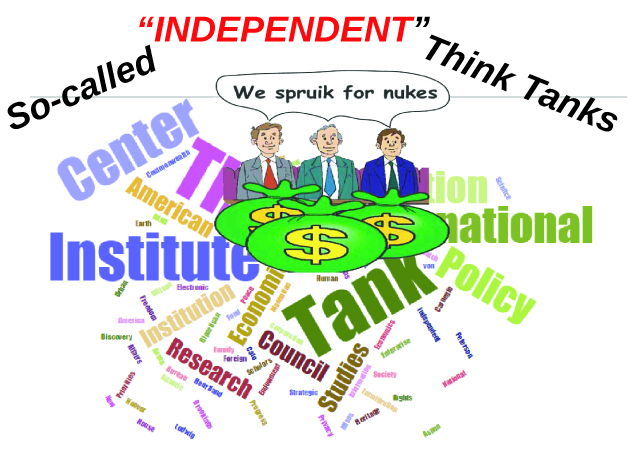
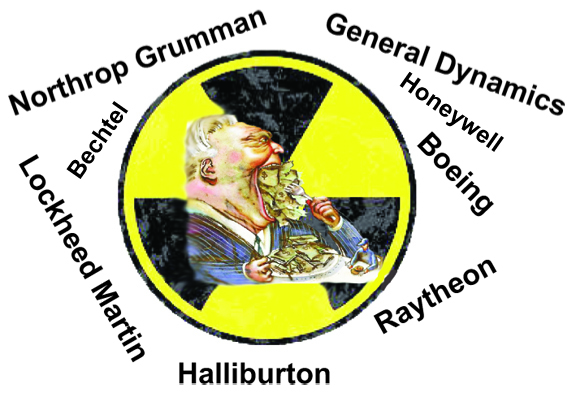
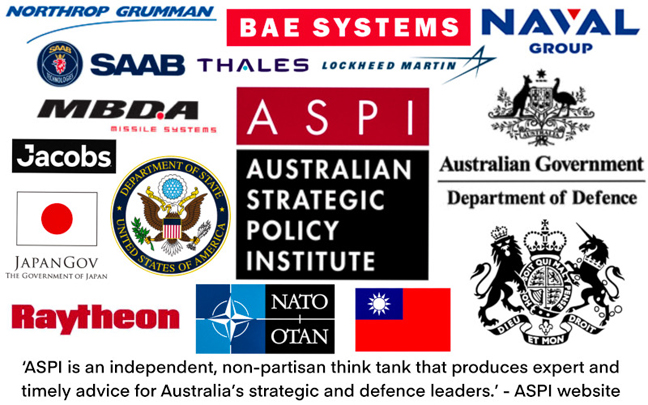
From producing reports and analysis for U.S. policy-makers, to enlisting representatives to write op-eds in corporate media, to providing talking heads for corporate media to interview and give quotes, think tanks play a fundamental role in shaping both U.S. foreign policy and public perception around that foreign policy. Leaders at top think tanks like the Atlantic Council and Hudson Institute have even been called upon to set focus priorities for the House Intelligence Committee. However, one look at the funding sources of the most influential think tanks reveals whose interests they really serve: that of the U.S. military and its defense contractors.
This ecosystem of overlapping networks of government institutions, think tanks, and defense contractors is where U.S. foreign policy is derived, and a revolving door exists among these three sectors. For example, before Biden-appointed head of the Pentagon Lloyd Austin took his current position, he sat on the Board of Directors at Raytheon. Before Austin’s appointment, current defense policy advisor Michèle Flournoy was also in the running for the position. Flournoy sat on the board of Booz Allen Hamilton, another major Pentagon defense contractor. These same defense contractors also work together with think tanks like the Center for Strategic and International Studies to organize conferences attended by national security officials.
On top of all this, since the end of the Cold War, intelligence analysis by the CIA and NSA has increasingly been contracted out to these same defense companies like BAE Systems and Lockheed Martin, among others — a major conflict of interest. In other words, these corporations are in the position to produce intelligence reports which raise the alarm on U.S. “enemy” nations so they can sell more military equipment!
And of course these are the same defense companies that donate hundreds of thousands of dollars each year to think tanks. Given all this, is it any wonder the U.S. government is simultaneously flooding billions of dollars of weaponry into an unwinnable proxy war in Ukraine while escalating a Cold War into a potential military confrontation with China?
The funding to these policy institutes steers the U.S. foreign policy agenda. To give you a scope of how these contributions determine national security priorities, listed below are six of some of the most influential foreign policy think tanks, along with how much in contributions they’ve received from “defense” companies in the last year.
All funding information for these policy institutes was gathered from the most recent annual report that was available online. Also note that this list is compiled from those that make this information publicly available — many think tanks, such as the hawkish American Enterprise Institute, do not release donation sources publicly.
1 – Center for Strategic and International Studies According to their 2020 annual report
$500,000+: Northrop Grumman Corporation
$200,000-$499,999: General Atomics (energy and defense corporation that manufactures Predator drones for the CIA), Lockheed Martin, SAIC (provides information technology services to U.S. military)
$100,000-$199,999: Bechtel, Boeing, Cummins (provides engines and generators for military equipment), General Dynamics, Hitachi (provides defense technology), Hanwha Group (South Korean aerospace and defense company), Huntington Ingalls Industries, Inc. (largest military shipbuilding company in the United States), Mitsubishi Corporation, Nippon Telegraph and Telephone Corporation (provides intelligence and information technology services to U.S. military), Qualcomm, Inc. (semiconductor company that produces microchips for the U.S. military), Raytheon, Samsung (provides security technology to the U.S. military), SK Group (defense technology company)
$65,000-$99,999: Hyundai Motor (produces weapons systems), Oracle
$100,000-$249,000: Huntington Ingalls Industries, Neal Blue (Chairman and CEO of General Atomics), Qualcomm, Inc., Raytheon, Boeing.
$50,000-$99,000: BAE Systems, Booz Allen Hamilton, Intel Corporation (provides aerospace and defense technology), Elbit Systems of America (aerospace and defense company), General Dynamics, Palantir Technologies
Japan should stop perpetuating nuclear colonialism, and instead respect the sovereignty and self-determination of Pacific nations regarding the planned discharge of radioactive wastewater from the Fukushima Daiichi Nuclear Power Plant, a New Zealand sociologist has said.
The social aspects and major country relations around Japan’s decision to release the radioactive wastewater from the defunct plant must be questioned, Karly Burch from the University of Auckland told Xinhua in a recent interview.
The most popular news stories are about celebrities, sport, fashion, cute animals…..
And perhaps that’s a good thing. We don’t need to be miserable all the time – and the news, by its very being, means unusual and bad events.
In the middle of those unusual and bad events, we should pause, to think about the human beings involved, and what they’re going through.
In the midst of global hypocrisy about things nuclear – the Japanese government should surely take the cake. But the rest of the powerful world governments, too, deserve medals for hypocrisy.
Not only is it time to stop the whole insane toboggan-ride to nuclear annihilation. It’s also time to help the victims of previous nuclear destruction. It seems to me that the people of Fukushima have had little help from Japan, and the world community. They need a material helping hand, and also – to be listened to – their opinions on nuclear waste, on emptying radioactive trash water into the Pacific, on the wreckage to their fishing industry.
It is sadly paradoxical that the world media waxes jubilantly over “new nuclear” and nuclear submarines, while as much as possible, ignoring the anniversary of the Fukushima Daiichi nuclear meltdown.






 nuclear-news