AUKUS nuclear submarine plan brings danger as it uses a loophole in the Nuclear Non-Proliferation Treaty

The Aukus scheme announced on Monday in San Diego represents the first time
a loophole in the 1968 Nuclear Non-Proliferation Treaty (NPT) has been used
to transfer fissile material and nuclear technology from a nuclear weapons
state to a non-weapons state.
The loophole is paragraph 14, and it allows
fissile material utilised for non-explosive military use, like naval
propulsion, to be exempt from inspections and monitoring by the UN nuclear
watchdog, the International Atomic Energy Agency (IAEA). It makes arms
controls experts nervous because it sets a precedent that could be used by
others to hide highly enriched uranium, or plutonium, the core of a nuclear
weapon, from international oversight.
Guardian 14th March 2023
400,000 gallons of radioactive water leaked from a nuclear plant in Minnesota
AP By STEVE KARNOWSKI 16 Mar 23
ST.. PAUL, Minn. (AP) — Minnesota regulators said Thursday they’re monitoring the cleanup of a leak of 400,000 gallons of radioactive water from Xcel Energy’s Monticello nuclear power plant, and the company said there’s no danger to the public.
………………… While Xcel reported the leak of water containing tritium to state and federal authorities in late November, the spill had not been made public before Thursday. State officials said they waited to get more information before going public with it.
…………………….. The Monticello plant is about 35 miles (55 kilometers) northwest of Minneapolis, upstream from the city on the Mississippi River.
………………. Xcel said it has recovered about 25% of the spilled tritium so far, that recovery efforts will continue and that it will install a permanent solution this spring.
…………… Xcel Energy is considering building above-ground storage tanks to store the contaminated water it recovers, and is considering options for the treatment, reuse, or final disposal of the collected tritium and water. State regulators will review the options the company selects, the MPCA said. https://apnews.com/article/minnesota-xcel-energy-nuclear-radioactive-tritium-leak-c7a12ecb1b203179c5f7fef42bd0a3aa?utm_source=homepage&utm_medium=TopNews&utm_campaign=position_02
Britain does not have the capacity to support Australia’s plan to build its own nuclear submarine fleet – Rear Admiral.
Letter Rear Admiral (ret’d) Philip Mathias:
Sir, Britain does not have the
capacity or effective leadership to provide the huge level of support
required by Australia to build its own nuclear submarine fleet (“PM
strikes submarine deal to face new threat”, Mar 14).
The performance of
the Submarine Delivery Agency has been abysmal. Astute class submarines are
being delivered late by BAE Systems; HMS Vanguard’s refit by Babcock has
taken more than seven years; and none of our 22 decommissioned nuclear
submarines has been dismantled, which is disgraceful.
Times 15th March 2023
https://www.thetimes.co.uk/article/times-letters-aukus-nuclear-powered-submarine-deal-9c5ntd5m7
Ukraine aims to produce full cycle of nuclear nuclear fuel production by 2026, exports to follow
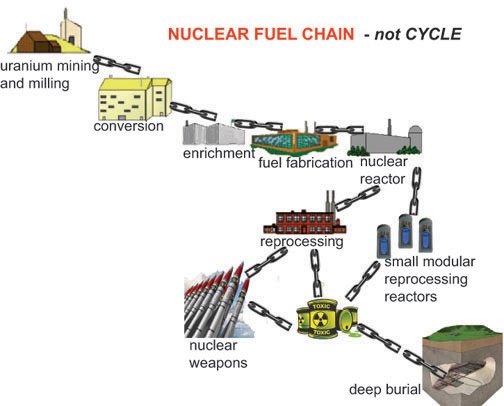
WNN, 17 March 2023
Ukraine is intending to produce its own nuclear fuel within three years, with Energy Minister Herman Halushchenko saying that in the longer term the aim is to export to other countries.
Halushchenko, speaking during a visit with Energoatom President Petro Kotin to the plant where nuclear fuel will be produced, said: “Ukraine is one of the first countries that diversified the supply of nuclear fuel, and this made it possible to abandon its purchase from Russia. Our joint task with our American partners is to produce the appropriate types of fuel as soon as possible in order to displace Russia from the nuclear fuel market.”
He said he hoped that in the future Ukraine could become a supplier of nuclear fuel for countries including the Czech Republic, Slovakia, Finland and Bulgaria.
…………… specialists will produce fuel components using Westinghouse technology.” These components will be used for the production, at the Westinghouse plant in Sweden, of nuclear fuel used by Energoatom’s nuclear power plants.
“It is planned that in three years we will start a full cycle of nuclear fuel production in Ukraine – 2026 is the date when we will be able to fully produce our Ukrainian fuel from components manufactured here……….
https://www.world-nuclear-news.org/Articles/Energoatom-looking-to-produce-nuclear-fuel-by-2026
Nuclear power eliminated from European Commission’s text on funding rules, amid heated disagreements between Europe’s nations.

European commissioners are at odds with each other over including nuclear
power in new funding rules aimed at boosting green industries in the EU
just 48 hours before the legislation is due to be announced. Nuclear
fission was included as a “strategic net zero industry” in an early
draft of the law, meaning atomic power plants could be in line for
fast-tracked permitting, preference in public procurement contracts and
fiscal incentives to boost investment.
But the technology has since been eliminated from the text amid heated discussions that have exposed
ideological divides along national lines within the 27-strong college of
commissioners.
Promoters of nuclear included the European Commission’s
president, Germany’s Ursula von der Leyen, and France’s Thierry Breton, the
internal market commissioner, along with eight others largely from central
and eastern Europe, according to people familiar with the talks.
In the opposite camp were Frans Timmermans, the EU’s climate commissioner and
former Dutch foreign minister, and Denmark’s Margrethe Vestager, the bloc’s
competition chief, as well as four other commissioners from southern and
central Europe. Among the other opponents of the inclusion of nuclear in
the proposals are Austria’s Johannes Hahn, the EU budget commissioner, and
Portugal’s Elisa Ferreira, commissioner for cohesion and reforms, according
to two people with knowledge of their views.
FT 14th March 2023
https://www.ft.com/content/65ad412f-3700-4c5a-8efe-2a4c8c6d6341
Libyan general says uranium reported missing by UN nuclear watchdog IAEA has been recovered
ABC News 16 Mar 2023
Several containers of natural uranium reported missing by the UN’s nuclear watchdog in war-torn Libya are found, according to a general with one of the country’s two rival governments.
Key points:
- The IAEA reported the 10 drums of uranium ore concentrate missing in Libya on Wednesday
- It says reaching the site — that is not under government control — required “complex logistics”
- Estimates put Libyan stockpiles of yellowcake uranium at some 1,000 metric tonnes under the regime of the late dictator, Moamar Gaddafi
General Khaled al-Mahjoub — commander of eastern strongman Khalifa Haftar’s communications division — said on his Facebook page that the containers of uranium had been recovered “barely 5 kilometres” from where they had been stored at Sabha, some 660km south-east of Libya’s capital, Tripoli, in the country’s lawless southern reaches of the Sahara Desert…………………………………………………………… more https://www.abc.net.au/news/2023-03-16/un-nuclear-watchdog-says-tonnes-of-uranium-missing-in-libya/102108314
Saudi crown prince is plotting to get US nuclear secrets by playing the White House, Russia, and China off against each other, report says
Business Insider Tom Porter ,Mar 15, 2023,

- Saudi Arabia’s de-facto ruler is seeking to pit major powers against each other, a report said.
- Mohammed bin Salman reportedly believes it will help him secure US nuclear technology.
- Saudi Arabia has snubbed the US and drawn closer to rivals including China.
Saudi Arabia’s de-facto ruler, Mohammed bin Salman, is trying to get better access to US nuclear technology by playing global powers against each other, Saudi officials told The Wall Street Journal.
In recent months, Saudi Arabia has provoked the ire of the US, traditionally its closest international ally, while drawing closer to US adversaries including China and Russia.
Analysts have told Insider that the move appears to be part of a power play by Crown Prince Mohammed, amid perceptions that US influence in the region is waning.
According to The Wall Street Journal, Crown Prince Mohammed may be using its relations with China and Russia to establish a closer US security relationship…………………………………………………………………………….
The balancing act appears to be based on the calculation by Saudi Arabia that the US will be forced to offer concessions to the Saudis in order to maintain the alliance and offset the growing influence of China.
A civilian nuclear program and better access to US weapons have long been core Saudi objectives, and Riyadh said last week that they would be the price for normalizing its relations with Israel.
US officials are wary of providing nuclear technology to Saudi Arabia, The New York Times reported, as they believe the Saudis could seek to develop nuclear weapons, amid fears that Iran is again gearing up its nuclear program. https://www.businessinsider.com/mohammed-bin-salman-playing-us-secure-nuclear-technology-saudi-report-2023
UK government is urged to “come clean” over the real cost of Sizewell C nuclear power station

Ministers must “come clean” over the cost of the planned Sizewell C
nuclear power station, MPs have heard. Alan Brown, the SNP’s energy
security spokesman, sought guarantees about the Suffolk project, given the
increasing costs for building Hinkley Point C in Somerset. Speaking at
Cabinet Office questions, Mr Brown (Kilmarnock and Loudoun) said: “In
2016, Hinkley Point C was estimated to cost £18 billion. “The latest
update is Hinkley Point C is going to cost £33 billion. “Now, the UK
Government wants to replicate Hinkley Point C at Sizewell C. “Why then
are they still estimating the cost for Sizewell C at £18 billion and when
are they going to come clean about the real cost?”
Irish News 16th March 2023
Alarm over 10 drums of uranium missing in Libya
Approximately 2.3 tonnes of natural uranium have gone missing from a site
in Libya not under government control, according to the United Nation’s
nuclear watchdog. The UN’s International Atomic Energy Agency (IAEA) has
told the organisation’s member states that 10 drums containing uranium
“were not present as previously declared” at the location in Libya.
The missing uranium stockpile could pose radiological risk and security
concerns, the agency has said. The IAEA sounded the alarm after a visit by
its inspectors to the undisclosed site earlier this week, where it found
less uranium than originally reported. Currently, officials are working to
locate the 2.3 missing tonnes.
Engineering & Technology 16th March 2023
Watchdog Rafael Grossi pledges ‘demanding’ oversight of nuclear sub deal

the first in the decades-long span of nuclear non-proliferation accords to take advantage of a loophole that allows narrow use of nuclear material outside of set safeguards. Critics express concern that bad actors could use the loophole as cover, pointing to the U.S.-Australia deal as precedent, to divert nuclear material into a weapons program.
BY ELLEN KNICKMEYER, ASSOCIATED PRESS – 03/15/23
WASHINGTON (AP) — The head of the global nuclear regulatory agency pledged Wednesday to be “very demanding” in overseeing the United States’ planned transfer of nuclear-powered submarines to Australia, amid complaints that the U.S. move could clear the way for bad actors to escape nuclear oversight in the future.
Rafael Grossi, director-general of the International Atomic Energy Agency, spoke to reporters during a Washington visit. Grossi was also meeting with senior National Security Council officials to discuss matters including the newly announced deal among the United States, Australia and the United Kingdom on nuclear-powered submarines.
President Joe Biden and the leaders of Australia and the United Kingdom announced Monday in San Diego that Australia would purchase nuclear-powered attack submarines from the U.S. to modernize its fleet amid growing concern about China’s influence in the Indo-Pacific. It would be the first transfer by a nuclear-weapon state of nuclear-powered submarines to a non-nuclear state.
Nuclear-powered submarines move more quietly and for longer than conventionally powered ones. While strengthening the military position of the U.S. and its allies in that region, the deal has raised concern as the first in the decades-long span of nuclear non-proliferation accords to take advantage of a loophole that allows narrow use of nuclear material outside of set safeguards. Critics express concern that bad actors could use the loophole as cover, pointing to the U.S.-Australia deal as precedent, to divert nuclear material into a weapons program.
China renewed its objections to the deal on Wednesday, accusing the three countries of “coercing” the IAEA into endorsing the arrangement. All member states of the IAEA should work to find a solution to the “safeguards issues” and “maintain international peace and security,” Foreign Ministry spokesperson Wang Wenbin said at a daily briefing.
…………. The architects of nuclear nonproliferation accords left open a loophole for use of nuclear material for some non-explosive military purposes, with nuclear naval propulsion in mind. Prior to withdrawing nuclear material from safeguards for that loophole, states are required to strike a separate agreement with the IAEA. https://thehill.com/homenews/ap/ap-international/former-australian-pm-says-subs-worst-deal-in-all-history/
Sizewell C nuclear plan slammed, despite the UK government’s greenwashing
Campaigners opposed to the new Sizewell C nuclear power station have
slammed the ‘nonsense’ decision by chancellor Jeremy Hunt to classify the
project as ‘environmentally sustainable’ in the budget. A spokesperson for
Stop Sizewell C said the decision made a ‘nonsense of the science, given
the major issue of radioactive waste’. She added: “In any case this seems
unlikely to sway wary UK investors, for despite government support,
Sizewell C is not expected to reach a Final Investment Decision for two
years – if ever – and remains a risky project with a flawed reactor design.
East Anglian Daily Times 16th March 2023
https://www.eadt.co.uk/news/23391108.sizewell-c-chancellor-jeremy-hunts-greenwashing-slammed/
Some countries plan to decentralize control of nuclear weapons in a crisis. Here’s why that’s dangerous.

Bulletin, By Giles David Arceneaux | March 14, 2023
With the Doomsday Clock now set at 90 seconds to midnight—the closest it has ever been to marking imminent global catastrophe—the collapsing global nuclear order presents a dire challenge. Among growing nuclear risks, Russia’s persistent nuclear threats throughout its war in Ukraine have increased the likelihood of nuclear use and thus threatened to undermine the long-standing tradition of the non-use of nuclear weapons. For its part, North Korea—which tested more missiles in 2022 than in any other year on record—promulgated a new nuclear doctrine that explicitly allows for the first use of nuclear weapons in a conflict.
But as scholars and policymakers grapple to confront these challenges, a reality complicates their policy responses: The current nuclear landscape presents different challenges for nuclear stability than during the Cold War—and policymakers and analysts alike are unprepared for it.
Even though it remains the most influential reference for US nuclear policymakers and scholars, the United States’ Cold War experience cannot explain—even less predict—behavior in the modern nuclear era. Analysts must now consider how new factors—such as resource limitations, domestic instability, and emerging technology—affect their old concepts and theories in nuclear politics.
………. Although numerous factors affect strategic stability, one component of nuclear policy has clearly gained importance in the modern nuclear era—although not in policy discussions: the command and control of nuclear weapons…………………………………………….
Nuclear-armed countries may desire robust command and control systems, but in doing so they face a fundamental problem known as the “always/never dilemma” to describe the dual imperatives of command and control. While leaders need to signal that their nuclear forces are reliable and capable of retaliating against an enemy’s attack under any circumstance, they also prefer to retain centralized political control over the decision to use nuclear weapons. That is, “always” promotes arsenal reliability, whereas “never” promotes the safety and security of nuclear weapons.
Because these two imperatives are fundamentally in tension, resolving this dilemma has proved nearly impossible. For example, delegating the authority to use nuclear weapons to lower-level military commanders to increase arsenal readiness necessarily reduces centralized political oversight that protects against accidental and unauthorized nuclear use.
Ultimately, leaders have no choice but to make difficult tradeoffs between arsenal safety, security, and reliability when establishing nuclear command and control systems……………………………………
Timing matters. The Cold War framework comes up short in the modern nuclear era because it asks the wrong question when classifying command and control systems.
Leaders might prefer to centralize political control over nuclear weapons, but military operators remain required to deliver nuclear weapons. Even in countries with highly centralized political oversight of nuclear weapons, such as China and India, leaders must eventually delegate control to lower-level commanders to use nuclear weapons. https://thebulletin.org/2023/03/some-countries-plan-to-decentralize-control-of-nuclear-weapons-in-a-crisis-heres-why-thats-dangerous/
UK Chancellor Jeremy Hunt wants nuclear power classified as ‘environmentally sustainable’ . But is it?
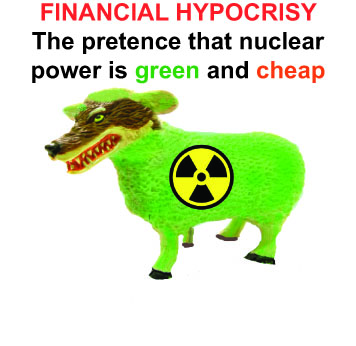
Jeremy Hunt wants nuclear power classed as ‘sustainable’: is it? UK
chancellor has launched consultation to classify nuclear as
‘environmentally sustainable’ Jeremy Hunt has kickstarted a fresh push
into nuclear power, which he hopes will provide a quarter of Britain’s
electricity by 2050. In his budget speech, the chancellor announced a
competition to co-fund small nuclear plants and hopes a new delivery body,
Great British Nuclear, will ease the creation of nuclear projects. He also
launched a consultation to classify nuclear as “environmentally
sustainable”. But is it?
Guardian 16th March 2023
“Atomic Bamboozle” Probes False Hopes for the Future of Nuclear Power
“Atomic Bamboozle” Probes False Hopes for the Future of Nuclear Power.
Portland documentarian Jan Haaken returns with another powerful and
provocative film. “Every tool in the toolbox.” Documentarian Jan Haaken
has heard recent proponents of nuclear power employ the phrase “like a
mantra” when discussing the fight against climate change.
Having made a two-part film about that planetary emergency (Necessity), Haaken
understands the fight. But not every tool is worth reaching for, posits her
new documentary, Atomic Bamboozle. Haaken, a professor emeritus of
psychology at Portland State University and director of documentaries about
abortion providers (Our Bodies Our Doctors), dairy farmers (Milk Men) and
drag queens (Queens of Heart), now explores what she calls a
“repackaging” of nuclear power in the form of small modular reactors,
or SMRs. Interviewing physicists, activists and conservationists, the
46-minute film portrays a nuclear industry rising quickly while downplaying
nuclear power’s most crucial and recurring issues—those unresolved and
unchanged by SMRs.
Willamette Week 7th March 2023
TODAY. Isn’t it wonderful how the men in opposing political parties can unite in hate and belligerence?

It really is quite sweet to see,- in America, the Democrats and Republicans being friendly – “on the same page”. Same for Australia, where the Labor and Liberals are being lovely to each other.
So good to see. It’s a bit of a pity that they fight each other so strongly about everything else, policies on health, education, welfare, environment – all those things that are crucial for the common good.
But now, and this really is very much a blokey thing, the opposing political parties are agreed on hating China, and on the need to spend many, many billions of the taxpayers’ money on weapons, especially nuclear. (Australia’s nuclear submarines won’t have weapons, I hear your cry) Australia’s subs will be controlled by USA, secretly, like the Pine Gap facility – Australians won’t even know what’s on them.
Well, the blokes are good at business, too, and so are the bought females that are celebrated these days (think of Victoria Nuland, Jennifer Granholm, Penny Wong ). And, they are right. You couldn’t get a more reliable customer for your weapons business than the tax-payers, who have to just pay up, bindly. with no say in these $multibillion nuclear decisions made on their behslf.
-
Archives
- February 2026 (228)
- January 2026 (308)
- December 2025 (358)
- November 2025 (359)
- October 2025 (376)
- September 2025 (258)
- August 2025 (319)
- July 2025 (230)
- June 2025 (348)
- May 2025 (261)
- April 2025 (305)
- March 2025 (319)
-
Categories
- 1
- 1 NUCLEAR ISSUES
- business and costs
- climate change
- culture and arts
- ENERGY
- environment
- health
- history
- indigenous issues
- Legal
- marketing of nuclear
- media
- opposition to nuclear
- PERSONAL STORIES
- politics
- politics international
- Religion and ethics
- safety
- secrets,lies and civil liberties
- spinbuster
- technology
- Uranium
- wastes
- weapons and war
- Women
- 2 WORLD
- ACTION
- AFRICA
- Atrocities
- AUSTRALIA
- Christina's notes
- Christina's themes
- culture and arts
- Events
- Fuk 2022
- Fuk 2023
- Fukushima 2017
- Fukushima 2018
- fukushima 2019
- Fukushima 2020
- Fukushima 2021
- general
- global warming
- Humour (God we need it)
- Nuclear
- RARE EARTHS
- Reference
- resources – print
- Resources -audiovicual
- Weekly Newsletter
- World
- World Nuclear
- YouTube
-
RSS
Entries RSS
Comments RSS
 nuclear-news