We need to shine some light on SNC-Lavalin and SMRs
Video above – 8 March 2019
Here’s the other thing we would have discovered: SNC Lavalin does not need to lobby government at all. It has tentacles that reach deeply into our civil service. What SNC Lavalin wants, SNC Lavalin gets.
SNC-Lavalin got the sweetheart deal of all time when then-prime minister Stephen Harper ‘sold’ Atomic Energy of Canada to SNC-Lavalin. Over the years, AECL had received at least $20-billion in public funds for the bargain basement price of $15-million, writes Green Party Leader Elizabeth May. Image courtesy of Wikimedia Commons
OPINION | BY GREEN PARTY LEADER ELIZABETH MAY | March 27, 2023
I am cursed with an excellent memory which makes me hang on to the unanswered questions. It also makes me want more sunlight, more inquiries, and more answers.
I wish we had had that public inquiry into the SNC-Lavalin Group Inc. scandal and I wish the RCMP had not dropped the matter.
My hunch is that we would have discovered two important things.
In December 2018, then-PCO clerk Michael Wernick did not inappropriately pressure former justice minister Jody Wilson-Raybould at the request of the prime minister. Wernick inappropriately pressured Wilson-Raybould as a favour to his old boss, former clerk of PCO, Kevin Lynch, then chair of the board of SNC Lavalin. I may be quite wrong, but this scenario better fits the facts. Wernick denied he inappropriately pressured Wilson-Raybould and said he told Lynch he would have to talk directly to Wilson-Raybould or to the director of public prosecutions about the matter. SNC Lavalin said Lynch requested a call with Wernick to convey that the company remained open to a deferred prosecution agreement.
But here’s the other thing we would have discovered. SNC-Lavalin does not need to lobby government at all. It has tentacles that reach deeply into our civil service. What SNC-Lavalin wants, SNC-Lavalin gets.
This is a statement that remains true whether the occupant of the Prime Minister’s Office is Liberal or Conservative.
SNC-Lavalin got the sweetheart deal of all time when then-prime minister Stephen Harper “sold” Atomic Energy of Canada to SNC-Lavalin. Over the years, AECL had received at least $20-billion in public funds for the bargain basement price of $15-million.
SNC-Lavalin is the driving force behind the new mania for so-called “small modular reactors”—SMRs.
The two SMRs slated for New Brunswick—ARC and Moltex—keep their promotional materials free of SNC-Lavalin references. You have to dig.
Here, for example, is the lead from this industry press release: “Canadian Nuclear Laboratories (CNL), Canada’s premier nuclear science and technology organization, is pleased to announce that it has entered into a collaboration agreement with ARC Clean Energy Canada (ARC Canada), a New Brunswick-based team working to develop and licence its sodium-cooled advanced small modular reactor (SMR) technology.”
Looking for details in the release, you get this: Canadian Nuclear Laboratories is a world leader in nuclear science and technology offering unique capabilities and solutions across a wide range of industries. Actively involved with industry-driven research and development in nuclear, transportation, clean technology, energy, defence, security and life sciences, we provide solutions to keep these sectors competitive internationally.
It’s the same thing with the Moltex announcement. You have to go to SNC-Lavalin’s website to find its central role in CNL and CNEA: “Canadian Nuclear Laboratories (CNL) is a world leader in nuclear science and technology. … We (SNC-Lavalin) are a majority partner in a consortium which manages and operates CNL, which is currently managing its ageing infrastructure and renewing its laboratories. This investment will ensure the organization stays at the top of its field while strengthening Canada’s status in the international scientific community.”
Looking at other SMR announcements, such as the Bruce Power BWRX-300 small modular reactor (SMR) at Darlington, Ont., SNC Lavalin is again a key player with partners Ontario Power Generation (OPG), GE Hitachi Nuclear Energy (GEH), and Aecon.
Thanks to The Hill Times for publishing Ole Hendrickson’s critical research in December 2020. That article established the links between SNC-Lavalin, its commercial partners, and the nuclear weapons industry.
“In 2015, the Harper government contracted a multinational consortium called Canadian National Energy Alliance—now comprised of two U.S. companies, Fluor and Jacobs, along with Canada’s SNC-Lavalin—to operate AECL’s nuclear sites, the main one being at Chalk River. Fluor operates the Savannah River Site, a South Carolina nuclear-weapons facility, under contract to the U.S. Department of Energy. Jacobs also has contracts at DOE weapons facilities and is part of a consortium that operates the U.K. Atomic Weapons Establishment.”
It is never too late to peel back the layers and ask some hard questions. As federal and provincial governments shovel more millions into unproven technology and false claims of SMRs as a climate solution, shouldn’t we demand transparency on where the new bodies are being buried? And should we not inquire into the deeply buried responsibility of a single corporation for its continual engagement in manipulating federal and provincial policies away from renewable energy resources towards that corporation’s publicly developed, but now privately owned, nuclear technologies?
Green Party Leader Elizabeth May represents Saanich-Gulf Islands, B.C.
Nuclear row threatens EU deal on renewable energy goals
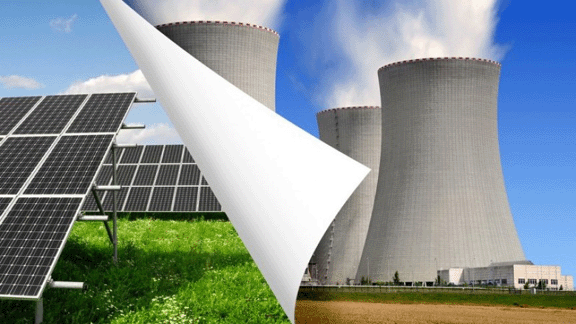
Paris has been disappointed by other recent EU moves to prioritise renewable technologies over nuclear.
By Kate Abnett, BRUSSELS, March 27 (Reuters) https://www.reuters.com/business/sustainable-business/nuclear-row-threatens-eu-deal-renewable-energy-goals-2023-03-27/ – European Union countries are split over whether to allow nuclear energy to contribute to meeting their renewable energy targets, a dispute threatening to delay one of the EU’s main climate policies.
Negotiators from EU countries and the European Parliament hold their final scheduled round of negotiations on Wednesday, to set more ambitious EU goals to expand renewable energy this decade.
The goals are key to Europe’s efforts to slash CO2 emissions by 2030 and quit Russian fossil fuels. But the negotiations have become mired in a dispute over whether fuels produced using nuclear power should be counted towards the renewable targets.
France is leading a campaign for “low-carbon hydrogen” – the term used to describe hydrogen produced from nuclear energy – to be put on an equal footing with hydrogen made from renewable electricity.
Backing France are countries including Romania, Poland, Hungary and the Czech Republic, who want more recognition of CO2-free nuclear energy’s contribution to climate goals.
Germany, Spain, Denmark, Portugal and Luxembourg are among the countries opposed. They say mixing nuclear into the renewable targets would distract from Europe’s need to massively expand wind and solar.
At a meeting of EU countries’ ambassadors on Friday, countries doubled down on their existing positions, EU officials said – leaving some doubtful that Wednesday’s negotiations will succeed in finishing the law.
EU countries’ ambassadors were meeting again on Monday to attempt to unblock the talks.
Countries are also at odds over other parts of the law, including which types of wood fuel can count as renewable energy.
France, one of the most nuclear-powered countries in the world, has a particular stake in whether nuclear power is credited under the targets, given its plans to build new reactors and upgrade its large existing fleet.
French energy minister Agnès Pannier-Runacher will convene a meeting of pro-nuclear countries’ ministers on Tuesday to discuss the issue, a French ministry source said.
Paris has been disappointed by other recent EU moves to prioritise renewable technologies over nuclear.
European Commission President Ursula von der Leyen last week said “cutting-edge nuclear” projects would be granted access to only some EU incentives to support green industries, while “strategic” technologies like solar panels would be granted the full benefits.
Paris plots response to von der Leyen’s ‘unfortunate’ comments on nuclear
By Paul Messad | EURACIV France | translated by Daniel Eck 27 Mar 23
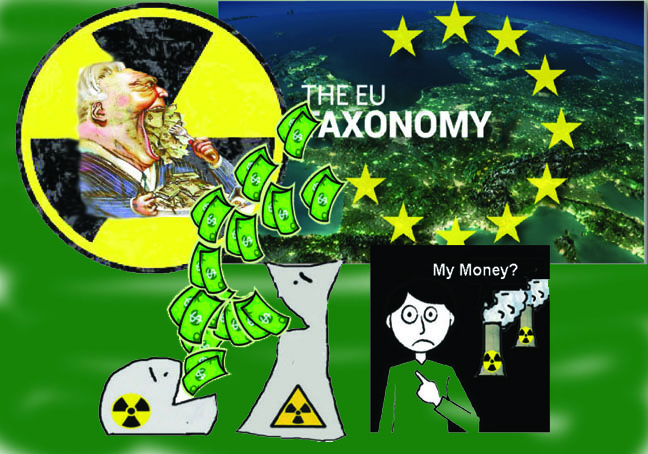
The office of French Energy Minister Agnès Pannier-Runacher slammed European Commission President Ursula von der Leyen’s recent comments about nuclear not being “strategic” for EU decarbonisation and is planning a counter-offensive at the EU energy ministers meeting in Brussels on Tuesday (28 March).
Read the original French article here.
Nuclear power, whether existing or in development, is not mentioned in the list of “strategic” technologies listed in the European Commission’s Net-Zero Industry Act (NZIA), presented on 16 March.
Ahead of an EU summit last week, the French President’s office called for clarity on the matter, urging member states to decide “once and for all” whether nuclear power is an asset for the bloc’s decarbonisation or not.
Von der Leyen responded after the first day of the summit, saying: “only the net-zero technologies that we deem strategic for the future – like solar panels, batteries and electrolysers, for example – have access to the full advantages and benefits” – which is not the case for nuclear power.
These comments only stoked further tensions with Paris.
EU not ‘consistent’ on tech neutrality………………………………………………….
Speaking on Monday (27 March) before a meeting of the EU’s Energy Council in Brussels, the office of French Energy Minister Agnès Pannier-Runacher drove the point home.
The Commission president’s comments were “unfortunate” and “clearly not consistent with the climate challenge to which nuclear power and renewables are intended to respond,” the minister’s office said, recalling that the strategic nature of nuclear power is recognised “without ambiguity” in the EURATOM Treaty‘s preamble…………………
Nuclear alliance
Faced with Brussels’ reservations on nuclear power, Pannier-Runacher will bring together the 11 member states taking part in the nuclear alliance set in motion at the last EU summit in Stockholm.
The gathering of pro-nuclear countries will take place in Brussels on Tuesday morning (28 March), in preparation of a wider meeting of EU energy ministers in Brussels starting at 10.00 CET……………….. https://www.euractiv.com/section/energy-environment/news/paris-plots-response-to-von-der-leyens-unfortunate-comments-on-nuclear/
UN sounds alarm over Ukraine church crackdown
Kiev’s actions targeting the largest religious denomination in the country “could be discriminatory”
https://www.rt.com/russia/573657-un-ukraine-church-discrimination/ 27 Mar 23,
The Ukrainian state may be discriminating against the nation’s largest religious denomination, the Ukrainian Orthodox Church (UOC), the UN’s human rights watchdog said in a report published on Friday. The government of President Vladimir Zelensky is currently in the process of kicking UOC monks out of their homes.
The apparent mistreatment of the church, which has historic links to the Russian Orthodox Church, was highlighted in a report released by the UN’s Office of the High Commissioner for Human Rights (OHCHR). It cited several draft laws submitted to the Ukrainian parliament as well as the actions of the SBU, Ukraine’s domestic security agency, against the clergy.
The UN body is “concerned that the State’s activities targeting the UOC could be discriminatory,” it said. The report cited “vague legal terminology and the absence of sufficient justification” in proposed legislation, explaining why it drew the OHCHR’s negative attention.
The report covered the period between August 2022 and January 2023, but more recent acts by the government have deepened the saga of the UOC. Earlier this month, the Ukrainian Culture Ministry ordered monks belonging to the jurisdiction to vacate their homes at the Kiev Pechersk Lavra, an iconic monastery in the Ukrainian capital.
Zelensky described the move as strengthening Ukraine’s “spiritual independence” and implied that the UOC was a tool that Russia used “to manipulate the spirituality of our people, to destroy our holy sites [and] to steal valuables from them.”
The president ignored pleas by UOC clergy to meet them and try to diffuse the situation.
Kiev previously expelled the UOC from two of the cathedrals above the monastery. Within days of that decision, the government-backed Orthodox Church of Ukraine (OCU) was allowed to hold services on the premises.
The OCU was created with the support of then-president Poroshenko in what many political observers perceived as an attempt to bolster his re-election chances. Culture Minister Aleksandr Tkachenko said the expelled monks, who have until this Wednesday to move out, could stay in their homes by leaving the UOC and joining the OCU.
Climate change amplifies existing threats to national security
We need to stop thinking of climate change as future hazard. It is
happening right now, and it is damaging our national security as well as
our way of life.
Global warming has not yet reached the Paris-agreed limit
of 1.5C, and already the shocks to global weather are ravaging communities
around the world.
Speaking as the IPCC delivered their latest assessment,
UN secretary general Antonio Guterres called it a “ticking climate time
bomb”. In a troubled world, with real concerns about cost of living, the
creeping dangers posed by climate change are too easily ignored. But we do
so at our peril.
Borders are no protection against its effects and, as
authoritarian states mount a challenge to the entire international system,
climate change further amplifies existing threats to UK national security.
Heat, drought, water shortages, food scarcity and fuel conflict drive huge
numbers of people from their homes.
Changes in the climate are having a
devastating social and economic effect, putting severe pressure on many of
the most vulnerable countries. This can exacerbate unrest and play a role
in the outbreak of war. Ethnic tensions in Sudan in 2003 were inflamed when
drought and hunger took hold. As then UN secretary general Ban Ki-moon
warned at the time: “The Darfur conflict began as an ecological crisis,
arising at least in part from climate change.” For decades before clashes
erupted, the Sahara Desert had advanced a mile a year into Sudan.
Independent 26th March 2023
https://www.independent.co.uk/voices/britain-climate-change-threat-national-security-b2308198.html
1 This Month

of the week – Shut Down Drone Warfare!


Tell the Ukrainian Government to Drop Prosecution of Peace Activist Yurii Sheliazhenko

Petition to revoke the licensing of the Near Surface Nuclear Disposal Facility (NSDF) at Chalk River. https://www.ourcommons.ca/petitions/en/Petition/Details?Petition=e-7247
To see nuclear-related stories in greater depth and intensity – go to https://nuclearinformation.wordpress.com
-
Archives
- April 2026 (103)
- March 2026 (251)
- February 2026 (268)
- January 2026 (308)
- December 2025 (358)
- November 2025 (359)
- October 2025 (376)
- September 2025 (257)
- August 2025 (319)
- July 2025 (230)
- June 2025 (348)
- May 2025 (261)
-
Categories
- 1
- 1 NUCLEAR ISSUES
- business and costs
- climate change
- culture and arts
- ENERGY
- environment
- health
- history
- indigenous issues
- Legal
- marketing of nuclear
- media
- opposition to nuclear
- PERSONAL STORIES
- politics
- politics international
- Religion and ethics
- safety
- secrets,lies and civil liberties
- spinbuster
- technology
- Uranium
- wastes
- weapons and war
- Women
- 2 WORLD
- ACTION
- AFRICA
- Atrocities
- AUSTRALIA
- Christina's notes
- Christina's themes
- culture and arts
- Events
- Fuk 2022
- Fuk 2023
- Fukushima 2017
- Fukushima 2018
- fukushima 2019
- Fukushima 2020
- Fukushima 2021
- general
- global warming
- Humour (God we need it)
- Nuclear
- RARE EARTHS
- Reference
- resources – print
- Resources -audiovicual
- Weekly Newsletter
- World
- World Nuclear
- YouTube
-
RSS
Entries RSS
Comments RSS
 nuclear-news