Nuclear power no solution for Canada’s North West Territory
Nuclear power no solution for the N.W.T., some experts suggest, Liny Lamberink · CBC News · Nov 23, 2022
When it comes to reducing greenhouse gas emissions — nuclear power is a divisive option.
But for Canada’s North, two academics on different sides of the debate agree: small modular reactors, called SMRs, are not an economically feasible way of getting remote northern communities off of diesel-generated power.
Since 2017, the N.W.T. government has been part of a working group looking at the possibility of SMRs.
John Richards, a fellow at the C.D. Howe Institute, co-authored a paper published last week that said Canada needs to embrace small modular reactors in order to meet its greenhouse gas reduction goals.
In a transition to cleaner forms of energy, Richards says Canada can’t entirely rely on solar and wind power because it’s intermittent. He said nuclear power can be used in conjunction with those forms of renewable energy to provide a constant supply of energy — when there’s no wind or no sunlight.
But, he said, he sees it as an option in Saskatchewan or Manitoba — where there isn’t much more potential for hydro. In the small remote communities in the North, he said, small modular reactors would be too expensive.
Who will build them?
Small modular reactors are nuclear reactors that use fission to produce energy, similar to existing large reactors, but with smaller power capacity. They’re “modular” because they’re designed to be assembled in a factory, transported by flatbed trucks or trains, and installed where needed. The International Atomic Energy Agency defines reactors as “small” if their output is under 300 megawatts.
Small modular reactors are still in the prototype phase now. Even if they can be built small enough so as not to massively over-supply power in a small remote community, M.V. Ramana — a professor at the School of Public Policy and Global Affairs at the University of British Columbia and a critic of nuclear power — doubts a private sector manufacturer will do so.
Ramana said a manufacturer would want to be guaranteed there’s a market for the technology, and he thinks they’ll be too expensive for remote communities to buy them. According to Natural Resources Canada, a 20 megawatt SMR for the mining industry is expected to cost between $200 and $350 million.
Ramana co-authored a report that found all the remote communities and all the remote mines in Canada would not generate enough demand to serve as an incentive for a manufacturer to build an SMR factory.
The price of the technology would also drive up the cost of the power it generates.
“Our estimates showed that the price of electricity from a small modular reactor built in the remote parts of Canada could cost up to 10 times as much as the cost of electricity from diesel,” he said.
Too much power
During peak demand in the winter months, Yellowknife uses about 34 megawatts of power, according to the Northwest Territories Power Corporation. Elsewhere in the N.W.T., Inuvik’s peak demand is 5.5 megawatts, while in Jean Marie River, it’s just 0.5 megawatts.
In an emailed statement to CBC News in late October, Ben Israel, a senior co-ordinator with the N.W.T.’s infrastructure department, said the smallest available size of SMR might still be oversized for most of the territory’s remote communities.
Israel said the territory has been part of an SMR working group since 2017, and that it is also participating in an SMR feasibility study being carried out by the Yukon government.
“Any development of SMR technology in the N.W.T. would first require extensive demonstration of safety and cost-effectiveness in other jurisdictions — as well as education about the technology … before it would be considered as an option by the Government of the Northwest Territories.”
Kevin O’Reilly, the MLA for Frame Lake, said nuclear energy comes up every so often “as some kind of climate crisis saviour” — and he isn’t convinced yet that it would work.
“If we want to deal with the climate crisis, I think we need to be looking at some fundamental changes in the way we do things and the way we consume and extract energy.”……………………….. https://www.cbc.ca/news/canada/north/nuclear-power-smr-nwt-north-1.6659679—
Europe’s biggest nuclear power plant, Zaporizhzhia, is maybe the most dangerous place in the world right now.
The plant is in Russian-occupied Ukraine and has been shelled repeatedly since March.
The situation is carefully monitored by the International Atomic Energy Agency, the U.N.’s
nuclear watchdog agency tasked with making sure nuclear facilities are safe
and atomic material is only used for peaceful purposes.
Its director general, Rafael Mariano Grossi, recently inspected the site. “Well, it’s an
unprecedented thing, really, in so many ways,” Grossi told Lesley Stahl for
this week’s 60 Minutes. “This place is at the front line which makes the
whole thing so volatile and in need of an urgent action.” Before the war
the plant supplied 20% of Ukraine’s power.
It’s now largely idle, but the reactors still need to be constantly cooled down with circulating water. If
they over-heat it could lead to nuclear catastrophe within hours.
CBS 20th Nov 2022
Take it from the soup throwers, COP’s a cop-out
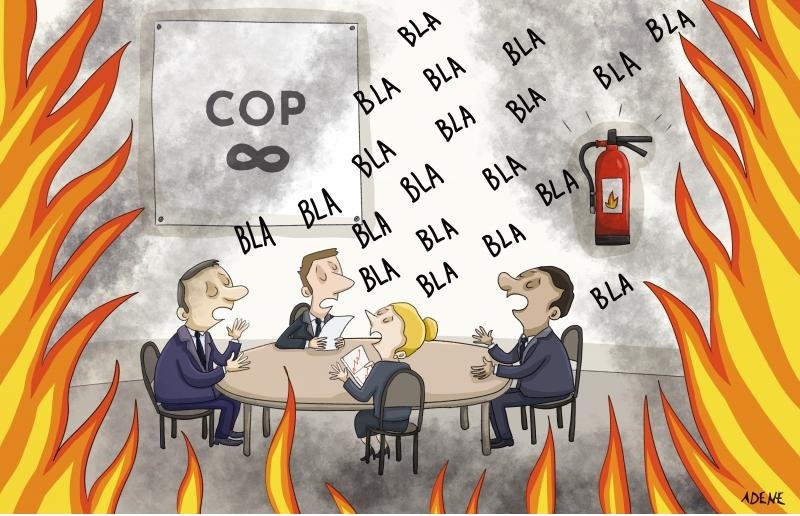
Holding the next climate conference in the oil-rich UAE shows how wealthy nations hide behind smug green nimbyism
If you’re enjoying the many hypocrisies flushed to the surface by the
World Cup in Qatar, then allow me to go one better. Next year’s United
Nations Climate Change Conference is to be held in Dubai. Yep, lovely,
green Dubai. A place so committed to environmental stewardship that I once
heard a resident describe the slick, viscous sea between the fronds of the
man-made Palm peninsula as “a bit athlete’s foot-ish”.
The same Dubai that, despite having little oil of its own, is also found within the UAE,
the world’s seventh-largest oil producer and third-largest per capita.
Forget the UAE, though, and come back to Britain. Probably, like me,
you’ve been fuming at environmental protesters these past months, as
they’ve thrown food over artworks, shut down roads and had annoying
names, like “Indigo”. Yet perhaps you’ve also had a latent sense of
guilt nagging at the back of your mind. On a global level, inaction is
still what we get.
Egypt’s Cop27, which finished this weekend, made zero
progress towards keeping the global temperature rise below 1.5C, despite
basically every country on the planet agreeing that we’re in trouble if
we don’t. Instead, discussions focused on the extent to which the richer,
more developed world should be paying “loss and damage” compensation to
the places that climate change affects the most.
Protesters talk often about the grim impacts of warming on “the global south”, and they’re
right. Recent floods in Pakistan, for example, displaced millions of people
and cost the country so many billions of pounds that they might as well
have had Liz Truss as PM for six weeks. Yet it’s also true that the same
poorer countries have the most to lose from future rises too. In effect,
they’re blackmailing the richer world by pointing a gun at their own
heads.
From Dubai onwards, this raises the prospect of Cop becoming a forum
that exists not to prevent climate change but rather to argue over who pays
for the damage while it rampages on. This, even while virtually every
individual government that is a part of it has a commitment to keeping the
rise down. Which, in the end, can only lead to a sort of environmental
nimbyism.
As in, you sort out your own backyard, if you can afford it,
while also not quite thinking about the effect your consumption or your
exports might have elsewhere. Much like the UAE. Much like us. If this
seems hopeless, that’s because it is. Sorry, but you know it, I know it
and the pink-haired soup-throwers know it too. Indeed, over the past couple
of months I’ve often worried that our swift rage at the imbecility of
Jocasta and Moonstar sticking themselves to a flyover, or whatever, is a
form of very basic displacement activity. It’s so much easier for us all
to condemn them for everything they’re doing wrong than it is for us to
grapple with the big thing they’re entirely right about. Which is that
the governments of the world are bodging this.
Times 22nd Nov 2022
https://www.thetimes.co.uk/article/take-it-from-the-soup-throwers-cops-a-cop-out-j5026mxsw
A billion down the drain for Diablo — Beyond Nuclear
The Diablo Canyon nuclear power plant on the California coastline has been granted a $1.1 billion transfusion to keep the aging, uneconomical plant open. The plant, which sits on a major earthquake fault line and has destroyed the indigenous marine environment in Diablo Cove, was scheduled to close its two reactors in 2024 and 2025. …
A billion down the drain for Diablo — Beyond Nuclear
Putin touts Russia’s ‘Arctic power’ with new nuclear icebreaker
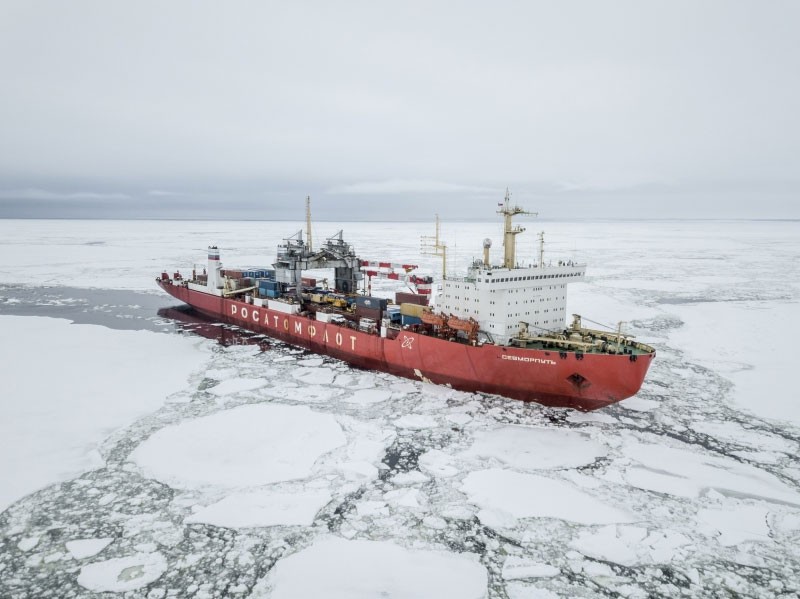
President vows to develop his country’s nuclear fleet despite current difficulties in Russia’s economy and production.
Aljazeera, 22 Nov 22,
President Vladimir Putin on Tuesday touted Russia’s Arctic power at a flag-raising ceremony and dock launch for two nuclear-powered icebreakers that will ensure year-round navigation in the Western Arctic.
Presiding via video link from the Kremlin at the launch ceremony in St Petersburg in northern Russia, Putin said such icebreakers were of strategic importance for the country.
“Both icebreakers were laid down as part of a large serial project and are part of our large-scale, systematic work to re-equip and replenish the domestic icebreaker fleet, to strengthen Russia’s status as a great Arctic power,” Putin said.
The Arctic is taking on greater strategic significance due to climate change, as a shrinking ice cap opens up new sea lanes.
Vast oil and gas resources lie in Russia’s Arctic regions, including a liquefied natural gas plant on the Yamal Peninsula.
The Kremlin chief pledged to develop his country’s nuclear fleet despite current difficulties in Russia’s economy and production, in an apparent reference to Western sanctions over Moscow’s offensive in Ukraine……………………..
The 173.3-metre (569 feet) Yakutia, with a displacement of up to 33,540 tonnes, can smash through ice of up to three metres. It will enter service in 2024.
Two other icebreakers in the same series, the Arktika and the Sibir, are already in service, and another, the Chukotka, is scheduled for 2026.
Putin said a super-powerful nuclear 209-metre icebreaker known as “Rossiya”, with a displacement of up to 71,380 tonnes, would be completed by 2027. It will be able to break through ice four metres thick………………………………….. more https://www.aljazeera.com/news/2022/11/22/putin-touts-russias-arctic-power-with-new-nuclear-icebreaker
UK recognises veterans of nuclear weapons tests with medals
Aljazeera, 22 Nov 22
The honour comes 70 years after Britain detonated a nuclear bomb in the Indian Ocean.
Seventy years after Britain detonated a nuclear bomb in the Indian Ocean, troops who took part – sometimes unknowingly – in the country’s atomic weapons tests are being recognised with a medal.
The UK government’s announcement on Monday of the Nuclear Test Medal is a victory for veterans and their families, who have campaigned for years for recognition.
Now, many want recognition of the health problems they believe they suffered as a result of exposure to radiation.
……….. Sunak attended the first-ever ceremony for the nuclear veterans at the National Memorial Arboretum in central England, marking the 70th anniversary of the United Kingdom’s first atmospheric atomic test on October 3, 1952.
Operation Hurricane
The detonation of a plutonium implosion device aboard a Royal Navy ship in the Montebello Islands off Western Australia, dubbed Operation Hurricane, made Britain the world’s third nuclear-armed nation, after the United States and Russia…….
The UK set off further nuclear explosions in Australia and ocean territories, including on Christmas Island, over the following years.
Veterans groups say about 22,000 UK military personnel were involved in British and American tests in the 1950s and 60s, many of them conscripts doing postwar national service.
Veterans, scientists and civil servants from Australia, New Zealand, Fiji and Kiribati who served under British command during the tests between 1952 and 1967 will also be eligible for the UK medal.
Many veterans and their families are convinced there is a link between the tests and health problems they have suffered, and are pressing the UK to hold a public inquiry into the tests.
Some allege they were deliberately exposed to radiation to see how their bodies would react, and claim their medical records were later suppressed.
‘The end of the world’
John Morris, who saw nuclear blasts on Christmas Island as a young conscript in the 1950s, told the BBC earlier this year that “I felt like I had seen the end of the world.”
“I saw right through my hands as the light was so intense,” he said. “It felt like my blood was boiling. The palm trees – which had been 20 miles [32km] away – were scorched.”
Numerous studies over the decades have probed allegations of high cancer rates among the test veterans, and of birth defects in their children, but have failed to establish an ironclad connection with the nuclear tests.
Successive British governments have denied troops were exposed to unsafe levels of radiation.
Alan Owen, founder of the Labrats International charity for atomic test survivors, welcomed the government’s recognition, but said “we want more”………………………………………https://www.aljazeera.com/news/2022/11/21/uk-recognises-veterans-of-nuclear-weapons-tests-with-medals
‘Dangerous rhetoric’ stoking nuclear tensions: UN chief
more https://www.france24.com/en/live-news/20221122-dangerous-rhetoric-stoking-nuclear-tensions-un-chief Fes (Morocco) (AFP) 22 Nov 22, – United Nations chief Antonio Guterres warned on Tuesday against “dangerous rhetoric” stoking tensions among nuclear-armed rivals.
Growing divisions are threatening global peace and security, provoking new confrontations and making it all the more difficult to resolve old conflicts,” Guterres told a conference in Morocco.
“Dangerous rhetoric is raising nuclear tensions,” he warned.
“At the same time, we are dangerously close to the edge on the climate, while hate speech and disinformation are proliferating.”
He was talking as Russia’s war in Ukraine neared its tenth month with no end in sight, fanning nuclear fears.
Guterres said “forces of discord” were waking up “old demons” including anti-semitism and Islamophobia.
“In this troubled world, we must ease tensions, foster inclusion and social cohesion, and bring about more united and resilient societies,” he said.
Guterres was addressing a meeting of the United Nations Alliance of Civilizations, which aims to “galvanise international action against extremism” — the first time the group has met on African soil.
In a declaration adopted on Tuesday evening, the meeting condemned “any advocacy of hatred that constitutes incitement to discrimination, hostility or violence”.
It also expressed “deep concern about the use of new information technologies… for purposes contrary to respect for human values, good neighbourliness, equality, non-discrimination, and respect for others”, noting the particular vulnerability of children and youth.
The Fez meeting ends Wednesday. The forum’s next edition is to be held in Lisbon in 2024.
Philippines to be America’s nuclear guinea-pig for experimental small modular nuclear reactors?
Philippines’ Makabayan bloc files resolution seeking to probe US-Philippines nuclear energy deal By CNN Philippines Staff.Nov 23, 2022,
— The Makabayan bloc in the House of Representatives has filed a resolution seeking to investigate the nuclear energy cooperation deal announced by United States Vice President Kamala Harris, citing threats to the health and safety of Filipinos and the environment.

ACT Teachers party-list Rep. France Castro, Gabriela Women’s Party Rep. Arlene Brosas, and Kabataan party-list Rep. Raoul Danniel Manuel warned that Filipinos may be used as “guinea pigs” for testing nuclear equipment.
“Ang mahirap dito baka tayong mga mamamayang Pilipino ang ma-1-2-3 at maging mga guinea pig ng teknolohiyang ito na tine-testing pa lang ng US,” Castro said in a statement.
[Translation: The problem here is that Filipinos may be duped and served as guinea pigs for a technology still being tested by the US.]
According to the White House fact sheet released on Monday, the 123 Agreement, or the nuclear energy cooperation deal, will provide the legal basis for US exports of nuclear equipment and material to the Philippines.
The 123 Agreement also aims to support expanded partnerships on zero-emission energy and nonproliferation of nuclear weapons.
According to Philippine Ambassador to the US Jose Manuel Romualdez, the Marcos administration is considering bringing in US-developed small modular reactors to the country.
“As it is, modular or microreactor nuclear power plants are still at an experimental stage and are only legally being made in US bases. Early this year, the Pentagon’s Strategic Capabilities Office announced the construction and testing decision that followed the office’s Environmental Impact Statement work for Project Pele,” Castro said………….more https://www.cnnphilippines.com/news/2022/11/23/Makabayan-bloc-US-PH-nuclear-energy-deal-probe.html
A new nuclear weapons delivery system is the last thing the US needs
The Hill, BY YINT HMU, – 11/21/22,
As conditions for Russian soldiers deteriorate on the battlefields of Ukraine, we have seen a rhetorical escalation of threats of a nuclear strike from Moscow in response. The risk of a possible nuclear conflict has not been this high since the height of the Cold War decades ago.
At this moment, we should be doubling down on our efforts toward nuclear arms control. Instead, the United States Congress is trying to develop a new nuclear weapons delivery system we don’t need, and one the Biden administration has emphatically declared it doesn’t want.
Congress’s pet nuclear boondoggle is known as the nuclear-armed sea-launched cruise missile (SLCM-N). It’s a Cold War-era idea that was given new life by former president Donald Trump only to haunt us in the year 2022. Nuke-happy, hawkish Democrats teamed up with the GOP and managed to slip $45 million for SLCM-N research and development into this year’s defense budget — the FY23 National Defense Authorization Act, a bill that is now being debated.
If completed, SLCM-N would essentially do what its name suggests: deliver nuclear warheads from ships, submarines or naval aircraft on a trajectory that makes it hard to track by radar.
Weapons like the SLCM-N are inherently more dangerous because of their ambiguous nature. These weapons look pretty much like conventional missiles, which are carried by U.S. naval assets around the world. Neither our allies nor our adversaries will be able to tell whether any random ship or submarine is armed with a nuclear weapon. And whenever a ship or a submarine fires a missile, everyone will be left wondering if it’s a nuke or not. The risk of accidental nuclear conflict is exponentially higher with these weapons in play. And they’re not treaty-limited either, which further destabilizes the environment.
Members of Congress, nuclear non-proliferation groups and anti-war organizations have called for the elimination of the SLCM-N. The Biden administration has also strongly opposed its funding in the NDAA. And in the recently released Nuclear Posture Review, the administration laid out multiple reasons to scrap the SLCM-N program entirely, ranging from the cost of the program to its redundancy with already existing weapon systems.
Still, the SLCM-N is on track to receive its funding. The provision to fund the research and development of the program passed the House, and right now it’s in the Senate as part of the NDAA. But it’s not a done deal yet, and there’s still time for the Biden administration and Senate Democrats to eliminate the program. ………………..
At a time when the world is rightly terrified of tactical nuclear weapon use by Russia, it’s unacceptable for Congress to go rogue and pursue the development of SLCM-N. The Biden administration needs all the credibility it can get to reduce nuclear risk in Ukraine. Congress pursuing a new tactical nuclear delivery system — a destabilizing move at any time — is especially counterproductive now. It’s time for Democrats to step up and end SLCM-N once and for all.
Yint Hmu is a senior associate for digital campaigns at Win Without War. You can follow him on Twitter @yinth_. https://thehill.com/opinion/national-security/3745138-a-new-nuclear-weapons-delivery-system-is-the-last-thing-the-us-needs/
Videos showing execution of Russian POWs in Ukraine are authentic – New York Times
Rt.com 21 Nov 22
The clips suggest captive troops were “killed at close range,” the American newspaper insists.
The New York Times says it has verified the authenticity of videos that surfaced online last week, showing the execution of captive Russian soldiers by Ukrainian troops. The men “appear to have been shot dead at close range,” according to the newspaper.
The events shown in the clips occurred in the village of Makeyevka in the People’s Republic of Lugansk, earlier this month, the newspaper reported on Sunday.
“The videos… whose authenticity has been verified by The New York Times, offer a rare look into one gruesome moment among many in the war, but do not show how or why the Russian soldiers were killed,” the NYT wrote, adding that what actually happened to the soldiers remains “a mystery.”
However, the outlet noted out that judging by the footage, “at least 11 Russians… appear to have been shot dead at close range after one of their fellow fighters suddenly opened fire on Ukrainian soldiers standing nearby.”
The NYT also cited Dr. Rohini Haar, medical adviser at Physicians for Human Rights, who said that “killing or wounding a combatant, who, having laid down his arms or having no longer means of defense, has surrendered at discretion” is a violation of the laws of international armed conflict……………….. https://www.rt.com/news/566901-ukraine-pow-execution-nyt/
Fears that oil exporters will control the next COP climate summit

Fears are growing among climate experts and campaigners over the influence
of fossil fuel producers on global climate talks, as a key Gulf petro-state
gears up to take control of the negotiations. The United Arab Emirates, one
of the world’s biggest oil exporters, will hold the presidency of Cop28,
the next round of UN climate talks that will begin in late November next
year. Decisions taken at the Cop27 climate summit in Egypt, which finished
on Sunday, showed the clear imprint of fossil fuel influence, according to
people inside the negotiations. They said Saudi Arabia – an ally of Egypt
outside the talks – played a key role in preventing a strong commitment
to limiting temperature increases to 1.5C above pre-industrial levels. Many
countries, including the UK and the EU, were bitterly disappointed. Alok
Sharma, the UK president of last year’s Cop26 summit, said in visible
anger at the conclusion of Cop27 on Sunday morning: “Those of us who came
to Egypt to keep 1.5C alive, and to respect what every single one of us
agreed to in Glasgow, have had to fight relentlessly to hold the line.”
Guardian 22nd Nov 2022
Finland’s Fortum turns to U.S. in bid to replace Russian nuclear fuel
https://www.reuters.com/business/energy/finlands-fortum-turns-us-bid-replace-russian-nuclear-fuel-2022-11-22/ HELSINKI, Nov 22 (Reuters) – Finnish power company Fortum (FORTUM.HE) on Tuesday said it was planning to begin buying nuclear fuel from U.S.-based Westinghouse Electric.
Fortum began looking to replace Russian fuel, which it has been using solely since 2008, last March as a response to Moscow’s war in Ukraine.
“The new and parallel fuel supplier will diversify our fuel strategy, improve security of supply and ensure reliable electricity production,” head of Loviisa power plant Sasu Valkamo said.
Fortum has applied for a licence to run its two plants in Finland until 2050, while the current fuel-supply agreements with TVEL, a subsidiary of Russian state-owned power company Rosatom, will run until 2027 and 2030, it said.
“A tendering process will be arranged for fuel supply for the new operating licence period,” the company said.
Fortum has also put its Russian assets up for sale.
Threat of Possible Nuclear Accident at Zaporizhzhia Sends Tensions Rising
Recent shelling at the site resurrected worries over the possibility of a nuclear accident and increased the finger-pointing between Kyiv and Moscow.
By Cecelia Smith-Schoenwalder, 22 Nov 22, The “period of relative calm” at the Zaporizhzhia nuclear power plant in Ukraine has come to an abrupt end, according to the International Atomic Energy Agency.
Renewed shelling over the weekend at Europe’s largest nuclear power plant resurrected worries over the possibility of a nuclear accident and increased the finger-pointing between Kyiv and Moscow at a time when both nations are struggling to gain an upper hand in the months-long war…………………………………… more https://www.usnews.com/news/national-news/articles/2022-11-22/threat-of-possible-nuclear-accident-at-zaporizhzhia-sends-tensions-rising
|
Electricity production at Olkiluoto 3 reactor delayed until 2023.
Full-scale electricity production at Olkiluoto 3 reactor delayed until
2023. An investigation into damage to the reactor’s feedwater pumps will
take a number of weeks, with a knock on effect on the schedule for the
beginning of regular electricity production.
Finland’s newest nuclear reactor will remain offline longer than expected, announced its owner on
Monday, pushing back much-needed relief for electricity consumers. Nuclear
power utility Teollisuuden Voima (TVO) has announced that an investigation
into damage at the much-delayed Olkiluoto 3 nuclear reactor’s feedwater
pumps will continue for a number of weeks.
In a press statement, TVO said
that as a result of the ongoing investigation, the schedule for when
regular electricity production will begin at the reactor cannot currently
be estimated.
YLE News 22nd Nov 2022
Nuclear Industry Liability under the Paris Convention
The Paris Convention on Third Party Liability in the Field of Nuclear
Energy and the Brussels Convention supplementary to the Paris Convention
established a special legal regime in relation to the compensation payable
in the event of an accident involving a civil nuclear power installation or
the transportation of nuclear substances to and from that installation.
Unlike general tort law, which is based on fault or negligence, under the
convention, the plant operator or party involved in the transportation is
exclusively liable for damages in the event of an accident and is always
deemed to be liable, regardless of whether fault can be established.
These two conventions were amended by agreement between the contracting powers,
including the United Kingdom, on 17 December 2021. After 1 January 2022,
nuclear plant operators became liable to pay compensation of up to €700
million in the event of an accident.
This level of liability will be increased by €100 million in each of the next five years leading to an
ultimate maximum liability of €1.2 billion towards claims involving
‘personal injury or loss of life, economic loss, the cost of preventive
measures and of measures of reinstatement of impaired environment’.
NFLA 21st Nov 2022
1 This Month
23 April – WEBINAR – Why new nuclear reactors are the wrong tools for decarbonization Thursday, April 23 • 1 AM – 2 AM AEST
World Nuclear Power. Reactors 1951-2026, 75 Years of Nuclear Power.
Interactive Map– https://dv.worldnuclearreport.org/

Chernobyl: The Lost Tapes – A good documentary on Chernobyl on SBS available On Demand for the next 3 weeks– https://www.sbs.com.au/ondemand/tv-program/chernobyl-the-lost-tapes/2352741955560

of the week–London Campaign for Nuclear Disarmament


Tell the Ukrainian Government to Drop Prosecution of Peace Activist Yurii Sheliazhenko
To see nuclear-related stories in greater depth and intensity – go to https://nuclearinformation.wordpress.com
-
Archives
- April 2026 (231)
- March 2026 (251)
- February 2026 (268)
- January 2026 (308)
- December 2025 (358)
- November 2025 (359)
- October 2025 (376)
- September 2025 (257)
- August 2025 (319)
- July 2025 (230)
- June 2025 (348)
- May 2025 (261)
-
Categories
- 1
- 1 NUCLEAR ISSUES
- business and costs
- climate change
- culture and arts
- ENERGY
- environment
- health
- history
- indigenous issues
- Legal
- marketing of nuclear
- media
- opposition to nuclear
- PERSONAL STORIES
- politics
- politics international
- Religion and ethics
- safety
- secrets,lies and civil liberties
- spinbuster
- technology
- Uranium
- wastes
- weapons and war
- Women
- 2 WORLD
- ACTION
- AFRICA
- Atrocities
- AUSTRALIA
- Christina's notes
- Christina's themes
- culture and arts
- Events
- Fuk 2022
- Fuk 2023
- Fukushima 2017
- Fukushima 2018
- fukushima 2019
- Fukushima 2020
- Fukushima 2021
- general
- global warming
- Humour (God we need it)
- Nuclear
- RARE EARTHS
- Reference
- resources – print
- Resources -audiovicual
- Weekly Newsletter
- World
- World Nuclear
- YouTube
-
RSS
Entries RSS
Comments RSS
 nuclear-news