World’s Biggest Nuclear-Fusion Project Faces Delays as Component Cracks.
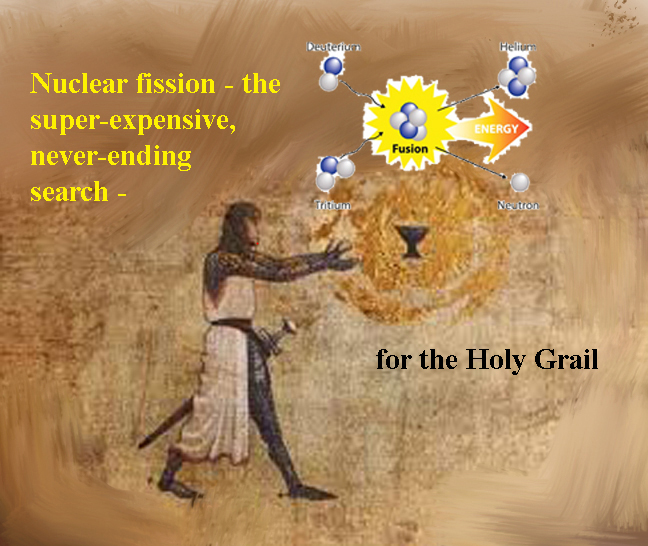
Cracks in a key silver-lined component are creating new delays and cost
overruns in the $23 billion project to prove whether nuclear fusion can
generate limitless clean energy.
The International Thermonuclear
Experimental Reactor, or ITER, under construction in southern France is
being funded by the European Union and countries including China, India,
Japan, Russia and South Korea. The world’s biggest experiment aims to show
that mimicking the power that makes stars shine can produce clean energy
that could help slow global warming on Earth.
But new ITER Director-General
Pietro Barabaschi warned members this week the project faces problems that
are potentially “extensive,” along with new requirements for time and
money that “will not be insignificant.”
Bloomberg 25th Nov 2022
China Prevented Transfer Of Polish MiG-29 Fighter Jets To Ukraine; Kept Russia Away From Nuclear Escalation
Eurasian Times, Tanmay Kadam November 25, 2022
Chinaa allegedly prevented the transfer of Polish MiG-29 fighter jets to Ukraine through secret back-channel talks with Washington. The Chinese intervention caused the US to reject Poland’s offer to hand over its MiG-29 fighters to a US airbase for use by Ukrainian Air Force.
Beijing is playing a critical behind-the-scenes role in managing the fallout of the ongoing Ukraine crisis even though publicly it has maintained a low profile, according to the latest revelations made by a British journalist, Owen Matthews, who writes about Russia for ‘The Spectator,’ a UK-based weekly magazine.
China’s actual position on the ongoing Russia-Ukraine war has been difficult to discern. So far, Beijing has only offered diplomatic and informational support to Moscow, as part of which it has regularly accused the US of brewing tensions with Russia.
In October, Chinese Foreign Minister Wang Yi told his Russian counterpart, Sergei Lavrov, that “China will also firmly support the Russian side, under the leadership of President Putin, to unite and lead the Russian people,” according to China’s state-owned media.
Furthermore, Wang promised to deepen contacts with the Russian side at all levels.
At the same time, China has refrained from providing any significant military assistance to Russia’s war effort in Ukraine, forcing Moscow to turn to Iran to acquire combat drones. Recent reports suggest that Russia could even buy missiles from Iran.
In September, on the sidelines of the UN General Assembly, Wang told NATO Secretary General Jens Stoltenberg that China “stays open-minded to dialogues and exchanges with NATO and is willing to promote the sound and steady development of bilateral relations jointly.”
China Wants To Avoid Nuclear Escalation
According to Matthews, who cites a source close to officials of China’s People’s Liberation Army (PLA), Beijing’s key priority is for the Russia-NATO confrontation to “avoid any nuclear escalation and to help reach a ceasefire.”
This was witnessed during the recent G20 summit in Bali, where Chinese President Xi Jinping said that the world “needs to prevent a nuclear crisis on the Eurasian continent” in a meeting with his US counterpart Joe Biden, marking a rare instance of public agreement between the US and China over Russia.
President Xi also appealed publicly for a “return to diplomacy and stressing the urgency in finding a peaceful resolution.”
Therefore, according to Matthews, Poland’s offer of supplying Ukraine with its entire fleet of MiG-29 fighter jets in March was a cause of concern for the Chinese, as it threatened significant tensions between NATO and Russia…………………………..
Initial reports in March indicated that the US was positively considering Poland’s proposal to send its MiG-29s to Ukraine in return for advanced US-made F-16s. However, the Pentagon later rejected Poland’s surprise statement that it would hand over its MiG-29 fighter jets to a US airbase for use by Ukraine.
How China Changed Washington’s Mind?
According to Matthews, an “urgent and confidential back-channel initiative” involved former European leaders and senior officials and was backed by the Chinese, which changed Washington’s mind……………… https://eurasiantimes.com/china-transfer-of-polands-mig-29-fighter/
“Environmental Social and Corporate governance” – EDF and the nuclear lobby try to trick the world with fake “green” credentials
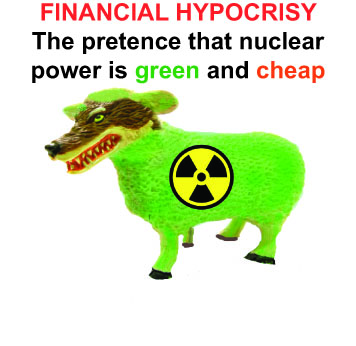
€1bn EDF loan lays the groundwork for nuclear green bond
IFR, 26 Nov
IFR 2461 – 26 Nov 2022 – 02 Dec 2022 Tessa Walsh A €1bn loan to EDF is the first green[?] loan to be earmarked for the nuclear power industry and shows the increasing renaissance [?]of the nuclear industry as a source of clean[?] energy and energy security [?].
The bilateral green loan from Credit Agricole will finance the maintenance of EDF’s power plants in France. Outages at EDF’s 56-strong fleet of reactors has severely hit production this year and spiralling financial problems prompted the French government to announce plans in July to renationalise the company.
France is buying the 16% of EDF’s capital that it does not already own for an estimated €9.7bn.
The green loan will help fund the “Grand Carenage”, a major industrial programme led by EDF that aims to improve national energy security and extend the operating life of reactors beyond 40 years after a summer of shutdowns and strike action………………………………………..
A green bond with a nuclear use of proceeds could be on the cards post-nationalisation……………..
UK nuclear power plant operator Sizewell C is also looking at ESG-labelled debt in early 2023 to fund part of the £15bn cost of the UK’s new-generation nuclear reactor and is considering green bonds as well as social or sustainable bonds.
New reactors
EDF is bracing for a hit of around €32bn to its full-year core earnings from lower production, and the company first has to stabilise its production and financing before gearing up to invest in expensive new reactors that remain controversial due to concerns about nuclear waste.
France is planning to build at least six reactors in the coming decades at an estimated cost of €50bn. The UK government has also commissioned EDF to build up to eight reactors by 2050 with up to 24GW capacity, many of which will be small modular reactors that could also attract ESG financing…………… https://www.ifre.com/story/3624140/edf-lays-the-groundwork-for-nuclear-green-bond-ljcftcfkqc
UK government underestimated the cost to the public of Regulated Asset Base financing of nuclear power
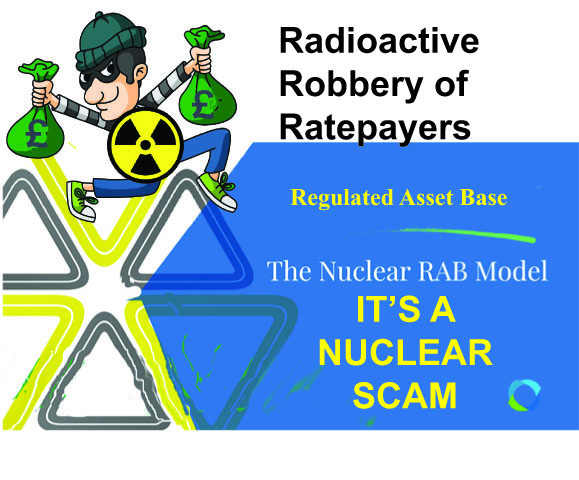
The government has been accused of under-estimating the cost to customers
of its new financing support mechanism for nuclear power, which could add
£100 onto annual bills if ex-prime minister Boris Johnson’s pledge to
roll out a new fleet of the plants is honoured.
At a meeting of the
All-Party Parliamentary Group on Energy Costs, held at the House of Commons
on Wednesday (23 November), University of Greenwich emeritus professor of
energy Steve Thomas criticised the use of the Regulated Asset Base (RAB)
for nuclear projects.
Utility Week 24th Nov 2022
Mayor of Ukraine’s second-largest city fined for speaking Russian
The Kharkov city head has been accused of violating the law by addressing his fellow residents in a “non-state” language.
https://www.rt.com/russia/567137-ukraine-mayor-fined-russian-language/ 24 Nov 22
Kiev has slapped the mayor of Ukraine’s second largest city, Kharkov, with a fine for using what the authorities called a “non-state” language in an official TV address. Mayor Igor Terekhov is known for addressing his fellow residents in Russian.
Terekhov will have to pay a fine of 3,400 hryvnas ($92) for violating Ukrainian law, Taras Kremin, the Ukrainian government’s commissioner for the protection of the state language, said in a statement on Thursday.
The mayor had “used non-state language in his addresses to the residents of the city of Kharkov” during a news telethon, the statement read, calling this an “administrative offense.” The language commissioner’s office also issued an administrative warning to the mayor’s office, telling it to only use Ukrainian on the mayor’s social media pages.
Terekhov has until December 4 to appeal the commissioner’s decision, the statement read. The Ukrainian authorities did not specify what language the mayor had used during the telethon, but the Ukrainian media reported that he was known for regularly addressing his fellow residents in Russian.
According to the language commissioner’s office, Terekhov and some Kharkov city council members have already been found in violation of the state language law. It is unclear if they were sanctioned back then as well.
The Ukrainian state language law was signed by then-President Pyotr Poroshenko back in 2019, five days before his presidential mandate expired. The legislation requires Ukrainian public officials to use only the Ukrainian language when discharging their duties.
Ukrainians are also required to use the Ukrainian language in the fields of public services, medical care, education and science, as well as in the media, although certain exceptions are allowed. A person found in violation of this law might face a fine of up to 8,500 hryvnas ($230), which can be further doubled for a repeated offense.
In mid-June, the language commissioner was granted the right to impose fines on those found in violation of the law. In October, an assistant professor at the Ukrainian National Aviation University was slapped with a fine of 3,400 hryvnas ($92) for teaching through a “non-state language.”
The Amazon forest is reaching a tipping point and starting to collapse
The Amazon forest is reaching a tipping point and starting to collapse
Dusty wells. Streams ebbing away. Pristine reserves aflame. Some scientists think the tipping point is already here.
November 25 Energy News — geoharvey

Opinion: ¶ “‘Africa’s COP’ Made Some Big Promises. Here Is How To Deliver” • COP27, called the “African COP,” put the continent center stage in the global effort to fight the causes and effects of climate change. The African Development Bank says climate change costs Africa up to $15 billion per year and will cost […]
November 25 Energy News — geoharvey
SCOTT RITTER: The Back Channel
Burns’ job is only to keep what will be a major escalation of the war from spinning out of control – to keep it from going nuclear. That has been his job from the start.
The conditions for a settlement on U.S. and Ukrainian terms — such as Russia withdrawing from the four territories it recently annexed as well as Crimea, paying reparations and turning over senior military and civilian leaders for prosecution as war criminals — have almost no chance of happening.
Such thinking only underscores the hubris-laced fantasy world Washington has crafted for itself. The notion that Russia is somehow losing its military conflict with NATO-backed Ukraine, and its economic war with the West, is belied by the increasing desperation inherent in the growing calls for a negotiated settlement by senior U.S. officials.
Communications between the U.S. and Russia are essential for preventing an out-of-control crisis and a conduit exists for ongoing, high-level dialogue. But what is it really for?
By Scott Ritter, Consortium News 22 No 22,
According to The Wall Street Journal, White House National Security Advisor Jake Sullivan has been involved with a secretive “back channel” line of communication with top Russian officials as part of an effort by the U.S. and Russia to prevent the war in Ukraine from escalating into a nuclear conflict.
Among the officials named as representing the Russian conduit for this “back channel” are Yuri Ushakov, a senior foreign policy adviser to Russian President Vladimir Putin, and Nikolai Patrushev, the head of Russia’s security council.
…………………….. the key to who might be taking the lead in the current Russian “back channel” lies with the man who headed up the March 2013 delegation in Oman — William Burns, a career diplomat who at the time served as deputy secretary of state and is now director of Central Intelligence.
His name is synonymous with “back channel.”
It was Burns who, based on these secret Oman meetings, hammered out the initial draft of the JCPOA. The background story, described by Burns in his autobiography, aptly titled The Back Channel, is what made the long-time diplomat an attractive choice for Biden to head the C.I.A.
When the Biden administration wanted to discuss the escalating crisis surrounding Ukraine in the fall of 2021, it was Burns who was dispatched. In addition to meeting with Patrushev, Ushakov and other senior Russian security officials (including his Russian counterpart, Sergei Naryshkin, the director of Russia’s Foreign Intelligence Service, or SVR) Burns had a conversation with Putin by telephone.
This kind of high-level access is what makes Burns the ideal conduit for a substantive “back channel” between the U.S. and Russia……………………………………………
‘Only About Nukes’
Significantly, senior Biden administration officials quickly quashed any notion that Burns was engaged in “back channel” diplomacy regarding an end to the Ukraine conflict…………………….
The U.S. mainstream media had been enthralled with the narrative of a Sullivan-run back channel seeking an early end to the conflict.
Russia will not negotiate a settlement on U.S./Ukrainian terms, only Russian terms. Russian terms will be dictated by the arrival of 220,000 fresh troops, organized into 10-15 divisions, starting next month.
Burns’ job is only to keep what will be a major escalation of the war from spinning out of control – to keep it from going nuclear. That has been his job from the start…………..
the notion of a separate Sullivan-run “back channel,” one focused on finding a diplomatic off-ramp to the Russian-Ukrainian conflict, lingers, promoted in part by the self-serving attitude of a Biden administration that believes itself somehow in control of events in Ukraine.
The conditions for a settlement on U.S. and Ukrainian terms — such as Russia withdrawing from the four territories it recently annexed as well as Crimea, paying reparations and turning over senior military and civilian leaders for prosecution as war criminals — have almost no chance of happening.
General Mark Milley, chairman of the Joint Chiefs of Staff, has argued that now is the time for negotiations, given the fact that, according to him, there is neither a way for Russia to win nor for Ukraine to regain its lost territory. “So, if there’s a slowdown in the tactical fighting, that may become a window — possibly, it may not — for a political solution, or at least the beginnings, for talks to initiate a political solution,” Milley said.
Milley’s pro-negotiation stance, however, is opposed by many of America’s European partners, whose position is perhaps best captured by NATO Secretary General Jens Stoltenberg, who on Nov. 14, while speaking to the heads of the foreign and defense ministries of the Netherlands, declared:
“The only way to achieve a solution to the Russian-Ukrainian conflict is on the battlefield. Many conflicts are resolved at the negotiating table, but this is not the case, and Ukraine must win, so we will support it for as long as it takes.”
Russia, it appears, fully agrees — this conflict will be settled on the battlefield. At the moment, Russia is shutting down the Ukrainian economy and Ukrainian society by destroying large sectors of Ukraine’s electrical power grid, throwing much of Ukraine into a cold darkness just as winter sets in.
Russia has stabilized the battlefield, withdrawing from untenable terrain while pouring 87,000 recently mobilized troops into the front lines to solidify its defenses. Meanwhile, it continues to undertake offensive operations in the Donbass, destroying Ukrainian forces while capturing territory that is part of the Donetsk.
Ukrainian casualties have been horrific, and overwhelmingly lop-sided — in the month of October alone, in the Kherson front, Ukraine lost some 12,000 men, while Russian casualties were around 1,500, according to the Russian Defense Ministry. Ukraine has released no figures, but the U.S. says 100,000 soldiers on both sides have been killed in the conflict, a figure impossible to verify.
Over the horizon, in combat training centers throughout Russia, more than 200,000 additional troops are finalizing their combat training and preparations. Sometime next month they will begin arriving on the battlefield, organized into 10-15 division equivalents.
When they arrive, Ukraine will have no response, having squandered its NATO-trained and equipped forces on pyrrhic political victories. The photo opportunities on the city square in Kherson will fade into memory once Russia unleashes this new force.
And there’s nothing either NATO or Ukraine can do to stop them.
While Russia engaged in negotiations with Ukraine at the beginning of the war and offered a deal to Kiev, which was stopped by the West, the facts on the ground have since changed.
Anyone attempting to breathe life into the concept of a Sullivan-driven “back channel” designed to bring Russia to the negotiating table must first discount Russia’s improving military posture. Russia simply will not be drawn to a negotiation designed to negate the advantages it has been accruing on the battlefield and beyond.
The Sullivan “back channel” is little more than the collective West negotiating with itself.
Russia’s negotiation will be on the battlefield.
Scott Ritter is a former U.S. Marine Corps intelligence officer who served in the former Soviet Union implementing arms control treaties, in the Persian Gulf during Operation Desert Storm and in Iraq overseeing the disarmament of WMD. His most recent book is Disarmament in the Time of Perestroika, published by Clarity Press. https://consortiumnews.com/2022/11/22/scott-ritter-the-back-channel/
Zelensky trapped by Moscow and Washington

by Thierry Meyssan, Translation Roger Lagassé
The evolution of the balance of power on the Ukrainian battlefield and the tragic episode of the G20 in Bali mark a reversal of the situation. If the West still believes that it will soon defeat Moscow, the United States has already begun secret negotiations with Russia. They are preparing to let go of Ukraine and to put the blame solely on Volodymyr Zelensky. As in Afghanistan, the awakening will be brutal.
VOLTAIRE NETWORK | PARIS (FRANCE) | 22 NOVEMBER 2022
I was talking to an open-minded leader of the European Parliament in Brussels ten days ago, and I listened to him tell me that the Ukrainian conflict was certainly complex, but that the most obvious thing was that Russia had invaded that country. I replied by observing that international law obliged Germany, France and Russia to implement resolution 2202, which Moscow alone had done. I continued by reminding him of the responsibility to protect the populations in case of failure of their own government. He cut me off and asked me: “If my government complains about the fate of its citizens in Russia and attacks that country, will you find that normal? Yes,” I said, “if you have a Security Council resolution. Do you have one? » Disconcerted, he changed the subject. Three times I asked him if we could talk about the Ukrainian “integral nationalists”. Three times he refused. We parted courteously.
The question of the responsibility to protect should have been nuanced. This principle does not allow for a war, but for a police operation, conducted with military means. That is why the Kremlin is careful not to refer to this conflict as a “war”, but as a “special military operation”. Both terms refer to the same facts, but “special military operation” limits the conflict. As soon as his troops entered Ukraine, Russian President Vladimir Putin made it clear that he did not intend to annex this territory, but only to liberate the people persecuted by the Ukrainian “Nazis”. In a previous long article, I pointed out that, if the expression “Nazis” is correct in the historical sense, it does not correspond to the way these people call themselves. They use the expression: “integral nationalists”. Let’s remember that Ukraine is the only state in the world with an explicitly racist constitution.The question of the responsibility to protect should have been nuanced. This principle does not allow for a war, but for a police operation, conducted with military means. That is why the Kremlin is careful not to refer to this conflict as a “war”, but as a “special military operation”. Both terms refer to the same facts, but “special military operation” limits the conflict. As soon as his troops entered Ukraine, Russian President Vladimir Putin made it clear that he did not intend to annex this territory, but only to liberate the people persecuted by the Ukrainian “Nazis”. In a previous long article, I pointed out that, if the expression “Nazis” is correct in the historical sense, it does not correspond to the way these people call themselves. They use the expression: “integral nationalists”. Let’s remember that Ukraine is the only state in the world with an explicitly racist constitution.
The fact that international law gives Russia the upper hand does not mean that it has a blank check. Everyone must criticize the way it applies the law. Westerners still find Russia “Asian”, “savage” and “brutal”, even though they themselves have been far more destructive on many occasions.
REVERSAL OF THE SITUATION
Now that the Russian and Western points of view have been clarified, it is clear that several events have prompted a Western shift……………………………….
Since the beginning of the conflict, Ukraine has been able to count on unlimited aid from the United States and its allies. However, the mid-term elections in the USA have removed the majority of the Biden administration in the House of Representatives. From now on, Washington’s support will be limited. Similarly, the European Union is also finding its limits. Its populations do not understand the rising cost of energy, the closure of certain factories and the impossibility of heating normally……………………………………..
THE TRAP
.. the West imposed a video intervention by Volodymyr Zelensky as they had done on August 24 and September 27 at the United Nations Security Council. However, while Russia had tried in vain to oppose it in September in New York, it accepted it in November in Bali. At the Security Council, France, which held the presidency, violated the rules of procedure to give the floor to a head of state by video.
On the contrary, at the G20, Indonesia held an absolutely neutral position and was not likely to accept giving him the floor without Russian authorization. This was obviously a trap. President Zelensky, who does not know how these bodies work, fell into it.
After having caricatured Moscow’s action, he called for its exclusion from the… “G19”. G19 “. In other words, the little Ukrainian gave an order on behalf of the Anglo-Saxons to the heads of state, prime ministers and foreign ministers of the 20 largest world powers and was not heard.
In reality, the dispute between these leaders was not about Ukraine, but about whether or not to submit to the American world order. All the Latin American, African and four Asian participants said that this domination was over; that the world is now multipolar.
…………………….. It is likely that Washington was in league with Moscow. The United States realizes that things are turning against it on a global scale. It will have no hesitation in blaming the Ukrainian regime. William Burns, director of the CIA, has already met Sergei Narychkin, the director of the SVR, in Turkey
………..it is not surprising that a few days after the G20 slap in the face, Volodymyr Zelensky contradicted his American sponsors for the first time in public. He accused Russia of having launched a missile at Poland and maintained his words when the Pentagon indicated that he was wrong, it was a Ukrainian counter-missile.
The idea, for him. was to continue to act in line with the Treaty of Warsaw, concluded on April 22, 1920, by Symon Petlioura’s integral nationalists with the regime of Piłsudski; to push Poland to go to war against Russia. This was the second time Washington rang a bell in his ears. He did not hear it.
Probably, these contradictions will no longer manifest themselves in public. Western positions will soften. Ukraine has been warned: in the coming months it will have to negotiate with Russia. President Zelensky can plan his escape now, because his bruised compatriots will not forgive him for deceiving them.
Rolls-Royce calls for formal funding talks over small nuclear plants
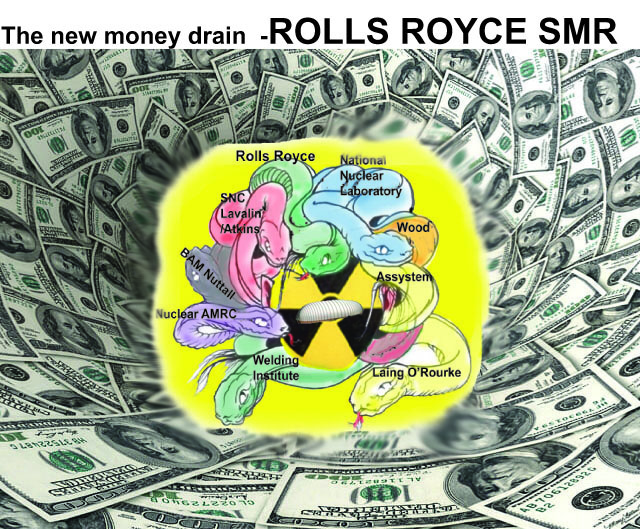
Ft.com Nathalie Thomas in Edinburgh and Sylvia Pfeifer in London, 23 Nov 22
Rolls-Royce has urged the UK government to enter formal negotiations over the funding for small nuclear reactors, which it hopes to build in England or Wales by the early part of next decade.
Tom Samson, head of the company’s small modular reactor business, told a committee of MPs on Wednesday that Britain would face an electricity crisis next decade if it did not push ahead with building more “baseload” power stations that offer a reliable [?] source of generation when weather-dependent renewables including wind and solar are not producing.
Rolls-Royce is leading a consortium that has designed a 470-megawatt [that’s LARGE !] small modular nuclear reactor, which could produce enough power for a city the size of Leeds and would be built in factories before being deployed at existing nuclear sites in England and Wales.
It wants the government to enter formal talks over potential funding models and how the technology could be deployed so it can start building factories. The first Rolls-Royce-designed SMR would cost £2.5bn, although the UK engineering company has argued the cost of each plant will drop to £2bn once it has a pipeline of orders.
……….. the first Rolls-Royce SMR would probably need a funding model underpinned by the government or bill payers.
The company has previously talked about models such as “contracts for difference”, which are used for technologies such as offshore wind and guarantee developers a set price for their output.
Alternatively, it has said it may consider a “regulated asset base” mechanism, whereby a surcharge is added to consumer energy bills long before any plant is operating to help finance schemes.
Samson warned the government it did not have the luxury of spending another two to three years talking about whether to build more nuclear capacity……………
Former prime minister Boris Johnson said while in office that he wanted up to 24 gigawatts of nuclear capacity by 2050 — up from just 5.9GW at present — but chancellor Jeremy Hunt’s recent Autumn Statement referred only to the 3.2GW Sizewell C nuclear project in Suffolk, about which the government is in negotiations with French state-backed energy group EDF. Opponents of nuclear argue that is expensive compared with other technologies.
……………. “The government is investing in these new technologies through the £385mn Advanced Nuclear Fund including £210mn towards the Rolls-Royce SMR programme,” a BEIS spokesperson said. https://www.ft.com/content/21a54a90-1b51-4561-ba9e-c1677e0262ed
—
Confusion over nuclear wastes from small modular reactors
Managing NuScale, other SMR waste will be ‘roughly comparable’ with conventional reactors, DOE labs find Utility Dive Stephen Singer, 23 Nov 22
Dive Brief:
- Two studies differ over how much nuclear waste would be a factor with small modular reactors, or SMRs, such as those planned by NuScale and TerraPower.
- The Argonne and Idaho national laboratories say managing waste from SMRs would have few challenges compared with traditional light water reactors. Spent fuel is thermally hot and highly radioactive, requiring remote handling and shielding.
- A study led by Stanford University and the University of British Columbia says SMRs will generate more radioactive waste than conventional nuclear power plants…………………………… more https://www.utilitydive.com/news/smr-modular-reactor-nuclear-waste-doe-stanford-0
The consequences of nuclear imperialism and colonialism
Climate change and the war in Ukraine have cast a renewed spotlight on nuclear issues, say organisers of this weekend’s inaugural Nuclear Connections Across Oceania conference at the University of Otago
https://www.newsroom.co.nz/ideasroom/the-consequences-of-nuclear-imperialism-and-colonialism 23 Nov 22 What is nuclear imperialism and nuclear colonialism?
The war in Ukraine has heightened people’s awareness of the ongoing threat of nuclear war, which could be induced by a nuclear weapon or the destruction of other nuclear infrastructure.
Nuclear imperialism is our current geopolitical order, where states with access to uranium and the ability to develop nuclear weapons hold dominant power over everyone else. Examples of nuclear imperialism include Russia’s ongoing threat to deploy nuclear weapons in Ukraine, or the reckless testing of nuclear weapons and nuclear-capable munitions throughout Oceania and the Pacific by the United States, the United Kingdom, and France since the 1940s as a way to entrench their geopolitical dominance.
Building on the work of Indigenous feminists such as Ojibwe environmentalist Winona LaDuke, nuclear colonialism has been described by the academic Danielle Endres as “a system of domination through which governments and corporations target Indigenous peoples and their lands to maintain the nuclear production process”.
Examples of nuclear colonialism include Canada’s decision to mine uranium on the ancestral lands of First Nations peoples; the United States’ decision to test nuclear weapons and depleted uranium munitions on the ancestral lands of Native Hawaiians, Native Americans and the Marshallese; France’s decision to test nuclear weapons in Ma’ohi Nui (French-occupied Polynesia); the United Kingdom’s decision to test nuclear weapons on the ancestral lands of Aboriginal peoples; Australia’s decisions to mine for uranium on the ancestral lands of Aboriginal peoples; Japan’s 1979 plan to dump nuclear waste in the Northern Marianas; Japan’s planned nuclear waste storage facility on Ainu ancestral land; Japan’s plan to discharge tritiated water from TEPCO’s Fukushima Daiichi into the Pacific Ocean in 2023 against the wishes of Indigenous peoples of the Pacific; and New Zealand’s decision to dump nuclear waste into the ocean until 1976; among many others.
Connecting nuclear justice and climate justice
While the nuclear industry has been aggressively framing nuclear energy as the answer to climate change, the material consequences of nuclear imperialism and nuclear colonialism mean that Indigenous communities around the world continue to suffer from the past and present harms of uranium-derived nuclear pollution. This, in turn, has set a precarious foundation for achieving climate justice.
The convergence of nuclear justice and climate justice are perhaps most evident in the Pacific. After decades of their lands, waters and bodies being used as the “nuclear playground” for many imperial nations, Pacific peoples unwittingly now find themselves at the front line of climate change.
This is through no fault of their own, as Pacific peoples are globally among the lowest contributors to anthropogenic climate change, according to estimates of CO2 emissions. Indigenous activists activists, who have long been fighting for a nuclear-free and independent Pacific are now struggling to tackle the existential threats of climate change and exploitative seabed mining.
In an unsurprising repeat of history, the same nuclear imperial nations continue to exacerbate the damaging consequences of climate change as they restrict the abilities of Pacific peoples to respond and impede the provision of a ‘Loss and Damage’ fund.
What is Nuclear Connections Across Oceania?
The Nuclear Connections Across Oceania conference emerged from conversations among five students and one staff member at the University of Otago’s Te Ao O Rongomaraeroa National Centre for Peace and Conflict Studies and Kā Rakahau o Te Ao Tūroa Centre for Sustainability.
It provides the public with an opportunity to hear from key activists, artists, researchers, and community members on the material consequences of the nuclear military and industrial complex.
The core organising team of five locally based and international settlers of European descent and one Aotearoa New Zealand-born Sāmoan, had shared expertise and interests in questions related to uranium-derived nuclear pollution, nuclear colonialism, nuclear imperialism, nuclear non-proliferation, and climate justice.
They also knew that addressing the historical and ongoing harms of nuclear imperialism and nuclear colonialism would necessitate centring the experiences, needs, and voices of Indigenous peoples and others on the front lines working for nuclear and climate justice.
Cultivating a space to (re)connect
The conference draws inspiration from a genealogy of resistance in Oceania, and recognises a notable anniversary in the regional movement for nuclear justice. November 2022 marks 40 years since Māori hosted the first Te Hui Oranga o Te Moana Nui a Kiwa.
These hui brought Pacific activists to Aotearoa as part of the Nuclear Free and Independent Pacific Movement, a grassroots coalition of Indigenous rights, environmental, peace and trade union groups opposing nuclear colonialism.
Te Hui Oranga allowed for anti-nuclear work on Indigenous terms, outside the predominantly Pākehā (European settler) peace movement where racism and universalism had, at times, hindered introspection. These aspects of the nuclear-free legacy in Aotearoa are often obscured in the popular imagination by images of yachts (like those being re-popularised in Heineken ads) and David Lange’s Oxford Union speeches.
Through grounding the conference in Indigenous-led anti-colonial and anti-imperial movements, we want to use this occasion as an opportunity to remind people that an Indigenous-led regional movement that refused to sever the link between nuclearism and colonialism had immense power.
In refusing warship visits or protesting nuclear testing and the dumping of nuclear wastes into our oceans, the Nuclear Free and Independent Pacific movement advanced a vision for Pacific regionalism outside of superpower domination.
This benefited tangata o te moana (Pacific peoples) as well as tangata whenua (Māori), who saw the value in sensitising domestic movements to regional struggles. In the words of the first hui’s report: “our manuhiri [guests] have strengthened us”.
What to expect at the conference
The free and hybrid conference was designed as a gathering place for people across Oceania and the globe to learn from each other, collaboratively imagine what anti-colonial and anti-imperial nuclear futures might look like, and critically strategise how we might get there together.
It follows several major nuclear events, including the Tenth Review Conference of the Parties to the Treaty on the Non-Proliferation of Nuclear Weapons in August 2022.
We invite anyone with a curiosity about nuclear and climate justice to join us on November 25-26 (NZDT). Recordings of some of the conference talks will be available on our website for those unable to join on the day, so we invite you to engage in whatever way works best for you. For more information and to register, please visit the conference webpage: https://nuclear-connections.mailchimpsites.com/.
Author/contributors:
Dr Karly Burch (conference co-organiser and speaker) grew up as a settler in Hawaiʻi and is a research fellow studying the material politics of nuclear pollution, artificially intelligent robotics in agriculture, and collaborative research for sustainable technofutures, at the University of Otago’s Centre for Sustainability.
Marco de Jong (conference speaker) is a New Zealand-born Samoan, and is completing his PhD on the history of the environmental movement in the Pacific, at the University of Oxford.
Mino Cleverley (conference co-organiser) is a New Zealand-born Samoan, and is completing his PhD on Indigenous responses to climate change and forced retreat due to sea level rise, at the University of Otago’s Centre for Sustainability.
Bedi Racule (conference speaker) is a climate and nuclear justice advocate from the Marshall Islands/Federated States of Micronesia and recent graduate in development studies from the University of the South Pacific.
Tomoki Fukui (conference speaker) is an agenderflux Nikkei anthropologist, and is completing their PhD on how Japanese nuclear reconstruction uses patriarchy and ableism to further Japanese capitalism, at Columbia University.
Lawmaker says Filipinos will be ‘guinea pigs’ in nuclear pact with US

ABS-CBN News Nov 24 2022
MANILA — House Deputy Minority Leader France Castro is against negotiations for a civilian nuclear pact between the United States and the Philippines, saying it poses threat to the health and safety of Filipinos.
According to the ACT Teachers party-list representative, the Filipinos will become “guinea pigs” in this nuclear energy cooperation deal known as “123 agreement”.
The pact, among initiatives announced during US Vice President Kamala Harris’s recent trip to the Philippines, can lead to the future sale of US nuclear reactors to Manila.
“The US and the Philippines agreed to have a… testing of what we call the nuclear equipment here in the Philippines,” Castro told ANC’s “Headstart” Thursday.
“So, we are being made as guinea pigs in this experiment. This would affect our health, of course, our safety and the environment,” she added.
The Makabayan bloc, led by Castro, has filed House Resolution 582 to investigate the “123 agreement”.
The group said modular or microreactor nuclear power plants are still at an experimental stage and are only legally being made in US bases…………………… https://news.abs-cbn.com/video/news/11/24/22/filipinos-will-be-guinea-pigs-in-nuclear-pact-with-us-solon
USA Vice-President For the Nuclear Industry Kamala Harris on a marketing jaunt for NuScam’s Small Nuclear Reactors to Southeast Asia

Thailand, Philippines, Indonesia – nuclear reactors such a jolly idea in this earthquake ring of fire ?
US to supply Thailand, Philippines with modular nuclear reactors
BenarNews staff, 2022.11.23, Bangkok.
The United States says it will help Thailand and the Philippines with a new civilian nuclear technology to reduce climate-damaging emissions, but experts warn the final products are years away from being operational and other hurdles exist.
Plans by the U.S. to supply its longtime Southeast Asian allies with so-called small modular reactors (SMRs) were unveiled during Vice President Kamala Harris’ trip to both countries in recent days.
While attending the Asia-Pacific Economic Cooperation meetings in Bangkok last weekend, Harris launched a new clean energy partnership with Thailand.
From there, the vice president went to the Philippines where she announced that Washington and Manila were starting negotiations on the 123 Agreement, which would allow for civilian nuclear cooperation.
The U.S. nuclear technology plans for Thailand and the Philippines are firsts involving Southeast Asian nations.
The SMRs, which can be as small as a bucket and transportable, are to be constructed under “the highest standards of safety, security and nonproliferation,” officials said.
Another country in Southeast Asia that has shown interest in developing such reactors – Indonesia – appears to be looking at designs from several countries. [Never mind about the earthquakes?]
In a press release, the White House said the new partnership with Thailand would “build capacity for the secure and safe deployment of advanced nuclear reactor technologies.”
“This partnership will help Thailand take advantage of the unique benefits of SMRs that provide 24/7 reliable power, complement other clean energy sources, use a small land footprint and incorporate advanced safety features.”
The Thai government has set a goal of Net Zero Emissions by 2065, but no timeline for the SMR partnership. Washington praised the “unique benefits” of reactors which, besides providing reliable power, also fight climate change.
Small modular reactors generally are defined as advanced nuclear reactors with a capacity of less than 300 MW, according to the International Energy Agency.
A reactor could be as small as a five-gallon (18.9-liter) bucket. The traditional design has fuel and control rods, and energy is transported through boiling water, according to NuScale, a U.S. SMR manufacturer, which estimated initial costs at about U.S. $500 million.
The agreement with Manila calls for the U.S. and the Philippines to cooperate on advanced nuclear technologies to ensure energy security as that Southeast Asian country transitions to clean energy.
Once in force, the 123 agreement “will provide the legal basis for U.S. exports of nuclear equipment and material to the Philippines. The United States is committed to working with the Philippines to increase energy security and deploying advanced nuclear reactor technology as quickly as safety and security conditions permit to meet the Philippines’ dire baseload power needs,” the White House said in a statement.
Under President Ferdinand Marcos Jr.’s father, the late dictator Ferdinand E. Marcos, the Philippines began construction of the Bataan Nuclear Power Plant in 1976, in an area about 100 km (62 miles) west of Manila. The plant, constructed above a major fault line, was mothballed amid safety concerns after the 1986 Chernobyl disaster.
Today, the Philippines runs a couple of research reactors for training and education purposes while Thailand has no nuclear power.
……….. Tanagorn said Thais were concerned about safety in light of the 2011 Fukushima nuclear disaster caused by a tsunami in Japan. Other obstacles are the limited number of investors and the lack of domestic laws and regulation of nuclear activities.
John Timmer, science editor of Ars Technica, a web portal focusing on science and technology, said that with nuclear reactors, the principle is always “safety first.”
“The approval process for that reason tends to be long and includes a lot of documentation,” he said.
“The SMRs are designed to be much safer, but they haven’t been built (in the U.S.) in a final form yet, so it’s difficult to say whether the real-world experience will show that to be the case and also how useful they’ll be for addressing climate change,” Timmer told BenarNews.
“I’ve been hearing about SMRs for about a decade,” he said, adding that “until we build and get a sense what operating them is like and what costs are like, I’m going to be a bit skeptical.”
Cost is another obstacle.
“We’ve never built one of these, so this is going to be a learning experience and for the first few years. It’s going to be more expensive and more complicated to complete,” Timmer said.
‘Widespread misconceptions’
Economist John Quiggin, a professor at the University of Queensland in Australia, listed economic viability of nuclear power plants compared to coal, gas or solar and wind facilities as one of the “widespread misconceptions.”
“When pressed, nuclear fans will mostly shift the argument to the ill-defined notion of ‘small modular reactors,’ which don’t actually exist, and may never [exist],” Quiggin said, noting there are operating examples of small reactors, but “those are made on a one-off basis and are expensive because they forgo size economies.”
Once the reactors can be factory-produced “the ‘modular’ idea is to counter this loss with the economic gains of high-volume,” he said.
“There has been a lot of talk lately about a revival of nuclear power, partly in response to the need to replace the energy previously supplied by Russia, and partly as a longer-term response to climate change,” Quiggin said.
While in office U.S. President George W. Bush launched a nuclear power program, which led to talks of a “nuclear renaissance” but yielded only two projects despite no effective opposition “except from consumers objecting to the massive costs.”
Quiggin expects that the number of SMRs constructed will be also “tiny.”
“The work of decarbonizing energy supply will be done almost entirely by the sun and the wind,” he said.
Jason Gutierrez in Manila contributed to this report. https://www.benarnews.org/english/news/philippine/nuclear-reactors-11232022142149.html
Ukraine quietly abolishes corruption oversight rule.
Rt.com 23 Nov 22, Activists have blasted Zelensky for “harmful” move they say shatters Kiev’s EU dreams.
President Vladimir Zelensky has harmed Ukraine’s hopes of joining the EU by signing an amendment that reduced financial oversight of politicians, anti-corruption activists in Kiev said on Monday.
The measure “practically kills” efforts to combat money-laundering, the head of the Anti-Corruption Action Centre (AntAC) claimed. The body is funded by the US government and EU member states and elites in Kiev have long been hostile to its work, despite their dependence on Western funding and support.
Ukraine had previously mandated lifetime financial monitoring of “politically exposed persons,” including government officials and lawmakers – until Zelensky signed an amendment last week limiting it to just three years. Officially, the law is supposed to “protect Ukraine’s financial system from Russia and Belarus,” but the AntAC says it will harm the country’s interests instead.
“With this law, politicians destroyed the system of financial monitoring of their loved ones, which means they actually blocked negotiations on Ukraine’s accession to the EU,” AntAC head Vitaly Shabunin said on social media. The amended law “practically kills the system of preventing money-laundering by Ukrainian politicians,” he added.
AntAC’s executive director Daria Kaleniuk pointed out that the law also breaks Kiev’s promise to the European Union, one of the seven commitments made by Zelensky to Brussels in June.
In order for us to be able to convince our European partners that we are serious about joining the EU and are implementing all the necessary reforms for this, we need to correct this,” she told Hromadske. …………………….. more https://www.rt.com/russia/566960-zelensky-ukraine-corruption-monitoring/
-
Archives
- February 2026 (228)
- January 2026 (308)
- December 2025 (358)
- November 2025 (359)
- October 2025 (376)
- September 2025 (258)
- August 2025 (319)
- July 2025 (230)
- June 2025 (348)
- May 2025 (261)
- April 2025 (305)
- March 2025 (319)
-
Categories
- 1
- 1 NUCLEAR ISSUES
- business and costs
- climate change
- culture and arts
- ENERGY
- environment
- health
- history
- indigenous issues
- Legal
- marketing of nuclear
- media
- opposition to nuclear
- PERSONAL STORIES
- politics
- politics international
- Religion and ethics
- safety
- secrets,lies and civil liberties
- spinbuster
- technology
- Uranium
- wastes
- weapons and war
- Women
- 2 WORLD
- ACTION
- AFRICA
- Atrocities
- AUSTRALIA
- Christina's notes
- Christina's themes
- culture and arts
- Events
- Fuk 2022
- Fuk 2023
- Fukushima 2017
- Fukushima 2018
- fukushima 2019
- Fukushima 2020
- Fukushima 2021
- general
- global warming
- Humour (God we need it)
- Nuclear
- RARE EARTHS
- Reference
- resources – print
- Resources -audiovicual
- Weekly Newsletter
- World
- World Nuclear
- YouTube
-
RSS
Entries RSS
Comments RSS
 nuclear-news