Radioactive releases from the nuclear power sector and implications for child health
British Medical Journal Paedistrics,Cindy Folkers & Linda Pentz Gunter 9 Oct 22, :
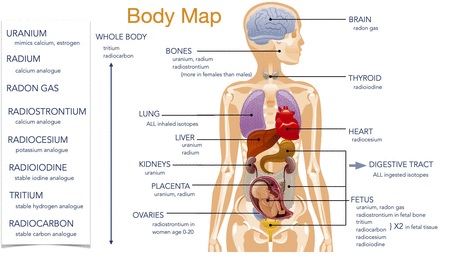
Although radioactivity is released routinely at every stage of nuclear power generation, the regulation of
these releases has never taken into account those potentially most
sensitive—women, especially when pregnant, and children.
From uranium mining and milling, to fuel manufacture, electricity generation and
radioactive waste management, children in frontline and Indigenous
communities can be disproportionately harmed due to often increased
sensitivity of developing systems to toxic exposures, the lack of resources
and racial and class discrimination.
The reasons for the greater susceptibility of women and children to harm from radiation exposure is not
fully understood. Regulatory practices, particularly in the establishment
of protective exposure standards, have failed to take this difference into
account.
Anecdotal evidence within communities around nuclear facilities
suggests an association between radiation exposure and increases in birth
defects, miscarriages and childhood cancers.
A significant number of academic studies tend to ascribe causality to other factors related to diet
and lifestyle and dismiss these health indicators as statistically insignificant.
In the case of a major release of radiation due to a serious
nuclear accident, children are again on the frontlines, with a noted
susceptibility to thyroid cancer, which has been found in significant
numbers among children exposed both by the 1986 Chornobyl nuclear accident
in Ukraine and the 2011 Fukushima-Daiichi nuclear disaster in Japan.
The response among authorities in Japan is to blame increased testing or to
reduce testing. More independent studies are needed focused on children,
especially those in vulnerable frontline and Indigenous communities. In
conducting such studies, greater consideration must be applied to
culturally significant traditions and habits in these communities.
BMJ Paediatrics 7th Oct 2022
No comments yet.
1 This Month
To see nuclear-related stories in greater depth and intensity – go to https://nuclearinformation.wordpress.com/
Now until to February 10, 2026 Radioactive waste storage in France: the debate is finally open! How to participate?
-
Archives
- February 2026 (59)
- January 2026 (308)
- December 2025 (358)
- November 2025 (359)
- October 2025 (376)
- September 2025 (258)
- August 2025 (319)
- July 2025 (230)
- June 2025 (348)
- May 2025 (261)
- April 2025 (305)
- March 2025 (319)
-
Categories
- 1
- 1 NUCLEAR ISSUES
- business and costs
- climate change
- culture and arts
- ENERGY
- environment
- health
- history
- indigenous issues
- Legal
- marketing of nuclear
- media
- opposition to nuclear
- PERSONAL STORIES
- politics
- politics international
- Religion and ethics
- safety
- secrets,lies and civil liberties
- spinbuster
- technology
- Uranium
- wastes
- weapons and war
- Women
- 2 WORLD
- ACTION
- AFRICA
- Atrocities
- AUSTRALIA
- Christina's notes
- Christina's themes
- culture and arts
- Events
- Fuk 2022
- Fuk 2023
- Fukushima 2017
- Fukushima 2018
- fukushima 2019
- Fukushima 2020
- Fukushima 2021
- general
- global warming
- Humour (God we need it)
- Nuclear
- RARE EARTHS
- Reference
- resources – print
- Resources -audiovicual
- Weekly Newsletter
- World
- World Nuclear
- YouTube
-
RSS
Entries RSS
Comments RSS
 nuclear-news
Leave a comment