International Atomic Energy Agency inspection team on its way to Zaporizhzhia nuclear power plant
An inspection team from the UN nuclear watchdog is on its way to Ukraine’s
embattled Zaporizhzhia nuclear power plant, the organisation’s head said.
Rafael Grossi, director general of the International Atomic Energy Agency
(IAEA) said the team was expected to arrive at the plant later this week.
“We must protect the safety and security of Ukraine’s and Europe’s biggest
nuclear facility,” he tweeted.
BBC 29th Aug 2022
New nuclear bases and nuclear submarines in Scotland deemed “unachievable” by a UK Government watchdog
Two projects vital for renewing the Trident nuclear weapons system on the Clyde have been damned as “unachievable” by a UK Government watchdog. The building of new facilities at the Faslane and Coulport nuclear bases in Argyll, as well as the manufacturing of new submarine reactors, both had
“major issues” which didn’t seem to be “resolvable”, according to the Infrastructure and Projects Authority (IPA).
The IPA has given the two projects its lowest rating of “red” for 2021-22, the worst in four years. The problems were attributed to “shortage of suitably experienced personnel”, “supply chain issues” and delays.
Campaigners have attacked the UK nuclear weapons programme as a “shambles”, warning that
it has repeatedly failed to deliver. Replacing Trident was “murderous”, “reckless” and “insanely expensive”, they said.
The Ferret 29th Aug 2022 https://theferret.scot/nuclear-trident-projects-unachievable
Mothers For Peace disappointed that California Governor supports ”lifeline” for Diablo Canyon nuclear power station
California’s governor seeks lifeline for last nuclear plant, Ft.com 29 Aug 22,
State confronts extreme weather and rising demand as it rids carbon from the electric grid
After nearly 40 years of protesting against the Diablo Canyon nuclear power plant, Linda Seeley thought victory was finally at hand. Seeley and other members of Mothers for Peace — an activist group with roots in the 1960s antiwar movement — cheered when Pacific Gas and Electric, the utility that operates California’s last nuclear power station, announced in 2016 that it would close by 2025.
But governor Gavin Newsom, a longtime proponent of shutting down the plant, has reversed course and embarked on a last-minute effort to extend its operation by a decade. Newsom’s administration has cited “unprecedented stress” on the state’s energy system as a reason for keeping open Diablo Canyon, which alone accounts for 9 per cent of the state’s generation and 17 per cent of its electricity from [ed so-called] carbon-free sources. The California legislature will need to vote on whether to extend its operating life by Wednesday.
Seeley, who lives 7 miles from the plant in San Luis Obispo County, is furious. “With this proposal, Gavin Newsom is keeping an asset that is antiquated, needs tons of upgrades [and] has a six-year history of deferred maintenance,” she said. “It would be unconscionable to allow the plant to go on operating without doing the due diligence needed to make sure the plant is safe enough to work.” Beyond those concerns, she said, are the issues that have kept her up at night for decades. Diablo Canyon’s coastal location sits on faultlines, prompting concerns that seismic activity could trigger a nuclear meltdown. The plant, Seeley said, “is precariously perched on the edge of the ocean in an earthquake zone”………………..
California is a leader in renewable generation, with a quarter of its electricity powered by solar and wind resources in 2021 compared to 12 per cent for the US as a whole. But problems in the supply chain and cost inflation threaten to impede their expansion, according to state officials. The state’s power system will hit a “critical inflection point after Diablo Canyon retires”, the California Independent System Operator (Caiso), which manages most of the state’s grid, warned in a filing last year…………………………….. https://www.ft.com/content/58dfc631-a415-4954-b845-c563c93c6ceb
Fukushima town lifts evacuation order, but few former residents want to come back
More than 80% of the municipality is designated as a “difficult-to-return” zone still experiencing high levels of radiation, the spokesman said. And a survey conducted last August found that 60.5% of residents had decided not to return — far exceeding the 11.3% who wanted to come back.
Fukushima town lifts evacuation order, allowing former residents to return 11 years after nuclear disaster, By Emiko Jozuka and Jessie Yeung, CNN, August 30,
Tokyo (CNN)More than a decade after Japan’s worst nuclear disaster, the town that hosts the disabled Fukushima Daiichi nuclear power plant finally lifted its evacuation order on Tuesday, allowing former residents to come home.
The town of Futaba, previously deemed off-limits, is the last of 11 districts to lift its evacuation order, a spokesman for the town’s municipal office told CNN.
On March 11, 2011, a 9.0-magnitude earthquake struck off Japan’s east coast, triggering a tsunami that caused a nuclear meltdown at the power plant and a major release of radioactive material. It was the world’s worst nuclear disaster since Chernobyl in 1986.
More than 300,000 people living near the nuclear plant were forced to evacuate temporarily; thousands more did so voluntarily. Once-bustling communities were turned into ghost towns.
In the years since, large-scale cleanup and decontamination operations have allowed some residents who once lived in the former exclusion zone to return.
…………………….Authorities began preparing for the town’s reopening this year; in January, they launched a program allowing former residents to return temporarily, but only 85 people from 52 households took part, the Futaba official said……………….It remains unclear, however, how many people will return — and how long the town will take to recover.
More than 80% of the municipality is designated as a “difficult-to-return” zone still experiencing high levels of radiation, the spokesman said. And a survey conducted last August found that 60.5% of residents had decided not to return — far exceeding the 11.3% who wanted to come back.
Futaba has no official timeline on when other areas of the town will be fully decontaminated.
But the spokesman expressed hope for the town’s future, saying Futaba aims to increase its population to 2,000 by 2030.
If other Japanese towns affected by the 2011 nuclear disaster are any indication, Futaba has a long road ahead. Even places that lifted evacuation orders several years ago have continued to face challenges.
For instance, Katsurao village, which lies about 40 kilometers (24 miles) from the plant, reopened to residents in 2016, but some households are still waiting for their sections of the village to be decontaminated.
Others may still have concerns about radiation. Despite the decontamination efforts, a 2020 survey by Kwansei Gakuin University found 65% of evacuees no longer wanted to return to Fukushima prefecture — 46% feared residual contamination and 45% had settled elsewhere.
CNN’s Kathleen Benoza contributed reporting. https://edition.cnn.com/2022/08/30/asia/futaba-fukushima-nuclear-evacuation-order-intl-hnk/index.html
Russia accuses Ukraine of fresh shelling of nuclear plant
https://www.reuters.com/world/europe/russia-accuses-ukraine-fresh-shelling-nuclear-plant-2022-08-30/) – Russian-installed authorities in the Ukrainian city of Enerhodar accused Ukrainian troops on Tuesday of once again shelling the territory of the Zaporizhzhia nuclear power plant, Russia’s TASS news agency said.
The city authorities said two shells exploded near a spent fuel storage building at the plant, the agency added.
Ukraine and Russia have repeatedly accused each other of attacking Europe’s biggest nuclear power plant, set to be visited this week by a mission of the International Atomic Energy Agency.
Nuclear news – week to 29 August

Some bits of good news – With all the various omnicidal threats to our planet, it’s a temptation to just give up. But giving up is just not an option. This week, there’ve been two reminders -powerful messages of why we can still hope, and more importantly, still act – in a myriad of ways. Radio Ecoshock replayed It’s wrong to wreck the world. In this broadcast, Kathleen Dean Moore delivers an artful talk about our attack on Nature, and hope of reviving love instead. Alex Smith comments: “Morality” sounds boring. This speech surprised and moved me. It will do the same for you.”Then there’s Dr Jane Goodall – still hopeful about the Earth’s future.
Coronavirus. No it hasn’t gone away – a slight drop in cases and deaths world-wide.
Climate change. The climate crisis is a hunger crisis.
The only thing keeping US and China from war is running dangerously thin.
The West’s false narrative about Russia and China. The blind side to western wars and western war crimes. Civilian casualties in Ukraine-5,000? In Yemen-380,000? But Western Media tells a different story! Ukraine and the Politics of Permanent War – Permanent war requires permanent censorship.
Are Russia and NATO trying to destroy the nuclear Non-Proliferation Treaty?. Meeting on Nuclear Non Proliferation Treaty ends in failure, as Russia blocks final draft.
Commemorate August 29: International Day against Nuclear Tests .
Astronauts Going to Mars Will Receive Many Lifetimes Worth of Radiation.
Busting the absurd pro-nuclear spin of “Ecomodernism”.
Digital damage: Is your online life polluting planet?
UKRAINE.
Russia-Ukraine war latest: what we know on day 186 of the invasion. Imperiled Ukrainian nuclear power plant has the world on edge – a safety expert explains what could go wrong. The cost of Ukraine’s de-Russification. The Hidden Truth about the War in Ukraine, and about Crimea and Donbass – Jacques Baud.
Russia-Ukraine war: Ukraine announces mandatory evacuations . Fears of ‘radiation cloud through Europe’ if Ukraine plant blows. Fears of a radiation leak mount near Ukrainian nuclear plant’. Anti-radiation-sickness pills given out amid shelling near Ukrainian nuclear station. UN chief demands halt to “nuclear saber-rattling” at Ukrainian nuke plant. Russia says it destroyed howitzer used to shell Zaporizhzhia nuclear plant.
Zelensky ‘troubled’ as he questions inner circle’s loyalties – Erdogan. Zelensky warns “no more peace talks”, if Donetsk People’s Republic prosecutes captured Neo Nazi fighters for war crimes. ‘We should kill as many Russians as we can’ – Ukrainian envoy. Ukrainian Hit List – targets Pink Floyd’s Roger Waters, Daria Dugina, Kissinger and 1000s of journalists. ‘Peacemaker’ of death: This Ukrainian website threatens hundreds of thousands with extrajudicial killings — some are Americans.
EUROPE.NATO Abandons Diplomacy, Says No Longer ‘At Peace’.
FRANCE. French nuclear woes stoke Europe’s power prices. Nuclear: EDF extends the shutdown of four reactors for several weeks. “It is really urgent” to “get out of this dependence on the nuclear fleet which is weakening us more and more”
JAPAN. The legacy of Shinzo Abe: a Japan divided about nuclear weapons. The government is planning to “promote” nuclear power plants…but there are so many difficulties to overcome before this can be realized, and there are doubts about the assurance of safety and security.
Fukushima. Tepco delays removing Fukushima nuclear debris. Robot issue delays fuel removal from Fukushima nuclear plant. More data needed before ocean release of Fukushima water. The number of evacuees from Fukushima Prefecture due to the nuclear power plant accident.
PAKISTAN. Pakistan’s desperate plight after monster flooding.
CHINA. The Chinese non-threat. China’s record-breaking heatwave, threatening water resources. China deploys ships and jets near Taiwan — Taipei. Chinese people are not enthusiastic about the nuclear industry
SOUTH KOREA. Resistance by local population thwarts the development of Terminal High Altitude Area Defense system (THAAD). S Korea signs $2.25 billion deal with Russia nuclear company.
SAUDI ARABIA. The Saudi path to nuclear weapons.
USA.
- America must consider the risk a war over Taiwan could go nuclear. Bruce Gagnon Interview: An Objective Look at U.S. Foreign Policy. Worst Places to Be If There’s a Nuclear Attack on America. Biden Pledges Nearly $3 Billion To Ukraine In Largest U.S. Military Aid Package Yet.
- The US Navy is looking at scrapping the ‘Big E,’ the first nuclear-powered aircraft carrier, at a private shipyard.
- How the USA climate bill will promote the nuclear industry.
- USA still importing uranium from Russia -(the nuclear industry rules!) but planning to look for alternatives – in the future.
Rethink Research throws cold water on the Nuclear Energy Institute’s enthusiasm for Small Modular Reactors (SMRs).
- All About Groundwater– Hanford Parts 1 and 2.
- A Uranium Ghost Town in the Making.
UK
- Stop the Extradition! #FreeAssangeNOW. WikiLeaks founder Julian Assange files latest appeal in bid to stop extradition to United States.
- Emotionless Liz Truss says she would unleash nuclear annihilation if necessary. Liz Truss commits to keeping Trident nuclear weapons on the Clyde, despite Scottish opposition to them .
- Boris Johnson told: “It’s time to deliver justice for Britain’s nuclear test veterans“.
- Sacre Bleu: EDF Energy talk of lower bills, whilst planning to generate Britain’s most expensive electricity.
- Tory leaders oppose policies that would encourage people to conserve energy.
- Boris Johnson plans to sign off on new £30bn nuclear plant in his final week in power.
- The long process of shutting down Hunterston B nuclear power station.
RUSSIA. Russia To Raise Dugina Assassination At Emergency UN Meeting. The murder of Daria Dugina- by a Ukrainian neo-Nazi operative? A nuclear showdown? One of the greatest ‘realist’ fears about the Russia-Ukraine conflict is actually groundless, and here’s why.
IRAN. A Crucial Week For The Iran Nuclear Deal. Iran’s UN envoy slams Israel refusal to join NPT, urges nuclear-weapon-free zone in Middle East.
FINLAND. Finnish energy company to take Russia’s nuclear giant to court.
MIDDLE EAST. Why the Middle East may be too hot to live in by the end of the century
NEW ZEALAND. The world stands on a nuclear precipice – we must avoid catastrophe- Jacinda Ardern.
HUNGARY. Hungary approves construction of two Russian-built nuclear reactors.
AUSTRALIA. Australia and China policy- David Bradbury interviews strategy expert Hugh White – https://www.youtube.com/watch?v=eT8bbdOAog8 . Australian government working with pro-nuclear zealot Jonathon Mead to plan US/UK nuclear submarines for Western Australia.
WikiLeaks founder Julian Assange files latest appeal in bid to stop extradition to United States
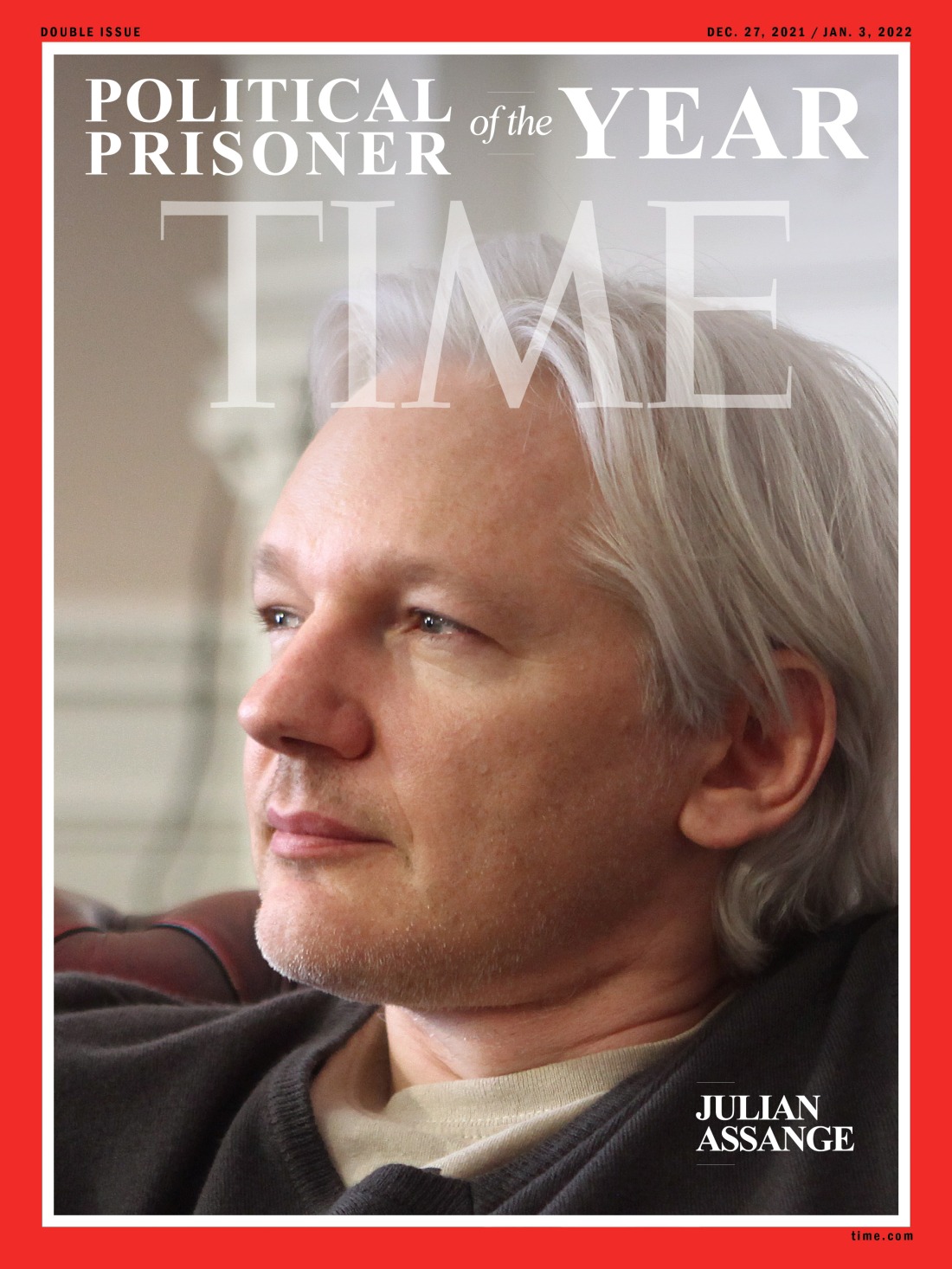
Julian Assange’s legal team has filed an appeal to Britain’s High Court in an effort to thwart his extradition to the United States to face espionage charges.
Key points:
- The appeal argues that Julian Assange is being prosecuted and punished for his political opinions and for protected speech
- Assange has been in custody since his was arrested in April 2019 and dragged out of the Ecuadorian embassy in London
- He is facing 17 espionage charges and one charge of computer misuse in the United States
British Home Secretary Priti Patel approved the extradition of the WikiLeaks founder in June after he was denied an appeal in the Supreme Court appeal back in March.
A public relations firm representing Assange said in a statement that the respondents to the appeal were Ms Patel and the government of the United States.
Lawyers for Assange will argue that he is being prosecuted and punished for his political opinions and for protected speech, and that the extradition request violates the US-UK Extradition Treaty and international law as it relates to what it calls political offences.
His lawyers will also argue that the US Government “misrepresented the core facts of the case” to the British courts and that the extradition request “constitute an abuse of process”.
“The Perfected Grounds of Appeal contain the arguments on which Julian Assange intends to challenge District Judge Vanessa Baraitser’s decision of 4 January 2021 and introduces significant new evidence that has developed since that ruling,” the statement read.
That January 2021 ruling saw Judge Baraister refuse the US Government’s extradition request on the basis that of Assange’s mental condition and the risk of suicide if he were held in a maximum-security prison.
But Judge Baraister rejected nearly all of the arguments put forward by Assange’s lawyers at the time, including that the charges against him were politically motivated and that he would not receive a fair trial in the US.
In December 2021 the US Government won an appeal against that decision in the UK’s High Court, with Judge Timothy Holroyde finding that the US had given assurances to the UK about Assange’s detention, including about his treatment in the US prison system and that the US would allow him to be transferred to Australia to serve any prison sentence.
Assange’s latest appeal also argues Ms Patel “erred in her decision to approve the extradition order on grounds of specialty” because the extradition request violated the US-UK Extradition Treaty.
US authorities have accused the 51-year-old of conspiring to hack government computers and of violating an espionage law in connection with the release of confidential cables by WikiLeaks in 2010-2011.
Assange is facing up to 175 years in prison over the 17 espionage charges and one charge of computer misuse over the leaks, but the US government has said that a sentence of between three and six years was more likely.
Stella Assange, Assange’s wife, said the pursuit of her husband was “criminal abuse”.
“Since the last ruling, overwhelming evidence has emerged, proving that the United States prosecution against my husband is a criminal abuse,” she said in a statement.
“The High Court judges will now decide whether Julian is given the opportunity to put the case against the United States before open court, and in full, at the appeal.”
Commemorate August 29: International Day against Nuclear Tests
Jerusalem Post, By IVO SLAUS, AUGUST 29, 2022, At the initiative of the Republic of Kazakhstan, the UN declared August 29 as the International Day against Nuclear Tests, universally adopted in 2009. While many of those discussing the possible use of nuclear weapons, including Mutually Assured Destruction (MAD), Tactical Nuclear Weapons, and Nuclear Utilization Target Selection (NUTS), and are modernizing and “improving” their nuclear capacity, most of them know almost nothing about nuclear warfare and its consequences for humankind.
In contrast, the people of Kazakhstan and their leaders have witnessed many nuclear tests carried out at the Semipalatinsk Nuclear Test Site for 40 years (1949-1989). From Pervaya Molniya (first lightning) on August 29, 1949, there were 456 tests at Semipalatinsk, 340 underground, and 116 above ground. Kazakhstan and its 1.5 million citizens have suffered from all the negative consequences of nuclear tests. Early death, lifelong debilitating illnesses, and horrific birth defects, including “jelly babies” – children born without limbs.
With good reason, Kazakhstan signed and ratified the Treaty on Prohibition of Nuclear Weapons and was among the original 50 states party to the treaty. On its independence day, Kazakhstan inherited 1,400 Soviet nuclear warheads, and quickly relinquished them, emphasizing that security is better achieved through disarmament and negotiation.
Kazakhstan also initiated a global moment of silence to honor all victims of nuclear weapons testing – at 11:05 Kazakhstan time on August 29. At 11:05 a.m. the clock shows V, standing for victory.
The elimination of nuclear weapons is truly a victory for humankind. On July 9, 1955, the Russell-Einstein Manifesto, signed by 11 outstanding scientists, was issued stressing, “Here is the problem we present to you, stark, dreadful and inescapable: Shall we put an end to the human race or shall mankind renounce war?… Remember your humanity and forget the rest!”
……………………….. we were never as close to doomsday as we are today. Expressed by the doomsday clock, introduced in 1947 and put at seven minutes to midnight, which symbolizes the human-made catastrophe, the doomsday clock since 2020 is at 100 seconds and most likely will deteriorate. The recent conflicts in Europe and Asia will probably abbreviate it further………………………more https://www.jpost.com/opinion/article-715783
Russia-Ukraine war latest: what we know on day 186 of the invasion
Radiation fears over Zaporizhzhia nuclear plant linger amid accusations from Moscow and Kyiv of more shelling near the site
https://www.theguardian.com/world/2022/aug/28/russia-ukraine-war-latest-what-we-know-on-day-186-of-the-invasion Nadeem Badshah with agencies, Mon 29 Aug 2022
- Concern about the potential for a radiation leak at Zaporizhzhia nuclear power plant is persisting. Ukraine’s state energy operator has warned there are “risks of hydrogen leakage and sputtering of radioactive substances” at the Russian-occupied plant. Authorities were distributing iodine tablets to residents who live near the plant in case of radiation exposure.
- Russia and Ukraine traded fresh accusations of each other shelling the area around the nuclear plant, Europe’s largest, on Saturday. Moscow’s troops have “repeatedly shelled” the site of the plant over the past day, the Ukrainian state nuclear company, Energoatom, said. Russia’s defence ministry has claimed Ukraine’s troops “shelled the territory of the station three times” in the past day.
- The UN nuclear watchdog, the International Atomic Energy Agency (IAEA), is trying to negotiate access to the plant for an urgent inspection mission “to help stabilise the nuclear safety and security situation there”. Energoatom head Petro Kotin told the Guardian a visit could come before the end of the month, but Ukrainian energy minister Lana Zerkal told a local radio station she was not convinced Russia was negotiating in good faith.
- Ukrainian president Volodymyr Zelenskiy has issued a statement marking Ukraine’s Aviation Day, in which he pledged that Kyiv’s troops would “destroy the occupiers’ potential step by step”. The Ukrainian president vowed that the Russian “invaders will die like dew on the sun”.
- Russia has probably increased the intensity of its attacks in the Donetsk area of eastern Ukraine’s Donbas region over the past five days, according to British intelligence. Pro-Russia separatists have most likely made progress towards the centre of Pisky village, near Donetsk airport, but Russian forces overall have secured few territorial gains, the latest report from the UK Ministry of Defence says.
- Russia has blocked an agreement at the UN aimed at bolstering the nuclear non-proliferation treaty. The failure to agree to a joint statement, due to Moscow’s objection to a clause about control over the Zaporizhzhia plant, is the latest blow to hopes of maintaining an arms control regime and keeping a lid on a rekindled arms race.
- Ukrainian sailors will be allowed to leave the country for work, Ukraine’s cabinet of ministers has said. The prime minister, Denys Shmyhal, said men of draft age employed as crew members would be allowed to leave the country so long as they had permission from their local conscription offices to cross the border.
- Britain’s defence ministry has said it is giving six underwater drones to Ukraine to help clear its coastline of mines and make grain shipments safer. In addition, dozens of Ukrainian navy personnel will be taught to use the drones over the coming months, the ministry said.
- Kazakhstan, a neighbour and ally of Russia, has suspended all arms exports for a year, its government said, amid the conflict in Ukraine and western sanctions against Moscow.
- Poland and the Czech Republic have agreed to protect the airspace of their Nato ally Slovakia, as it upgrades its air force from legacy Soviet-made MiG-29 fighters to a new batch of F-16 jets from the US.
- The EU is set to suspend its visa travel agreement with Russia this week, The Financial Times reports. The plan to freeze a 2007 deal will make it harder and more expensive for Russians to get Schengen-area documents, the FT reports. It comes after some eastern member states threatened to unilaterally close their borders to Russian tourists, with other countries calling for collective action to stop ordinary Russians from travelling to the EU on tourist visas. Ukraine’s president Volodymyr Zelenskiy has previously called for a complete ban.
- Russia claims it has hit workshops at the Motor Sich factory in the Zaporizhzhia region of Ukraine. The facility is where helicopters for the Ukrainian air force are being repaired, the defence ministry said. But Ukrainian officials later said the hit resulted significant civilian damages, damaging nine multi-storey buildings and 40 private homes.
- A Russian missile has struck military infrastructure in Rivne oblast in northern Ukraine. Reports so far are that there were no casualties, and that the missiles came from just over the border from Belarus.
- The United States called out Russia’s “cynical obstructionism” after Moscow remained the sole holdout in blocking the adoption of a joint declaration on nuclear non-proliferation following lengthy negotiations at the United Nations. The 191 signatories review the Nuclear Non-Proliferation Treaty every five years, which aims to stop the spread of nuclear weapons and promote cooperation in the peaceful use of nuclear energy. But on Friday, Russia prevented the declaration’s adoption, saying it took issue with “political” aspects of the text.
- It is unclear whether Russia will try to boost its armed forces by recruiting more volunteer “contract” soldiers or by lifting annual targets for conscriptions, British intelligence says. President Vladimir Putin signed a decree this week to increase the size of the armed forces from 1.9 million to 2.04 million in the wake of the country’s invasion of Ukraine, now in its sixth month. The latest UK Ministry of Defence briefing says that under the Russian legislation now in place, the decree is unlikely to make “substantive progress” towards increasing Russia’s combat power.
- Two people were killed when Russia fired on Bakhmut, the governor of the Donetsk region, Pavlo Kyrylenko, said on Saturday. The eastern city is a significant target for Russian and separatist forces seeking to take control of the parts of Donetsk they don’t hold. Associated Press also reported local government officials as saying that in the Black Sea region of Mykolaiv, one person was killed and another wounded in Russian firing.
- On the opposite shore from the Zaporizhzhia nuclear power plant, the towns of Nikopol and Marhanets were hit by shells on Saturday afternoon and evening, Nikopol’s mayor, Yevhen Yevtushenko, said on Telegram.
The cost of Ukraine’s de-Russification
the burgeoning de-Russification in Ukraine is one of the issues that needs a cool-headed examination. The process of removing Russian cultural and linguistic influence from the country is not an easy — or necessarily equitable — thing to do, when around a quarter of Ukrainians still identify as Russian speakers.
The country’s insistence on its right to exist as separate from Russia is understandable, but expunging Russian cultural and linguistic influence risks future trouble.
Politico. BY JAMIE DETTMER, AUGUST 29, 2022
Wars transform nations and people — leaving them, whether victorious or vanquished, “all changed, changed utterly,” as Irish writer W.B. Yeats noted.
Yeats was writing about the armed insurrection against British rule in Ireland during April 1916. The uprising had lasted just six days, but Ireland would never be the same.
Ukraine’s ongoing epic defense of its national identity, territorial integrity and sovereignty has already lasted six months, and there is no end in sight. It has left widespread devastation, with towns and buildings wrecked, families traumatized and uprooted, livelihoods upended and lives lost and mourned.
But there’s another transformation underway — and it’s in Ukrainian hearts.
Being told endlessly that they don’t exist has led to the understandable Ukrainian reaction of insisting on their existence, and their right to exist as separate from Russia. This is leading them to try and expunge Russian cultural and linguistic influence on their country. But how they do so, and to what degree, is fraught with future danger.
In a March 2014 speech marking the annexation of Crimea, Russian President Vladimir Putin had declared that Russians and Ukrainians “are one people. Kiev is the mother of Russian cities. Ancient Rus’ is our common source and we cannot live without each other.”
But, although the two nations are ensnared by history, the full-scale war he launched in February has only demonstrated the opposite, and has made it much more difficult for them to live with each other.
Indeed, for a nation that Putin has argued doesn’t exist, Ukraine has been kicking up a storm, and is now taking the fight well behind military frontlines, brazenly crossing the border into Russia and occupied Crimea, disrupting Russian supply lines and logistics, leaving the Kremlin to fall back on preposterous lies to explain explosions witnessed by vacationing Russians…………………
Ukrainians’ firmer sense of nationhood and identity, fueled by fury at what is befalling them, risks becoming less inclusive and more Russian-hating. How could it be otherwise?
……………. the burgeoning de-Russification in Ukraine is one of the issues that needs a cool-headed examination. The process of removing Russian cultural and linguistic influence from the country is not an easy — or necessarily equitable — thing to do, when around a quarter of Ukrainians still identify as Russian speakers.
……………………………… In January, Human Rights Watch also raised concerns about the lack of protections for Russian speakers in a new state language law that entered into force this year. The law requires print media outlets registered in Ukraine to publish only in the Ukrainian language, or to provide an accompanying Ukrainian version, or equivalent in content, volume and method of print, when publishing in another language. But while exceptions were made for other minority languages, such as English and official European Union languages, there were none provided for Russian.
………………….. in June, the Ukrainian parliament passed a set of new laws banning the distribution of Russian books printed overseas, and the playing or performance of Russian music by post-Soviet era artists, further seeking to distance the country from Russian culture.
But through the often tragic twists and turns of Ukraine’s tangled history, and the cultural imperialism of Russian czars and communist autocrats, Ukrainian and Russian culture are inextricably linked and have contributed to each other’s shaping — for good or ill.
…………………. there are risks in rejecting all things Russian……………..
In his independence day speech this week, Zelenskyy vowed Kyiv’s forces will retake Russian-occupied Crimea. But if that day comes, how will Kyiv approach de-Russification? Will it still insist on the use of the Ukrainian language in most aspects of public life on a peninsula where 65 percent of the population are ethnic Russian?
As Ukraine goes about trying to win this war, it also needs to think about how it will win the peace. https://www.politico.eu/article/the-cost-of-ukraines-de-russification/
It is really urgent” to “get out of this dependence on the nuclear fleet – French energy expert.

EDF: “It is really urgent” to “get out of this dependence on the nuclear
fleet which is weakening us more and more”, warns an expert. Yves Marignac
pleads among other things for a diversification of our electrical system
and a control of our electricity consumption, but also the development of
renewable energies.
France Info 25th Aug 2022
Chinese people are not enthusiastic about the nuclear industry
From a comment by Terry Southard 26 Aug 22
China is now, the world’s biggest economy. China has a large, educated middle class and large employed, informed, working class. Most chines have little respect for Americans, in theUSA or Americans, that visit China.
At least a half million Chinese, rose up against two proposed nuclear power plants and, a plutonium reprocessing plant in the in Jiangsu region, of china post-fukushima, in 2016. Thousands of Chinese took to the streets, in two separate cities, in China, to protest new proposed reactors and a used nuclear fuel plutonium processing plant, in their region in 2016.
The central government in Bejing, backed down, and stopped the plutonium plant and reactors in those two regions in china.
There simply aren’t enough Chinese students rushing to enrol into nuclear engineering courses, to produce the workforce for an expanded nuclear program.7 China’s ambitious nuclear expansion plans would require at least 50,000 students to be trained by 2030, but barely a few hundred students raise their hands each year.8 The shortage of trained nuclear technicians and engineers has already led to safety incidents.8
By contrast, in 2015, China invested five times more in renewables than nuclear power.4 Those nuclear projects will take many years to complete, whereas renewables are deployed and put to immediate use. Moreover, China’s nuclear investments may have an uncertain future and may meet the same fate as their renowned ghost cities. Significant Chinese street protests against nuclear, in 2013 and 2015, indicate a growing groundswell of discontent.9,10 https://nuclear-news.net/2017/01/16/nuclear-game-over/
China halts work on $15 billion nuclear waste project after protest
Stop the Extradition! #FreeAssangeNOW
Julian Assange Files his Perfected Grounds of Appeal
Crowdfunder, Today, 26 August 2022, Julian Assange is filing his Perfected Grounds of Appeal before the High Court of Justice Administrative Court. The Respondents are the Government of the United States and the Secretary of State for the Home Department, Priti Patel.
The Perfected Grounds of Appeal contain the arguments on which Julian Assange intends to challenge District Judge Vanessa Baraitser’s decision of 4 January 2021, and introduces significant new evidence that has developed since that ruling.
The Perfected Grounds of Appeal concerning the United States Government include the following points:
- Julian Assange is being prosecuted and punished for his political opinions (s.81(a) of the Extradition Act);
- Julian Assange is being prosecuted for protected speech (Article 10)
- The request itself violates the US-UK Extradition Treaty and International law because it is for political offences;
- The US Government has misrepresented the core facts of the case to the British courts; and
- The extradition request and its surrounding circumstances constitute an abuse of process.
The Perfected Grounds of Appeal concerning the Secretary of State for the Home Department (SSHD) include arguments that Home Secretary Priti Patel erred in her decision to approve the extradition order on grounds of specialty and because the request itself violates Article 4 of the US-UK Extradition Treaty.
“Since the last ruling, overwhelming evidence has emerged proving that the United States prosecution against my husband is a criminal abuse. The High Court judges will now decide whether Julian is given the opportunity to put the case against the United States before open court, and in full, at the appeal,” said Julian Assange’s wife Stella Assange.
Background:……………………………………… more https://www.crowdfunder.co.uk/p/free-assange/updates/187543#startc—
Nuclear: EDF extends the shutdown of four reactors for several weeks. (Translation)
The energy company announced on Thursday that reactors 1, 3 and 4 of the Cattenom power plant, as well as reactor 1 of Penly, will only be reconnected to the electricity network between November and January. An announcement related to the stress corrosion problem detected since last fall on several units.
By Les Echos
Posted on August 25, 2022 at 5:55 PMUpdated on August 25, 2022 at 6:04 p.m.
France will have to do without at least four nuclear reactors until the beginning of winter. This Thursday, EDF announced the extension, for several weeks, of the shutdown of units affected by the problem of stress corrosion detected for the first time in the fall of 2021.
According to the new provisional timetable published by the energy company, reactors 1 and 4 of the Cattenom power plant, in Moselle, will be reconnected to the electricity network on November 1 and 14 respectively . Reactor number 3 will resume service on December 11, while unit number 1 of the Penly power plant (Seine-Maritime) will not be reconnected until January 23……… (subscribers only) https://www.lesechos.fr/industrie-services/energie-environnement/nucleaire-edf-prolonge-pour-plusieurs-semaines-larret-de-quatre-reacteurs-1783781#utm_source=newsletter&utm_medium=email&utm_campaign=nl_lec_18h&utm_content=20220825&xtor=EPR-5020-%5B20220825
Ukraine and the Politics of Permanent War
Permanent war requires permanent censorship.

Day and night, the drums of war never stop beating. Its goal: to keep billions of dollars flowing into the hands of the war industry and prevent the public from asking inconvenient questions.
Chris Hedges, 29 Aug 22. No one, including the most bullish supporters of Ukraine, expect the nation’s war with Russia to end soon. The fighting has been reduced to artillery duels across hundreds of miles of front lines and creeping advances and retreats. Ukraine, like Afghanistan, will bleed for a very long time. This is by design.
On August 24, the Biden administration announced yet another massive military aid package to Ukraine worth nearly $3 billion. It will take months, and in some cases years, for this military equipment to reach Ukraine. In another sign that Washington assumes the conflict will be a long war of attrition it will give a name to the U.S. military assistance mission in Ukraine and make it a separate command overseen by a two- or three-star general.
Since August 2021, Biden has approved more than $8 billion in weapons transfers from existing stockpiles, known as drawdowns, to be shipped to Ukraine, which do not require Congressional approval.
Including humanitarian assistance, replenishing depleting U.S. weapons stocks and expanding U.S. troop presence in Europe, Congress has approved over $53.6 billion ($13.6 billion in March and a further $40.1 billion in May) since Russia’s February 24 invasion.
War takes precedence over the most serious existential threats we face. The proposed budget for the Centers for Disease Control and Prevention (CDC) in fiscal year 2023 is $10.675 billion while the proposed budget for the Environmental Protection Agency (EPA) is $11.881 billion. Our approved assistance to Ukraine is more than twice these amounts.
The militarists who have waged permanent war costing trillions of dollars over the past two decades have invested heavily in controlling the public narrative. The enemy, whether Saddam Hussein or Vladimir Putin, is always the epitome of evil, the new Hitler. Those we support are always heroic defenders of liberty and democracy. Anyone who questions the righteousness of the cause is accused of being an agent of a foreign power and a traitor.
The mass media cravenly disseminates these binary absurdities in 24-hour news cycles. Its news celebrities and experts, universally drawn from the intelligence community and military, rarely deviate from the approved script. The mass media cravenly disseminates these binary absurdities in 24-hour news cycles. Its news celebrities and experts, universally drawn from the intelligence community and military, rarely deviate from the approved script. Day and night, the drums of war never stop beating. Its goal: to keep billions of dollars flowing into the hands of the war industry and prevent the public from asking inconvenient questions.
In the face of this barrage, no dissent is permitted. CBS News caved to pressure and retracted its documentary which charged that only 30 percent of arms shipped to Ukraine were making it to the front lines, with the rest siphoned off to the black market, a finding that was separately reported upon by U.S. journalist Lindsey Snell. CNN has acknowledged there is no oversight of weapons once they arrive in Ukraine, long considered the most corrupt country in Europe. According to a poll of executives responsible for tackling fraud, completed by Ernst & Young in 2018, Ukraine was ranked the ninth-most corrupt nation from 53 surveyed.
There is little ostensible reason for censoring critics of the war in Ukraine. The U.S. is not at war with Russia. No U.S. troops are fighting in Ukraine. Criticism of the war in Ukraine does not jeopardize our national security. There are no long-standing cultural and historical ties to Ukraine, as there are to Great Britain. But if permanent war, with potentially tenuous public support, is the primary objective, censorship makes sense.
War is the primary business of the U.S. empire and the bedrock of the U.S. economy. The two ruling political parties slavishly perpetuate permanent war,………………………………………………
An organization like NewsGuard, which has been rating what it says are trustworthy and untrustworthy sites based on their reporting on Ukraine, is one of the many indoctrination tools of the war industry. Sites that raise what are deemed “false” assertions about Ukraine, including that there was a U.S.-backed coup in 2014 and neo-Nazi forces are part of Ukraine’s military and power structure, are tagged as unreliable. Consortium News, Daily Kos, Mint Press and Grayzone have been given a red warning label. Sites that do not raise these issues, such as CNN, receive the “green” rating” for truth and credibility. (NewsGuard, after being heavily criticized for giving Fox News a green rating of approval in July revised its rating for Fox News and MSNBC, giving them red labels.)
The ratings are arbitrary. The Daily Caller, which published fake naked pictures of Alexandria Ocasio-Cortez, was given a green rating, along with a media outlet owned and operated by The Heritage Foundation. NewsGuard gives WikiLeaks a red label for “failing” to publish retractions despite admitting that all of the information WikiLeaks has published thus far is accurate. …………..
NewsGuard, established in 2018, “partners” with the State Department and the Pentagon, as well as corporations such as Microsoft. Its advisory board includes the former Director of the CIA and NSA, Gen. Michael Hayden; the first U.S. Homeland Security director Tom Ridge and Anders Fogh Rasmussen, a former secretary general of NATO………………………………
As the persecution of Julian Assange illustrates, the throttling of press freedom is bipartisan. This assault on truth leaves a population unmoored. It feeds wild conspiracy theories. It shreds the credibility of the ruling class. It empowers demagogues. It creates an information desert, one where truth and lies are indistinguishable. It frog-marches us towards tyranny. This censorship only serves the interests of the militarists who, as Karl Liebknecht reminded his fellow Germans in World War I, are the enemy within.
-
Archives
- February 2026 (221)
- January 2026 (308)
- December 2025 (358)
- November 2025 (359)
- October 2025 (376)
- September 2025 (258)
- August 2025 (319)
- July 2025 (230)
- June 2025 (348)
- May 2025 (261)
- April 2025 (305)
- March 2025 (319)
-
Categories
- 1
- 1 NUCLEAR ISSUES
- business and costs
- climate change
- culture and arts
- ENERGY
- environment
- health
- history
- indigenous issues
- Legal
- marketing of nuclear
- media
- opposition to nuclear
- PERSONAL STORIES
- politics
- politics international
- Religion and ethics
- safety
- secrets,lies and civil liberties
- spinbuster
- technology
- Uranium
- wastes
- weapons and war
- Women
- 2 WORLD
- ACTION
- AFRICA
- Atrocities
- AUSTRALIA
- Christina's notes
- Christina's themes
- culture and arts
- Events
- Fuk 2022
- Fuk 2023
- Fukushima 2017
- Fukushima 2018
- fukushima 2019
- Fukushima 2020
- Fukushima 2021
- general
- global warming
- Humour (God we need it)
- Nuclear
- RARE EARTHS
- Reference
- resources – print
- Resources -audiovicual
- Weekly Newsletter
- World
- World Nuclear
- YouTube
-
RSS
Entries RSS
Comments RSS
 nuclear-news