All at Sea: Energy Security Bill reveals UK government preference to dump waste offshore

https://www.nuclearpolicy.info/news/all-at-sea-energy-security-bill-reveals-government-preference-to-dump-waste-offshore/ 20 July 22, The Government has published a factsheet in support of the new Energy Security Bill which has confirmed the long-held suspicion of Britain’s Nuclear Free Local Authorities that the nuclear industry intends to dump its deadly legacy of radioactive waste out at sea.
Tucked away in this page-turner is a reference that could be missed on page seven revealing that with refence to the government stated ambition to Prepare for our nuclear future and clean up the past’, that ‘The Bill will also facilitate the safe, and cost-effective clean-up of the UK’s nuclear sites, ensuring the UK is a responsible nuclear state by clarifying that a geological disposal facility located deep below the seabed will be licensed.’[1]
That the intention is to dump the waste at a location out at sea has helpfully been made plain in the latest infomercial published by the Theddlethorpe GDF Community Partnership
20th July 2022
All at Sea: Energy Security Bill reveals government preference to dump waste offshore
The Government has published a factsheet in support of the new Energy Security Bill which has confirmed the long-held suspicion of Britain’s Nuclear Free Local Authorities that the nuclear industry intends to dump its deadly legacy of radioactive waste out at sea.
Tucked away in this page-turner is a reference that could be missed on page seven revealing that with refence to the government stated ambition to Prepare for our nuclear future and clean up the past’, that ‘The Bill will also facilitate the safe, and cost-effective clean-up of the UK’s nuclear sites, ensuring the UK is a responsible nuclear state by clarifying that a geological disposal facility located deep below the seabed will be licensed.’[1]
That the intention is to dump the waste at a location out at sea has helpfully been made plain in the latest infomercial published by the Theddlethorpe GDF Community Partnership

This latest plan to jeopardise the marine environment is par for the course for successive British Governments which, without a care for the ecology of British waters, have previously chosen to recklessly dump deadly munitions and poison gas into our oceans.
In November 2020, the NFLA published a horrifying report commissioned from marine pollution expert, Tim Deere-Jones, which revealed that evidence was mounting that around two million tons of unused wartime munitions were dumped in, or around, the Beaufort’s Dyke in the Irish Sea in the interwar and post-war years, up until at least the mid-1970’s.[2]
Alongside conventional explosives, this deadly legacy included at least 14,000 tons of phosgene gas and a cocktail of other nasties such as ‘canisters of chemical warfare agents including sarin, tabun, mustard gas, cyanide, … and the biological warfare agent anthrax’.
The New Scientist has reported instances of munitions washing up on Scottish beaches and the British Geological Survey confirmed that explosions generated by degrading munitions are a relatively frequent occurrence and that at least one of those explosions was observed to have generated an explosive force equivalent to approximately 5.5 tonnes of TNT.
The report also revealed that radioactive waste has previously been dumped into the Irish Sea, in the Beaufort’s Dyke, in the Firth of Tay and off the island of Arran, including radium-coated aircraft dials, laboratory waste, luminous paint and waste encased in concrete within metal drums.
Responding to the latest revelation, Councillor David Blackburn, Chair of the NFLA Steering Committee, said:
“Clearly then the Energy Security Bill demonstrates that once again the British Government’s plan is to dump its deadly legacy of high-level radioactive waste offshore whatever the long-term detriment to the marine environment and regardless of local and international opposition, and the Theddlethorpe Community Partnership diagram makes this intention writ large.
“The NFLA has far from convinced that however well engineered a nuclear waste dump, or Geological Disposal Facility as the nuclear industry likes to call it, is that the structure of such a facility will not become compromised over the 100,000 years it is required to hold waste whilst it remains radioactive. We fear that in future centuries we shall see radioactive waste poisoning our oceans and beaches.
“This is an especial issue of concern in West Cumbria, where three of the possible four current sites for the dump are under consideration; for here for generations Sellafield has been leaking its toxics into the Irish Sea.
“The NFLA will continue to oppose a GDF, especially one at sea. Our policy is to see radioactive waste properly monitored and managed in a near surface facility, rather than dumped out of sight, out of mind and forgotten about!”
For more information, please contact NFLA Secretary Richard Outram by email on richard.outram@manchester.gov.uk or mobile 07583097793
Global action urged to block AUKUS plan on transfer of nuclear materials

The submarine purchase, if realized, “will be the first time” after the Nuclear Non-Proliferation Treaty went into force in 1970 that nuclear weapon states transfer tons of weapons-grade nuclear materials to a non-nuclear-weapon state
The plan is high on the agenda of the 10th Review Conference of the Parties to the Treaty on the Non-Proliferation of Nuclear Weapons, which is scheduled to open in New York on Aug 1
http://global.chinadaily.com.cn/a/202207/21/WS62d898fda310fd2b29e6d83a.html By ZHANG YUNBI | CHINA DAILY | Updated: 2022-07-21,
A report written by leading Chinese nuclear security researchers urged the global community to use an upcoming global conference on nuclear nonproliferation to deter the collaboration of the United States and the United Kingdom to transfer weapons-grade nuclear materials through nuclear-powered submarines to Australia.
“The weapons-grade nuclear materials to be transferred to Australia by the two countries would be sufficient to build as many as 64 to 80 nuclear weapons,” said Zhao Xuelin, a leading engineer at the China Institute of Nuclear Industry Strategy.
Such a move would be in “serious violation” of the objectives and purpose of the nonproliferation treaty and would cause enormous harm, he said.
“Washington has been busy building up blocs and small circles like AUKUS to shore up its overwhelming advantage in military areas and secure its hegemony in the Asia-Pacific and the whole world,” said Liu Chong, director of the Institute of International Security of the China Institutes of Contemporary International Relations.
“Such moves have run counter to many countries’ need to seek common security. The trilateral bloc’s members seek their own security at the cost of the other countries, sabotaging global security,” he added.
Zhang Yan, president of the China Arms Control and Disarmament Association, noted that the AUKUS partnership is a new political and military alliance that serves the US’ “Indo-Pacific Strategy”, which aims to provoke regional confrontation and step up a geopolitical zero-sum game.
The submarine purchase, if realized, “will be the first time” after the Nuclear Non-Proliferation Treaty went into force in 1970 that nuclear weapon states transfer tons of weapons-grade nuclear materials to a non-nuclear-weapon state, Zhang said.
“The US, the UK and Australia should seriously respond to the concerns of the international community and earnestly fulfill their obligations under international law,” he added.
Pan Qilong, chairman of the China Institute of Nuclear Industry Strategy, said the AUKUS nuclear-powered submarine collaboration sets a dangerous example of illegal transfer of weapons-grade nuclear materials.
Such a “blatant act of nuclear proliferation” has triggered widespread concern and criticism from the international community, he added
The US, Britain and Australia should “stop taking double standards” and halt their collaboration on nuclear-powered submarines, said the research report issued on Wednesday in Beijing.
Two leading Chinese nuclear research agencies-the China Arms Control and Disarmament Association and the China Institute of Nuclear Industry Strategy-issued the report.
“The international community should take action to urge the AUKUS countries to revoke their wrong decision, and jointly safeguard the integrity, authority and effectiveness of the international nuclear nonproliferation regime,” the report said.
The research report is the first of its kind made by Chinese think tanks focused on the collaboration of the three nations, and it offers abundant evidence and data to prove how the AUKUS countries-Australia, the UK and the US-affect the international nuclear nonproliferation system and stir up the arms race, Foreign Ministry spokesman Wang Wenbin said on Wednesday.
The report is the latest proof that the international community’s concerns on AUKUS collaboration “are well-founded by facts”, he added.
Washington, London and Canberra built the AUKUS trilateral security partnership last year. That prompted anger within and outside the Asia-Pacific region as they announced a plan to allow Australia to purchase nuclear-powered submarines from the UK.
The plan is high on the agenda of the 10th Review Conference of the Parties to the Treaty on the Non-Proliferation of Nuclear Weapons, which is scheduled to open in New York on Aug 1.
The conference, a top-level global meeting that aims to prevent a nuclear arms race and checks on the status quo of nuclear materials around the world, has been delayed for two years due to the COVID-19 pandemic.
Greenpeace investigation challenges nuclear agency on Chornobyl radiation levels

Greenpeace Germany is concerned that the IAEA is severely compromised in its role on nuclear safety and security in Ukraine by its ties to Russia’s nuclear state agency, ROSATOM, including its current IAEA Deputy Director Mikhail Chudakov, a long term ROSATOM official.
Kyiv, Ukraine – A Greenpeace Germany investigation team working with Ukrainian scientists at Chornobyl has found radiation levels in areas where Russian military operations occurred to be at least three times higher than the estimation by the International Atomic Energy Agency (IAEA).[1] In April 2022, the IAEA provided very limited data with assurances that radiation levels were “normal” and not a major environmental or public safety issue.[2]
The investigation team in Chornobyl also documented that Russian military actions against essential laboratories, databases and radiation monitoring systems have caused severe damage to the scientific infrastructure that was developed with the international scientific community. This includes damage to the lab equipment needed to study the impact of radiation on people and the environment, which threatens the safety of current and future generations.
Shaun Burnie, senior nuclear specialist at Greenpeace Germany said:
“Understanding the complex radiation effects at Chornobyl is essential for the world and that means conducting research and working with international scientists. All of that has been put at risk by Russia’s war against Ukraine. Scientists and workers conducting essential radiation hazard monitoring are now threatened by an unknown number of Russian landmines and anti-personnel explosives. This is one further outrageous legacy of Russia’s illegal war and is a crime against the environment and global science. The IAEA appears reluctant to explain the scale of the radiation hazards at Chornobyl and the impact of the Russian occupation.”
Greenpeace Germany is concerned that the IAEA is severely compromised in its role on nuclear safety and security in Ukraine by its ties to Russia’s nuclear state agency, ROSATOM, including its current IAEA Deputy Director Mikhail Chudakov, a long term ROSATOM official.
Jan Vande Putte, lead radiation specialist at Greenpeace Belgium who also participated in the investigation said:
“We measured levels of gamma radiation inside the abandoned Russian trenches that qualify it as low-level nuclear waste. Clearly the Russian military was operating in a highly radioactive environment, but that’s not what the IAEA is communicating. We can only conclude that the IAEA for some reason decided not to make an effort to fully investigate. It’s clear from our survey that there is nothing normal about the radiation levels inside the Chornobyl Exclusion Zone, despite what the IAEA wants the world to believe.”
Essential to Greenpeace Germany’s investigation was a satellite analysis report commissioned from UK based McKenzie Intelligence Services (MIS) which showed the location of Russian military operations during February and March 2022. Expert military analysis of multispectral imagery from the Sentinel 2 constellation satellite and NASA’s Visible Infrared Imaging Radiometer Suite identified fires in the exclusion zone which McKenzie concluded was set deliberately by the Russian military.[3]
Russia to Scrap World’s Largest Nuclear Submarine
https://www.themoscowtimes.com/2022/07/20/russia-to-scrap-worlds-largest-nuclear-sub-reports-a78349, 20 July 22, Russia has decommissioned the world’s largest nuclear ballistic missile submarine, state media reported Wednesday.
The Dmitry Donskoy, a Typhoon-class submarine that served in the Russian Navy’s Northern Fleet since 1980, stood at 175 meters in length. Its status as the world’s largest submarine will be taken by the 184-meter Oscar II-class Belgorod nuclear submarine, which was commissioned earlier in July.
“The submarine Dmitry Donskoy has been removed from the fleet and is to be scrapped,” the state-run RIA Novosti news agency quoted an unnamed Russian defense industry source as saying.
The Dmitry Donskoy was last spotted accompanying the Belgorod in the waters of northwestern Russia’s White Sea. . Analysts speculated at the time that the Dmitry Donskoy was accompanying the Belgorod for sea trials ahead of the latter vessel’s entrance into service.
France’s costly nationalisation of the nuclear industry

The French government is poised to pay nearly €10bn (£8.5bn) to fully
nationalise EDF as ministers attempt to tackle the European energy crisis.
The French finance ministry said on Tuesday it had offered €9.7bn or
€12 a share to buy the 16% of debt-laden EDF it does not already own. The
government of the French prime minister, Elisabeth Borne, government is
trying to shore up domestic energy supplies amid concerns over the finances
of the energy company, which is also building the Hinkley Point C nuclear
power station in Somerset.
Guardian 19th July 2022
https://www.theguardian.com/business/2022/jul/19/france-to-pay-nearly-10bn-to-fully-nationalise-edf
As Europe burns, the world’s climate plan, such as it is, unravels
As Europe burns, the world’s climate plan, such as it is, unravels
As Europe descends into a furnace, global action on climate change is being delayed by politics and war.
Employee shareholders to sue EDF over France nationising nuclear industry
An association of EDF employee shareholders announced on Sunday their plan
to sue the French state regarding its nationalisation of the power giant.
“Today the state needs to explain itself for the management as
ultra-majority stakeholder of the company,” the association “Energie en
actions” said in a statement.
The association holds that the government’s
decision goes against the interest of the company and the minority
shareholders, the statement added. The government will announce details of
its plan to fully nationalise the EDF, which runs the nation’s nuclear
power plants, by July 19.
Reuters 17th July 2022
Humanity faces collective suicide over climate crisis, warns UN chief.

Wildfires and heatwaves wreaking havoc across swathes of the globe show
humanity facing “collective suicide”, the UN secretary general has
warned, as governments around the world scramble to protect people from the
impacts of extreme heat.
António Guterres told ministers from 40 countries
meeting to discuss the climate crisis on Monday: “Half of humanity is in
the danger zone, from floods, droughts, extreme storms and wildfires. No
nation is immune. Yet we continue to feed our fossil fuel addiction.” He
added:
“We have a choice. Collective action or collective suicide. It is
in our hands.”
Guardian 18th July 2022
In Ukraine, a proxy war on the planet
As the Ukraine crisis causes global havoc, US officials won’t negotiate with Russia to end the fighting — and are even willing to “countenance” mounting hunger as a result.
Aaron Maté, Jul 17, 22
In 2015, one year after a US-backed coup ushered in a US-friendly, far-right-dominated government in Kiev, University of Chicago professor John Mearsheimer issued a stark warning. “The West is leading Ukraine down the primrose path,” he said. “And the end result is that Ukraine is going to get wrecked.”
Mearsheimer’s cause for concern was what he identified as a US-led campaign to convert Ukraine into a NATO proxy on Russia’s border. The events since have proved him to be both tragically prescient, and understated.
In using Ukraine to “fight Russia over there”, as Adam Schiff put it in January 2020, the US has not only sacrificed countless Ukrainian lives. Four months into Russia’s invasion, the Biden administration is signaling its willingness to sacrifice the rest of the planet, particularly the most vulnerable areas.
In an article headlined “Ukraine War Pushes Millions of the World’s Poorest Toward Starvation,” the Wall Street Journal summarizes the impact of the Ukraine war on global hunger:………………………..
By invading Ukraine rather than exhausting all diplomatic solutions, Russia bears obvious responsibility for the crisis. Ukraine’s grain exports, which feed multiple countries, have plummeted. Russia has denied blocking Ukrainian grain, instead faulting Kiev’s extensive mining of its Black Sea ports. Ukraine has refused to de-mine those ports on self-defense grounds, claiming that doing so could invite further Russian incursions. Turkey, which has been brokering talks between the two sides, has just announced a pending deal to break the impasse.
But even if the Turkey-backed deal is implemented, a major cause of the food crisis will remain.
By invading Ukraine rather than exhausting all diplomatic solutions, Russia bears obvious responsibility for the crisis. Ukraine’s grain exports, which feed multiple countries, have plummeted. Russia has denied blocking Ukrainian grain, instead faulting Kiev’s extensive mining of its Black Sea ports. Ukraine has refused to de-mine those ports on self-defense grounds, claiming that doing so could invite further Russian incursions. Turkey, which has been brokering talks between the two sides, has just announced a pending deal to break the impasse.
But even if the Turkey-backed deal is implemented, a major cause of the food crisis will remain. The US-led sanctions regime against Russia has blocked international payments for Russian goods and necessary export licenses, including food shipments……………………
Rather than seek a diplomatic solution in Ukraine that could end the war and its worldwide deprivations, the US has shunned talks with Russia and made clear that it is even willing to tolerate global starvation………….
Left unquestioned is why a group of officials in Washington have arrogated themselves the right to “countenance” a global recession and mounting hunger – including pushing millions toward famine — on behalf of the rest of the planet.
Because the Biden administration is willing to countenance hunger, Africa is now being pushed into what a recent New York Times article describes as a major “dilemma.” African countries who seek to accept Russian grain imports, the Times notes, “potentially face a hard choice between, on one hand, benefiting from possible war crimes and displeasing a powerful Western ally, and on the other, refusing cheap food at a time when wheat prices are soaring and hundreds of thousands of people are starving.”
Under policies set by Washington, it is apparently a “dilemma” for Africa to have to choose between feeding hundreds of thousands of people or risk “displeasing” its “powerful Western ally,” — which would presumably prefer that they starve. https://mate.substack.com/p/in-ukraine-a-proxy-war-on-the-planet
Consultation on proposed changes to storage of radioactive wastes at Hinkley Point C NPP
The Environment Agency has launched a consultation on a proposed change to
the way radioactive waste will be stored at Hinkley Point C nuclear power
station near Bridgwater. Currently the Office for Nuclear Regulation
states: The waste will be stored on the Hinkley Point C site pending
availability of the GDF and the waste meeting the waste acceptance criteria
for the site (e.g. some heat generating radioactive waste may require
on-site storage until the thermal output has reduced).
Pressurised water reactors at Hinkley Point C will use uranium fuel to create heat and
generate electricity when operating. Once used within the reactor, nuclear
fuel will be stored on-site before being sent off-site to a Geological
Disposal Facility (GDF).
NNB Generation Company (HPC) Limited was
originally issued a radioactive substances environmental permit in 2013. In
the original design radioactive waste was to be stored on-site in ‘wet
storage’ – a method of submerging and storing in water. The operator has
now decided to change the technology by which it will store spent nuclear
fuel, from wet storage to ‘dry storage’.
Dry storage will see used nuclear fuel stored in sealed containers within a facility, before it is
sent to the GDF. This means the operator now seeks to change its
radioactive substances environmental permit to remove or amend specific
conditions related to the previous wet storage technology that are no
longer relevant. The operator has said altering the storage method will not
change the expected radiation dose to the general public from discharges or
the wider environment, which remains incredibly small. Separately, NNB
Generation Company (HPC) Limited will be seeking the necessary changes to
its Development Consent Order for Hinkley Point C in the autumn.
Somerset Live 20th July 2022
https://www.somersetlive.co.uk/news/somerset-news/locals-urged-say-proposed-change-7351721
UK govt to decide on whether or not £20bn Sizewell C nuclear power plant should go ahead
A decision on whether to approve the building of a new £20bn nuclear
power plant is due later. The government was expected to make an
announcement about the application for Sizewell C in Suffolk two weeks ago.
Business minister Paul Scully said he had “set a new deadline of no later
than 20 July for deciding this application”. “This is to ensure there is
sufficient time to allow the secretary of state to consider the proposal,”
he said. The government was previously due to announce a planning decision
by 25 May, but it said it needed more time to look at new information and
it set a new deadline of 8 July.
BBC 20th July 2022
Anti-nuclear forces gather in Wales

Anti-nuclear campaigners are gathering forces against what they say is a
“repeated narrative” that nuclear energy is viable and helps create
more jobs. PAWB (People Against Wylfa B), CND Cymru, Nuclear Free Local
Authorities, Cymdeithas yr Iaith, CADNO, the Welsh Anti-Nuclear Alliance
and Beyond Nuclear have organised a conference in Caernarfon to air their
views.
North Dot Wales 20th July 2022
Greencoat Capital Investing might be turning yellow – swallowing the climate lies of the nuclear industry.
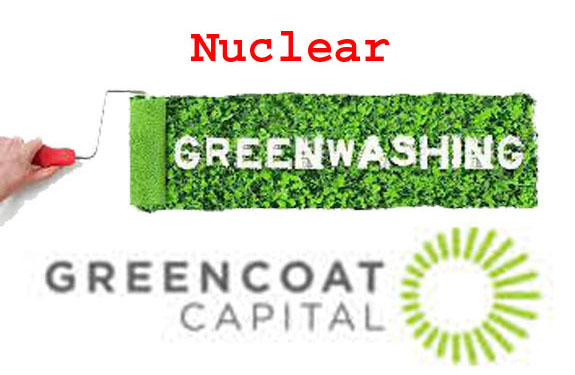
One of Europe’s largest renewable energy investors is considering
creating a nuclear investment fund to take a stake in three of EDF’s
nuclear plants, it has been reported. Greencoat Capital, which currently
has more than £6bn under management and plans to grow over the coming
years, is considering taking a stake in the proposed Sizewell C plant in
Suffolk, according to The Times. The fund could also be invested in the
ongoing Hinkley Point C build in Somerset and the existing Sizewell B
plant.
Construction News 18th July 2022 https://www.constructionnews.co.uk/buildings/sizewell-c-major-fund-mulls-investment-18-07-2022/
Documents show Australian Labor government supports Assange’s extradition to the US

as far as the Labor government is concerned, Assange’s extradition is a done deal.
the greatest mistake defenders of Assange could make would be to harbour illusions that Labor will act to free the WikiLeaks founder.
as far as the Labor government is concerned, Assange’s extradition is a done deal.
the greatest mistake defenders of Assange could make would be to harbour illusions that Labor will act to free the WikiLeaks founder.
https://www.wsws.org/en/articles/2022/07/18/rqbf-j18.html Oscar Grenfell @Oscar_Grenfell, 18 July 22,
Documents obtained by lawyer Kellie Tranter and published on the Declassified Australia website cast a damning light on the Australian Labor government’s role in facilitating the continued imprisonment of WikiLeaks publisher Julian Assange and his extradition to the US.
The material gives the lie to the claims of Labor supporters that the newly-elected government may be seeking to secure Assange’s freedom through backroom diplomacy, despite the refusal of Labor ministers to condemn the attempted US extradition and prosecution.
They show that Labor is willing to let Assange be sent to the US, despite doctors and his family warning that it would be a death sentence. A successful extradition would also set a sweeping precedent for attacks on journalists and political dissidents globally.
Assange faces 17 charges under the Espionage Act, and 175 years imprisonment, for publishing true information exposing massive US-led war crimes in Iraq and Afghanistan.
Tranter, a longstanding legal advisor to Assange, has for many years filed freedom of information requests aimed at acquiring official documents revealing the role of Australian governments in the persecution of Assange. Those released by Declassified Australia are the first she has published since the Labor government was installed after the May 21 federal election.
The two documents are redacted. What is present, however, gives a sufficient picture of Labor’s acquiescence to Assange’s extradition, and the cynical, duplicitous character of the ambiguous public statements its leading representatives have made.
The first are internal “talking points” prepared for Attorney-General Mark Dreyfus on June 2. It is entitled: “Julian Assange – International Transfer of Prisoners process – talking points and background.” Its heading indicates the central preoccupation of the document, which states:
“Prisoner transfers cannot be agreed between governments in advance of a person being a prisoner (after a criminal trial, conviction and sentencing) in a particular country, and require the consent of the prisoner;
“International prisoner transfers to Australia are initiated by an application from a prisoner after the prisoner has been convicted and sentenced;
“If surrendered, convicted and sentenced in the US, Assange could apply under the ITP scheme to serve his sentence in Australia;”
In other words, Assange is to be extradited to the US, where the former Trump administration and the CIA plotted to kidnap or assassinate him from London in 2017, before settling on a pseudo-legal criminal indictment. He would be hauled before a kangaroo court in the District of Virginia, with a jury stacked by the very same CIA officers and their relatives. The hearings would proceed in secret and Assange’s detention regime would be one of total isolation.
With this hanging over his head, the document suggests that perhaps Assange will feel compelled to plead guilty to the “crime” of journalism revealing the illegal killings of civilians, torture and other violations of international law.
Tranter notes that following a redacted section, the document continues: “However, the UK High Court’s judgment does note that the US has provided an assurance that they will consent to Mr Assange being transferred to Australia to serve any custodial sentence on him if he is convicted.”
The US “assurances” are not worth the paper they are written on. Their sole aim was to overcome an earlier British court ruling, which found that Assange’s extradition would be “oppressive” because of his deep on-going health issues and the horrific conditions in which he would be held in a US prison.
The assurances, accepted by a British High Court as bona fide last October, asserted that Assange’s conditions of detention would not be as bad as his lawyers claimed. But those very assurances made plain that the intelligence agencies, including the CIA, would have complete control over the circumstances of Assange’s imprisonment, which could be changed at any time.
The second, June 8 document, is a “ministerial submission,” entitled “Julian Assange – extradition request from the United States to the United Kingdom.” It recommends that Dreyfus “note” the situation confronting Assange, in the lead up to an announcement by British Home Secretary Priti Patel on whether she would approve extradition. Several weeks later, Patel gave her green light.
The submission to Dreyfus bluntly stated: “The UK Home Secretary is due to make a final decision on Mr Assange’s extradition to the US by 20 June. Mr Assange will have one final avenue of appeal with the leave of the High Court, otherwise he must be extradited within 28 days of the Secretary of State’s decision.”
And again: “If Mr Assange is extradited, convicted and sentenced in the US, he may apply for transfer to Australia under the International Transfer of Prisoner’s Scheme. This will require the consent of the US and Australian authorities.
“The UK High Court’s judgment notes that the US has provided an assurance that it will consent to Mr Assange being transferred to Australia to serve any custodial sentence imposed on him if he is convicted.”
Later on, the document stated: “‘If Mr Assange is convicted and sentenced to imprisonment in the US, it will be possible for him to apply under the ITP scheme to serve the remainder of his sentence in Australia. A transfer would also require the consent of the US, the Australian Government (through you as Attorney-General), and the relevant minister in the state into whose prison Mr Assange would be transferring.
“In making any such decision, the department would provide you with advice on factors such as the extent to which the transfer would assist the prisoner’s rehabilitation, sentence enforcement, community safety and any relevant humanitarian considerations, in addition to any conditions of transfer required by the US.’”
In other words, as far as the Labor government is concerned, Assange’s extradition is a done deal.
Also striking is the fact that the documents do not countenance the possibility that he would be found “not guilty” in a US court. The entire thrust of the two documents is that the extradition and successful prosecution have already been stitched up, in a conspiracy involving the British government, the UK courts, the American authorities and the Labor administration.
Once Assange were in the US, moreover, the documents acknowledge that any “prison transfer” would be dependent upon the acquiescence of the American government whose President, Joe Biden, has previously branded Assange as a “high-tech terrorist.” A prison transfer, even in the unlikely event that it occurred, would mean years more of Assange’s incarceration, in Britain, the US and then Australia.
The contempt of the government for Assange is summed up by the reference to “factors such as the extent to which the transfer would assist the prisoner’s rehabilitation.” Assange does not need to be rehabilitated. He is a heroic journalist who has done a major service to humanity. It is the war criminals he has exposed who need to be placed in an institution.
Obviously it is unknown what is contained in the redacted section. It may deal with the elephant in the room, which is excluded from the rest of the documents. Assange’s doctors, lawyers and family have all testified that the WikiLeaks founder would take his life if he were to be extradited to the US. That judgment was effectively upheld by the British District Court, before it was overturned on the basis of the bogus US assurances.
All of the talk about “prison transfers” and the like is therefore window dressing for what would amount to a death sentence.
The documents reveal the sinister character of statements by Labor leaders, including Prime Minister Anthony Albanese, Foreign Minister Penny Wong and Dreyfus, that the Assange case has ‘gone on for too long,” and “needs to be brought to a close.” When asked by journalists, each has refused to elaborate on what this precisely means.
One thing that is entirely absent from the documents is any suggestion that Labor has so much as suggested the US government drop the charges against Assange and end the extradition proceedings. The continuation of the judicial frame-up and victimisation is taken as given.
The documents vindicate the warnings of the Socialist Equality Party that the greatest mistake defenders of Assange could make would be to harbour illusions that Labor will act to free the WikiLeaks founder.
The 2010-2013 Gillard Labor government initiated Australia’s collaboration with the persecution of Assange. Gillard slandered Assange by falsely claiming that he had broken Australian laws. Assange publicly accused Gillard and other senior ministers of secretly collaborating with the American state against him and other Australian citizens associated with WikiLeaks.
Those actions were bound up with the Gillard government’s full-throated support for the “pivot to Asia,” a vast military build-up aimed at preparing for an aggressive US-led war against China.
A decade on and the military preparations are far advanced. The new Labor government is functioning as an attack dog of the Biden administration throughout the region. Last week, during a visit to Washington, Defence Minister Richard Marles hailed the US-Australia alliance as “unbreakable,” as he outlined a further massive military-build up.
The documents confirm that the fight for Assange’s freedom requires a political struggle by the working class, the social constituency for democratic rights, against the Labor government and all of its defenders. A Labor government will only intervene diplomatically and legally to free Assange, if it is forced to do so by a mass movement from below.
Greenpeace radiation investigation at Chornobyl to assess accuracy of IAEA data.
During the Russian occupation of the Chornobyl region, Greenpeace experts warned that this could lead to increased radioactive contamination.
But the IAEA gave an “all-clear” at the end of April. The nuclear agency has a mandate to promote nuclear power.
Greenpeace Germany will present the results of the Chornobyl radiation research, in English, at a press conference in Kyiv on July 20 at 9:00 am CEST (ZOOM Link: https://t1p.de/dzbks).
Greenpeace https://www.miragenews.com/greenpeace-radiation-investigation-at-chornobyl-820855/ 18 July 22,
Chornobyl, Ukraine – Near the ruins of the Chornobyl nuclear power plant, an international team of radiation experts led by Greenpeace Germany is examining abandoned Russian positions for radioactive contamination. Trenches and dugouts were built by Russian soldiers during their occupation of the Chornobyl site in March. About 600 soldiers were deployed there. The research project is being conducted with the approval of the Ukrainian government and in cooperation with scientists from the State Agency of Ukraine on the Exclusion Zone Management (SAUEZM).
For the first time since the beginning of the Russian invasion, independent measurements will be taken and the April 28 statement of the International Atomic Energy Agency (IAEA) will be assessed. According to the IAEA, while there was increased radiation the levels did not pose a great danger to the environment or people. The IAEA’s deputy director is Mikhail Chudakov, a long-time employee of the Russian nuclear company Rosatom.[1]
Shaun Burnie, a nuclear expert from Greenpeace Germany, on site in Chornobyl, said:
“We want to know what really happened on the ground. The IAEA’s information so far is insufficient. The Ukrainian authorities are enabling the Greenpeace Germany research team to gather independent information about radiation safety in the region. This includes investigating the radioactive contamination that deposited in the Exclusion Zone when the Chornobyl reactor exploded in 1986. Between seven and nine tonnes of nuclear fuel were pulverized and ejected into the atmosphere in the 1986 explosion.”
During the Russian occupation of the Chornobyl region, Greenpeace experts warned that this could lead to increased radioactive contamination. But the IAEA gave an “all-clear” at the end of April. The nuclear agency has a mandate to promote nuclear power.[2]
“While the European Commission actively supports nuclear power by including it in its taxonomy. It’s more important than ever to investigate the environmental impact of Chornobyl, the world’s worst nuclear disaster,” said Burnie.
Greenpeace Germany will present the results of the Chornobyl radiation research, in English, at a press conference in Kyiv on July 20 at 9:00 am CEST (ZOOM Link: https://t1p.de/dzbks).
Public Release. This material from the originating organization/author(s) may be of a point-in-time nature, edited for clarity, style and length. The views and opinions expressed are those of the author(s).View in full here.
1 This Month
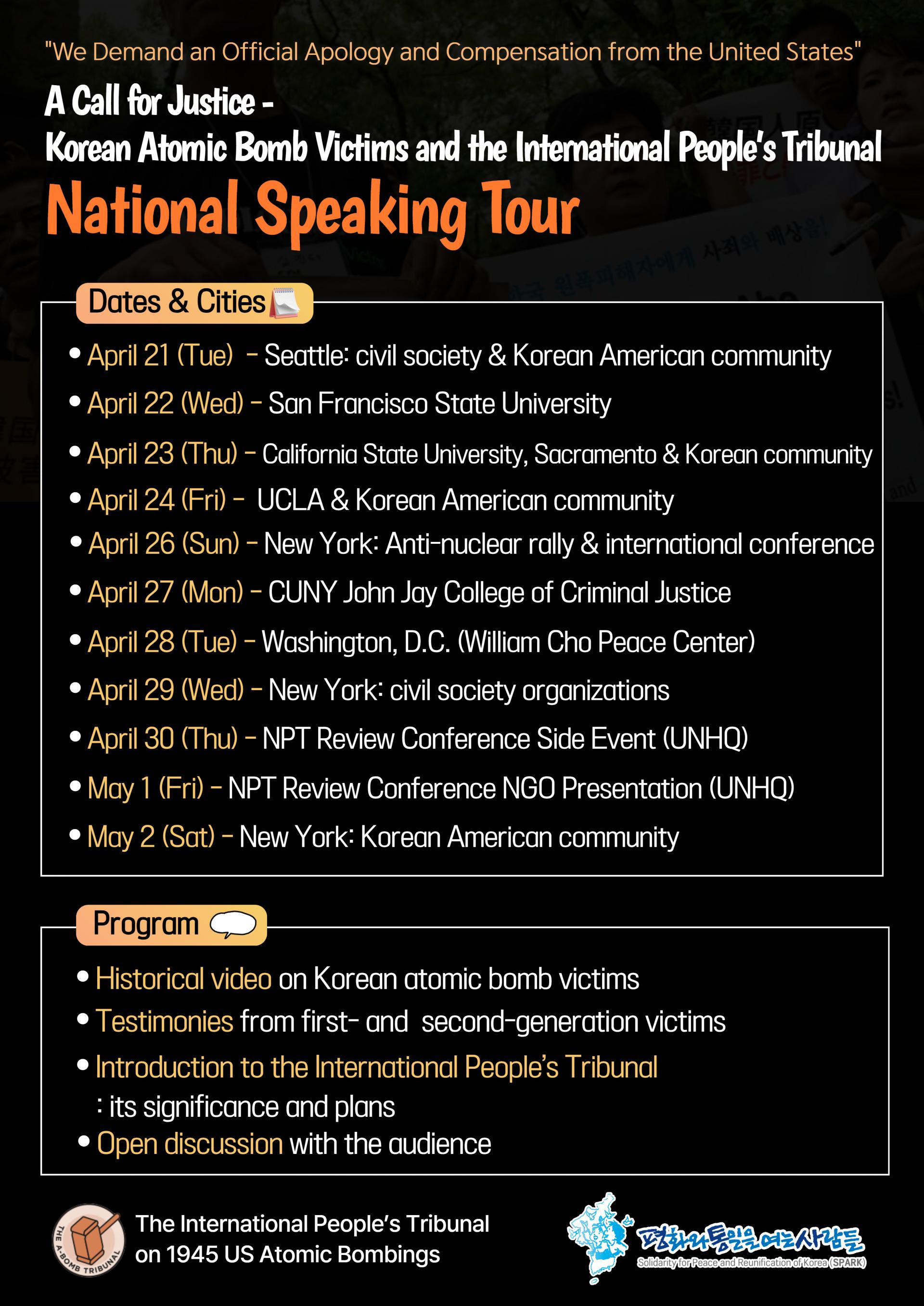
23 April – WEBINAR – Why new nuclear reactors are the wrong tools for decarbonization Thursday, April 23 • 1 AM – 2 AM AEST

Pine Ridge Uranium is the real threat, not Tehran- Tell Burgum: Stop the Extraction.
Chernobyl: The Lost Tapes – A good documentary on Chernobyl on SBS available On Demand for the next 3 weeks– https://www.sbs.com.au/ondemand/tv-program/chernobyl-the-lost-tapes/2352741955560
To see nuclear-related stories in greater depth and intensity – go to https://nuclearinformation.wordpress.com
-
Archives
- April 2026 (275)
- March 2026 (251)
- February 2026 (268)
- January 2026 (308)
- December 2025 (358)
- November 2025 (359)
- October 2025 (376)
- September 2025 (257)
- August 2025 (319)
- July 2025 (230)
- June 2025 (348)
- May 2025 (261)
-
Categories
- 1
- 1 NUCLEAR ISSUES
- business and costs
- climate change
- culture and arts
- ENERGY
- environment
- health
- history
- indigenous issues
- Legal
- marketing of nuclear
- media
- opposition to nuclear
- PERSONAL STORIES
- politics
- politics international
- Religion and ethics
- safety
- secrets,lies and civil liberties
- spinbuster
- technology
- Uranium
- wastes
- weapons and war
- Women
- 2 WORLD
- ACTION
- AFRICA
- Atrocities
- AUSTRALIA
- Christina's notes
- Christina's themes
- culture and arts
- Events
- Fuk 2022
- Fuk 2023
- Fukushima 2017
- Fukushima 2018
- fukushima 2019
- Fukushima 2020
- Fukushima 2021
- general
- global warming
- Humour (God we need it)
- Nuclear
- RARE EARTHS
- Reference
- resources – print
- Resources -audiovicual
- Weekly Newsletter
- World
- World Nuclear
- YouTube
-
RSS
Entries RSS
Comments RSS
 nuclear-news