No need for miracle technologies to rapidly decarbonise energy
Most of the world can switch to renewable energy without destabilizing
power grids, at low cost, and relying almost entirely on existing
technologies, according to a new Stanford University study.
With countries facing record-high fuel prices, energy blackmail from Russia, up to seven
million deaths per year due to air pollution, and an endless parade of
climate disasters, there’s no need for “miracle technologies” to put
things right, writes Stanford civil and environmental engineering professor
Mark Z. Jacobson, in a post for The Hill.
“By electrifying all energy sectors; producing electricity from clean, renewable sources; creating
heat, cold, and hydrogen from such electricity; storing electricity, heat,
cold and the hydrogen; expanding transmission; and shifting the time of
some electricity use, we can create safe, cheap and reliable energy
everywhere.”
Jacobson’s study covered the 145 countries that account
for 99.7% of global carbon dioxide emissions, and relied solely on onshore
and offshore wind, various solar technologies, geothermal, hydropower,
small amounts of tidal and wave energy, and different forms of storage. The
transition would cost about US$62 trillion, he says. With annual energy
cost savings of $11 trillion, the investment would pay back in less than
six years.
The Energy Mix 13th July 2022
Problem maintenance outage at Lepreau nuclear plant adds to N.B. Power money troubles

Costly spring shutdown of Point Lepreau nears day 100
Robert Jones · CBC News Jul 15, 2022
A troubled maintenance outage at the Point Lepreau nuclear generating station that began back in April has dragged on a month longer than planned and is adding to the financially challenged utility’s money troubles by the day.
N.B. Power expects Lepreau will be back in service sometime next week after what has turned into a 100-day outage, but with key work left unfinished. This work will require additional downtime next spring to fully complete…………………………
Point Lepreau is N.B. Power’s most important generating station, but its reliability has been a frustration since it emerged from a 4½-year, $2.4-billion refurbishment in late 2012.
In its annual reports, N.B. Power claims unscheduled outages at the nuclear plant cost the utility’s bottom line between $28,500 and $45,700 per hour depending on the time of year and market conditions, plus the cost of required repairs.
According to filings with the New Brunswick Energy and Utilities Board, Lepreau has experienced 8,000 more hours of downtime than projected since 2012, not including the current outage.
That has been a major factor in N.B. Power missing corporate profit targets for the last six years in a row and failing to execute on plans to reduce its debt load
In a third-quarter financial update released in February, N.B. Power reported its net debt hit $4.97 billion on December 31, 2021. That’s $40 million higher than last year and $810 million above levels it had projected for itself just six years ago………………………………………
more https://www.cbc.ca/news/canada/new-brunswick/nb-power-lepreau-maintenance-1.6520978—
On the Hudson River, a New Model of Environmental Stewardship

The languishing waterway offers an indispensable lesson for scientists: Environmental problems are human problems.,
BY JONATHAN KRAMER UNDARK, 07.14.2022
……………………………………………………………………………………………..The collaborative work being done to restore the Hudson River is just a start. If we’re going to succeed at problems like adapting to climate change, protecting clean water supplies, and preserving biodiversity, we all need to think differently, work collaboratively, and commit to learning as we go. Our knowledge, history, beliefs, culture, and social and economic structures will help to shape and define the big environmental challenges we will face in the coming decades. To give ourselves the best chance of solving those problems, we must be willing to look at them, together, in new ways.
Uranium is losing the new energy market battle.
Uranium is losing the new energy market battle. Uranium is being bypassed
in the rush to embrace renewable wind and solar energy sources, leaving
nuclear power floundering well short of its once anticipated potential.
Mining Journal 14th July 2022
More delays for the multi-billion-euro ITER nuclear fusion project in France
The multi-billion-euro ITER nuclear fusion project in France faces yet
more delays because transport sanctions imposed in response to the invasion
of Ukraine could stop key parts from Russia reaching Europe, according to a
senior official in Europe’s contribution to the initiative. Leonardo
Biagioni, deputy chief financial officer at Fusion for Energy, which
manages Europe’s contribution to ITER, said that sanctions would “most
likely” delay the project. Speaking this morning at the EuroScience Open
Forum (ESOF) in Leiden, he said that transport sanctions against Russia,
including restrictions on Russian registered vessels docking in European
ports, risk making it hard to move parts manufactured by Russia to ITER’s
site in the south of France.
Science Business 14th July 2022
https://sciencebusiness.net/news/iter-faces-further-delays-if-key-parts-stuck-russia
There Is No ‘Magic Bullet’ That Can Turn The Tide For Ukraine
1945 By Daniel Davis 8 July 22
It is necessary, in light of these physical realities, for U.S. and Western policies to change. Continuing to give verbal support to Ukraine and claiming that eventually, Kyiv’s side will win the war is not likely to change the outcome and is likely to result in a policy failure for Washington.
There Is No ‘Magic Bullet’ That Can Turn The Tide For Ukraine,8 July 22, Last Sunday when the remaining Ukrainian soldier withdrew from Lysychansk, Ukrainian President Volodymyr Zelensky said evacuating his troops from the city “where the enemy has the greatest advantage in fire power,” was the right call, but “means only one thing… That we will return thanks to our tactics, thanks to the increase in the supply of modern weapons.” While many in the West would like that to be true, the reality is very different: there is no basis upon which to hope for a future offensive to drive Russian troops out of conquered territories.
The most likely result for the Ukrainian Armed Forces (UAF) if they continue fighting the Russians is that more of Zelensky’s troops will be killed, more Ukrainian cities will be turned to rubble, and more territory Kyiv will lose to the invaders. A sober analysis of the capacity of the of the two armed forces, an assessment of the military fundamentals that have historically proven decisive on the battlefield, and an examination of the sustainability potential for both sides, make it plain that Russia will almost certainly win a tactical victory.
Ukrainian Presidential Advisor Oleksiy Arestovych said that, to the contrary, the withdrawals in Severodonetsk and Lysychansk weren’t defeats at all, but instead “successful” in that he claimed they allowed Ukraine to “buy time for the supply of Western weapons and the improvement of the second line of defense, to create conditions for our offensive actions in other areas of the front.” This is a common belief in the West but one not borne out by the facts……………..
The much-ballyhooed supply of “heavy weapons” from the West that both Zelensky and Arestovych claim is coming will not be enough to turn the tide. Not even close. Zelensky advisor Mykhailo Podolyak correctly noted that the minimum needed by Ukraine to have a chance at reaching parity with the Russian invaders would require modern kit in the range of 1,000 howitzers, 500 tanks, and 300 rocket launchers.
As detailed by The Kiel Institute for the World Economy, the sum total of all heavy weapons delivered or promised by the West through last week’s G7 and NATO summits amounts to a paltry 175 howitzers, 250 Soviet-era tanks, and an anemic dozen or so rocket launchers. To date, no other help is being considered.
The ramifications of this mismatch should be clear: despite numerous and boisterous claims of Western support, it is militarily unsound for Ukraine to base its defense plans on the hope that major quantities of high quality Western heavy weapons will show up to help Ukraine stop the Russians. But there is a bigger, less obvious truth at play as well: even if Zelensky got everything on Podolyak’s list, it still would not likely change the battlefield dynamics.
The reason is that, like in all modern wars, military victory or defeat in the Russian-Ukraine War is likely to be determined by the side that has the highest quality of manpower and less on the platforms of war. For all its major missteps in the opening round, Russia began the war with a total active force of 900,000 whereas Ukraine had approximately 250,000…………………………
In short, there is no valid military path through which Ukraine can hope that trading space for time will result in stopping Russia’s methodical progress through Ukraine – much less reverse it. To continue contesting every town and city is to ensure the Ukrainian casualties continue to mount and its urban areas destroyed. In the end, Russia is still likely to achieve a tactical victory.
It is necessary, in light of these physical realities, for U.S. and Western policies to change. Continuing to give verbal support to Ukraine and claiming that eventually, Kyiv’s side will win the war is not likely to change the outcome and is likely to result in a policy failure for Washington.
No one wants to negotiate from a position of weakness with an invading power, but the harsh truth is that the longer Zelensky and his Western supporters continue pursuing unrealistic objectives, the more likely Ukraine eventually suffers an outright military defeat.
Expert Biography: Now a 1945 Contributing Editor, Daniel L. Davis is a Senior Fellow for Defense Priorities and a former Lt. Col. in the U.S. Army who deployed into combat zones four times. He is the author of “The Eleventh Hour in 2020 America.” Follow him @DanielLDavis. https://www.19fortyfive.com/2022/07/there-is-no-magic-bullet-that-can-turn-the-tide-for-ukraine/
Former National Security Advisor John Bolton boasts openly about USA government overturning foreign governments
The Empire Is Showing More And More Of Its True Face
Caitlin Johnstone 14 July 22
Genocide walrus John Bolton outright admitted to planning foreign coups with the US government in conversation with CNN’s Jake Tapper on Wednesday. That’s coups, plural.
While arguing that the Capitol riot on January 6th of last year was not an attempted coup but rather just Trump stumbling around trying to look after his own interests, Bolton hastened to pull authority on the matter when Tapper suggested that he might not be correct about how coups work.
“I disagree with that,” Bolton said. “As somebody who has helped plan coups d’etat — not here, but, you know, other places — it takes a lot of work, and that’s not what [Trump] did.”
Places. Plural.
Tapper just let Bolton’s remark slide like he didn’t just admit to something extraordinarily fiendish, but did eventually follow up with a request that the former National Security Advisor elaborate.
“I do want to ask a follow up,” Tapper said. “When we were talking about what is capable, or what you need to do to be able to plan a coup, and you cited your expertise having planned coups.”
“I’m not going to get into the specifics,” replied Bolton with a chuckle.
“Successful coups?” Tapper asked.
“Well, I wrote about Venezuela in the book,” Bolton answered. “And it turned out not to be successful – not that we had all that much to do with it, but I saw what it took for an opposition to try and overturn an illegally elected president, and they failed. The notion that Donald Trump was half as competent as the Venezuelan opposition is laughable.”
“I feel like there’s other stuff you’re not telling me, though,” Tapper responded.
“I’m sure there is,” Bolton said, grinning like he just finished boiling a puppy.
Tapper pursued the matter no further, because he is a propagandist first and a journalist second, and he would be acutely aware that Bolton was saying things that you are not supposed to admit to on television.
Bolton’s sole admission to coup plotting runs counter to his comments about the US government’s failed attempt to oust President Nicolas Maduro while he was facilitating that bizarre operation under the Trump administration, telling reporters in 2019 that the empire’s Venezuela shenanigans were “clearly not a coup.”………………….. https://caitlinjohnstone.substack.com/p/the-empire-is-showing-more-and-more—
The Agency Responsible for Securing the U.S.’s Toxic Nuclear Waste Has Its Work Cut Out For It
Gizmodo Mack DeGeurin, July 14, 2022 Scattershot budgets, lack of coordination, stalling research and development, and rapid worker turnover are threatening the Department of Energy’s ability to sufficiently store and secure the nation’s ever-growing trash bin of toxic nuclear waste.
Those were some of the top concerns outlined today by experts and lawmakers during a congressional hearing probing the country’s nuclear waste cleanup response. The hearing, carried out by the House Committee on Science, Space, and Technology, specifically interrogated a series of Government Accountability Office reports highlighting potential deficiencies within the DOE’s Office of Environmental Management (EM).
The DOE’s EM office is responsible for the Herculean task of securing and cleaning up the country’s still-growing excesses of radioactive nuclear waste produced as a byproduct of nuclear weapons research and production dating back to World War II. Those diverse cleanup efforts can vary from addressing contaminated ground soil and groundwater, to decommissioning contaminated facilities, and building facilities to treat radioactive waste. That’s a challenging task under the best circumstance, and the office certainly isn’t operating at its best, according to the GAO.
One of the 2021 GAO reports found growth in DOE’s environmental waste liabilities and overall costs related to addressing cleanup have outpaced how much the agency spends on cleanup. A separate GAO report released that same year found the DOE had reduced research and development funding crucial for discovering new, undiscovered ways to reduce all that nuclear waste. While throwing more funding at the agency might sound like the most obvious answer to that second problem, GAO Natural Resources, and Environment Director Nathan Anderson wasn’t so sure when probed by lawmakers. Large chunks of DOE R&D money, he said, simply aren’t trackable.
“We asked the sites, we asked the labs what [money] was spent and there was a breakdown of internal controls at that point,” Anderson said……..
Anderson was directly involved in the GAO report, which determined the DOE as a whole simply lacks a “comprehensive approach to prioritising cleanup R&D.”……………..
In some cases, waste cleanup teams handling extremely hazardous materials appeared woefully under-equipped. ………………..
Issues around nuclear waste safety don’t simply cease to exist once the dangerous materials are secured underground either. Several of the speakers Wednesday expressed concerns that escalating environmental disturbances arising from climate change could potentially force the EM to reconsider some of its models around proper waste storage. What happens, for example, when an area selected to store hazardous materials is actually unearthed and made unviable due to climate change effects? Anderson said models made accounting for weather patterns 20 years ago may not accurately reflect the realities of climate impacts today…………………………………… https://www.gizmodo.com.au/2022/07/the-agency-responsible-for-securing-the-u-s-s-toxic-nuclear-waste-has-its-work-cut-out-for-it/
Biden moves US closer to confrontation with Russia
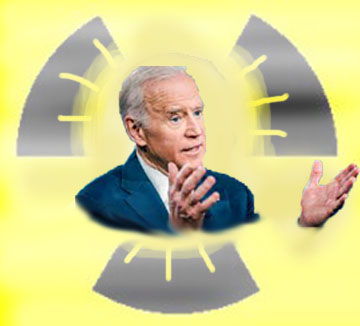
His latest step reflects his choice of war over peace — or as he might put it, his belief that peace can best be achieved through war.
For American strategic planners, this war has little to do with Ukraine. They see it as a battering ram against Russia. Since saving Ukrainian lives is not their priority, they view diplomacy as an enemy.
Negotiation would inevitably give Russia at least some of what it wants. Russia’s war with Ukraine, on the other hand, holds out the delicious prospect of bringing Russia to its knees. That’s why Congress voted to send Ukraine billions of dollars in weaponry, and why President Biden asserted when making his announcement that rather than send diplomats to the crisis zone, he prefers “stepping up” US military involvement there.
His announcement to step up military involvement in Europe reflects his choice of war over peace.
Boston Globe ,By Stephen Kinzer July 11, 2022,
The United States is sinking its flag deeper into European soil. President Biden announced late last monththat the American military will soon open a “permanent base” in Poland, deploy two squadrons of F-35 fighter jets to Britain, send more warships to our sprawling base in Spain, and increase our troop strength in Romania, Latvia, Lithuania, and Estonia. Instead of promoting diplomacy that could lead to peace, he chose a course guaranteed to increase tensions with Russia at a moment when they are already approaching an all-time high. This brings us one step closer to direct confrontation with another nuclear-armed power.
Biden and other promoters of this policy — a group that includes virtually everyone in Washington — say it is necessary to counter Russian aggression in Ukraine. In fact, it will have little effect in Ukraine. The true purpose of this American buildup is to threaten and intimidate Russia.
For complex reasons that are as much psychological as political, many Americans have come to regard Russia as a font of evil. Many in Washington dream of destroying Russia utterly and forever — stripping it of all power and then perhaps breaking it up into smaller states that would submit to American influence.
For American strategic planners, this war has little to do with Ukraine. They see it as a battering ram against Russia. Since saving Ukrainian lives is not their priority, they view diplomacy as an enemy. Negotiation would inevitably give Russia at least some of what it wants. Russia’s war with Ukraine, on the other hand, holds out the delicious prospect of bringing Russia to its knees. That’s why Congress voted to send Ukraine billions of dollars in weaponry, and why President Biden asserted when making his announcement that rather than send diplomats to the crisis zone, he prefers “stepping up” US military involvement there.
Outlines of what will probably be the peace settlement in Ukraine are already clear. Russia will withdraw its army, eastern regions of Ukraine will be guaranteed autonomy, and Ukraine will agree to keep Western troops out of its territory. Such a peace, however, would end the dream of inflicting a “strategic defeat” on Russia. That is why many in Washington consider it anathema — and why Secretary of State Antony Blinken refused to meet his Russian counterpart when both were at a summit in Bali last week.
An obsession with crushing Russia lies behind Washington’s passionate embrace of the Ukrainian cause. But there is another, more cosmic reason. We are seeing a textbook example of what geo-strategists call the classic security dilemma. One country takes steps to secure itself, but others see those steps as preparation for war. They respond with buildups of their own. Fears, accusations, and demonizing propaganda intensify until fighting breaks out.
This syndrome has led to countless wars. World War I is just one example. Germany began strengthening its navy to protect trade routes and overseas colonies. Britain, determined to “rule the waves,” took this as a threat and began producing radically more destructive warships. Germany presumed it was the intended target of those warships, and began building its own. The competition became so intense that it took only a single spark, an assassination in Bosnia, to set off the conflagration.
The same cascade of military pride and ambition — the same inability to see things from the other side’s point of view — led to the Ukraine war. Democrats and Republicans alike insist that we only ever wanted freedom for Ukraine, that we offered to bring it into the NATO military alliance in 2008 to guarantee that freedom, that we helped depose its Russia-friendly government in 2014 because it was corrupt, and that we are sending tens of billions of dollars in weaponry to Ukraine only to help it defend itself against aggression.
Russians see things quite differently: America is fiercely dedicated to destroying Russia; it is increasing troop strength in Europe to prepare for a future assault; and if Russia doesn’t stop this tide in Ukraine, it will sooner or later find itself defending Moscow against a US-led attack.
It’s not necessary to decide which of these versions is right, only to recognize that both exist. Like many Americans, Biden sees Russia through a lens at least as distorted as the one through which Russia views us. His latest step reflects his choice of war over peace — or as he might put it, his belief that peace can best be achieved through war. That will haunt the world long after the Ukraine conflict ends.
Stephen Kinzer is a senior fellow at the Watson Institute for International and Public Affairs at Brown University.
https://www.bostonglobe.com/2022/07/11/opinion/biden-moves-us-closer-confrontation-with-russia/
Climate change hitting France’s nuclear power – the technology that’s supposed to solve climate change !
Electricity prices across Europe are expected to rise as the heatwave sweeping Europe has crippled nuclear power output in France. State-owned electricity provider EDF must reduce or halt nuclear output when river temperatures reach certain thresholds under French legislation.
This is to ensure that the water used to cool the plants won’t harm the environment when it is pumped back out. Climbing temperatures in the Garonne River mean that production will likely be slowed at the Golfech nuclear plant in the South of the country from Thursday, Electricite de France SA said.
Independent 12th July 2022
Macron’s nationalisation of nuclear energy corporation EDF will be a disaster for France
Macron’s energy power grab will be a disaster for France.
Nationalisation of the nuclear energy giant is an ill-thought-out, populist
response from a president overwhelmed by a political crisis. European
leaders have yet to come up with any convincing answers to the global
energy crisis. ………..
France’s energy system is in
complete disarray and Emmanuel Macron’s solution is arguably the worst of
the lot, in a decidedly crowded field – an ill-thought out, knee-jerk
populist response from a president battling a massive political crisis at
home. Faced with long delays and huge budget overruns on new nuclear plants
at home and abroad, corrosion problems at many of its existing reactors,
and the same spiralling cost of living crunch that has gripped most of
Europe, Macron has decided that now is the time to renationalise heavily
indebted electricity titan EDF.
. You can see the attractions, limited though
they are. As the country’s biggest utility by a sizeable margin, EDF has
become the face of France’s energy crisis. Taking EDF into state hands
removes it from the glare of the stock market, making it easier, in theory,
to tackle its huge financial and operational problems head on with the
approval of private shareholders no longer required.
Nevertheless, for all the political hype, it is a move that I am willing to bet will almost
certainly backfire – and in spectacular fashion, too. Whatever the
problem, nationalisation is rarely, if ever, the solution. History has
taught us that. It is even harder to believe that nationalisation will
improve EDF’s widespread operational issues.
One of the main reasons why
its finances are in such a sorry state is that scores of corroding reactors
have forced it to shut down many of its existing nuclear plants, strangling
output. It is also suffering from huge cost overruns and missed deadlines
on new projects. EDF is beset by a host of problems, almost none of which
are likely to be solved by vanishing into the bowels of the notoriously
inefficient, heavily technocratic, work-shy French state. Telegraph 13th July 2022
How To End the War in Ukraine?
Anti War.com by Jean Bricmont
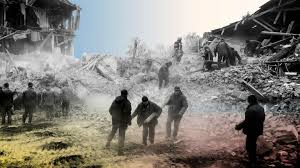
Given the devastating effects of this war, first in Ukraine but also, through sanctions, on the world economy and the risks of famine that they entail, it seems obvious that the first task of any diplomat and political leader should be to end this war.
The problem is that there are at least two ways of considering how this will end and they are irreconcilable.
The first, which until recently was the view of the U.S. government, which is the view of the Ukrainian government, European Greens, and the majority of our media, is that the Russian invasion is illegitimate, unprovoked, and must simply be repelled: Ukraine must regain all of its territory, including Crimea (which has been attached to Russia since 2014).
The other, supported by individuals as different as Chomsky, the Pope, Lula in Brazil, and Kissinger, is that a negotiated solution is inevitable, which in practice means Ukraine giving up territories such as Crimea and Donbass and presumably other regions, as well as agreeing to the neutrality of that country.
The supporters of the first solution shower those of the second with insults: Putin-lovers, pro-Russians, supporters of appeasement in the face of Russian fascism etc. But we can ask at least two questions about this first solution: is it fair? And is it realistic?
The fundamental problem with the fairness of this solution is that it assumes that there is one Ukraine and one Ukrainian people under attack by Russia. But Ukraine, which became independent in 1991 with the dissolution of the USSR, was not a former nation annexed by Russia in the past. Certainly, there was a historical Ukraine that had been absorbed into the Russian empire, but what became independent in 1991 was the former Ukrainian Soviet Socialist Republic, created in 1922 following the October revolution and which incorporated Russian-speaking populations in the east of the present Ukraine, and to whose opinion was never asked by anybody. It included also territories in the west added to Ukraine in 1939-1945 as well as the Crimea added in 1954.………………………………
If the right to self-determination of peoples is sacrosanct in the face of the territorial integrity of states in which they are minorities, then why does the territorial integrity of republics, which were in part administrative entities in dissolving multinational states, suddenly become sacrosanct in the face of the aspirations of minorities living in those republics?
……………………….. The precedent of the Kosovo war is often recalled by the Russians: if the NATO intervention there was legitimate to support the Kosovars, why is the Russian “military operation” to protect the inhabitants of Donbass not legitimate?
There have been many other conflicts of the same kind, and much bloodier: for example, the partition of the British Empire of India in 1948 between India and Pakistan, which initially included the present Bangladesh (called at the time East Pakistan) that became independent after a fierce war in 1971.
There is no simple solution to this kind of conflict. In principle, there could be one: ask by referendum on a local basis to which state each population wants to belong. But this solution is accepted by almost no one: if a referendum in Crimea is in favor of joining Russia, of which Crimea was a part between 1783 and 1954 (and, at that time, the joining of Crimea to Ukraine was decided in a purely authoritarian way), the West declares it illegitimate. If other referendums are held in the rest of Ukraine, they will also be declared illegitimate.
What we should hope for in order to resolve these local conflicts is that foreign powers do not use them to advance their economic and strategic interests. However, the United States and Britain have done exactly the opposite since 2014 (if not before) in Ukraine, first encouraging a coup that led to the overthrow of the legally elected president, Yanukovych, who had to flee for his life. This president was seen as pro-Russian, and the United States and Britain were not prepared to accept the situation. As the new power in Kiev was not only violently anti-Russian but also hostile to the Russian-speaking part of its population, a fraction of the latter demanded more autonomy within Ukraine, which was refused. Since then, there has been a more or less low-intensity war between part of the Donbass and the Ukrainian army.
Again, in principle, a peaceful solution could have been found through negotiations with the leaders of the rebel provinces, and this is what the Minsk agreements, accepted by the Ukrainian government but never implemented by it, provided.
It is true that there are other minorities in the world who are persecuted or badly treated by their governments, but it was particularly irresponsible for the Kiev government to behave in this way towards its minority in the east of the country, knowing that it could benefit from the protection of the Russian “big brother.” And it is unlikely that this conduct would have been adopted without the encouragement and political and military support of the United States and Britain.
This is why it can be considered that it was the American-British policy that pushed Russia to intervene. One can obviously condemn this intervention as contrary to international law, but then one would have to answer the question: what should the Russians have done to protect the populations of eastern Ukraine, assuming that their demands for autonomy are accepted as legitimate (and if not, in the name of what to refuse them)? Wait? Negotiate? But that is what they have been doing for eight years, sending very clear signals at the end of 2021 that their patience had limits.
Moreover, it is difficult for the architects of the wars in Yugoslavia, Iraq, Libya and Afghanistan to pose as great defenders of international law in the face of the Russians. Whatever one thinks of their military intervention in Ukraine, it is less illegitimate than the Western wars mentioned above.
…………………………………………….It is also necessary to point out the incredible hypocrisy of the discourse on the war in Ukraine, and on the accompanying sanctions, on the part of most of our journalists and intellectuals: when did we do anything similar during the US invasion of Iraq?
…………………………. In terms of interests, it is clear that the United States is using every weapon at its disposal, including espionage, to favor its businesses at the expense of ours.
………………………………………. As for the military issue, it is difficult to make definite predictions, but for the moment the Russians are moving forward, even if much more slowly than at the beginning. No Ukrainian counter-offensive has had a lasting effect. Some hope for a reversal of the situation following the delivery of sophisticated weapons to Ukraine by the United States and its allies, but this remains to be seen, and various voices in Washington itself are considering the need for negotiation as the only solution to the crisis.
it seems unlikely that Ukraine’s war aims of recovering the entire eastern part of the country and Crimea can be achieved. The Russians consider these territories, and especially Crimea, to be part of the “motherland” and they are far from having committed all their forces to this battle……………………………………..
In the end, it is likely that the only ones who will have defended the true interests of the Ukrainian people (as well as those of Europe) will be those who have advocated from the beginning (i.e., at least since 2014) for a negotiated solution to the conflict.
Jean Bricmont is a retired Belgian theoretical physicist. He is the co-author with Alan Sokal of Fashionable Nonsense Postmodern Intellectuals’ Abuse of Science (Picador, NY, 1998), of Humanitarian Imperialism; Using human rights to sell war (Monthly Review, NY, 2007), and of Quantum Sense and Nonsense (Springer, 2017).
https://original.antiwar.com/jean_bricmont/2022/07/11/how-to-end-the-war-in-ukraine/
The Nuclear Ban Treaty Had a Conference. Now it Has a Plan.
https://allthingsnuclear.org/jknox/the-nuclear-ban-treaty-had-a-conference-now-it-has-a-plan/ Jennifer Knox July 13, 2022 The Treaty on the Prohibition of Nuclear Weapons (TPNW) entered into force in early 2021, for the first time defining nuclear weapons as illegitimate tools of war under international law. In Vienna from June 21-23, states parties gathered for the first time alongside other state observers, civil society groups, and survivors of nuclear use, testing, and development to define concrete steps towards implementing the obligations of the treaty. At its conclusion, states parties adopted the Vienna Declaration and 50-point Action Plan.
The Vienna Declaration
The Vienna Declaration is a forceful statement against nuclear weapons. It reaffirms the treaty’s goal of a world without nuclear weapons and asserts “that the risk of a nuclear weapon detonation by accident, miscalculation or design concerns the security of all humanity.”
The Declaration also addresses the growing risks of nuclear war. Members were divided on whether to explicitly condemn Russia’s invasion of Ukraine and escalating threats of nuclear use; many participating states issued statements condemning Russian aggression, but others did not. Ultimately, while the Declaration acknowledged an environment of “increasingly strident nuclear rhetoric,” it did not single out Russia. Instead, the Declaration “[condemns] unequivocally any and all nuclear threats, whether they be explicit or implicit and irrespective of the circumstances.”
While Russia’s recent nuclear threats are particularly egregious and irresponsible, they are unfortunately not unique. Other nuclear powers engage in similar rhetoric, using the threat of nuclear use not for their own defense but as a coercive tool of policy. Former US President Donald Trump repeatedly issued such threats during his administration. National populist leaders like Vladimir Putin and Donald Trump are more likely to resort to dangerous rhetoric and take risks in pursuit of their goals. As national populism continues to rise in nuclear-armed states, norms of nuclear restraint will continue to erode.
However, nuclear threats do not only come from national populists through speeches or tweets. The threat of nuclear use is fundamental to the security of every nuclear-armed state and any other state that relies on nuclear deterrence. Nuclear deterrence is the threat of nuclear use, issued in the hope that the risk of catastrophic humanitarian disaster will disincentivize conflict. Helplessness, uncertainty and terror are foundational to theories of nuclear deterrence – this is how the system works by design.
The Vienna Declaration denounces not a single bad actor but the very practice of nuclear deterrence, a system which both permits and perpetuates Russia’s nuclear coercion. While nuclear powers and their allies recommit indefinitely to global terror through nuclear deterrence, the Vienna Declaration is a timely reminder that most states have explicitly rejected the threat of mass destruction as a form of security. Nine states possess nuclear weapons. Another 33 states have or will soon have collective security relationships with nuclear powers. They include:
- 6 of which host US nuclear weapons)
- Soon-to-be NATO members Finland and Sweden
- Australia, Japan, and South Korea, which have military alliances with the United States
- Belarus, which may soon host Russian nuclear weapons
That leaves 151 states that do not rely on nuclear weapons in any form for their security. All but one of those states (South Sudan) have committed to never develop or possess nuclear weapons as members of the Nuclear Non-Proliferation Treaty (NPT). 114 of those states are members of regional nuclear-weapons-free zones. 66 (so far) have signed and ratified the TPNW – for many, joining the TPNW is the third time they have formally affirmed their commitment to abstain from nuclear weapons.
Nuclear weapons are not inevitable or irreplaceable. Most governments and most people in the world have chosen not to seek their own security through the threat of mass destruction.
The Action Plan
State parties also adopted a 50-point Action Plan. This document contains concrete actions for members of the TPNW to advance nuclear disarmament and fulfill their obligations under the treaty. Many of these provisions relate to the treaty’s ‘positive obligations:’ measures to reduce both the past, present, and future harm caused by nuclear weapons. The treaty obliges its members to provide victim assistance and environmental remediation for frontline communities impacted by nuclear use, testing, and development.
The humanitarian impacts of nuclear weapons are widespread, affecting people all over the world. The nuclear age began with the destruction of the cities of Hiroshima and Nagasaki, creating hundreds of thousands of casualties and leaving behind generations affected by the consequences. In the following 70 years, over 2,000 nuclear tests were conducted throughout North America, Eurasia, Africa, and the Pacific. Further environmental contamination resulted from mining, development, production, waste storage, and disposal activities related to nuclear weapons. Indigenous communities and people of color have disproportionately born the health and environmental consequences of nuclear weapons, and, in most cases, those harms have not been addressed. In the Action Plan, states parties committed to
- consult closely with affected communities and international organizations to develop sustainable, effective, and detailed plans for victim assistance and environmental remediation.
- appoint government officials and adopt national laws and policies required to carry out that work.
- establish voluntary reporting on national initiatives and progress.
- provide technical, material, and financial assistance to states in need of additional support that have been affected by nuclear weapons.
- develop guidelines for how to address age- and gender-specific nuclear harm.
The Action Plan also emphasizes the role of scientific and technical expertise in creating a shared understanding of the humanitarian impact of nuclear weapons and guiding implementation of the treaty. The Action Plan calls for states parties to
- establish
The Action Plan also emphasizes the role of scientific and technical expertise in creating a shared understanding of the humanitarian impact of nuclear weapons and guiding implementation of the treaty. The Action Plan calls for states parties to
- establish a Scientific Advisory Group to advise treaty members and aid in achieving the treaty’s goals.
- create a broad network of experts from relevant fields that are diverse in terms of geography and gender.
Beyond the immediate objectives of the Action Plan, this document is also meaningful as a sign of forward momentum on nuclear disarmament issues. It represents the first conclusive plan of work to result from multilateral disarmament efforts in over a decade. In the past, review conferences for the NPT have been seen as important opportunities to make progress on nuclear disarmament, a key pillar of the treaty. The 2010 NPT Review Conference produced an action plan for the first time, but it was never fully implemented. The 2015 Review Conference failed to produce a consensus document, in large part because of a lack of progress on the 2010 action plan. Prospects for a better outcome during the 2022 Review Conference this August are bleak. Beyond the immediate objectives of the Action Plan, this document is also meaningful as a sign of forward momentum on nuclear disarmament issues. It represents the first conclusive plan of work to result from multilateral disarmament efforts in over a decade. In the past, review conferences for the NPT have been seen as important opportunities to make progress on nuclear disarmament, a key pillar of the treaty. The 2010 NPT Review Conference produced an action plan for the first time, but it was never fully implemented. The 2015 Review Conference failed to produce a consensus document, in large part because of a lack of progress on the 2010 action plan. Prospects for a better outcome during the 2022 Review Conference this August are bleak.
Meanwhile, the Conference on Disarmament, established to be the primary forum for disarmament negotiations, has not produced an arms control agreement since the 1996 Comprehensive Nuclear Test Ban Treaty. As tensions between nuclear powers rise, there is little hope of a breakthrough in the foreseeable future.
The TPNW’s first meeting of states parties was not just a review of treaty progress but an international forum for states to work collaboratively on nuclear disarmament issues and to create a plan for moving forward. While states possessing nuclear weapons have boycotted the TPNW, several states that rely on nuclear deterrence through NATO engaged constructively with the conference as observers. Hopefully that meeting will only be the first among many such opportunities, and the action plan that resulted will be the first of many such action plans.
The states parties expressed in the Vienna Declaration that they “have no illusions about the challenges and obstacles that lie before us,” but that they will “move ahead with optimism and resolve.” They offer no false hope that the destination is easy or close, but at least one more pathway is open.
Austria to take EU to court over ‘greenwashing’ of gas and nuclear

https://www.euronews.com/my-europe/2022/07/13/austria-to-take-eu-to-court-over-greenwashing-of-gas-and-nuclearBy Euronews 13/07/2022 –
Austria wants the European Court of Justice to rule on whether the Commission was allowed to issue a Delegated Act to label gas and nuclear as green, the country’s minister said on Wednesday.
A controversial plan by the European Commission to include gas and nuclear in its taxonomy — a planned EU classification to give the financial sector clarity on which economic activities can be considered sustainable — was approved by MEPs last week with Austria immediately announcing it will challenge the vote in court.
Speaking from Luxembourg ahead of an informal meeting of EU environment ministers on Wednesday, Leonore Gewessler stressed that “from the very beginning, Austria was strongly opposed to greenwashing fossil gas and to greenwashing nuclear in the taxonomy.”
“We will file a lawsuit at the European Court of Justice to prevent this greenwashing programme, I cannot call it otherwise, to come into force.”
“There is a legal period of two months after the entry into force that is there to file the suit for the annulment of the legislation under the treaties,” she explained, adding: “Of course, we will respect this time frame.”
Luxembourg has also announced it will turn to the courts over the issue but Gewessler said other member states could join them.
“Several other states have been very critical of, and very vocal also, in their criticism on the delegated act and so we will also look for further allies in the lawsuit,” she told reporters.
Environmental NGOs, including Greenpeace and WWF, have also condemned the vote by the European Parliament with Greenpeace also considering a legal challenge.
Opponents argue that adding branding gas and nuclear as sustainable could lead to billions of euros being invested in these two energy powers rather than in renewables or other green technologies which would, in turn, endanger commitments made under the Paris Climate Agreement as well as the European Climate Law.
These plan for the bloc to become the world’s first carbon-neutral continent by 2050 and to cut its greenhouse gas emissions by at least 55% by 2030, compared to 1990 levels.
The taxonomy, the Austrian environment minister stressed on Wednesday, is “a tool where financial markets, investors, ordinary people who want to invest their money into something good and useful and green and climate-friendly need to have the certainty that wherever there is a green label on, they are truly green projects.”
“So neither fossil gas, nor nuclear fulfil the criteria for really truly green investments. And we also question whether the Commission has the power to regulate this in a delegated act, and all of this will be put in the lawsuit,” she concluded.
Unconfirmed reports that Russian forces at Zaporizhzhia Nuclear Power Station might drain the cooling ponds

There have been unconfirmed reports that Russian forces at Zapphrizia
nuclear plant, Europe’s largest nuclear plant located in Ukraine, could be
attempting to drain the cooling ponds there – something which could spell
disaster for the continent and the UK.
The Russian forces reportedly want
to drain the cooling pond in order to conduct weapons searches. Dr Paul
Dorfman told Express.co.uk that this would be “utter madness” and
warned of disaster if the Russian forces went through with their plan.
Dr Dorfman is an Associate Fellow, Science Policy Research Unit (SPRU), Sussex
Business School, University of Sussex. He has worked with both the
Government as well as European Governments on various areas of nuclear
policy. He said: “Draining spent nuclear fuel ponds would be utter
madness, as cascading problems could lead to very significant radioactive
release – and depending on which way the wind is blowing, the radioactive
pollution could either go to Europe or Russia.”
Express 10th July 2022
1 This Month

of the week – Shut Down Drone Warfare!


Tell the Ukrainian Government to Drop Prosecution of Peace Activist Yurii Sheliazhenko

Petition to revoke the licensing of the Near Surface Nuclear Disposal Facility (NSDF) at Chalk River. https://www.ourcommons.ca/petitions/en/Petition/Details?Petition=e-7247
To see nuclear-related stories in greater depth and intensity – go to https://nuclearinformation.wordpress.com
-
Archives
- April 2026 (44)
- March 2026 (251)
- February 2026 (268)
- January 2026 (308)
- December 2025 (358)
- November 2025 (359)
- October 2025 (376)
- September 2025 (257)
- August 2025 (319)
- July 2025 (230)
- June 2025 (348)
- May 2025 (261)
-
Categories
- 1
- 1 NUCLEAR ISSUES
- business and costs
- climate change
- culture and arts
- ENERGY
- environment
- health
- history
- indigenous issues
- Legal
- marketing of nuclear
- media
- opposition to nuclear
- PERSONAL STORIES
- politics
- politics international
- Religion and ethics
- safety
- secrets,lies and civil liberties
- spinbuster
- technology
- Uranium
- wastes
- weapons and war
- Women
- 2 WORLD
- ACTION
- AFRICA
- Atrocities
- AUSTRALIA
- Christina's notes
- Christina's themes
- culture and arts
- Events
- Fuk 2022
- Fuk 2023
- Fukushima 2017
- Fukushima 2018
- fukushima 2019
- Fukushima 2020
- Fukushima 2021
- general
- global warming
- Humour (God we need it)
- Nuclear
- RARE EARTHS
- Reference
- resources – print
- Resources -audiovicual
- Weekly Newsletter
- World
- World Nuclear
- YouTube
-
RSS
Entries RSS
Comments RSS
 nuclear-news