Urgent need to bring about new arms control agreements
The last remaining U.S.-Russian arms reduction agreement, the New Strategic Arms Reduction Treaty, expires in 2026. Without commonsense arms control guardrails, the dangers of unconstrained global nuclear arms racing will only grow.
New Approaches Needed to Prevent Nuclear Catastrophe, Arms Control Association, April 2022
By Daryl G. Kimball ”……………………. Instead of reverting to destabilizing Cold War-era behaviors, leaders and concerned citizens in the United States, Europe, and elsewhere need to embrace new thinking and strategies about nuclear weapons and disarmament that move the world from the shadow of nuclear catastrophe.
Putin and other Russian officials have made implied nuclear threats and put their strategic nuclear forces on a heightened state of readiness to ward off a direct U.S. or NATO military intervention in Ukraine. It is not a new or uniquely Russian idea. U.S. officials also claim that U.S. strategic nuclear forces create “maneuver space” to “project conventional military power.”…………..
Biden wisely has not matched Putin’s nuclear taunts, but the risk of escalation is real. A close encounter between NATO and Russian warplanes, which could result if NATO imposed a no-fly zone in Ukraine, could lead to a wider conflict. Because Russian and U.S. military strategies reserve the option to use nuclear weapons first against non-nuclear threats, fighting could quickly go nuclear.
Russian nuclear doctrine states that nuclear weapons can be used in response to an attack with weapons of mass destruction or if a conventional war threatens the “very existence of the state.” Right now, these conditions do not exist. But if the Kremlin believes a serious attack is underway, it might use short-range, tactical nuclear weapons to tip the military balance in its favor.
Unfortunately, U.S. President Joe Biden’s new Nuclear Posture Review states that the “fundamental role” of the U.S. arsenal will be to deter nuclear attacks while still leaving open the option for nuclear first use in “extreme circumstances” to counter conventional, biological, chemical, and possibly cyberattacks.
There is no plausible military scenario, and no legally justifiable basis for threatening or using nuclear weapons first, if at all. Once nuclear weapons are used between nuclear-armed states, there is no guarantee it will not lead to an all-out nuclear exchange.
New thinking is needed. The adoption of policies prohibiting the first use of nuclear weapons would increase stability. But even that would not eliminate the dangers of nuclear deterrence strategies and arsenals, which depend on maintaining the credible threat of prompt retaliation in response to a nuclear attack.
U.S. and European citizens need to mobilize and press their leaders to pursue even bolder initiatives to steer the nuclear possessor states away from nuclear confrontation and arms racing.
For example, UN General Assembly members, particularly those who negotiated the 2017 Treaty on the Prohibition of Nuclear Weapons, should consider a “uniting for peace” resolution in response to the immediate threat of nuclear use. Such resolutions have been used in rare cases when the UN Security Council, lacking unanimity among its five permanent, nuclear-armed members, fails to act to maintain international peace and security.
Such a resolution could build on the March 2 vote in the General Assembly condemning Russia’s invasion and Putin’s decision to increase the readiness of his nuclear forces and would recall the assembly’s declaration of November 1961 that said that “any state using nuclear…weapons is to be considered as violating the Charter of the UN, as acting contrary to the laws of humanity and as committing a crime against mankind and civilization.”
An updated resolution could declare that the use or threat of use of nuclear weapons is contrary to international law and mandate negotiations on legally binding security guarantees against unprovoked attacks from states possessing nuclear weapons.
The resolution could mandate that any state that initiates a nuclear attack shall be stripped of its voting privileges at the United Nations and recommend collective measures to restore the peace under Chapter VII of the UN Charter. Such an initiative would reinforce the nuclear weapons taboo at a critical juncture.
Responsible states must also come together on a meaningful disarmament plan at the nuclear Nonproliferation Treaty (NPT) review conference in August. Although Putin’s war has derailed U.S.-Russian talks for now on further cuts in their bloated strategic arsenals and new agreements to limit short- and intermediate-range nuclear weapons systems, they are still bound by their disarmament obligations under Article VI of the NPT.
The last remaining U.S.-Russian arms reduction agreement, the New Strategic Arms Reduction Treaty, expires in 2026. Without commonsense arms control guardrails, the dangers of unconstrained global nuclear arms racing will only grow.
Putin’s war on Ukraine is a sobering reminder that outdated nuclear deterrence policies create unacceptable risks. The only way to eliminate the danger is to reinforce the norm against nuclear use and pursue more sustainable path toward their elimination. https://www.armscontrol.org/act/2022-04/focus/new-approaches-needed-prevent-nuclear-catastrophe#.YkUg4ImybtQ.twitter
Greenpeace activists storm French nuclear plant
Greenpeace activists break into the construction site of the Flamanville
EPR nuclear reactor to protest against pro-nuclear candidates in the French
presidential elections.
Launched at the end of 2007, the Normandy project
is 11 years overdue and its cost has risen to 12.7 billion euros according
to EDF, compared with the 3.3 billion announced in 2006. Greenpeace France
has called for an independent assessment of the viability of EPR nuclear
reactors.
Euronews 31st March 2022
https://www.euronews.com/2022/03/31/greenpeace-activists-storm-french-nuclear-power-plant
Nuclear Free Local Authorities highlight the threat to Britain’s nuclear reactors, of rising sea levels and coastal erosion
| Talks are to be held next week by Nuclear Free Local Authorities to highlight threat of rising sea levels and coastal erosion to Britain’s nuclear plants, including those either side of Felixstowe at Sizewell and Bradwell. In March 2011, the Japanese nuclear power plant at Fukushima was inundated by a tsunami, with flood waters rendering the plant’s cooling systems inoperative, leading to three nuclear meltdowns, three hydrogen explosions and a release of radiation from reactors 1, 2, and 3. The impact is still being felt to this day. Now the Nuclear Free Local Authorities (NFLA) is holding a special webinar examining the possible impact of rising sea levels and coastal erosion on Britain’s coastal nuclear facilities. Felixstowe Nub News 31st March 2022 https://felixstowe.nub.news/n/felixstowe-flood-threat-to-nuclear-plants-at-sizewell-and-bradwell-to-be-discussed |
Boris Johnson’s fixation on nuclear power is not justified by the facts, as Britain’s electricity demand continues to fall.

| Letter Andrew Warren, Chairman, British Energy Efficiency Federation: In declaring that Boris Johnson’s fixation on nuclear is a threat to British energy supply, Simon Nixon (Mar 31) draws attention to the fallacious belief by the Department for Business (if not at the National Grid) that demand for electricity is expected to expand enormously, apparently even double, over future years. Strangely enough, precisely the same justification was used in 2006, when the Labour government first committed itself (as Nixon observes) to a “family” of further nuclear power stations. Based on the official forecasts issued in 2006, we should by now be consuming at least 15 per cent more electricity than we were then. But we are not. In fact UK electricity consumption has gone down by more than 15 per cent since 2006. In other words, all that “expectation of demand growth” used then to justify new nukes was grossly exaggerated, by well over 30 per cent. In the interim, no new nuclear power stations have been added to the system. It hasn’t collapsed, and is far less carbon intensive. Surely, we should not be fooled again by the same spurious rhetoric about endless consumption growth? In that immortal phrase of the 1970s: “Save it. You know it makes sense.” Times 1st April 2022https://www.thetimes.co.uk/article/times-letters-lessons-of-the-shropshire-maternity-scandal-7vs5xwfw3 |
UK government’s nuclear dream likely to fade away, as private investors resist that risky call

Private investors are yet to be convinced that the returns from nuclear
power are sufficiently attractive to plow billions of pounds into a new
fleet of reactors that is being pushed by the U.K. government.
Unclear policy, competition from renewables and concerns about how attractive the
financial returns will be all make the investment case for nuclear less
compelling, according to people involved in the discussions.
That could be a major stumbling block for the government as it seeks to enlist private
capital to help fund projects like Electricite de France SA’s Sizewell C
plant.
Financial Post 29th March 2022
Nuclear on the ”frontline of climate change” – and not in a good way!
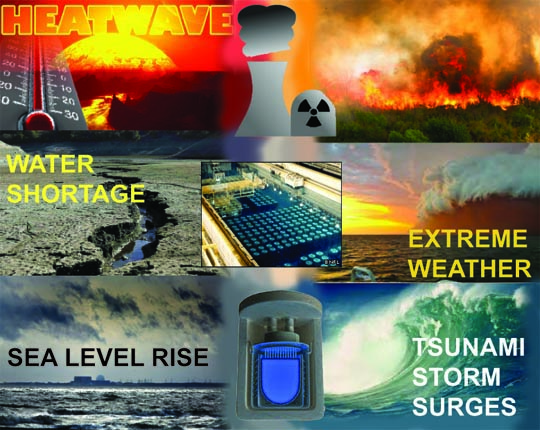
Paul Dorfman, writing in The Conversation, 1 Apr 22, Not everyone is convinced that nuclear power is a reliable tool in the effort to slow global warming and shore up energy supplies. Paul Dorfman is an honorary senior research associate at UCL’s Energy Institute. He argues that “nuclear energy is, quite literally, on the frontline of climate change – and not in a good way”.
“Nuclear power is often credited with offering energy security in an increasingly turbulent world, but climate change will rewrite these old certainties,” Dorfman says.
“Nuclear power plants must draw from large sources of water to cool their reactors, hence why they’re often built near the sea,” Dorfman highlights. “Two in five nuclear plants operate on the coast and at least 100 have been built just a few metres above sea level.”
In a world made increasingly turbulent by climate change, that’s a problem, Dorfman argues.
“A recent US Army War College report also states that nuclear power facilities are at high risk of temporary or permanent closure due to climate threats – with 60% of US nuclear capacity at risk from future sea-level rise, severe storms, and cooling water shortages.”……………….
Scrutiny on Switzerland’s nuclear power industry- it gets uranium from Russia
Use of Russian uranium for Swiss nuclear power under scrutiny, Russia’s state-owned nuclear firm Rosatom helps fuel two nuclear power plants in Switzerland. That commercial link is now under scrutiny as the Western world puts financial pressure on Russia to stop its aggression against Ukraine. Swiss Info March 31, 2022
Swiss electricity company Axpo purchases fuel from Rosatom to operate the Beznau and Leibstadt nuclear power plants in canton Aargau.
In a statement published on Thursday, the environmental NGO Greenpeace urged the authorities of seven Swiss cantons – which own Axpo – to stop buying uranium from Rosatom.
This commercial relationship, the NGO argued, helps to finance Russia’s war effort in Ukraine. Competitor company Alpiq, which runs the Gösgen nuclear site, stopped sourcing from Russia in 2016.
………………………………….. Of Switzerland’s four nuclear reactors, only Gösgen, operated by the company Alpiq, does not buy Russian uranium. Alpiq said this decision was taken in 2016 due to considerations about environmental compatibility and supply chain transparency………..
By paying for Russian uranium – Switzerland could also indirectly help finance Russia’s military apparatus. SRF points that Rosatom is the manufacturer of Russia’s warheads and now controls the operation of various Ukrainian nuclear power plants, such as at Zaporizhia, seized after fighting on March 4. https://www.swissinfo.ch/eng/use-of-russian-uranium-for-swiss-nuclear-power-under-scrutiny/47479722
Australia’s Parliament has little control over military matters, and Prime Ministers kow tow to USA and the White Anglosphere to go to war

Australia is an “active, eager participant in the US-led order” and restricting the Australian parliament’s control over the military has been “… a decision taken by the Australian government — at a bipartisan level — and implemented by senior policy planners.
Meanwhile the Australian parliament has “deliberately restricted its own powers on intelligence matters”
,Australia has ”reaffirmed its whiteness in its commitment to expansion of the “Five Eyes” intelligence sharing arrangements between the US, Britain, Canada, Australia and New Zealand and, of course, to the controversial 2021 AUKUS nuclear submarine deal, which was nurtured in great secrecy”
White and might is right: the secrets which push us into other people’s wars, https://www.michaelwest.com.au/the-dirty-secret-that-pushes-australia-into-other-peoples-wars/ By Zacharias Szumer|April 2, 2022 Is playing deputy to America’s sheriff the reason Australian war powers remain unreformed? It’s clear that our politicians remain muddled on this critical issue, writes Zacharias Szumer.
For decades, minor parties in Australia have introduced bills seeking to give parliament greater control over military deployments. In the debates and inquiries that have followed, a wide range of objections have been raised.
We are told that, as military deployments are often made on the basis of confidential information, this information cannot be publicly disclosed to the parliament. Another common objection is that parliamentary decision-making would reduce the flexibility and speed needed to carry out military operations safely and effectively.
Most of the opposition to war powers reform, received as part of Michael West Media’s ongoing survey of politicians, follows similar lines. You can see myriad responses here.
However, some experts think there might be another reason — one that Australian pollies may be uncomfortable acknowledging.
Kowtowing to empires
Clinton Fernandes, professor of international and political studies at the University of NSW and former Australian army intelligence officer, contends that the bipartisan reluctance to infringe upon this executive prerogative should be understood within Australia’s ”sub-imperial” geopolitical strategy.
In basic terms, Australia has sought to integrate itself into the global strategy of great powers — firstly the British and, from 1942 onwards, the United States. In a 2020 article, Fernandes argues that this sub-imperial strategy has meant the “effective exclusion of the legislative and judicial branches of government from Australia’s national-security policy”.
Fernandes does not believe that Australian politicians and policy officials have been forced against their will into this position. Rather, he argues that Australia is an “active, eager participant in the US-led order” and restricting the Australian parliament’s control over the military has been “… a decision taken by the Australian government — at a bipartisan level — and implemented by senior policy planners.
“Australian strategic planners understand that this means a reduction in sovereignty, but they accept it because it achieves a higher objective — upholding US imperial power.”
In addition to limiting parliament’s control over military deployments, Fernandes argues that Australia’s position as a “sub-imperial power” also limits parliamentary oversight of intelligence gathering. In the US, “intelligence committees and judiciary committees in the Senate and House of Representatives are regularly briefed about all authorised intelligence-collection programs, and relevant members of Congress receive detailed briefings prior to each re-authorisation,” Fernandes says.
Five Eyes and whiteness
Meanwhile the Australian parliament has “deliberately restricted its own powers on intelligence matters” through measures such as the Intelligence Services Act 2001 which ‘prevents the Parliamentary Joint Committee on Intelligence and Security from ‘reviewing the intelligence gathering and assessment priorities’ or ‘reviewing particular operations that have been, are being or are proposed to be undertaken’ by ASIS, ASIO and the other intelligence agencies, and likewise ‘the sources of information, other operational assistance or operational methods’ available to the agencies”.
Dr Greg Lockhart, an historian and Vietnam War veteran, supports Fernandes’ argument, but stresses the importance of seeing Australia’s sub-imperial strategy through the lens of a wider “cultural self-deception” around racial anxieties. “Fear of the ‘yellow peril’ meant that our Anzac expeditionary strategic reflex was from its inception race-based,” he says. ‘It was also primarily defensive; it depended on “great and powerful” white friends for protection in our region; it has always depended on being in the Anglosphere”.
Dr Lockhart argues that, although the overtly racist rhetoric of the White Australia policy is largely a thing of the past, “our strategic culture is still inseparable from the Anglosphere, from wherein we have never needed to reassess its whiteness”.
Recently, he says, Australia has ”reaffirmed its whiteness in its commitment to expansion of the “Five Eyes” intelligence sharing arrangements between the US, Britain, Canada, Australia and New Zealand and, of course, to the controversial 2021 AUKUS nuclear submarine deal, which was nurtured in great secrecy”.
“And with secrecy comes deception. Sounding like a US proxy in the Pacific while asserting Australian ‘sovereignty’, Scott Morrison’s government “announces it is in ‘lockstep’ with “our allies”, while trumpeting the threat of China’s communism, territorial expansion, abuse of human rights, or its implied role as the origin of Covid 19 — anything but the anxiety about Chinese numbers, ethnic difference, and independent power that has shadowed Australian history since the 1800s – and that now determines the security culture’s mindless dependence on the US.’’
Seen in this wider cultural context, Lockhart believes that “the Constitution was never going to impose legislative or judicial restraints on the autocratic war powers of the sub-imperial state. Since the First World War in 1914, almost every Anzac expedition has been a British or American imperial one. The exceptions are the Pacific campaign in 1942-1945 and Timor in 1999-2000. And in all those imperial campaigns the decision for war has been made undemocratically by the prime minister acting in secret conclave with only a handful of advisers”.
Parliamentary war powers
Fernandes and Lockhart aren’t alone in suggesting that there’s a relationship between strategic objectives and parliamentary control, or lack thereof, over the military. In their encyclopaedic 2010 study of war powers around the world, scholars Wolfgang Wagner, Dirk Peters and Cosima Glahn noted that several Central and Eastern European states — Bulgaria, the Czech Republic, Hungary and Slovakia — abolished parliamentary approval for war in the process of joining the US-led North Atlantic Treaty Organisation (NATO).
The authors argue that ‘’NATO accession apparently amplified the trade-off between creating legitimacy through procedures of ex ante parliamentary control and gaining efficiency through lean, executive-centred decision-making. From NATO’s perspective, having the governments of some member state tied by domestic parliamentary veto power must seem highly unattractive.’’
However, many of the more powerful NATO countries have far more wide-ranging parliamentary war powers than Australia or the aforementioned junior NATO partners. Although contested, the US War Powers Resolution significantly limits the President’s freedom to order military action without congressional authorisation.
For almost two decades in Germany, all major military deployments have been put to parliament for a vote. In the UK too, a parliamentary convention of seeking approval for military deployments in the House of Commons has also evolved over the past two decades.
Coastal communities across the world already feeling the impacts of climate change.
Coastal communities across the world are already feeling the disastrous
impacts of climate change through variations in extreme sea levels. These
variations reflect the combined effect of sea-level rise and changes in
storm surge activity.
Understanding the relative importance of these two
factors in altering the likelihood of extreme events is crucial to the
success of coastal adaptation measures. Existing analyses of tide gauge
records agree that sea-level rise has been a considerable driver of trends
in sea-level extremes since at least 1960.
However, the contribution from
changes in storminess remains unclear, owing to the difficulty of inferring
this contribution from sparse data and the consequent inconclusive results
that have accumulated in the literature. Here we analyse tide gauge
observations using spatial Bayesian methods to show that, contrary to
current thought, trends in surge extremes and sea-level rise both made
comparable contributions to the overall change in extreme sea levels in
Europe since 1960.
We determine that the trend pattern of surge extremes
reflects the contributions from a dominant north–south dipole associated
with internal climate variability and a single-sign positive pattern
related to anthropogenic forcing. Our results demonstrate that both
external and internal influences can considerably affect the likelihood of
surge extremes over periods as long as 60 years, suggesting that the
current coastal planning practice of assuming stationary surge extremes
might be inadequate.
Nature 30th March 2022
Hotter Antarctic summers posing increasing threat to stability of world’s largest ice sheet
Hotter Antarctic summers posing increasing threat to stability of
world’s largest ice sheet, satellite observations show. The East
Antarctic ice sheet is the biggest land-based piece of frozen water on the
planet. It holds about 80 per cent of all ice in the world, stretching up
to 4,800 metres in thickness in some places, and containing enough water to
raise global sea levels by 52 metres. Humans are generally keen for it to
stay in place. But new research shows that warmer summers due to the
worsening climate crisis are seriously threatening the floating ice shelves
which fringe the ice sheet, helping hold it in place.
Independent 31st March 2022
https://www.independent.co.uk/climate-change/news/antarctic-heat-ice-sheet-threat-b2048301.html
April 1 Energy News — geoharvey

Opinion: ¶ “The World Is Stuck Between Gas Prices And Climate Change” • The West needs more oil now. The world needs to get off oil and gas ASAP. It is an epic quandary of the oil addiction that runs the world economy. President Joe Biden announced a plan he said would address all of […]
April 1 Energy News — geoharvey
Ukraine, Poland discuss NATO “peacekeeping” force in Ukraine — Anti-bellum
Polish RadioApril 1, 2022 Polish peacekeeping plan for NATO allies to discuss: Ukrainian FM Poland’s proposal to send international peacekeepers into war-torn Ukraine is for Poland to discuss with its NATO partners because Ukraine is not a member of the alliance, the Ukrainian foreign minister said in Warsaw on Friday. Dmytro Kuleba said that, during […]
Ukraine, Poland discuss NATO “peacekeeping” force in Ukraine — Anti-bellum
West exploits centuries of ethnic grievances to pit Ukrainians, Georgians against Russia

The revived Prometheism project entails far more than criticism of the actions of the Russian Federation, even of the former Soviet Union, but reaches back centuries to create and exacerbate national, ethnic, practically racial animus between groups that inhabited Russia from Czarist times until 1991.
Also see: U.S. ambassador to Georgia blasts “revanchist” Russia for 220 years of barbaric atrocities
====
Agenda.ge
April 1, 2022
“We are participating in all kinds of international financial sanctions and that’s quite something for the Georgian financial sector. At the same time, we are participating in all the international resolutions that have been taken to support Ukraine. We share [with Ukraine] a common two-century history of Russian aggression and we know what that means,” the Georgian President [French-born Salome Zourabichvili] said.
***
“The more pressure we feel from Russia, the…
View original post 28 more words
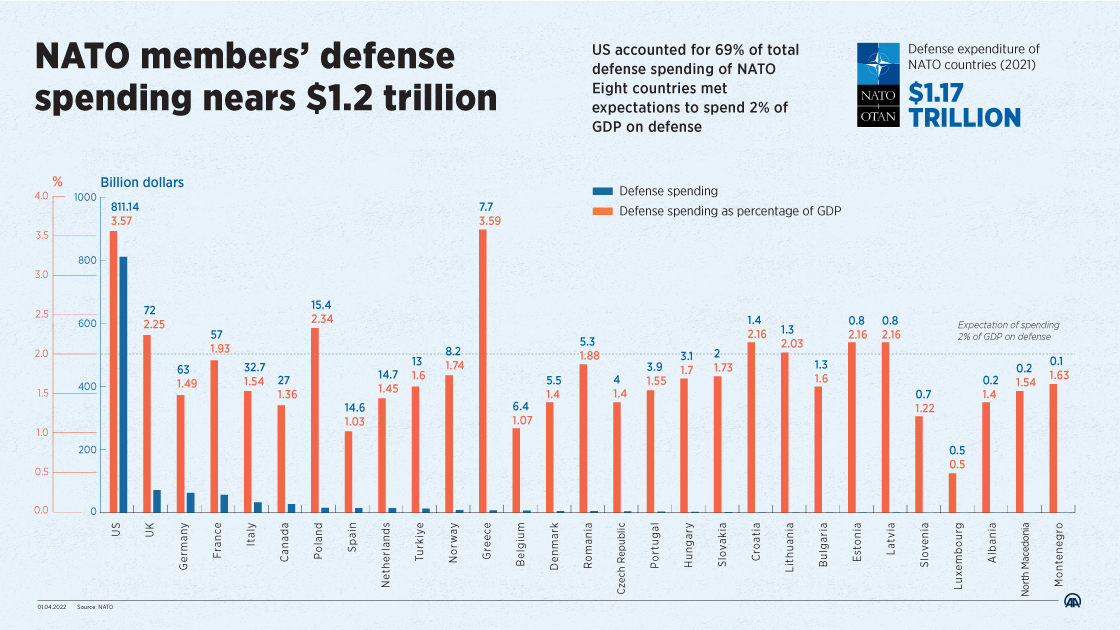
NATO Enhanced Opportunities Partner Australia to deliver armored vehicles to Ukraine — Anti-bellum
UkranewsApril 1, 2022 Australia To Send Bushmaster Armored Personnel Carriers To Ukraine – Yermak Australia will send Bushmaster armored personnel carriers to Ukraine.Head of the Presidential Office, Andrii Yermak, has written this on Telegram, Ukrainian News Agency reports. As Ukrainian News Agency reported, President Volodymyr Zelenskyy, in an address to the Australian Parliament, asked Australia […]
NATO Enhanced Opportunities Partner Australia to deliver armored vehicles to Ukraine — Anti-bellum
1 This Month
26 April – Chernobyl: Inside the Meltdown airs on National Geographic on Sunday 26th April from 4pm
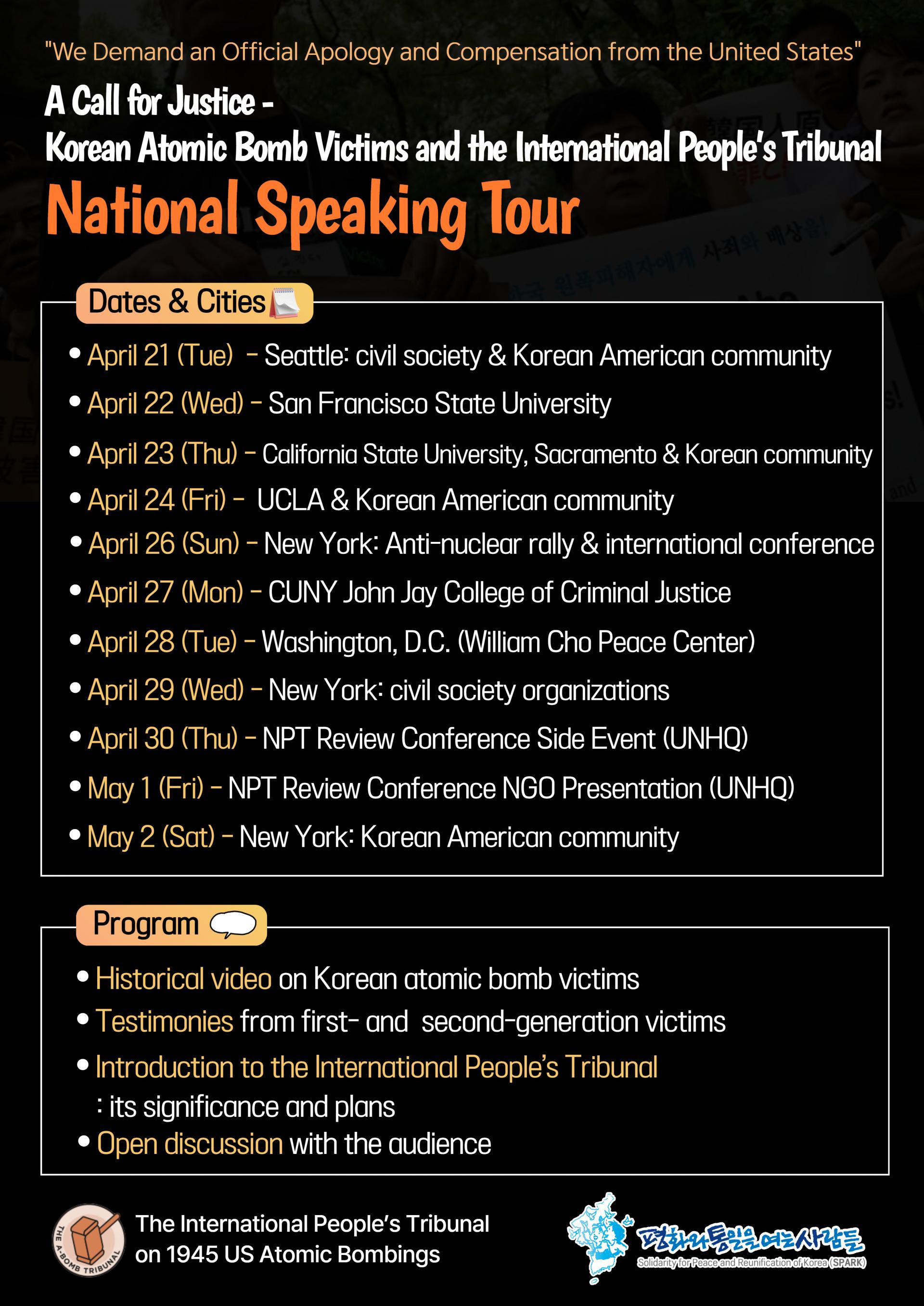

29 April – Nuclear Expert Webinar #1 – Radiation Impacts on Families with Mary Olson and Cindy Folkers
- 12:15 PM MT – 1:45 PM MT
- Location: Virtual – REGISTER TODAY

4 May -West Suburban Peace Coalition to discuss Iran war at May Educational Forum
Monday, May 4, 7:00 – 8:00 PM Central Standard Time
Title: : How Trump’s Narrative Tries to Shape the Reality of the War on Iran.
Contact Walt Zlotow, zlotow@hotmail.com 630 442 3045 for further information
14 May – online event From Bombs to Data Centres: the Face of Nuclear Colonialism
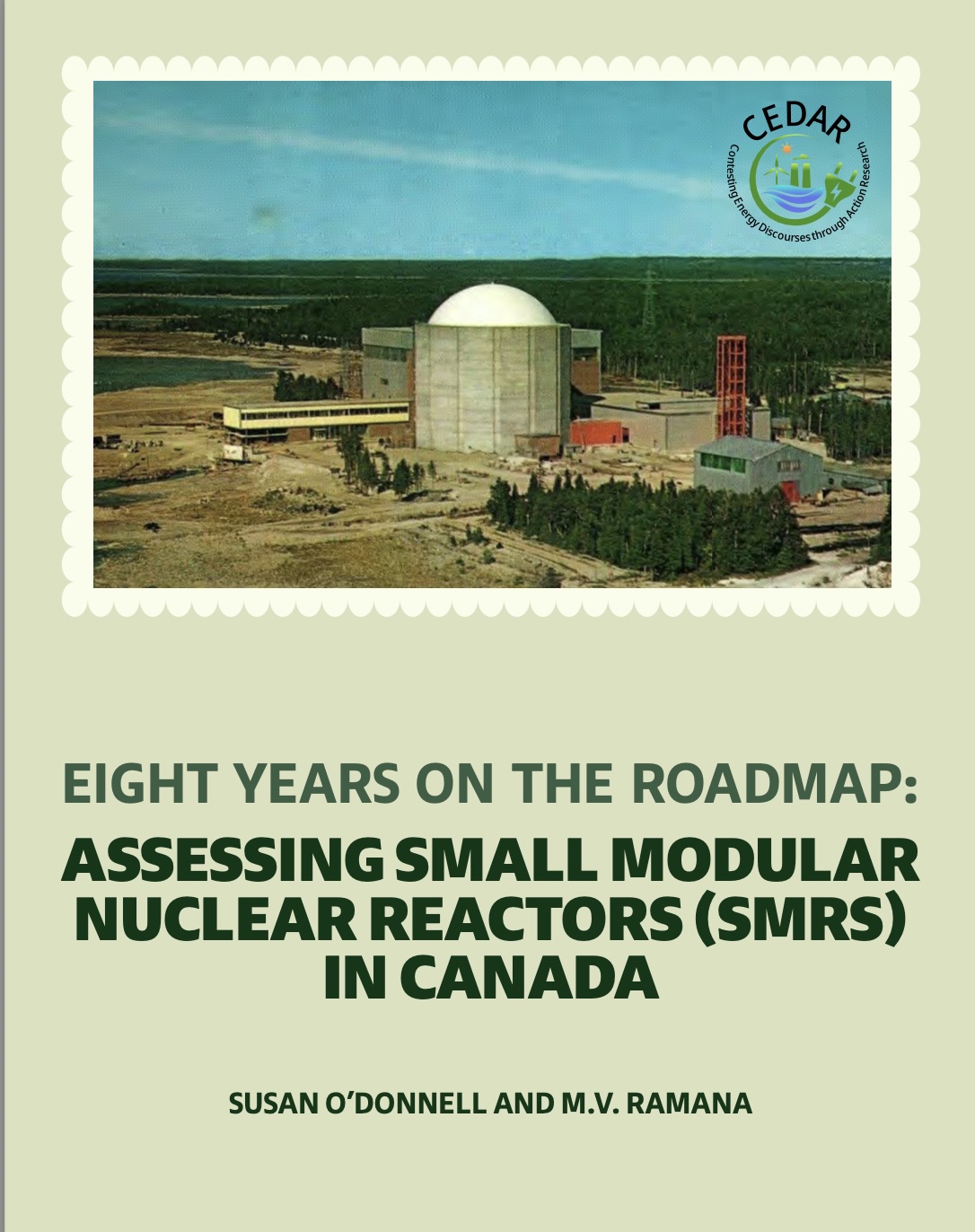

Pine Ridge Uranium is the real threat, not Tehran- Tell Burgum: Stop the Extraction.
Chernobyl: The Lost Tapes – A good documentary on Chernobyl on SBS available On Demand for the next 3 weeks– https://www.sbs.com.au/ondemand/tv-program/chernobyl-the-lost-tapes/2352741955560
To see nuclear-related stories in greater depth and intensity – go to https://nuclearinformation.wordpress.com
-
Archives
- April 2026 (327)
- March 2026 (251)
- February 2026 (268)
- January 2026 (308)
- December 2025 (358)
- November 2025 (359)
- October 2025 (376)
- September 2025 (257)
- August 2025 (319)
- July 2025 (230)
- June 2025 (348)
- May 2025 (261)
-
Categories
- 1
- 1 NUCLEAR ISSUES
- business and costs
- climate change
- culture and arts
- ENERGY
- environment
- health
- history
- indigenous issues
- Legal
- marketing of nuclear
- media
- opposition to nuclear
- PERSONAL STORIES
- politics
- politics international
- Religion and ethics
- safety
- secrets,lies and civil liberties
- spinbuster
- technology
- Uranium
- wastes
- weapons and war
- Women
- 2 WORLD
- ACTION
- AFRICA
- Atrocities
- AUSTRALIA
- Christina's notes
- Christina's themes
- culture and arts
- Events
- Fuk 2022
- Fuk 2023
- Fukushima 2017
- Fukushima 2018
- fukushima 2019
- Fukushima 2020
- Fukushima 2021
- general
- global warming
- Humour (God we need it)
- Nuclear
- RARE EARTHS
- Reference
- resources – print
- Resources -audiovicual
- Weekly Newsletter
- World
- World Nuclear
- YouTube
-
RSS
Entries RSS
Comments RSS
 nuclear-news