UK government’s energy strategy relying on massive nuclear expansion will fail credibility test
The government is expected finally to publish its much-delayed energy
strategy review on Thursday. The review is urgently needed both to address
the soaring energy prices that are inflicting financial hardship on many
households but also to end Britain’s reliance on Russian oil and gas so
as to avoid funding Vladimir Putin’s war machine. The clear test of the
credibility of whatever the government announces must be whether and how
quickly it reduces Britain’s dependence on expensive hydrocarbons for the
bulk of its energy.
The chances of meeting that test look slim, given the
rifts within the government and Conservative Party that have so far held up
the review for more than a month. Bizarrely, Tory MPs have fought furiously
in favour of restarting fracking, which would do nothing to reduce
Britain’s reliance on hydrocarbons, while fiercely resisting any reversal
of the de-facto ban on new onshore wind farms, which would be by far the
quickest and cheapest way to bring new energy on stream.
Both would of course be difficult to deliver since they are beholden to local planning
decisions. But whereas polls indicate that the public is overwhelmingly
opposed to fracking, they reveal strong public support for onshore wind.
Indeed, a YouGov poll last year found that nearly 70 per cent of the public
would support onshore wind farms near where they live. Polls indicate that
support rises higher if it means cheaper energy for residents. A large
expansion of onshore wind ought to be a key feature of a credible strategy,
yet comments yesterday by Grant Shapps, the transport secretary, suggest
that opposition in cabinet rules this out.
On the other hand, an energy
strategy that rests upon a massively expanded role for nuclear risks
failing the credibility test. That’s not because there isn’t a role for
nuclear as a source of baseload electricity for when solar and wind
supplies are low. There is a strong case for expanding Britain’s nuclear
fleet of 11 reactors, all but one of which are due to be deactivated by
2030, with only one new one, Hinkley Point C, under construction.
The
problem is the same one that has dogged all recent efforts to expand the
nuclear fleet: vast costs of construction. The energy review needs to
contain realistic plans with deliverable timelines. Boris Johnson’s hopes
of delivering six or seven new nuclear power stations by 2050 look
implausible given that Britain has succeeded in starting construction of
one in the past 16 years and even that is nearly a decade behind schedule
and far over budget.
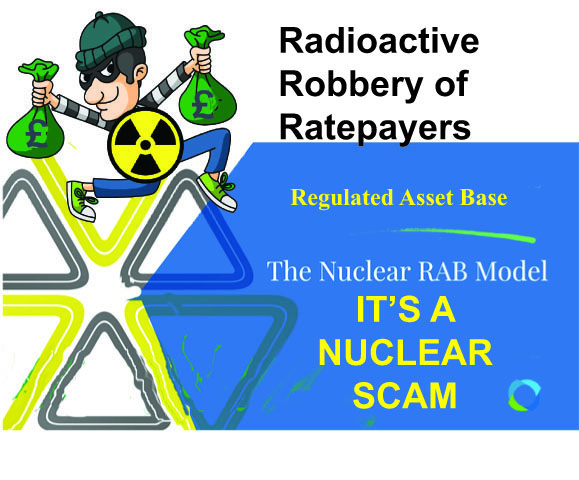
What’s more, under the government’s preferred funding model, construction costs would be passed on to consumers long before any electricity is delivered, further pushing up energy bills.
The review must therefore include plans to expand other sources of baseload,
including battery storage and carbon capture for gas-fired power stations.
Finally a credible strategy must include plans to reduce energy demand as
well as expand supply. The government needs to turbo-charge the drive to
improve home insulation, the switch to heat-pumps and the optimisation of
the energy network. A smart grid that allows differential pricing and
households to sell electricity from home solar panels and electric car
batteries could dramatically reduce energy supply requirements. Such plans
may lack the glamour of Mr Johnson’s fantasy of a floating wind farm in
the Irish Sea. But they would show that the government is serious.
Times 4th April 2022
https://www.thetimes.co.uk/article/the-times-view-on-britains-energy-strategy-power-play-p8g9hp0qp
No comments yet.
1 This Month
Chernobyl: The Lost Tapes – A good documentary on Chernobyl on SBS available On Demand for the next 3 weeks– https://www.sbs.com.au/ondemand/tv-program/chernobyl-the-lost-tapes/2352741955560

of the week–London Campaign for Nuclear Disarmament

Tell the Ukrainian Government to Drop Prosecution of Peace Activist Yurii Sheliazhenko
To see nuclear-related stories in greater depth and intensity – go to https://nuclearinformation.wordpress.com
-
Archives
- April 2026 (139)
- March 2026 (251)
- February 2026 (268)
- January 2026 (308)
- December 2025 (358)
- November 2025 (359)
- October 2025 (376)
- September 2025 (257)
- August 2025 (319)
- July 2025 (230)
- June 2025 (348)
- May 2025 (261)
-
Categories
- 1
- 1 NUCLEAR ISSUES
- business and costs
- climate change
- culture and arts
- ENERGY
- environment
- health
- history
- indigenous issues
- Legal
- marketing of nuclear
- media
- opposition to nuclear
- PERSONAL STORIES
- politics
- politics international
- Religion and ethics
- safety
- secrets,lies and civil liberties
- spinbuster
- technology
- Uranium
- wastes
- weapons and war
- Women
- 2 WORLD
- ACTION
- AFRICA
- Atrocities
- AUSTRALIA
- Christina's notes
- Christina's themes
- culture and arts
- Events
- Fuk 2022
- Fuk 2023
- Fukushima 2017
- Fukushima 2018
- fukushima 2019
- Fukushima 2020
- Fukushima 2021
- general
- global warming
- Humour (God we need it)
- Nuclear
- RARE EARTHS
- Reference
- resources – print
- Resources -audiovicual
- Weekly Newsletter
- World
- World Nuclear
- YouTube
-
RSS
Entries RSS
Comments RSS
 nuclear-news
Leave a comment