Electromagnetic radiation, said by telecom companies to be harmless, could be hurting wildlife.
EMFs’ toxic effects on an animal’s cells, DNA and chromosomes have been observed in laboratory specimens — and thus would apply to wildlife, according to the report.
Many types of wildlife are exposed to EMFs from wireless sources, such as deer, seals, whales, birds, bats, insects, amphibians and reptiles, the report said. Many species have been found more sensitive to EMFs than humans in some ways.
Report says wireless radiation, said by telecom companies to be harmless, could be hurting wildlife Source: Environmental Health TrustSanta Fe New Mexican, By Scott Wyland swyland@sfnewmexican.com, Feb 5, 2022
Health researchers raised concerns in the 1990s about the possible harmful effects of wireless radiation from cellphones and towers, and their warnings met pushback from telecommunications companies on the verge of growing a mega-industry.
Industry-backed researchers assured federal agencies health concerns — especially those centered on the possibility of low-level microwaves causing cancer — lacked conclusive evidence.
Regulators accepted their assessments, and the alarm bells went silent.
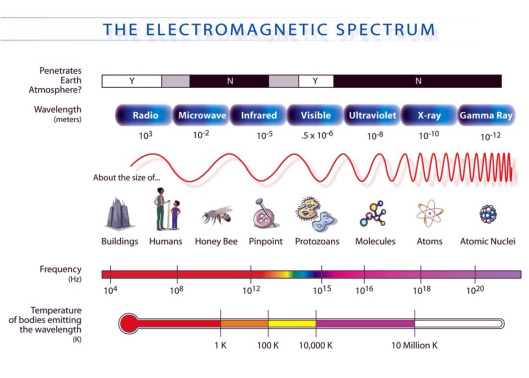
Now a trio of researchers have compiled a report saying the widespread installation of cell towers and antennas is generating electromagnetic fields — EMFs for short — that could be physiologically harmful.
The report focuses on potential impacts on wildlife, trees, plants and insects, such as bees, because there are no regulations protecting them from EMFs emanating from wireless antennas. Wildlife protections are becoming more vital as this radiation — known more specifically as radiofrequency EMFs — escalates through 5G technologies, the researchers warn.
“There needs to be regulatory standards to address EMFs affecting wildlife,” said Albert Manville, a retired U.S. Fish and Wildlife Service biologist and one of the paper’s authors.
Manville also is an adjunct science professor at Johns Hopkins University.
He said he provided the Federal Communications Commission with some research on how the electromagnetic pollution can hurt wildlife and the steps that could be taken to lessen the impacts.
But the FCC has been unresponsive, Manville said, arguing the agency tends to accommodate the industry it’s supposed to regulate.
“That’s unfortunate, but that’s just the way it is,” he said.
The FCC did not respond to questions about whether it would consider making efforts to reduce animals’ EMF exposure.
The three authors drew from 1,200 peer-reviewed studies to compile a three-part, 210-page report titled “Effects of non-ionizing electromagnetic fields on flora and fauna.” It was published in the journal Reviews on Environmental Health.
Science journalist Blake Levitt, who also co-wrote the report, said they dug up overlooked studies that contained compelling research on how living organisms react to low-level EMFs. Their compilation invalidates any claims that the EMFs don’t cause biological effects, she said.
We just blew the whole thing out of the water and took it to the ecosystem level, which is really where it needed to go,” Levitt said. “Nobody had done that before. We need a whole lot more scrutiny put to the low-intensity stuff.”
Ambient EMFs have risen exponentially in the past quarter-century, as cellphones were widely adopted, to become a ubiquitous and continuous environmental pollutant, even in remote areas, the report said, adding studies indicate EMFs can affect animals’ orientation, migration, food finding, reproduction, nest building, territorial defense, vitality, longevity and survival.
EMFs’ toxic effects on an animal’s cells, DNA and chromosomes have been observed in laboratory specimens — and thus would apply to wildlife, according to the report.
Many types of wildlife are exposed to EMFs from wireless sources, such as deer, seals, whales, birds, bats, insects, amphibians and reptiles, the report said. Many species have been found more sensitive to EMFs than humans in some ways.
The report recommends new laws that include the redesign of wireless devices and infrastructure to reduce the rising ambient levels.
It comes several months after a federal court in Washington, D.C., ordered the FCC to review its guidelines for wireless radiation and justify why it should retain them, as the standards haven’t been updated since 1996. This radiation should not be confused with radioactivity, the court noted, adding microwaves used in transmitting signals are low enough to not heat tissues in what are known as “thermal effects.”
But medical studies suggest the lower-level radiation could cause cancer, reproductive problems, impaired learning and motor skills, disrupted sleep and decreased memory.
These studies and others were submitted to the FCC after it opened a notice of inquiry in 2013 under the administration of former President Barack Obama to probe the adequacy of the 1996 guidelines, which were geared toward avoiding thermal effects, the court said.
In 2019, the Trump administration’s FCC deemed the inquiry unnecessary, saying the 1996 rules were sufficient and required no revision.
Two judges called that FCC action “arbitrary and capricious,” saying the FCC made the decision out of hand, ignoring all the science presented and offering no reasonable, fact-based argument to back it up.
The agency also failed to look at the technological developments in the past 25 years and how they’ve changed the degree of exposure, the judges wrote. And they said it refused to examine possible health effects from EMFs that fall below the threshold set in 1996……………………………….. https://www.santafenewmexican.com/news/local_news/report-says-wireless-radiation-said-by-telecom-companies-to-be-harmless-could-be-hurting-wildlife/article_1ae80fc0-7d5d-11ec-8c13-4f3411ea8ea1.html
No comments yet.
1 This Month

of the week – Shut Down Drone Warfare!


Tell the Ukrainian Government to Drop Prosecution of Peace Activist Yurii Sheliazhenko

Petition to revoke the licensing of the Near Surface Nuclear Disposal Facility (NSDF) at Chalk River. https://www.ourcommons.ca/petitions/en/Petition/Details?Petition=e-7247
To see nuclear-related stories in greater depth and intensity – go to https://nuclearinformation.wordpress.com
-
Archives
- March 2026 (244)
- February 2026 (268)
- January 2026 (308)
- December 2025 (358)
- November 2025 (359)
- October 2025 (376)
- September 2025 (257)
- August 2025 (319)
- July 2025 (230)
- June 2025 (348)
- May 2025 (261)
- April 2025 (305)
-
Categories
- 1
- 1 NUCLEAR ISSUES
- business and costs
- climate change
- culture and arts
- ENERGY
- environment
- health
- history
- indigenous issues
- Legal
- marketing of nuclear
- media
- opposition to nuclear
- PERSONAL STORIES
- politics
- politics international
- Religion and ethics
- safety
- secrets,lies and civil liberties
- spinbuster
- technology
- Uranium
- wastes
- weapons and war
- Women
- 2 WORLD
- ACTION
- AFRICA
- Atrocities
- AUSTRALIA
- Christina's notes
- Christina's themes
- culture and arts
- Events
- Fuk 2022
- Fuk 2023
- Fukushima 2017
- Fukushima 2018
- fukushima 2019
- Fukushima 2020
- Fukushima 2021
- general
- global warming
- Humour (God we need it)
- Nuclear
- RARE EARTHS
- Reference
- resources – print
- Resources -audiovicual
- Weekly Newsletter
- World
- World Nuclear
- YouTube
-
RSS
Entries RSS
Comments RSS
 nuclear-news
Leave a comment