Six men stood directly under a nuclear explosion test – all got cancer.
Rough Job: A Nuclear Bomb Exploded Over These Six Men
When the AIR-2 Genie was launched at eighteen thousand feet from an F-89J interceptor and detonated over the Yucca Flats in Nevada there were six men directly underneath. They would later grow to develop serious health complications. National Interest by Peter Suciu 9 Jan 22, Here’s What You Need to Remember: Above-ground nuclear tests were finally banned in 1963 as a result of the Partial Nuclear Test Ban Treaty, which limited radiation exposure to test personnel.
Instead of being granted three wishes the five United States Airmen and cameraman who volunteered to stand directly under a nuclear explosion during a test of the Douglas AIR-2 Genie air-to-air rocket in the Nevada desert were eventually “rewarded” with cancer while they were in their 1940s and 1950s. Whether it should be seen as a “successful” test that the AIR-2 Genie could, in fact, be used safely over populated areas remains a matter of debate, but the fact that test was the one and only one of its kind likely answers the question…………What was remarkable about the AIR-2 Genie test wasn’t just that it was the only live demonstration of a U.S. nuclear-tipped air-to-air rocket, but also that when it was launched at eighteen thousand feet from an F-89J interceptor and detonated over the Yucca Flats in Nevada there were six men directly underneath.
And they volunteered to be there.
As Popular Mechanics reported, five men including Colonel Sidney Bruce, Lt. Col. Frank P. Ball, Major Norman “Bodie” Bodinger, Major John Hughes, and Don Lutrell volunteered to stand directly under the detonation point and stood their ground as the nuclear explosion went off 3.5 miles overhead. One additional man, George Yoshitake didn’t exactly “volunteer” but instead there to operate the camera and capture the moment for posterity.
……………past nuclear detonations had been witnessed by those just miles away—so much so that Las Vegas actually promoted “atomic tourism” where people were encouraged to travel to “Sin City” and view various atomic tests taking place just outside the city. The Las Vegas Chamber of Commerce even issued a calendar for tourists, which listed the schedule times of bomb detonations and the best places to view them—while the Sky Room at the Desert Inn was promoted to be one of the best places to take in the explosions!.
Sadly all six men present under the Genie detonation eventually developed cancer, but whether it was from that one incident is questionable as all the men were present at several nuclear tests. Their respective cancers could have been as much a cumulative effect of several tests as from being exposed to this one bomb.
Above-ground nuclear tests were finally banned in 1963 as a result of the Partial Nuclear Test Ban Treaty, which limited radiation exposure to test personnel. …………. https://nationalinterest.org/blog/reboot/rough-job-nuclear-bomb-exploded-over-these-six-men-199199
Argentina pressures UK over deployment of nuclear weapons in Malvinas conflict
Argentina pressures UK over deployment of nuclear weapons in Malvinas conflict https://batimes.com.ar/news/argentina/argentina-demands-answers-over-uk-deployment-of-nuclear-weapons-in-malvinas-conflict.phtml
Report reveals British warships carried at least 31 nuclear weapons to South Atlantic following invasion of disputed island in 1982.
Argentina’s government has called on the United Kingdom to provide detailed information about the alleged movement and use of nuclear weapons during the 1982 South Atlantic conflict, after a report revealed that as many as 31 depth charges were sent to sea near the disputed Malvinas (Falkland) Islands during the war.
Last week, the Declassified UK website reported that a number of British warships deployed to the South Atlantic following Argentina’s invasion of the disputed islands were armed with dozens of nuclear depth charges.
According to the report, aircraft carriers HMS Hermes, HMS Invincible and the Royal Fleet Auxiliary ship, Regent, carried 31 nuclear weapons in total to the region’s seas, though no ship encroached upon the “total exclusion zone” around the islands imposed by the UK government at the time.
The article, written by veteran defence and security journalist and author Richard Norton-Taylor, said that new files released to the National Archives revealed that the presence of nuclear weapons had “caused panic among officials in London” who were concerned by the potential damage the “nuclear depth bombs” could cause if they were “lost or damaged.”
‘Measures’
Responding to the revelations, Argentina’s Foreign Ministry warned this week that if it did not receive answers from the British authorities, it would take “measures” and “raise this situation before the competent international bodies.”
Despite the UK’s reluctance to provide detailed information on the matter, our country has on several occasions expressed its concern before different international fora about the possibility, confirmed in 2003, that the UK had introduced nuclear weapons into the South Atlantic,” said a statement from the Palacio de San Martín.
Raising the possibility that Britain may have breached the 1967 Treaty of Tlatelolco (which established a nuclear free zone in Latin America and its seas), the Foreign Ministry said that it is essential to “ensure that there are no nuclear weapons anywhere in the South Atlantic, either in sunken ships, on the seabed or under any other form or circumstance.
Argentina and the UK maintain a sovereignty dispute over the islands, over which they fought a war in 1982 that ended 74 days later with the surrender of Argentina, then ruled by a military dictatorship. During the war, 648 Argentines and 255 British died.
Russia’s nuclear submarine construction reaches a post-Soviet high.
Russia’s Nuclear Submarine Construction Reaches Post-Soviet High https://www.themoscowtimes.com/2022/01/07/russias-nuclear-submarine-construction-reaches-post-soviet-high-a75991 By The Barents Observer, Jan. 7, 2022
Russia’s Sevmash shipyard, the only one in the country that builds nuclear-powered submarines, saw a record year in 2021. Three subs were handed over to the Navy, two were put on water and construction started on another two.
Not since the late days of the Soviet Union have the workers at the building and repair yard Severodvinsk been busier than now. Moscow’s modernization program for its Navy over the last decade stands in sharp contrast to considerable neglect in the years after the disintegration of the Soviet Union.
2022 marks 10 years since the Russian Navy’s first fourth generation multi-purpose submarine, the Severodvinsk, successfully launched a Kalibr cruise missile from a submerged position in the White Sea. While it took nearly 20 years to complete construction of the Severodvinsk, later Yasen-M class vessels are being built faster.
Construction of the Novosibirsk, which was commissioned for the Navy in late December 2021, took 8 years. Similar construction times are also being seen for the new ballistic missile submarines of the Borei-A class in the wake of the Yury Dolgoruky, which took 16 years from being laid down in 1996 to commissioning for the Northern Fleet in 2012. The Knyaz Oleg, handed over to the Pacific Fleet just before Christmas last year took 7 years to build.
As of Jan. 1, 2022, 13 nuclear-powered submarines are at different stages of construction at the Sevmash yard and are all expected to be delivered to the navy before 2027.
While high-profile publicity is given to laying-down ceremonies, launching and commissioning of ballistic missile subs and multi-purpose subs, far less is known about special-purpose subs. The Barents Observer has on several occasions reported about the Belgord, the world’s longest submarine built on a modified Oscar-II class hull. The submarine will be the carrier of the new Poseidon nuclear-powered, nuclear-armed drones and likely be based with the Pacific Fleet later this year.
Two other carriers of the Poseidon drone are currently under construction at the Sevmash yard, the Khabarovsk and Ulyanovsk.
Other unconfirmed submarines that might be in the pipeline for construction in years to come are two more Borei-A class vessels, two more Poseidon carriers and one or two special-purpose mini-submarine to sail for GUGI, the Defense Ministry’s Main Directorate for Deep Sea Research.
Design work for fifth generation nuclear-powered submarines, referred to as the Husky class, is said to be underway, but so far no contracts have been signed.
In addition to new submarines, the Sevmash yard is busy working on repair and modernization of the large nuclear-powered battle cruiser Admiral Nakhimov. Originally commissioned into the Soviet Navy in 1988, the warship was rarely deployed to sea and has been in Severodvinsk for the last 23 years. If no further delays are announced, the battlecruiser will be re-commissioned for the Northern Fleet in 2023.
What ratepayers should know about the Plant Vogtle expansion
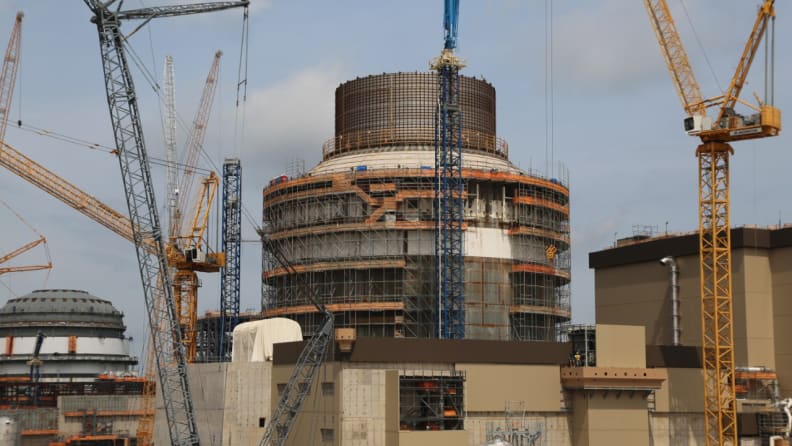
What ratepayers should know about the Plant Vogtle expansion January 6, 2022 By: Mary Landers , The Current
If you feel like you keep reading the same story about the expansion of Plant Vogtle, the only new nuclear power under construction in the U.S., you’re not exactly wrong.
Reactors No. 3 and 4 at Vogtle on the banks of the Savannah River near Waynesboro are more than five years overdue and $14 billion over budget. And that’s just a broad outline.
For more details, and for a take that’s sympathetic to consumers bearing these costs, read Georgia Conservation Voters‘ 32-page report “Ratepayer Robbery — The True Cost of Plant Vogtle.”
It includes timelines, data on expenses, and records of key decisions. The report reminds Georgia Power residential customers that they’ve been paying for Vogtle financing on their monthly bills for 10 years while industrial customers are exempt. It also spells out how Vogtle’s cost overruns actually increase Georgia Power’s profit. Footnotes link to news articles, and government and nonprofit documents.
“Plant Vogtle is a monumental example of failed leadership, oversight and lack of forethought,” said GCV Executive Director Brionté McCorkle. “What started out as an overpriced $14 billion project has ballooned into more than $30 billion, and that doesn’t take into account the future costs of completing the units.”
The report highlights the role of the Georgia Public Service Commission, an elected five-member panel, in moving the project forward. In a go/no go review of the project in 2017 after building contractor Westinghouse went bankrupt, expert witnesses and the PSC staff cautioned it wasn’t cost effective to continue. But the PSC voted to continue construction…………..
McCorkle is not against finishing the project, she said, but she is concerned about who will pay to finish it, residential ratepayers or Georgia Power shareholders.
“The responsible thing to do is to reassess the whole situation and reassess who’s picking up the tab for this and why customers are on the hook for paying for this energy,” she said.
Georgia Power, which owns 45.7% of the Vogtle expansion project, “has earned over $6 billion just from the delays of their own project,” the report states.
“They’re profiting, they’re making sky-high profits, while individual ratepayers are struggling to keep the lights on throughout a pandemic, people are losing family members,” McCorkle said. “And the squeeze is being felt everywhere. And our commissioners have a responsibility to do something about that.”
“Ratepayer Robbery — The True Cost of Plant Vogtle” concludes with a list of suggested actions. They are:
- The Georgia Public Service Commission should disallow Georgia Power from placing all of
these nuclear construction costs onto our bills and share rate increases more fully between
customer classes. - Voters should hold Commissioners accountable by ejecting them from their seats and electing pro-consumer candidates that commit to transparency.
- The Georgia State legislature should fully fund an independent Consumer Utility Counsel (CUC).
- The Georgia State legislature should create an independent study commission to document lessons learned.Read the entire report at https://www.scribd.com/document/550992905/Ratepayer-Robbery-The-True-Cost-of-Plant-Vogtle
- https://www.gpb.org/news/2022/01/06/what-ratepayers-should-know-about-the-plant-vogtle-expansion?fbclid=IwAR3zdntXhPLdXrqewGAw26Bt1FwsNXQSuLWXhN2cEvA3zJEyZyN5EZzgmyA
BBC Report on Closure of Hunterston B Fails to Mention that All the Nuclear Crapola will Come to Cumbria
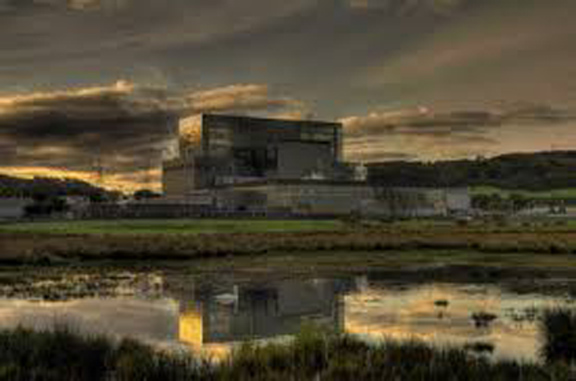
BBC Report on Closure of Hunterston B Fails to Mention that All the Nuclear Crapola will Come to Cumbria. Radiation Free Lakeland. JANUARY 8, 2022 BY MARIANNEWILDART Radiation Free Lakeland have long argued for the closure of the cracked nuclear plants that EDF are running long past their planned lifetimes. Yesterday one of these cancer factories, Hunterston B was closed down because of the dangerously cracked graphite cores. The BBC report below toots a trumpet about the electricity produced by Hunterston but makes no mention at all of the 46 years of radioactive emissions and the fact that the resulting nuclear wastes (low, intermediate and high level wastes) and “cleaned up” infrastructure ( heading to landfill, incineration, recycled radioactive scrap metal, Drigg and proposed Deep Nuclear Dump ) will be dangerous to all life on the biosphere for so many generations to come. Yes lets toot a trumpet for the closure of a dangerous nuclear plant but the massive radioactive footprint of Hunterston will live on long after the limited use of electricity!
Hunterston B nuclear power plant closes down after 46 years
By Kevin Keane
BBC Scotland’s energy correspondent 7th Jan 2022 The Hunterston B nuclear power plant in North Ayrshire has been shut down for the final time after generating electricity for 46 years.
The plant’s original 25-year lifespan was extended by more than two decades.
But the final closure was brought forward after cracks were found in the graphite bricks which make up the reactor cores.
A small group of former workers gathered at the power station at midday to see the final shut down.
The site, owned by EDF Energy, will now begin a three-year process of defueling with the spent nuclear fuel sent to Sellafield for reprocessing. After that, the site will be handed over to the Nuclear Decommissioning Authority…………
The cracks were first spotted in two graphite bricks in the reactor in 2014.
By 2018, a total of 350 bricks had been affected although the Office for Nuclear Regulation subsequently gave permission to operate at much greater numbers.
Each of the two reactor cores is made up of 3,000 bricks which form vertical channels for nuclear fuel and control rods to slide in and out.
The concern was that too many cracks, combined with a rare seismic event, could affect the structural integrity of the core and prevent it being shut down in an emergency.
The Hunterston A plant, which is already closed, comprised two 180MWe Magnox reactors.
It began operation in 1964. Reactor 2 shut down in December 1989 and Reactor 1 in March 1990.
Construction of Hunterston B began in 1968 and reactors 3 and 4 began operating in February 1976 and March 1977……
Reactor 3, a 490MWe advanced gas-cooled reactor (AGR), was permanently closed down on 26 November.
Hunterston Reactor 4 – also a 490MWe AGR – has now shut down……….
Similar cracks are expected to develop there and at several other similar sites in England. In December, EDF Energy announced that Torness would close two years earlier than planned in 2028 because of the issue. https://mariannewildart.wordpress.com/2022/01/08/bbc-report-on-closure-of-hunterston-fails-to-mention-that-all-the-nuclear-crapola-will-come-to-cumbria/
Six reasons to say ‘no’ — Beyond Nuclear International

Nuclear power is unreliable, unjust and unsafe
Six reasons to say ‘no’ — Beyond Nuclear International
What if it doesn’t work? — Beyond Nuclear International

Deterrence is an assumption. Let’s assume it’s wrong
What if it doesn’t work? — Beyond Nuclear International
Treaties, Constitutions, and Laws Against War — limitless life
David Swanson CEO, World BEYOND War Treaties, Constitutions, and Laws Against War By David Swanson, World BEYOND War, January 10, 2022 https://worldbeyondwar.org/constitutions/ You’d hardly guess it from all the silent acceptance of war as a legal enterprise and all the chatter about ways to supposedly keep war legal through the reform of particular atrocities, but […]
Treaties, Constitutions, and Laws Against War — limitless life
“Don’t Look Up:” Hollywood tackles the myths that fuel climate denial

Hollywood’s primer on climate denial illustrates five myths that fuel the rejection of science – including a favourite of Australia’s federal government. The post “Don’t Look Up:” Hollywood tackles the myths that fuel climate denial appeared first on RenewEconomy.
“Don’t Look Up:” Hollywood tackles the myths that fuel climate denial — RenewEconomy
Hunterston nuclear power workers need a just transition to sustainable work. No more subsidies to the nuclear industry.
Workers are key to a just transition at the Hunterston nuclear plant,
which retires today, according to the Scottish Greens.
The nuclear sectorbhas used the occasion to call for more subsidies, despite the UK Government
already subsidising the sector and proposing to charge bill payers upfront
to pay for nuclear power stations that haven’t even been built yet, like
at Hinkley Point.
Commenting, Scottish Greens energy spokesperson Mark
Ruskell said: “Respect and thanks must go to the workers at Hunterston
who have kept our lights on over the decades and those who will continue
the important work of de-commissioning. “These communities deserve a just
transition away from an energy source that is expensive and neither clean
nor sustainable. The vast subsidies involved would be better spent
investing in modern renewable energy solutions that provide a long-term
future for workers and our planet.”
Scottish Greens 7th Jan 2021
https://greens.scot/news/greens-workers-key-to-hunterston-transition
Nuclear power station life-extension project running late — even before it starts
Nuclear power station life-extension project running late — even before it starts, MYBROADBAND, Chris Yelland, 9 January 2022 The installation of six new steam generators at Eskom’s Koeberg nuclear power station, which was scheduled to begin on 5 January 2022, appears to be running late even before it started.
Koeberg power station, situated on the west coast of South Africa some 35 km north of Cape Town, is approaching the end of its 40-year design life and operating licence.
However, in 2022 and early 2023, the nuclear power plant is scheduled for a number of upgrades to extend its operational life for a further 20 years.
This includes the replacement of three steam generators on each of the two 920 MW nuclear reactors at Koeberg, as well as the replacement of the reactor head, control rod drive mechanism and reactor in-core instrumentation cables on one of the nuclear reactors.
Other work for the life-extension involves:……………..
However, Eskom’s chief nuclear officer, Riedewaan Bakardien, says that the Omicron variant and the impact of the coronavirus pandemic, which led to travel restrictions and the implementation of additional protocols, “has proven a challenge in getting some of the required international resources on site in time”.
A further stumbling block is that Eskom’s installation safety case has not yet been approved by the National Nuclear Regulator (NNR), and the “green light” from the NNR to start work has still not been received.
The NNR normally provides its final approval once it has completed detailed reviews of all the major work that would be executed during an outage to ensure that they have not missed anything in terms of cross-functional impacts.
“This final approval for plant changes is usually issued a month before the start of an outage”, says Eskom………………………..https://mybroadband.co.za/news/energy/429428-nuclear-power-station-life-extension-project-running-late-even-before-it-starts.html
What’s going on at Michigan’s nuclear power plants? A troublesome past, and present.
FIRE REPORTED AT CRUMBLING MICHIGAN NUCLEAR POWER PLANT, WHAT IS WRONG WITH MICHIGAN’S NUCLEAR PLANTS? https://futurism.com/the-byte/fire-michigan-nuclear
byABBY LEE HOOD 9 Dec 22,
What’s going on with Michigan’s nuclear power plants? Yesterday, local newspaper conglomerate MLive reported that a fire was detected at the Donald C. Cook Nuclear Plant in Berrien County, MI.
MLive reports that the “potential fire” was detected Thursday morning, complete with an alert from the United States Nuclear Regulatory Commission, though in the end no actual fire was found. And that’s extremely lucky, because MLive reports that the fire protection system for the vault where the fire was detected is currently out of service.
Add that to a local radio news outlet’s report last year that the nuclear facility had deactivated all its warning sirens in favor of mobile alerts, and the incident is a perfect illustration of the United States’ dilapidated nuclear infrastructure.
Some workers have died in gruesome ways at the Cook nuclear plant over the years, which has racked up fines and even briefly shut down entirely in 1997 for grave safety concerns.
Dig a little deeper and other nuclear incidents surface in the same state. Last year, Downtown Publications reported that Fermi 2, a nuclear station located in Newport, MI, suffered the longest nuclear refueling and maintenance outage in 2020, lasting from March until August — and its predecessor, Fermi 1, suffered a partial core meltdown back in the 1960s.
Nuclear power remains a tempting stopgap as the world trundles toward renewables, but in practice it might not actually be the most effective energy solution. The 2011 Fukushima disaster in Japan showed that even with modern safety precautions, events can still spin out of control. And we don’t have solid plans for containing radioactive waste, which stays toxic for hundreds of thousands of years. Uranium pollutes groundwater, and new plants costs a fortune.
In the face of all that, you’d at least expect currently operating plants to be on the top of their game, but the situation in Michigan sounds anything but.
Will we come up with truly effective strategies before another nuclear disaster? Only time will tell.
European citizens divided over nuclear energy

European citizens divided over nuclear energy – What Greeks believe, https://greekcitytimes.com/2022/01/07/european-citizens-nuclear-energy/A “tie” prevails in the European public opinion for the production of energy through nuclear power plants, as recorded by the latest relevant Eurobarometer survey.
The differences, however, are large from country to country, with the weight of “NO” prevailing in the EU’s largest population, Germany, where 69% are against this form of energy.
It is also striking that in France, where about 70% of energy is produced in individual plants, the disapproval rate is quite high at 45%.
This number is particularly important if one takes into account that at this time the French government, with the personal mobilisation of President Emmanuel Macron, seeks to classify nuclear energy in “environmentally friendly” technologies.
This issue has provoked several reactions, both from some countries and from political forces, with the European Greens declaring a few days ago that they are considering appealing to the European Court of Justice against the Commission for its proposal.
Austrian Environment Minister Leonore Gewessler had hinted at something similar, with experts in European law questioning whether such an appeal could be justified.
Overall in Europe and with a sample of around 27,000 respondents the acceptance and rejection rates were exactly the same, with 46%.
3% had no opinion and 5% did not answer.
Opinions on solar (92%) and wind energy (87%) are overwhelmingly positive.
The countries with the highest percentages of negative opinion after Germany and Austria (66%) included Greece and Luxembourg.
Citizens are divided in Belgium, Denmark, Spain and Portugal, where YES or NO does not prevail.
High levels of support were recorded where nuclear power is already being used – the Czech Republic with 79%, Bulgaria with 69%, Poland with 60%, as well as in Finland where a new nuclear reactor has recently started operating. The survey also recorded slightly higher acceptance rates among men surveyed than women.
Texas residents affected by New Mexico nuclear tests – radioactive fallout ignores state lines
Nuclear fallout ignores state lines: Lon Burnam and Istra Fuhrmann, https://www.elpasotimes.com/story/opinion/2022/01/07/nuclear-fallout-ignores-state-lines-lon-burnam-and-istra-fuhrmann/9122752002/ Early in the morning of July 16, 1945, native El Pasoan Barbara Kent was thrown out of her bunk bed at dance camp.
Just 13 years of age, she had traveled to Ruidoso, New Mexico, to learn ballet, unwittingly only a short distance from the site of the first nuclear weapons test. After the explosion awakened her, she says the camp owner came running in to tell the young girls to head outside, where the sky had turned from dark to blindingly bright.
Barbara Kent describes playing in pleasantly warm snow improbably falling in July, grabbing it in her hands and rubbing it on her face. Decades later, she realized that this “snow” had been radioactive fallout from the atomic blast. Today, she is the only survivor from the camp – all the other girls passed away from cancers before the age of 30.
El Paso is less than 150 miles from the epicenter of the nuclear bomb detonation known as the Trinity Test. While Kent happened to be in New Mexico that day, she was not the only Texan exposed to dangerous radiation levels. According to U.S. Census data, between 100,000-130,000 people lived in El Paso during the blast. Nuclear fallout from the explosion settled over thousands of square miles and exposed locals to radiation levels 10,000 times higher than what is currently allowed.
Unfortunately, many of our state’s lawmakers in Congress do not see radiation exposure as a Texas issue. They have not treated the problem with the urgency it is due. It’s time to acknowledge this historical wrong and compensate Texans and New Mexicans suffering from life-threatening illnesses due to nuclear weapons activities.
Congress has united in compensating nuclear testing survivors in the past. In 1990, Utah Senator Orrin Hatch introduced the Radiation Exposure Compensation Act (RECA), which received strong bipartisan support and was signed into law by President George H.W. Bush. Unless Congress acts, this compensation program is set to expire in July 2022. Making matters worse, Texas and New Mexico “downwinders” – locals exposed to nuclear fallout – have never been eligible.
Last month, communities affected by nuclear testing celebrated when the RECA Amendments Act of 2021 was overwhelmingly approved by the House Judiciary Committee. If passed into law, this bill will extend RECA by 19 years and allow New Mexican downwinders to claim compensation for the first time. Importantly, Texan downwinders just across the border are also pushing to be included.
Texas is currently covered in RECA as a uranium mining state that supplied material for America’s nuclear weapons arsenal. Uranium workers employed before 1971 who have developed radiation-related illnesses are eligible to receive a one-time RECA payment of $150,000. Many industry workers came from low-income Native and Hispanic communities and were never informed of deadly radiation exposure.
Greg Harman writes that “after 30 years of heavy [uranium] mining activity, cancer rates in Navajo Country began to shoot upward, doubling by the late ’90s.” RECA does not compensate post-1971 uranium miners, even though mining (and cancer cases) continued past this cutoff date. Texas contained the country’s third-largest uranium reserves and ranked second in the nation in drilling for uranium in 1971. As a result, many Texan uranium miners stand to benefit from the RECA extension, which expands eligibility to include workers in the industry post-1971.
We scored another victory when El Paso’s Congresswomen Veronica Escobar recently cosponsored the RECA Amendments Act. Now it’s time for Senators John Cornyn and Ted Cruz to cosponsor and endorse the Senate version. This bill ensures that compensation for Texan uranium miners will not expire this summer. Advocates from local groups like the Tularosa Basin Downwinders Consortium ask legislators to amend the bill’s language to include El Paso County.
Nuclear fallout does not respect state lines or dates on the calendar. Perhaps, in this case, neither should Congress. It is long past time to compensate Texans, New Mexicans, and downwinders of the 1945 Trinity Tests.
Concerns in New Mexico, about taking in out-of-state nuclear waste, as Waste Isolation Pilot Plant has limited space.
Waste Isolation Pilot Plant criticized for accepting out-of-state nuclear waste, Adrian Hedden, Carlsbad Current-Argus, 8 Jan 22, About 200 shipments of nuclear waste were sent to the Waste Isolation Pilot Plant repository near Carlsbad last year for disposal in an underground salt deposit, but New Mexico officials continued criticism that most of the shipments were coming from out of state.
Waste disposed of at WIPP is known as transuranic (TRU) nuclear waste, made up of clothing materials and equipment irradiated during nuclear activities at U.S. Department of Energy facilities across the nation.
TRU waste is shipped from Los Alamos National Laboratory (LANL) in northern New Mexico, but also from sites like Idaho National Laboratory in Idaho or Savannah River Site in North Carolina.
Of the 210 shipments recorded in 2021, per DOE records, 55 or 26 percent came from LANL. Another 21 came from Oak Ridge National Laboratory in Tennessee, eight came from Savannah River, two came from Lawrence Livermore National Laboratory in California and one came from Waste Control Specialists in Andrews, Texas.
The other 123 shipments, or about 58 percent of WIPP shipments last year were from Idaho National Laboratory, where research is conducted on nuclear reactors.
In total, 74 percent or about three quarters of WIPP’s shipments last year came from out of state.
The State of Idaho entered into a settlement agreement with the DOE in 1995 to prioritize waste shipments from its national laboratory to an out-of-state location: the WIPP site in New Mexico.
But that prioritization is a problem for New Mexico Rep. Christine Chandler (D-43).
Her district represents Los Alamos County, home to LANL, and Chandler said because New Mexico accepts the risk of the waste, its facilities that generate nuclear waste should be given top priority for disposal.
“I feel very strongly that since the WIPP is in New Mexico, and New Mexico accepts the risk for operating that plant that NM waste should be prioritized,” Chandler said. “That would mostly mean from LANL.
“They have a settlement with Idaho and so shipments from there are prioritized to the detriment of actual active sites like LANL.”……………………………..
Chandler’s concerns were echoed in a recent letter from NMED Cabinet Secretary James Kenney to the Government Accountability Office calling for federal oversight of DOE decisions related to the shipment priorities.
The Idaho settlement, Kenney argued, was entered without public input from New Mexicans who he said would bear the risk of disposal.
“The practice of DOE (Office of Emergency Management) solely managing waste shipments to WIPP from around the U.S. without first discussing with New Mexico stakeholders – including NMED as its regulator – now merits immediate congressional oversight,” Kenney wrote.
Other than pressuring federal regulators, Chandler said the State of New Mexico and lawmakers have little recourse to reprioritize disposal at WIPP to benefit their state.
“Truthfully, there is very little we can do. Most of the issues at Los Alamos are driven by federal law. Mostly, it’s placing pressure on the DOE to do the right thing for the state of New Mexico,” Chandler said.
“They need to recognize that LANL is the leading lab and it needs the Department’s full support in all things including clean up.”
Realigning shipment priorities could be achieved through the pending 10-year renewal of WIPP’s operating permit with NMED, said Don Hancock at Albuquerque-based watchdog group Southwest Research and Information Center.
He said regardless of priority for wastes from specific facilities, there is not enough room at WIPP for all the DOE’s waste and the federal government should develop alternate repositories.
WIPP is presently the nation’s only deep-geological repository that can dispose of nuclear waste off-site from where it is generated.
“The State of New Mexico now needs to be pushing on other approved repository sites to be permitted,” Hancock said. “They need to enforce the capacity limits. The DOE and Congress are going to have to start looking at alternatives.”………… https://www.currentargus.com/story/news/local/2022/01/07/wipp-criticized-accepting-out-state-nuclear-waste/9078220002/
1 This Month
Chernobyl: The Lost Tapes – A good documentary on Chernobyl on SBS available On Demand for the next 3 weeks– https://www.sbs.com.au/ondemand/tv-program/chernobyl-the-lost-tapes/2352741955560

of the week–London Campaign for Nuclear Disarmament

Tell the Ukrainian Government to Drop Prosecution of Peace Activist Yurii Sheliazhenko
To see nuclear-related stories in greater depth and intensity – go to https://nuclearinformation.wordpress.com
-
Archives
- April 2026 (139)
- March 2026 (251)
- February 2026 (268)
- January 2026 (308)
- December 2025 (358)
- November 2025 (359)
- October 2025 (376)
- September 2025 (257)
- August 2025 (319)
- July 2025 (230)
- June 2025 (348)
- May 2025 (261)
-
Categories
- 1
- 1 NUCLEAR ISSUES
- business and costs
- climate change
- culture and arts
- ENERGY
- environment
- health
- history
- indigenous issues
- Legal
- marketing of nuclear
- media
- opposition to nuclear
- PERSONAL STORIES
- politics
- politics international
- Religion and ethics
- safety
- secrets,lies and civil liberties
- spinbuster
- technology
- Uranium
- wastes
- weapons and war
- Women
- 2 WORLD
- ACTION
- AFRICA
- Atrocities
- AUSTRALIA
- Christina's notes
- Christina's themes
- culture and arts
- Events
- Fuk 2022
- Fuk 2023
- Fukushima 2017
- Fukushima 2018
- fukushima 2019
- Fukushima 2020
- Fukushima 2021
- general
- global warming
- Humour (God we need it)
- Nuclear
- RARE EARTHS
- Reference
- resources – print
- Resources -audiovicual
- Weekly Newsletter
- World
- World Nuclear
- YouTube
-
RSS
Entries RSS
Comments RSS
 nuclear-news