Nuclear power in Hungary: Green, cheap and independent?
Nuclear power in Hungary: Green, cheap and independent? DW, 26 Nov 21,
The Hungarian government is convinced that nuclear power is the path to a green future. A new Russian reactor block is to be constructed that allegedly guarantees low emissions and low energy prices.
While Germany is phasing out nuclear power and many EU states don’t have any atomic plants at all, others are expanding their nuclear programs as part of the fight against climate change. These states argue that atomic energy is low in CO2 emissions and allows them to produce cheap electricity and be more energy-independent.
But can nuclear power really lead the way out of the climate crisis?
EU split on nuclear power
The Hungarian government says it can — and is far from being alone. In mid-October, 10 EU states, including Finland, the Czech Republic and Poland, issued a statement that declared: “To win the climate battle, we need nuclear energy.”
France, a long-time enthusiastic advocate of nuclear energy, took the lead in formulating this statement. Currently, Paris is investing in new types of domestically developed reactors.
Meanwhile, Budapest is planning to expand its Russian-type nuclear plant. It is located near the small town of Paks on the banks of the Danube, less than a two-hour drive south of the Hungarian capital. In addition to the four existing reactors, two others are planned — Paks II.
Good for the environment and consumers?
…………… The question of whether atomic power is really beneficial to the environment is extremely contested. It is not just a matter of the catastrophic consequences of potential reactor accidents and the still unresolved questions about the safe storage of atomic waste. Nuclear energy does not guarantee lower emissions. A study of 123 countries that was published in the scientific journal Nature in 2020 came to the conclusion that actual emissions are not significantly lower in those countries with nuclear power than those without.
New reactor block in seismically active zone
The nuclear plant in Paks also has an impact on flora and fauna in the vicinity, stresses Andras Perger, the climate and energy expert for Greenpeace Hungary. He says that cooling water fed into the Danube can significantly increase the river’s temperature, in particular when water levels are low and all reactors are running.
“The cooling water is already the most significant environmental influence,” Perger says. The water temperature in the zone up to 500 meters (1,640 feet) downriver of the plant is legally permitted to reach a maximum of 30 C (86 F). In August 2018, the river reached, at times, the critical level of 29.8 C, according to the operator. Unofficial measurements conducted by the think tank Energiaklub even showed temperatures significantly above permitted levels.
Perger also stresses the fact that the new reactors are located in a seismically active zone and is skeptical whether all regulations were taken into account when choosing the site. The Federal Environmental Office in neighboring Austria shares his view. This summer, it produced a report that described the location of Paks II as “unsuitable.”……
How independent is nuclear energy?
The state-owned company MVM’s home page states that the new reactor blocks are not just safe but guarantee Hungary greater energy independence. Yet experts are not convinced that the plants really improve Hungary’s relatively high import rate — the technology as well as the fuel rods come from Russia. A study from 2020 comes to the conclusion that in view of this fact, nuclear energy can also ultimately be classed as an import, meaning some three-quarters of the country’s energy balance comes from beyond the country’s borders……………
Lack of transparency
But opposition parties and NGOs have sharply criticized the decision to directly award the contract for expanding the plant to Russia’s state-owned nuclear energy company Rosatom and to finance the project with a Russian loan worth more than €10 billion. The relatively high interest rate of between 4% and 5% and the Hungarian forint‘s drop in value could mean that taxpayers will end up paying more than the €12.5 billion ($14.1 billion) budgeted for the new reactors………….
Critics have also attacked the Fidesz government’s decision to declare the Rosatom contract a matter of national security and its passing of a new law that permits the documents to be kept under lock and key for 30 years.
Little hope for opponents of nuclear energy
Unlike Germany or Austria, Hungary does not have a broad-based anti-nuclear power movement. A number of opinion polls indicate that a majority of Hungarians tend to oppose the renewed extension of the operating licenses of the existing reactors and the expansion of Paks nuclear power plant — in particular after the 2011 Fukushima nuclear disaster.
But scrapping the contract for Paks II or abandoning nuclear power altogether would be difficult. Not only would energy prices for consumers be likely to rise, but the government could be forced to pay high compensation payments to Russia. https://www.dw.com/en/nuclear-power-in-hungary-green-cheap-and-independent/a-59950544
No comments yet.
1 This Month
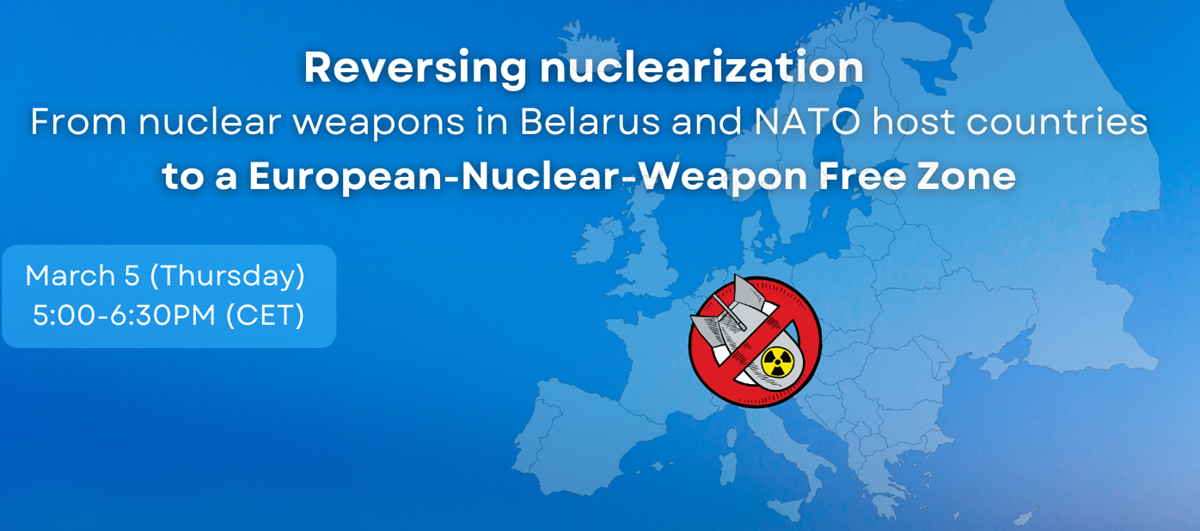
5 March -Online – Reversing nuclearization:
From nuclear weapons in Belarus and NATO host countries to a European-Nuclear-Weapon Free Zone
11am-12:30pm Eastern Time USA / 5pm-6:30pm CET

of the week – Advocating for a
nuclear free beach – https://www.samuellawrencefoundation.org/
The Samuel Lawrence Foundation advocates for a Nuclear Waste Free Beach at San Onofre, join us and take action!

10 March A LIVE WEBINAR THE REAL EFFECTS OF NUCLEAR POWER
What the Industry Isn’t Telling Us
1:00 PM Mountain, 2 pm Central, 3 pm Eastern. Live on the Keepers of the Water Facebook page

18 March Webinar @ 1 PM EST: An Assessment of SMR Projects: The Case of Canada
register for the zoom:
https://us02web.zoom.us/webinar/register/WN_o8BIIOUvQ2ONJR1nta65DQ#/registration

of the week – STOP SMALL MODULAR REACTORS IN CANADA
To see nuclear-related stories in greater depth and intensity – go to https://nuclearinformation.wordpress.com
-
Archives
- March 2026 (38)
- February 2026 (268)
- January 2026 (308)
- December 2025 (358)
- November 2025 (359)
- October 2025 (376)
- September 2025 (258)
- August 2025 (319)
- July 2025 (230)
- June 2025 (348)
- May 2025 (261)
- April 2025 (305)
-
Categories
- 1
- 1 NUCLEAR ISSUES
- business and costs
- climate change
- culture and arts
- ENERGY
- environment
- health
- history
- indigenous issues
- Legal
- marketing of nuclear
- media
- opposition to nuclear
- PERSONAL STORIES
- politics
- politics international
- Religion and ethics
- safety
- secrets,lies and civil liberties
- spinbuster
- technology
- Uranium
- wastes
- weapons and war
- Women
- 2 WORLD
- ACTION
- AFRICA
- Atrocities
- AUSTRALIA
- Christina's notes
- Christina's themes
- culture and arts
- Events
- Fuk 2022
- Fuk 2023
- Fukushima 2017
- Fukushima 2018
- fukushima 2019
- Fukushima 2020
- Fukushima 2021
- general
- global warming
- Humour (God we need it)
- Nuclear
- RARE EARTHS
- Reference
- resources – print
- Resources -audiovicual
- Weekly Newsletter
- World
- World Nuclear
- YouTube
-
RSS
Entries RSS
Comments RSS
 nuclear-news
Leave a comment